Doenjang-marinated pork (maekjeok)
A home-pan version of Korean maekjeok: thin pork shoulder slices in a savory soybean-paste and pear marinade. Gentle batch cooking prevents the sweet marinade from burning.

Ingredients
2 servings

Everyday kitchen measurements
For 2 servings. Use a small 180 ml paper cup, a level eating spoon (about 15 ml) and a small teaspoon (about 5 ml).
How to fill the cup and spoons
Use the same cup and spoons throughout. Their sizes vary, so these amounts are approximate. Spoon flour in loosely and level the top without pressing. Measure vegetables after chopping, without packing them down. The amounts in g/ml are the original reference quantities. For part of a pack, use the specified pack weight and divide the contents evenly.
King Arthur Baking-
Essential
Required; slice across the grain, or ask the butcher for thin grilling slices.
-
Substitute available
If Korean soybean paste (doenjang) — 20 g is unavailable
Replace with 20 g miso and omit the soy sauce; taste only after cooking.
-
Substitute available
If Pear, peeled and grated — 50 g is unavailable
Replace with 50 g grated apple; include the juice.
-
Essential
Balances the salty paste; watch the pan because sugar burns easily.
-
Essential
For the marinade.
-
Substitute available
If Soy sauce — 5 ml is unavailable
Omit when using miso instead of doenjang.
-
Substitute available
If Sesame oil — 5 ml is unavailable
For aroma; replace with neutral oil for a sesame allergy.
-
Optional
Optional; omit without changing other quantities.
-
Essential
For the pan; use a nonstick or well-seasoned skillet.
-
Essential
Cook separately first so the pork can sear in small batches.
-
Essential
Add to the cooked pork at the end.
-
Optional
Optional for wrapping; wash and dry before handling raw meat.
Tap each ingredient as you prepare it. Check product labels for egg, soy, sesame, wheat, fish or shellfish where relevant.
Step-by-step cooking
Check off a completed step to move to the next one. After the last step, you will move to the finished dish.
Completed steps are saved in this browser. Start over to clear this recipe’s progress.
-
Step 1
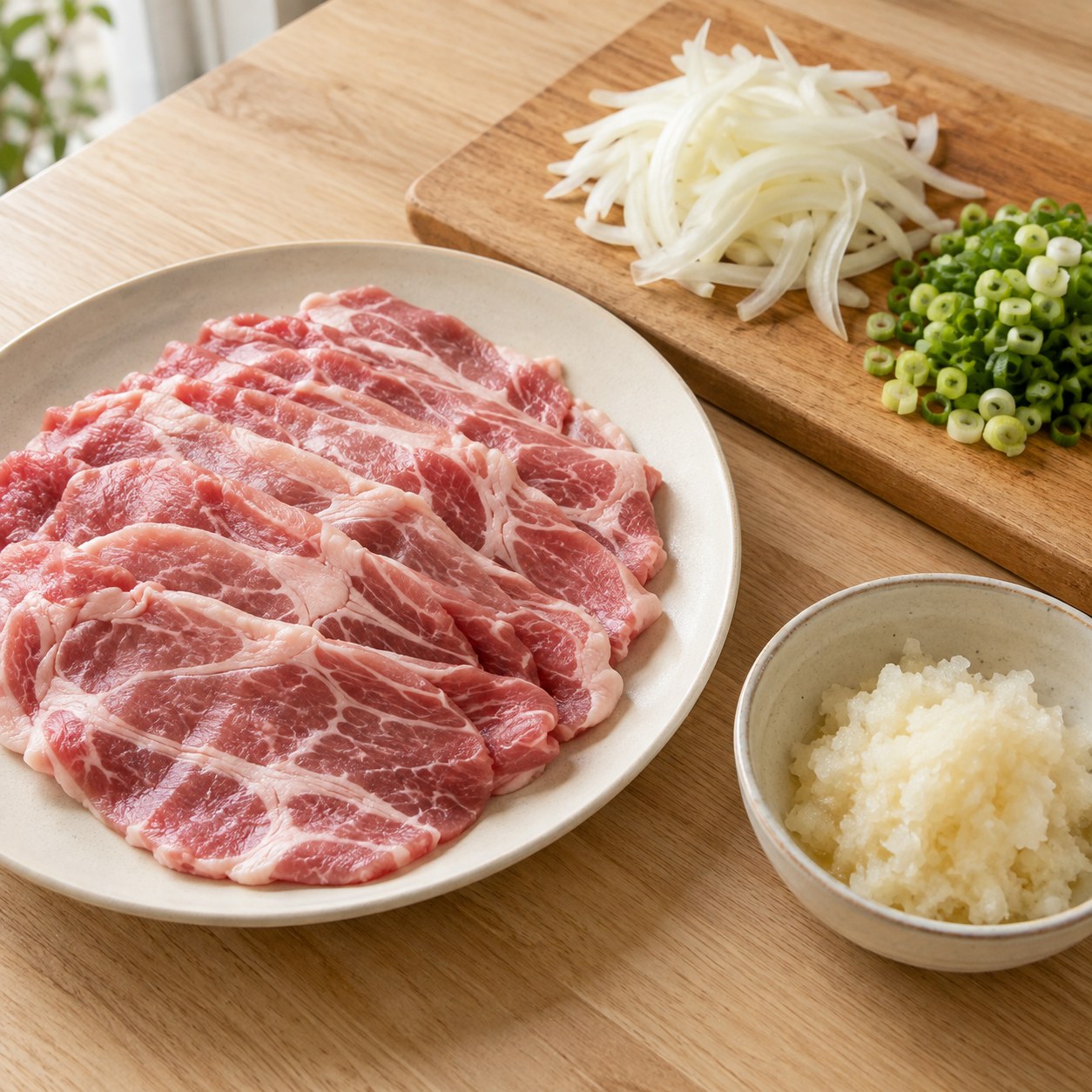
Prepare vegetables first: wash and dry lettuce, thinly slice onion, chop spring onions and grate pear. On a separate board cut pork across the grain into 4 mm slices, then into bite-size pieces. Keep raw meat and its utensils away from lettuce and cooked food.
-
Step 2
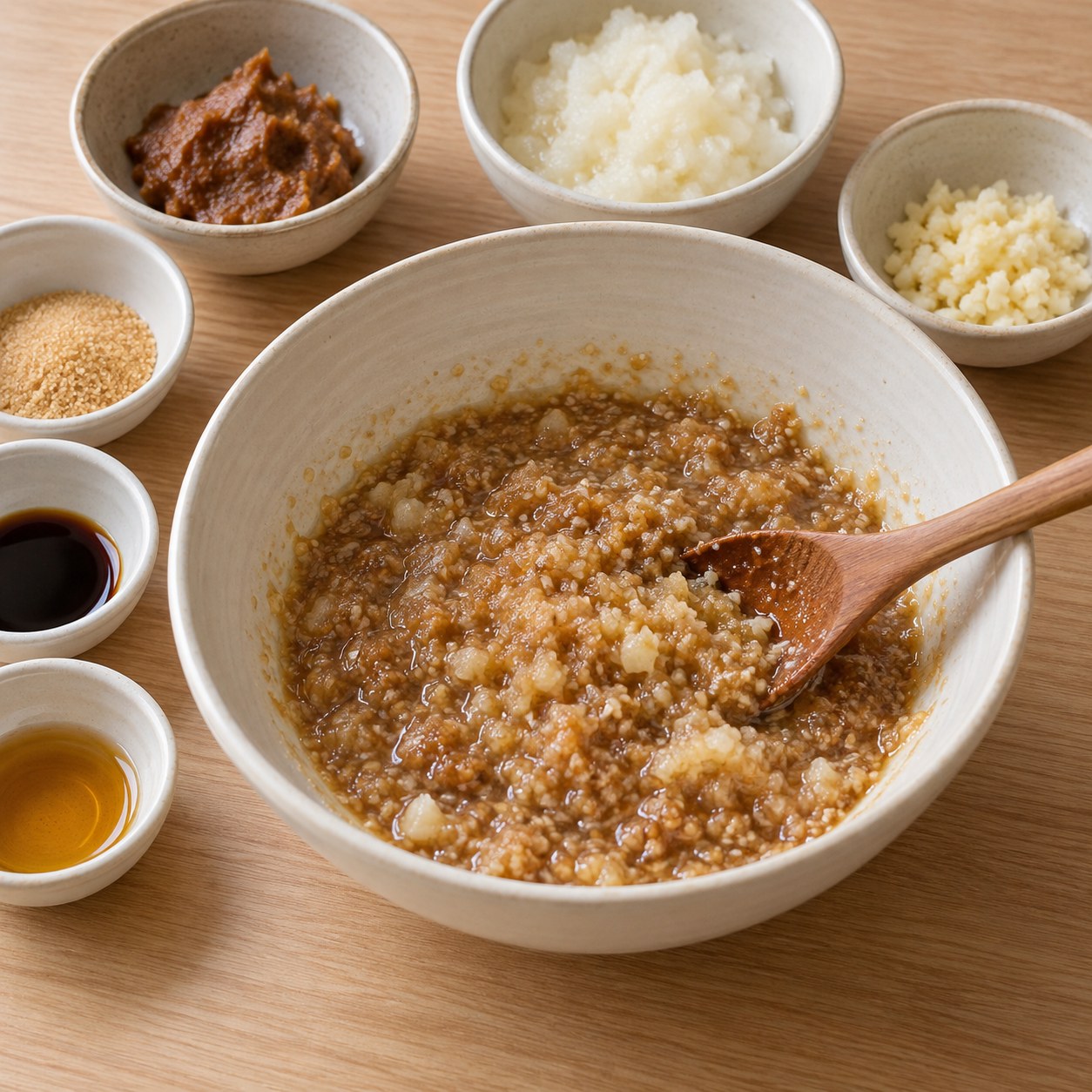
In a bowl mix doenjang, pear and its juice, sugar, garlic, soy sauce, sesame oil and optional pepper until evenly blended. If substituting miso, use the same 20 g but leave out the soy sauce. The marinade should be a thin paste, not a thick crust.
-
Step 3
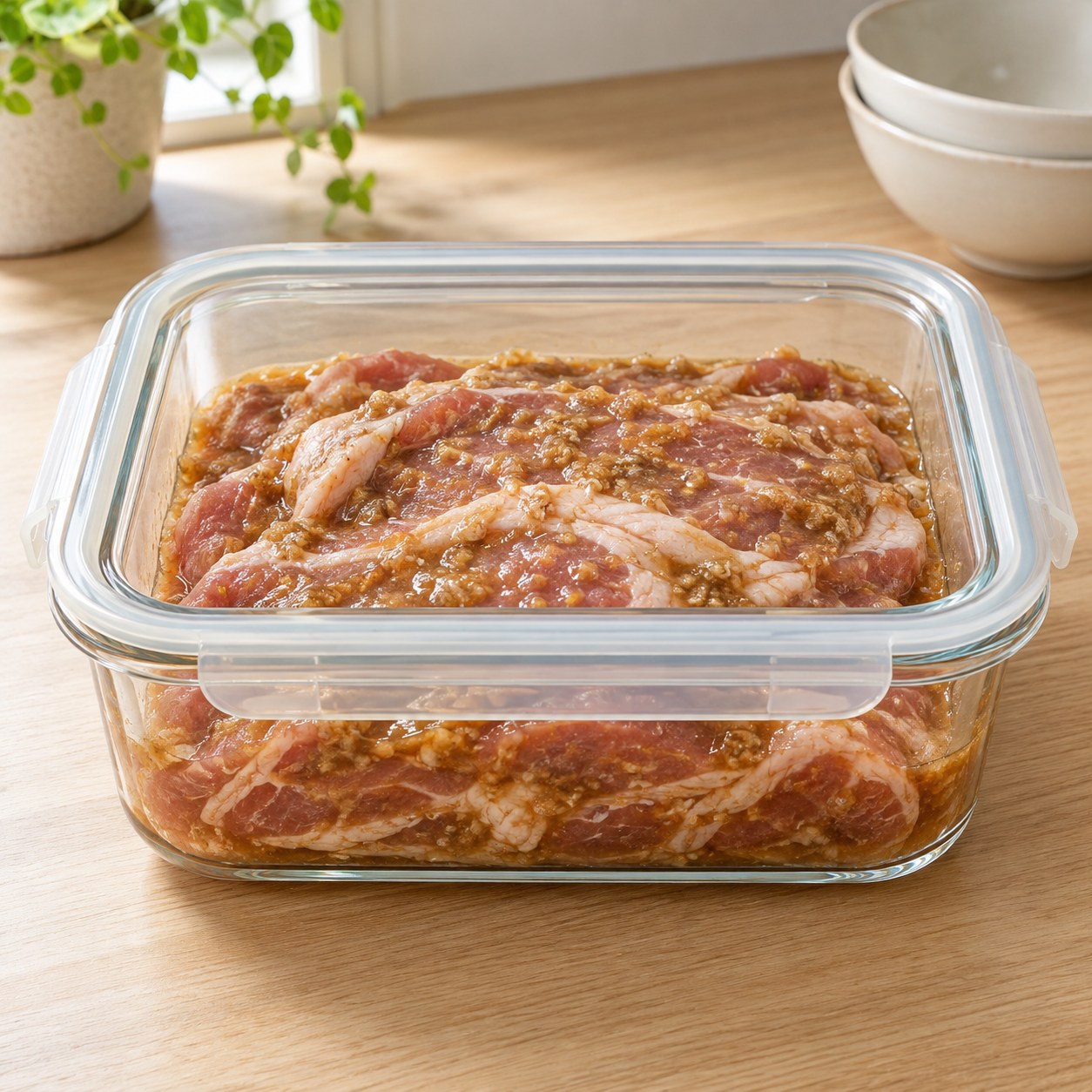
Coat pork evenly with the marinade. Cover and refrigerate for 20 minutes, not on the counter. Use this time to prepare rice or side dishes. Do not taste the marinade after it touches raw pork, and discard any liquid left in that bowl.
-
Step 4
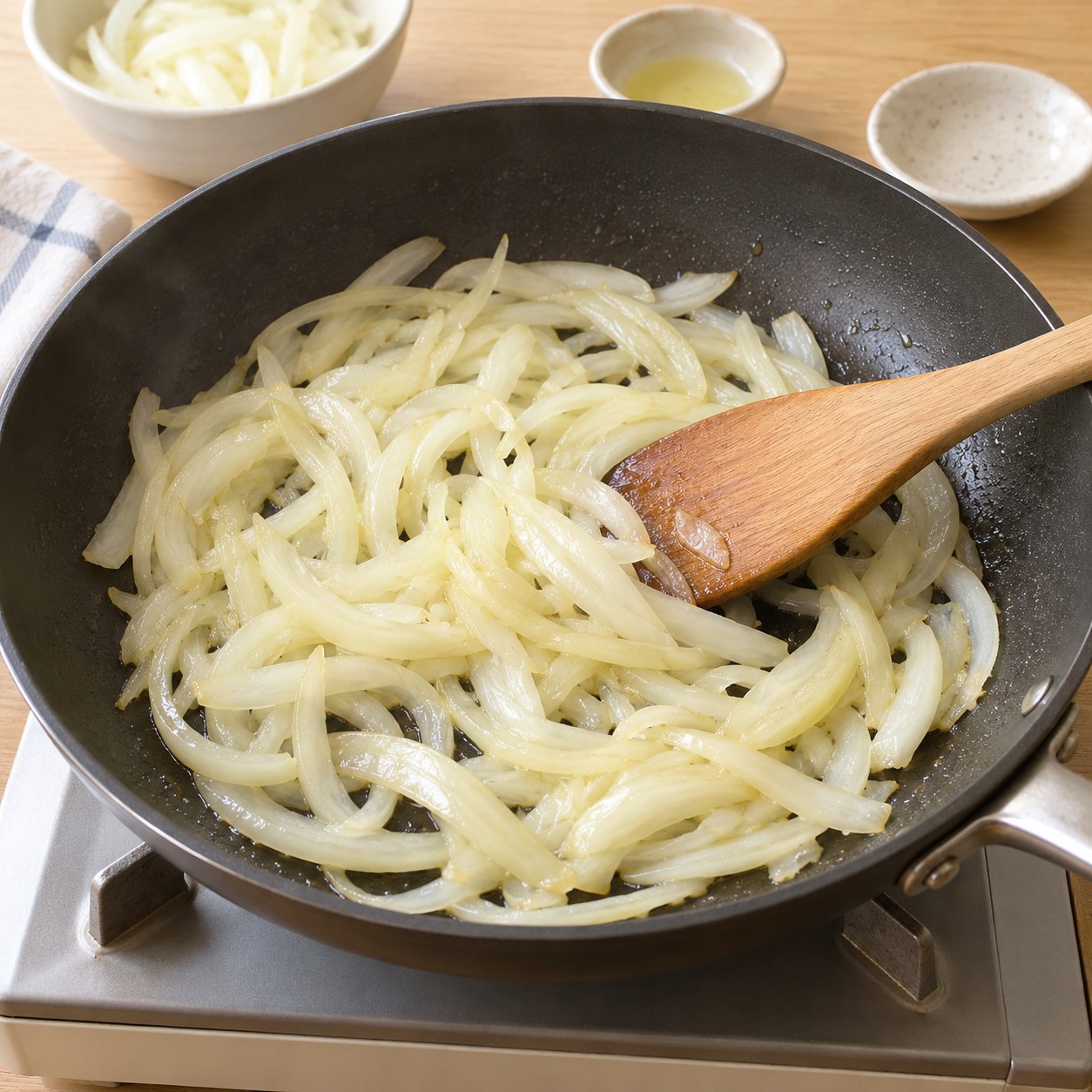
Warm neutral oil in a wide skillet over medium heat. Cook onion for 3–4 minutes until softened but not dark brown, then transfer to a clean plate. This leaves room to cook the pork without steaming it under a pile of onions.
-
Step 5
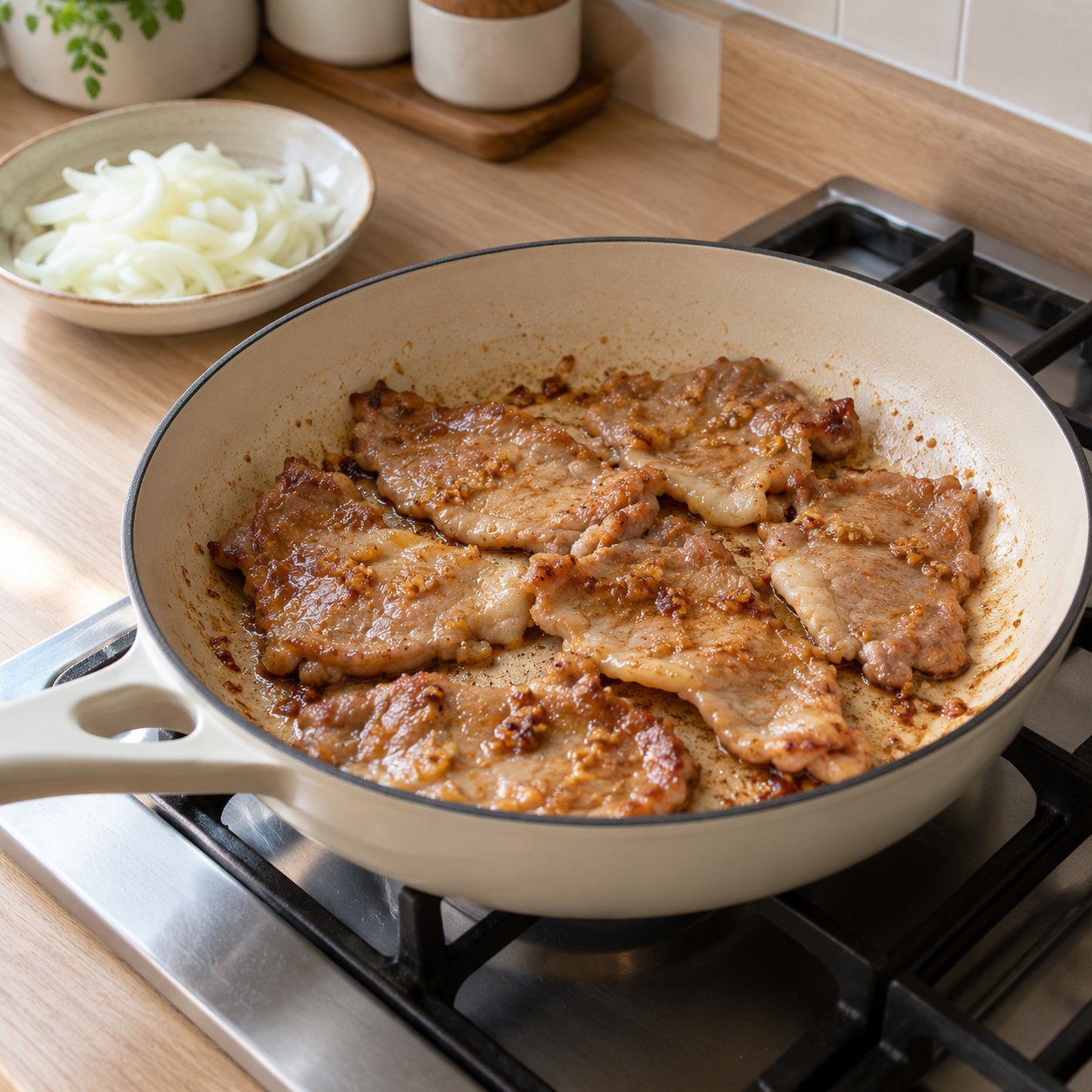
Cook pork in 2–3 batches in one layer over medium heat, about 2–3 minutes per side. Let excess marinade drip off first. Lower the heat if the sugar darkens quickly; if the pan scorches, remove it from the heat and wipe it carefully before the next batch. Check several thick pieces: at least 63°C in the center, measured with a thin probe inserted from the side.
-
Step 6
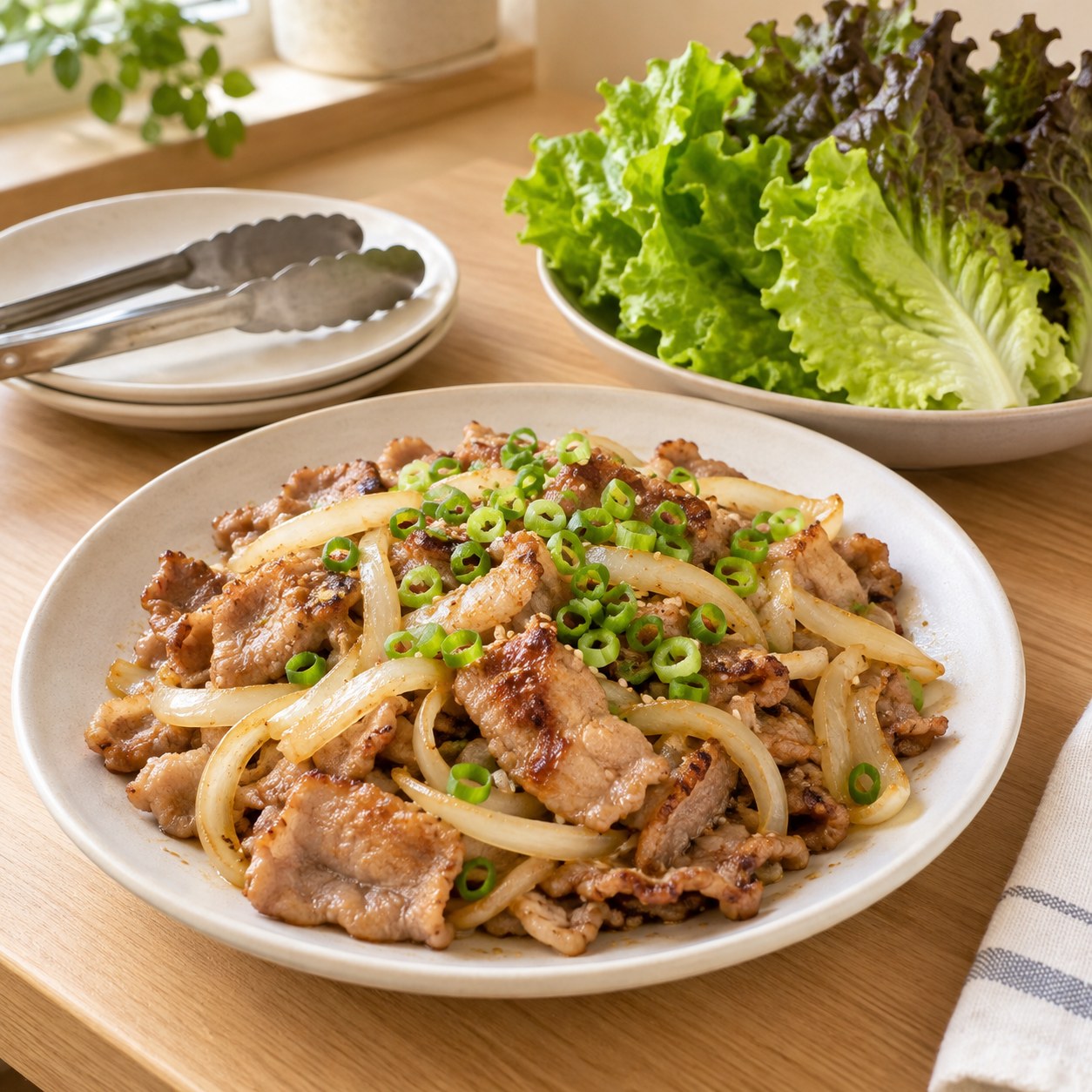
Return cooked onion and all cooked pork to the pan, add spring onions and toss for 30 seconds. Transfer with clean utensils to a clean plate and rest at least 3 minutes after reaching 63°C. Serve with lettuce if using. Do not put cooked pork back on the raw-meat plate.


Finished dish
2 servings. Contains pork, soy and sesame; some soybean pastes and soy sauces contain wheat. This is a skillet adaptation of maekjeok, not spicy jeyuk. Total time includes 20 minutes refrigerated marinating and 3 minutes resting. Refrigerate cooled leftovers within 2 hours and use within 3 days.
Related recipes


Enjoy every bite
How to enjoy it
Serve in lettuce wraps with rice and only a little ssamjang, since the pork is already seasoned.
Serve it with

Fresh spicy radish salad (musaengchae)
Fresh radish matchsticks with a tangy Korean chilli dressing. A short salted rest removes excess water; this is a quick fresh side dish, not a long-fermented kimchi.

All-purpose Ssamjang — Korean BBQ Dipping Paste
A savory soybean-and-chili dipping paste you can mix in one bowl, without a stove. Use a little with lettuce wraps, cooked meat, rice or crisp vegetable sticks.