Fresh spicy radish salad (musaengchae)
Fresh radish matchsticks with a tangy Korean chilli dressing. A short salted rest removes excess water; this is a quick fresh side dish, not a long-fermented kimchi.
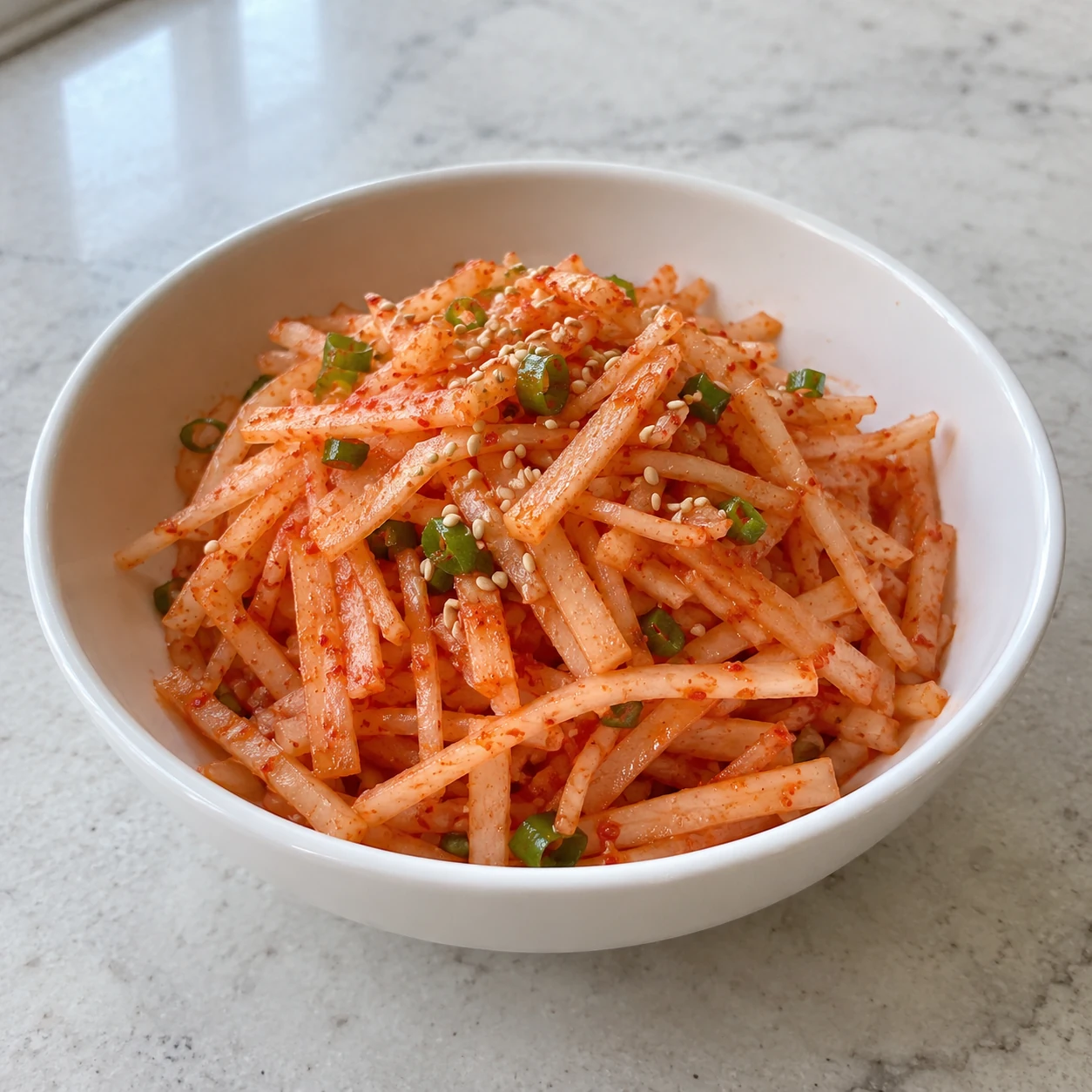
AI-generated cooking illustrations. Follow the written quantities and instructions.
Ingredients
4 servings
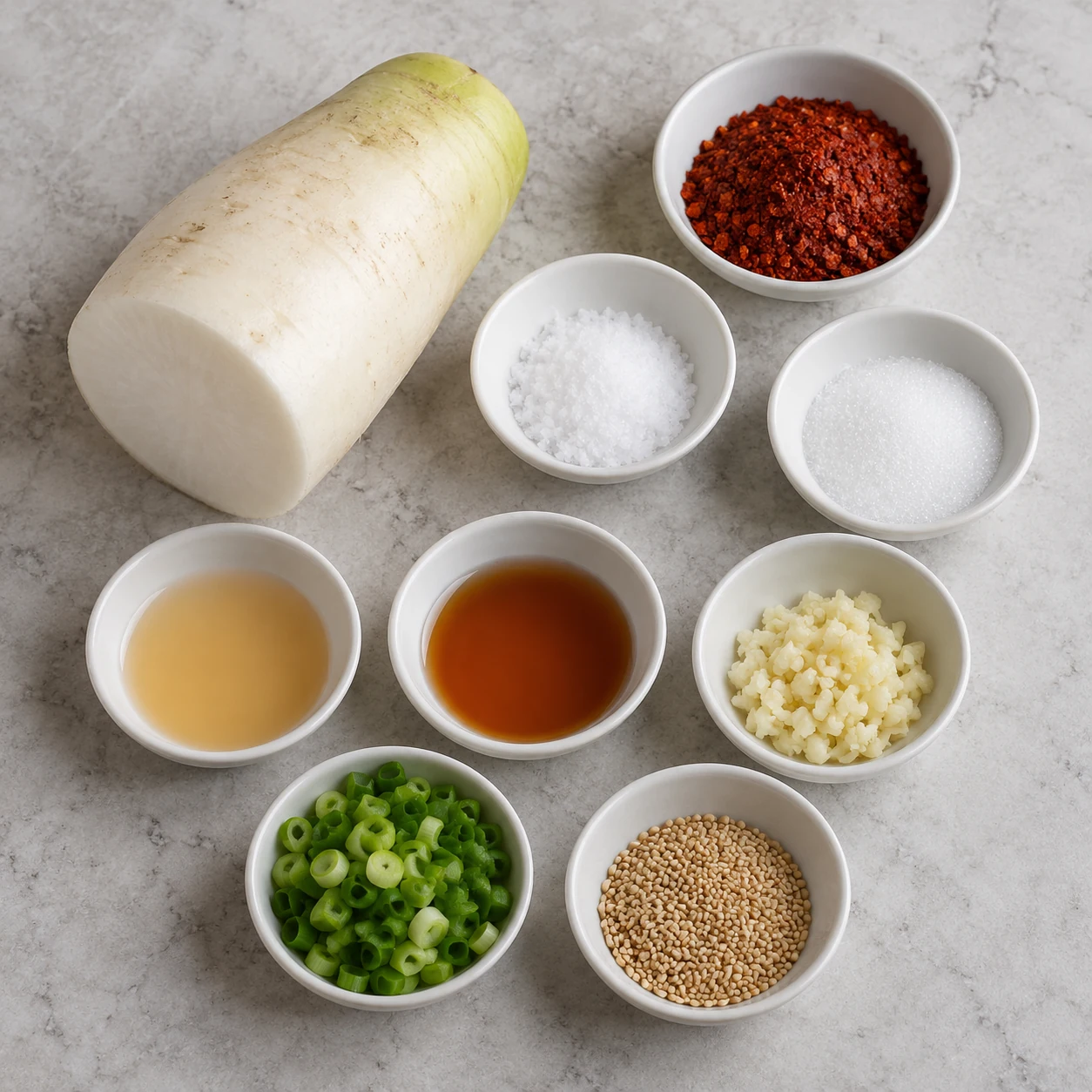
Everyday kitchen measurements
For 4 servings. Use a small 180 ml paper cup, a level eating spoon (about 15 ml) and a small teaspoon (about 5 ml).
How to fill the cup and spoons
Use the same cup and spoons throughout. Their sizes vary, so these amounts are approximate. Spoon flour in loosely and level the top without pressing. Measure vegetables after chopping, without packing them down. The amounts in g/ml are the original reference quantities. For part of a pack, use the specified pack weight and divide the contents evenly.
King Arthur Baking-
Substitute available
If Korean radish is unavailable
- Use instead
- Daikon radish
- Substitute quantity
- ⅓ of a medium radishReference quantity: 300 g
Use the same prepared weight in thin matchsticks. Daikon may release more water, so drain after the salted rest.
-
Essential
Use for the short salted rest. Do not add a second portion of salt when mixing the dressing.
-
Optional
Use in the salted rest, or omit for less sweetness.
-
Optional
Omit for a white mild radish salad with a different appearance. Do not replace spoon-for-spoon with hot cayenne.
-
Substitute available
If Vinegar is unavailable
- Use instead
- Lemon juice
- Substitute quantity
- 1 level eating spoonReference quantity: 15 ml
Use the same amount in the dressing. The aroma will be fruitier.
-
Optional
Leave out for a fish-free version. Salt and vinegar still season the radish.
-
Optional
Leave out for a gentler raw-garlic flavour.
-
Optional
Leave out if unavailable.
-
Optional
Leave out if unavailable or unsuitable for the people eating.
Tap each ingredient as you prepare it. Check product labels for egg, soy, sesame, wheat, fish or shellfish where relevant.
Step-by-step cooking
-
Step 1
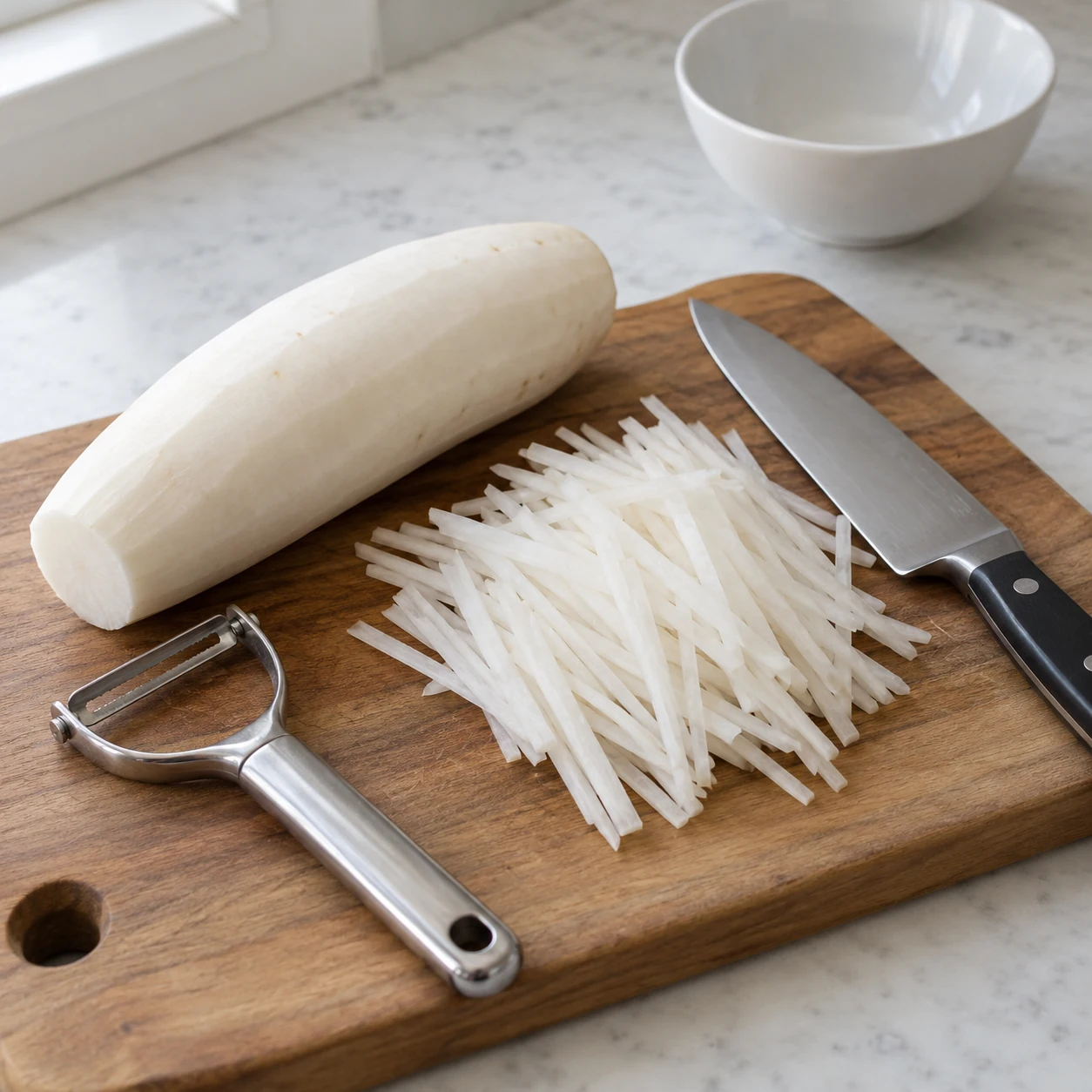
Wash the radish, peel any tough skin and cut into thin even matchsticks about 2 mm thick. Use a clean board and utensils because this dish is not cooked.
-
Step 2
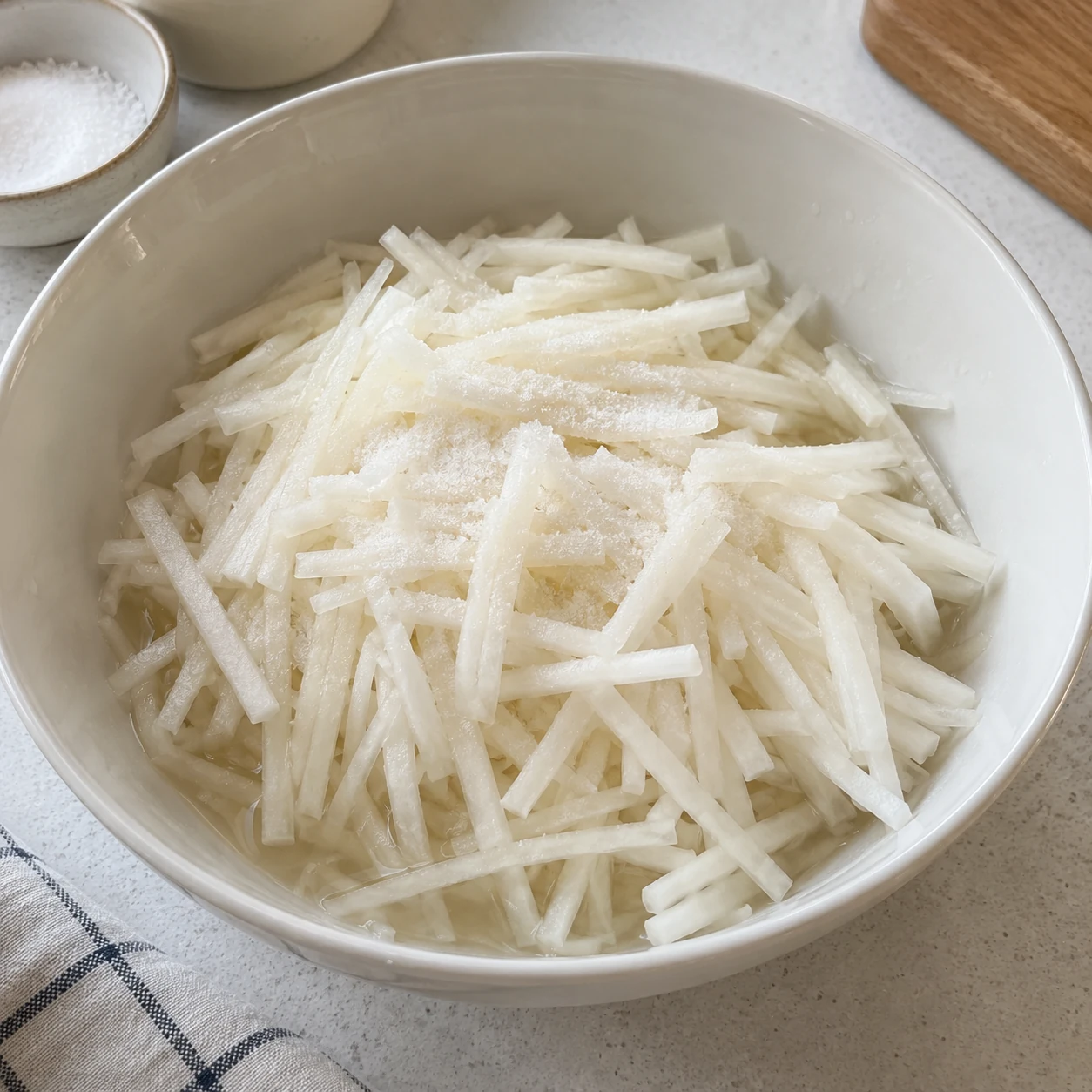
Toss with the fine salt and optional sugar in a clean bowl. Rest for 10 minutes, turning once, until a little liquid collects and the strands soften slightly.
-
Step 3
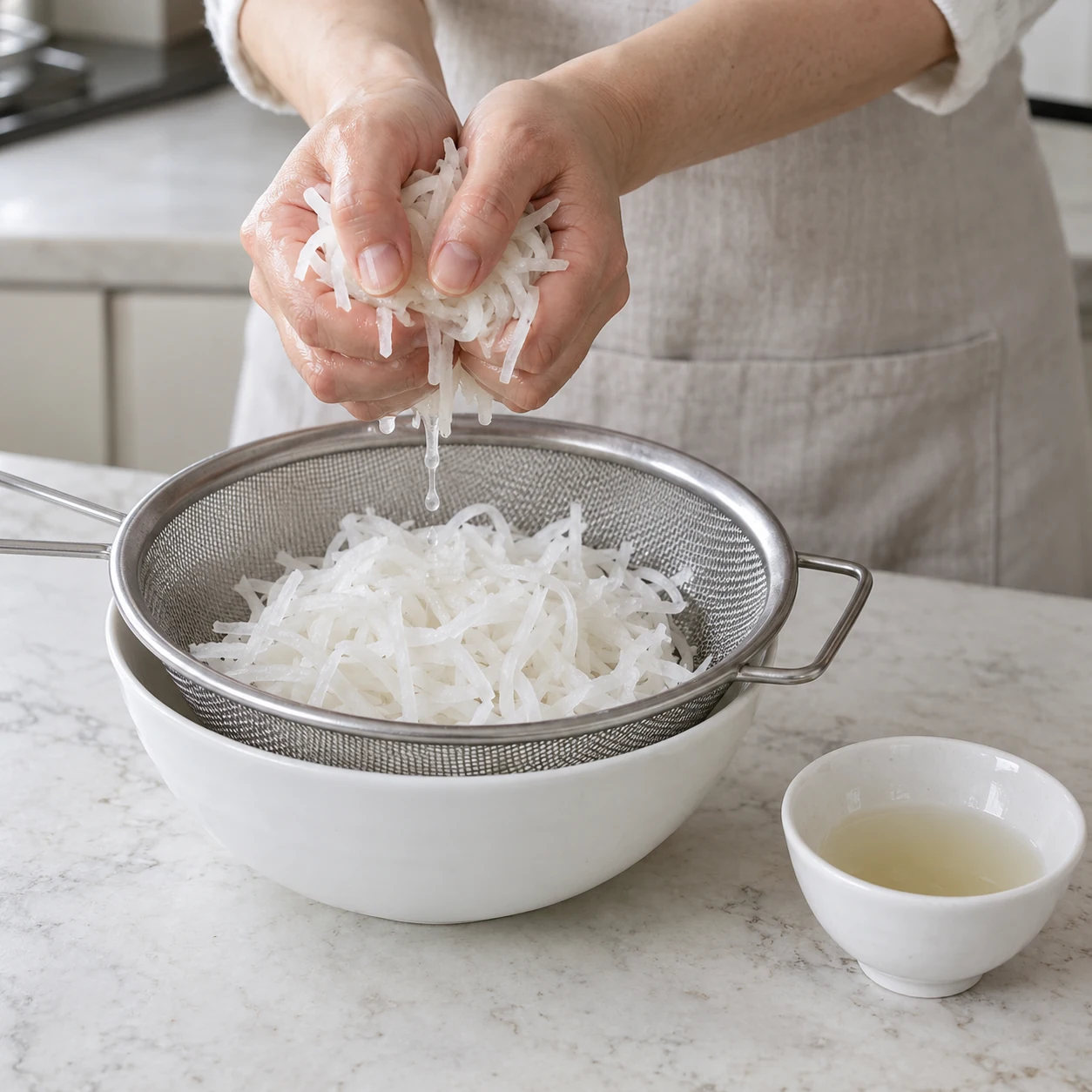
Drain, saving one spoonful of liquid in case it is needed. Gently squeeze the strands once; do not crush or rinse them. The listed salt is already part of the seasoning.
-
Step 4
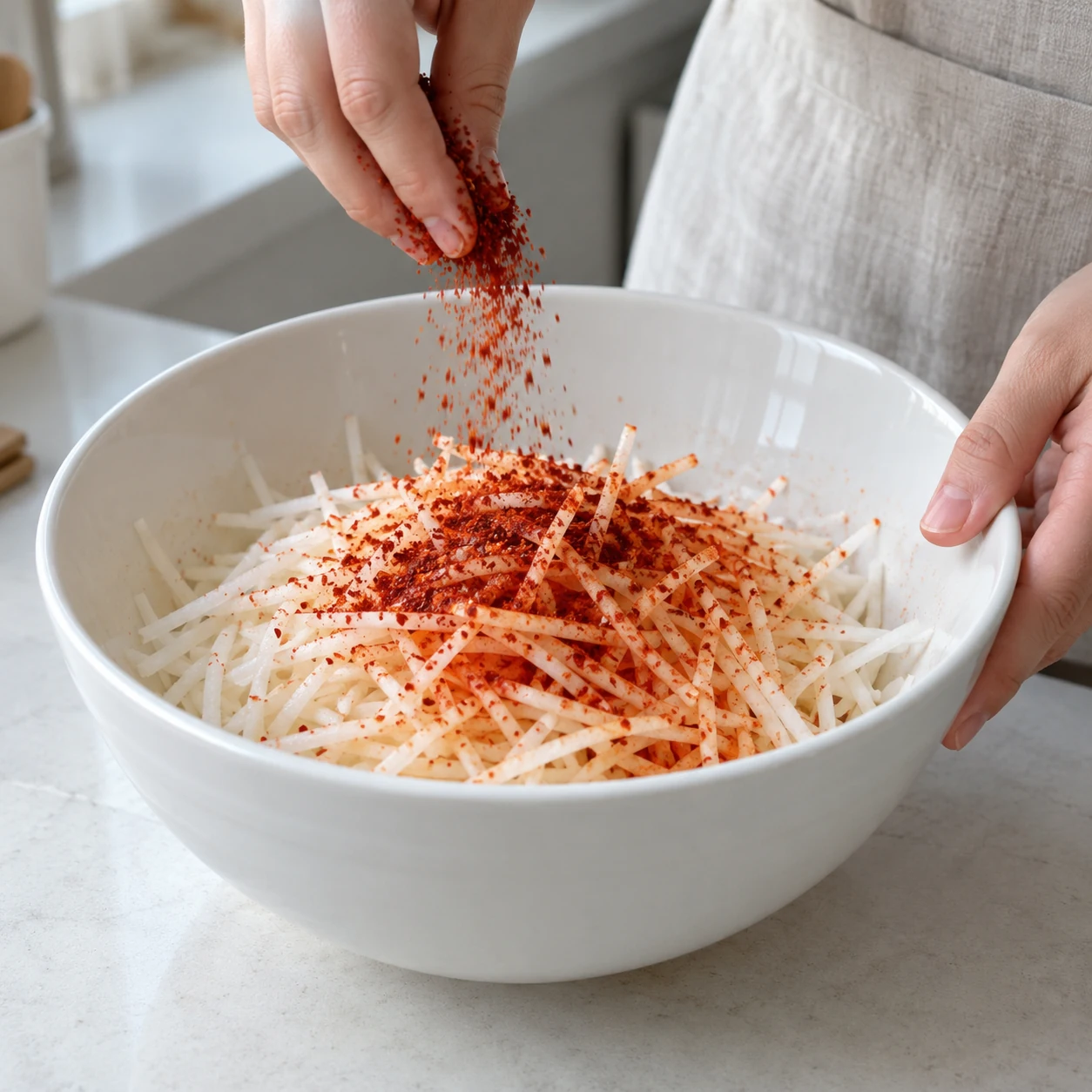
Put radish back in the clean bowl and toss with the optional gochugaru so the strands turn evenly light red. For the mild white version, skip the chilli and go directly to the next step.
-
Step 5
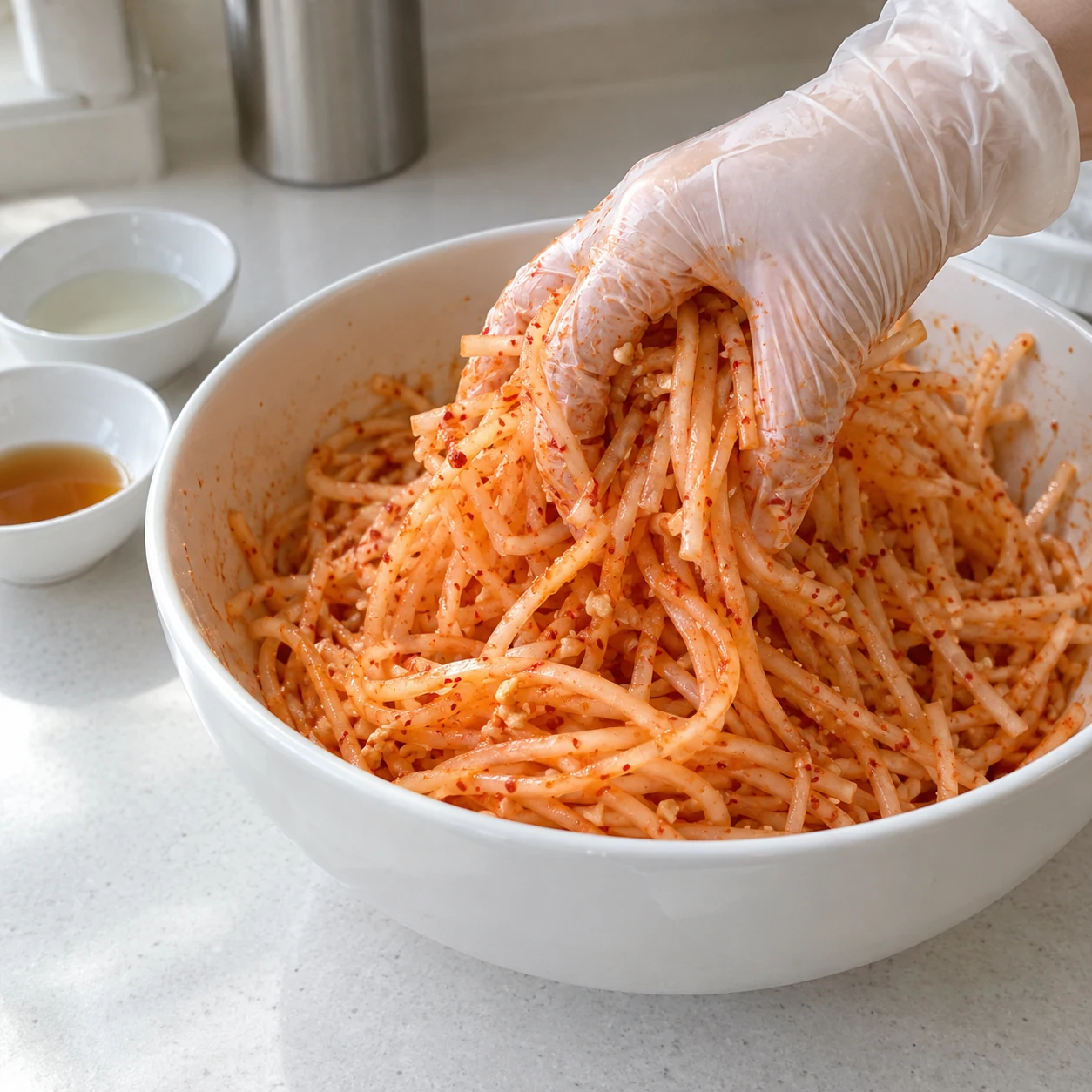
Add vinegar, optional fish sauce and optional minced garlic. Lift and turn gently with clean utensils or food-safe gloves. If very dry, add a little of the saved radish liquid; do not pour all the salty liquid back.
-
Step 6
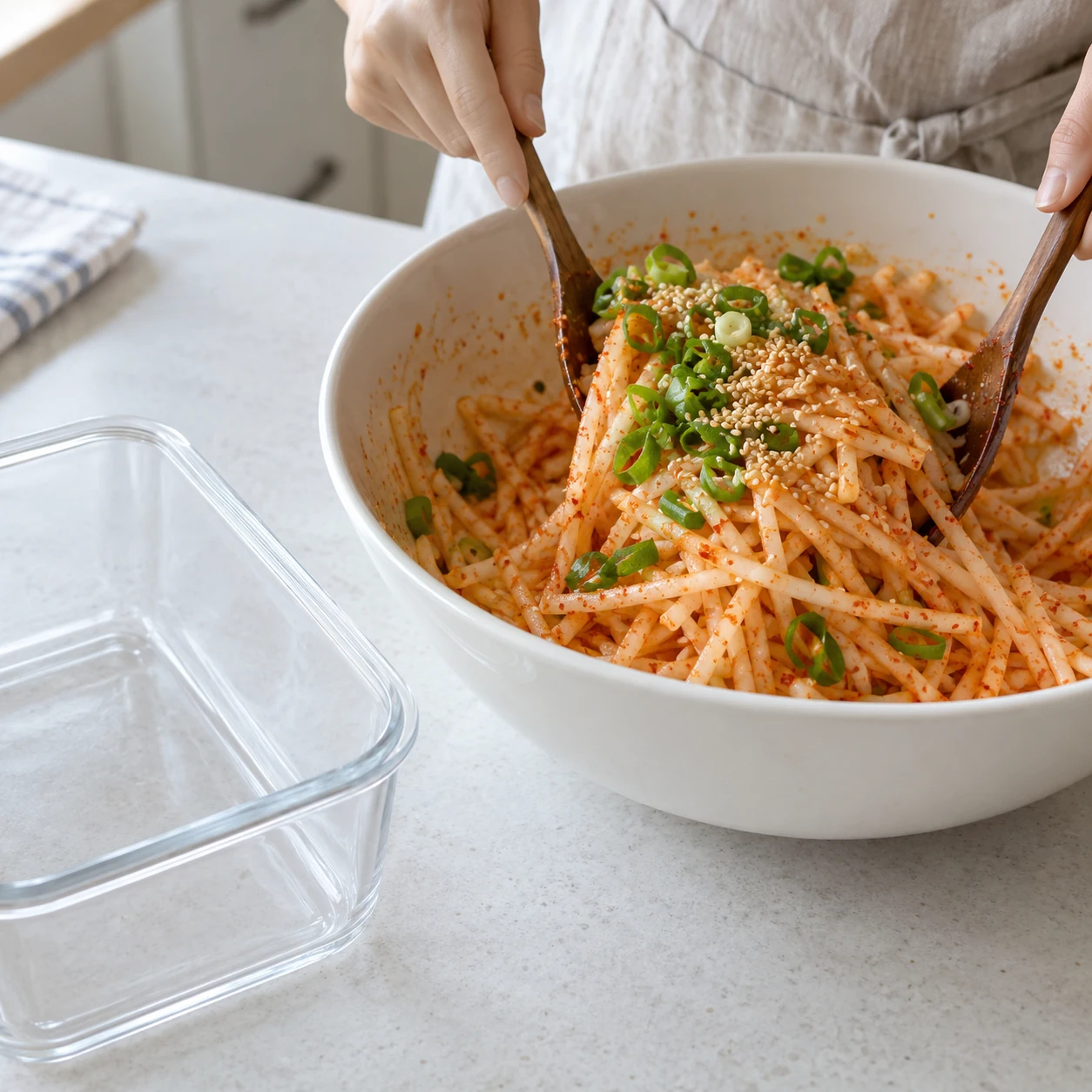
Fold in optional spring onion and sesame seeds, then serve small portions. Put the remainder promptly in a clean covered container in the refrigerator. The flavour becomes a little milder as it rests, but it is ready to eat now.
Finished dish
This fresh salad needs no room-temperature fermentation. Keep at 4°C or below and use within 3 days. Refrigerate within 2 hours, or within 1 hour above 32°C. Use clean utensils each time. Check fish-sauce and sesame ingredients if relevant.
Enjoy every bite
How to enjoy it
Add a small spoonful to bibimbap or serve beside cooked meat. Keep it in a separate bowl until eating so its dressing does not soak other foods.
Serve it with
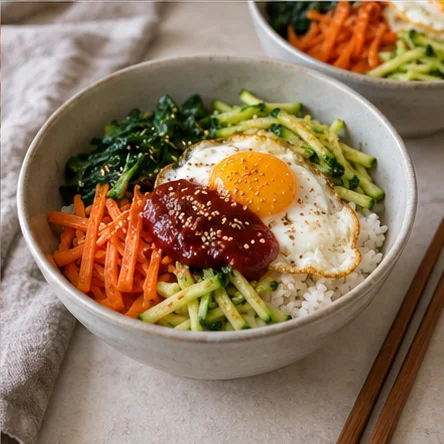
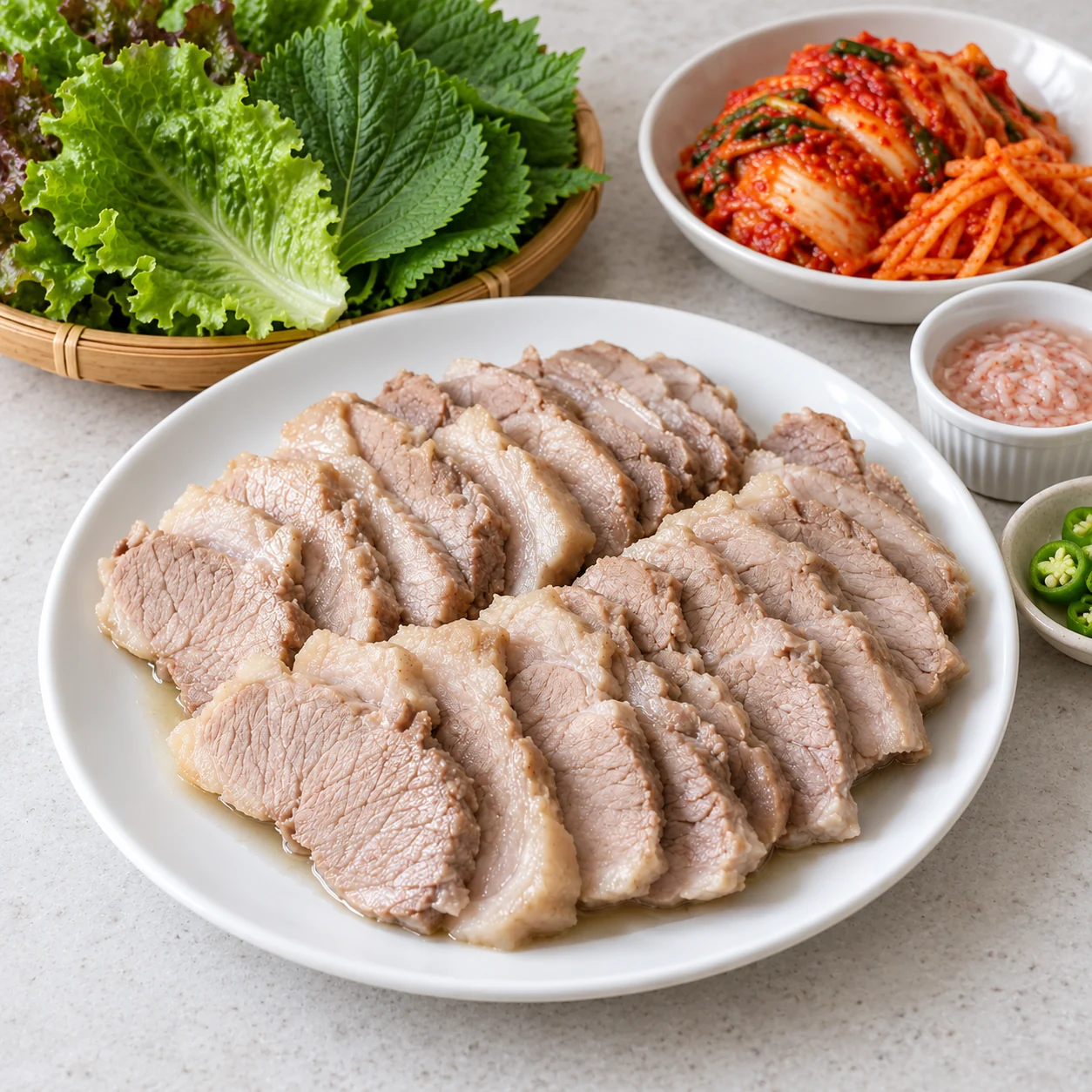
Pork Suyuk — Tender Korean Boiled Pork
A small savory bite complements a lighter noodle or vegetable dish.
View recipe