Jeyuk Bokkeum — Spicy Pork Stir-fry
Thin slices of pork and onion in a sweet, spicy gochujang sauce. Learn how to coat the meat, keep the pan from becoming watery, and finish without burning the sauce.
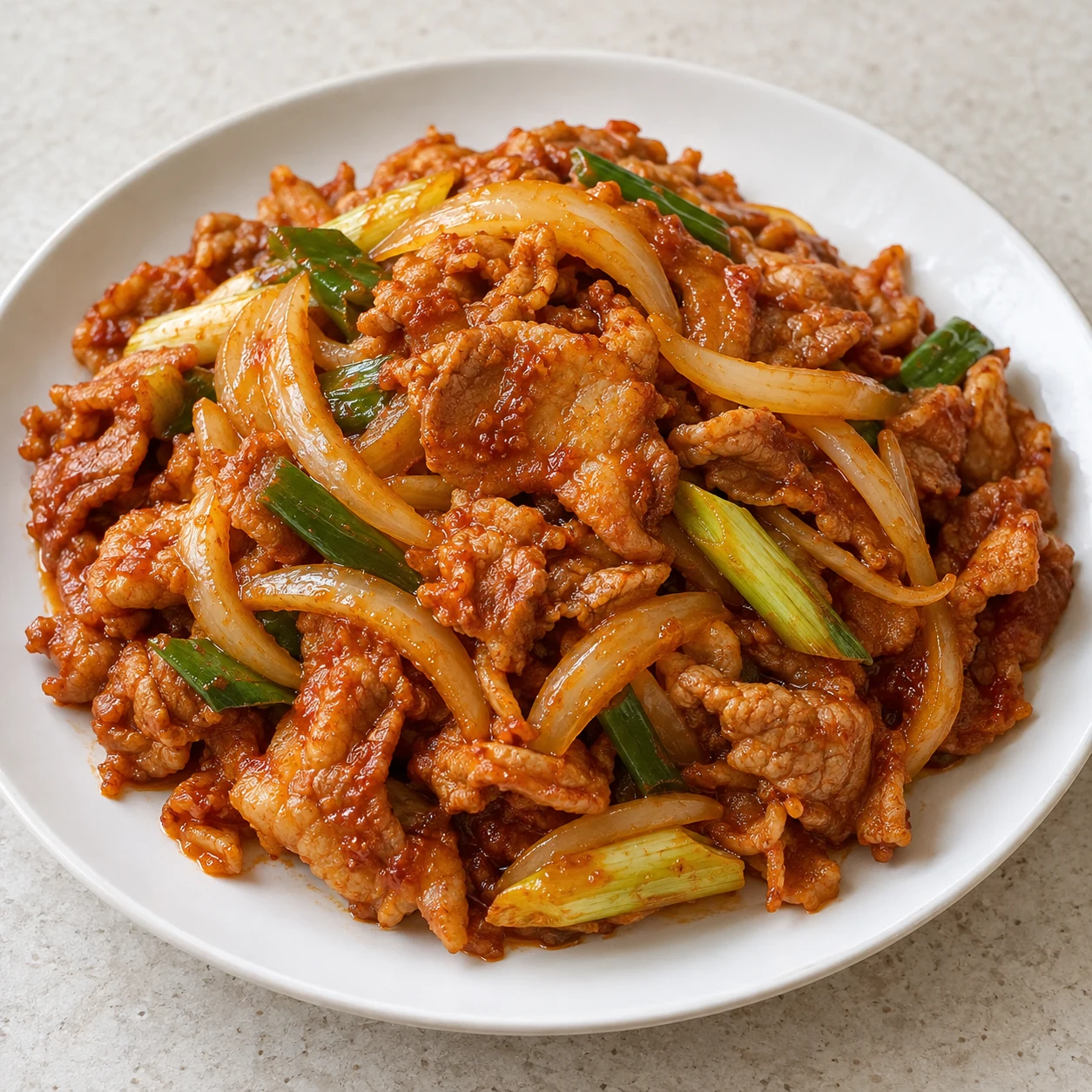
AI-generated cooking illustrations. Follow the written quantities and instructions.
Ingredients
2 servings
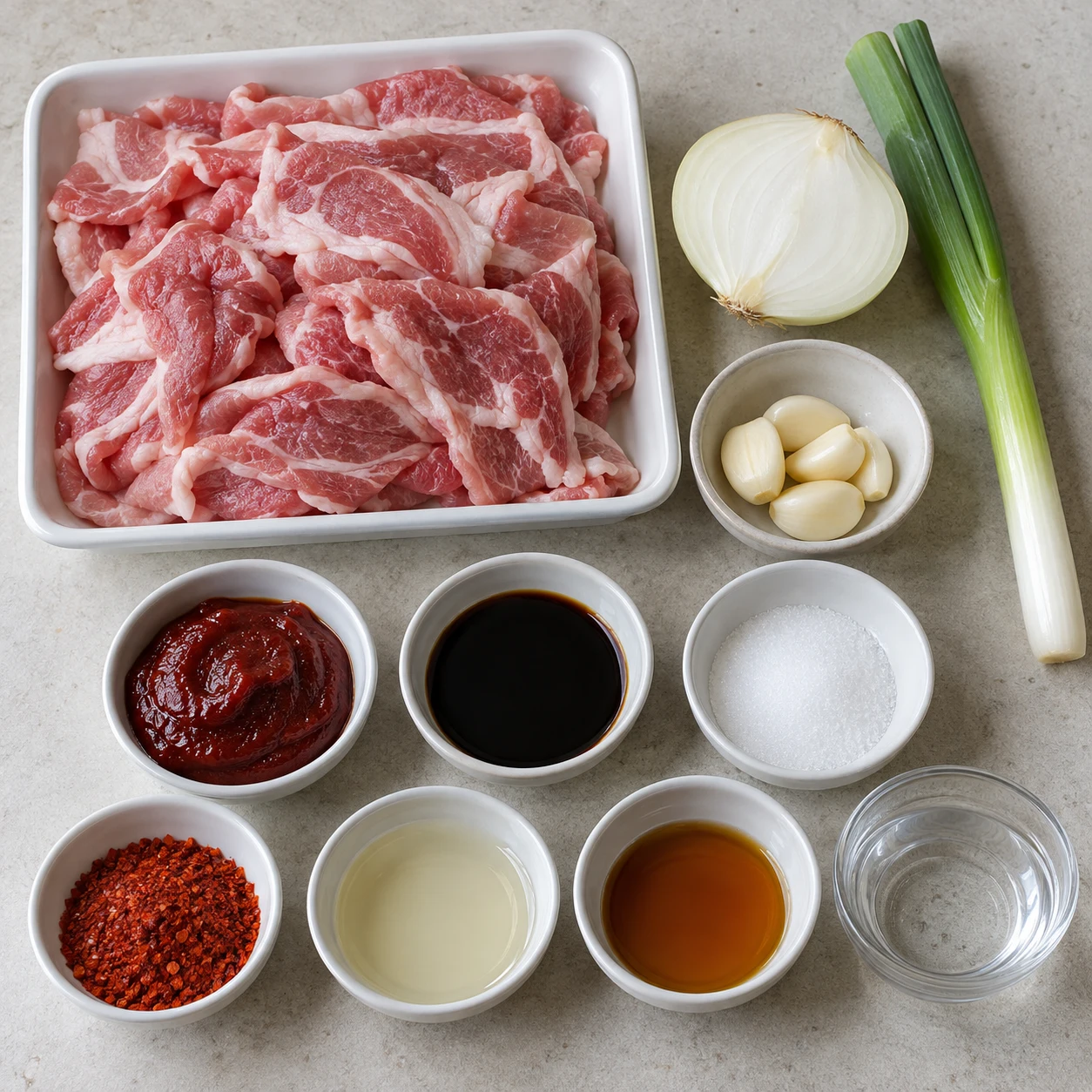
Everyday kitchen measurements
For 2 servings. Use a small 180 ml paper cup, a level eating spoon (about 15 ml) and a small teaspoon (about 5 ml).
How to fill the cup and spoons
Use the same cup and spoons throughout. Their sizes vary, so these amounts are approximate. Spoon flour in loosely and level the top without pressing. Measure vegetables after chopping, without packing them down. The amounts in g/ml are the original reference quantities. For part of a pack, use the specified pack weight and divide the contents evenly.
King Arthur Baking-
Substitute available
If Thinly sliced pork shoulder is unavailable
- Use instead
- Boneless chicken thigh, thinly sliced
- Substitute quantity
- ½ of a 600 g packReference quantity: 300 g
Slice into thin strips and use in steps 3–5 instead of pork. Cook until completely done; if using a thermometer, chicken must reach 74°C. Start checking after 7 minutes and cook longer as needed. This becomes a chicken stir-fry.
-
Essential
Slice thinly for step 1. It provides moisture and balances the strong sauce; do not double the onion because a crowded pan becomes watery.
-
Essential
Use the thick Korean fermented chili paste, not a pourable hot sauce. It gives both heat and body. For a gentler dish use a mild gochujang and omit the optional chili flakes; replacing it with ketchup changes the dish.
-
Substitute available
If Soy sauce is unavailable
- Use instead
- Tamari
- Substitute quantity
- 1 level eating spoonReference quantity: 15 ml
Mix into the marinade in step 2 instead of soy sauce. Use unsweetened tamari; check the gochujang label too if avoiding wheat.
-
Substitute available
If Sugar is unavailable
- Use instead
- Maple syrup
- Substitute quantity
- 2 small teaspoonsReference quantity: 10 ml
Mix into the marinade instead of sugar. Use 2 small teaspoons, not a full eating spoon; this keeps the sauce from becoming too wet.
-
Essential
About 2 average peeled cloves make this amount. Mix into the marinade rather than frying the garlic alone, which can burn.
-
Essential
Use in the marinade. If the sauce catches on the pan before the meat is cooked, add 1 more spoon of water at a time, rather than adding more oil.
-
Substitute available
If Neutral cooking oil is unavailable
- Use instead
- Olive oil
- Substitute quantity
- 1 small teaspoonReference quantity: 5 ml
Use to coat the pan in step 4. A mild olive oil works; the flavor may be a little different. Do not substitute butter, which burns more easily.
-
Optional
If unavailable, omit its cutting in step 1 and its addition in step 5. The onion and garlic already provide flavor.
-
Optional
Leave out of the marinade in step 2 for less heat. Keep the gochujang amount the same; extra chili is not needed for the sauce to work.
-
Optional
Skip the finishing sesame oil in step 6 if unavailable or unsuitable. No replacement oil is needed.
Tap each ingredient as you prepare it. Check product labels for egg, soy, sesame, wheat, fish or shellfish where relevant.
Step-by-step cooking
-
Step 1
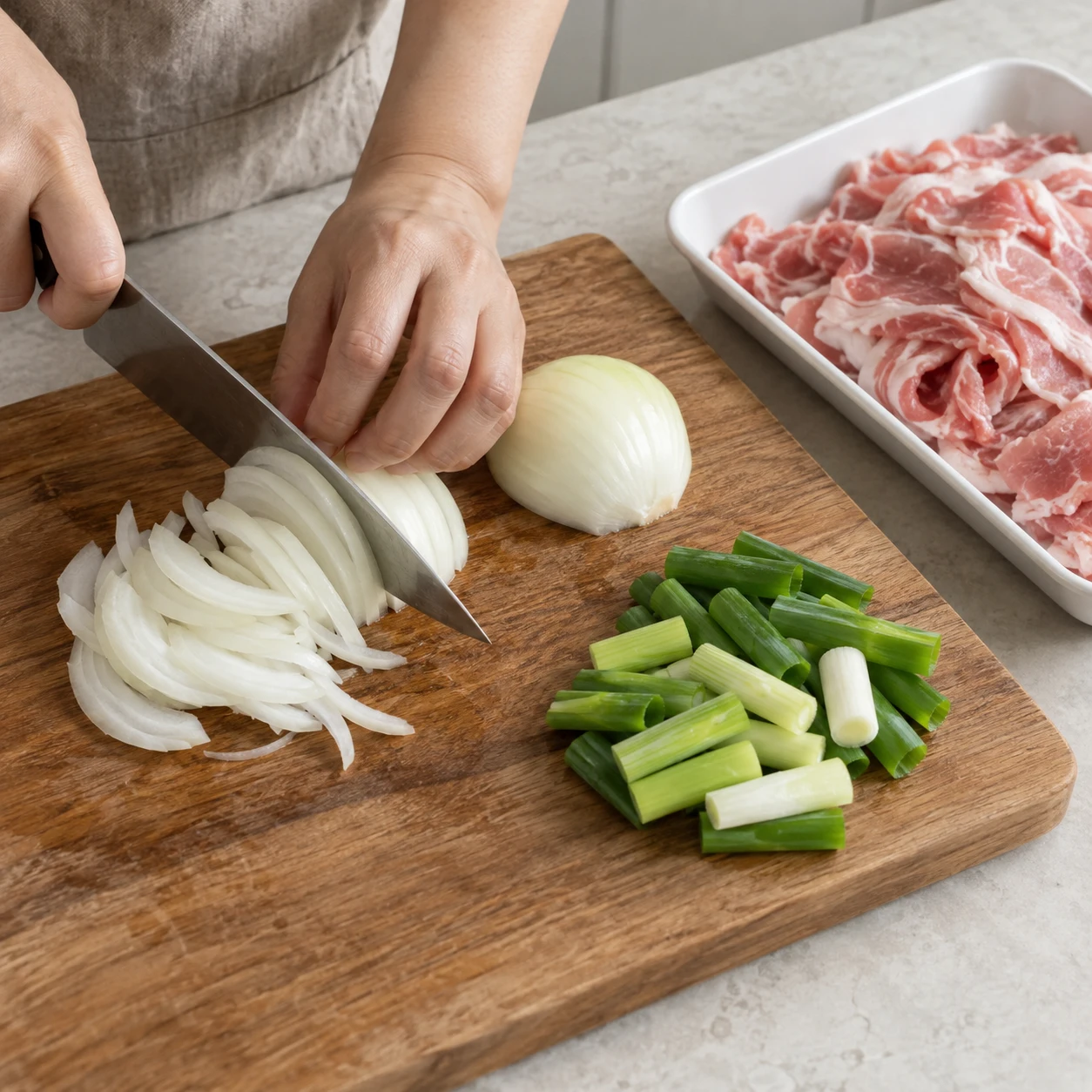
Slice the onion into thin strips and cut the optional spring onion into 3 cm pieces. Prepare these vegetables before handling meat. Separate the pork slices and cut long ones into bite-size strips. Aim for slices about 3 mm thick; thicker pieces take longer. Use separate utensils for raw meat and ready-to-eat food.
-
Step 2
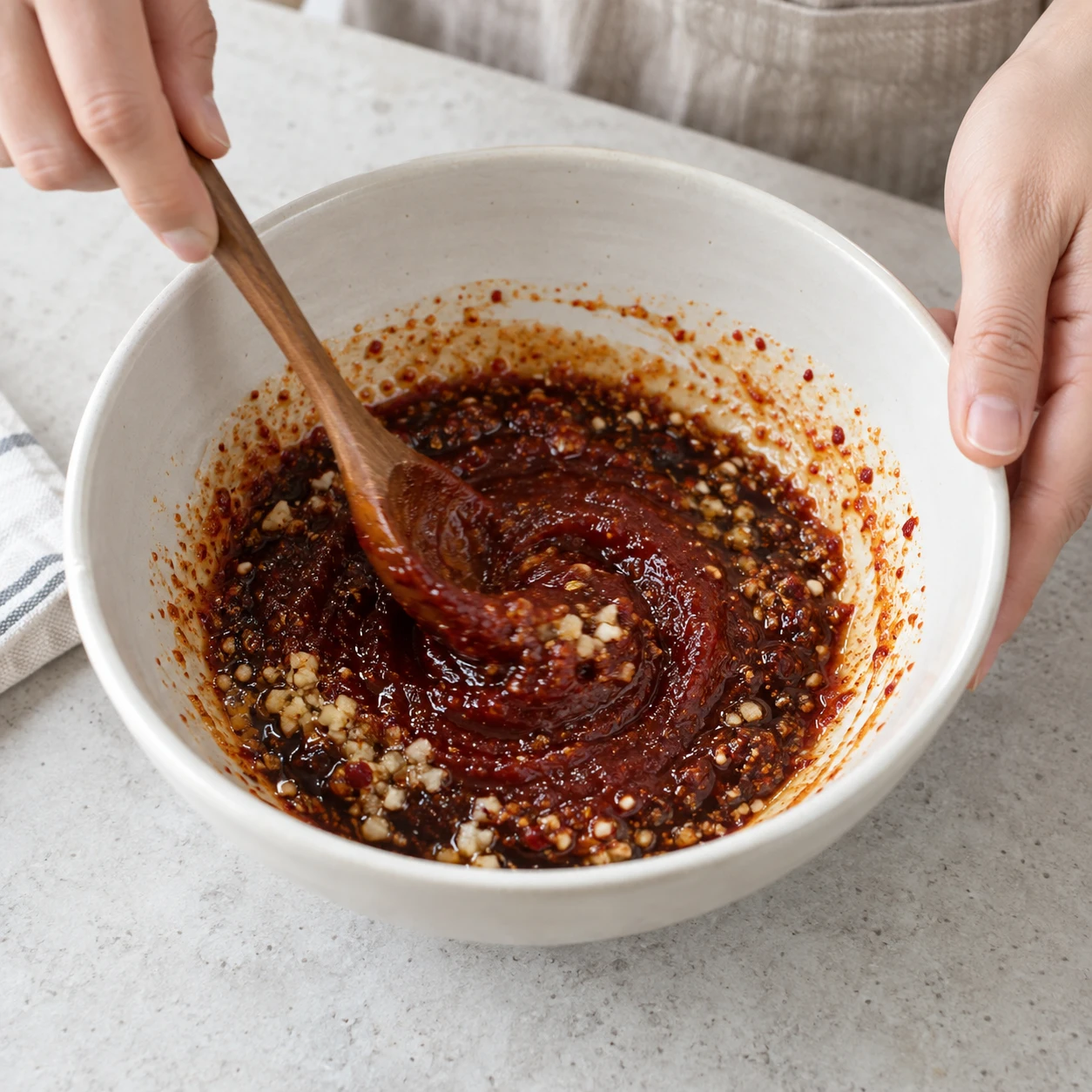
In a large bowl, stir together 2 level eating spoons gochujang, 1 level eating spoon soy sauce, 1 level eating spoon sugar, 2 small teaspoons minced garlic and 2 level eating spoons water. Add the optional 1 small teaspoon chili flakes only if you want more heat. Mix until there are no dry lumps of paste.
-
Step 3
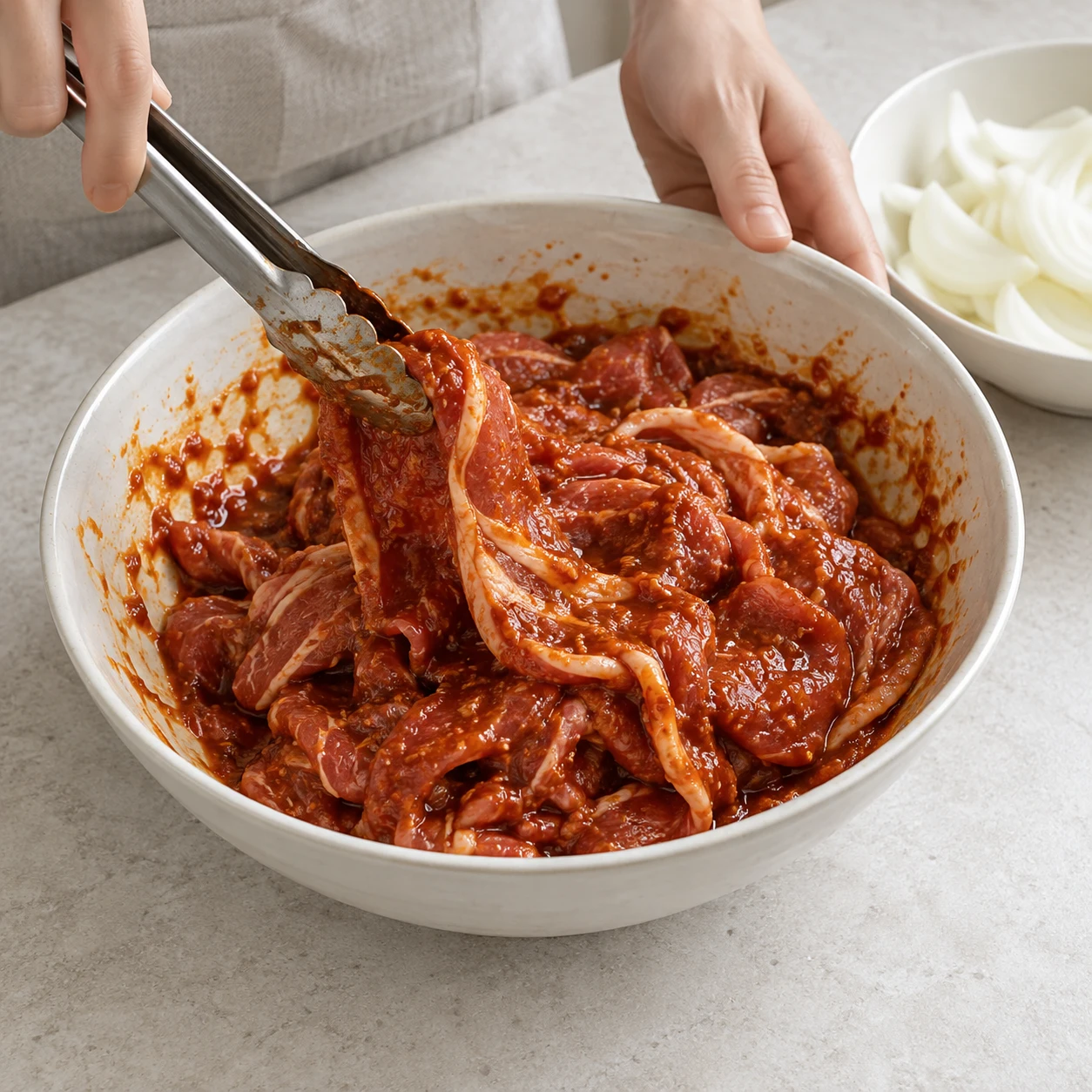
Add the pork to the sauce and use tongs to coat every slice, opening up folded pieces. Cover and refrigerate for 20 minutes while you prepare rice or another side if desired. Keep the sliced onion separate until cooking. Do not taste the marinade after it has touched raw meat.
-
Step 4
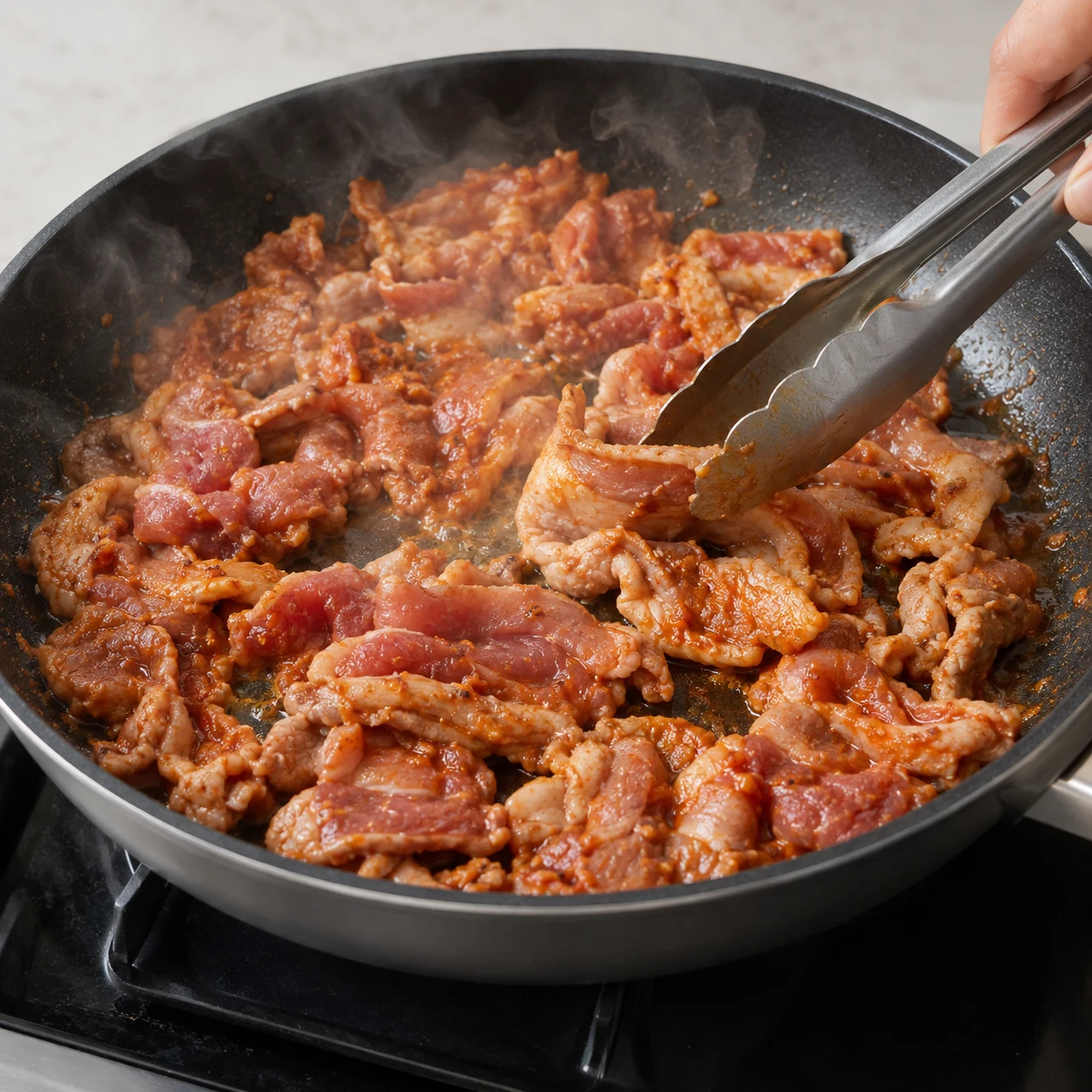
Warm a wide frying pan over medium-high heat for 1 minute, then add 1 small teaspoon cooking oil. Add the pork and all its marinade, spreading the slices out. Cook for 2 minutes, then turn and separate them with tongs. If the pan is small, cook in 2 batches instead of piling the meat into a deep layer.
-
Step 5
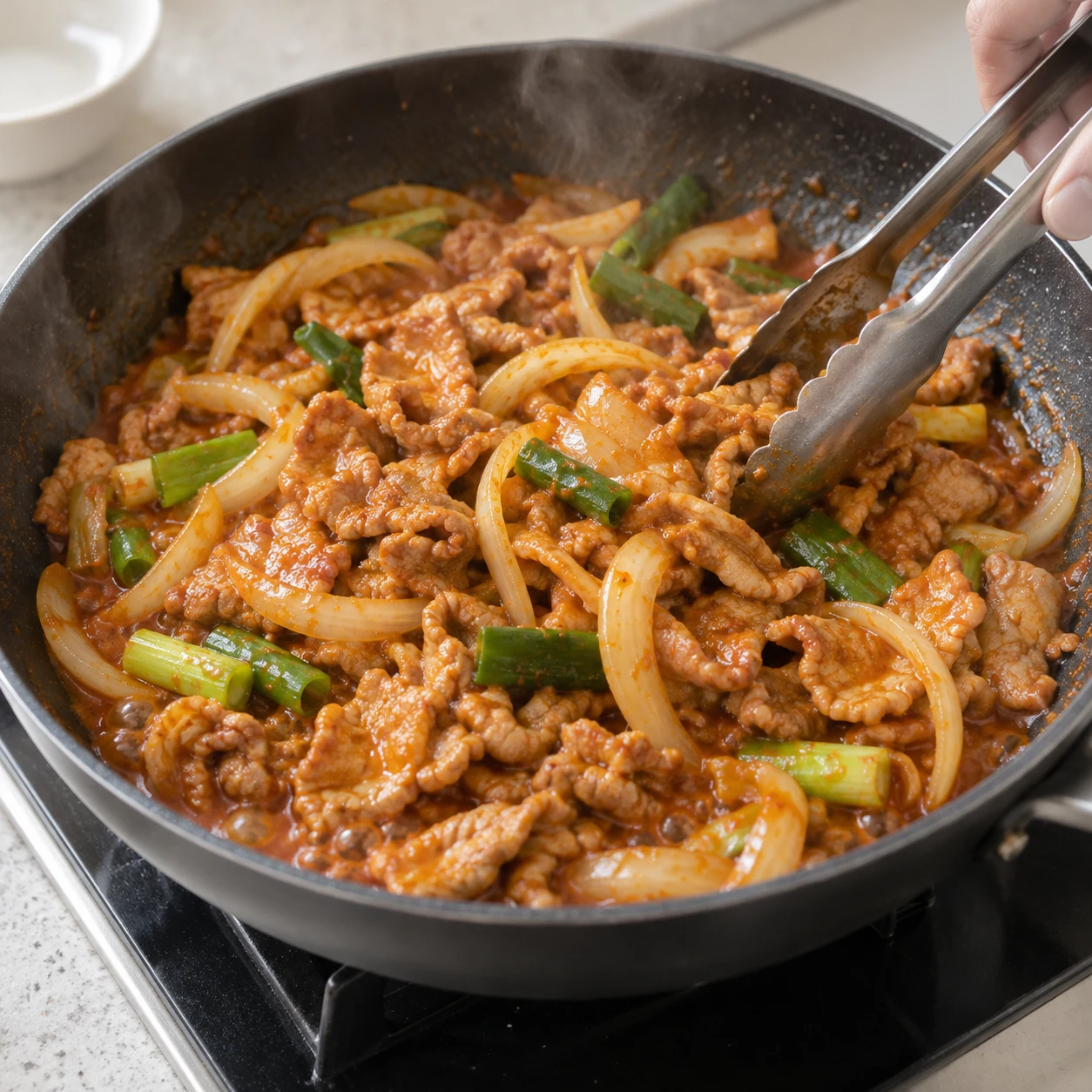
Add the onion and optional spring onion. Stir-fry for another 5–7 minutes, turning the meat and vegetables often, until the pork is cooked through and the onion is softened. If the sauce begins sticking before the meat is done, lower the heat and add water 1 level eating spoon at a time. If checking with a thermometer, pork must reach at least 63°C and rest for 3 minutes before eating; chicken replacement must reach 74°C.
-
Step 6
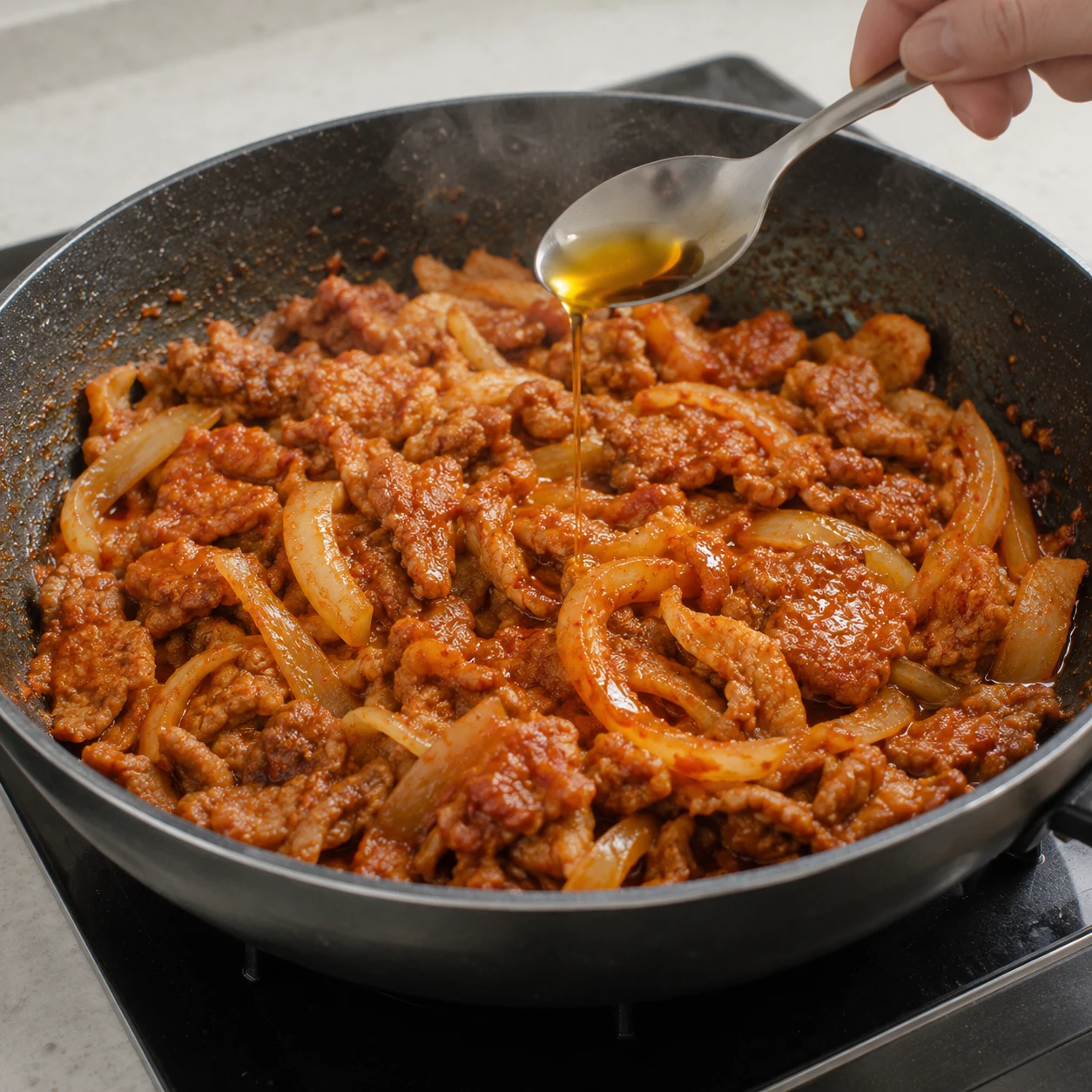
Once the meat is fully cooked, let any watery liquid bubble away for 1–2 minutes while stirring. Stop when the sauce coats the slices, before it turns black or smells burnt. Switch off the heat and mix in the optional 1 small teaspoon sesame oil. Transfer to a clean serving plate. Rest the pork for 3 minutes, and serve with rice or lettuce if desired.
Finished dish
Use thin pork shoulder for a good balance of tenderness and flavor. If you slice the pork yourself, firm it in the freezer for about 20 minutes first, then slice across the grain without freezing it solid; this extra preparation is not included in the 40-minute estimate. Gochujang varies in heat, so choose a mild product if you are new to Korean food. The cup used on this site is a small 180 ml paper cup. Eating spoons are level and approximately 15 ml; small teaspoons are approximately 5 ml. The meat is easiest to measure by dividing a labeled 600 g pack in half. Optional chili flakes and sesame oil can be left out. Use clean utensils and a clean plate for cooked meat. Refrigerate within 2 hours, or 1 hour above 32°C, in a shallow covered container. Keep at 4°C or colder for 3–4 days and reheat until steaming throughout, reaching 74°C if measured. Check gochujang and soy sauce for soy and wheat, and sesame oil for sesame.