All-purpose Ssamjang — Korean BBQ Dipping Paste
A savory soybean-and-chili dipping paste you can mix in one bowl, without a stove. Use a little with lettuce wraps, cooked meat, rice or crisp vegetable sticks.
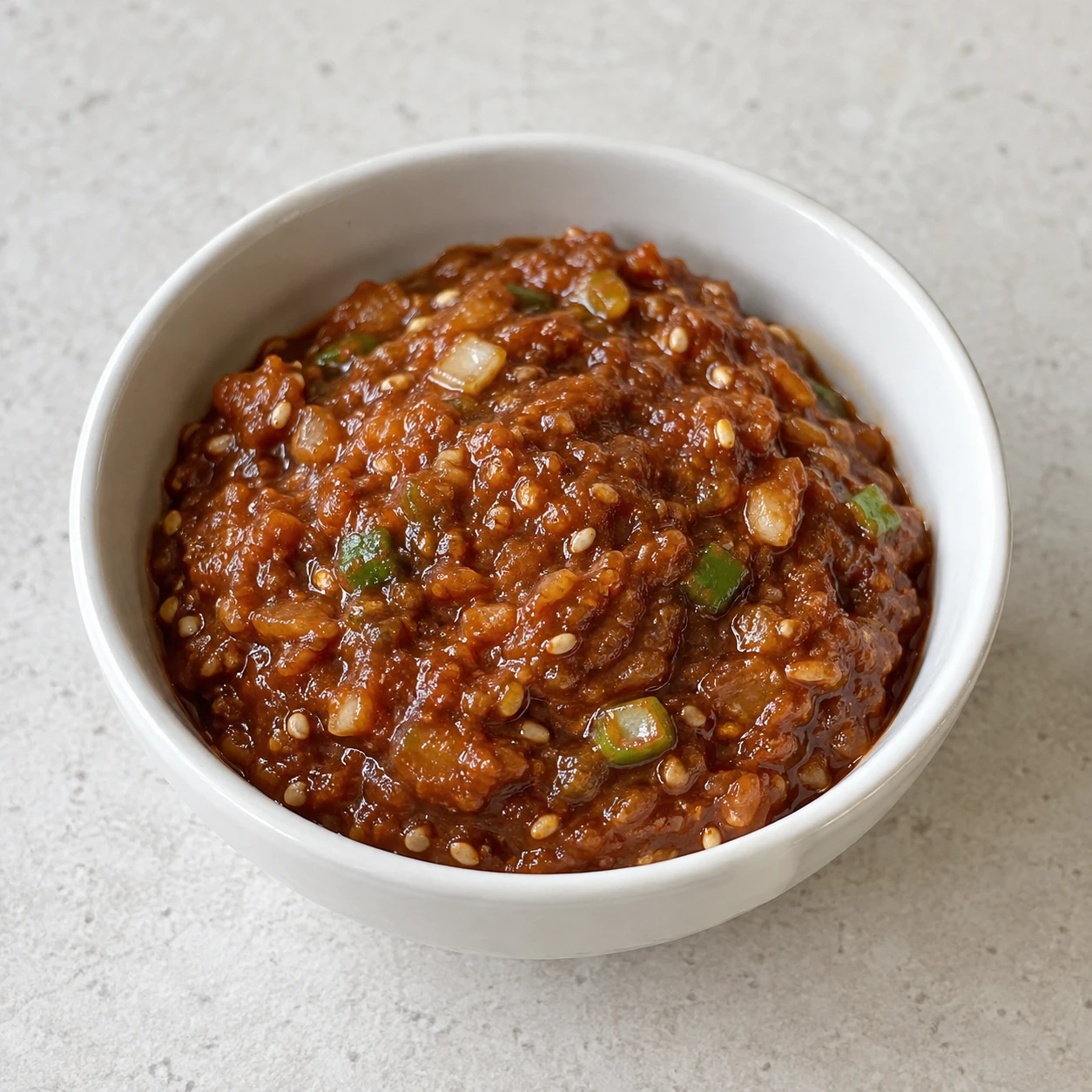
AI-generated cooking illustrations. Follow the written quantities and instructions.
Ingredients
4 servings
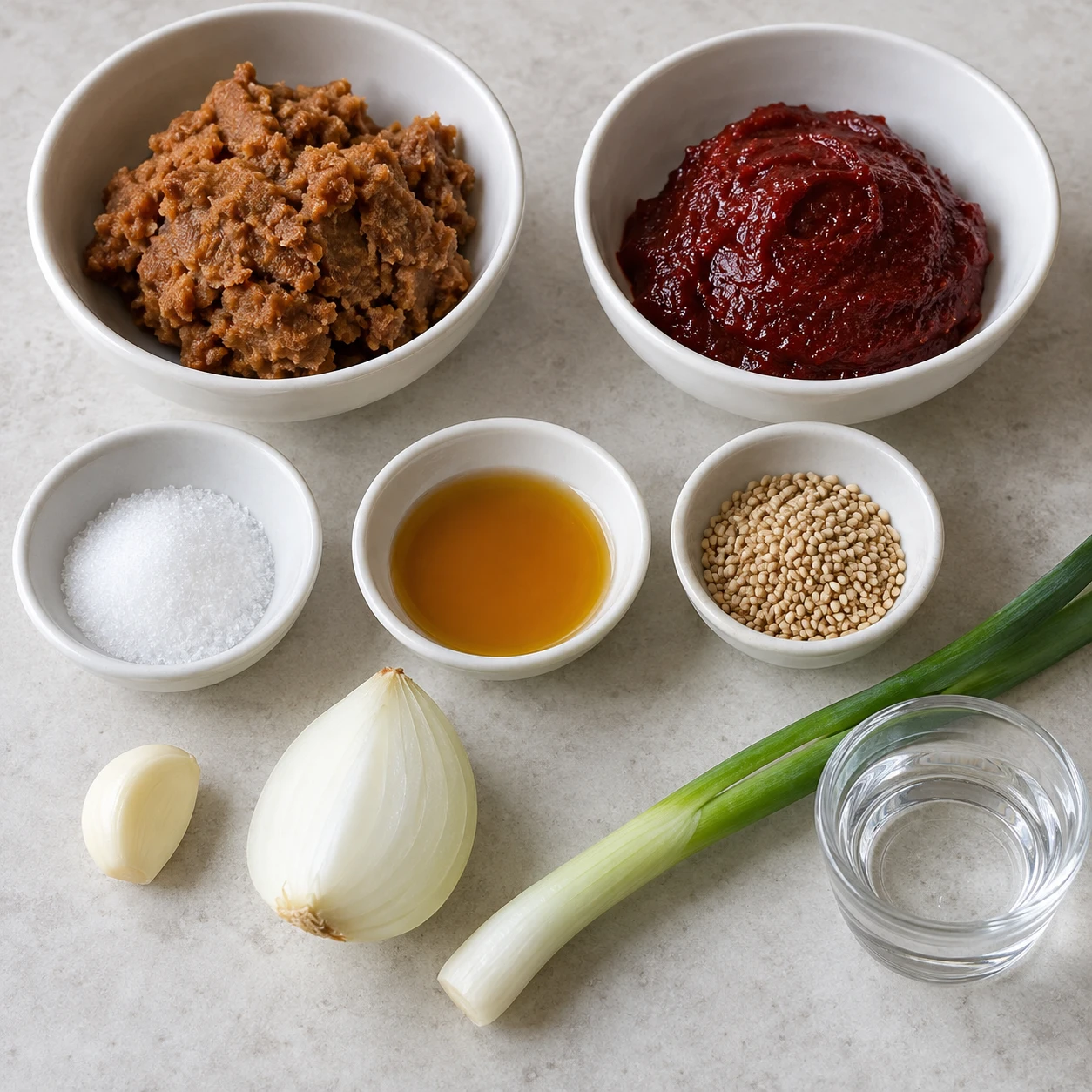
Everyday kitchen measurements
For 4 servings. Use a small 180 ml paper cup, a level eating spoon (about 15 ml) and a small teaspoon (about 5 ml).
How to fill the cup and spoons
Use the same cup and spoons throughout. Their sizes vary, so these amounts are approximate. Spoon flour in loosely and level the top without pressing. Measure vegetables after chopping, without packing them down. The amounts in g/ml are the original reference quantities. For part of a pack, use the specified pack weight and divide the contents evenly.
King Arthur Baking-
Substitute available
If Doenjang, Korean fermented soybean paste is unavailable
- Use instead
- Miso paste
- Substitute quantity
- 3 level eating spoonsReference quantity: about 54 g
Mix into step 2 instead of doenjang. Miso is usually smoother and may be sweeter; taste before adding the optional sugar. This is an accessible variation, with a different flavor from Korean doenjang.
-
Essential
The thick fermented chili paste creates the familiar ssamjang flavor. Choose a mild product. For a less spicy variation, use only ½ eating spoon; do not add watery hot sauce.
-
Optional
If raw garlic is too strong or unavailable, omit it from steps 1 and 3. The fermented pastes still give the dip plenty of flavor.
-
Optional
Leave out the onion and its preparation in step 1 if unavailable. The dip will be thicker and less sweet. Do not add extra water unless it is actually needed in step 5.
-
Optional
Skip the spring onion in steps 1 and 3 if unavailable. No other ingredient needs to be increased.
-
Optional
Taste the paste first in step 4. If it is already pleasantly sweet, or if you prefer a savory dip, omit the sugar completely.
-
Optional
Omit in step 4 if unavailable or unsuitable for you. It supplies aroma, not the base of the dip; no replacement oil is necessary.
-
Optional
Leave out in step 4 if unavailable or unsuitable. The dip is still complete; no nuts are required.
-
Optional
Only add in step 5 if the dip is too stiff to spread. Start with 1 small teaspoon and stop before it becomes runny; if the paste is already soft, leave it out.
Tap each ingredient as you prepare it. Check product labels for egg, soy, sesame, wheat, fish or shellfish where relevant.
Step-by-step cooking
-
Step 1
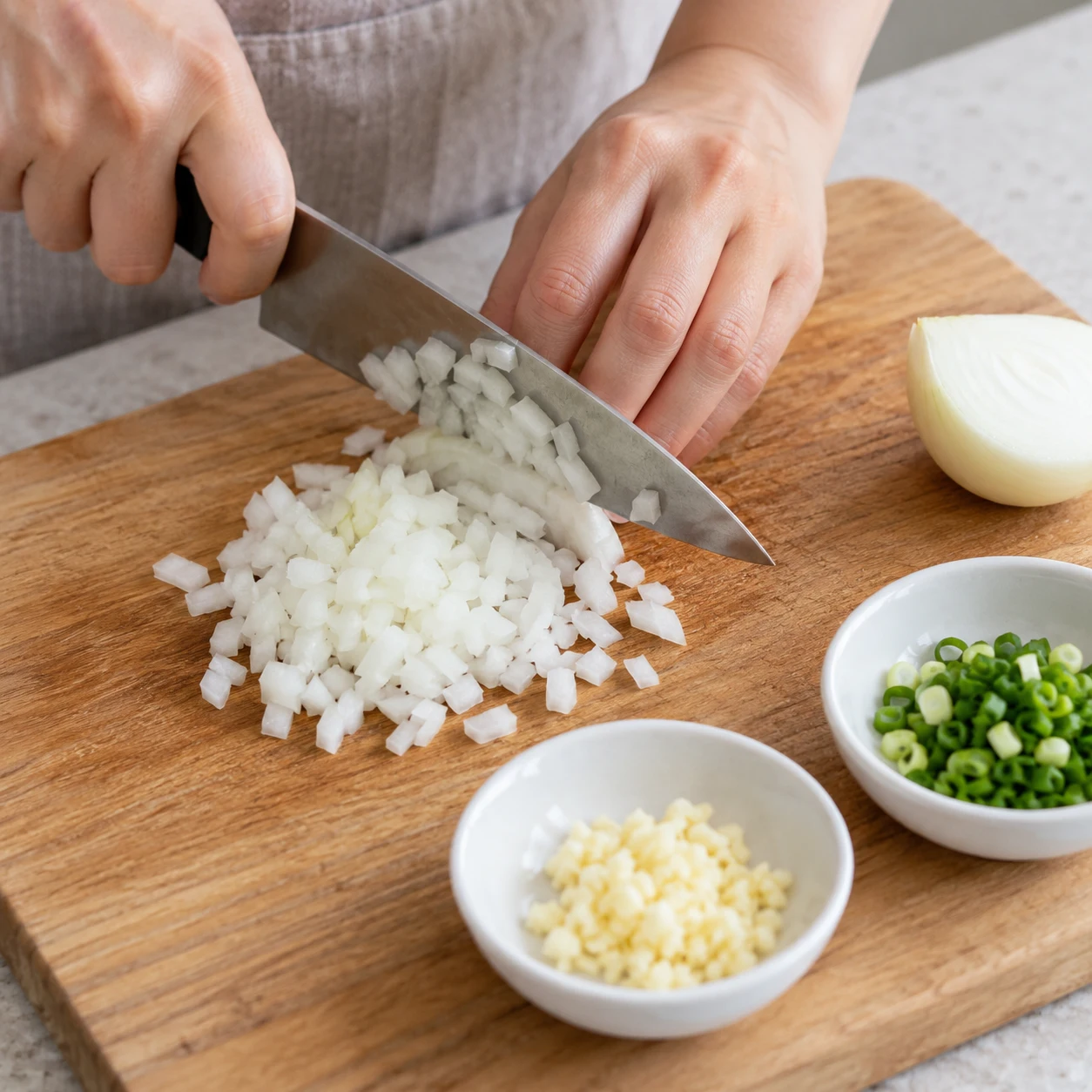
Wash and thoroughly dry the onion and spring onion. Finely chop enough onion for 2 level eating spoons and spring onion for 1 level eating spoon. Mince enough peeled garlic for 1 small teaspoon. Tiny pieces blend into the dip better than large chunks. Skip any of these optional ingredients that you are not using.
-
Step 2
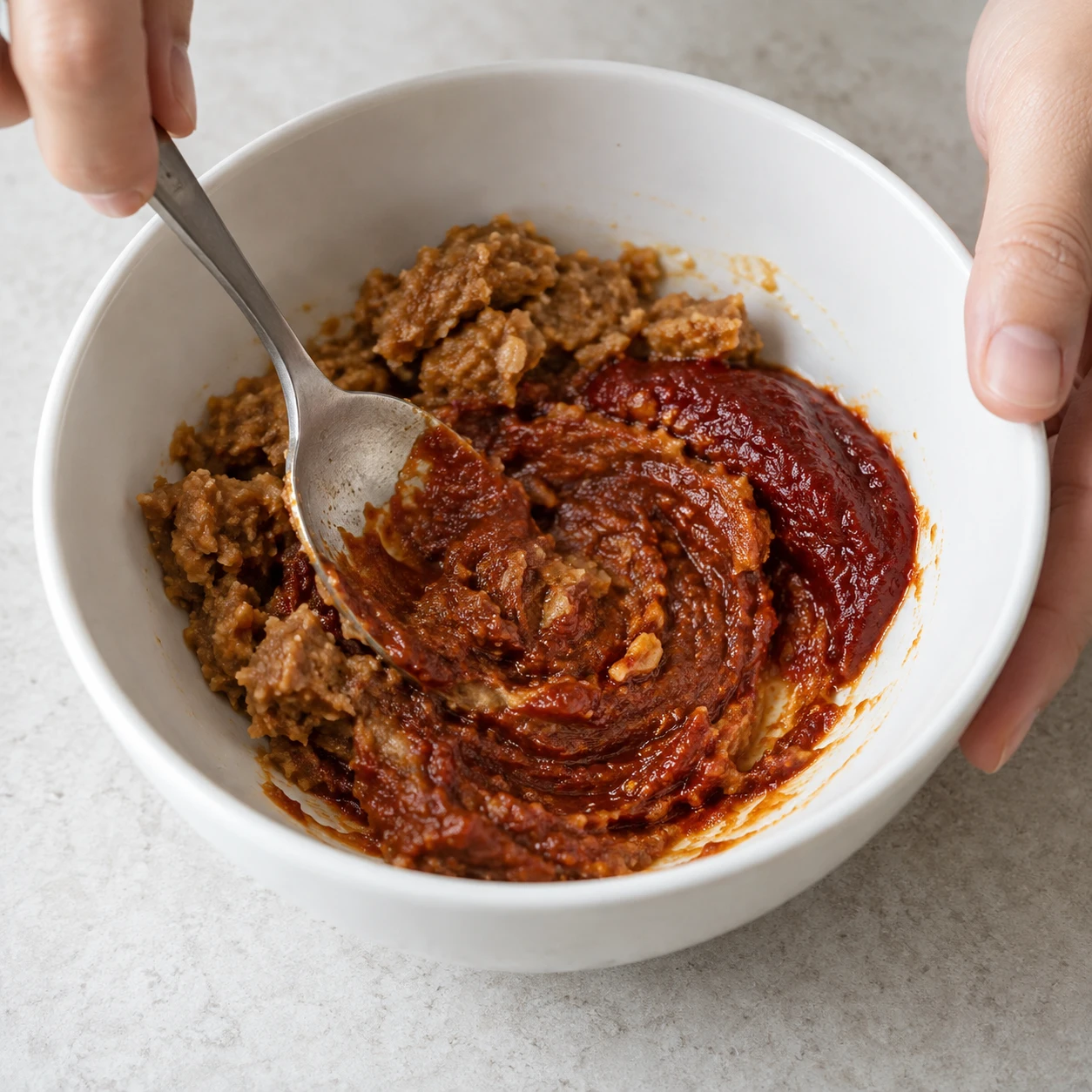
Put 3 level eating spoons doenjang and 1 level eating spoon gochujang in a clean mixing bowl. Press and stir with the back of a spoon until the two pastes are evenly combined. Choose mild gochujang for a gentler dip, or use only ½ eating spoon if you want less chili heat.
-
Step 3
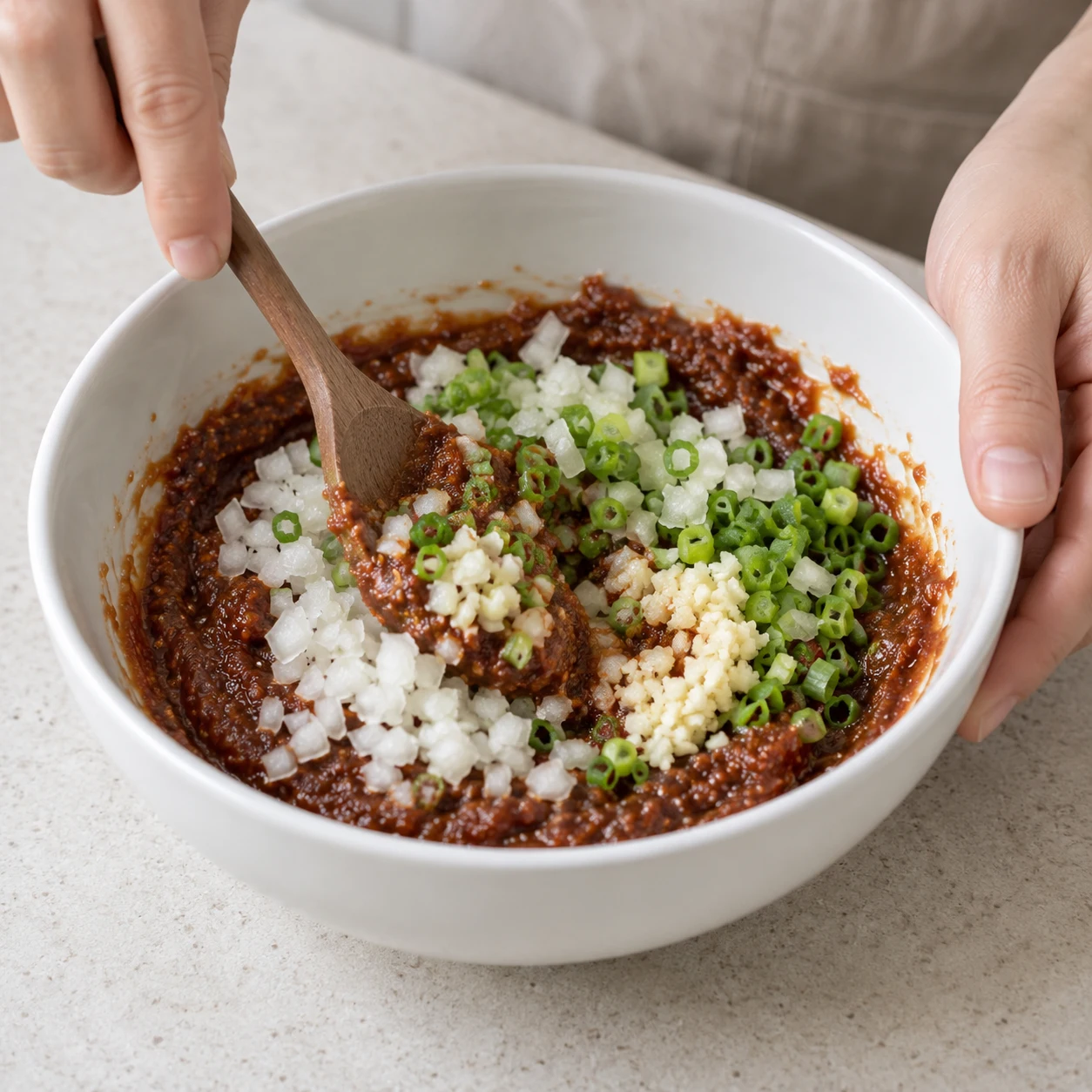
Stir in the prepared onion, spring onion and garlic, if using. Scrape the sides and bottom of the bowl so the chopped vegetables are spread evenly through the paste. This recipe is mixed cold; no frying pan, burner or cooking is needed.
-
Step 4
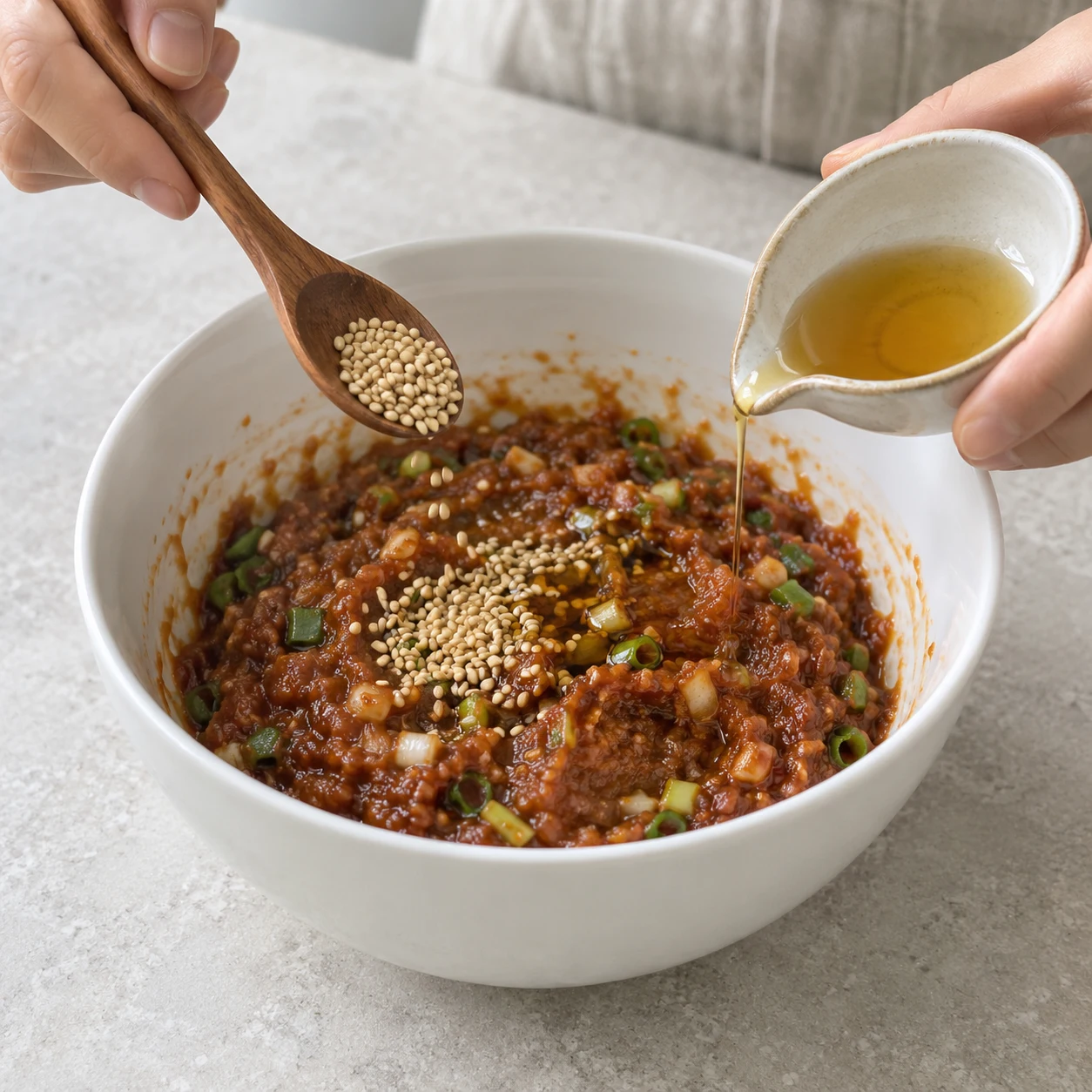
Taste a tiny amount with a clean spoon. Add the optional 1 small teaspoon sugar only if you want it sweeter. Stir in the optional 1 small teaspoon sesame oil and 1 small teaspoon toasted sesame seeds. Do not add salt or soy sauce: the fermented pastes are already salty.
-
Step 5
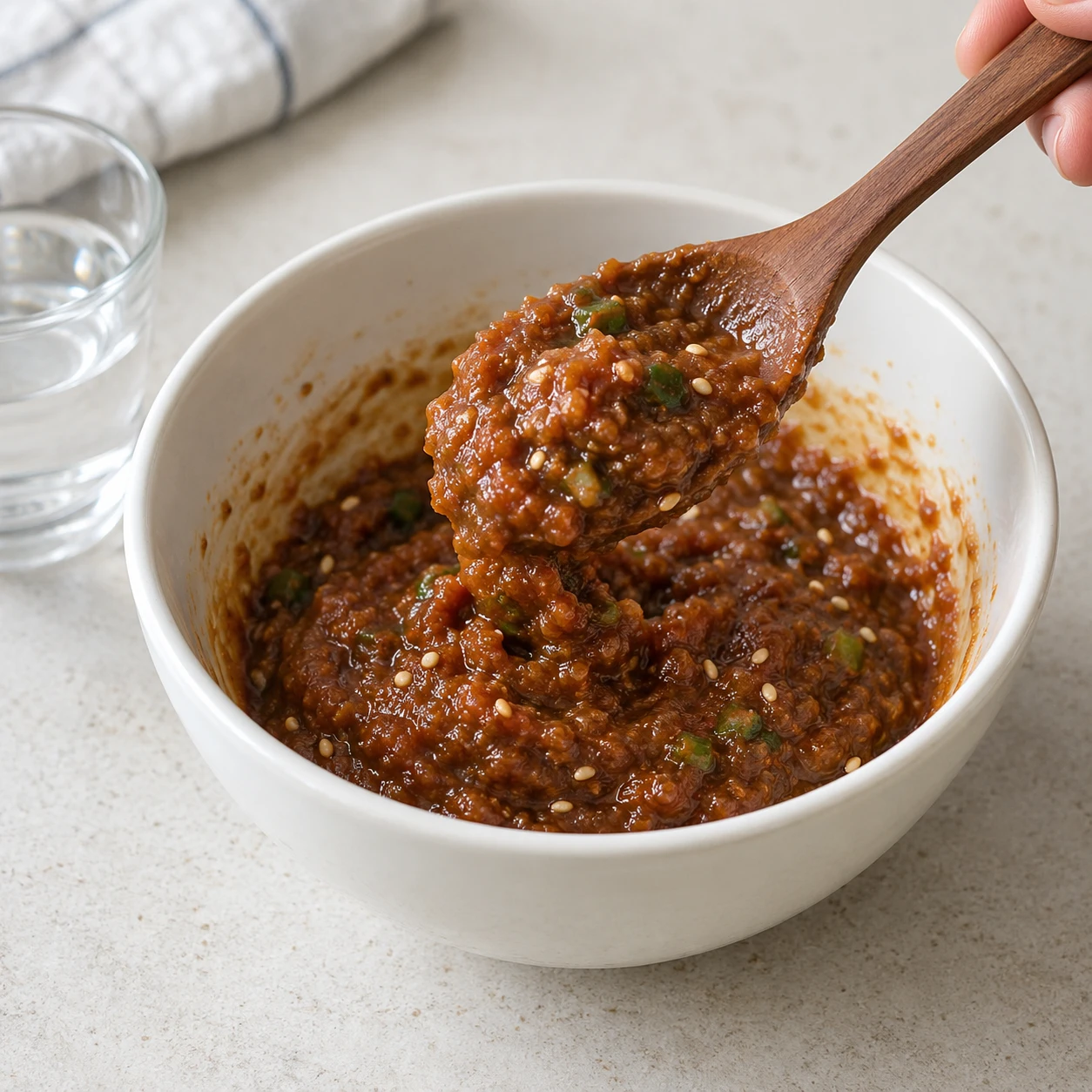
Check the texture by spreading a little paste with a spoon. It should be thick enough to stay on a vegetable stick. If it is unusually stiff, stir in 1 small teaspoon water, then a second only if needed. Do not thin it into a pourable sauce. The onion releases moisture as it sits, so keep added water modest.
-
Step 6
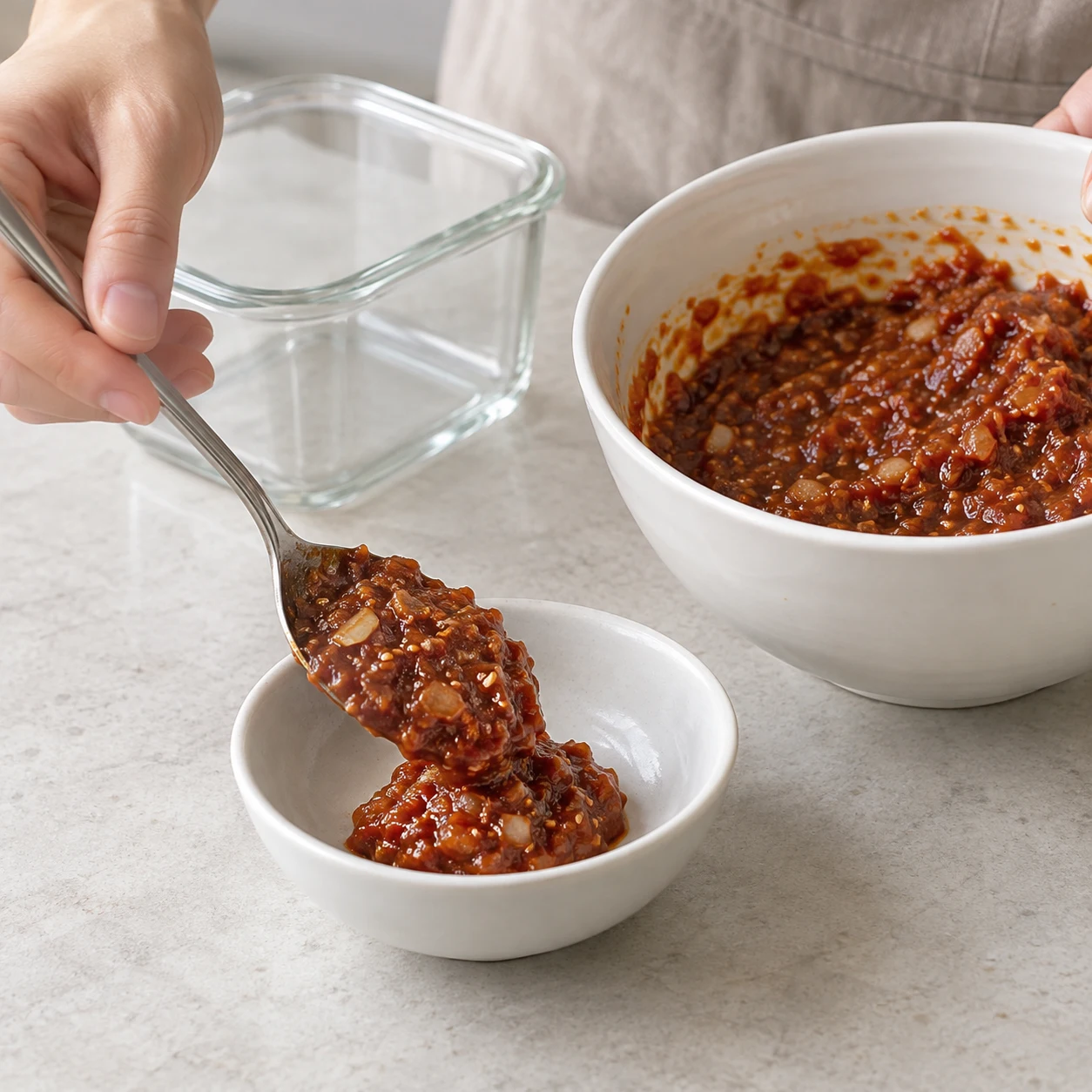
Spoon the finished dip into a small serving bowl. Start with about ½ small teaspoon in a lettuce wrap with cooked meat or rice, or use it with washed cucumber and carrot sticks. Take out only the portion you need, use a clean serving spoon, and refrigerate the remainder promptly in a clean covered container.
Finished dish
This is a versatile condiment, not a sauce that must be cooked. For a simple lettuce wrap, place a little cooked rice and cooked meat in a washed, dried lettuce leaf, add a small dab of ssamjang and fold it around the filling. The dip is concentrated, so begin with a little and add more to taste. Serving vegetables, rice and meat are suggestions and are not included in the ingredient quantities. Use level eating spoons of about 15 ml and small teaspoons of about 5 ml. A small paper cup on this site means 180 ml, although no cup is needed for this recipe. You can omit the onion, spring onion, garlic, sugar and sesame additions independently; read the omission advice next to each one. Because fresh chopped vegetables are added, treat this homemade mixture as perishable rather than like an unopened jar of commercial paste. Refrigerate within 2 hours, or within 1 hour above 32°C; keep at 4°C or colder and use within 3–4 days. Do not dip a used eating spoon into the storage container. Check doenjang and gochujang for soy and wheat; omit both sesame additions if unsuitable.