Roasted burdock tea (ueong-cha)
Fresh burdock is scrubbed, thinly sliced, thoroughly dried and gently roasted before simmering into an unsweetened amber tea. Includes checks for dry slices and a ready-roasted shortcut.

Ingredients
4 servings

Everyday kitchen measurements
For 4 servings. Use a small 180 ml paper cup, a level eating spoon (about 15 ml) and a small teaspoon (about 5 ml).
How to fill the cup and spoons
Use the same cup and spoons throughout. Their sizes vary, so these amounts are approximate. Spoon flour in loosely and level the top without pressing. Measure vegetables after chopping, without packing them down. The amounts in g/ml are the original reference quantities. For part of a pack, use the specified pack weight and divide the contents evenly.
King Arthur Baking-
Substitute available
If Fresh cultivated edible burdock root is unavailable
- Use instead
- Plain commercial dried roasted burdock tea pieces
- Substitute quantity
- 3 level tablespoons (15 g)Reference quantity: 15 g
Use 15 g plain ready-roasted burdock pieces, not powder or a sweetened mix. Skip washing, slicing, drying, roasting and cooling. Start at step 6 with 900 ml water and up to 180 ml hot reserve; simmer 15 minutes. Total time becomes about 25 minutes instead of 140. Follow stricter package instructions.
-
Essential
Required for this recipe; use the listed amount.
Tap each ingredient as you prepare it. Check product labels for egg, soy, sesame, wheat, fish or shellfish where relevant.
Step-by-step cooking
Check off a completed step to move to the next one. After the last step, you will move to the finished dish.
Completed steps are saved in this browser. Start over to clear this recipe’s progress.
-
Step 1
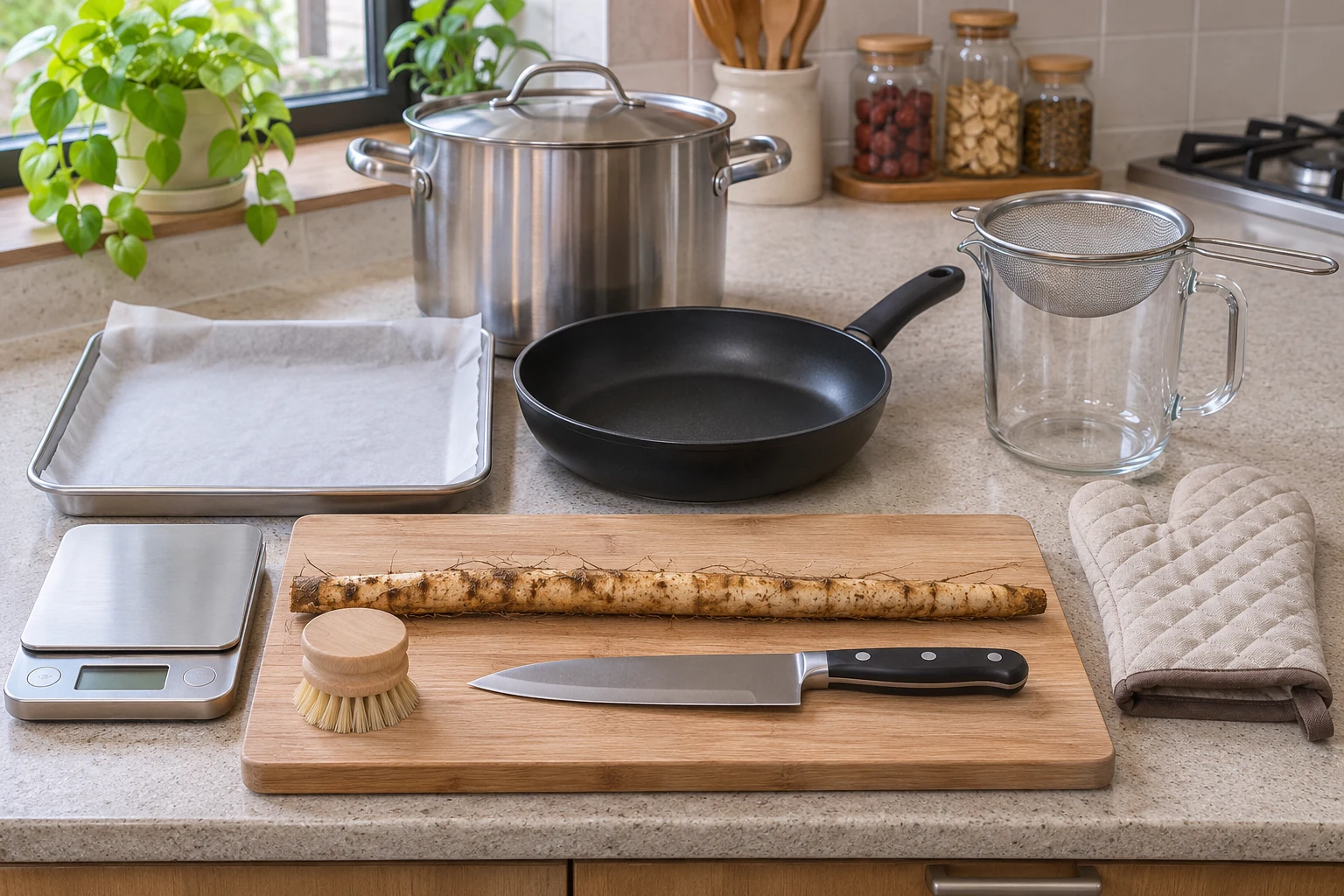
Allow about 140 minutes: 15 for preparation, around 90 for oven drying, 8 for roasting, 10 for cooling and 17 for brewing and straining. Set out a vegetable brush, sharp knife, stable board, scale, parchment-lined tray, oven mitts, dry frying pan, 1.5-liter pot and fine strainer over a heatproof jug. Buy firm cultivated food-grade burdock; do not use unidentified wild roots. Reject moldy, slimy or rotten roots.
-
Step 2
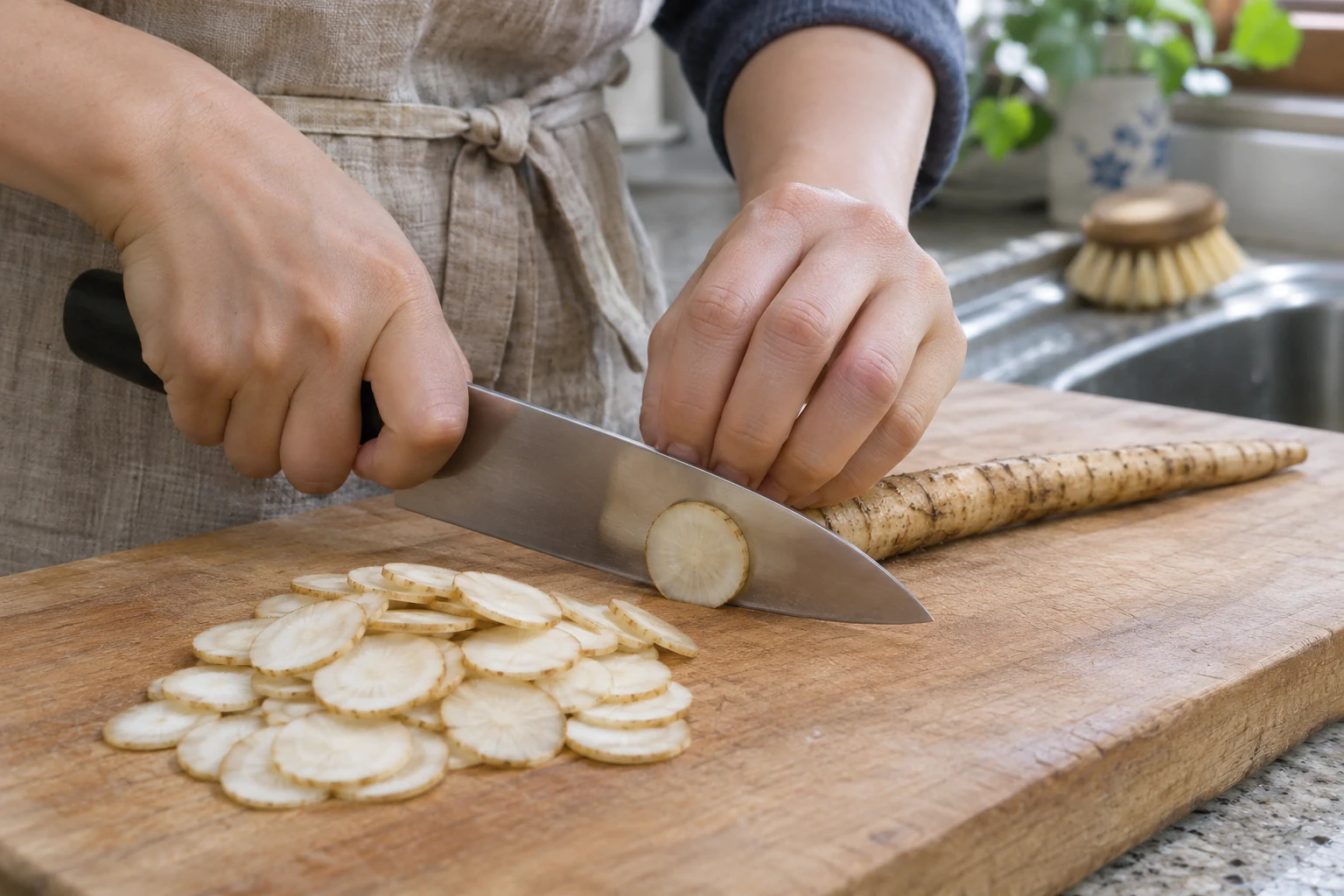
Wash your hands. Scrub the whole root under running water, including grooves. Trim the dry ends and small bruises. Lightly scrape only tough patches with a spoon; clean thin skin may remain. Rinse again, weigh 100 g and pat dry. With fingertips tucked back, cut crosswise into even 2 mm slices. Split a thick rolling root lengthwise first to make a stable flat side. Do not soak in vinegar water; this tea keeps the root aroma.
-
Step 3
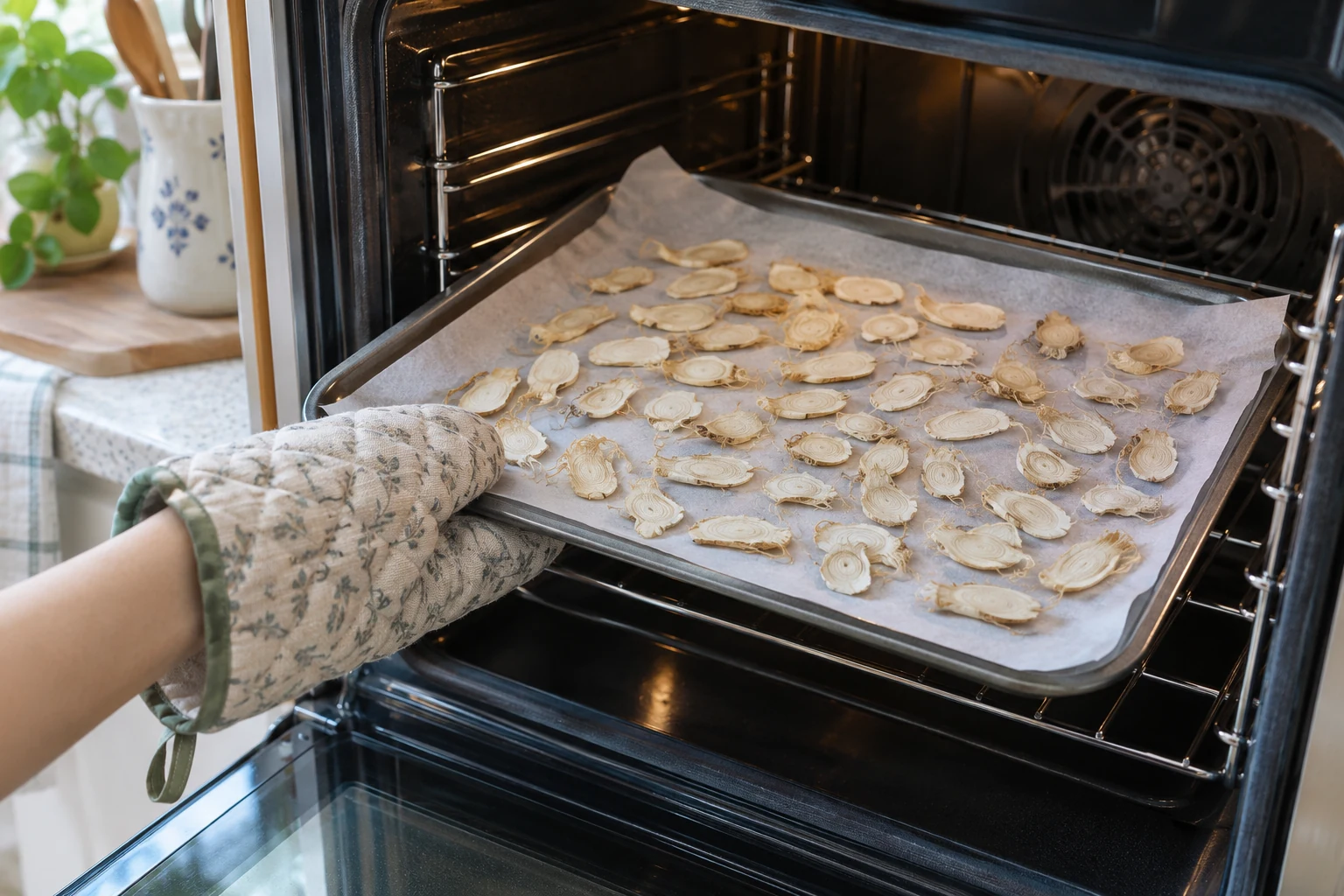
Heat the oven to 100°C. Spread slices in one layer without overlaps on the tray, on the middle rack. Dry for about 90 minutes, turning and separating at 30 and 60 minutes; start checking at 60 because ovens differ. They should shrink and curl rather than brown rapidly. Test a cooled slice: it must snap brittle, not bend with a damp center. If flexible, dry in further 15-minute blocks at 100°C and test again. Lower heat if browning, use mitts and attend the oven.
-
Step 4
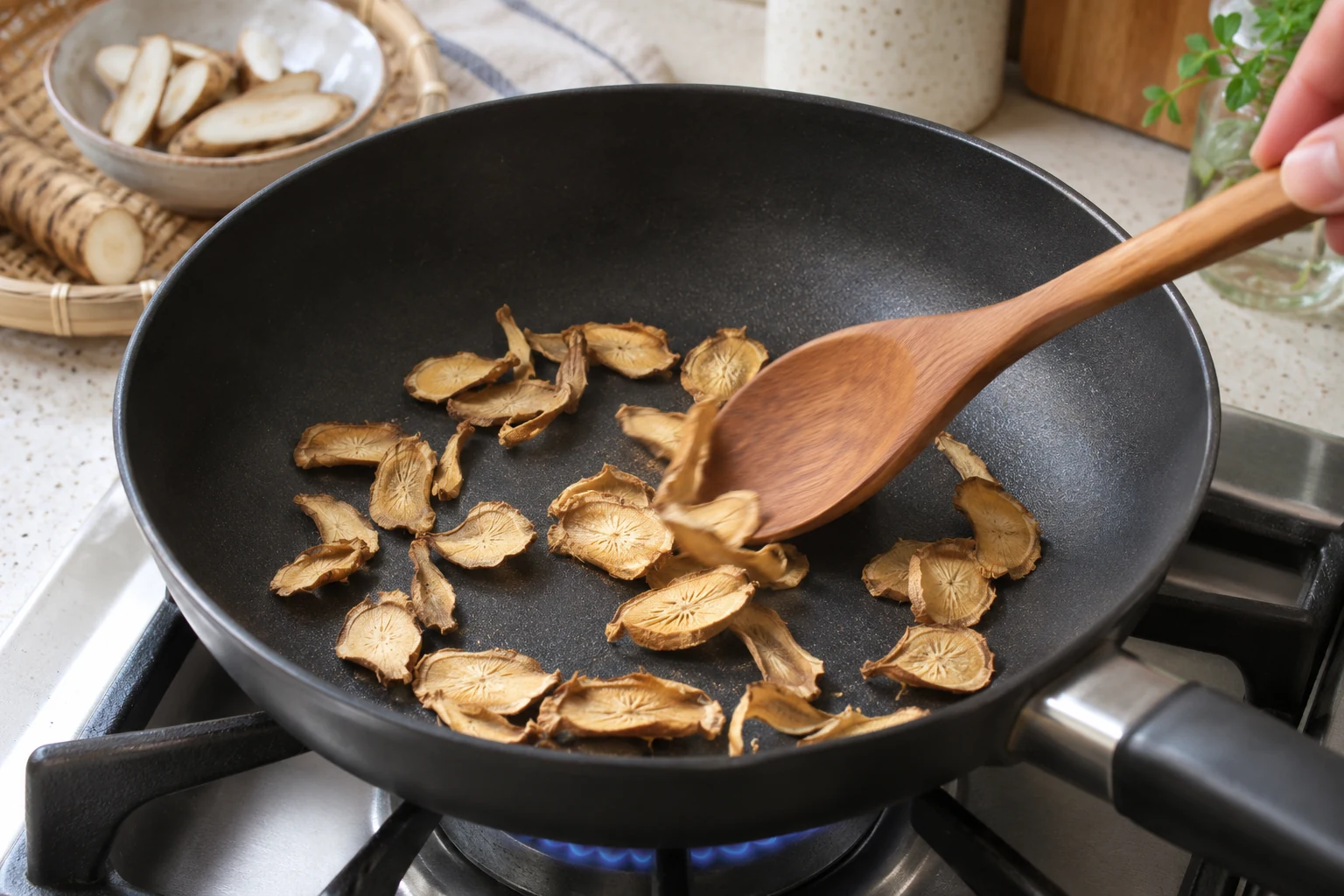
Put the dried slices in a completely dry pan with no oil. Roast on LOW heat for 6–8 minutes, stirring and tossing constantly, until light golden brown with a nutty, earthy aroma. Lower the heat if they color unevenly. Black edges or smoke mean burning and bitter tea. Turn off and transfer immediately to a clean dry tray so the hot pan does not keep roasting them.
-
Step 5
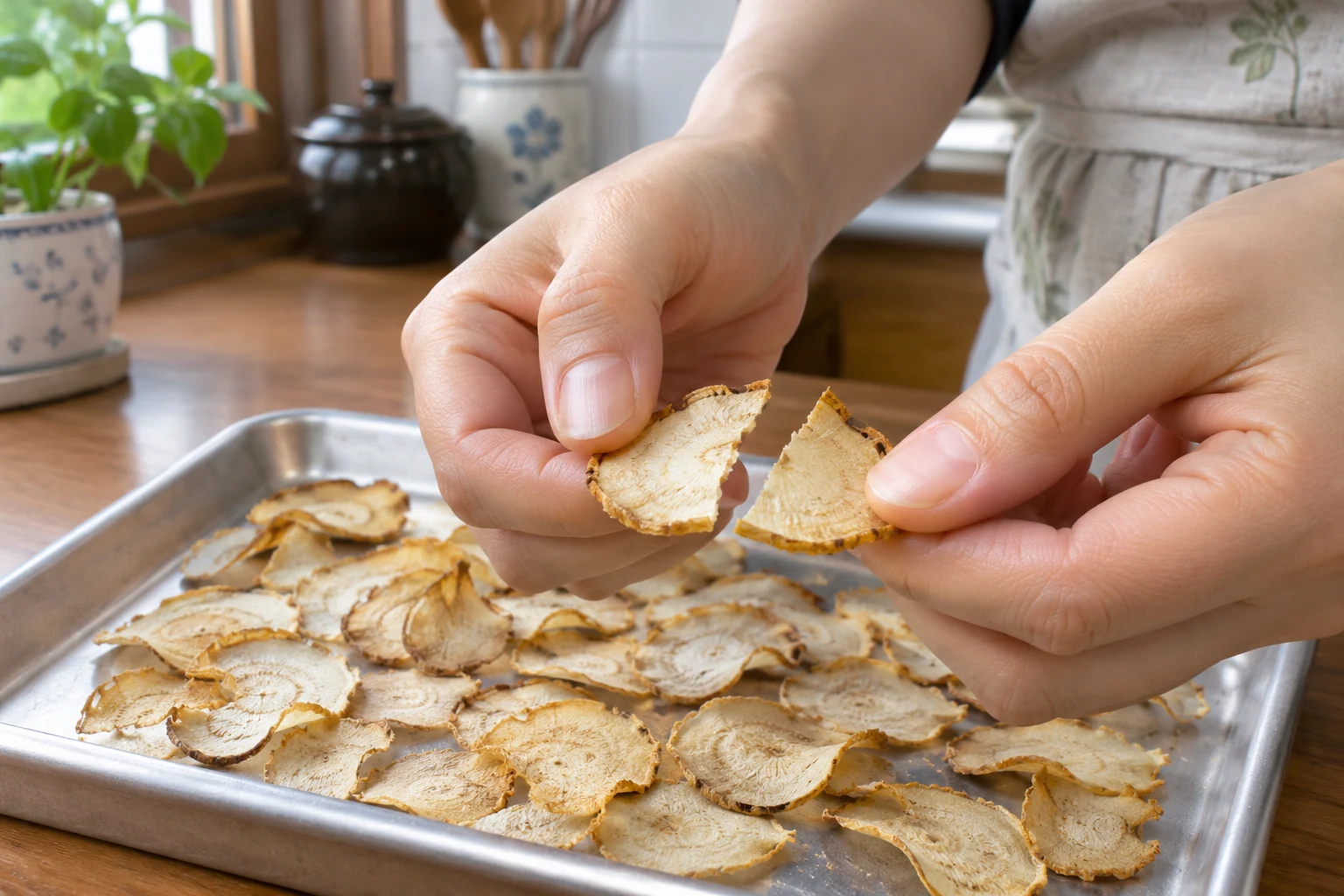
Cool in one layer for 10 minutes. A completely cooled slice should snap or crumble, with no leathery damp center. If it still bends, return to the 100°C oven for 15 minutes, cool and retest; refresh on LOW pan heat for 1 minute only if necessary. The dry yield is often 15–25 g but varies: use the entire batch made from the fresh 100 g. Do not seal warm pieces in a jar or assume they are shelf-stable.
-
Step 6
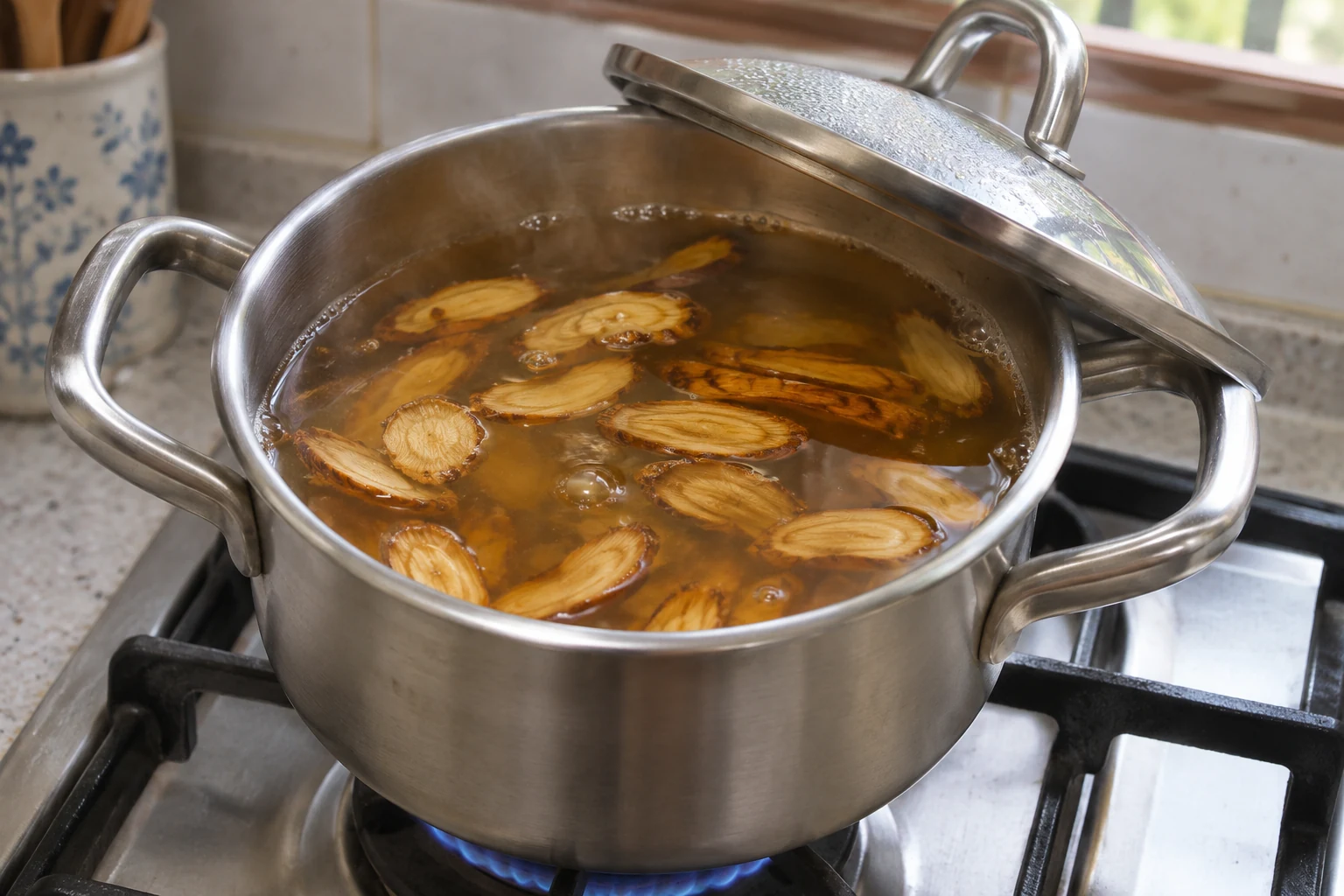
Put all cooled roasted pieces and 5 paper cups water (900 ml) into the pot. Bring to a full boil over medium-high heat, then lower to a gentle simmer for 15 minutes with the lid ajar. Small bubbles should rise in clear amber liquid. If water drops quickly, lower the heat and add only from the measured HOT reserve; never boil the pot dry.
-
Step 7
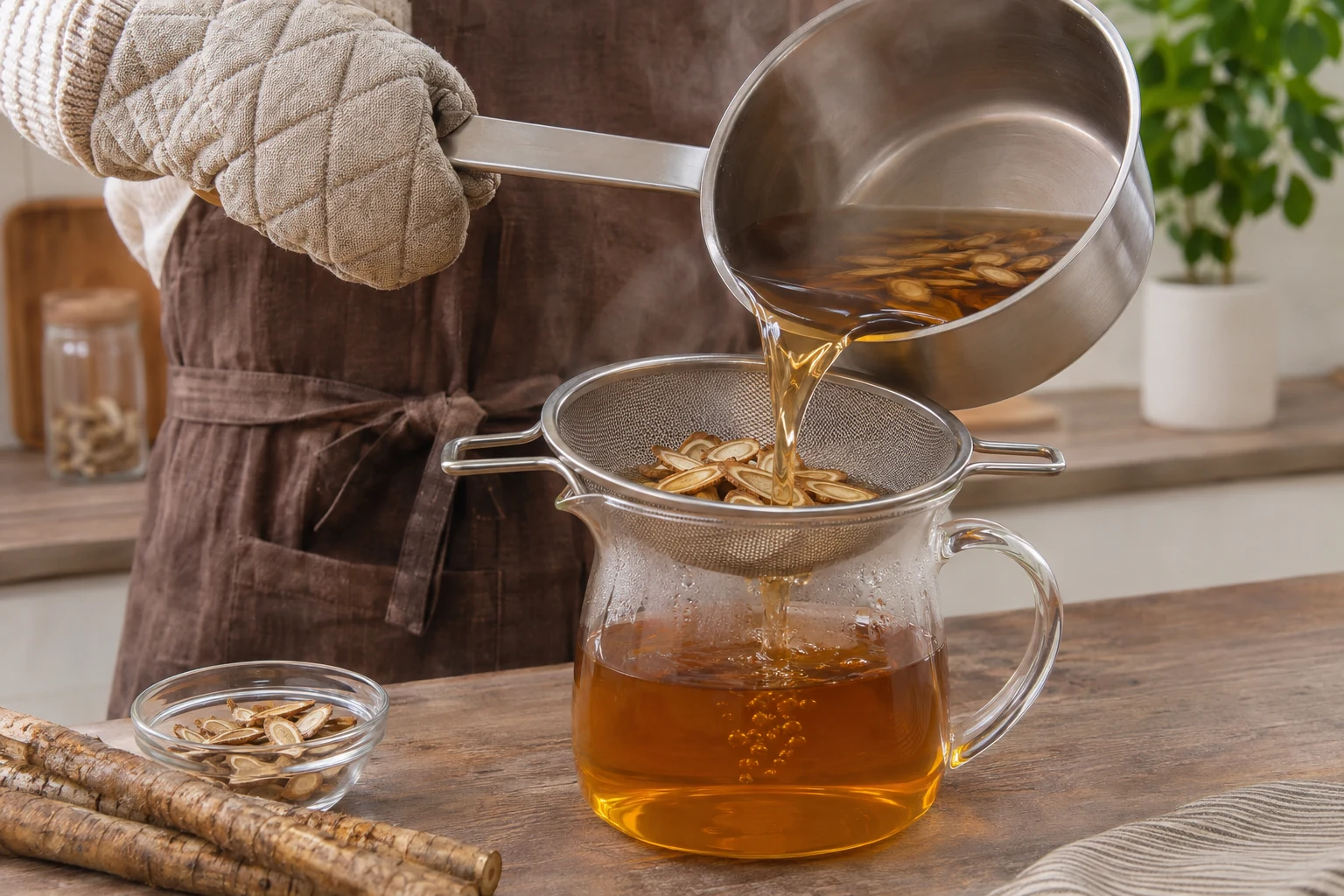
Turn off and let bubbles settle for 30 seconds. Secure a fine strainer over a heatproof jug on a stable counter. With an oven mitt, pour slowly away from your face and hands. Discard the wet spent roots; do not keep them on the counter for tomorrow. Taste a spoonful only after cooling. If too strong, dilute with remaining hot reserve, 1 tablespoon at a time. Strain out every woody chip.
-
Step 8
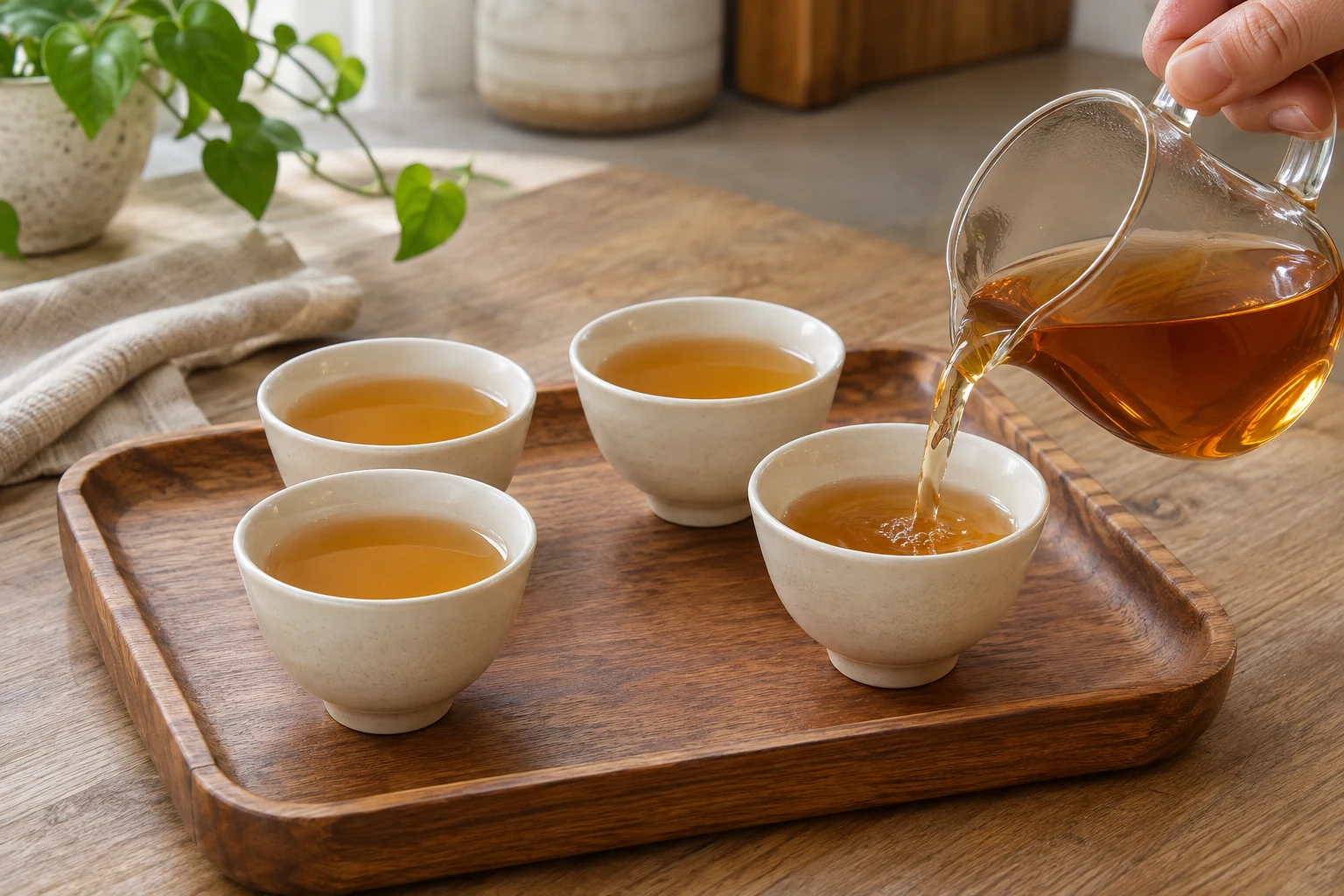
Divide into four small cups, roughly 180–220 ml each depending on evaporation and dilution. Let cool to comfortably warm before drinking. Expect a light roasted root flavor, not smoke or harsh bitterness. Serve plain, without honey, lemon or garnish. Discard a burnt batch instead of masking it. For cold tea, cool promptly and refrigerate; never leave warm tea out overnight.


Finished dish
Measures: tablespoon 15 ml, teaspoon 5 ml, paper cup 180 ml. The 100 g is FRESH root, not dried tea; brewing water is 900 ml plus up to 180 ml reserve. Judge dryness on a cooled slice, not the clock. Refrigerate brewed tea in shallow covered containers at 4°C or below within 2 hours, or 1 hour above 32°C; use within 2 days. Freeze any unused fully cooled roasted pieces promptly in a sealed container; this home drying method does not establish safe room-temperature storage.
Related recipes


Enjoy every bite
How to enjoy it
Sip comfortably warm between small bites of a Korean sweet; the tea is unsweetened. Keep four small cups rather than serving it scalding in one large mug.

