Gaeseong syrup-glazed rice cakes (Gaeseong juak)
Make twelve small fried rice cakes with moist glutinous rice flour and makgeolli, then coat them in ginger rice syrup. A low-temperature start lets the dough expand before the crust turns golden. Four dessert portions of three cakes, about 150 minutes including resting and syrup coating.

Ingredients
4 servings

Everyday kitchen measurements
For 4 servings. Use a small 180 ml paper cup, a level eating spoon (about 15 ml) and a small teaspoon (about 5 ml).
How to fill the cup and spoons
Use the same cup and spoons throughout. Their sizes vary, so these amounts are approximate. Spoon flour in loosely and level the top without pressing. Measure vegetables after chopping, without packing them down. The amounts in g/ml are the original reference quantities. For part of a pack, use the specified pack weight and divide the contents evenly.
King Arthur Baking-
Essential
Required for this recipe; use the listed amount.
-
Essential
Required for this recipe; use the listed amount.
-
Essential
Required for this recipe; use the listed amount.
-
Essential
Required for this recipe; use the listed amount.
-
Essential
Required for this recipe; use the listed amount.
-
Essential
Required for this recipe; use the listed amount.
-
Essential
Required for this recipe; use the listed amount.
-
Essential
Required for this recipe; use the listed amount.
-
Essential
Required for this recipe; use the listed amount.
-
Substitute available
If Honey is unavailable
- Use instead
- Thick rice syrup
- Substitute quantity
- 2 tablespoons (42 g)Reference quantity: 42 g
If honey is unavailable, add an extra 2 tablespoons thick rice syrup, weighed to 42 g, at the same syrup-making stage. Keep the 90 ml water and 5-minute low simmer unchanged. The coating will have less honey aroma.
-
Essential
Required for this recipe; use the listed amount.
-
Optional
May be omitted without changing the other quantities.
-
Optional
May be omitted without changing the other quantities.
-
Optional
May be omitted without changing the other quantities.
Tap each ingredient as you prepare it. Check product labels for egg, soy, sesame, wheat, fish or shellfish where relevant.
Step-by-step cooking
Check off a completed step to move to the next one. After the last step, you will move to the finished dish.
Completed steps are saved in this browser. Start over to clear this recipe’s progress.
-
Step 1
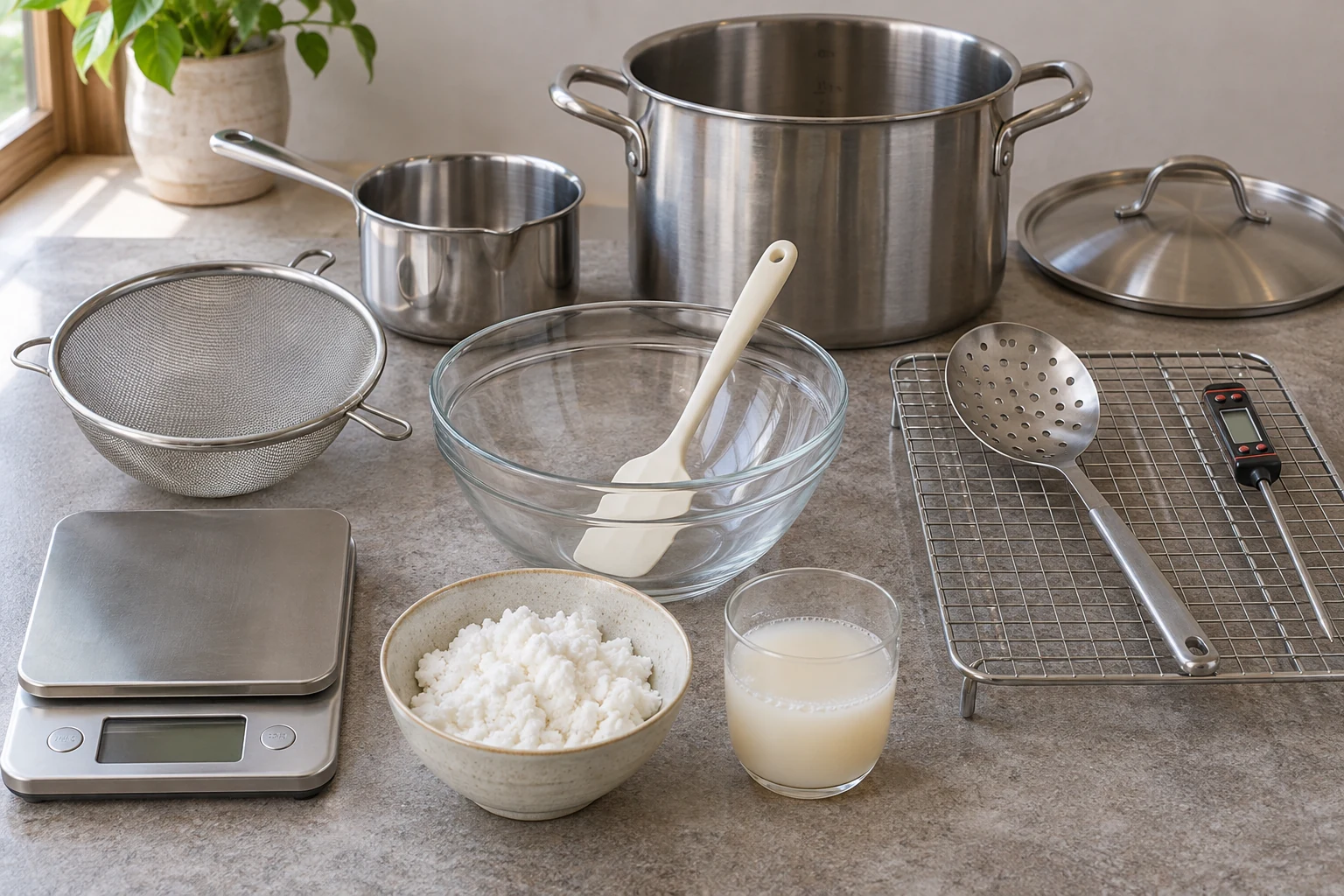
Allow about 25 minutes preparation, 30 minutes dough rest, 50 minutes frying in four batches, 30 minutes syrup coating and 15 minutes draining; prepare syrup during the rest. Use a scale, fine sieve, bowl, spatula, small syrup pan, heavy 20 cm saucepan at least 3 litres deep, frying thermometer, slotted spoon and rack. Buy unsalted moist wet-milled glutinous rice flour, often frozen; thaw covered in the refrigerator beforehand if needed. It should clump lightly when squeezed. Ordinary dry flour, non-glutinous rice flour and premixed doughnut flour need different formulas. Measure the listed 200 g after thawing. This dough uses makgeolli and has no added yeast or baking powder.
-
Step 2
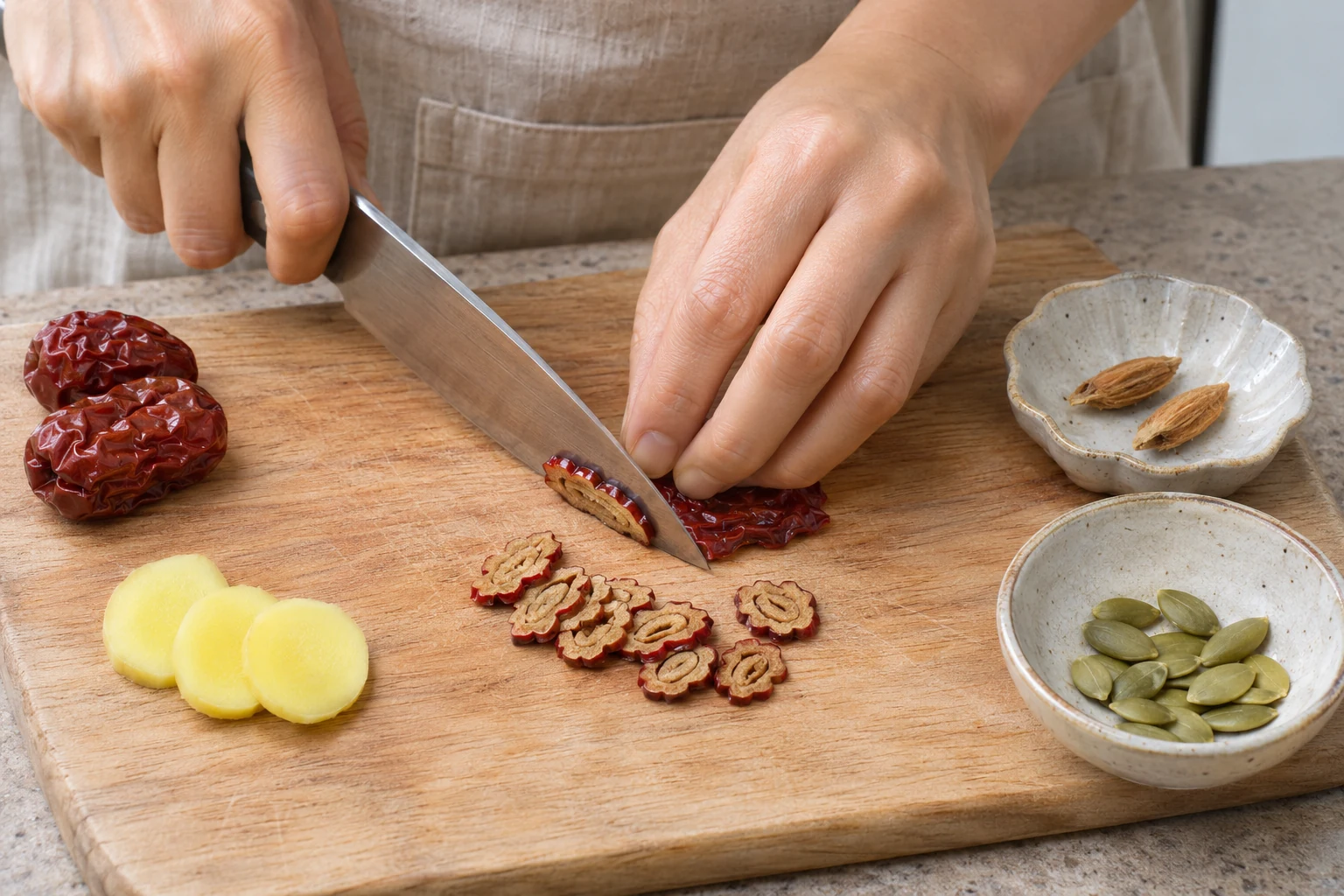
Wash the ginger under running drinking water, scrub away soil, peel thinly and cut three coins about 2 mm thick; weigh 6 g. If using dried jujubes, inspect for mold, rinse briefly, dry thoroughly, slit lengthwise and remove every hard stone. Unroll the flesh, then cut very thin strips or little rolled slices for decoration. Use ready-shelled food-grade pumpkin seeds without shells; pick out damaged pieces. Keep the dry garnishes away from the frying pan so no water falls into hot oil.
-
Step 3
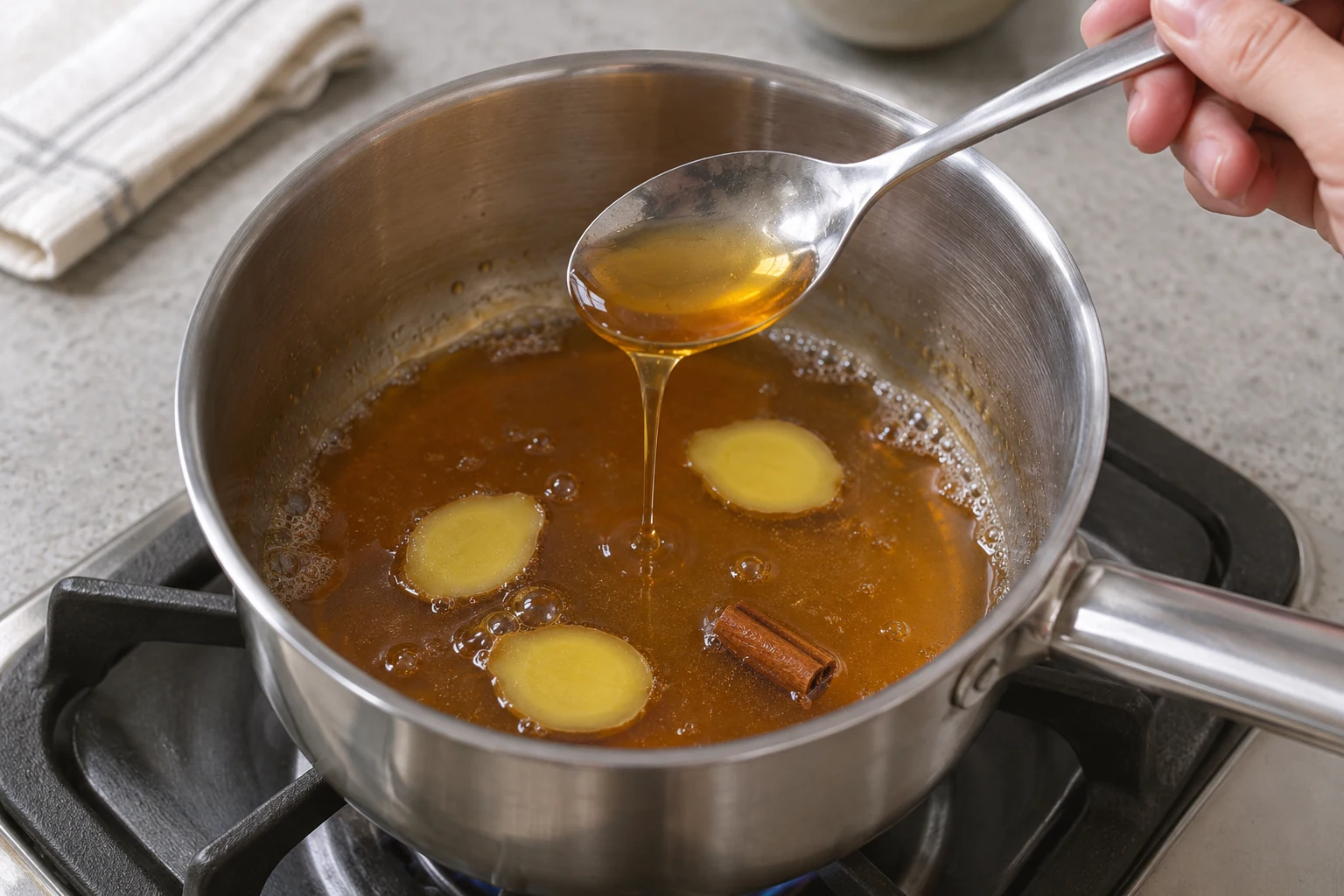
Put 12 tablespoons thick rice syrup (240 g), 6 tablespoons water (90 ml), 2 tablespoons honey (42 g), the ginger and optional cinnamon into the small saucepan. Warm over medium-low heat, stirring only until combined. When it gently bubbles, simmer on low for 5 minutes, then turn off. Let cool until barely warm, about 35–40°C; remove the ginger and cinnamon before coating. The syrup should pour in a slow ribbon rather than set like hard candy. If reduced too far, return only enough of the evaporated water to make it fluid, adding hot drinking water 1 teaspoon at a time. Keep covered away from the oil.
-
Step 4
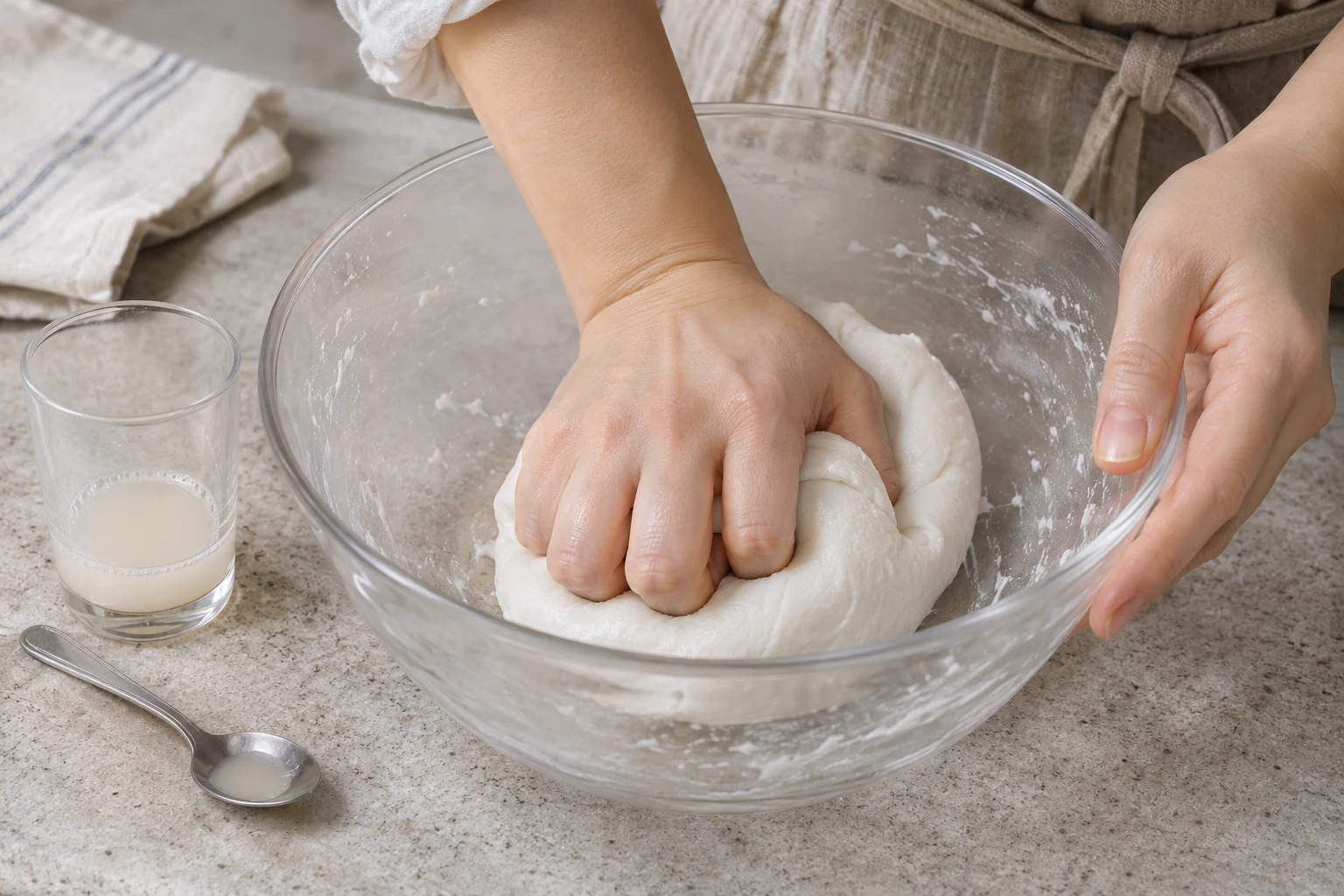
Sift the 200 g wet glutinous flour, 35 g wheat flour and ¼ teaspoon salt into a bowl, breaking up moist lumps. Stir in the dough sugar. Shake the closed makgeolli bottle gently, open slowly, measure 3 tablespoons and stir into the flour. Add 2 teaspoons boiling drinking water with a spatula. Once comfortably warm to touch, knead for 3–4 minutes into a soft clay-like dough. If the surface cracks when rolled, knead in the reserved hot water ½ teaspoon at a time, at most 1 teaspoon (5 ml). It must hold its shape without flowing or sticking heavily. Cover and refrigerate for 30 minutes; this is a hydration rest, not a long fermentation.
-
Step 5
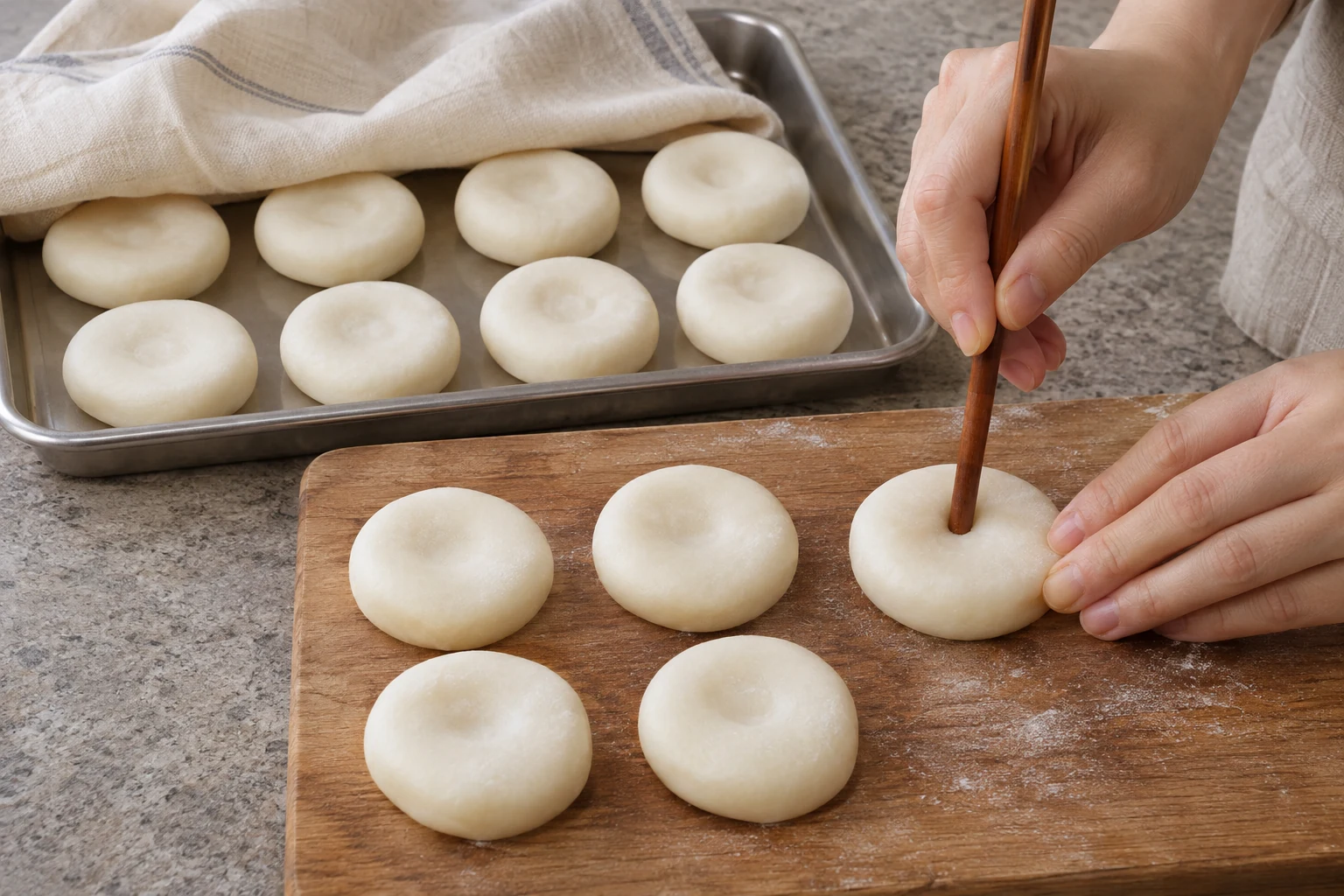
Take out the rested dough and knead briefly. Divide into twelve equal portions, roughly 26–27 g each depending on water used; keep unused portions covered. Roll each into a smooth ball, then gently flatten to about 4 cm wide and 1.5 cm thick. Press a shallow central dimple with a clean chopstick end without punching all the way through. Smooth any edge cracks with a fingertip barely dampened with the measured reserve, if any remains. Do not make large thick balls: their centers can remain raw while the outside darkens.
-
Step 6
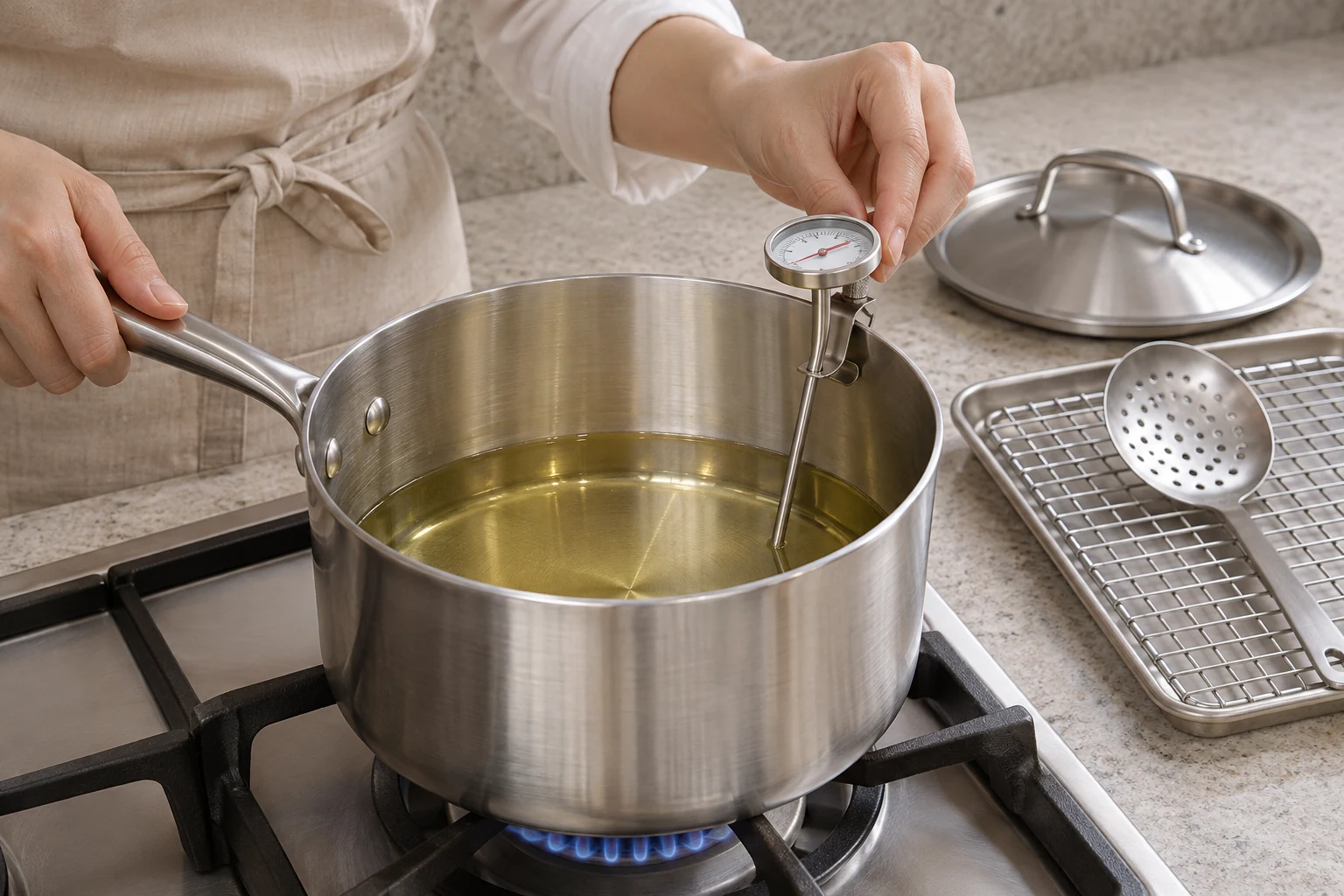
Dry the frying pan, thermometer, slotted spoon and rack completely. Put 5 small paper cups oil (900 ml) into the heavy saucepan, making roughly 3 cm depth and never filling the pan more than halfway. Set it on a stable burner with the handle turned inward. Heat over medium-low until the thermometer reads 130°C; keep its tip in oil without touching the base. Have a fitted metal lid nearby and a clear draining area. Keep water and children away. If oil smokes, turn off and let it cool. For an oil fire, turn off if safe and cover with the lid; never pour water onto it.
-
Step 7
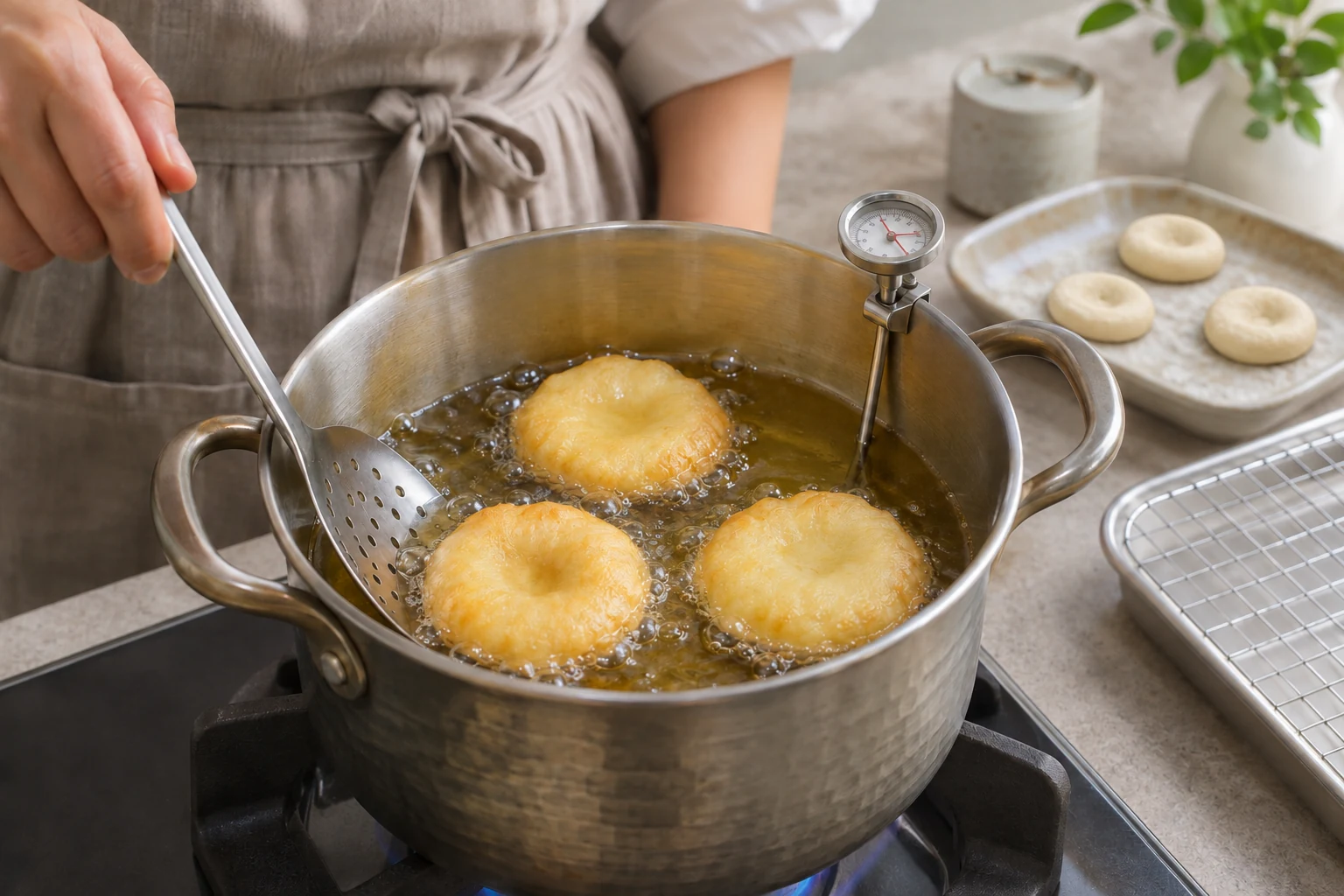
Lower three shaped cakes gently into the 130°C oil with the dry slotted spoon. Keep around 125–135°C for 6–8 minutes, nudging apart without piercing them. They should swell and float; do not force them up or crowd the pan. Then raise the heat gradually to 160–170°C and fry another 2–3 minutes, turning gently until evenly golden. If they darken before expanding, lower the heat immediately. Avoid hard pressing or repeated poking, which can split the skin and release sticky dough. Time is a guide: rising, expansion and a golden shell must all develop.
-
Step 8
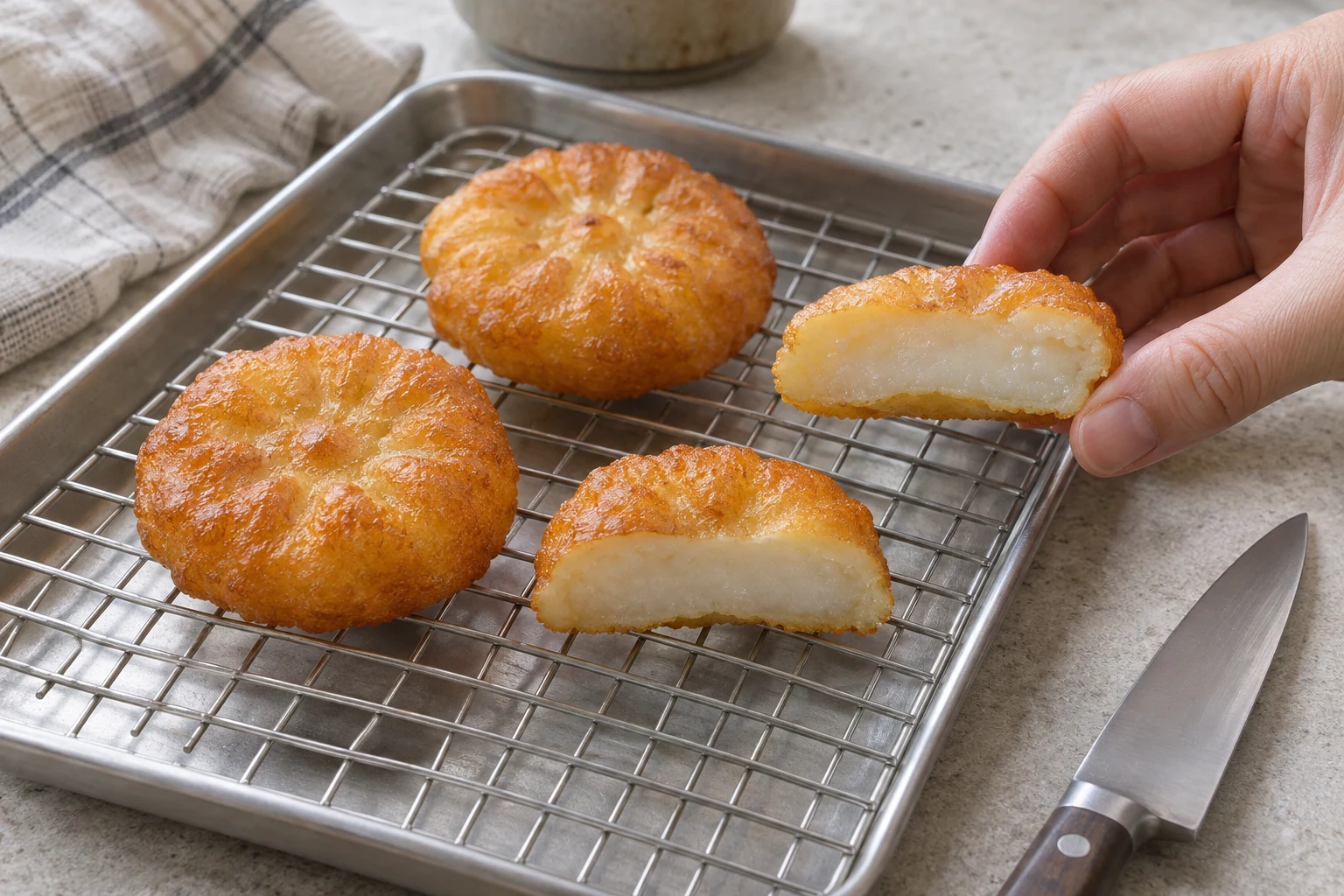
Lift onto the rack and drain for 3–5 minutes. Let one test cake cool enough to handle and cut it open: the center should be set, uniformly chewy and moist, with no dry flour or wet uncooked paste. If underdone, keep the other cakes in that batch around 150°C for another 2–3 minutes and check again; adjust later batches rather than relying on color. Do not taste raw dough. Return the oil to 130°C before each of the remaining three batches of three. Skim burnt crumbs with a dry strainer. Keep finished cakes on the rack, not stacked on paper while steaming.
-
Step 9
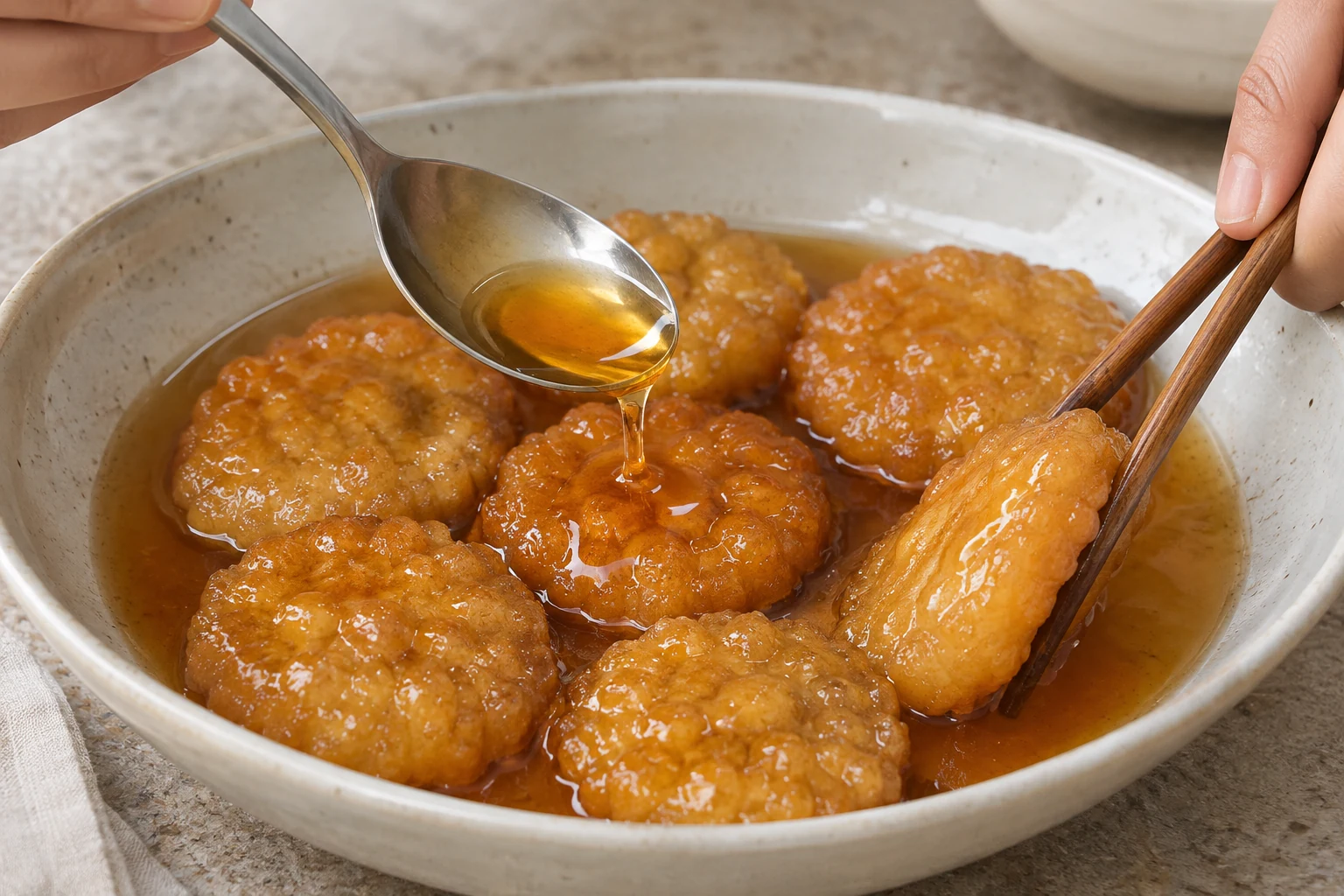
Arrange the drained cakes in a shallow heatproof dish and pour over the barely warm ginger syrup, removing the spent aromatics first. Spoon syrup over the exposed tops and turn carefully every 5 minutes for 30 minutes. The aim is an even glossy coating and some absorption; the dish need not be deep enough to submerge every cake. Use a clean spoon and avoid crushing them. Very hot syrup can soften the shell too much, while cold thick syrup coats unevenly. Keep this dish well away from the hot frying oil.
-
Step 10
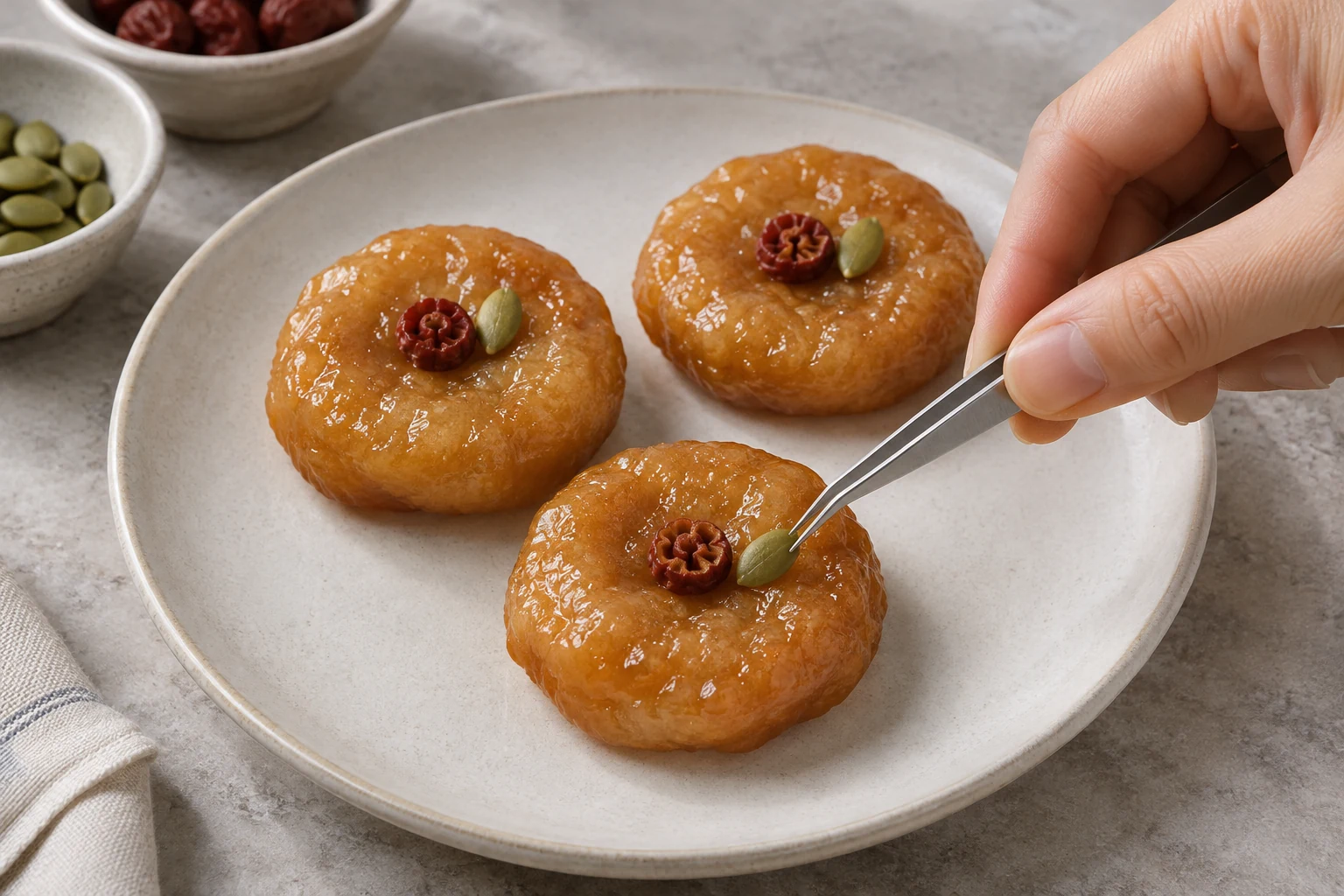
Lift to a clean rack over a tray and let excess syrup drip for about 15 minutes. Put three cakes on each dessert plate. Add optional dry jujube pieces and one pumpkin-seed kernel per cake; both may be omitted for plain juak. Serve once comfortably warm or at room temperature: the outside should be glossy, lightly crisp and the middle chewy, not hollow bread or a hard raw lump. Take small bites and chew carefully. The cut test cake is part of the twelve-piece batch, not an extra cake.


Finished dish
A tablespoon is 15 ml, teaspoon 5 ml and small paper cup 180 ml; flour and thick-syrup spoon weights are approximate, so the stated gram weights take priority. The wet glutinous flour is unsalted; check the package. Begin with 10 ml dough water and use at most the extra 5 ml. Oil temperature control and small equal cakes are essential. Makgeolli contains alcohol: frying does not guarantee complete removal, and this is not an alcohol-free recipe. Contains wheat; check makgeolli and syrup labels for other allergens. Honey is unsuitable for children under 1 year. Optional cinnamon and decorations can be omitted without changing cooking times. Rice cakes are chewy: eat slowly and do not serve whole pieces to small children or anyone with swallowing difficulty. Best the day made. Refrigerate in a shallow covered container at 4°C or below within 2 hours, or 1 hour above 32°C, and use within 2 days; the crust softens when stored. Do not leave syrup-soaked cakes warm overnight. Cool the used oil completely before handling it.
Related recipes


Enjoy every bite
How to enjoy it
Offer three small cakes with an unsweetened warm drink. Let syrup drip before plating, and take small bites to enjoy the contrast between the golden shell and chewy center.

