Easy rabokki: rice cakes and ramyeon
Chewy Korean rice cakes and instant noodles simmered together in a sweet-spicy red sauce. Cook the rice cakes first so the noodles do not become mushy while waiting.
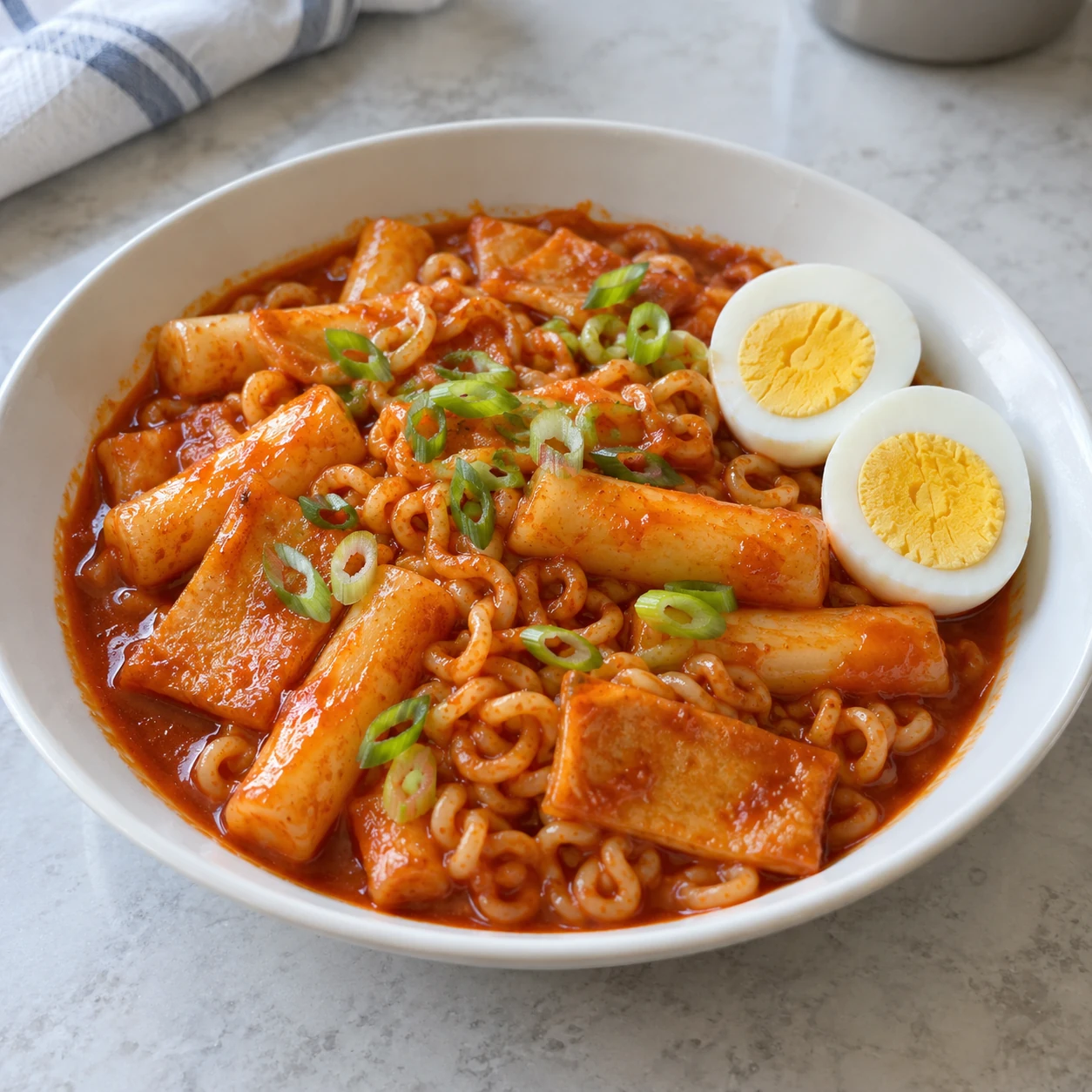
AI-generated cooking illustrations. Follow the written quantities and instructions.
Ingredients
2 servings
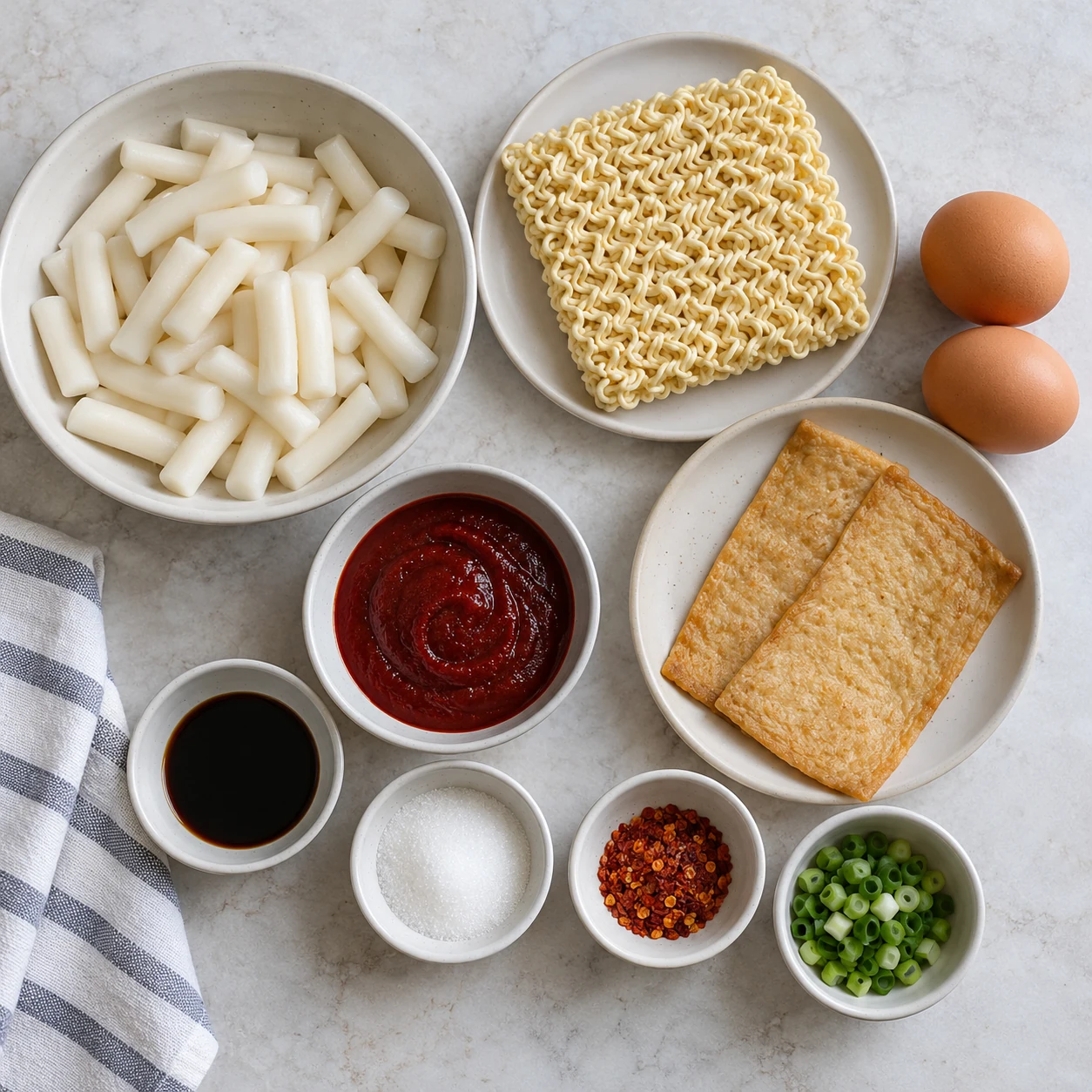
Everyday kitchen measurements
For 2 servings. Use a small 180 ml paper cup, a level eating spoon (about 15 ml) and a small teaspoon (about 5 ml).
How to fill the cup and spoons
Use the same cup and spoons throughout. Their sizes vary, so these amounts are approximate. Spoon flour in loosely and level the top without pressing. Measure vegetables after chopping, without packing them down. The amounts in g/ml are the original reference quantities. For part of a pack, use the specified pack weight and divide the contents evenly.
King Arthur Baking-
Essential
Use Korean cylindrical rice cakes, not puffed crisp rice snacks. Separate them and soften hard refrigerated ones before cooking.
-
Substitute available
If Plain instant noodle block is unavailable
- Use instead
- Plain quick-cooking wheat noodles
- Substitute quantity
- 1 small bundleReference quantity: 90 g
Use noodles that cook in 3–4 minutes and follow their packet. Do not add an instant noodle seasoning packet to this sauce.
-
Essential
Start with this amount and add hot water a spoon at a time if it thickens before the noodles soften.
-
Essential
Choose a mild Korean chilli paste if unfamiliar, but the dish will still be spicy.
-
Optional
Adjust downward or omit; the sauce will taste less sweet.
-
Substitute available
If Soy sauce is unavailable
- Use instead
- Tamari
- Substitute quantity
- 1 small teaspoonReference quantity: 5 ml
Use unsweetened tamari. Check the noodle and chilli-paste labels too if avoiding wheat.
-
Optional
Cut into rectangles and heat thoroughly, or omit for a simpler version. Check fish and wheat labels.
-
Optional
Boil separately until fully set, cool, peel and halve. Omit if unavailable.
-
Optional
Slice and add near the end, or omit.
-
Optional
Leave out to reduce the heat; the gochujang itself still contains chilli.
Tap each ingredient as you prepare it. Check product labels for egg, soy, sesame, wheat, fish or shellfish where relevant.
Step-by-step cooking
-
Step 1
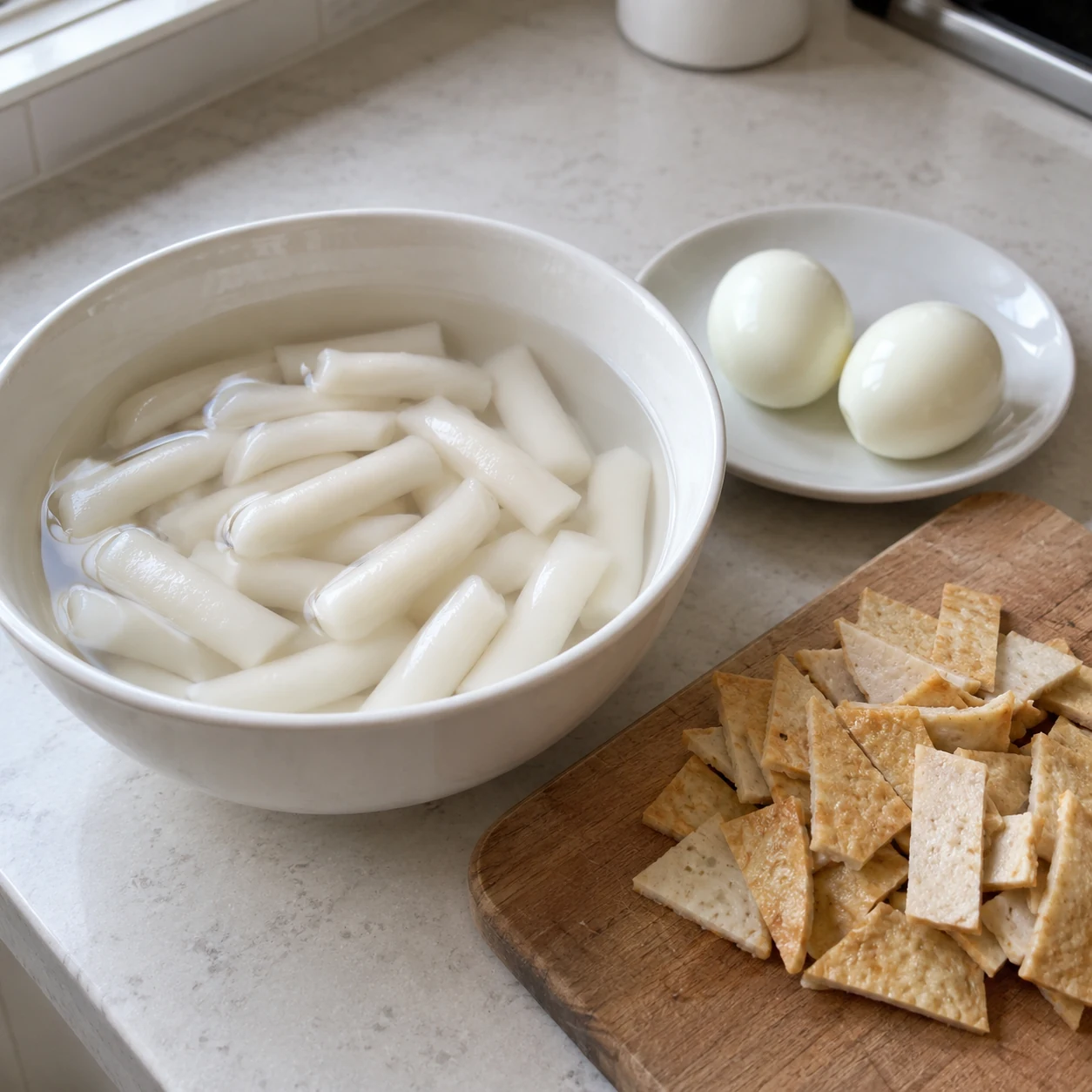
Separate the rice cakes. If hard or refrigerated, soak in warm water for 10 minutes, then drain. If using eggs, boil separately for 10–11 minutes from a gentle boil until fully set, cool, peel and halve. Slice fish cake and spring onion if using.
-
Step 2
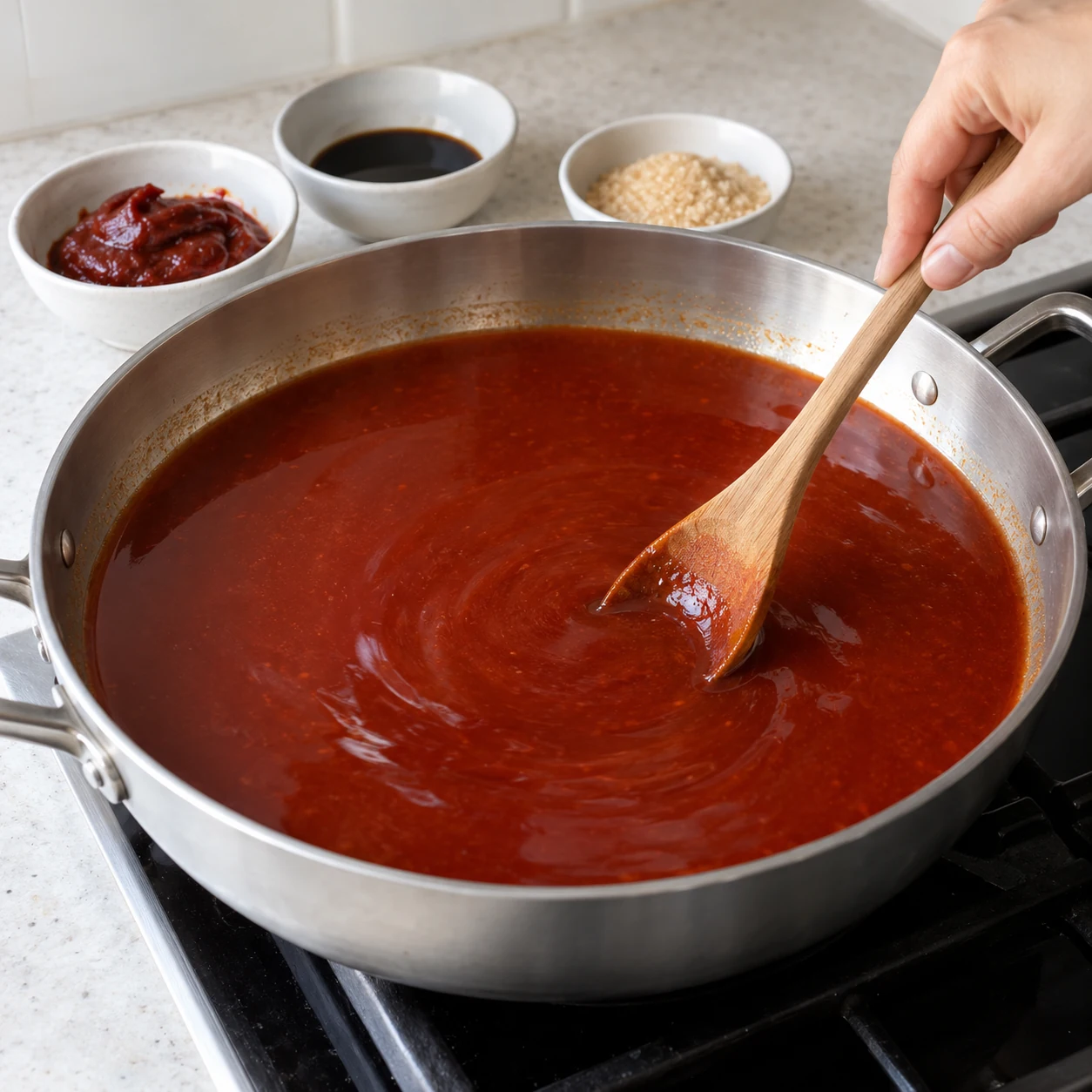
Put 4 paper cups of water, gochujang, soy sauce, optional sugar and optional chilli flakes in a wide pan. Stir until no large paste lumps remain, then bring to a gentle boil. Do not add a noodle seasoning packet.
-
Step 3
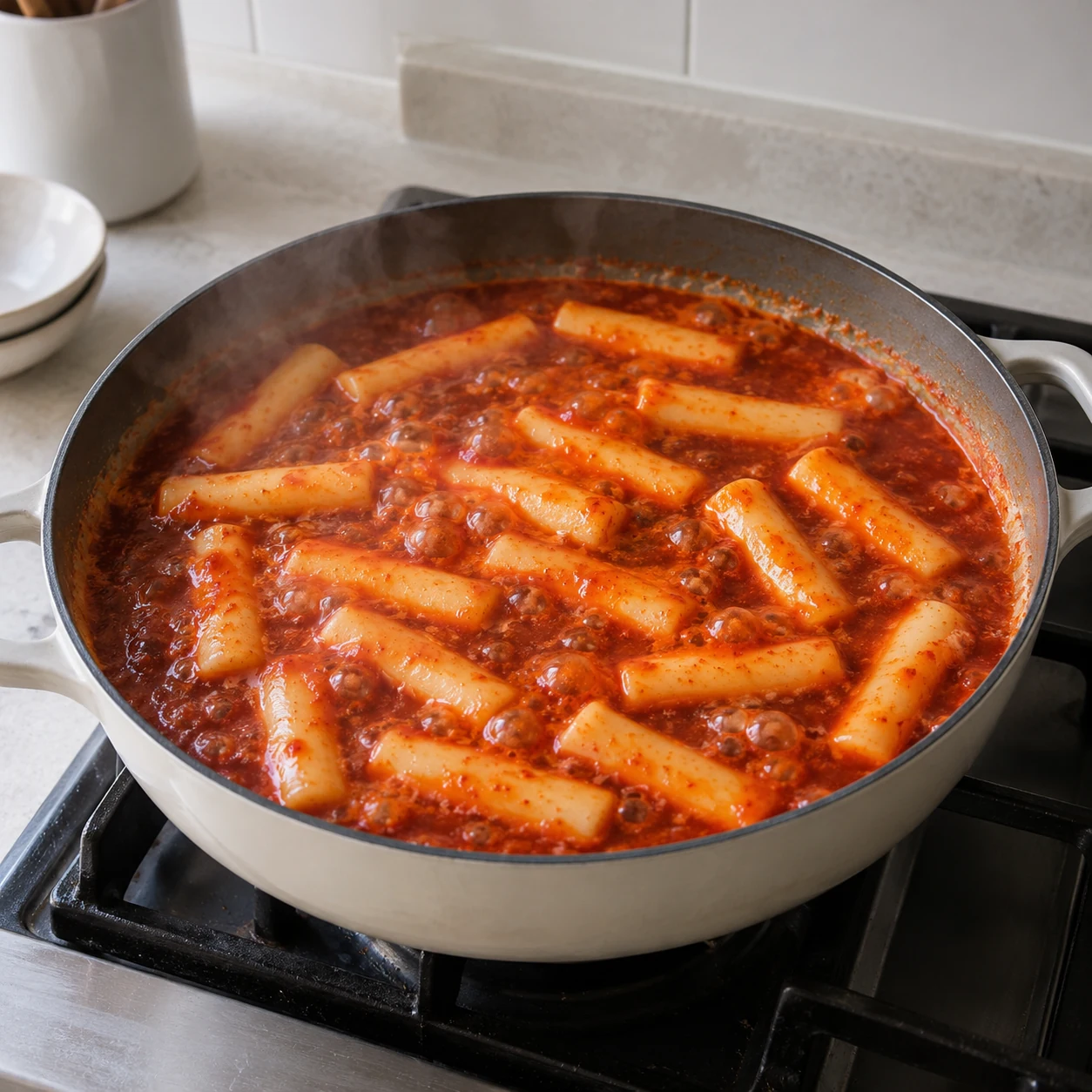
Add the drained rice cakes and simmer for 5–7 minutes, stirring along the bottom so they do not stick. They should be nearly soft in the centre before noodles are added. Very firm rice cakes may need longer; check a cooled small bite.
-
Step 4
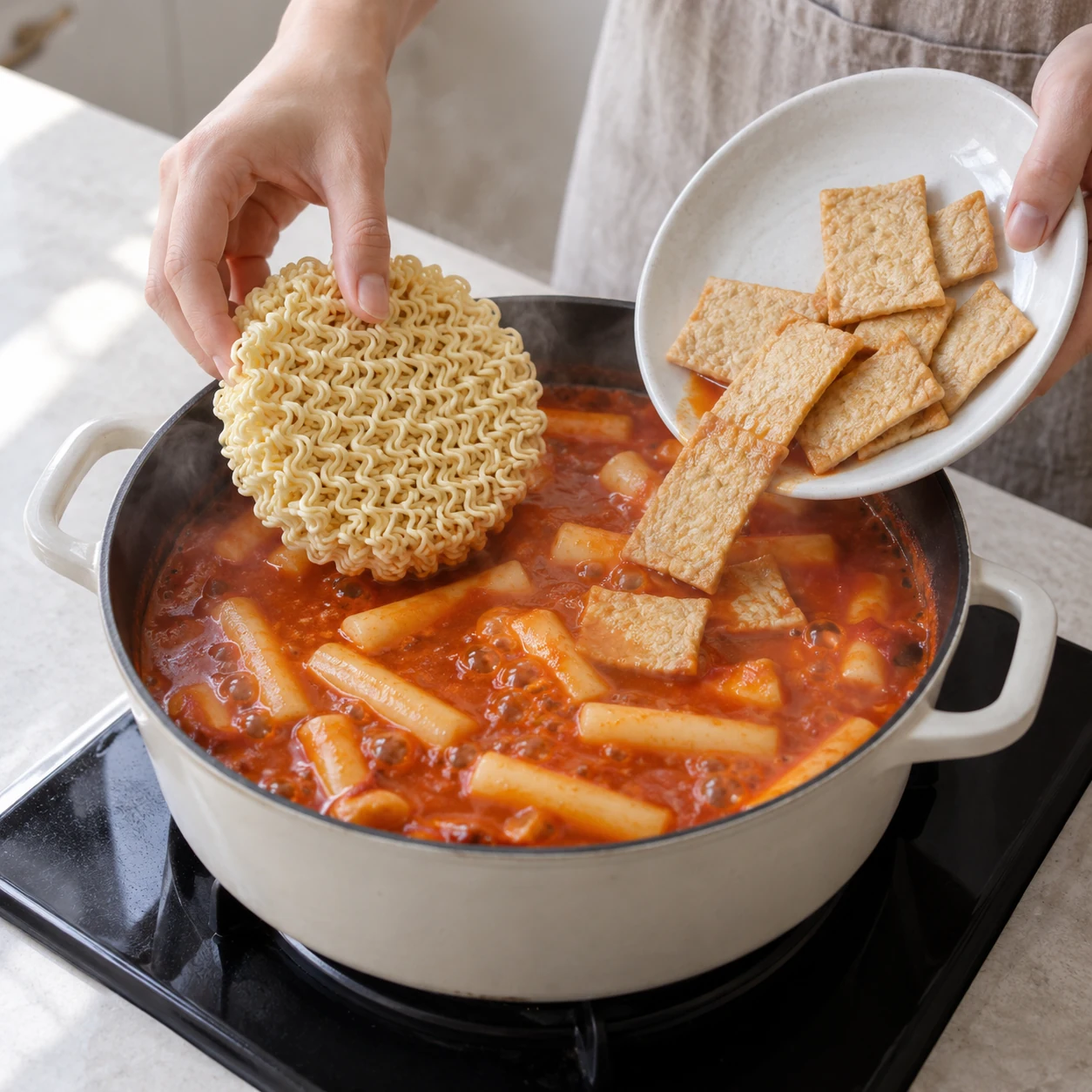
Add the plain instant noodle block and optional fish cake. Simmer for 3–4 minutes or the noodle packet time, gently loosening the strands. Both noodles and rice cakes should be tender. If sauce becomes too thick before that happens, add hot water one spoon at a time.
-
Step 5
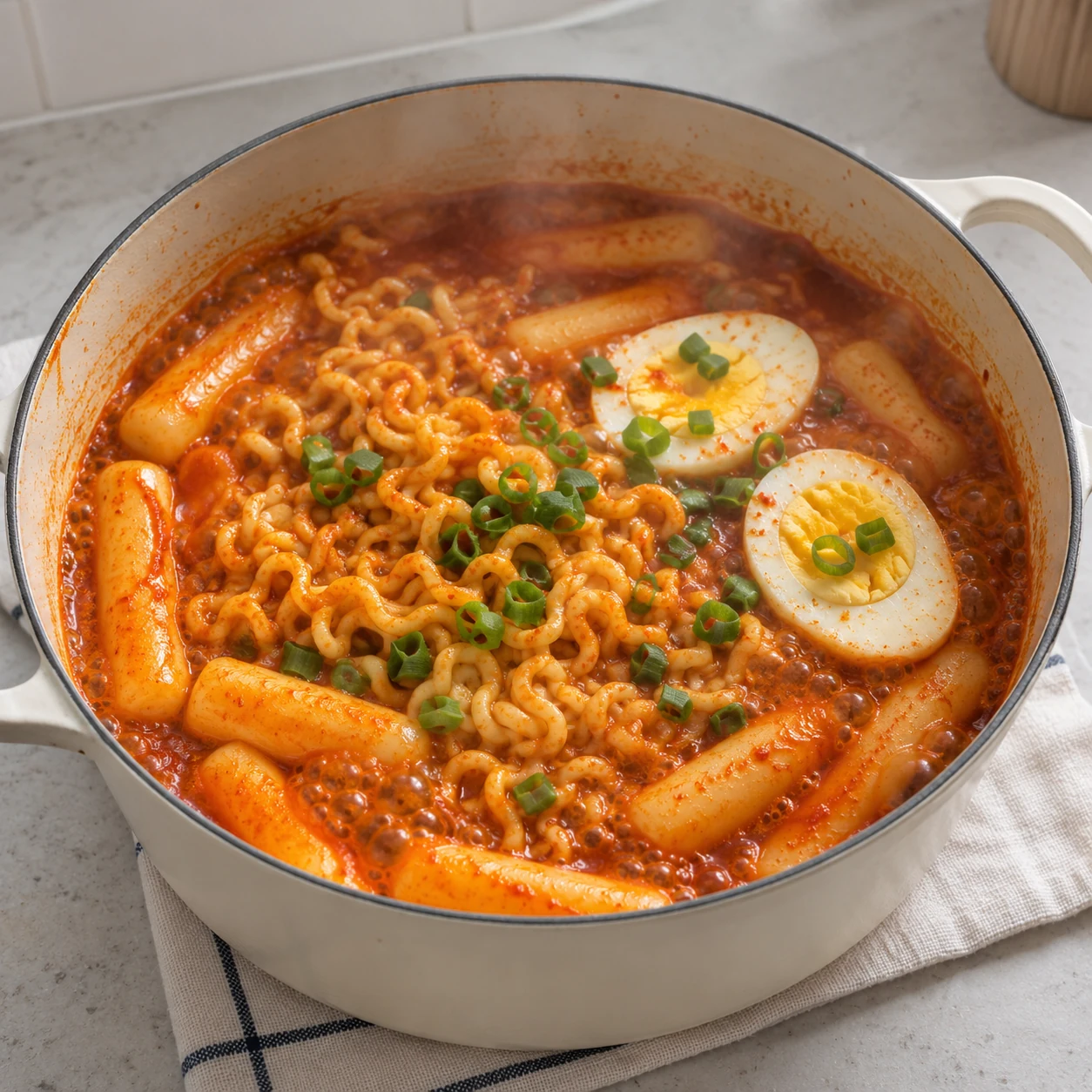
Add the hard-boiled egg halves and spring onion if using. Simmer for 1 minute until everything is hot throughout. Keep enough sauce to coat the noodles and rice cakes rather than cooking the pan dry.
-
Step 6
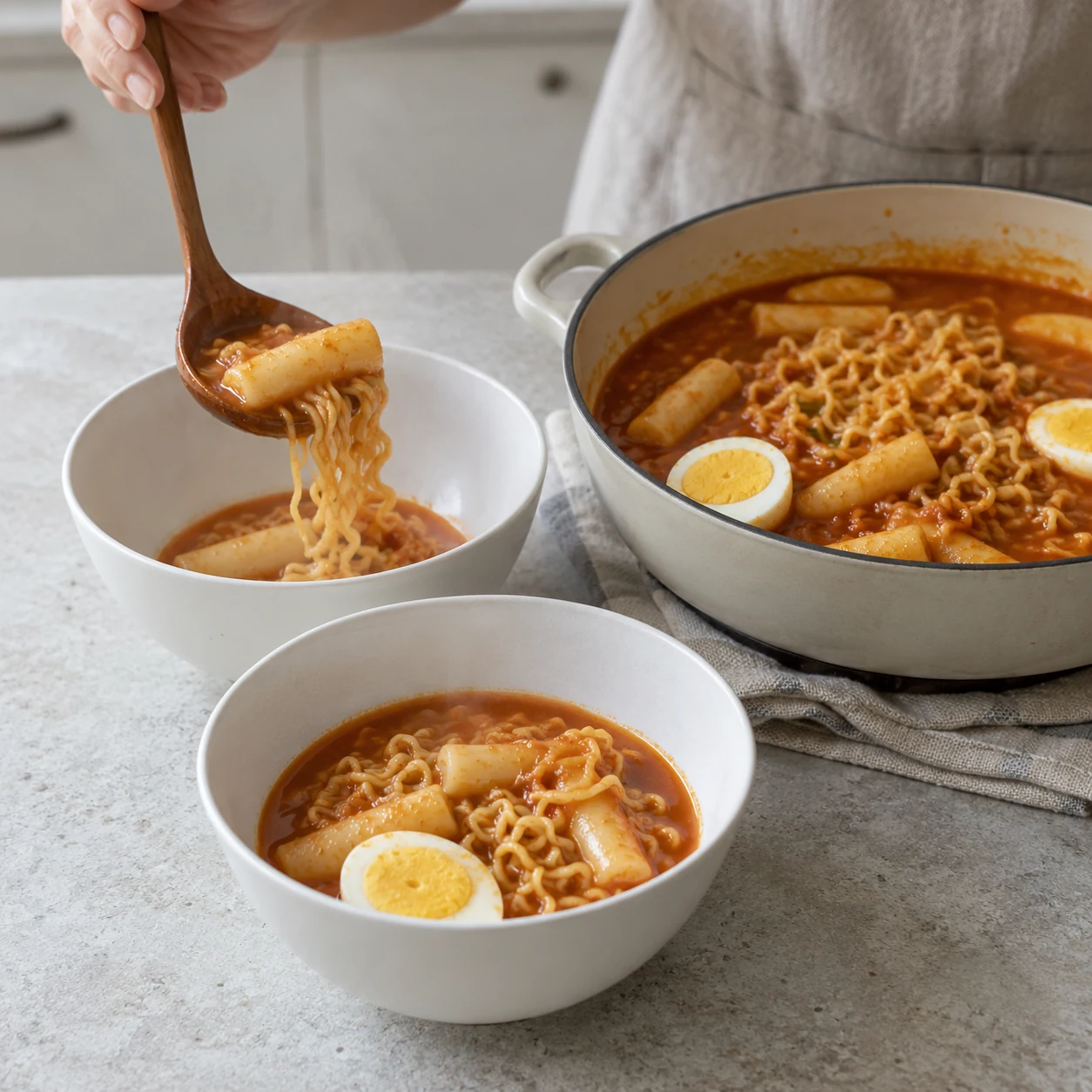
Divide between two shallow bowls and serve immediately before noodles absorb the sauce. Let a small bite cool first. Cut chewy rice cakes into smaller appropriate pieces for children; reducing extra chilli does not make this a non-spicy dish.
Finished dish
Uses only the plain noodle block, not the supplied soup powder or oil sachets. Noodle and rice-cake sizes vary, so follow the doneness checks as well as the times. Refrigerate leftovers in shallow containers within 2 hours, or within 1 hour if the room is hotter than 32°C. Keep at 4°C or below, use within 3–4 days and reheat cooked leftovers to 74°C.
Enjoy every bite
How to enjoy it
Eat promptly while the noodles are tender and the sauce still flows. Keep the extra chilli optional and explain the rice cakes’ chewy texture to first-time eaters.
Serve it with
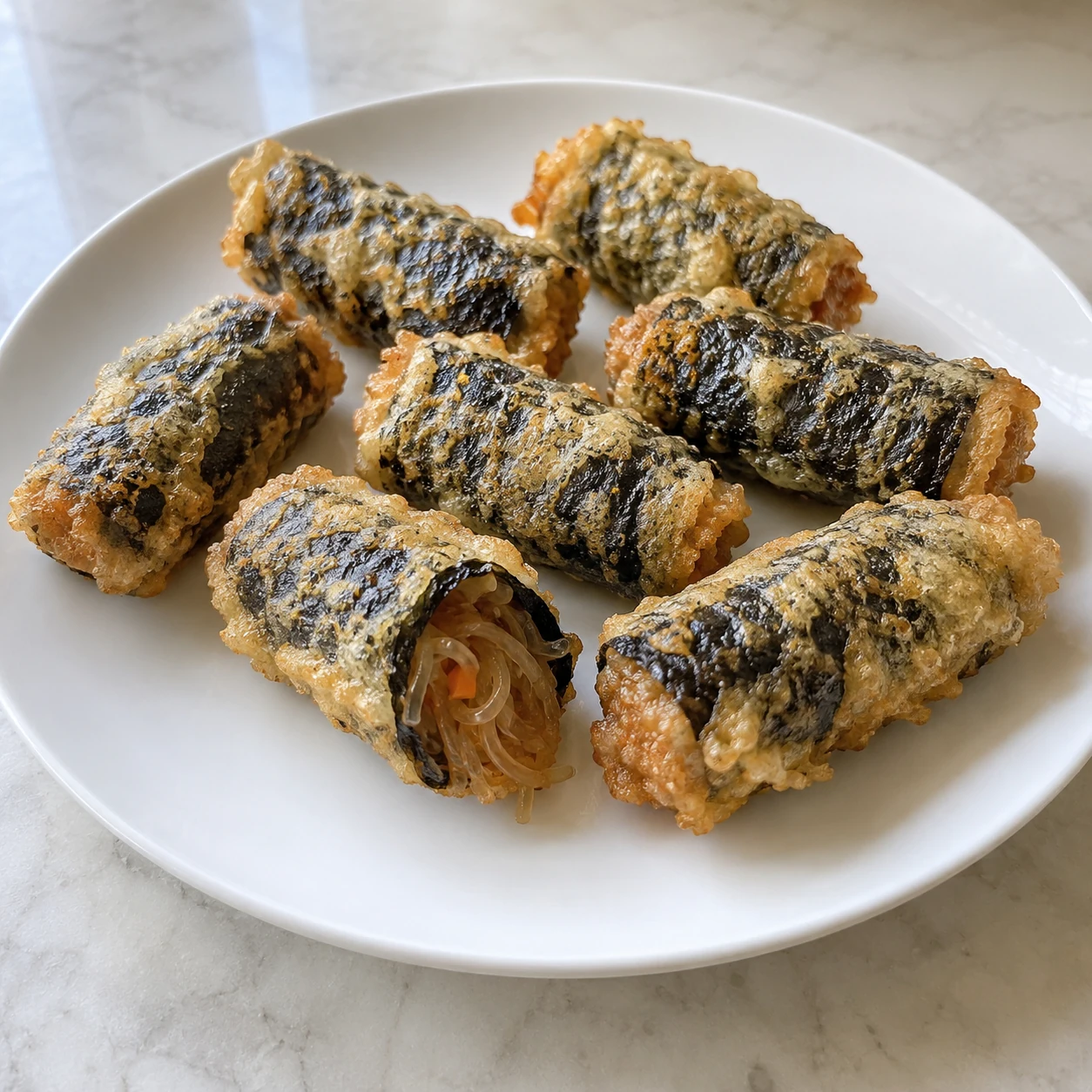
Crisp seaweed noodle rolls (gimmari)
A crisp bite contrasts with the softer main dish; keep its sauce separate.
View recipe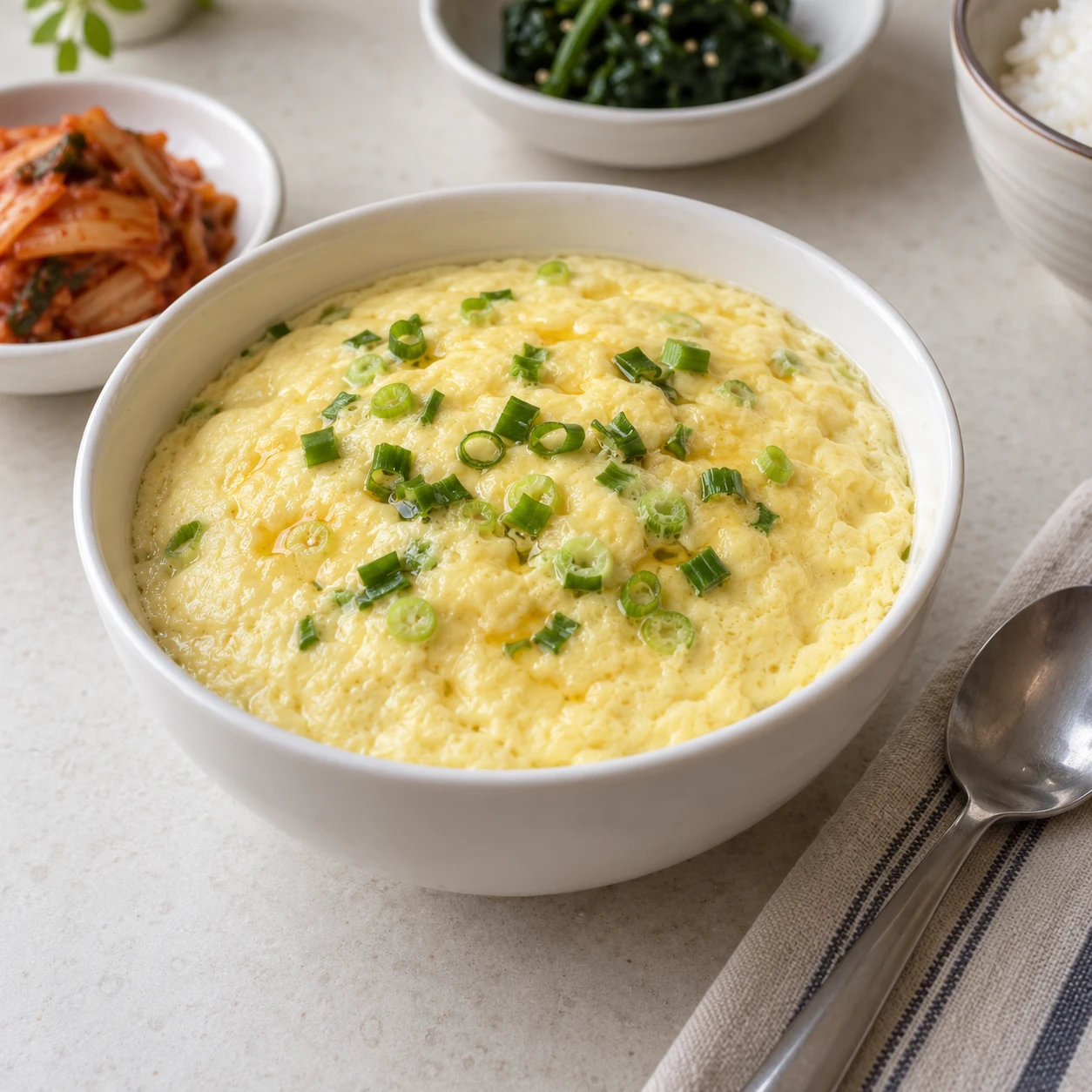
Korean steamed eggs
Soft, gently seasoned egg contrasts with a stronger sauce or a crisp bite.
View recipe