Crisp seaweed noodle rolls (gimmari)
Small seaweed rolls filled with seasoned glass noodles and coated in a light crisp batter. Drain and cool the filling before rolling, then fry in small batches.
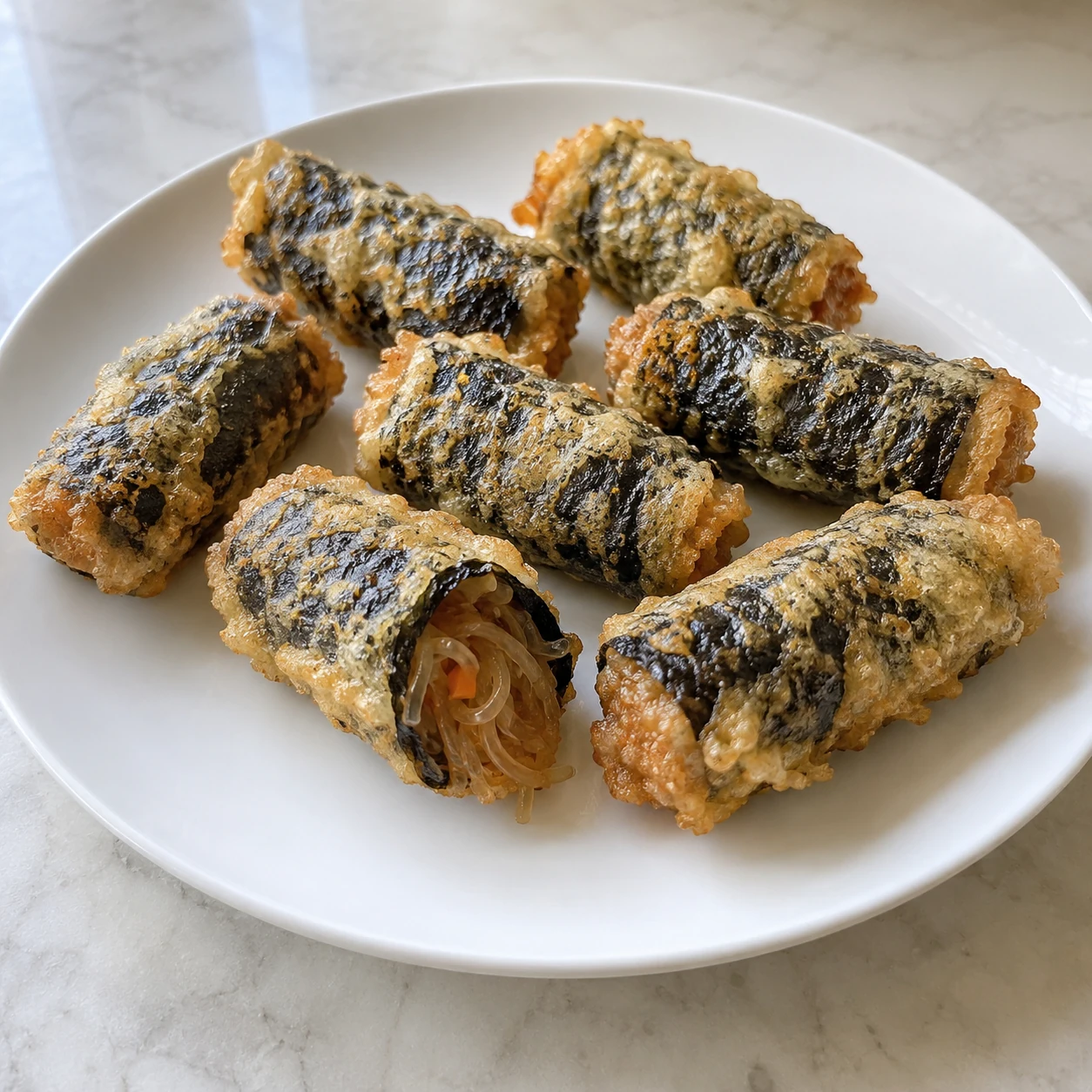
AI-generated cooking illustrations. Follow the written quantities and instructions.
Ingredients
2 servings
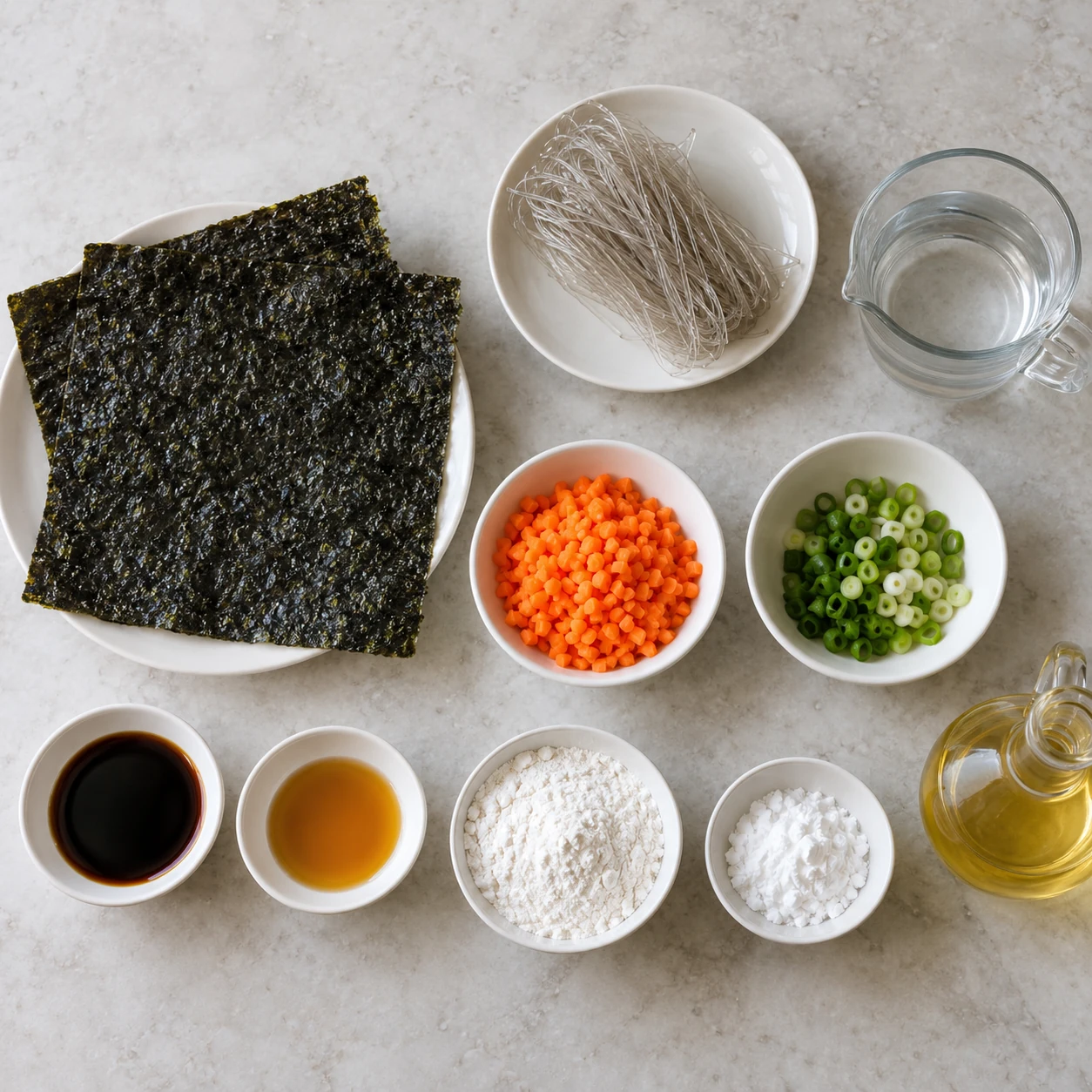
Everyday kitchen measurements
For 2 servings. Use a small 180 ml paper cup, a level eating spoon (about 15 ml) and a small teaspoon (about 5 ml).
How to fill the cup and spoons
Use the same cup and spoons throughout. Their sizes vary, so these amounts are approximate. Spoon flour in loosely and level the top without pressing. Measure vegetables after chopping, without packing them down. The amounts in g/ml are the original reference quantities. For part of a pack, use the specified pack weight and divide the contents evenly.
King Arthur Baking-
Essential
Use Korean dangmyeon. Cook and drain fully; do not wrap dry noodles in seaweed.
-
Essential
Cut each full sheet into four squares, making eight pieces. Oily seasoned snack seaweed is too fragile for this method.
-
Optional
Cook briefly with the noodles, or omit.
-
Optional
Omit if unavailable.
-
Substitute available
If Soy sauce is unavailable
- Use instead
- Tamari
- Substitute quantity
- 1 small teaspoonReference quantity: 5 ml
Use the same amount in the cooked filling. Check flour and sauce labels if avoiding wheat.
-
Optional
Omit if unavailable; do not add extra oil to replace it.
-
Essential
Loosely fill and level the cup; mix only briefly with the cold water.
-
Essential
Dust lightly before dipping so the batter clings to the rolls.
-
Substitute available
If Potato starch is unavailable
- Use instead
- Cornstarch
- Substitute quantity
- 2 level eating spoonsReference quantity: 20 g
Use pure cornstarch in the batter, not cornmeal. The crust may be a little firmer.
-
Essential
Keep cold. Add one small teaspoon at a time only if the batter cannot coat in a thin layer.
-
Substitute available
If Neutral oil for frying is unavailable
- Use instead
- Sunflower oil suitable for frying
- Substitute quantity
- 3 paper cupsReference quantity: 540 ml
Use in the same small high-sided pot. Oil depth is about 2 cm; do not use a large wide pan with only a shallow film.
Tap each ingredient as you prepare it. Check product labels for egg, soy, sesame, wheat, fish or shellfish where relevant.
Step-by-step cooking
-
Step 1
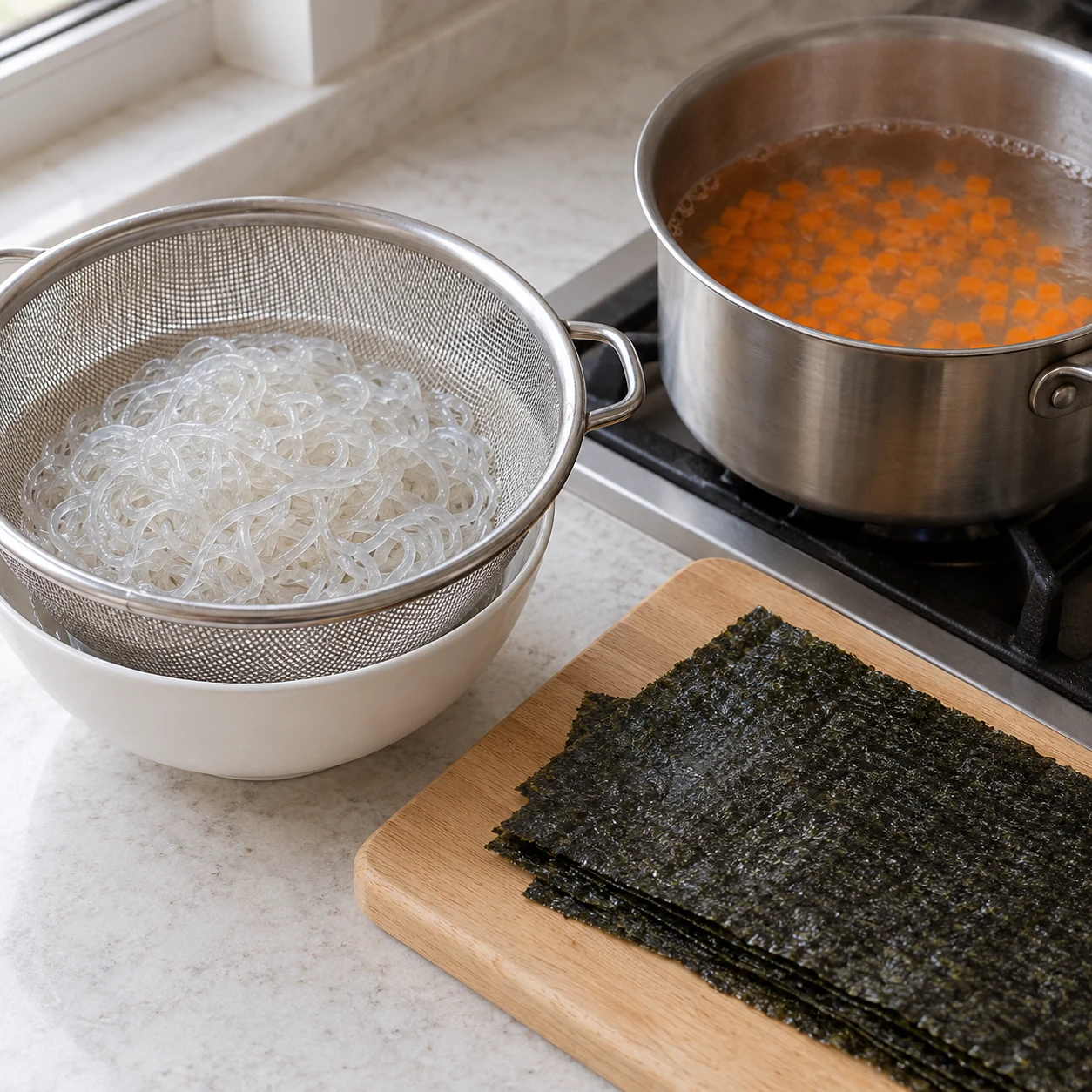
Boil the glass noodles according to their packet, usually 6–8 minutes. Add the optional finely chopped carrot for the final 1 minute. Drain thoroughly in a sieve; keep the seaweed dry and away from the steaming pot.
-
Step 2
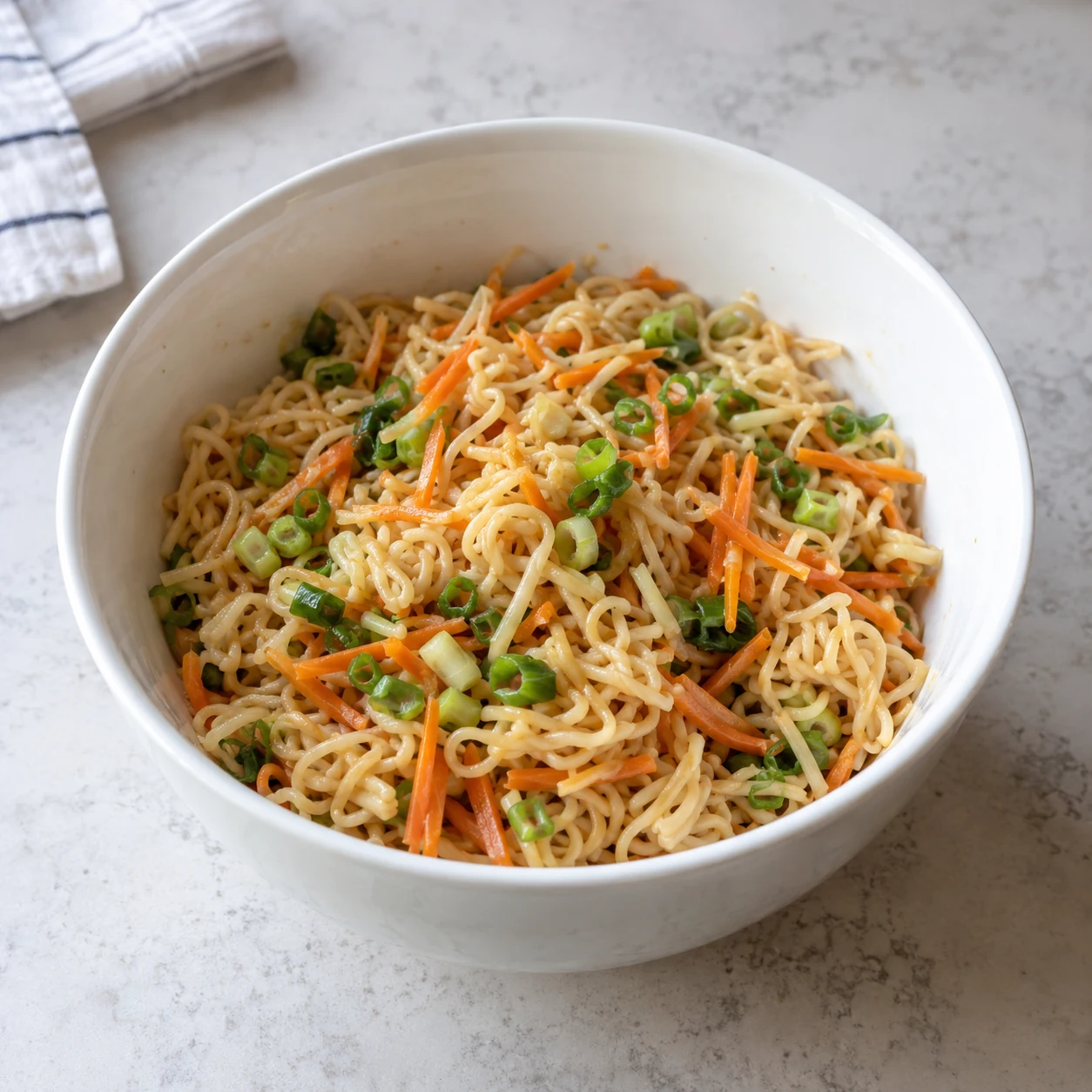
Snip the cooked noodles into short lengths. Toss with soy sauce, optional sesame oil and optional spring onion. Spread in a clean bowl and cool for 10 minutes until no longer steaming; the filling must not be dripping wet.
-
Step 3
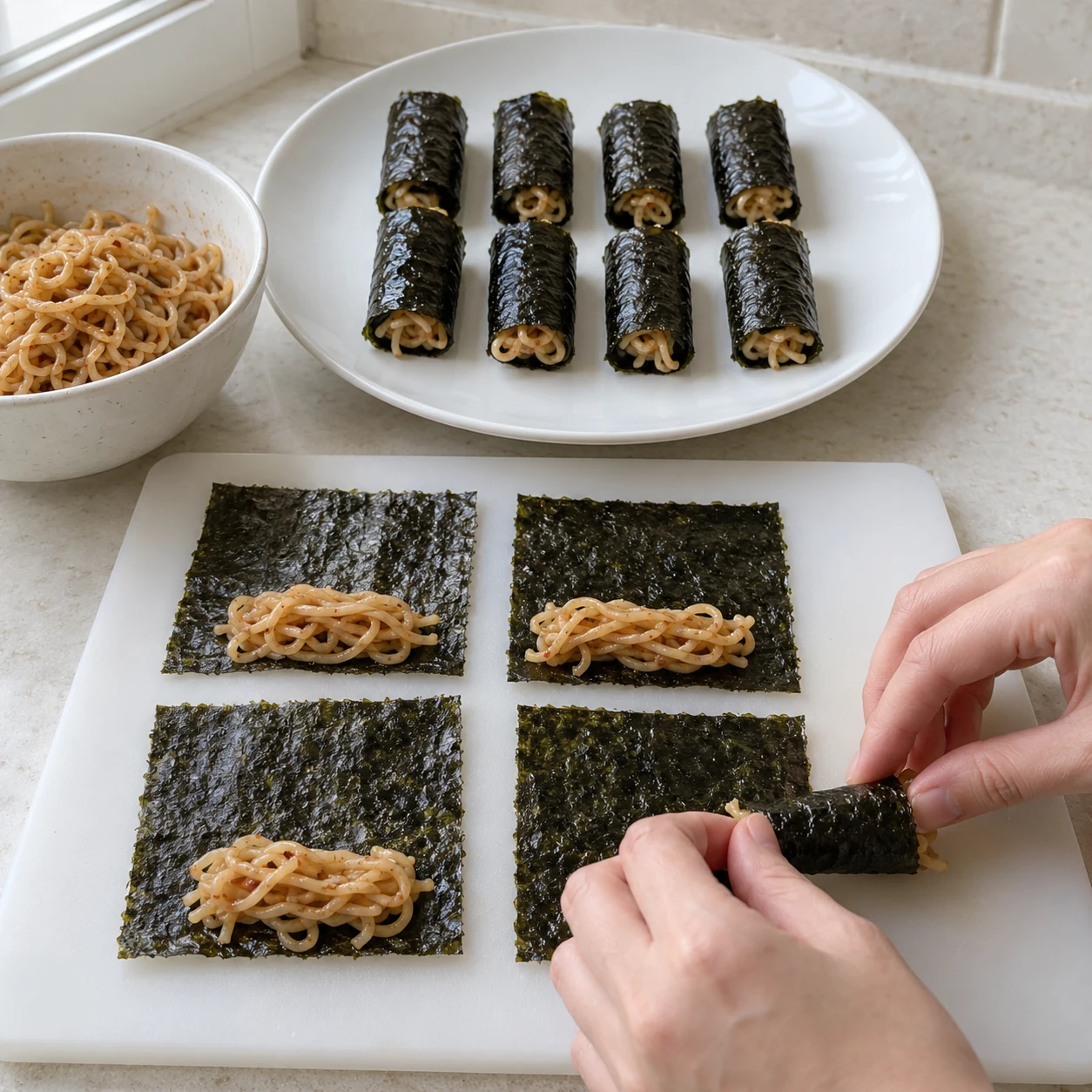
Cut each nori sheet into four squares. Divide filling into eight portions. Put one portion near an edge, roll snugly into a small cylinder and moisten just the final edge with a little water to seal. Do not soak the whole sheet.
-
Step 4
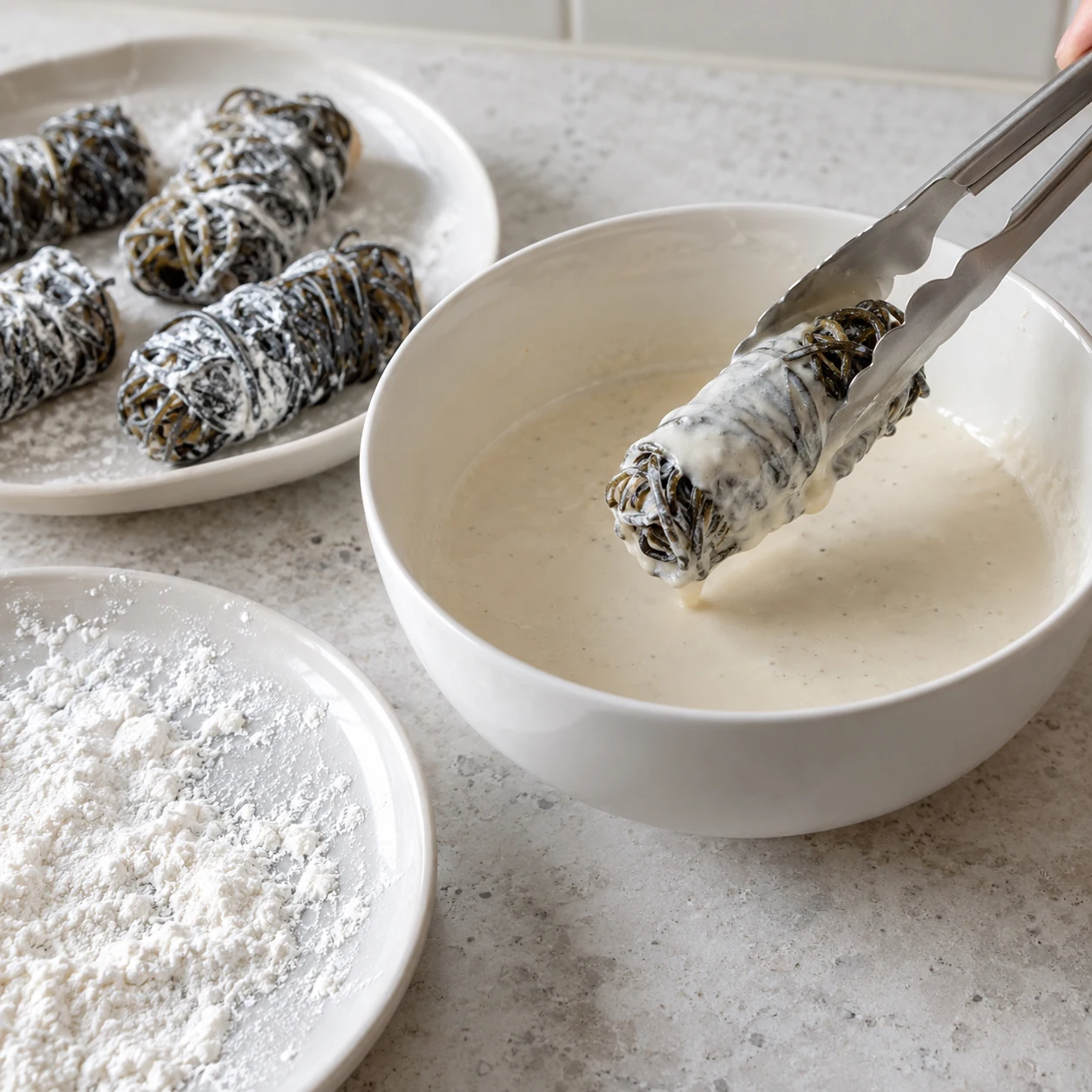
Mix the batter flour and starch with the cold water just until combined; small lumps are fine. Dust the rolls lightly with the separate spoon of flour. Dip each roll in batter just before frying and let excess drip off.
-
Step 5
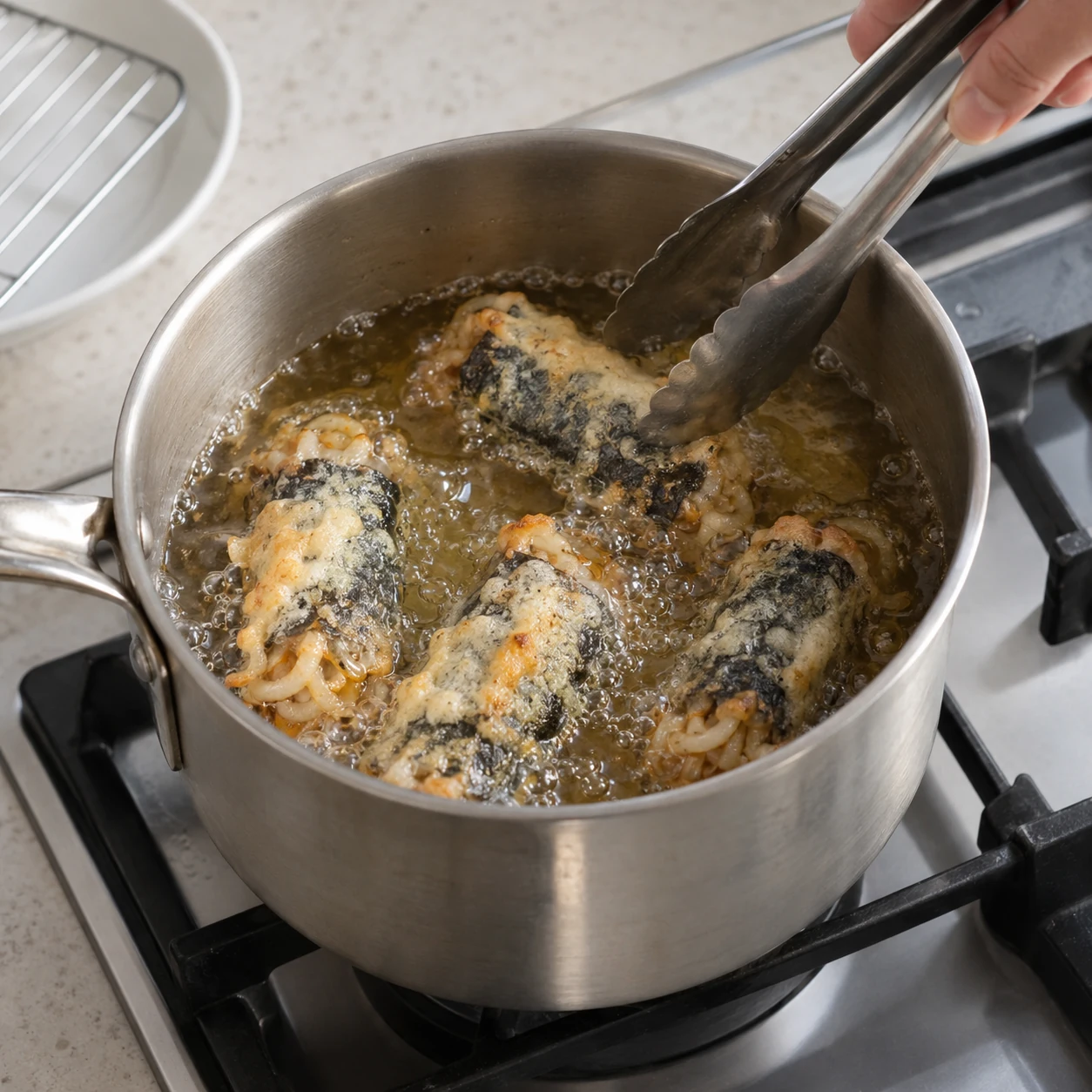
Heat 3 paper cups of oil to 170°C in a heavy high-sided pot about 18 cm wide, with oil no higher than one third of the pot. Fry four rolls at a time for 3–4 minutes, turning with dry tongs until golden and crisp. Keep water away from hot oil.
-
Step 6
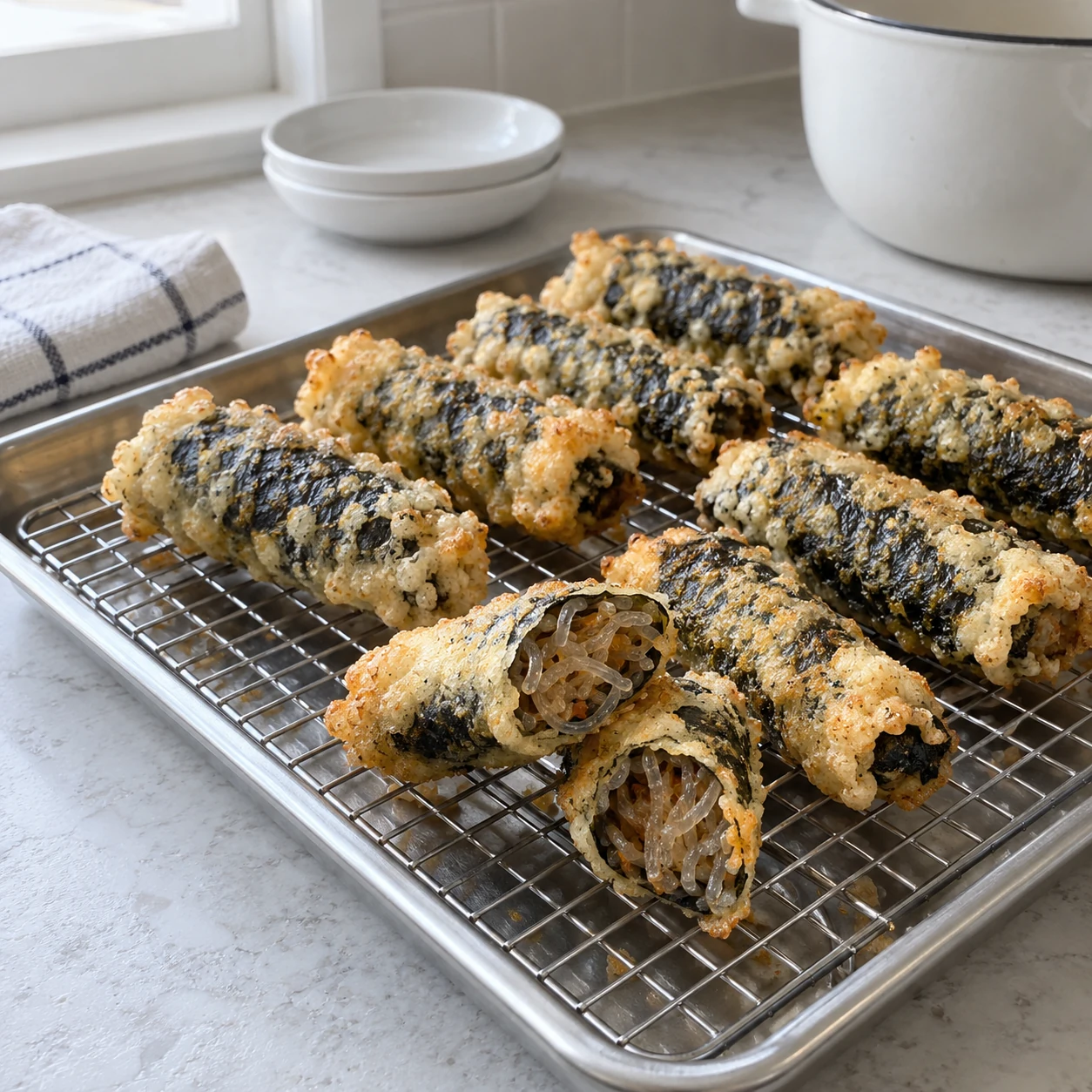
Drain on a rack and repeat with the remaining four rolls, letting the oil return to 170°C. Let the centres cool briefly before eating; cooked noodles inside can be very hot. Serve immediately for the crispest coating.
Finished dish
Makes eight small rolls. An adult should handle the hot oil and let it cool completely before moving or discarding it. A food thermometer is useful for keeping oil temperature steady. The filling is already cooked before frying, but the flour coating must cook fully. Refrigerate leftovers in shallow containers within 2 hours, or within 1 hour if the room is hotter than 32°C. Keep at 4°C or below, use within 3–4 days and reheat cooked leftovers to 74°C.
Enjoy every bite
How to enjoy it
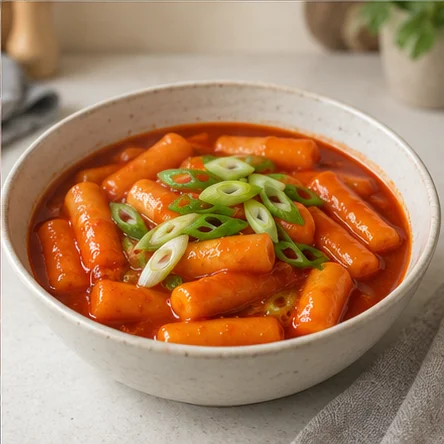
Serve beside rabokki or tteokbokki and dip only one edge at a time. Keep the remaining rolls away from sauce so their coating stays crisp.
Serve it with
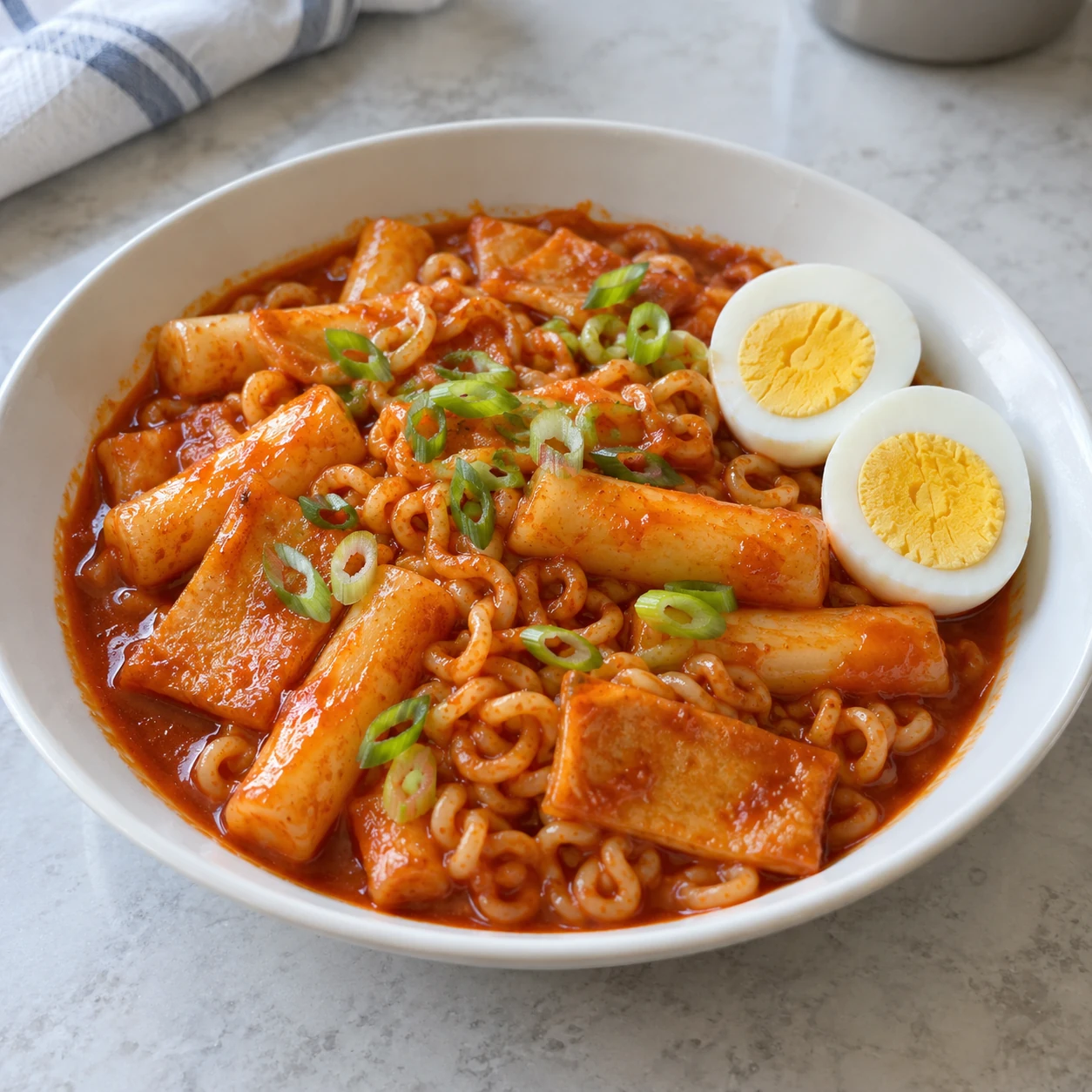
Easy rabokki: rice cakes and ramyeon
A little spicy sauce adds a stronger flavor beside a mild accompaniment.
View recipe