Gochujang salmon rice bowls
Pan-seared salmon with a glossy sweet-spicy Korean glaze, warm rice and cool cucumber. A simple fusion dinner made in one frying pan.

AI-generated cooking illustrations. Follow the written quantities and instructions.
Ingredients
2 servings

Everyday kitchen measurements
For 2 servings. Use a small 180 ml paper cup, a level eating spoon (about 15 ml) and a small teaspoon (about 5 ml).
How to fill the cup and spoons
Use the same cup and spoons throughout. Their sizes vary, so these amounts are approximate. Spoon flour in loosely and level the top without pressing. Measure vegetables after chopping, without packing them down. The amounts in g/ml are the original reference quantities. For part of a pack, use the specified pack weight and divide the contents evenly.
King Arthur Baking-
Substitute available
If Skinless boneless salmon fillets is unavailable
- Use instead
- Skinless boneless trout fillets
- Substitute quantity
- 2Reference quantity: 300 g
Use 2 fillets totaling about 300 g. Follow the same pan method, adjusting for thickness, and cook the thickest part to 63°C.
-
Essential
Needed for this version. Keep the listed amount; do not simply leave it out.
-
Essential
Needed for this version. Keep the listed amount; do not simply leave it out.
-
Essential
Needed for this version. Keep the listed amount; do not simply leave it out.
-
Substitute available
If Soy sauce is unavailable
- Use instead
- Tamari soy sauce
- Substitute quantity
- 1 small teaspoon
Use the displayed replacement amount instead of the original, not in addition. Keep the other quantities and cooking method; check the replacement label for allergens.
-
Substitute available
If Honey is unavailable
- Use instead
- Maple syrup
- Substitute quantity
- 2 small teaspoons
Keep the same spoon measure. Maple syrup gives a different sweetness; glaze over low heat so it does not burn. Honey is unsuitable for babies under 12 months.
-
Substitute available
If Rice vinegar is unavailable
- Use instead
- Lemon juice
- Substitute quantity
- 1 small teaspoon
Use the displayed replacement amount instead of the original, not in addition. Keep the other quantities and cooking method; check the replacement label for allergens.
-
Essential
Needed for this version. Keep the listed amount; do not simply leave it out.
-
Substitute available
If Neutral cooking oil is unavailable
- Use instead
- Mild olive oil
- Substitute quantity
- 2 small teaspoons
Use the displayed replacement amount instead of the original, not in addition. Keep the other quantities and cooking method; check the replacement label for allergens.
Tap each ingredient as you prepare it. Check product labels for egg, soy, sesame, wheat, fish or shellfish where relevant.
Step-by-step cooking
-
Step 1
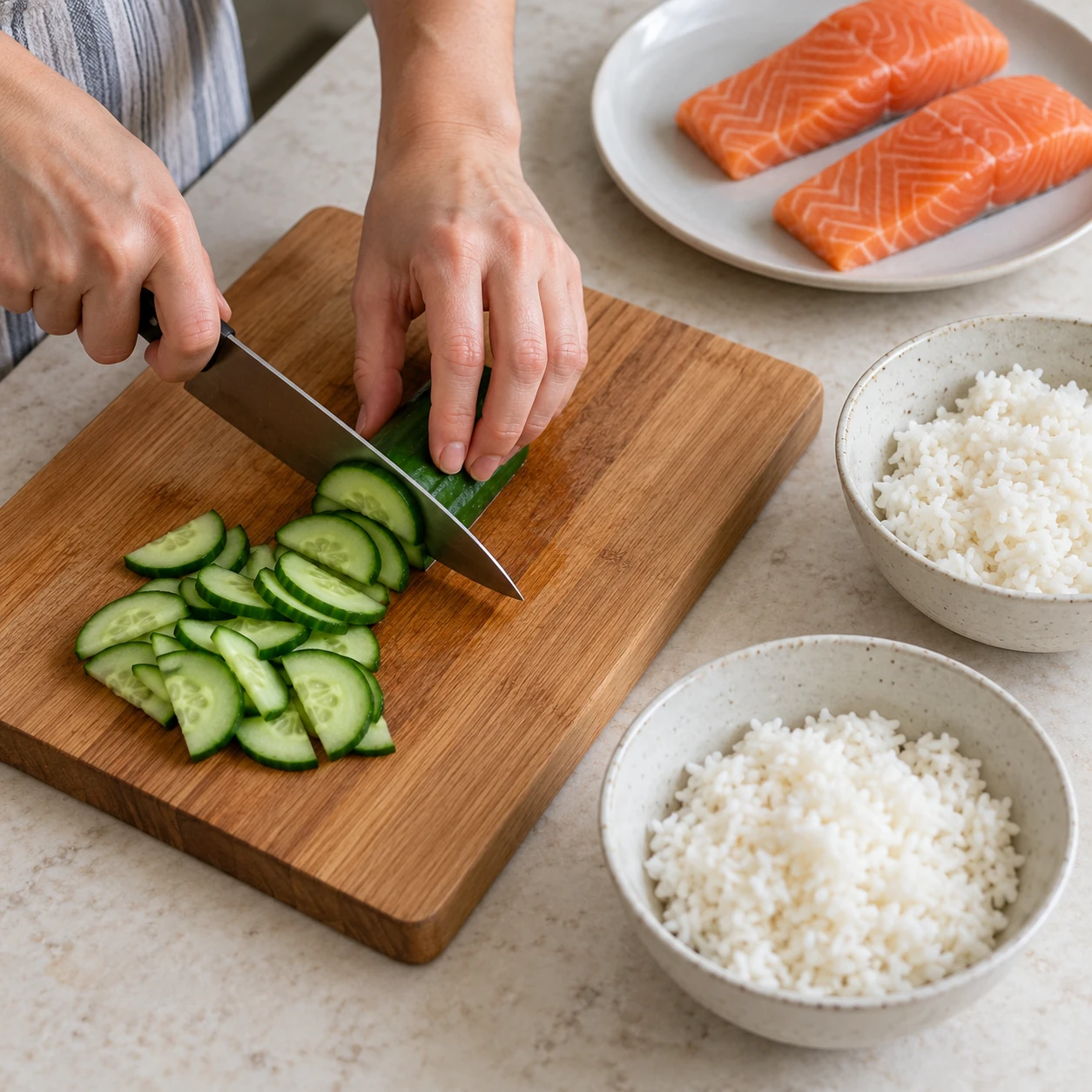
Wash ½ cucumber, pat dry and slice into thin half-moons on a clean board. Prepare 2 small bowls of cooked rice, about 300 g in total; heat ready-cooked rice according to its packet just before serving. Pat 2 skinless, boneless salmon fillets dry on a separate plate. Keep utensils for raw fish away from the cucumber and cooked rice.
-
Step 2
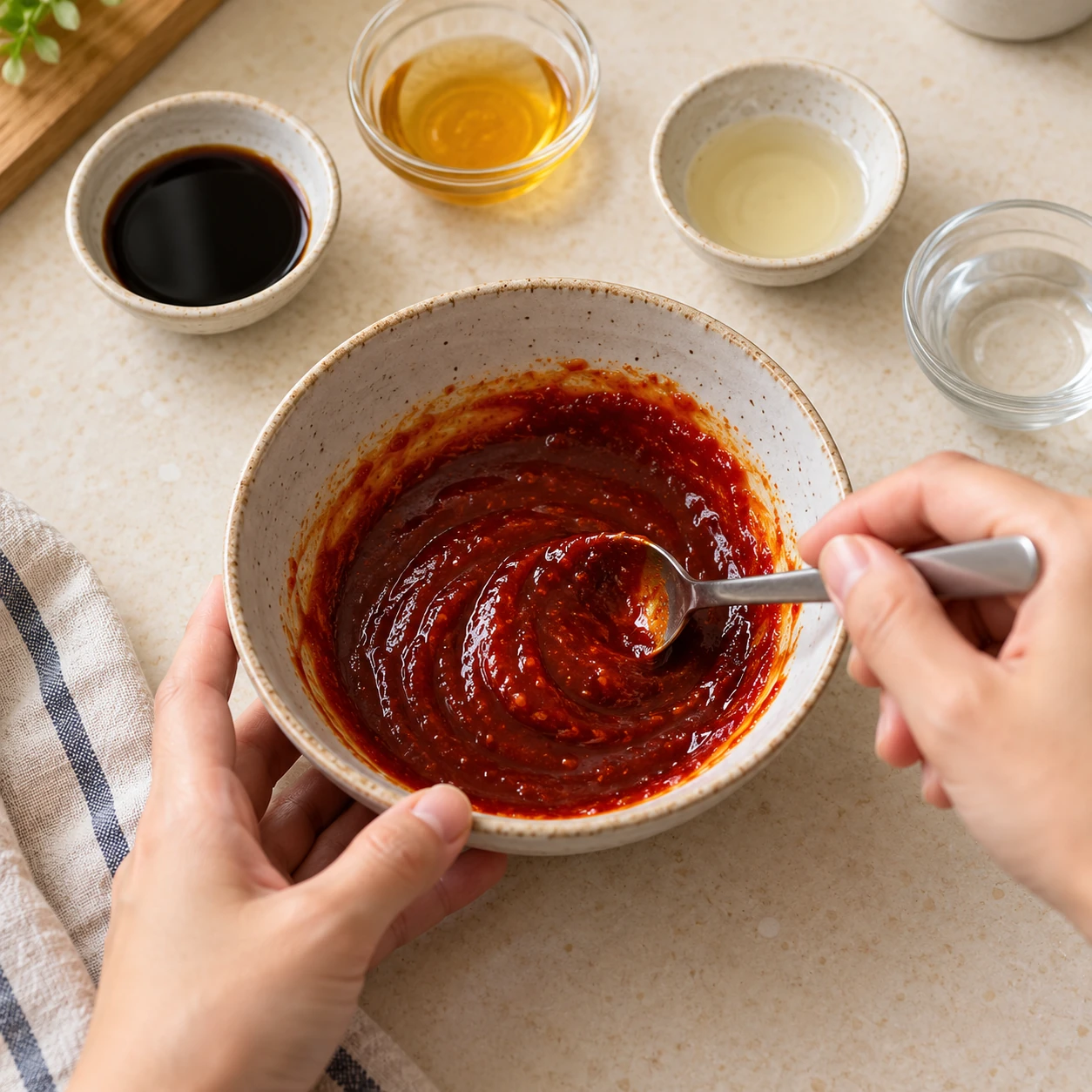
In a small bowl, mix 1 level eating spoon gochujang, 1 small teaspoon soy sauce, 2 small teaspoons honey, 1 small teaspoon rice vinegar and 2 eating spoons water. Stir until smooth. Keep this glaze separate; do not use it as a raw-fish marinade.
-
Step 3
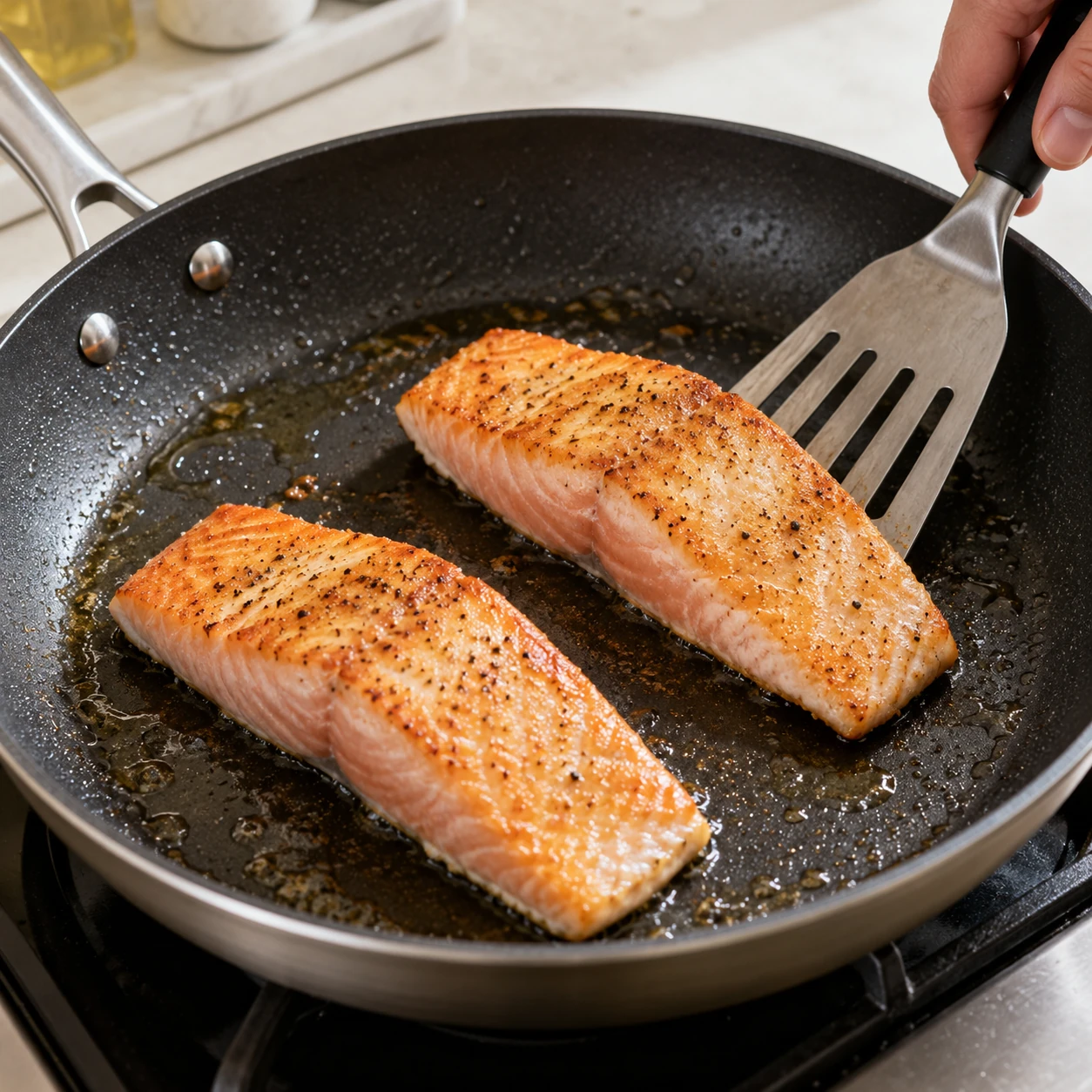
Heat 2 small teaspoons cooking oil in a nonstick pan over medium heat. Lay in the salmon and cook without moving for 3–4 minutes. Turn carefully with a spatula and cook the other side for about 3 minutes. Lower the heat if the surface browns too quickly; thick fillets need more time.
-
Step 4
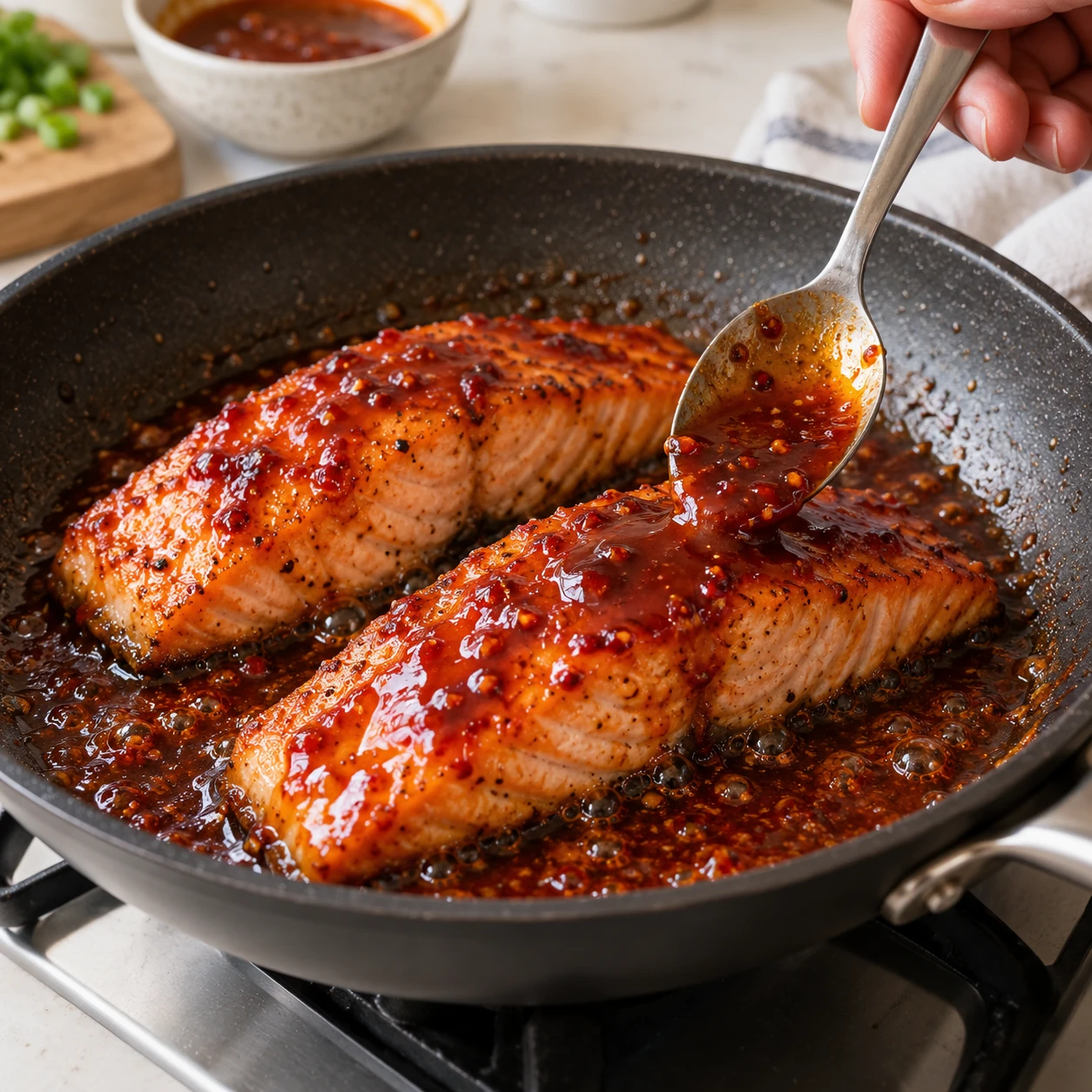
Reduce the heat to low and pour the prepared glaze around the salmon. Spoon it over the fish for 1–2 minutes until glossy. Add a splash of water if it becomes too thick. Cook salmon to 63°C at its thickest point; the flesh should be opaque and separate easily. Put one fillet on each warm rice bowl, add the cucumber and spoon over the cooked sauce. Serve straight away.


Finished dish
A small paper cup is 180 ml, a level eating spoon 15 ml and a small teaspoon 5 ml; household sizes vary. Check packets for soy, wheat, sesame, fish, egg or milk allergens according to your choices. Keep raw and ready-to-eat food separate. Refrigerate leftovers promptly, within 1 hour for rice or 2 hours for other cooked food, at 4°C or below. Use within 24 hours and reheat the cooked portion once to 74°C. Keep raw salad and bread separate; do not reheat them with the filling.
Enjoy every bite
How to enjoy it
Take a little rice, salmon and cucumber together so the sweet-spicy glaze stays balanced.
Serve it with

Dongchimi (Korean radish water kimchi)
A sip of warm broth makes a pleasant change between bites.
View recipe
Korean steamed eggs
Soft, gently seasoned egg contrasts with a stronger sauce or a crisp bite.
View recipe