Dongchimi (Korean radish water kimchi)
Crisp Korean radish ferments in a light, refreshing brine with pear, garlic and ginger. This small-batch home version is mild; taste the brine as it ferments, then chill it.
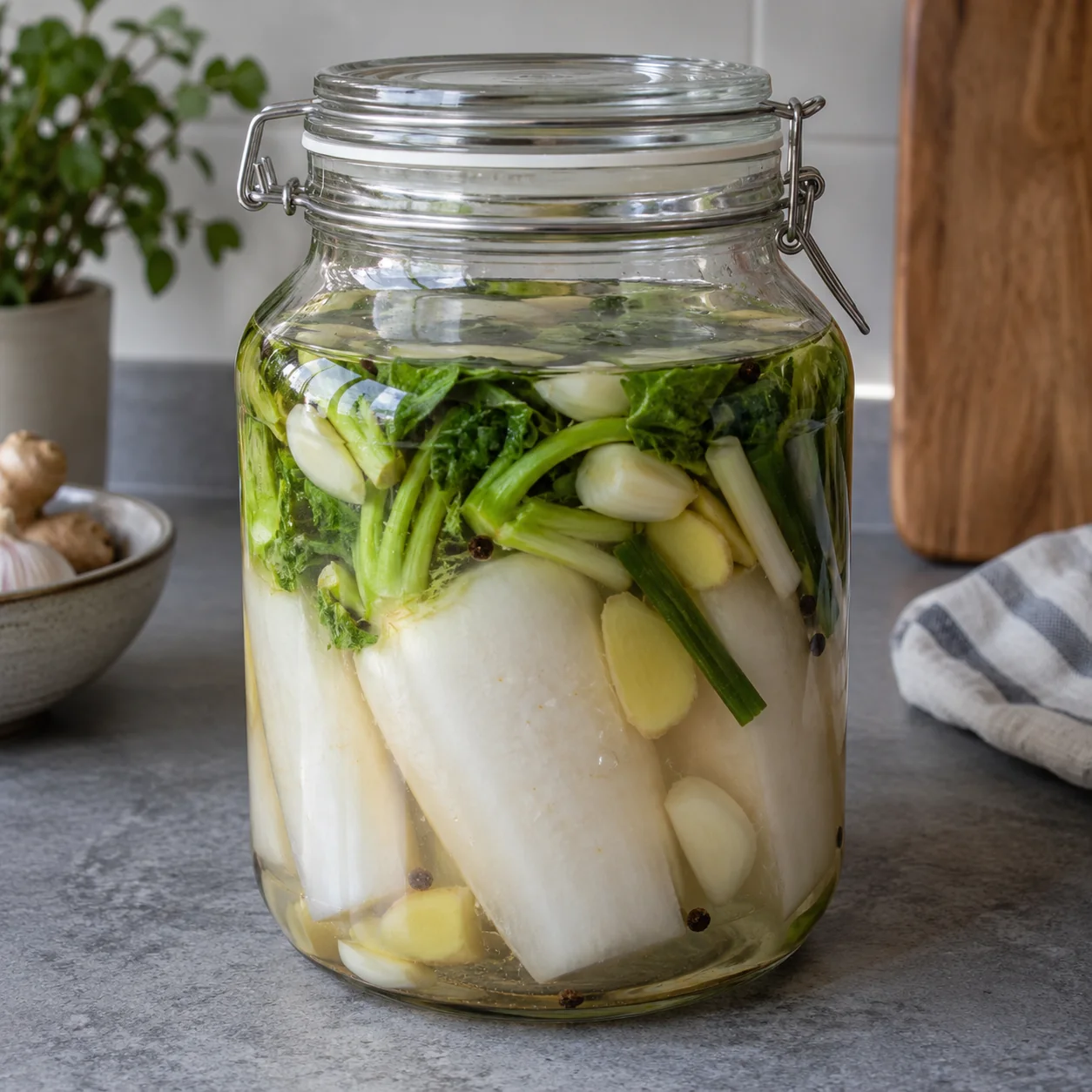
AI-generated cooking illustrations. Follow the written quantities and instructions.
Ingredients
6 servings
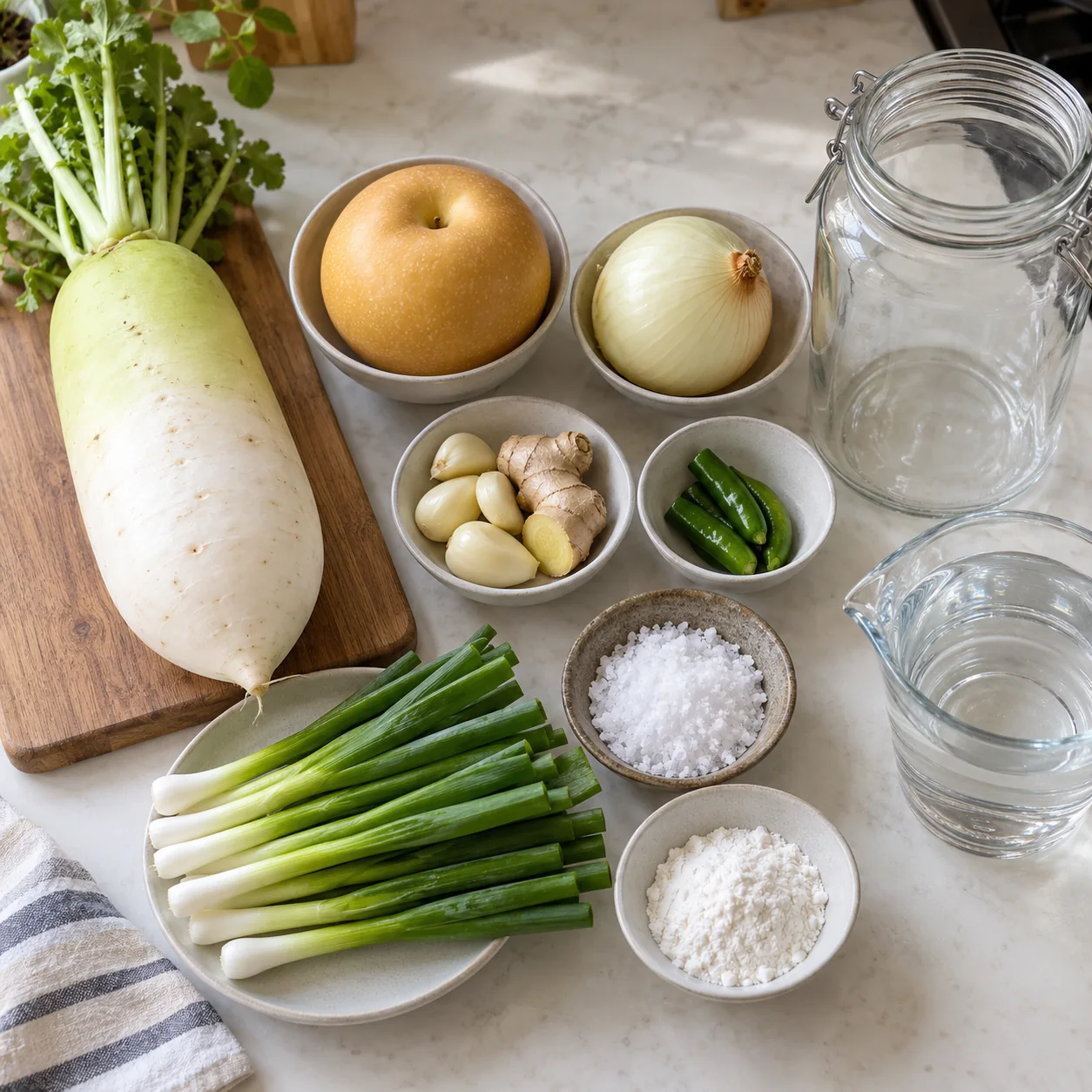
Everyday kitchen measurements
For 6 servings. Use a small 180 ml paper cup, a level eating spoon (about 15 ml) and a small teaspoon (about 5 ml).
How to fill the cup and spoons
Use the same cup and spoons throughout. Their sizes vary, so these amounts are approximate. Spoon flour in loosely and level the top without pressing. Measure vegetables after chopping, without packing them down. The amounts in g/ml are the original reference quantities. For part of a pack, use the specified pack weight and divide the contents evenly.
King Arthur Baking-
Substitute available
If Korean radish or daikon — 1 medium, about 700 g, peeled is unavailable
Daikon is an easy substitute. Choose a firm radish; peel only if the skin is tough.
-
Essential
Use plain coarse salt without flavorings. Do not use the whole amount at once; the rest seasons the brine.
-
Essential
Use drinking water. Boil it, then cool completely before mixing the brine.
-
Essential
Dissolve fully in the cooled water. Taste the brine; it should be pleasantly salty, not harsh.
-
Substitute available
If Asian pear or sweet apple — 1/2 medium, sliced is unavailable
Use apple if Asian pear is unavailable; it makes the broth a little sweeter.
-
Optional
Omit if unavailable; it adds a mild aroma.
-
Essential
Use 1/2 level teaspoon garlic powder if fresh garlic is unavailable.
-
Substitute available
If Fresh ginger — 2 thin slices is unavailable
Use 1/4 level teaspoon ground ginger if fresh ginger is unavailable.
-
Substitute available
If Scallions — 2 stalks, cut in half is unavailable
Use 2 chives or omit if unavailable.
-
Optional
Omit for a completely mild kimchi or for children.
-
Optional
Omit for a clearer, lighter broth; it only adds a little body.
Tap each ingredient as you prepare it. Check product labels for egg, soy, sesame, wheat, fish or shellfish where relevant.
Step-by-step cooking
-
Step 1
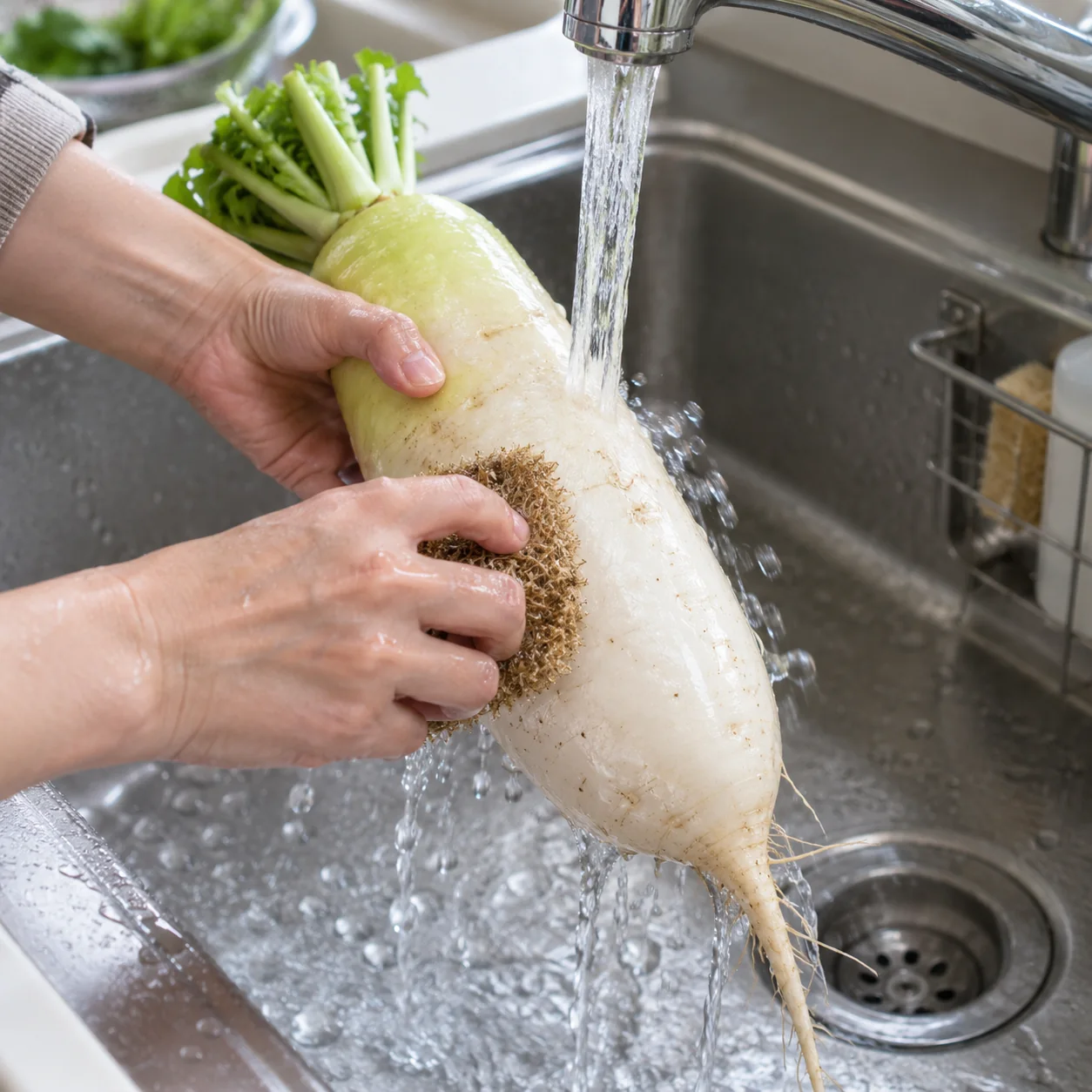
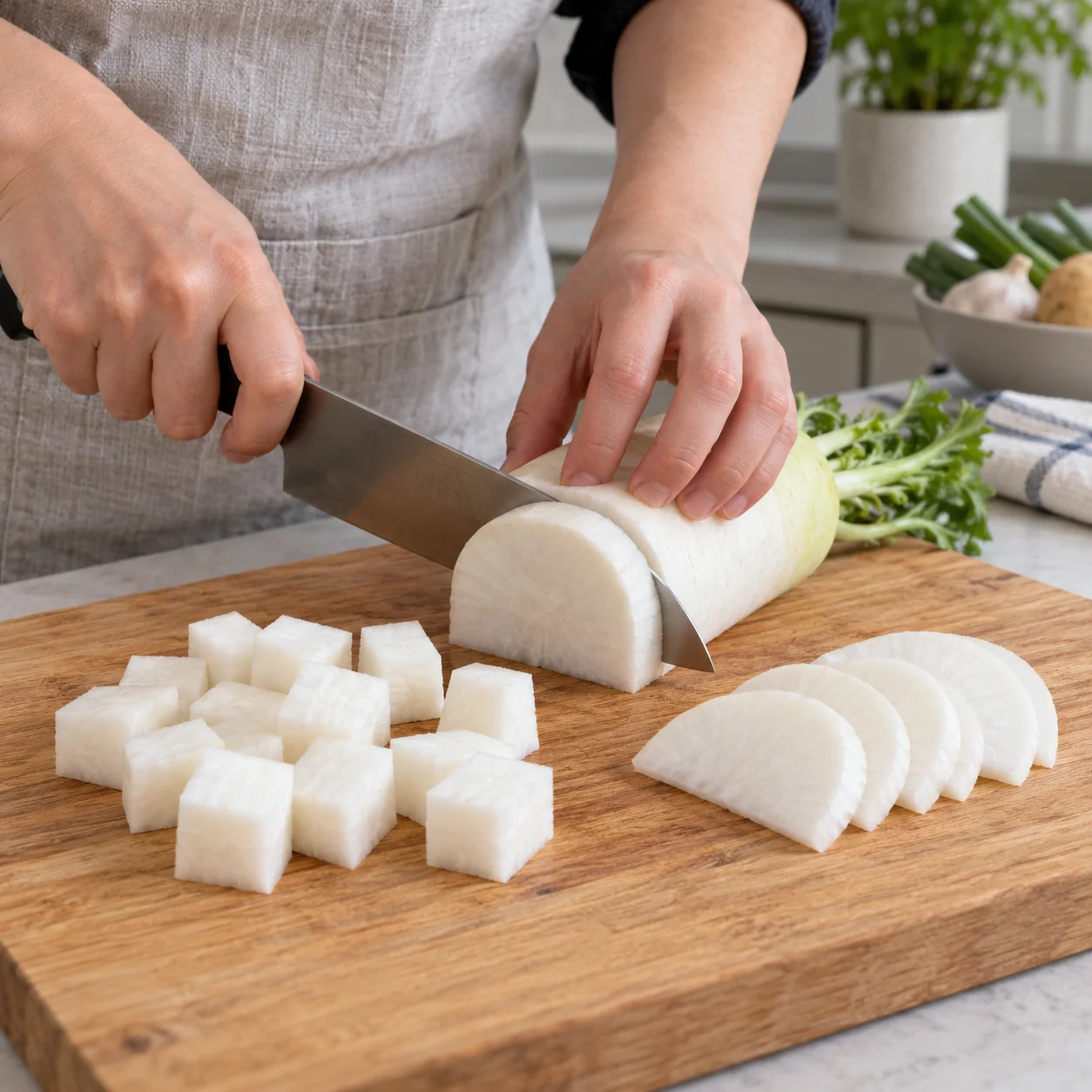
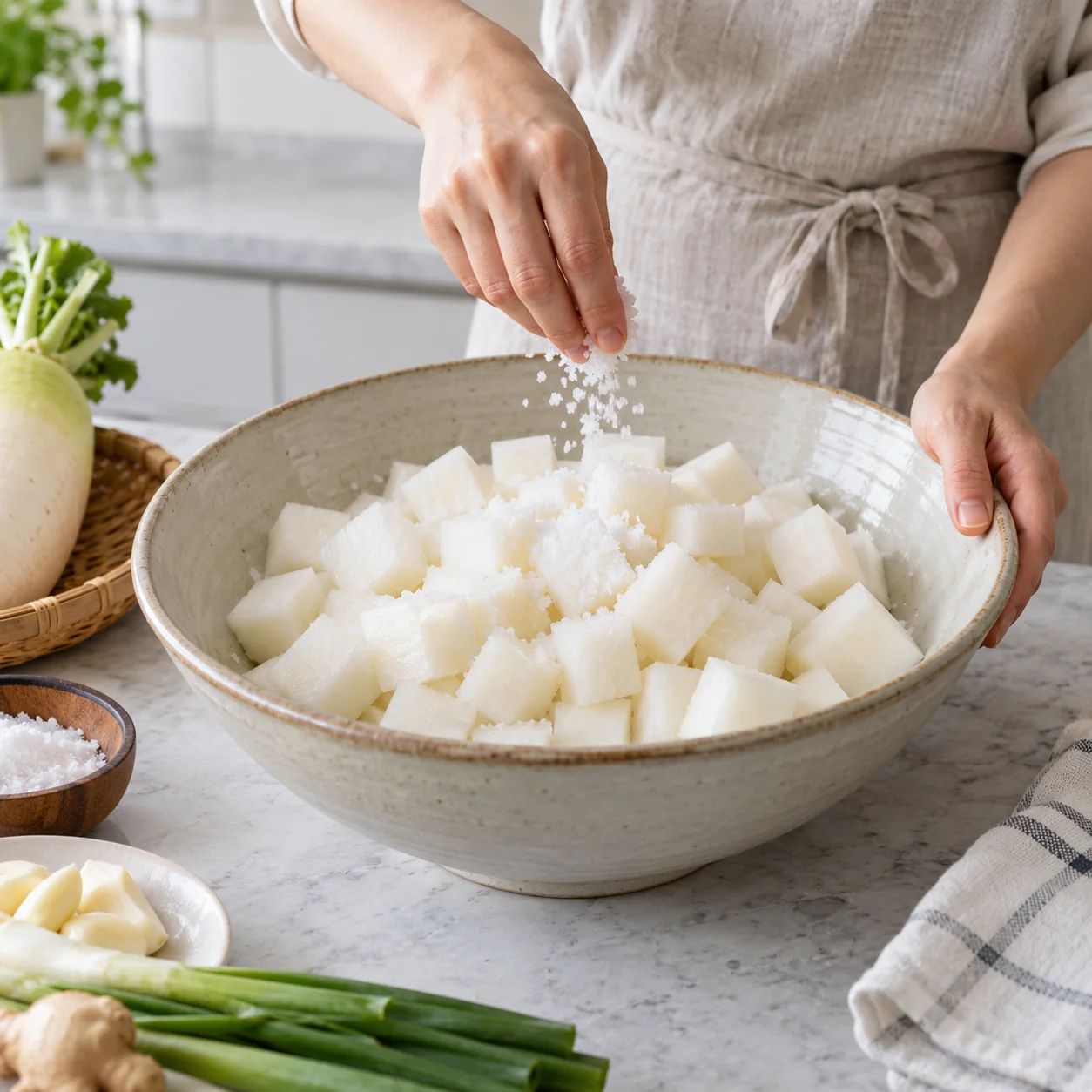
Wash the radish well. Peel it if the skin is tough, then cut it into 2 cm cubes or thin half-moons so it is easy to serve.
-
Step 2
Put the radish in a clean bowl and toss with 1 level tablespoon coarse salt. Rest for 30 minutes, turning once halfway through. Do not rinse; keep the liquid that collects.
-
Step 3
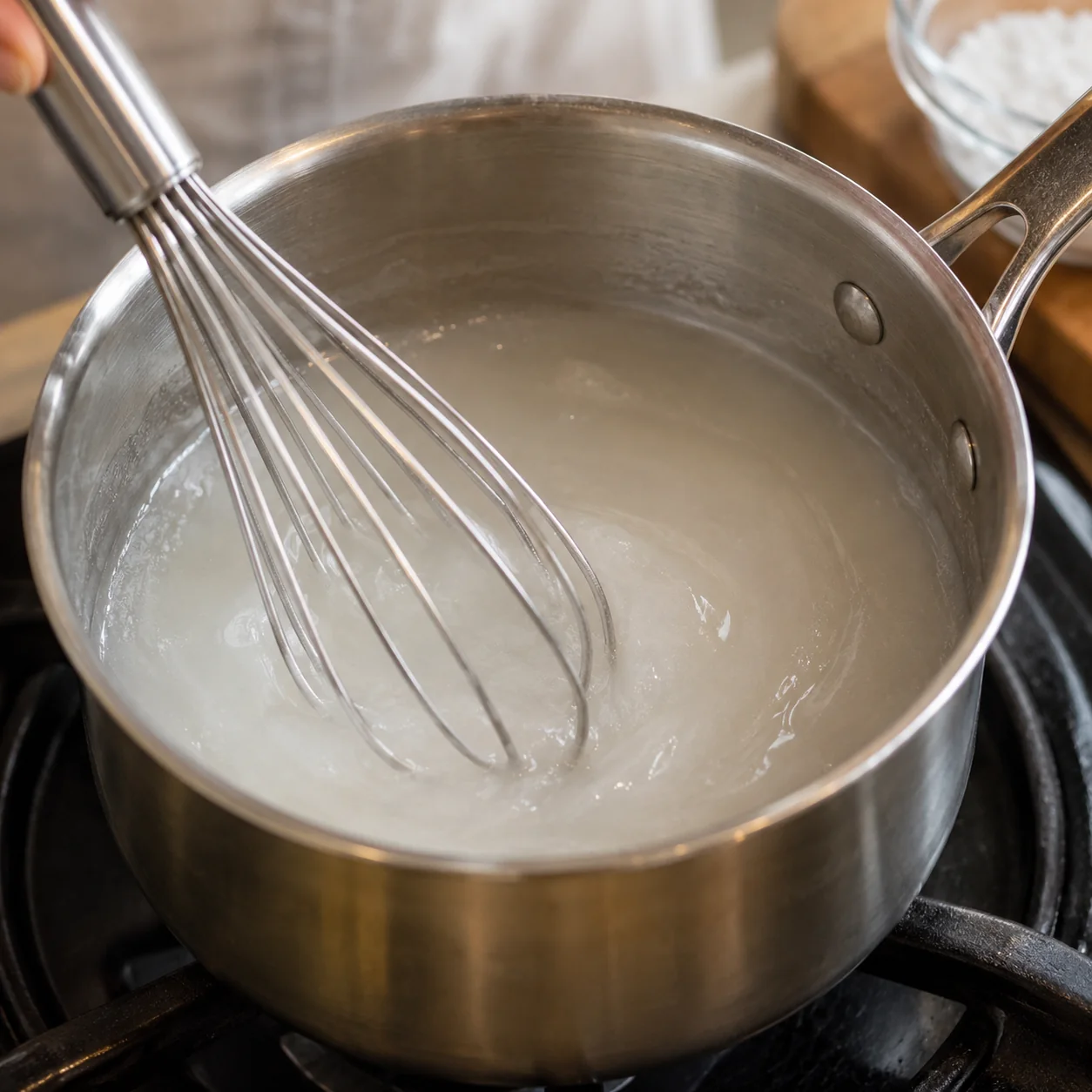
If using rice flour, whisk 1 teaspoon into 1/2 paper cup water in a small pan. Stir over medium-low heat until lightly thickened, about 2 minutes, then cool completely. Otherwise skip this step.
-
Step 4
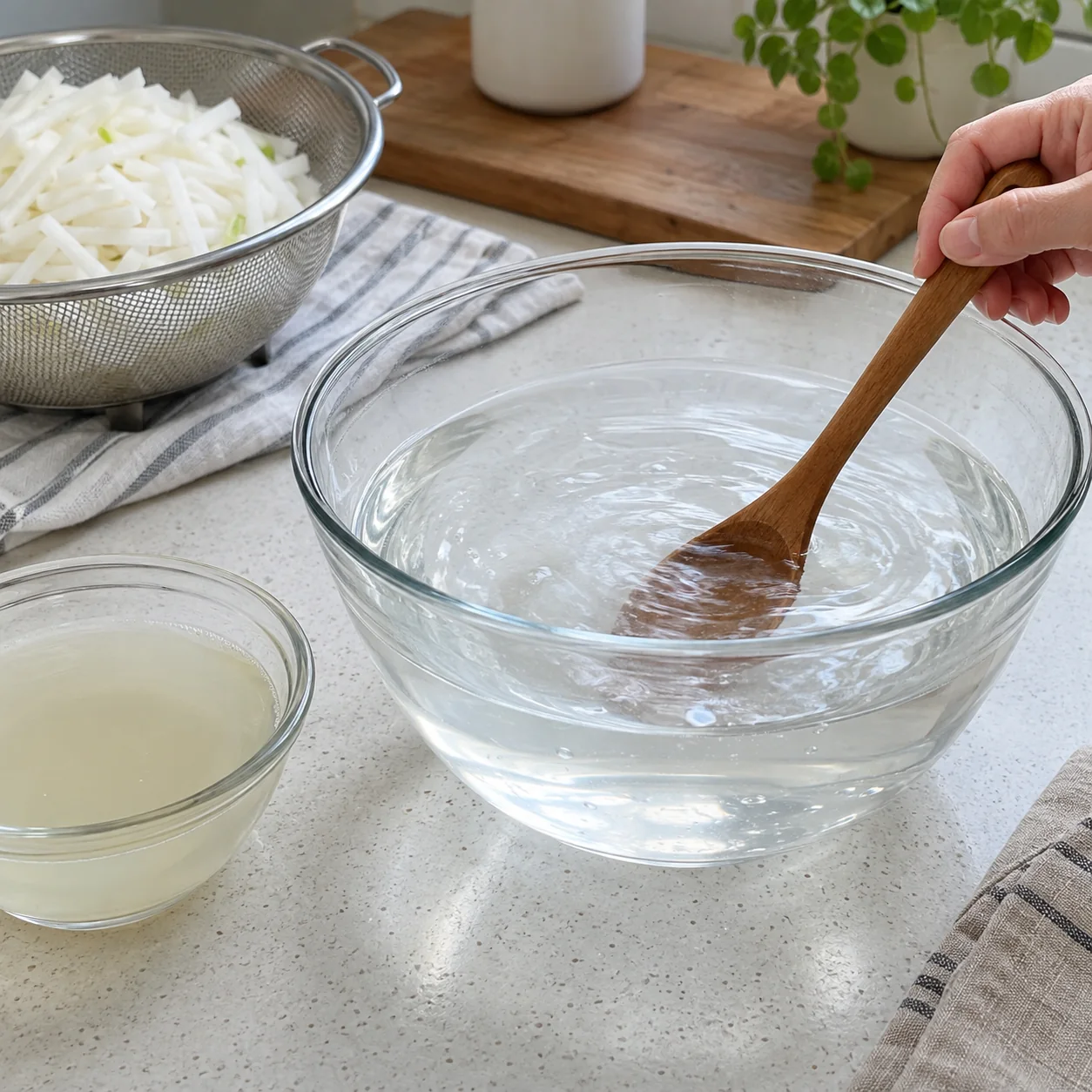
Pour 5 paper cups boiled-and-cooled water into a clean large bowl. Stir in 1 tablespoon coarse salt and the cooled rice-flour mixture if using. Add the liquid from the salted radish.
-
Step 5
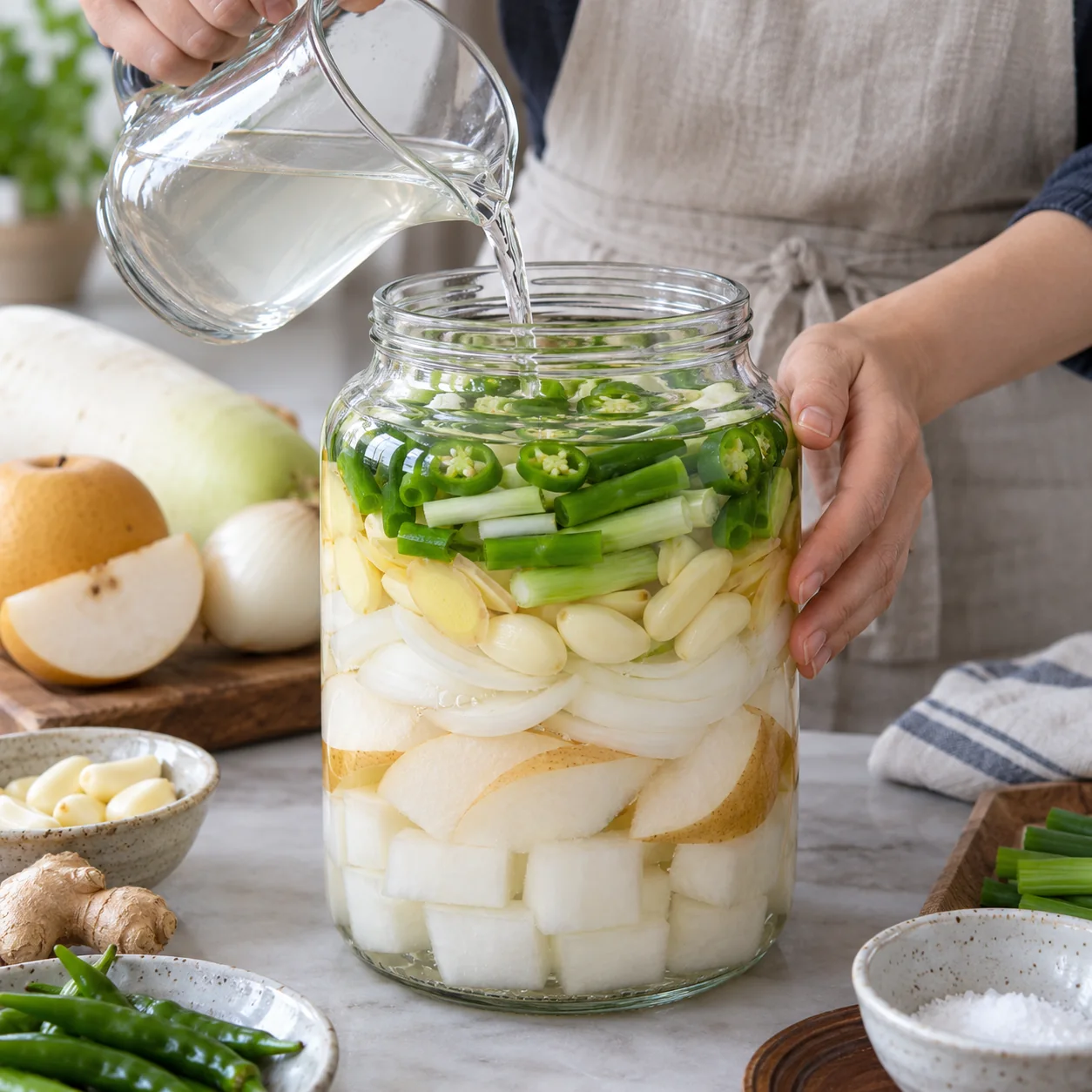
Put the radish, pear, onion, garlic, ginger, scallions and slit chili into a clean glass jar. Pour in the brine until everything is covered. Use a clean small weight or folded cabbage leaf to keep pieces submerged; close the lid loosely.
-
Step 6
Leave at a cool room temperature for 1 to 2 days, checking once a day. When the brine smells pleasantly fermented and tastes lightly sour, refrigerate it. Fermentation speed changes with room temperature. Serve chilled with radish pieces and some brine.
Finished dish
A paper cup is 180 ml; a level tablespoon is 15 ml and a teaspoon is 5 ml. Use a very clean jar and utensils, keep all vegetables under the brine, and refrigerate once pleasantly tangy. Fermentation time varies with room temperature. Contains no fish sauce; check salt labels if needed.