Seasoned mung bean sprouts (sukju-namul)
A mild Korean vegetable side with fully cooked mung bean sprouts, garlic and a little sesame oil. A light, simple banchan with thin stems and small heads, distinct from soybean sprouts.

Ingredients
3 servings

Everyday kitchen measurements
For 3 servings. Use a small 180 ml paper cup, a level eating spoon (about 15 ml) and a small teaspoon (about 5 ml).
How to fill the cup and spoons
Use the same cup and spoons throughout. Their sizes vary, so these amounts are approximate. Spoon flour in loosely and level the top without pressing. Measure vegetables after chopping, without packing them down. The amounts in g/ml are the original reference quantities. For part of a pack, use the specified pack weight and divide the contents evenly.
King Arthur Baking-
Essential
Needed for this version; use the listed amount at the stated step.
-
Essential
Needed for this version; use the listed amount at the stated step.
-
Essential
Needed for this version; use the listed amount at the stated step.
-
Optional
May be omitted without changing the other quantities.
-
Substitute available
If Toasted sesame oil is unavailable
- Use instead
- Edible perilla seed oil
- Substitute quantity
- 1 small teaspoonReference quantity: 5 ml
If toasted sesame oil is unavailable, use this same amount of edible perilla seed oil instead, not both. Add at the mixing step; the aroma changes. Do not use cosmetic oil.
-
Optional
May be omitted without changing the other quantities.
-
Optional
May be omitted without changing the other quantities.
Tap each ingredient as you prepare it. Check product labels for egg, soy, sesame, wheat, fish or shellfish where relevant.
Step-by-step cooking
Check off a completed step to move to the next one. After the last step, you will move to the finished dish.
Completed steps are saved in this browser. Start over to clear this recipe’s progress.
-
Step 1
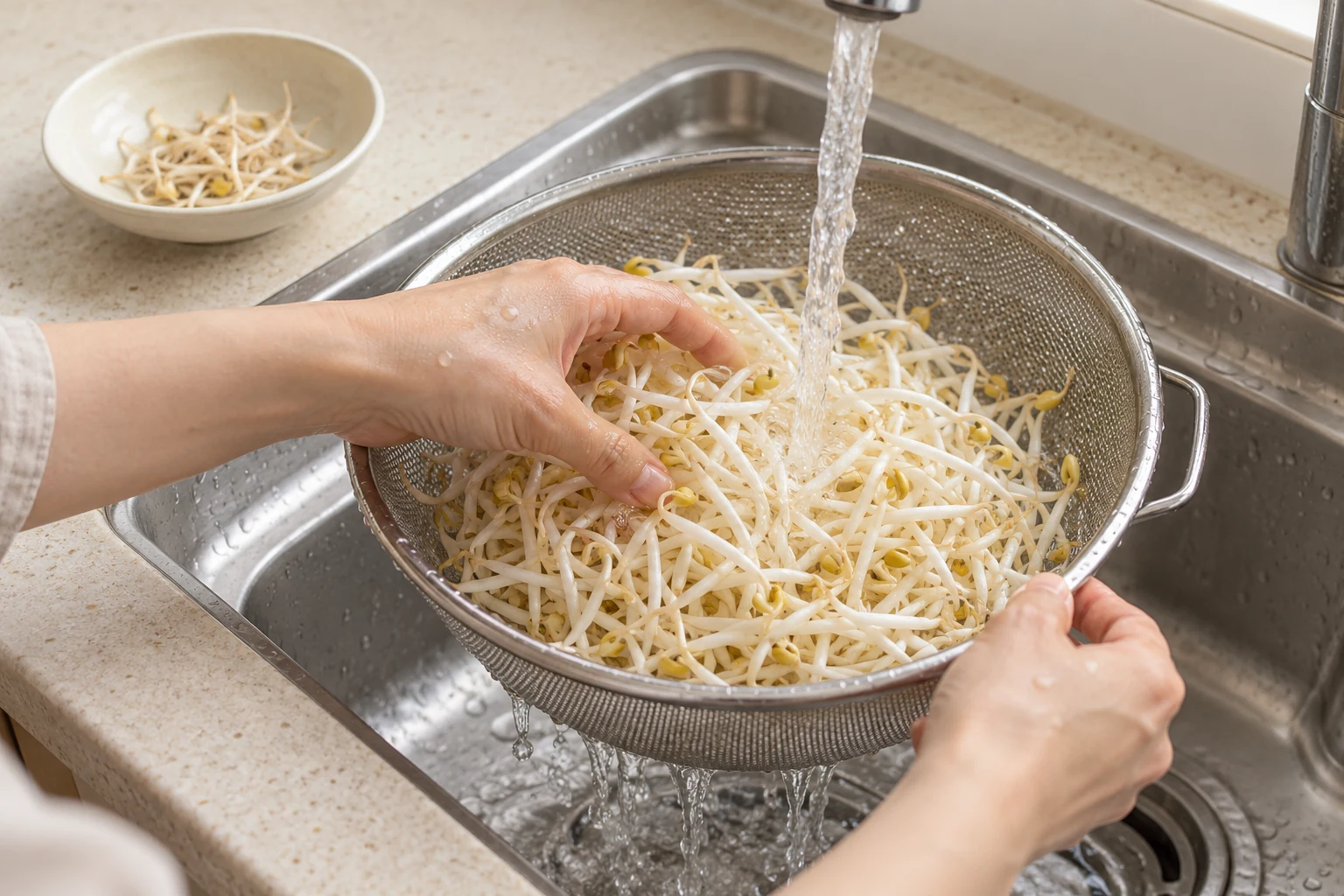
Use a fresh 300 g pack of mung bean sprouts. Remove discolored roots and damaged sprouts; discard the pack if slimy or sour-smelling. Rinse under clean drinking water and drain. Peel and mince the optional half garlic clove; wash and finely slice the optional half spring onion.
-
Step 2
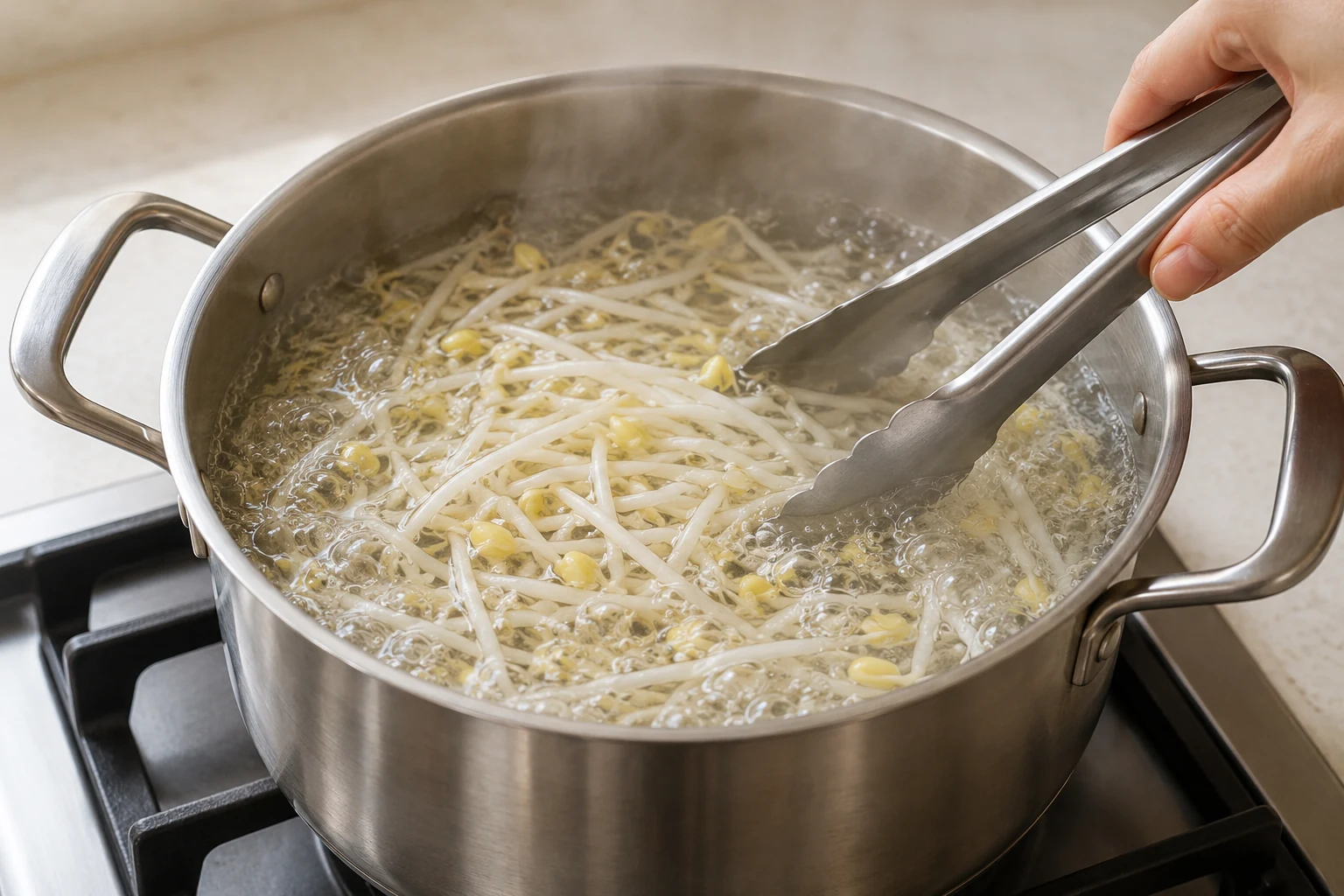
Bring 6 small paper cups water to a rolling boil in a roomy pot. Add the sprouts, gently submerge them and let the water return to a boil. Cook uncovered for 3–4 minutes until the whole batch is steaming hot and the stems are tender and flexible. Do not serve them raw or merely warmed.
-
Step 3
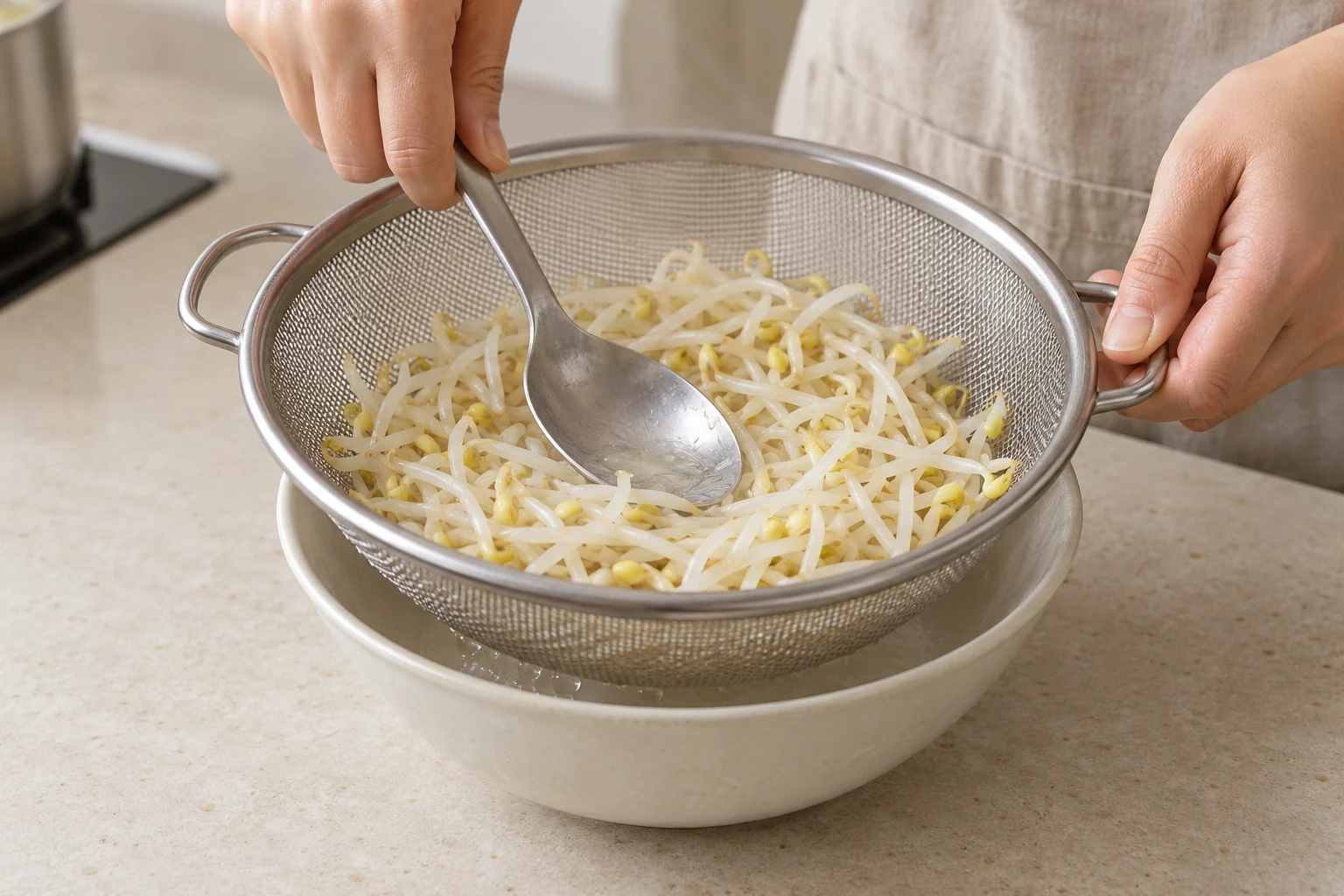
Drain carefully in a colander, keeping hands away from steam. Discard the cooking water. Spread the sprouts in the colander and let steam escape for 5 minutes. Press lightly with a clean spoon to release excess water, without wringing or crushing the stems.
-
Step 4
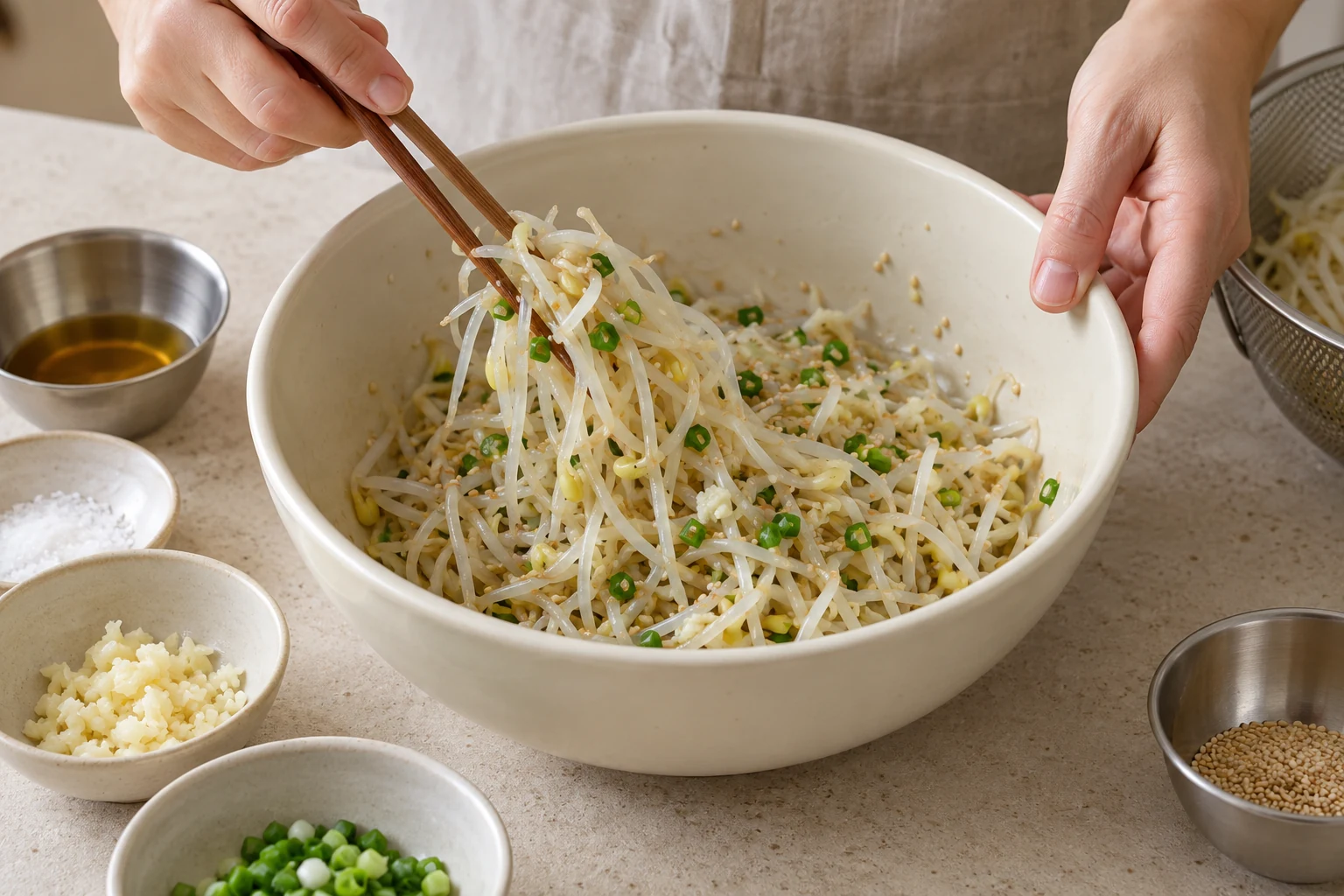
Transfer to a clean bowl. Add ¼ small teaspoon fine salt and 1 small teaspoon sesame oil, plus the optional garlic, spring onion and 1 small teaspoon sesame seeds. Lift and fold gently until evenly seasoned. Serve promptly; if saving it, cool and refrigerate within 2 hours.


Finished dish
3 side-dish servings. Small paper cup 180 ml; level tablespoon 15 ml; small teaspoon 5 ml. Contains sesame. The boiling water is discarded, not added to the dressing. Cook the sprouts thoroughly, use clean utensils, refrigerate at 4°C or below and eat within 2 days.
Related recipes


Enjoy every bite
How to enjoy it
Serve beside rice or add to bibimbap. Drain well before seasoning so water does not wash away the sesame aroma.
Serve it with

Jeyuk Bokkeum — Spicy Pork Stir-fry
Thin slices of pork and onion in a sweet, spicy gochujang sauce. Learn how to coat the meat, keep the pan from becoming watery, and finish without burning the sauce.

Spicy Korean chicken stew
Bone-in chicken, potatoes and vegetables simmered in a rich red gochujang sauce. Follow the vegetable timings so the chicken cooks through without turning the potatoes to mash.