Spicy kimchi jajang ramyeon
Tangy sautéed kimchi and a small pinch of Korean chilli flakes cut through the sweet-savoury black-bean sauce for a quick spicy variation.
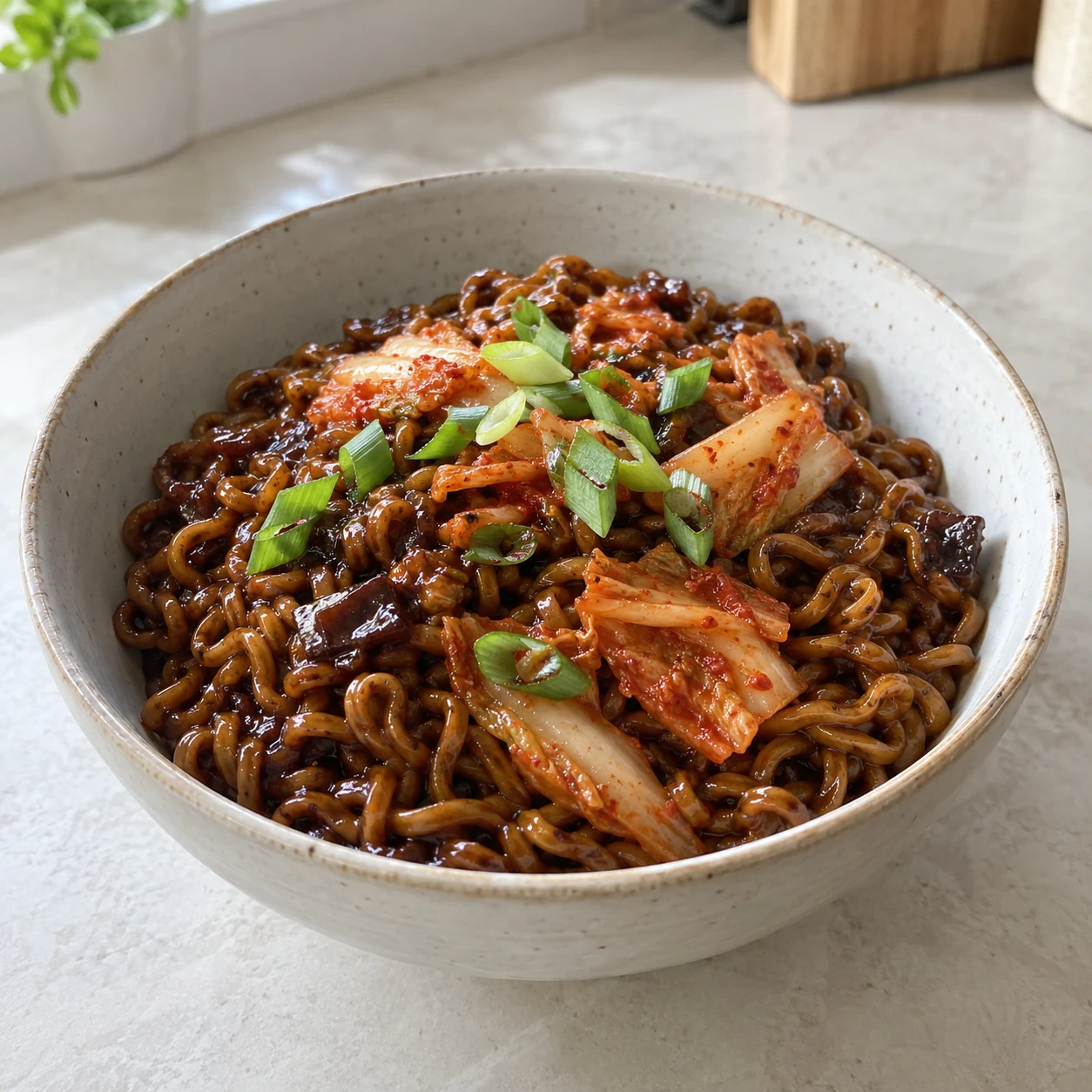
AI-generated cooking illustrations. Follow the written quantities and instructions.
Ingredients
2 servings
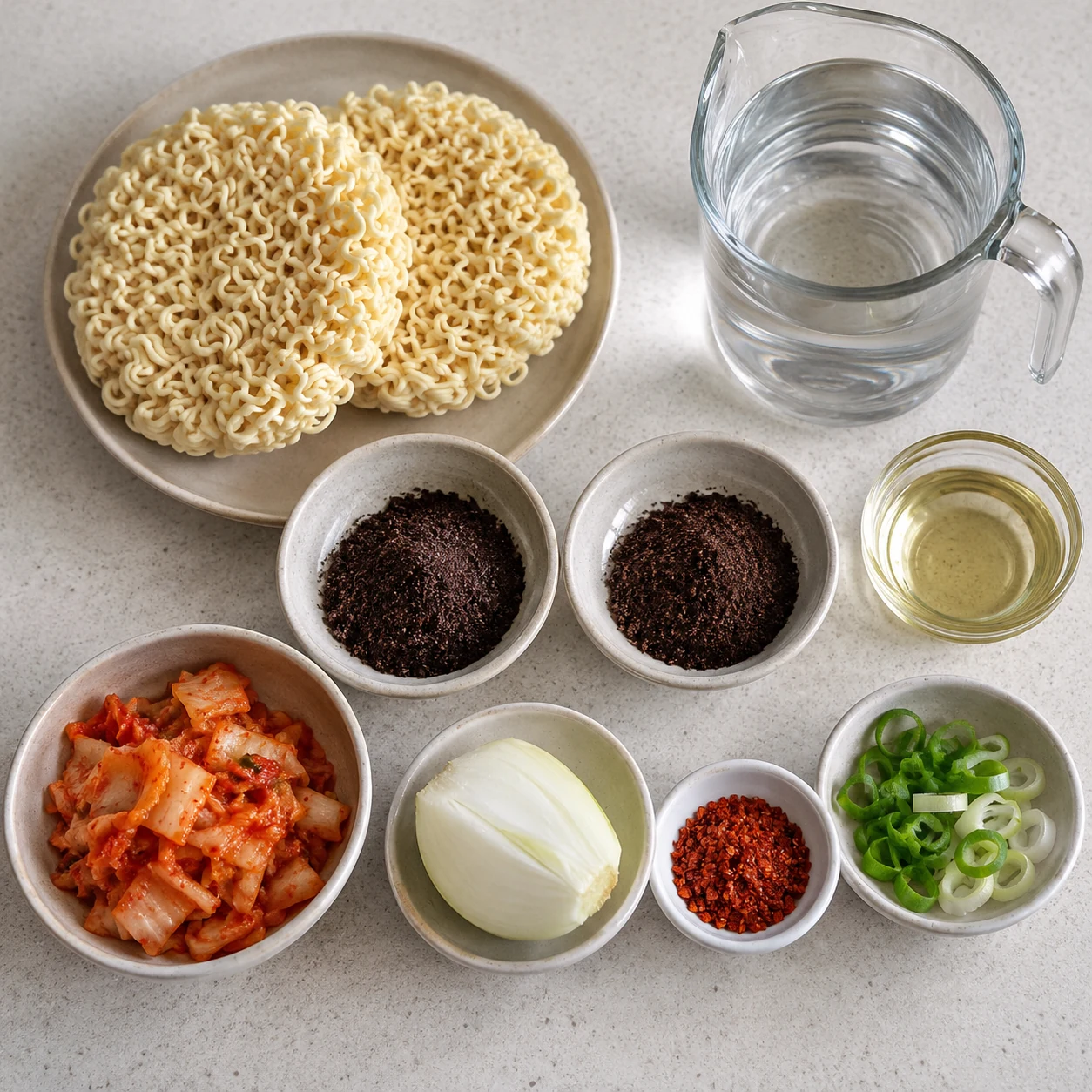
Everyday kitchen measurements
For 2 servings. Use a small 180 ml paper cup, a level eating spoon (about 15 ml) and a small teaspoon (about 5 ml).
How to fill the cup and spoons
Use the same cup and spoons throughout. Their sizes vary, so these amounts are approximate. Spoon flour in loosely and level the top without pressing. Measure vegetables after chopping, without packing them down. The amounts in g/ml are the original reference quantities. For part of a pack, use the specified pack weight and divide the contents evenly.
King Arthur Baking-
Substitute available
If Instant Korean black-bean noodle packs with included sauce is unavailable
- Use instead
- Plain instant noodle blocks plus ready-to-eat Korean black-bean sauce
- Substitute quantity
- 2 blocks + ½ paper cup sauceReference quantity: about 200 g noodles + 90 g sauce
Cook the plain noodles to their packet time. Use the ready-to-eat sauce instead of the missing powder sachets; it may already contain salt and oil, so start with less noodle water.
-
Essential
Boil noodles in 900 ml water. Before draining, save ⅔ paper cup (120 ml) of this water; you will add only what the sauce needs.
-
Substitute available
If Kimchi, chopped and squeezed is unavailable
- Use instead
- Well-drained fermented cabbage plus gochugaru
- Substitute quantity
- ½ paper cup cabbage + ½ small teaspoon chilli flakesReference quantity: 90 g + about 1 g
The substitute is less tangy and less like kimchi; avoid sweet pickles and taste before adding more chilli.
-
Optional
Leave out if unavailable; the kimchi still gives the sauce flavour.
-
Optional
Leave out for a milder bowl. If the kimchi is already hot, begin with only half a teaspoon.
-
Optional
Use only enough to keep the kimchi from sticking; omit if using an included oil sachet.
-
Optional
Scatter on at the end; omit if unavailable.
Tap each ingredient as you prepare it. Check product labels for egg, soy, sesame, wheat, fish or shellfish where relevant.
Step-by-step cooking
-
Step 1
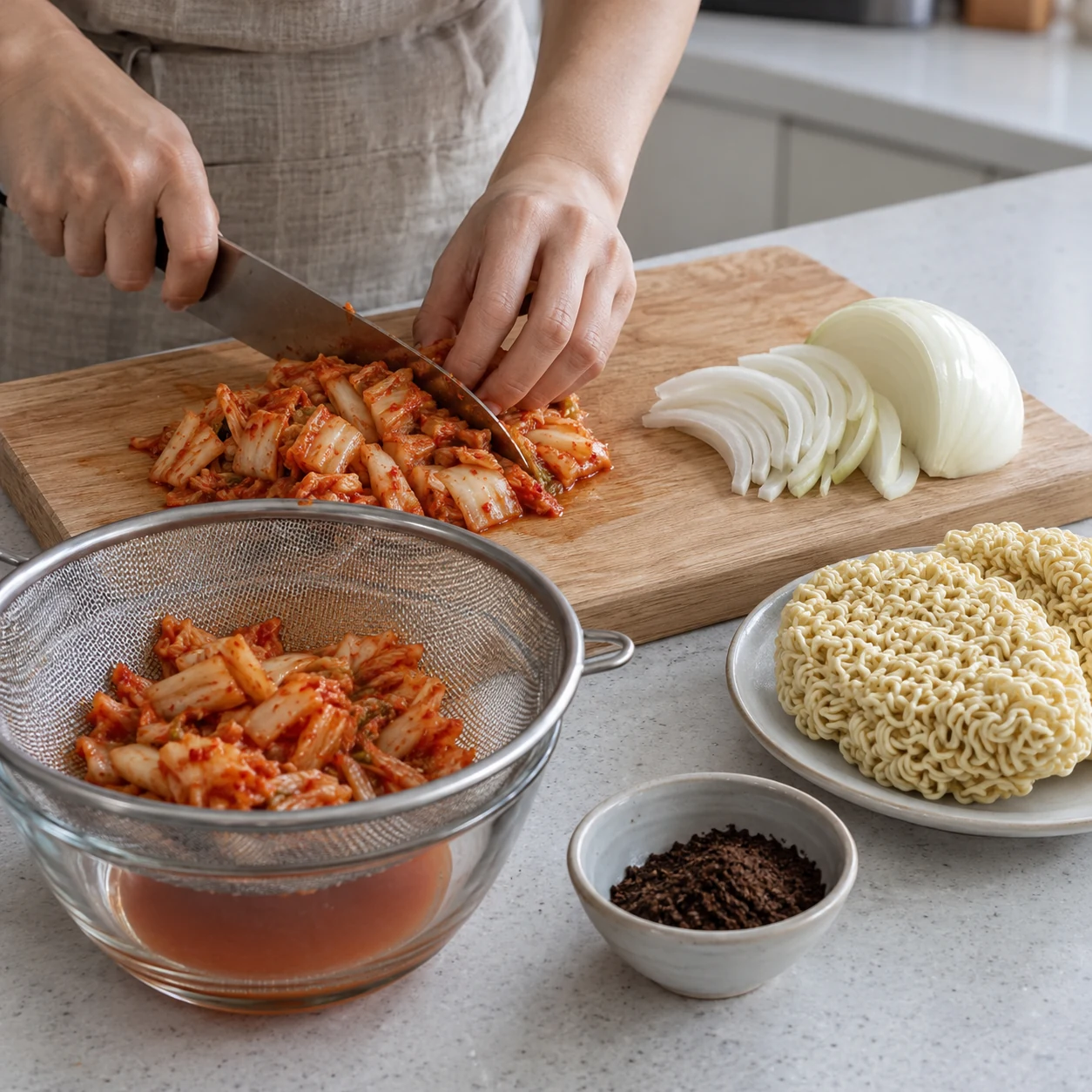
Open both instant black-bean noodle packs. Set aside the full sauce sachets and any dried-vegetable or oil sachets. Chop the kimchi and squeeze out most of its brine so the final sauce will not be watery. Slice the optional onion and spring onion.
-
Step 2
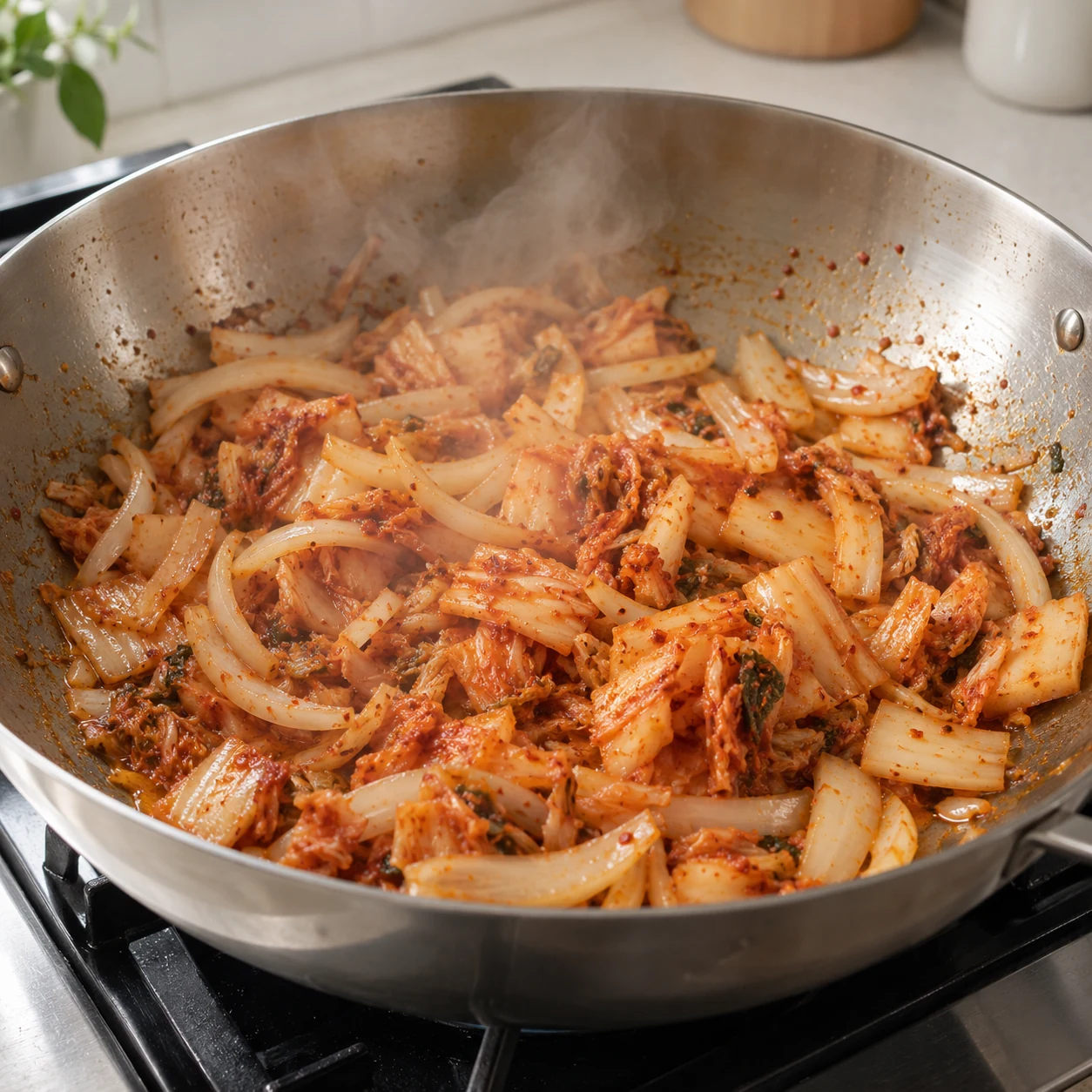
Warm a wide nonstick pan over medium heat. Add optional 1 small teaspoon of oil, then the squeezed kimchi and optional onion. Stir for 3–4 minutes until the onion softens and the kimchi edges lightly caramelize. Add up to 1 small teaspoon of gochugaru only if you want more heat; stir for 20 seconds without burning the flakes.
-
Step 3
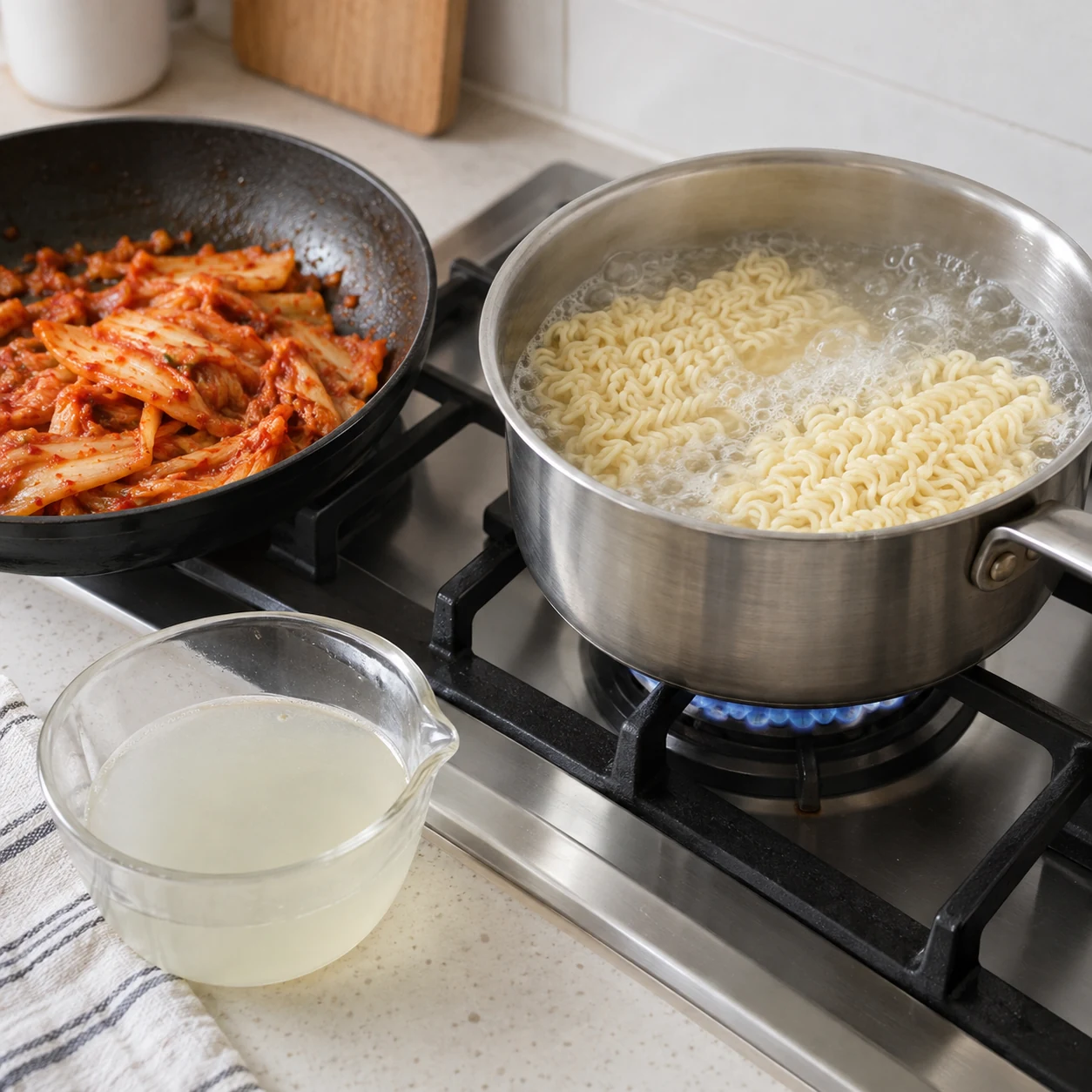
Boil 5 paper cups (900 ml) water in a separate pot. Add the two noodle blocks and any dried-vegetable sachets. Cook about 3–4 minutes, or one minute less than the packet time. Save ⅔ paper cup (120 ml) noodle water in a heat-safe cup, then drain the noodles.
-
Step 4
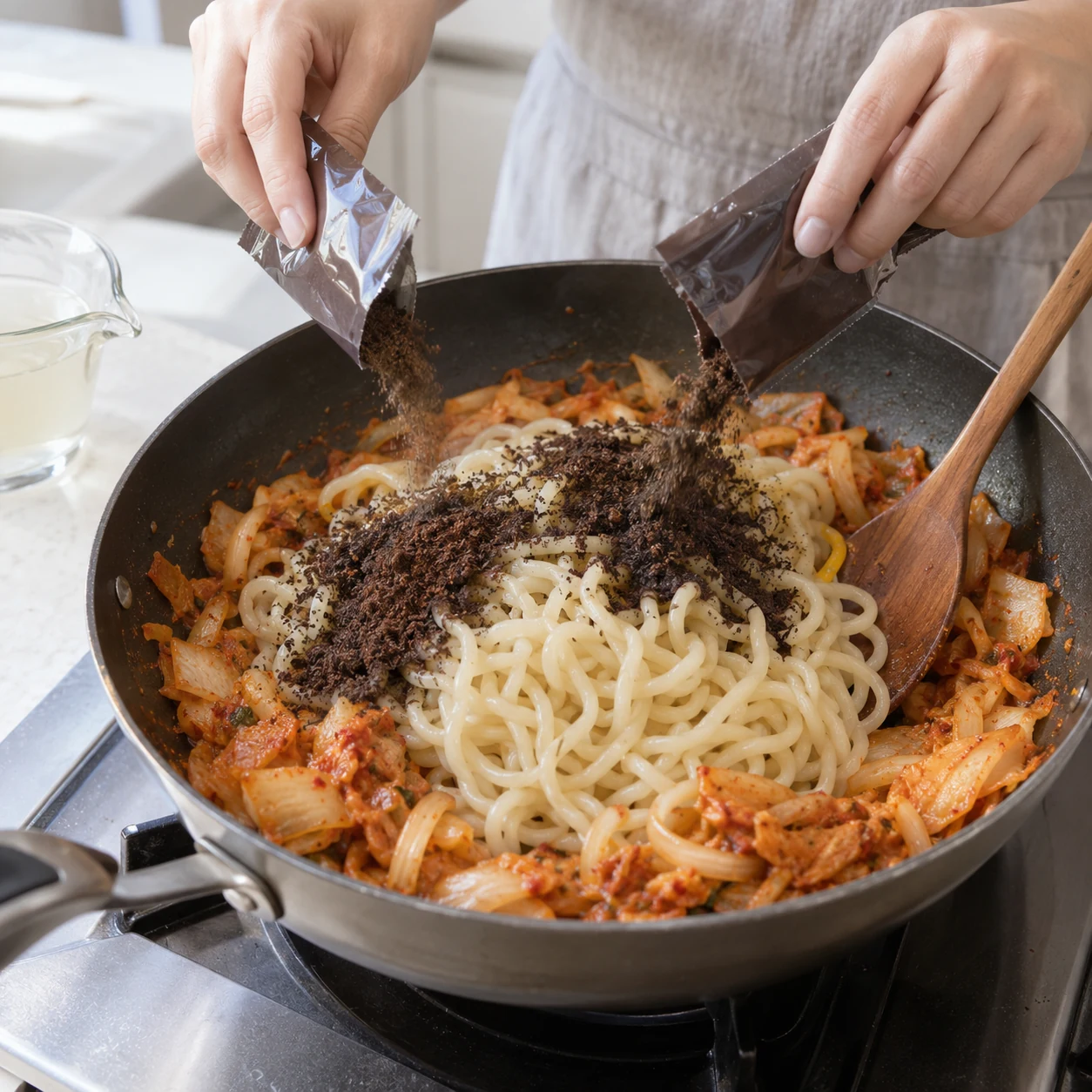
Turn the kimchi pan to low heat. Add the drained noodles and both full black-bean sauce sachets. If the sauce is powder, add 4 level eating spoons (60 ml) saved noodle water; if liquid, start with 2 level eating spoons (30 ml). Stir until the seasoning dissolves and coats the kimchi.
-
Step 5
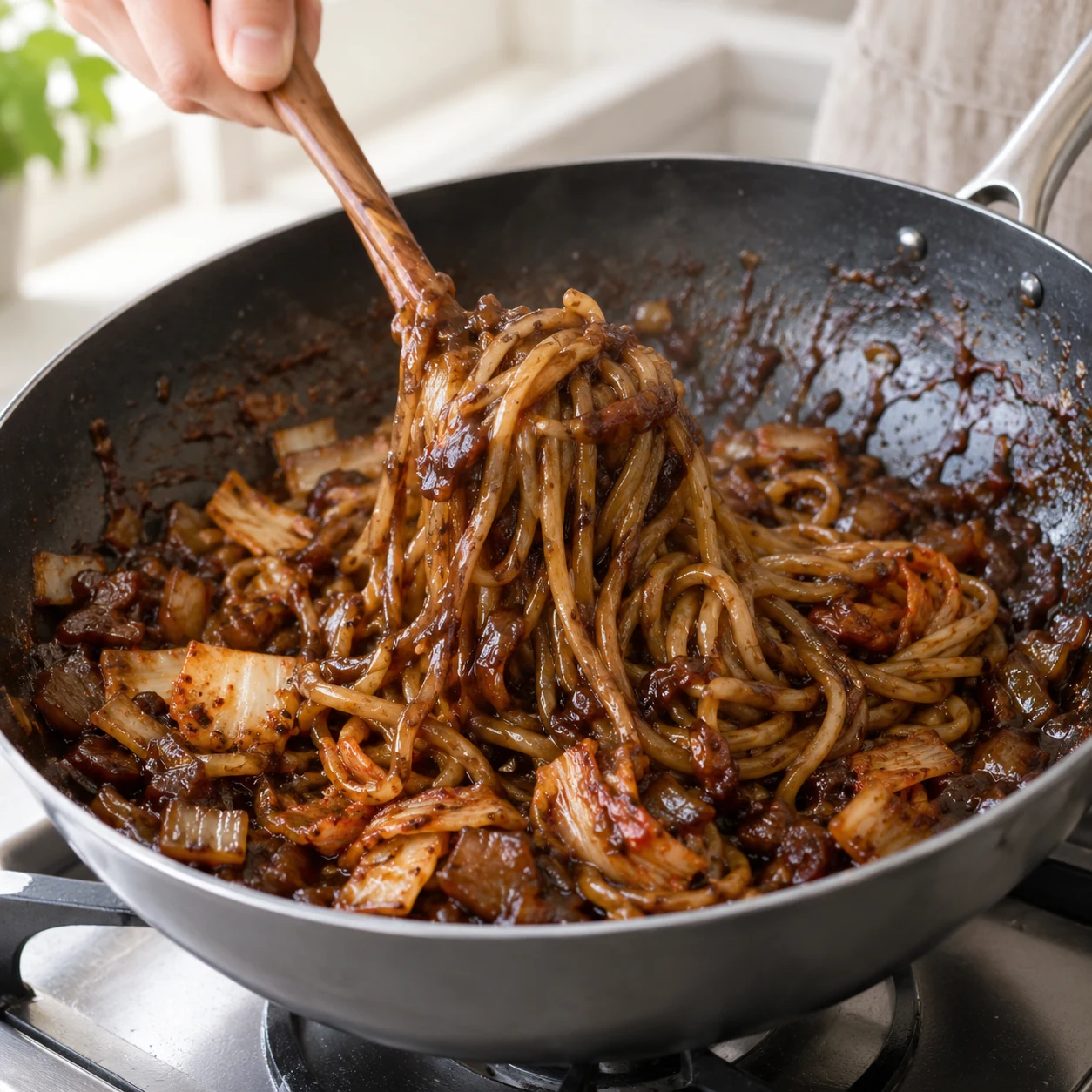
Toss for 30–60 seconds until the noodles are glossy and the kimchi is evenly mixed. Add extra saved water 1 level eating spoon at a time only if the sauce looks dry; stop before the pan becomes soupy. Taste before adding any extra salt, because kimchi and packet sauce are both seasoned.
-
Step 6
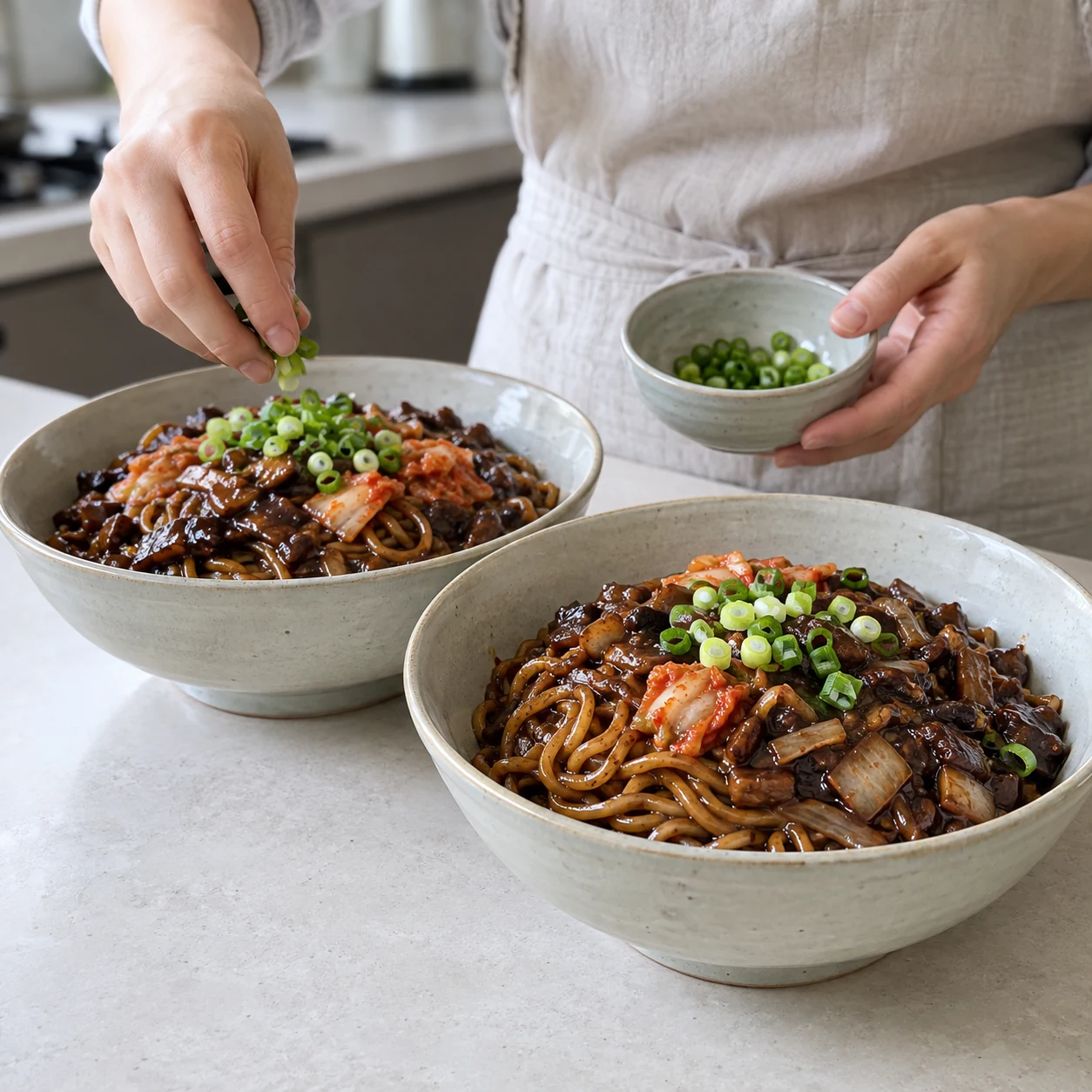
Turn off the heat and divide into two bowls. Add optional spring onion and serve immediately. The finished dish is spicy even without extra chilli flakes; for a less hot bowl, rinse and squeeze the kimchi briefly before frying and leave out the gochugaru.
Finished dish
Use well-drained kimchi so the black-bean sauce stays thick. Kimchi varies greatly in heat and salt, and packet sauces vary in liquid content. Begin with less water for liquid sauce and omit extra gochugaru if serving someone sensitive to spice.
Enjoy every bite
How to enjoy it
Frying squeezed kimchi first concentrates its flavour without watering down the jajang sauce. A mild egg side balances the heat.
Serve it with
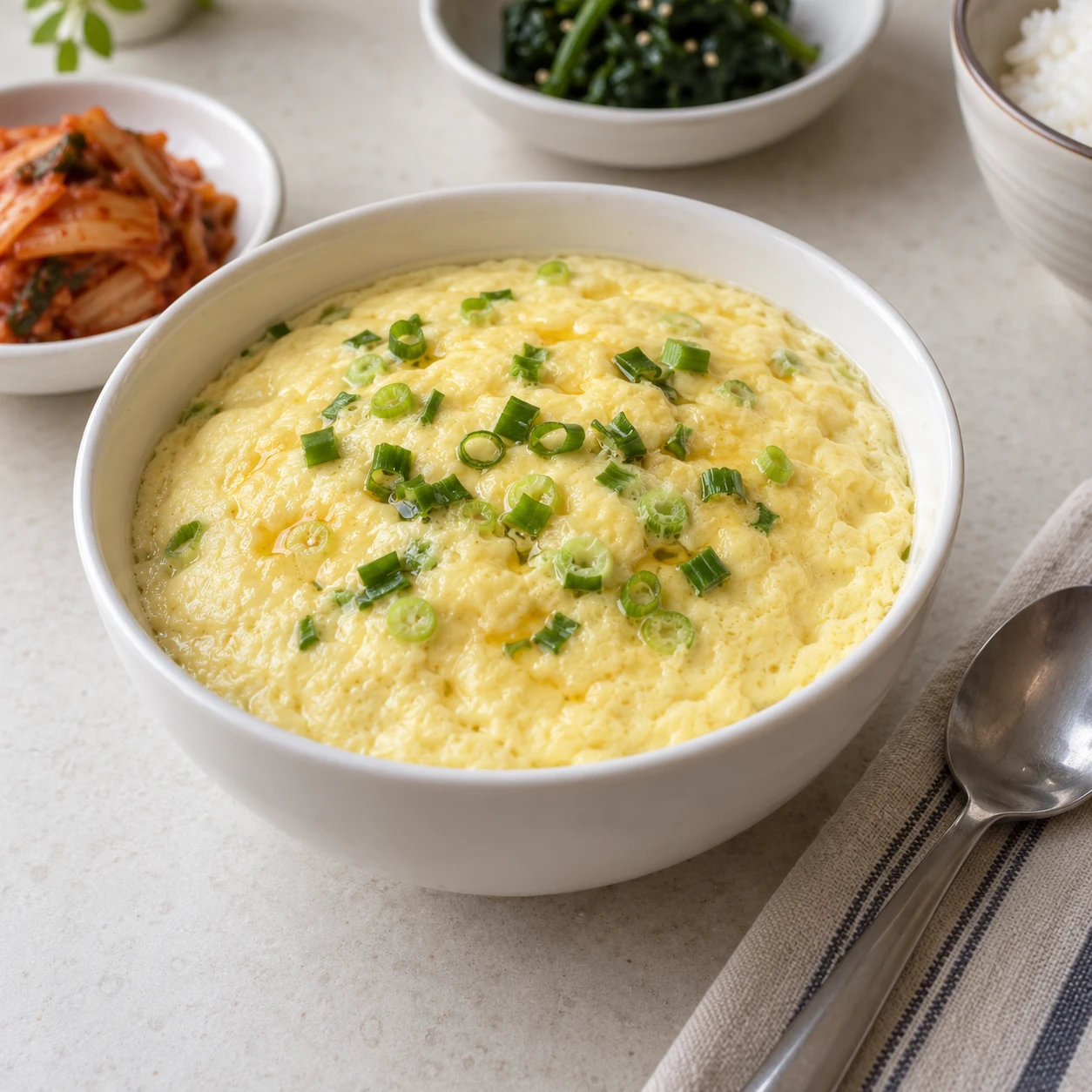
Korean steamed eggs
Soft, gently seasoned egg contrasts with a stronger sauce or a crisp bite.
View recipe
Soft vegetable rice bites (Jumeokbap)
A small rice bite goes well with a more strongly seasoned dish.
View recipe