King oyster mushroom jeon
Thin king oyster slices with a light flour-and-egg coating, pan-fried until golden and tender. A mild traditional Korean side, made as individual pieces rather than a thick batter pancake.

Ingredients
2 servings

Everyday kitchen measurements
For 2 servings. Use a small 180 ml paper cup, a level eating spoon (about 15 ml) and a small teaspoon (about 5 ml).
How to fill the cup and spoons
Use the same cup and spoons throughout. Their sizes vary, so these amounts are approximate. Spoon flour in loosely and level the top without pressing. Measure vegetables after chopping, without packing them down. The amounts in g/ml are the original reference quantities. For part of a pack, use the specified pack weight and divide the contents evenly.
King Arthur Baking-
Substitute available
If Cultivated king oyster mushrooms is unavailable
- Use instead
- Cultivated white button mushrooms
- Substitute quantity
- 1 pack of 200 gReference quantity: 200 g
If king oyster mushrooms are unavailable, use this amount of cultivated white button mushrooms, sliced 5 mm thick. Use the same thin flour and egg coating; check tenderness as smaller pieces can cook sooner. The texture is softer. Do not use unidentified wild mushrooms.
-
Essential
Needed for this version; use the listed amount at the stated step.
-
Substitute available
If Plain wheat flour is unavailable
- Use instead
- Fine non-glutinous rice flour
- Substitute quantity
- 2 level tablespoonsReference quantity: 16 g
If wheat flour is unavailable, use this amount of fine non-glutinous rice flour. Dust thinly and shake off excess before dipping in egg. The coating differs slightly; do not use glutinous rice flour.
-
Essential
Needed for this version; use the listed amount at the stated step.
-
Essential
Needed for this version; use the listed amount at the stated step.
-
Optional
May be omitted without changing the other quantities.
Tap each ingredient as you prepare it. Check product labels for egg, soy, sesame, wheat, fish or shellfish where relevant.
Step-by-step cooking
Check off a completed step to move to the next one. After the last step, you will move to the finished dish.
Completed steps are saved in this browser. Start over to clear this recipe’s progress.
-
Step 1
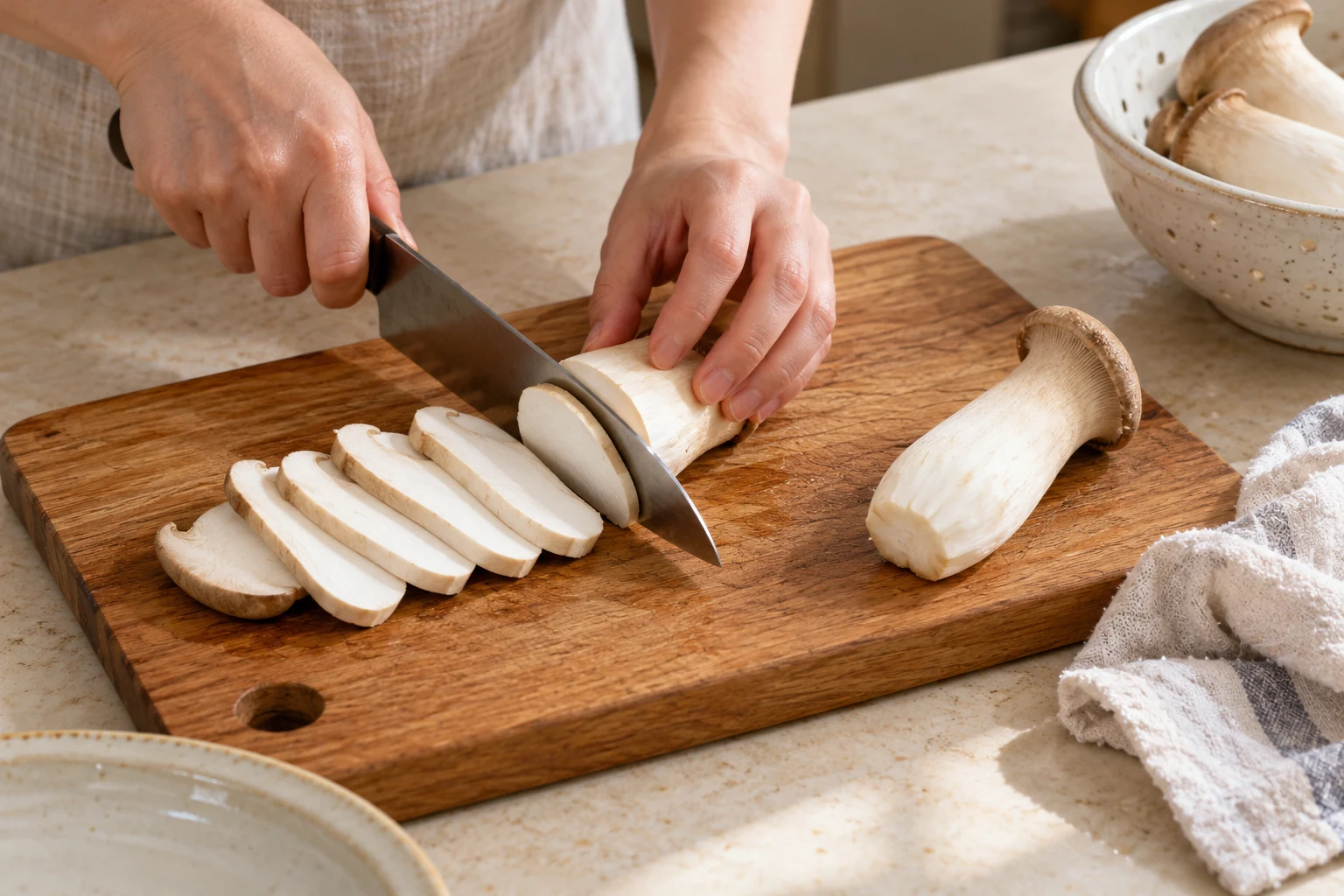
Use cultivated king oyster mushrooms. Trim only the dirty, dry base, wipe with a clean damp cloth, or briefly rinse if gritty, then dry thoroughly; do not soak. Slice lengthwise through cap and stem into even 5 mm pieces. Uniform thickness helps the centers cook evenly.
-
Step 2
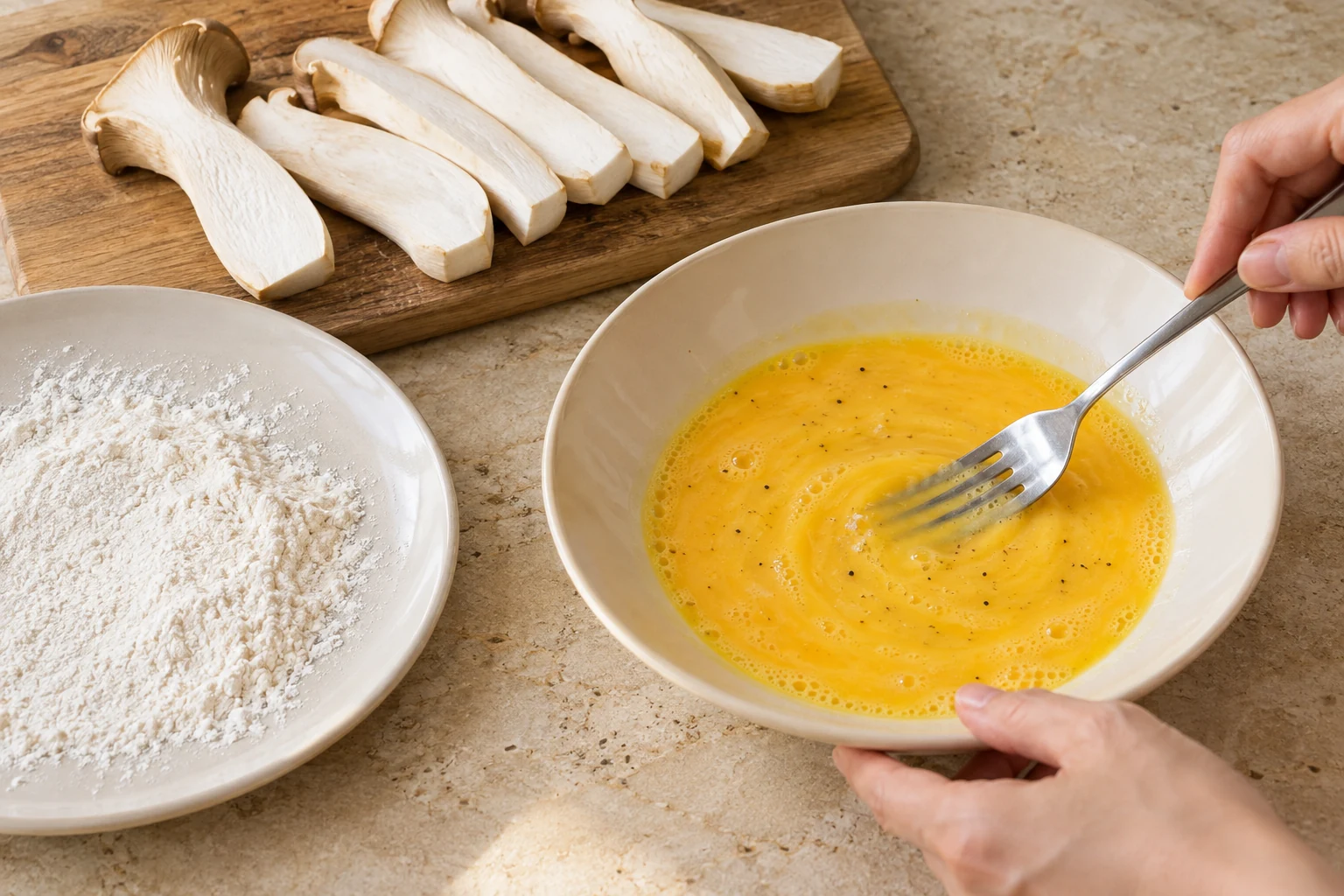
Beat 2 eggs with ¼ small teaspoon fine salt and the optional pinch of pepper in a wide shallow bowl until no separate egg-white strands remain. Spread 2 tablespoons flour on a separate plate. Keep a clean serving plate apart from raw-egg utensils.
-
Step 3
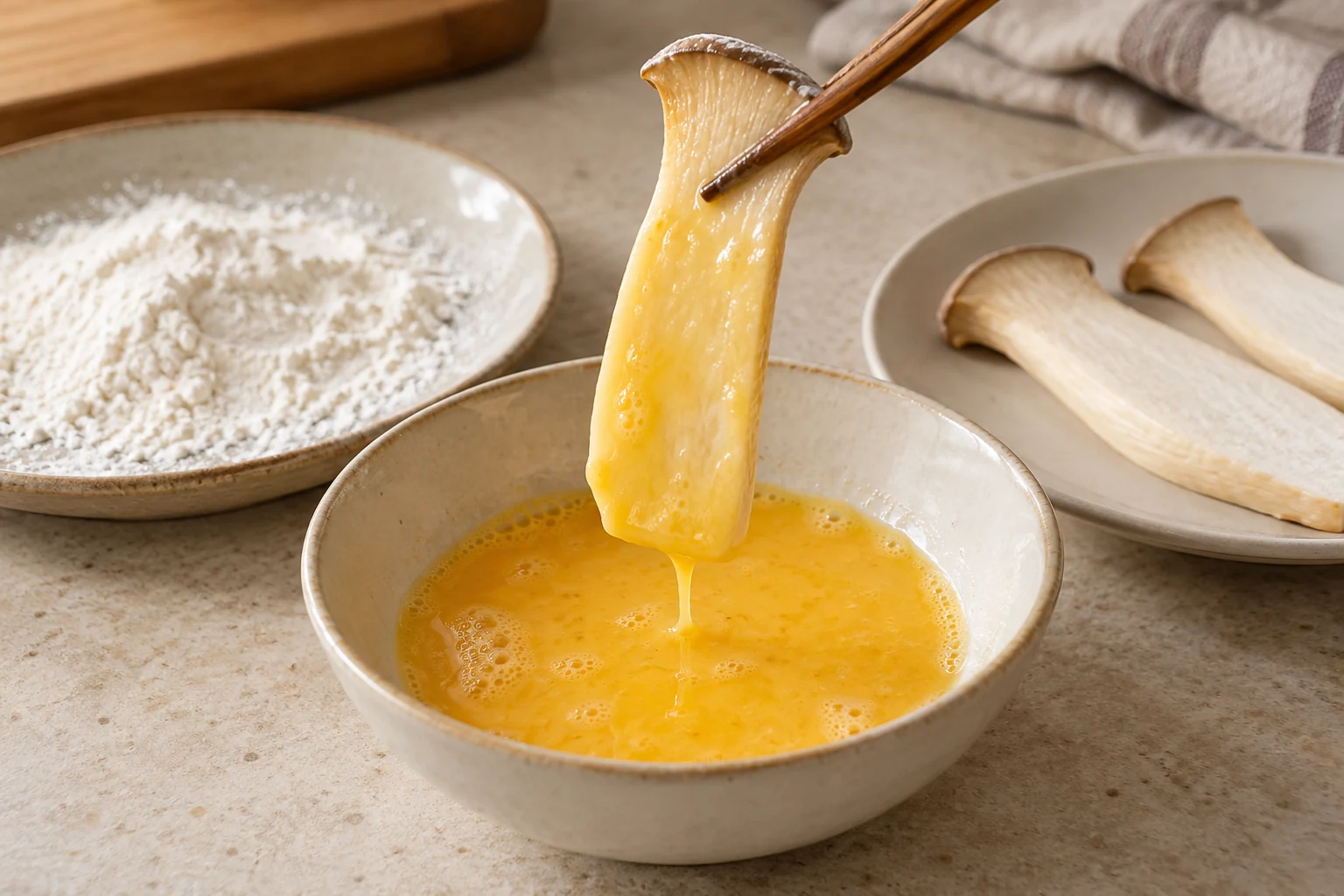
Dust both sides of a few mushroom slices with a thin layer of flour and shake off loose flour. Dip in the beaten egg and let excess drip for 1–2 seconds. Coat only a few pieces at a time, just before they go into the pan; do not leave them soaking.
-
Step 4
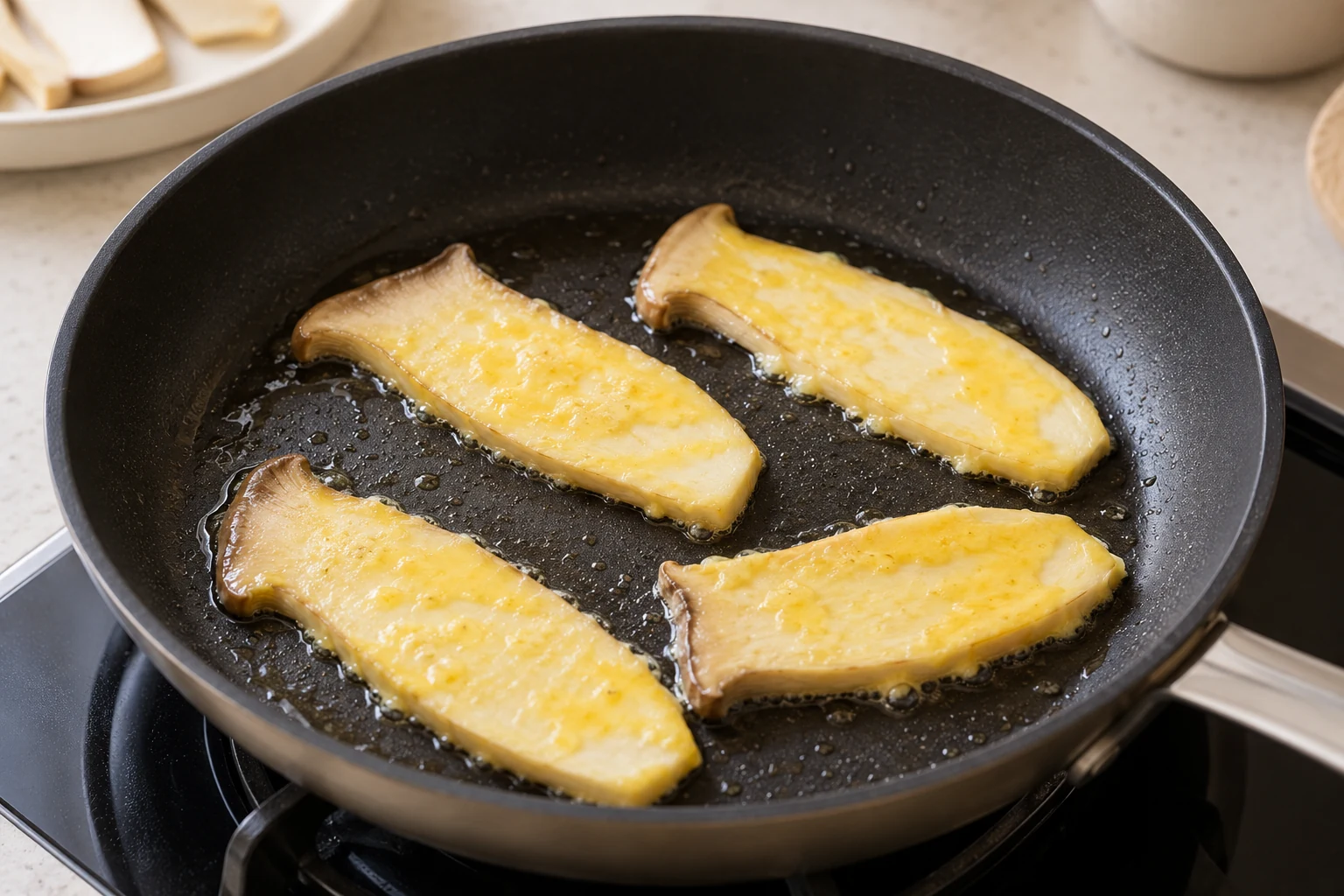
Warm a 24 cm nonstick pan over medium-low heat for 1 minute, then add 1 tablespoon oil. Lay in the coated slices in one layer with small gaps. Cook uncovered for 2–3 minutes until the underside is pale golden and the egg coating has set. Lower the heat if it browns too quickly.
-
Step 5
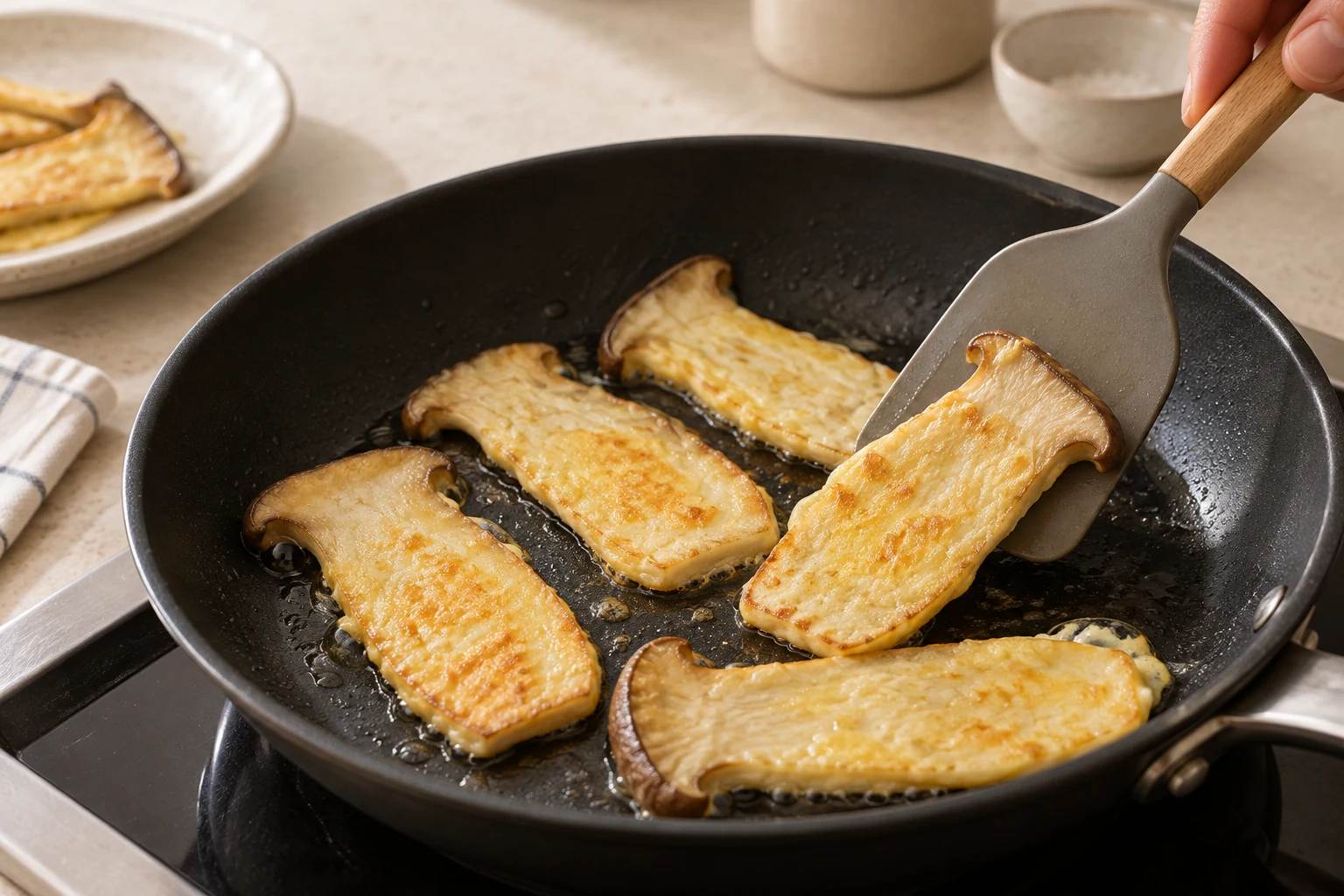
Turn gently and cook the second side 2–3 minutes until golden, the egg is fully set and the mushroom is tender through the center. If still firm, lower the heat and cook 1–2 minutes more. Repeat with the remaining slices and remaining 1 tablespoon oil. Serve warm without stacking tightly; discard raw coating leftovers and wash the utensils.


Finished dish
2 side-dish servings. Paper cup 180 ml; level tablespoon 15 ml; small teaspoon 5 ml. Contains egg and wheat. This is a simple home version of traditional egg-coated jeon. Refrigerate leftovers within 2 hours at 4°C or below and eat within 2 days; reheat until hot throughout.
Related recipes


Enjoy every bite
How to enjoy it
A thin coating keeps the mushroom flavor clear. Use moderate heat so the egg does not burn before the center softens; serve beside rice and soup.
Serve it with

Everyday doenjang jjigae (soybean paste stew)
A gentle Korean soybean-paste stew with tofu, potato, zucchini and mushrooms. No meat or anchovy broth is needed; choose a vegetarian doenjang if avoiding seafood.

Rainbow bibimbap
A colorful rice bowl with vegetables, egg and a sweet-spicy gochujang sauce.