Everyday doenjang jjigae (soybean paste stew)
A gentle Korean soybean-paste stew with tofu, potato, zucchini and mushrooms. No meat or anchovy broth is needed; choose a vegetarian doenjang if avoiding seafood.
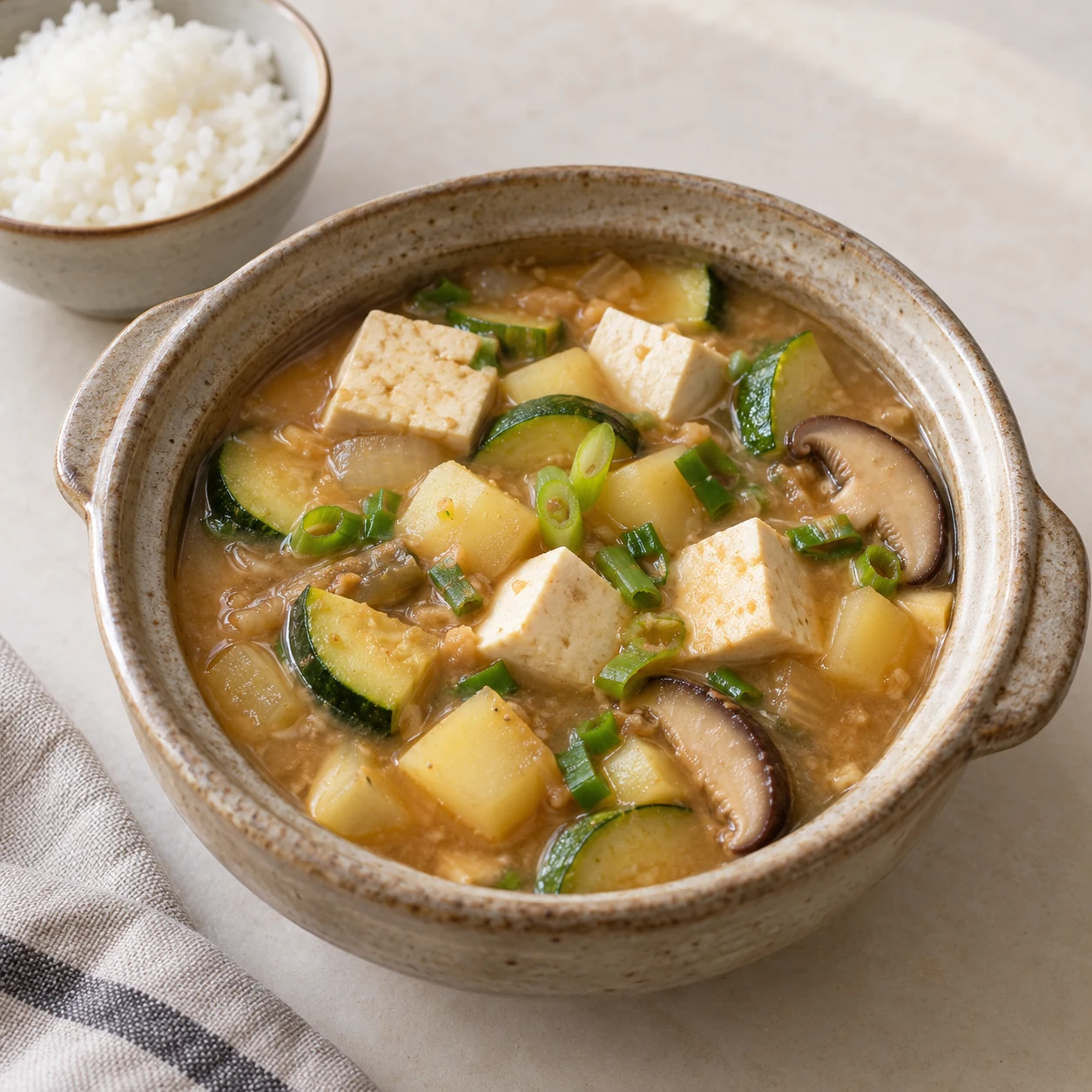
AI-generated cooking illustrations. Follow the written quantities and instructions.
Ingredients
2 servings
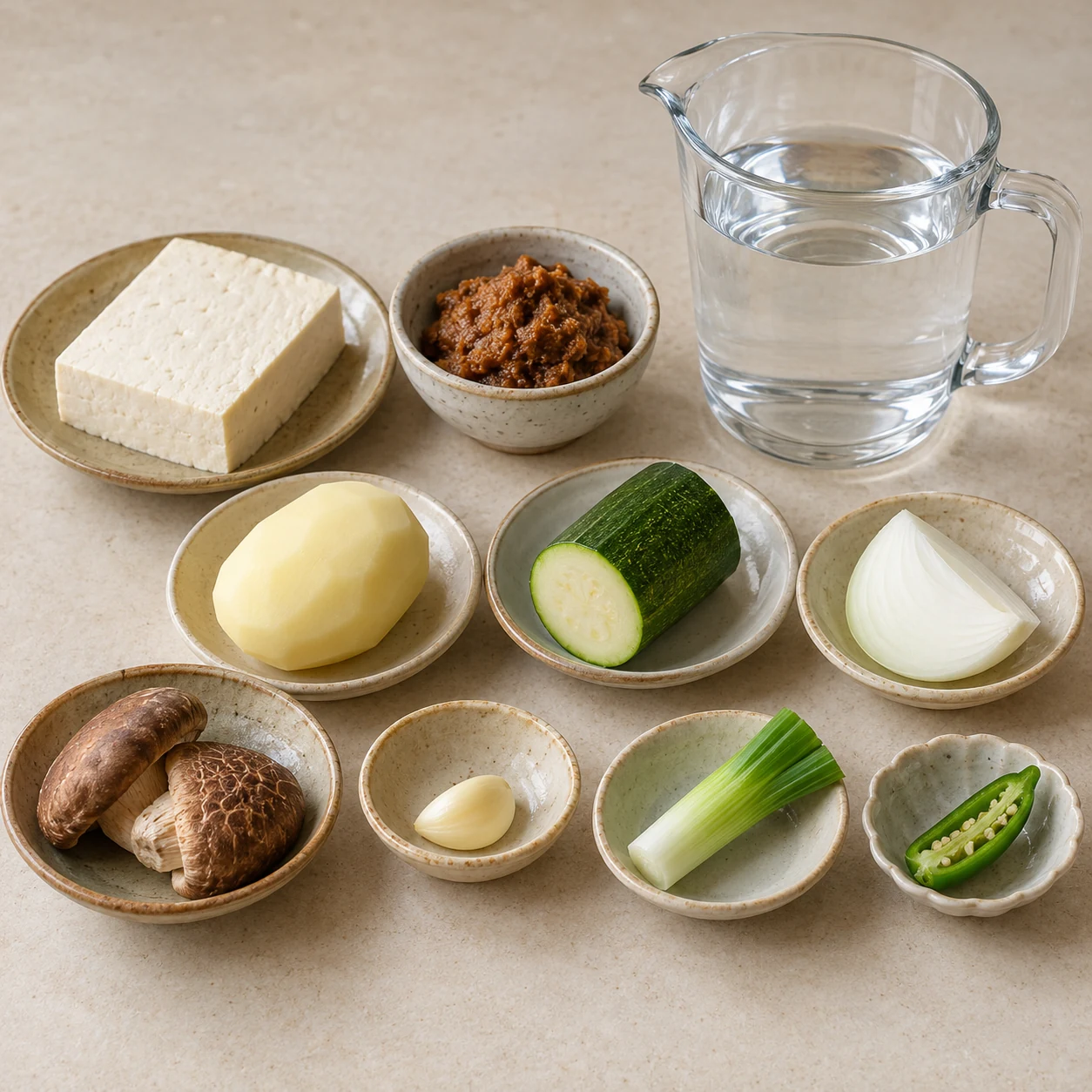
Everyday kitchen measurements
For 2 servings. Use a small 180 ml paper cup, a level eating spoon (about 15 ml) and a small teaspoon (about 5 ml).
How to fill the cup and spoons
Use the same cup and spoons throughout. Their sizes vary, so these amounts are approximate. Spoon flour in loosely and level the top without pressing. Measure vegetables after chopping, without packing them down. The amounts in g/ml are the original reference quantities. For part of a pack, use the specified pack weight and divide the contents evenly.
King Arthur Baking-
Essential
This is the starting broth. Use a 180 ml cup; add hot water a tablespoon at a time only if the pan dries.
-
Substitute available
If Doenjang, Korean soybean paste is unavailable
If doenjang is unavailable, use 2 level tablespoons (30 g) plain red miso. Dissolve at the same stage; the flavour is milder and different. Taste before adding salt.
-
Essential
Drain and cut into 2 cm cubes. Firm tofu holds its shape; dessert tofu is unsuitable.
-
Substitute available
If Potato is unavailable
If potato is unavailable, use 1 small carrot (100 g), cut into 1 cm pieces. Simmer until easily pierced; allow an extra 3–5 minutes if firm.
-
Substitute available
If Zucchini is unavailable
If zucchini is unavailable, use 1 loose paper cup chopped cabbage (100 g). Add at the same vegetable stage and cook until tender.
-
Optional
May be omitted; skip slicing and adding it. The broth will be slightly less sweet.
-
Substitute available
If Shiitake mushrooms is unavailable
If shiitake is unavailable, use 2 medium button mushrooms (40 g), sliced. Add at the same stage; the aroma will be milder.
-
Optional
May be omitted; skip preparing and adding it. The paste still provides flavour.
-
Optional
May be omitted; skip the final addition.
-
Optional
Omit for a mild version. Chilli strength varies; do not add it to children's portions.
Tap each ingredient as you prepare it. Check product labels for egg, soy, sesame, wheat, fish or shellfish where relevant.
Step-by-step cooking
-
Step 1
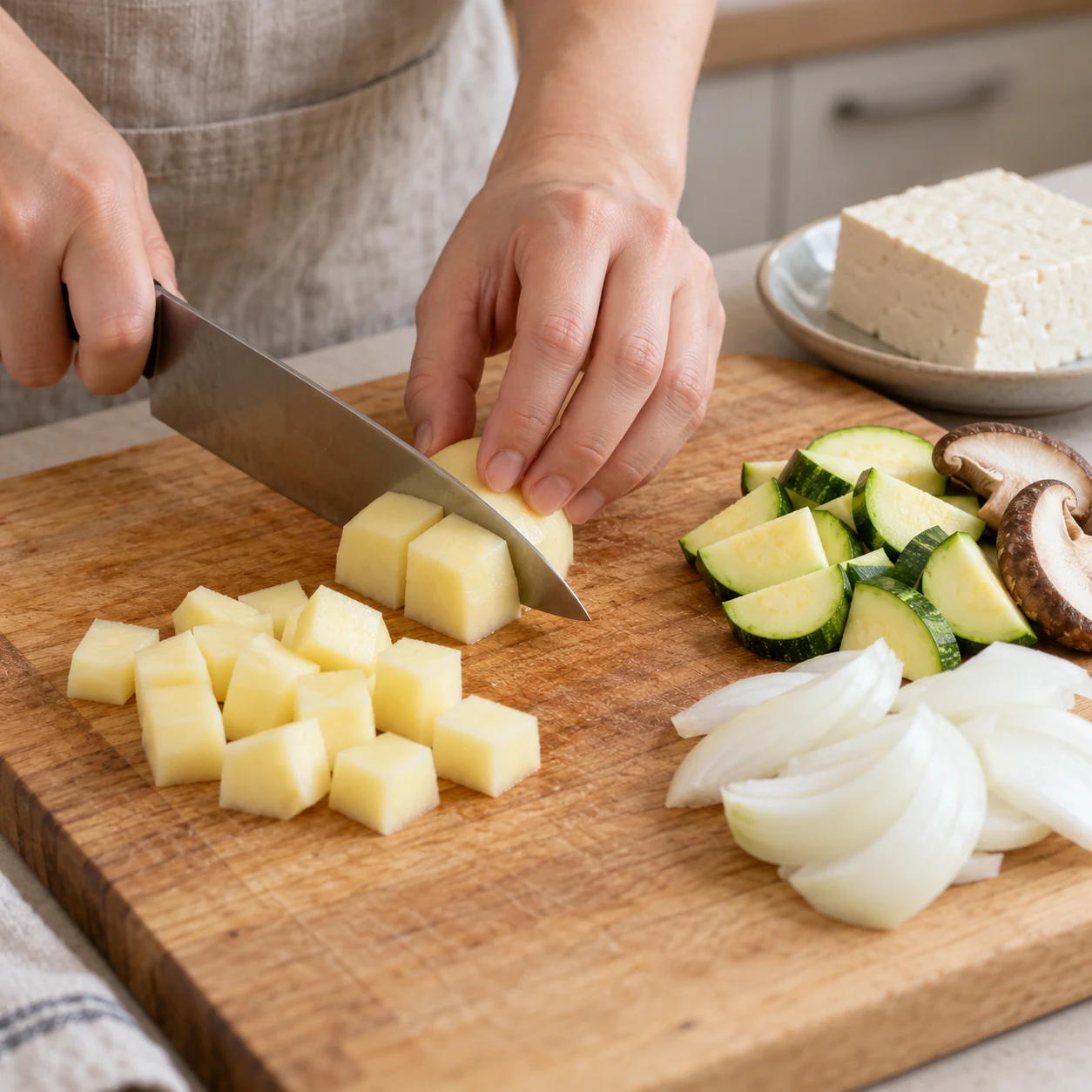
Peel the potato and cut into even 1 cm cubes. Slice the zucchini into 1 cm half-moons, slice the onion and mushrooms and drain and cube the tofu. Keep the optional chilli separate so you can leave it out.
-
Step 2
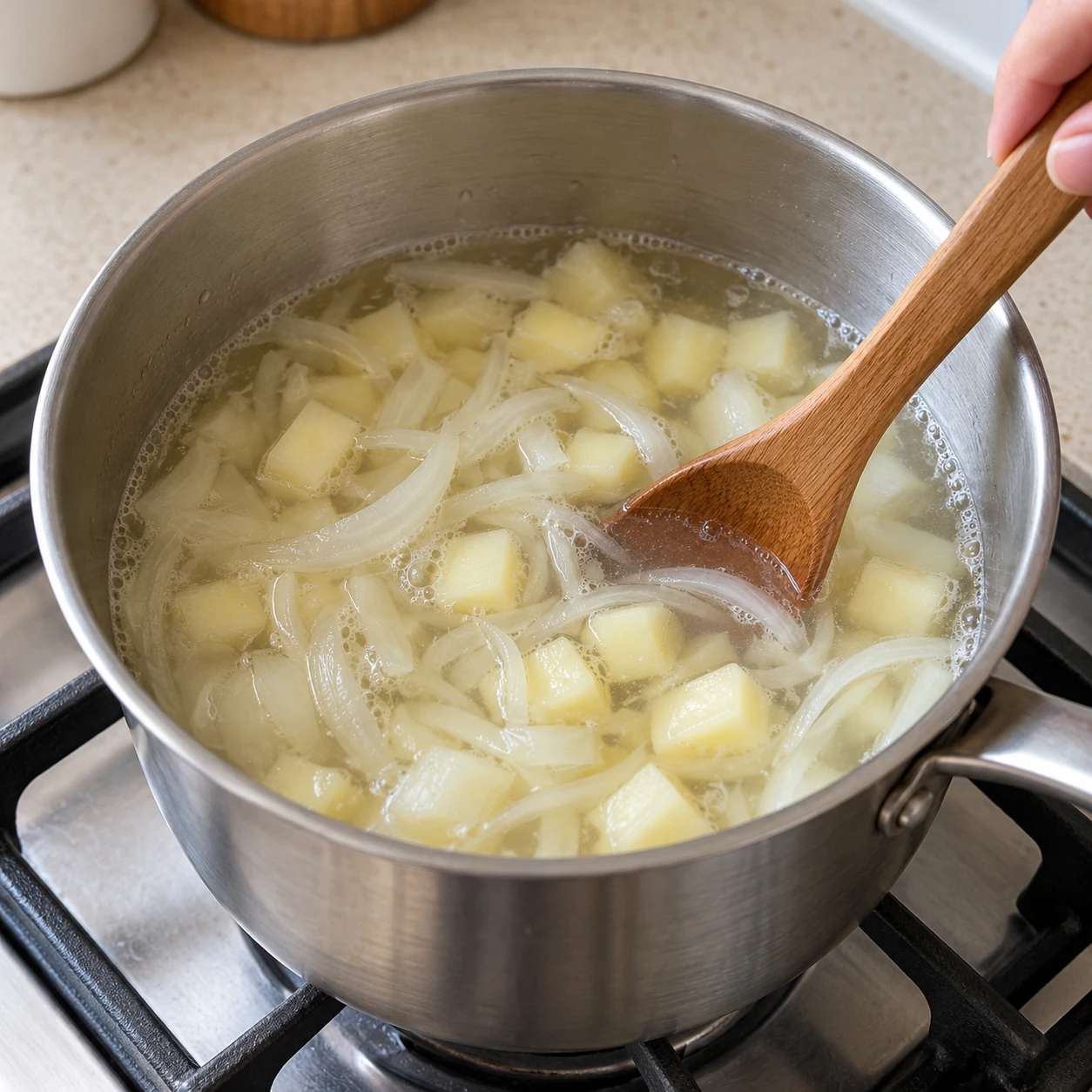
Put the potato, optional onion and 3 paper cups water in a 2-litre pot. Bring to a boil, then simmer uncovered for 5–7 minutes. The potato should be starting to soften; keep enough broth around it.
-
Step 3
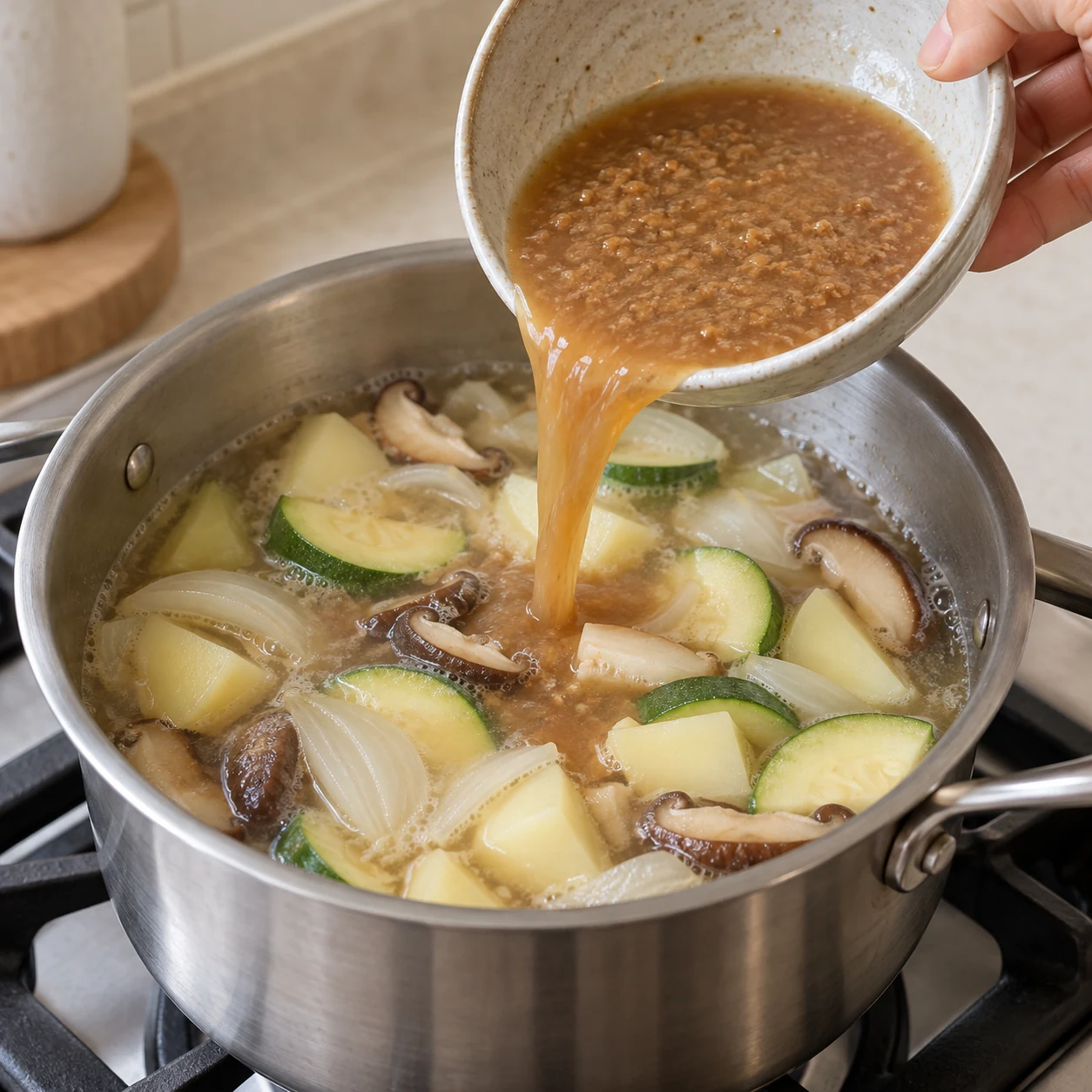
Mix the doenjang with a ladleful of hot broth in a small bowl until smooth, then return it to the pot. Add zucchini, mushrooms and optional garlic. Simmer for 5 minutes, stirring gently, until the vegetables are tender.
-
Step 4
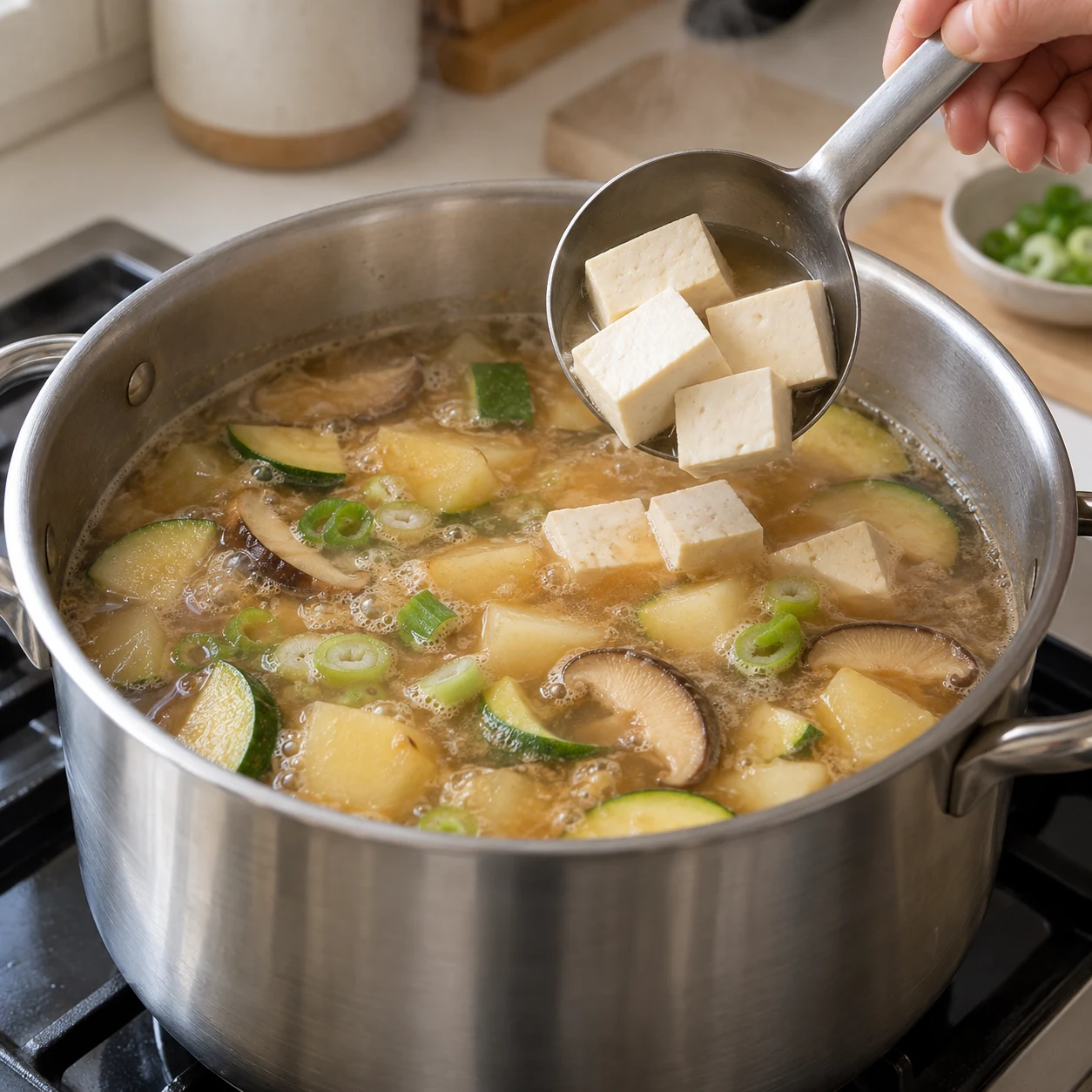
Add the tofu and optional chilli. Simmer gently for 3–4 minutes to heat the tofu through, adding optional spring onion for the last minute. Check the potato with a fork and cook longer if needed. Taste before extra salt and serve with separately cooked rice if desired.
Finished dish
Makes two modest bowls to accompany rice; rice is not included. A paper cup here is 180 ml, a tablespoon 15 ml and a teaspoon 5 ml. Doenjang and tofu contain soy; paste may contain wheat or seafood. Cool leftovers in shallow containers and refrigerate within 2 hours, or 1 hour above 32°C. Keep at 4°C or colder, use within 3 days and reheat the portion needed to 74°C.
Enjoy every bite
How to enjoy it
Taste the broth first, then enjoy tofu and vegetables with a small spoonful of rice. Keep extra chilli on the side.
Serve it with
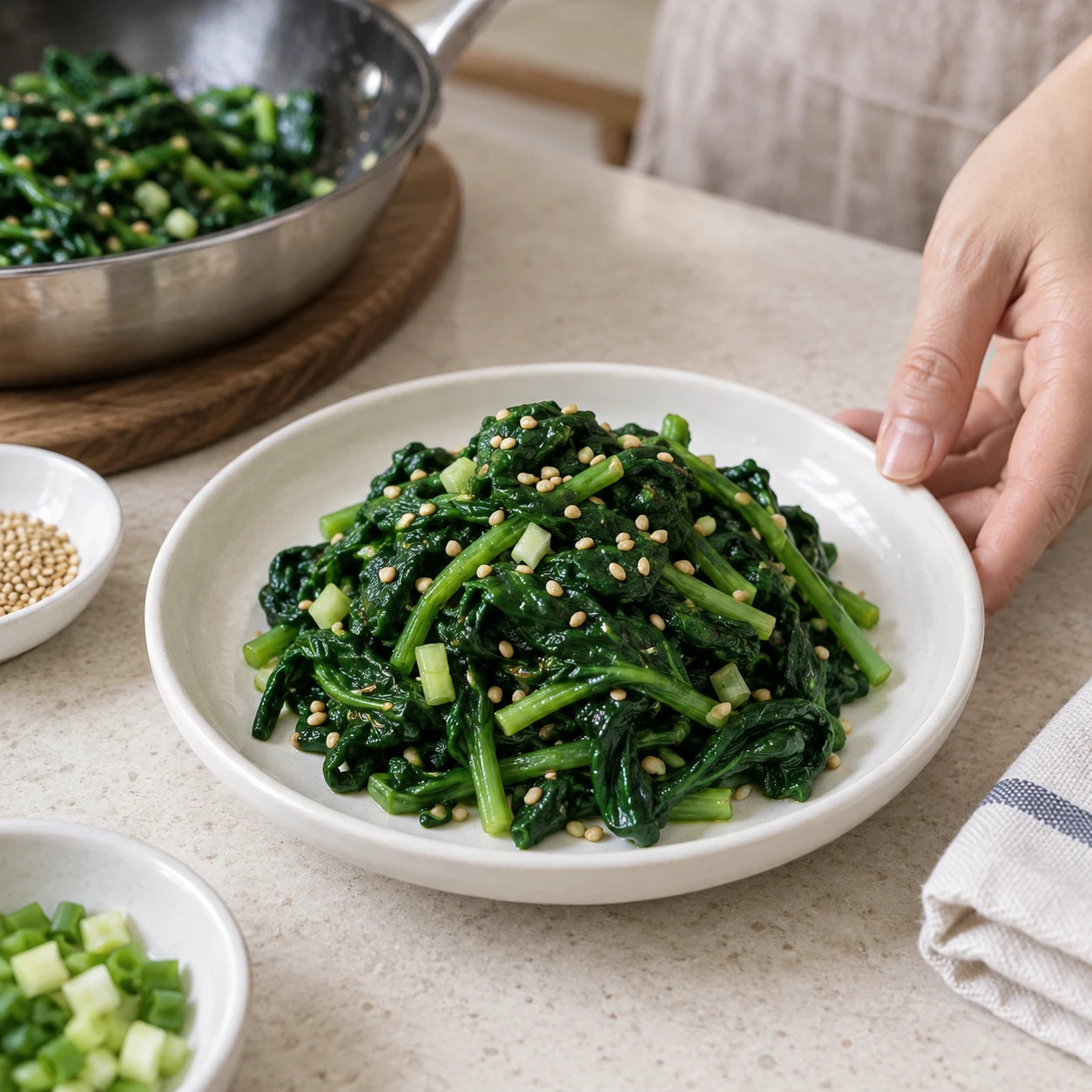
Seasoned spinach (Sigeumchi namul)
Lightly seasoned vegetables let the main dish stand out.
View recipe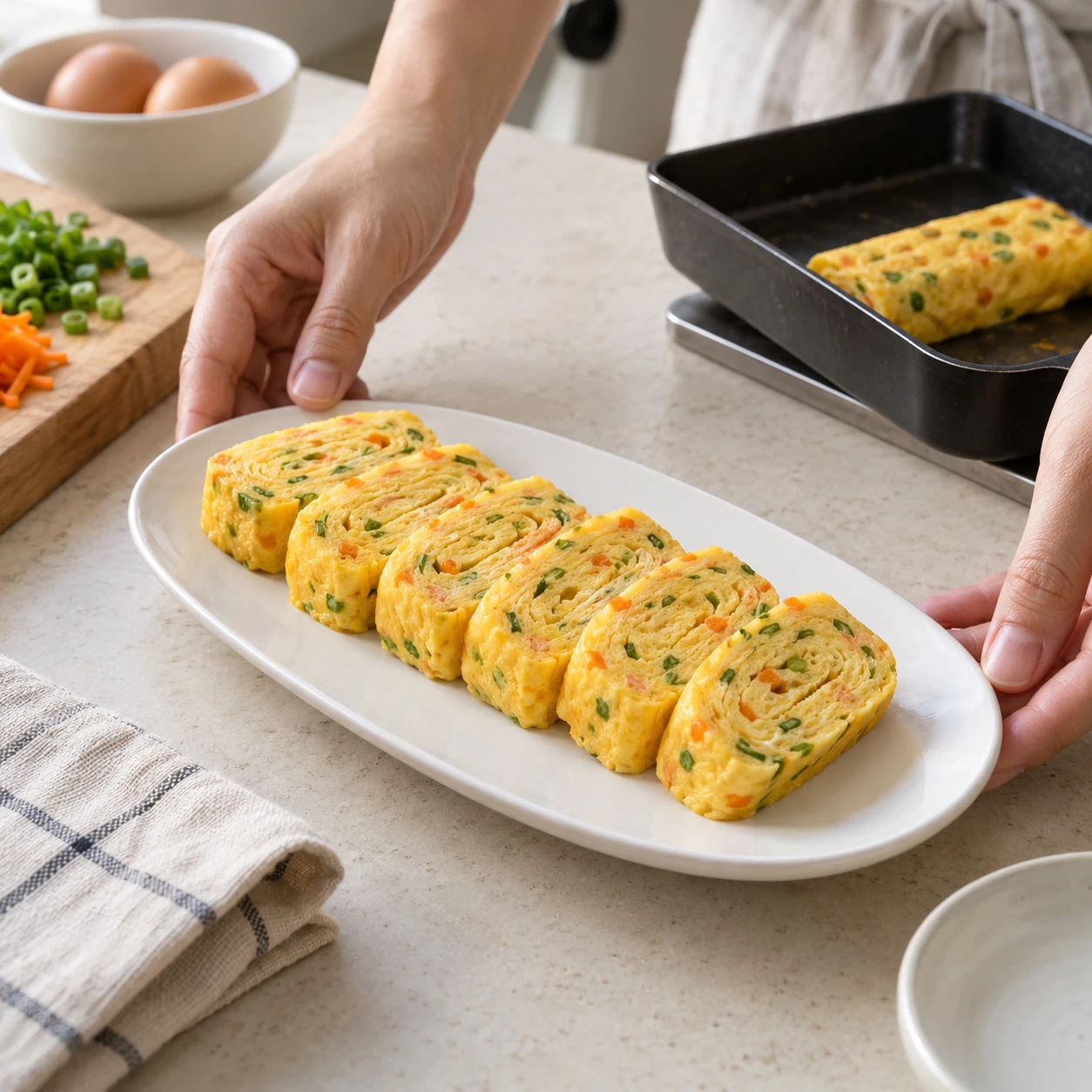
Rolled omelette (Gyeran mari)
Soft, gently seasoned egg contrasts with a stronger sauce or a crisp bite.
View recipe