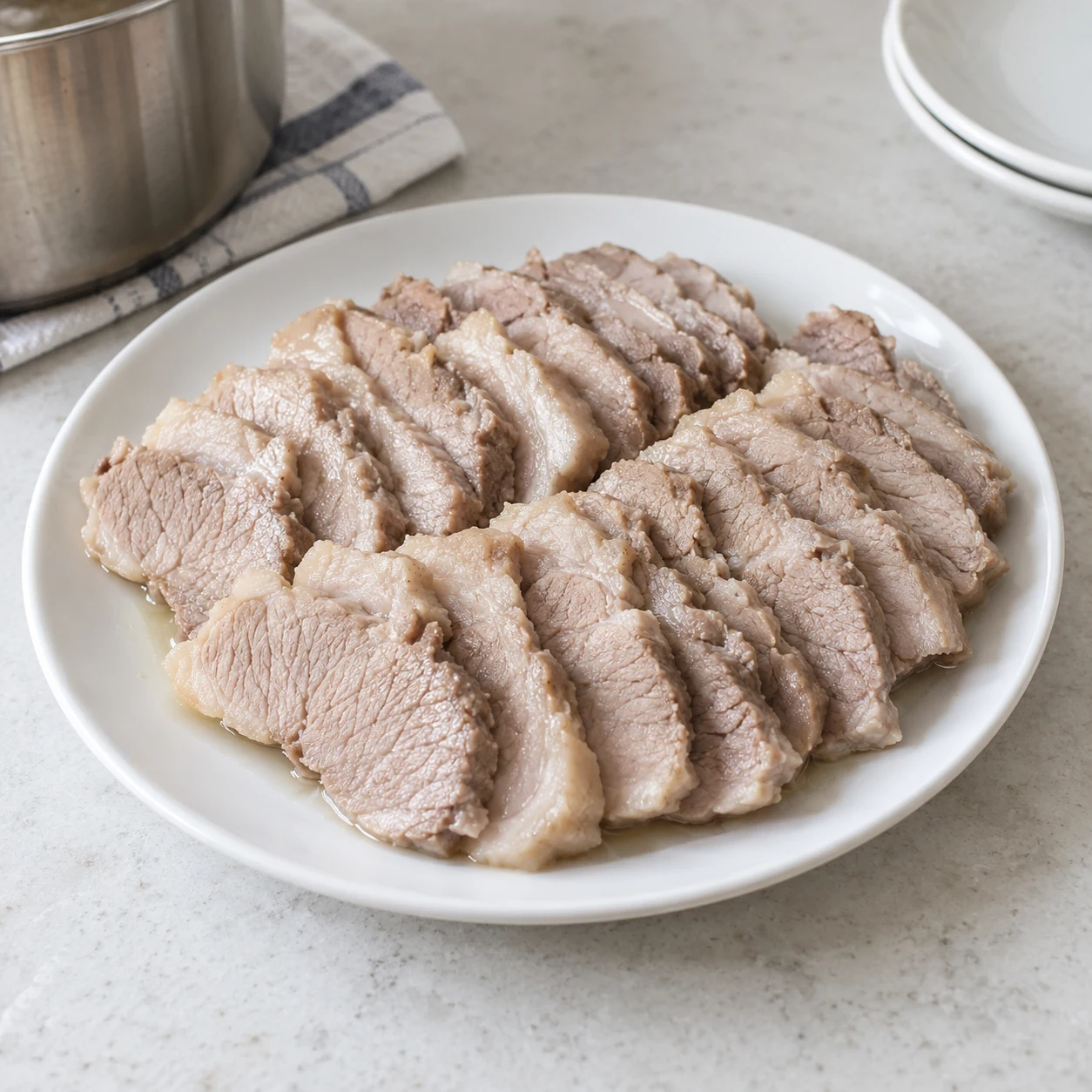
Pork Suyuk — Tender Korean Boiled Pork
Juicy pork gently simmered with soybean paste, garlic and onion. Learn how to avoid a hard boil, check tenderness, rest in the broth, and slice just before serving.
AI-generated cooking illustrations. Follow the written quantities and instructions.
Ingredients
3 servings
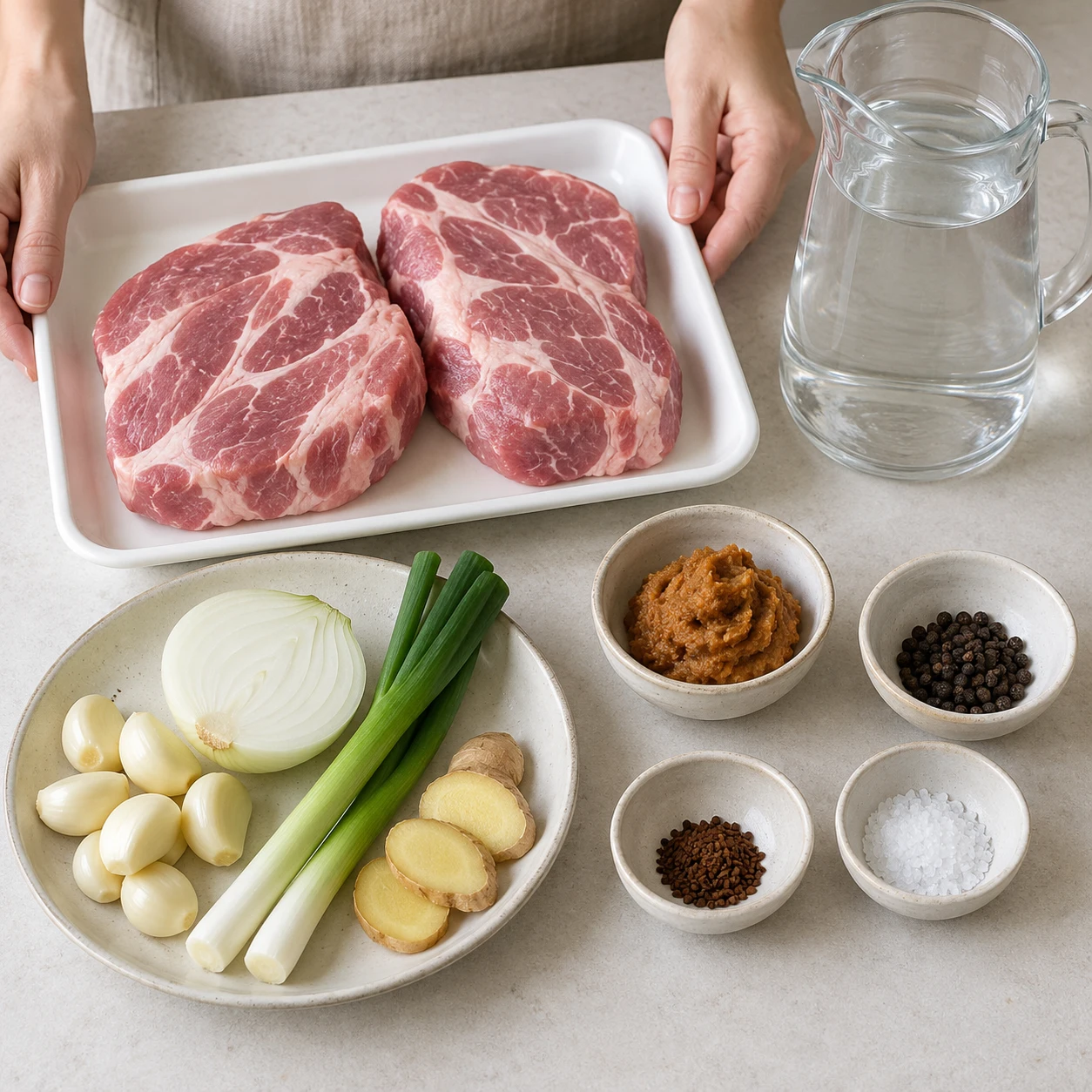
Everyday kitchen measurements
For 3 servings. Use a small 180 ml paper cup, a level eating spoon (about 15 ml) and a small teaspoon (about 5 ml).
How to fill the cup and spoons
Use the same cup and spoons throughout. Their sizes vary, so these amounts are approximate. Spoon flour in loosely and level the top without pressing. Measure vegetables after chopping, without packing them down. The amounts in g/ml are the original reference quantities. For part of a pack, use the specified pack weight and divide the contents evenly.
King Arthur Baking-
Substitute available
If Boneless pork shoulder is unavailable
- Use instead
- Boneless pork belly
- Substitute quantity
- 1 pack labeled 600 gReference quantity: 600 g
Use 2 thick pieces, as for the shoulder, rather than thin barbecue slices. Begin checking tenderness after 50 minutes and continue in 10-minute intervals. Belly is richer and fattier; do not use the clock alone to decide that it is ready.
-
Essential
Use a pot just big enough for the meat. This is a starting amount; add enough hot water to keep the pork mostly covered during simmering, without filling the pot too high.
-
Substitute available
If Doenjang, Korean fermented soybean paste is unavailable
- Use instead
- Miso paste
- Substitute quantity
- 1 level eating spoonReference quantity: about 18 g
Dissolve in the broth in step 2 instead of doenjang. The aroma will be milder and smoother. Use an unsweetened plain miso and omit the optional salt if the broth already tastes salty.
-
Essential
Use whole peeled cloves in the simmering liquid. They gently flavor the pork without requiring a garlic press.
-
Optional
If unavailable, omit the onion and its cutting in step 1. Garlic and soybean paste still flavor the broth; no change to the cooking time is needed.
-
Optional
Skip the spring onion in steps 1 and 2 if unavailable. It is an aromatic, not a required garnish.
-
Optional
Omit from the simmering liquid in step 2 if unavailable. The dish will have less ginger aroma, but no extra coffee or pepper is needed.
-
Optional
Skip in step 2 if unavailable. Do not replace with a large amount of ground pepper, which can make the broth gritty.
-
Optional
Omit from the broth in step 2 if unavailable. If using, choose plain unsweetened coffee without milk powder; coffee mix is not an equal replacement.
-
Optional
Optional seasoning for the cooking broth in step 2. Omit if your soybean paste is very salty. It is not a separate dipping-sauce amount.
Tap each ingredient as you prepare it. Check product labels for egg, soy, sesame, wheat, fish or shellfish where relevant.
Step-by-step cooking
-
Step 1
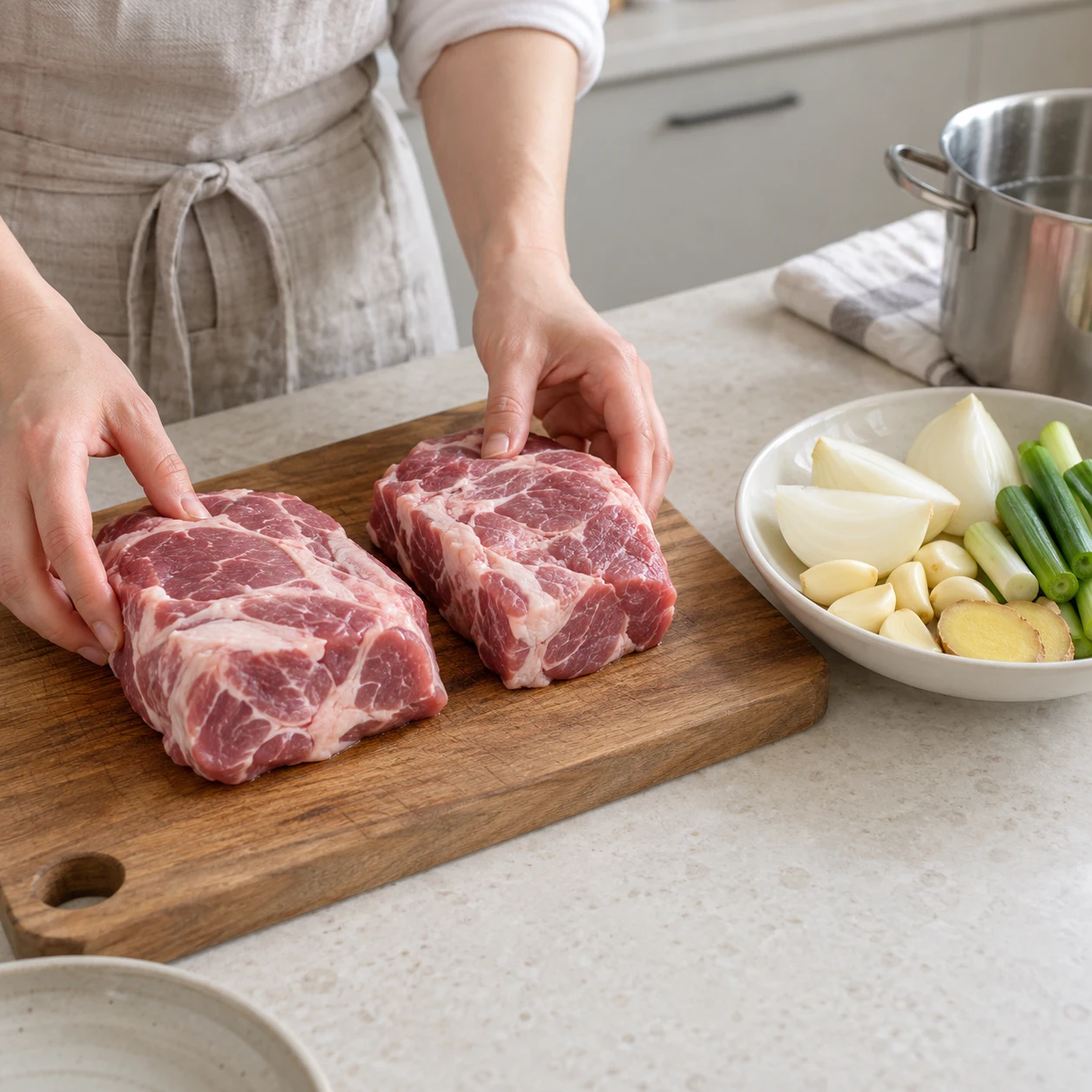
Cut the pork into 2 thick pieces about 5 cm thick so they cook more evenly than one large roast. Pat dry, trim loose excess fat but leave some for juiciness, and keep the meat separate from serving utensils. Cut the optional onion into large wedges and the spring onion into lengths that fit the pot. Peel the garlic and slice the optional ginger.
-
Step 2
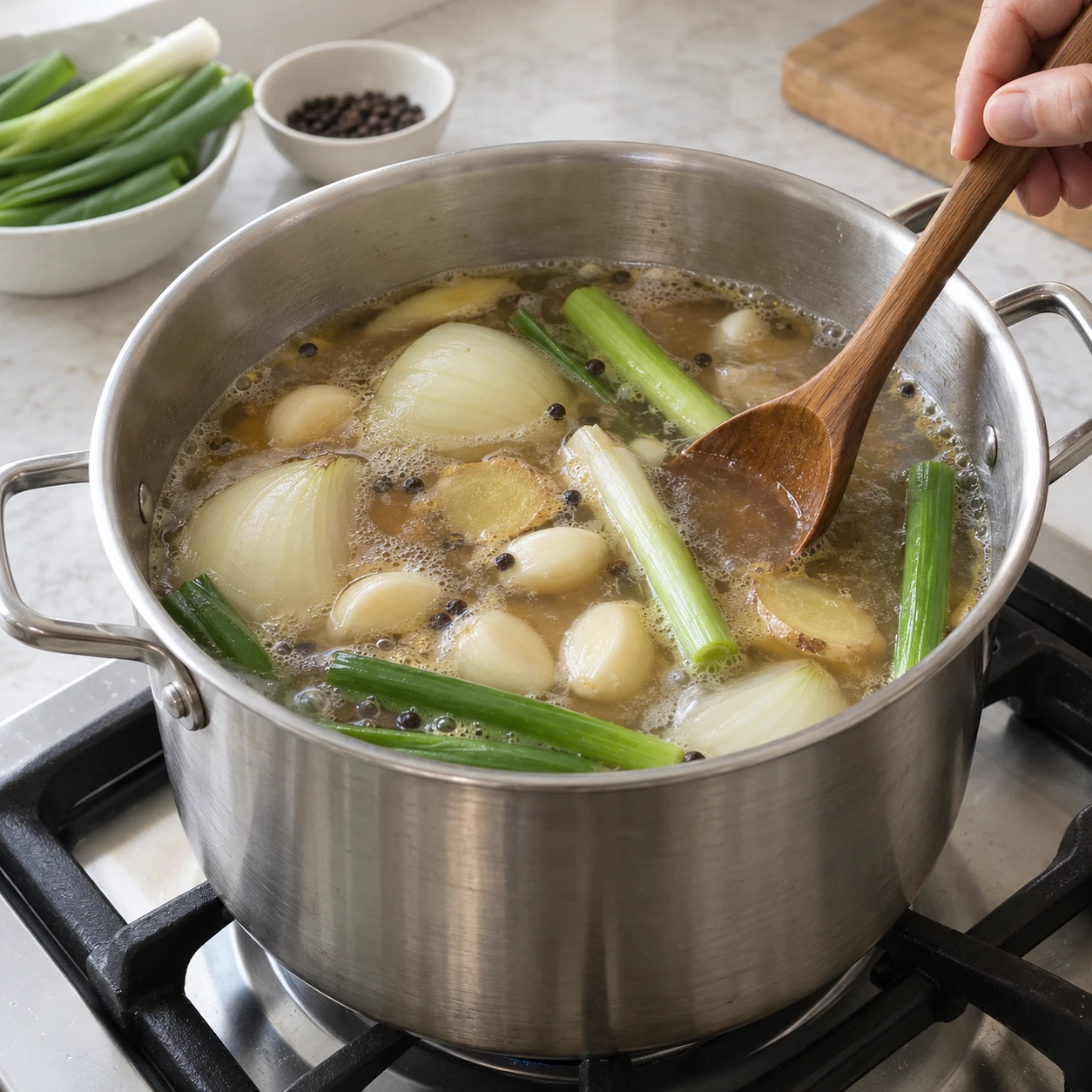
Put 8 small paper cups water in a pot just large enough to hold the pork. Stir in 1 level eating spoon doenjang. Add the 6 garlic cloves and any optional onion, spring onion, ginger, peppercorns, ¼ small teaspoon plain instant coffee and ½ small teaspoon salt. Bring to a boil and boil for 5 minutes to release the aromas.
-
Step 3
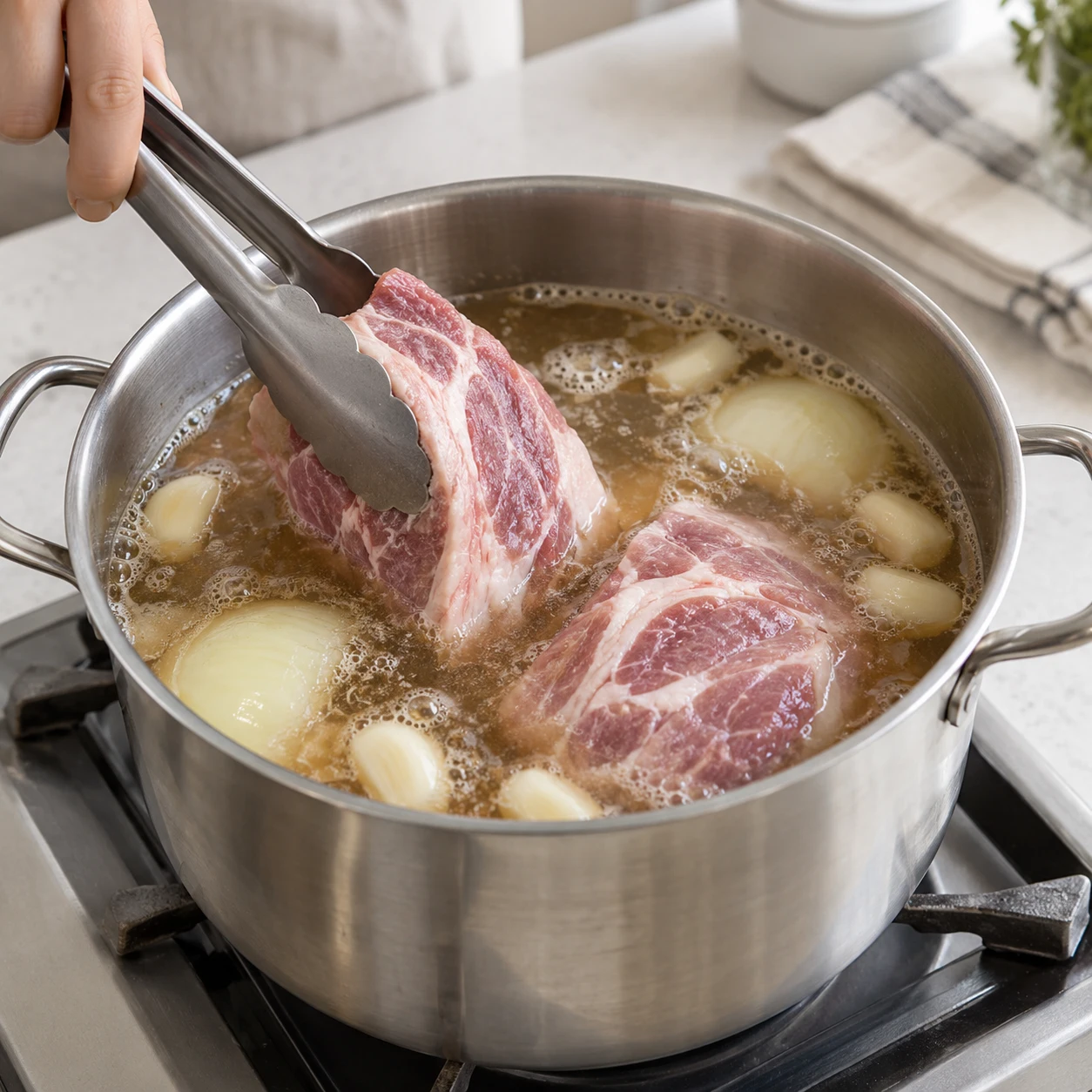
Carefully lower the pork into the aromatic broth. Add a little more hot water if needed so the meat is mostly covered. Bring back to a boil, skim the foam from the surface, then immediately lower the heat. A violent rolling boil makes the outside dry while the center is still becoming tender.
-
Step 4
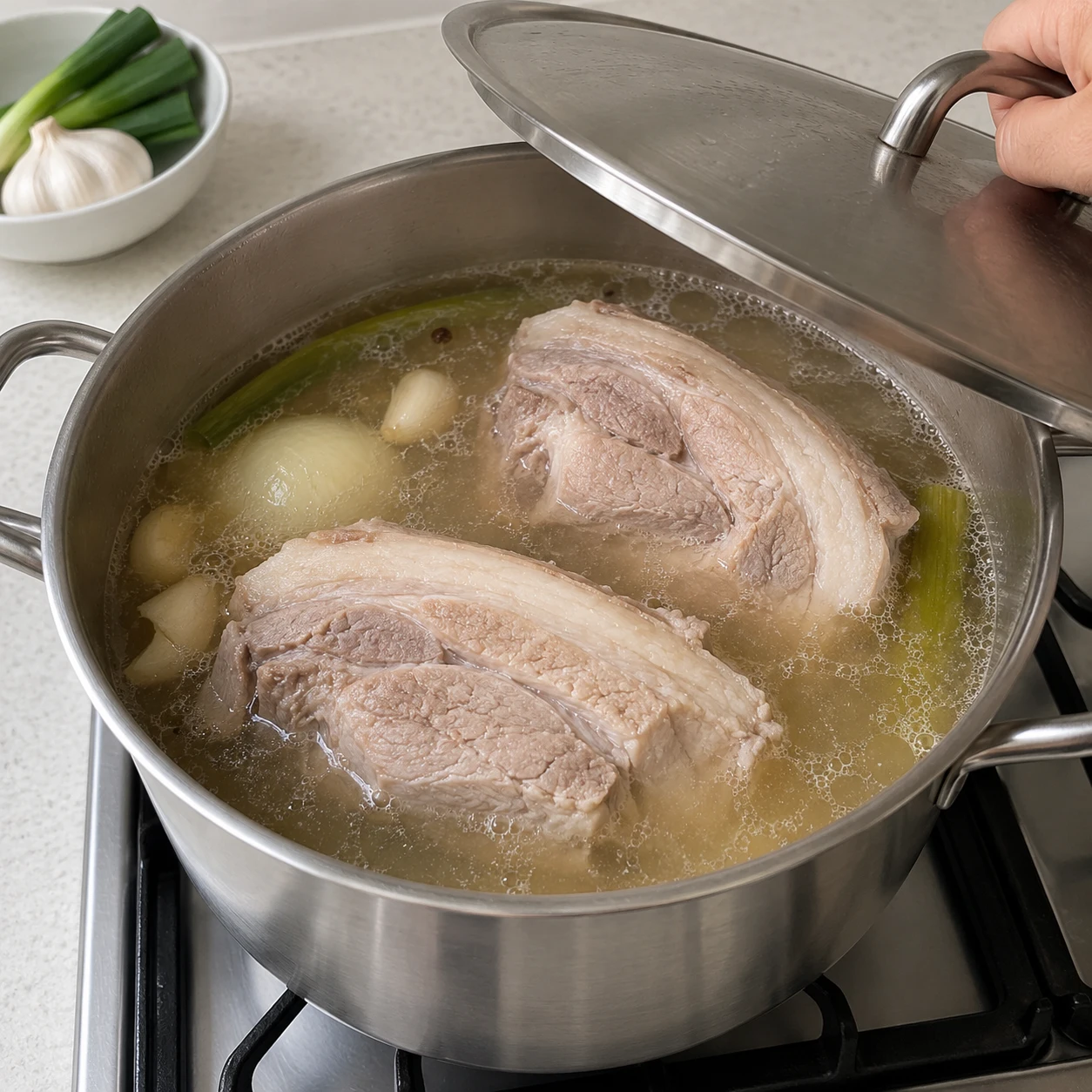
Cover partly and simmer gently for 60–80 minutes, with only small bubbles rising. Turn the pieces once halfway through and add hot water if the liquid drops too far. Begin checking after 60 minutes: a fork should enter the thickest part easily. If still tough, continue in 10-minute intervals. Belly replacement may become tender earlier, as described beside the ingredient.
-
Step 5
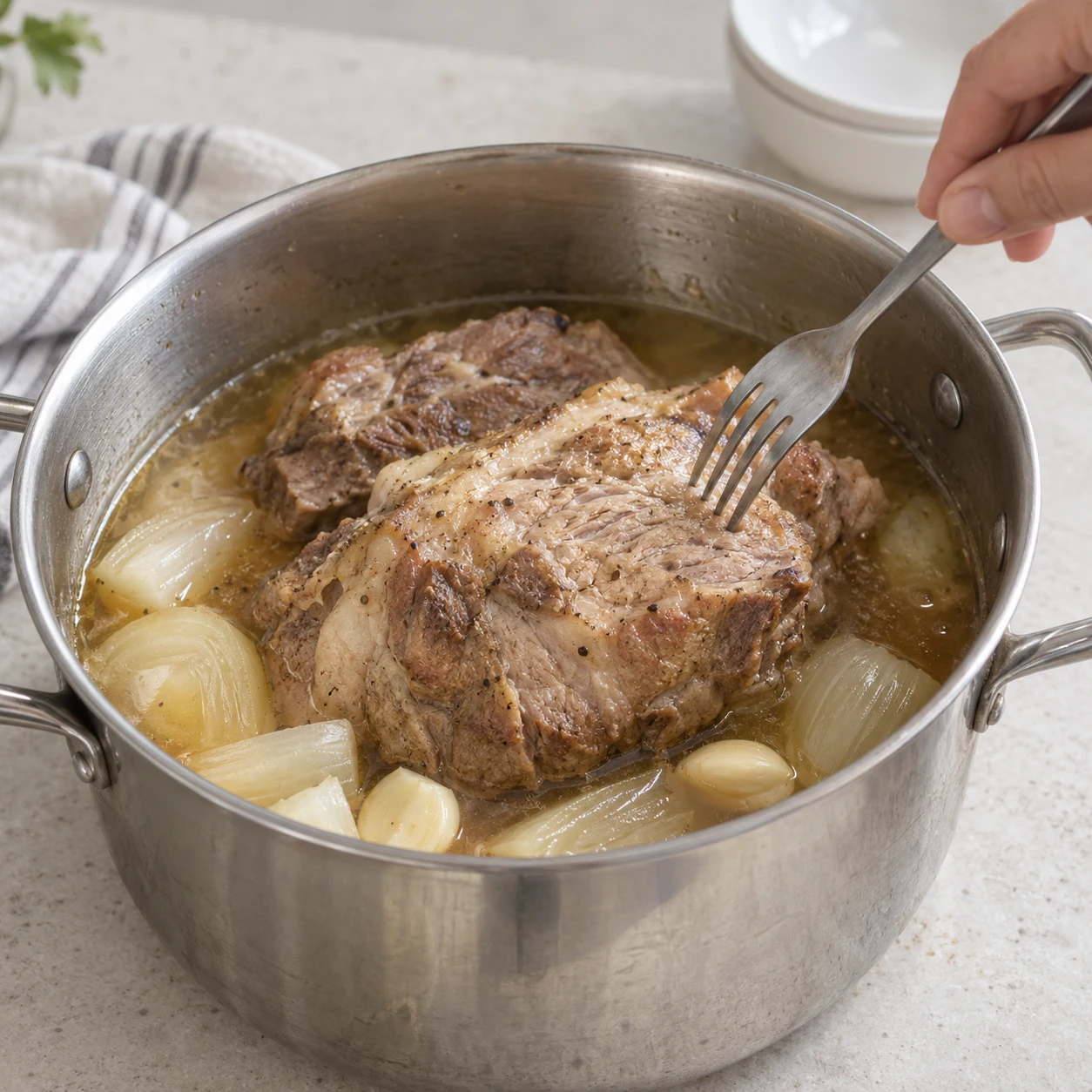
When the pork is tender, switch off the heat and leave it in the hot broth for 10 minutes. Keep this rest short; it helps the meat stay juicy. If checking temperature, whole pork must reach at least 63°C and rest for at least 3 minutes; this slow simmer should also reach the separate fork-tenderness goal rather than stopping as soon as the minimum temperature is met.
-
Step 6
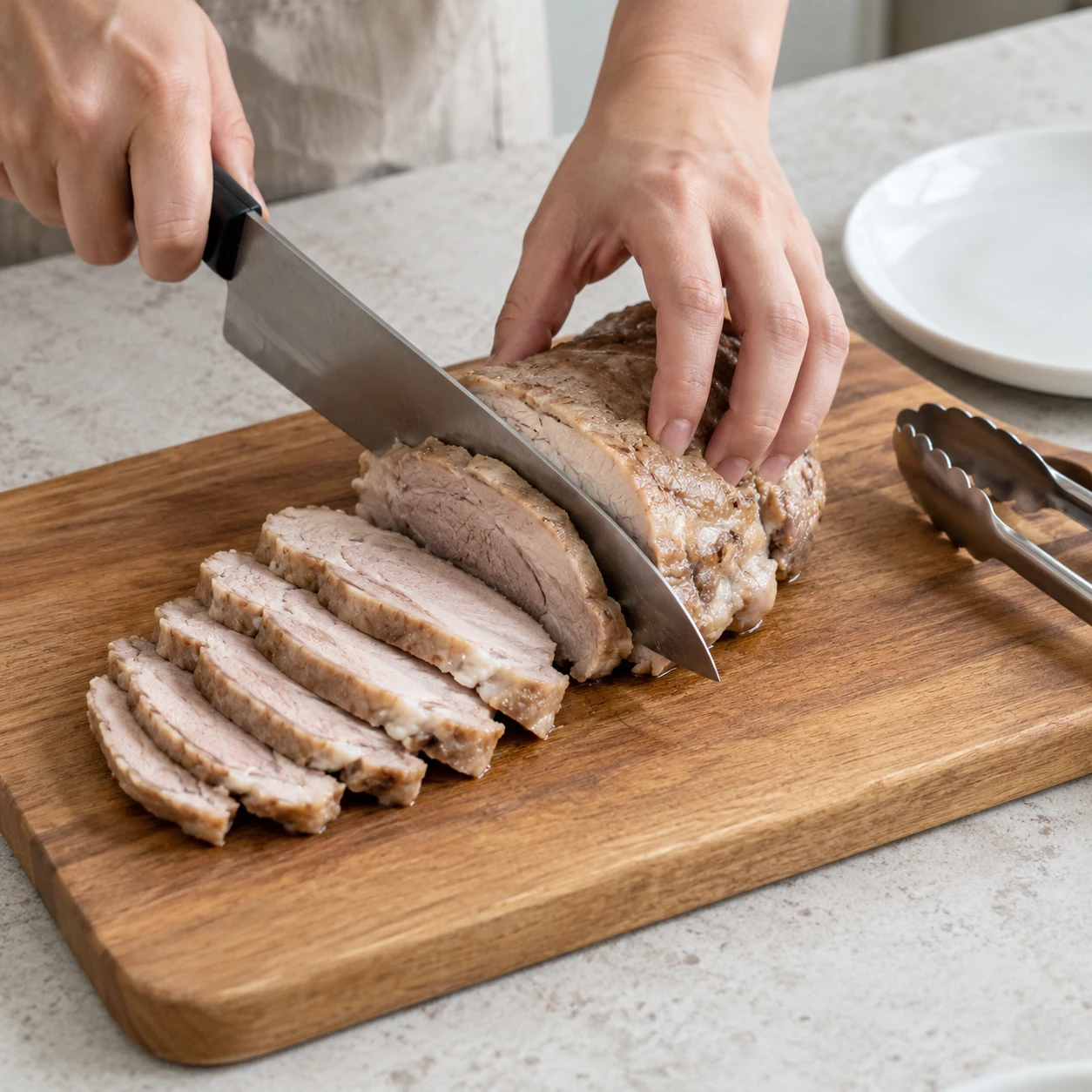
Lift the pork onto a clean board with clean tongs. Slice across the grain into pieces about 5 mm thick, immediately before eating. Spoon over a little warm cooking broth if desired. Serve with kimchi, lettuce or ssamjang as optional accompaniments, and remove spent broth aromatics rather than putting them on the serving plate.
Finished dish
Pork shoulder gives a good balance of meat and fat; belly is a richer alternative. The main ways to keep suyuk juicy are a gentle simmer, enough liquid and a short rest in the broth. It needs no alcohol, pressure cooker or long marinade. Do not use very thin barbecue pork slices for this method. Use a small 180 ml paper cup, a level eating spoon of about 15 ml and a small teaspoon of about 5 ml. Household quantities are approximate; use the same cup and spoons throughout. Packet fractions refer to the labeled packet size, not to an unknown bag. The broth aromatics are mostly removed after cooking. Kimchi, lettuce and ssamjang are serving suggestions and are not included in the ingredient quantities. Refrigerate leftovers in a shallow covered container within 2 hours, or within 1 hour if the room is above 32°C. Keep at 4°C or colder and use within 3–4 days. Reheat cooked leftovers until hot throughout, reaching 74°C if measured. Store the pork with a little cooking broth to help it stay moist. Reheat slices gently in the broth until hot throughout. Do not leave the meat sitting in lukewarm broth for hours. Doenjang or miso contains soy and may contain wheat.