Mala cheese stir-fried ramyeon
A lightly numbing, spicy Korean-style noodle remix with crisp greens and melting cheese. Use a measured amount of mala paste so you can control the heat.
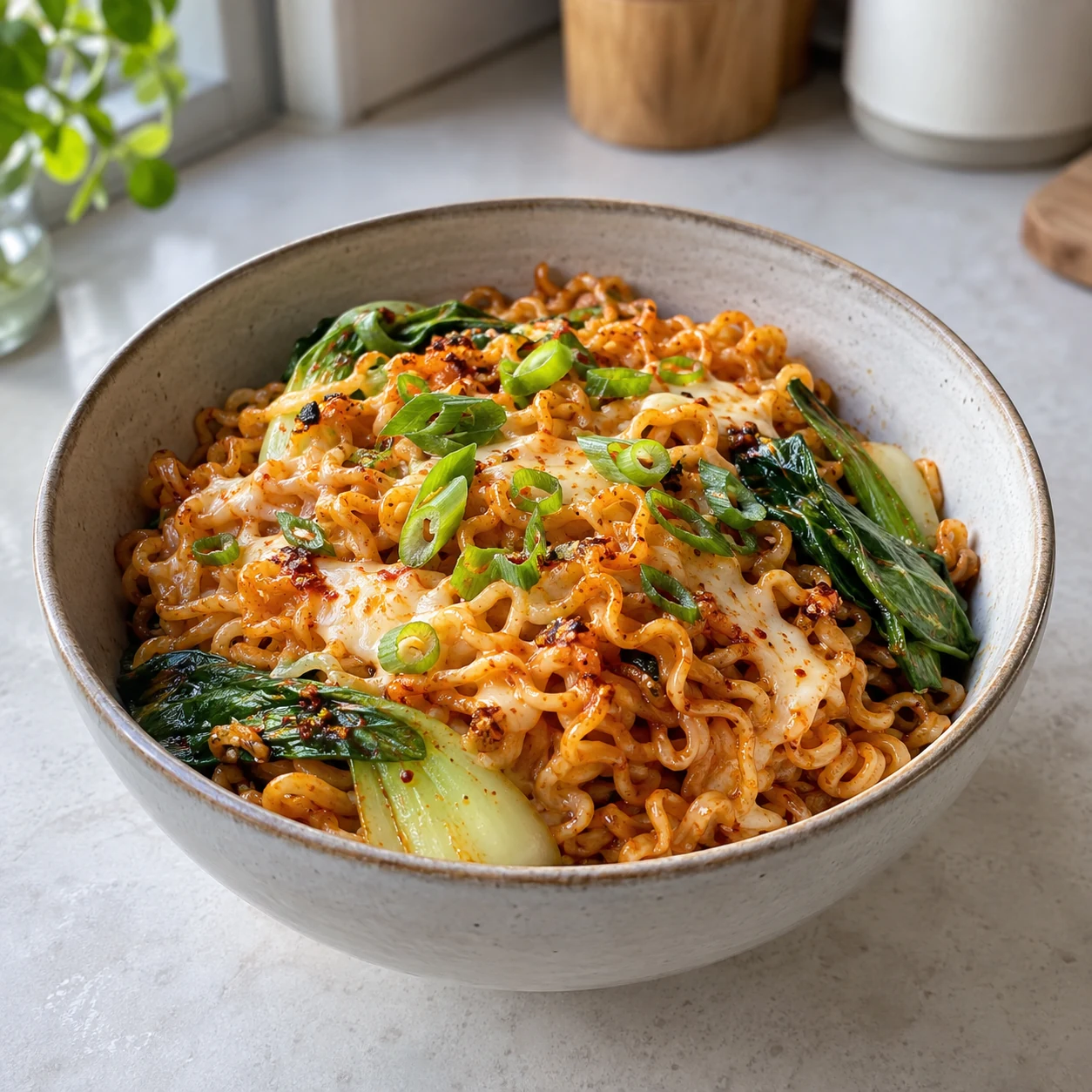
AI-generated cooking illustrations. Follow the written quantities and instructions.
Ingredients
2 servings
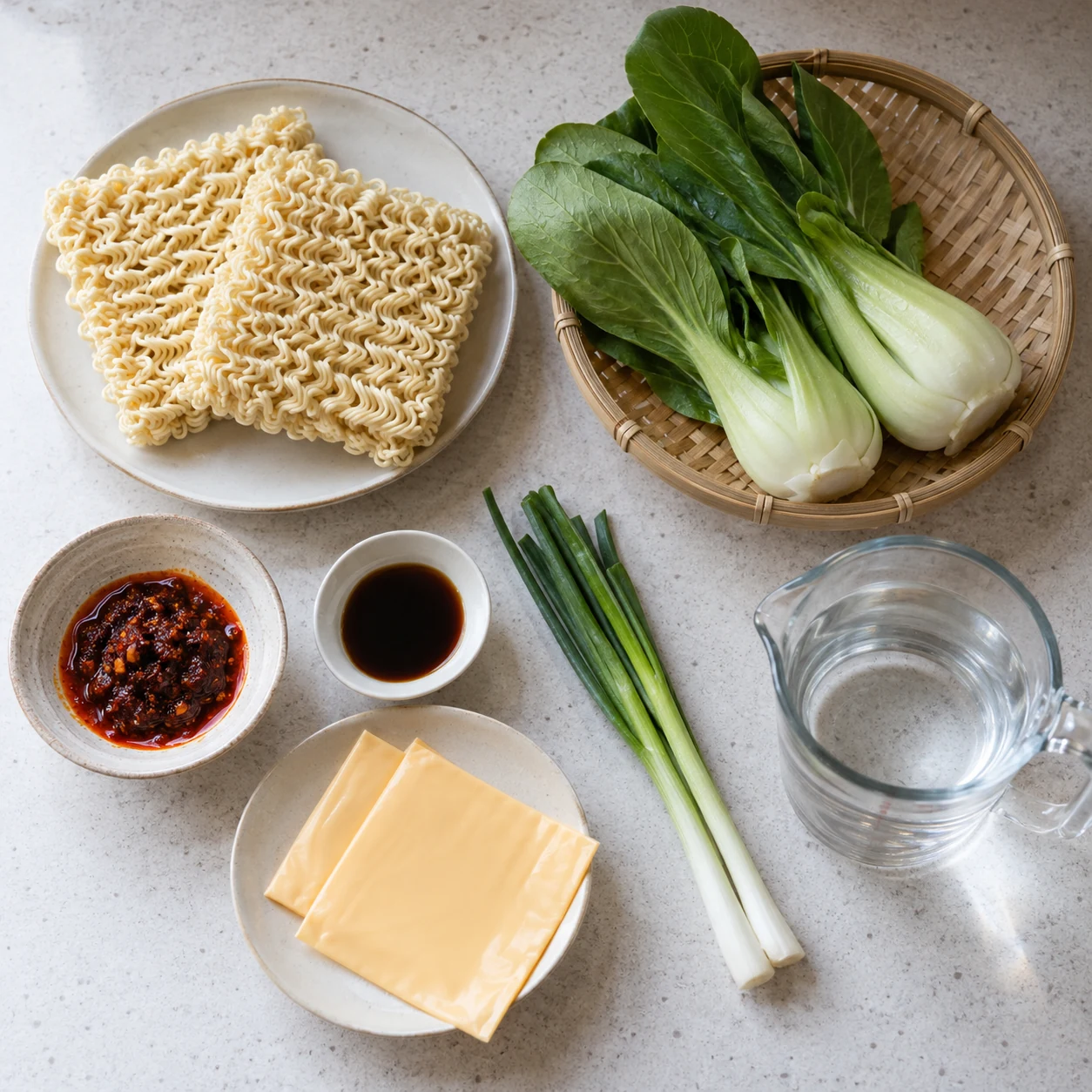
Everyday kitchen measurements
For 2 servings. Use a small 180 ml paper cup, a level eating spoon (about 15 ml) and a small teaspoon (about 5 ml).
How to fill the cup and spoons
Use the same cup and spoons throughout. Their sizes vary, so these amounts are approximate. Spoon flour in loosely and level the top without pressing. Measure vegetables after chopping, without packing them down. The amounts in g/ml are the original reference quantities. For part of a pack, use the specified pack weight and divide the contents evenly.
King Arthur Baking-
Substitute available
If Plain instant ramyeon noodle blocks is unavailable
- Use instead
- Instant noodles sold with seasoning sachets
- Substitute quantity
- 2 noodle blocksReference quantity: about 200 g
Use the noodle blocks only; discard seasoning sachets because the mala paste and soy sauce supply salt.
-
Essential
Boil the noodles in ample water, then reserve ½ paper cup (90 ml) before draining.
-
Substitute available
If Prepared mala chilli paste is unavailable
- Use instead
- Chilli oil plus ground Sichuan pepper
- Substitute quantity
- 1 small teaspoon chilli oil + ¼ small teaspoon pepperReference quantity: 5 ml + about 0.5 g
Use less if sensitive to heat; the substitute is less complex and may not include the same salt. Check prepared mala paste labels for soy and sesame.
-
Substitute available
If Bok choy, chopped is unavailable
- Use instead
- Baby spinach
- Substitute quantity
- about 1 paper cup loosely packedReference quantity: 100 g
Spinach wilts faster; add it only for the final 30–60 seconds of the pan step.
-
Substitute available
If Cheese slices is unavailable
- Use instead
- Shredded mozzarella
- Substitute quantity
- about ½ paper cupReference quantity: 40 g
Mozzarella melts more slowly and tastes milder; stir until fully melted. Leave cheese out for a dairy-free bowl, with a thinner sauce.
-
Substitute available
If Unsweetened soy sauce is unavailable
- Use instead
- Tamari
- Substitute quantity
- 1 small teaspoonReference quantity: 5 ml
Use a gluten-free labelled tamari if required. Prepared mala pastes vary in salt; add after tasting.
-
Optional
Omit if the prepared mala paste already contains plenty of oil.
-
Optional
Add as a garnish; omit without changing the cooking method.
Tap each ingredient as you prepare it. Check product labels for egg, soy, sesame, wheat, fish or shellfish where relevant.
Step-by-step cooking
-
Step 1
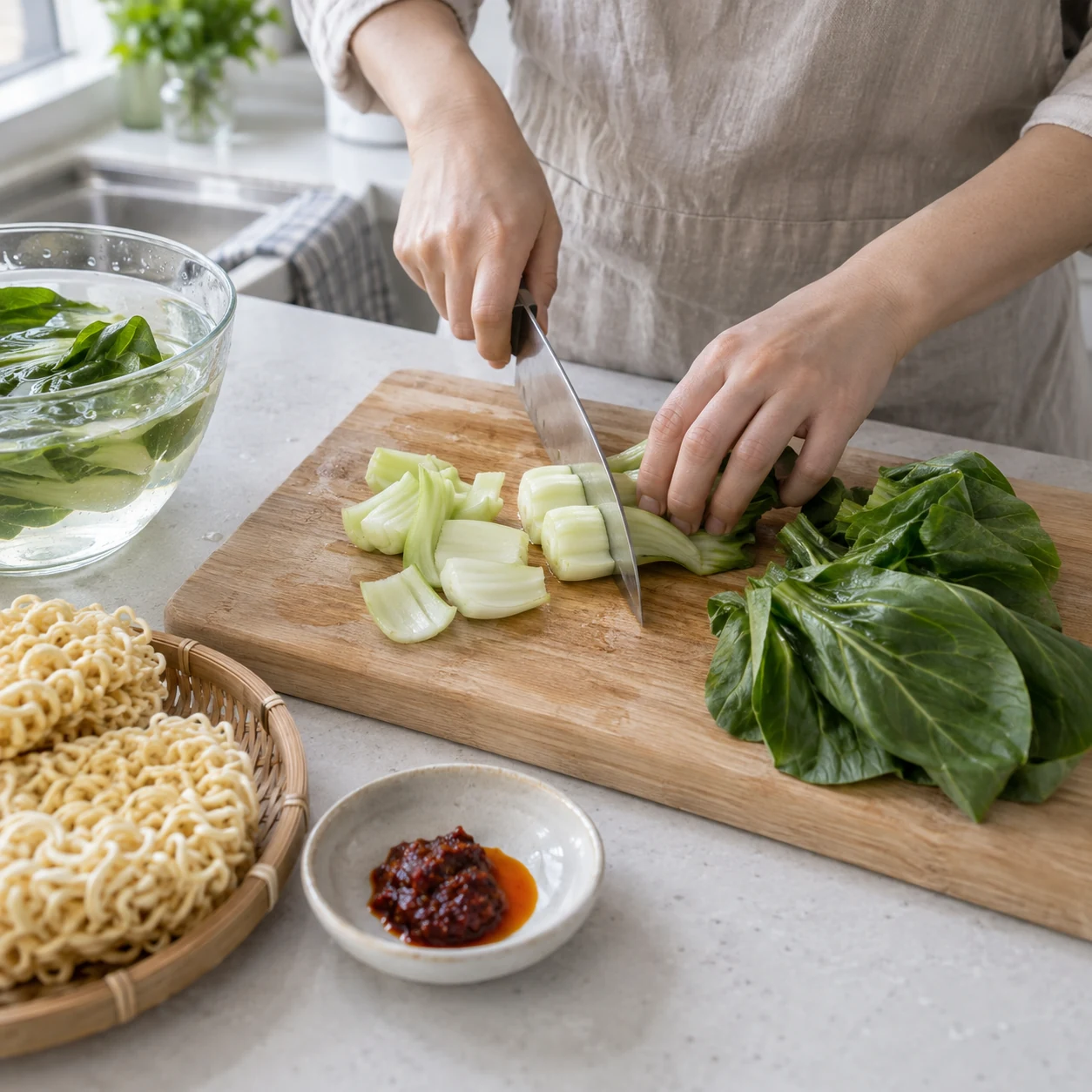
Wash and chop the bok choy; keep the firmer stalk pieces separate from the leaves. Slice the optional spring onion. Measure 2 small teaspoons of prepared mala paste into a dish. Mala brands differ in chilli and Sichuan-pepper intensity, so start with half if unsure.
-
Step 2
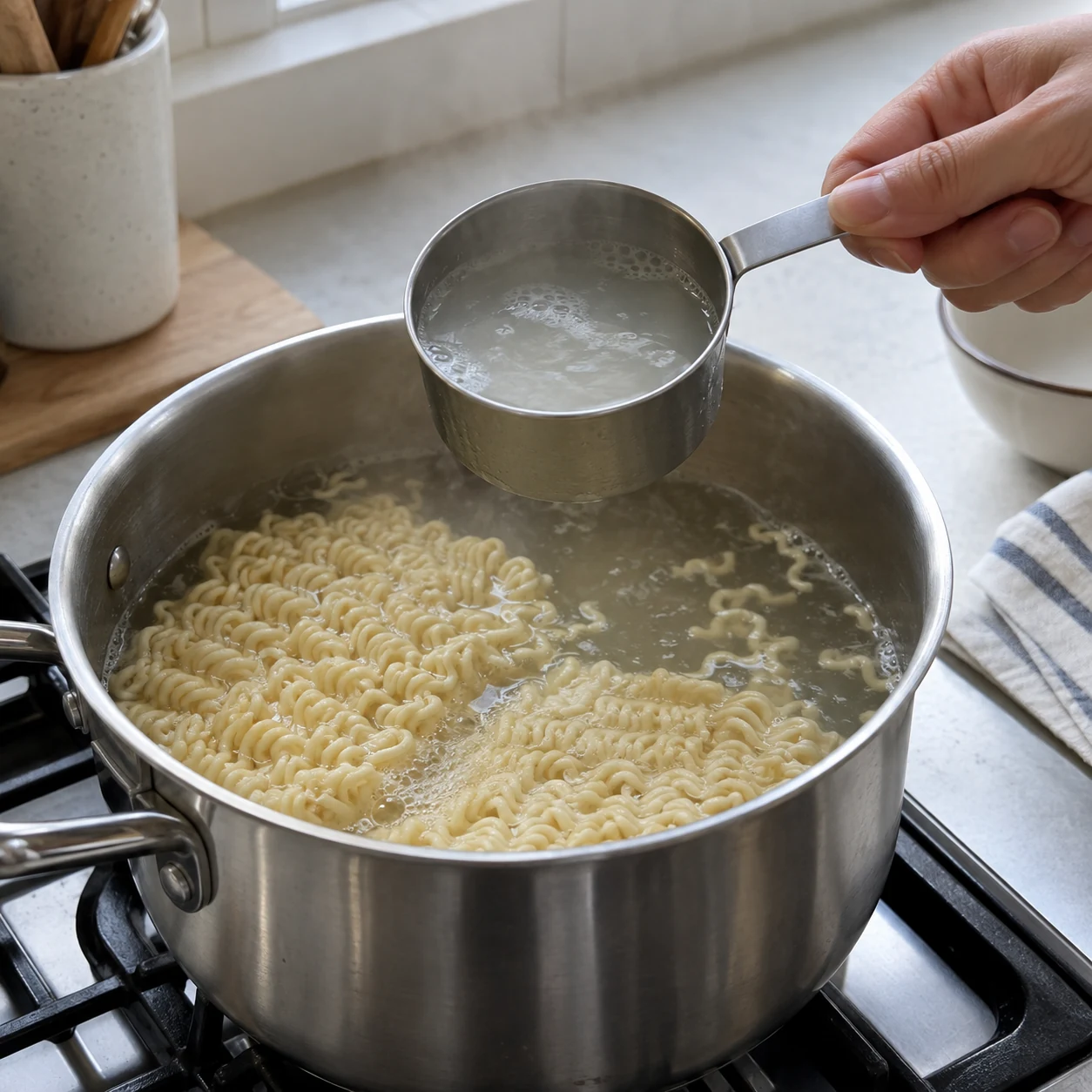
Bring about 6 paper cups of water to a rolling boil in a pot. Add the two noodle blocks and cook for roughly 2 minutes, just until they begin to separate but are not fully soft. Scoop out ½ paper cup (90 ml) noodle water, then drain the noodles. Do not add packet seasoning sachets.
-
Step 3
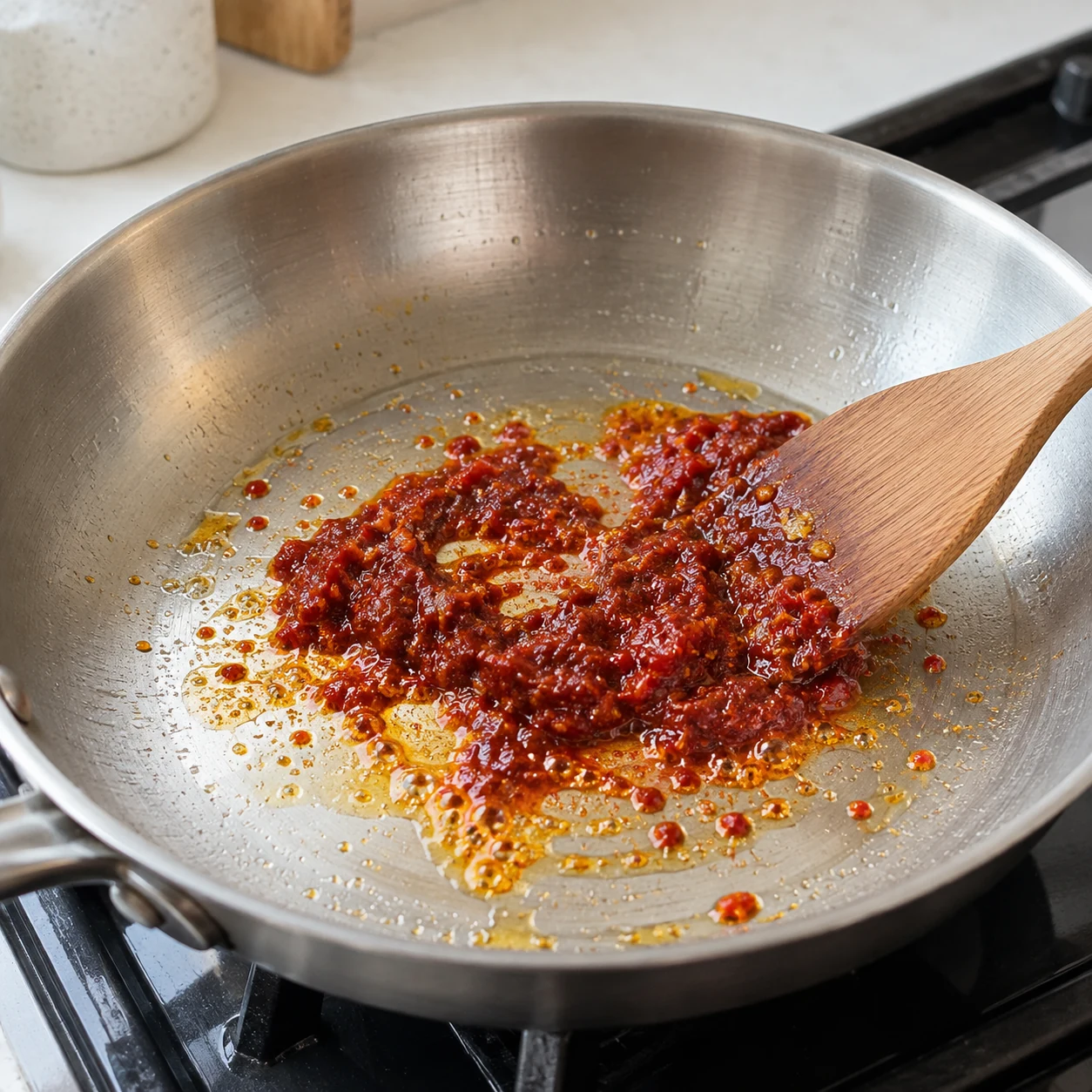
Set a wide pan over medium-low heat. Add the optional small teaspoon of oil and the measured mala paste. Stir for about 20–30 seconds until fragrant, keeping your face away from the hot chilli oil and turning down the heat if it spits.
-
Step 4
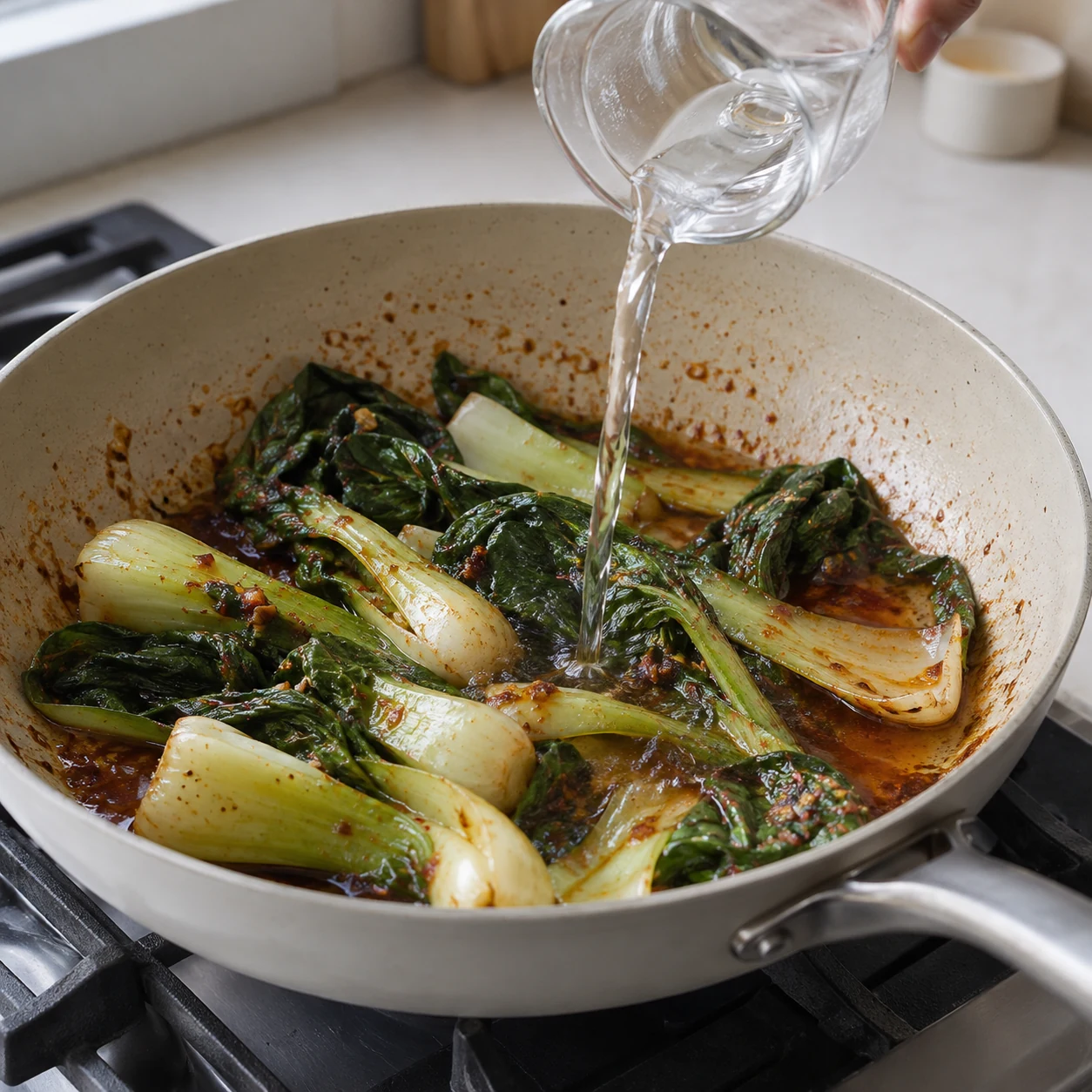
Add the bok choy stalks and 2 level eating spoons of reserved noodle water. Stir for 1 minute. Add the leaves and stir another 30–60 seconds until wilted. If using spinach instead, add it only with the leaves at the end.
-
Step 5
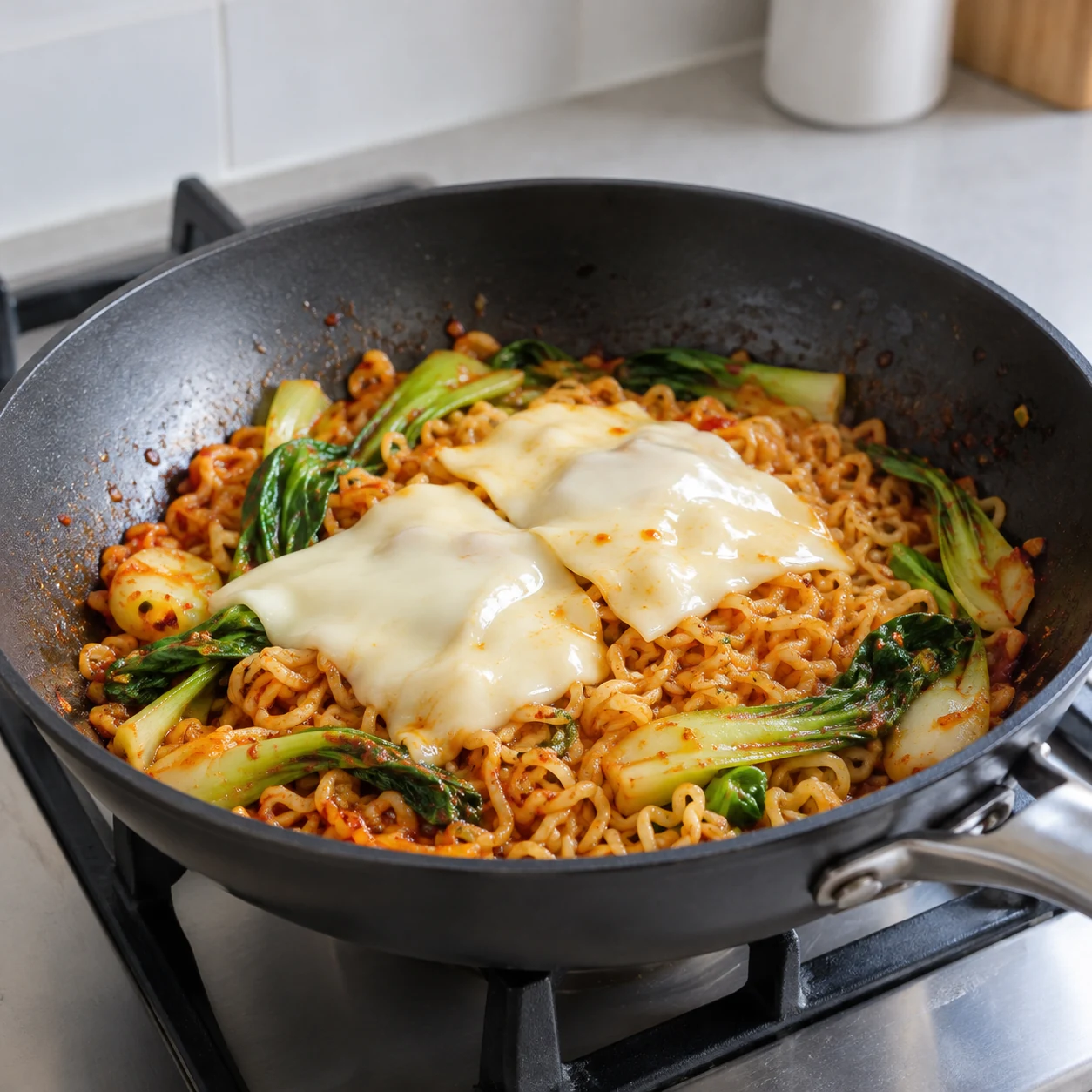
Add the partly cooked noodles and the remaining reserved noodle water. Toss over medium-low heat for 1–2 minutes until the noodles are fully tender and coated, not swimming. Lay the two cheese slices on top, cover for about 30–60 seconds, then stir until melted. Taste before adding the optional soy sauce.
-
Step 6
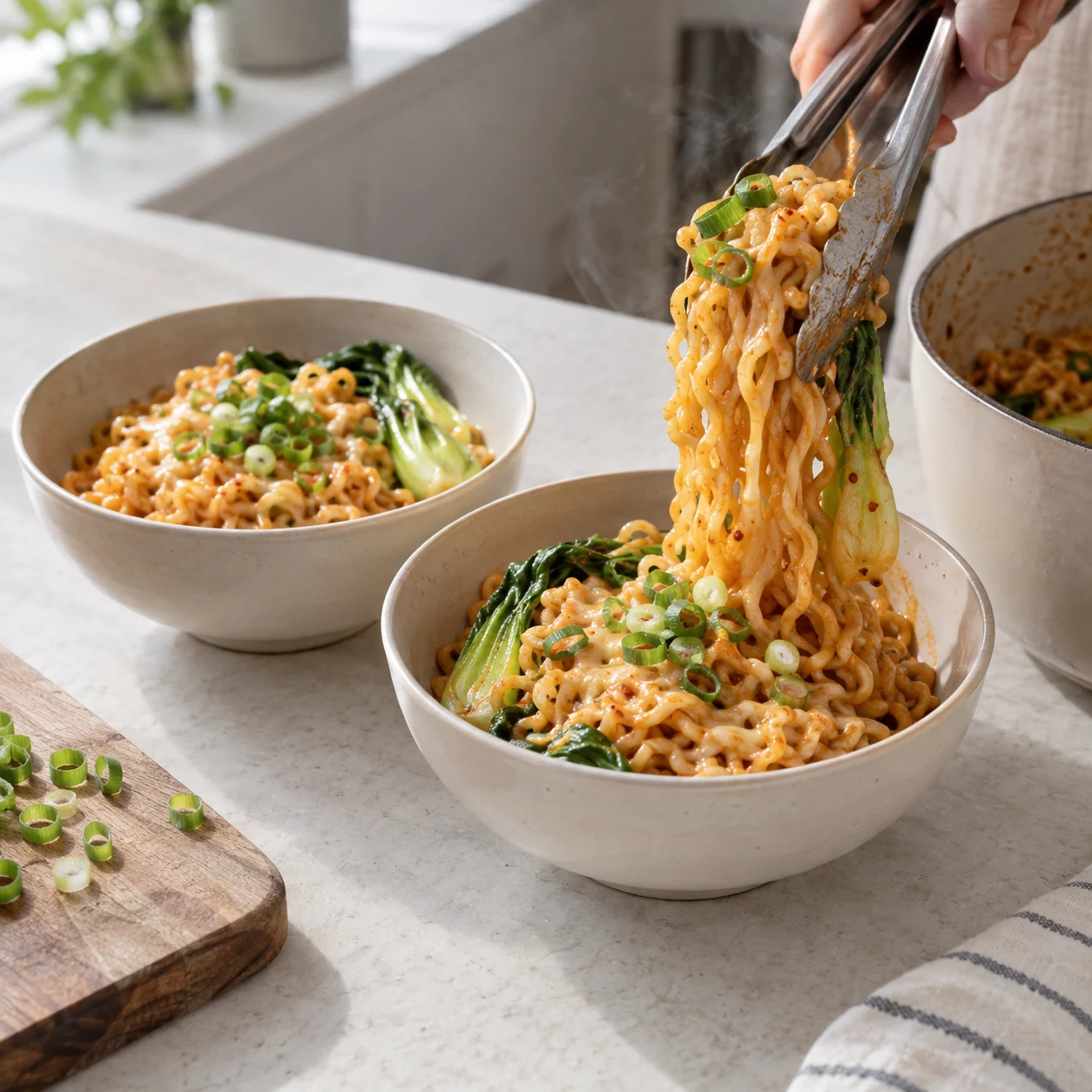
Turn off the heat. Divide the glossy noodles and greens between two bowls and scatter on optional spring onion. Eat while hot and stretchy. Mala paste gives a tingling, spicy sensation; use a smaller portion for anyone sensitive to heat, and check the paste label for allergens.
Finished dish
Prepared mala pastes vary widely in heat, salt and oil; use the label as a guide and taste before adding soy sauce. Do not use dry instant noodle seasoning packets. Cool and refrigerate leftovers promptly; the noodles are best eaten fresh.
Enjoy every bite
How to enjoy it
Serve with crisp cucumber or a mild egg side. For less heat, halve the mala paste rather than adding more cheese; the numbing sensation can remain strong.
Serve it with
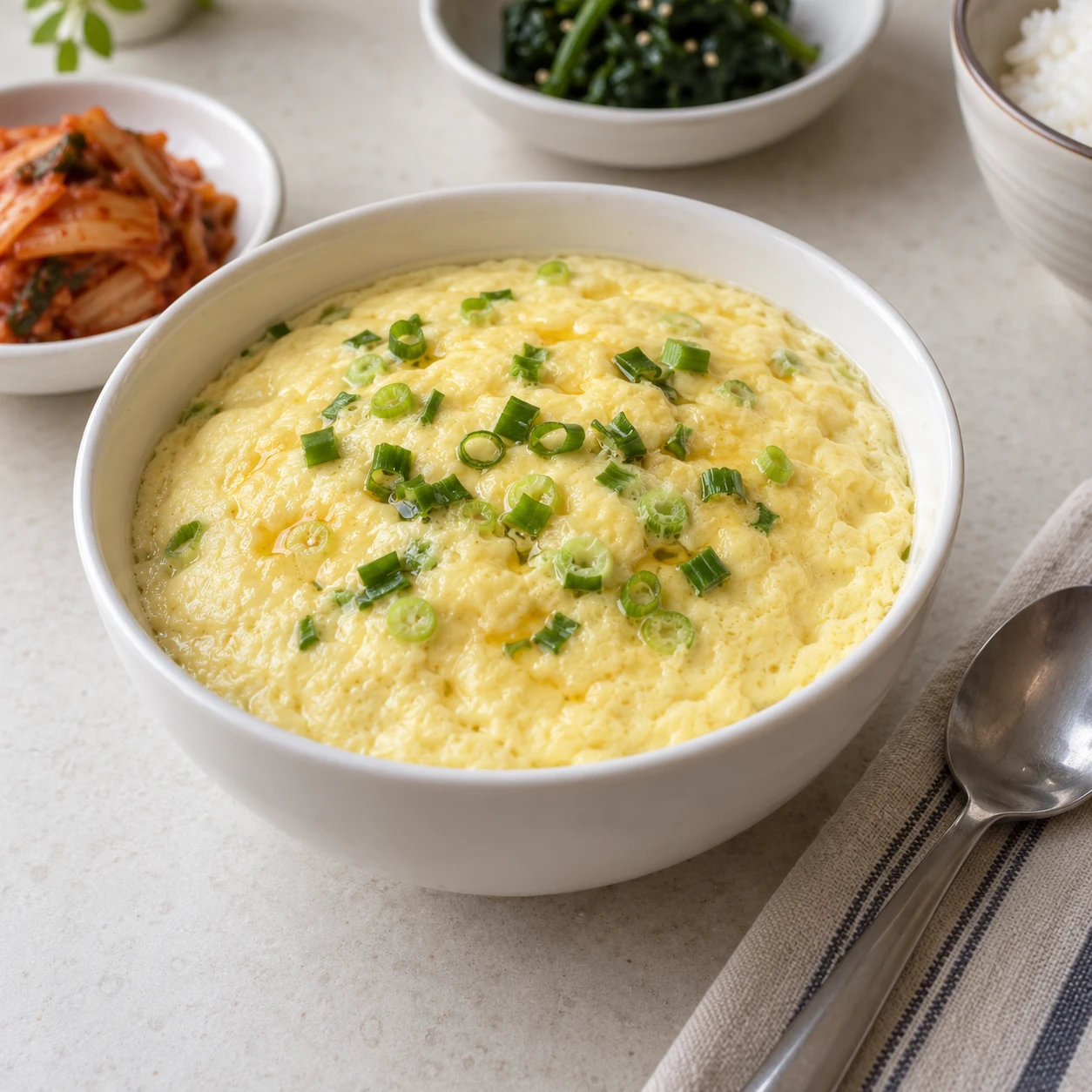
Korean steamed eggs
Soft, gently seasoned egg contrasts with a stronger sauce or a crisp bite.
View recipe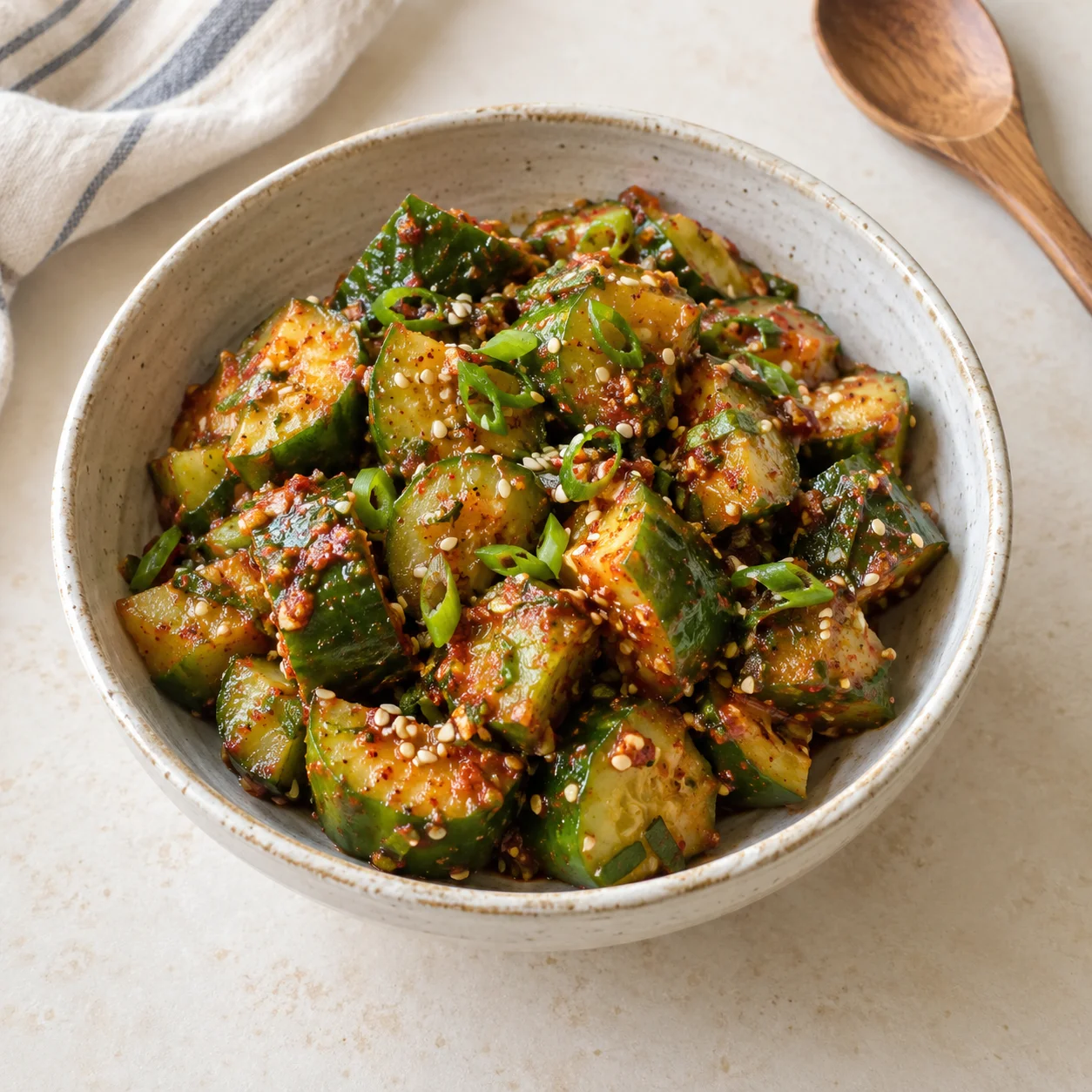
Korean spicy cucumber salad (oi-muchim)
A crisp bite contrasts with the softer main dish; keep its sauce separate.
View recipe