Soybean kimchi stew (kongbiji jjigae)
A hearty Korean stew of finely blended soaked soybeans, kimchi and a little pork. The beans give it a creamy texture without milk; overnight soaking and a blender are needed.

AI-generated cooking illustrations. Follow the written quantities and instructions.
Ingredients
2 servings
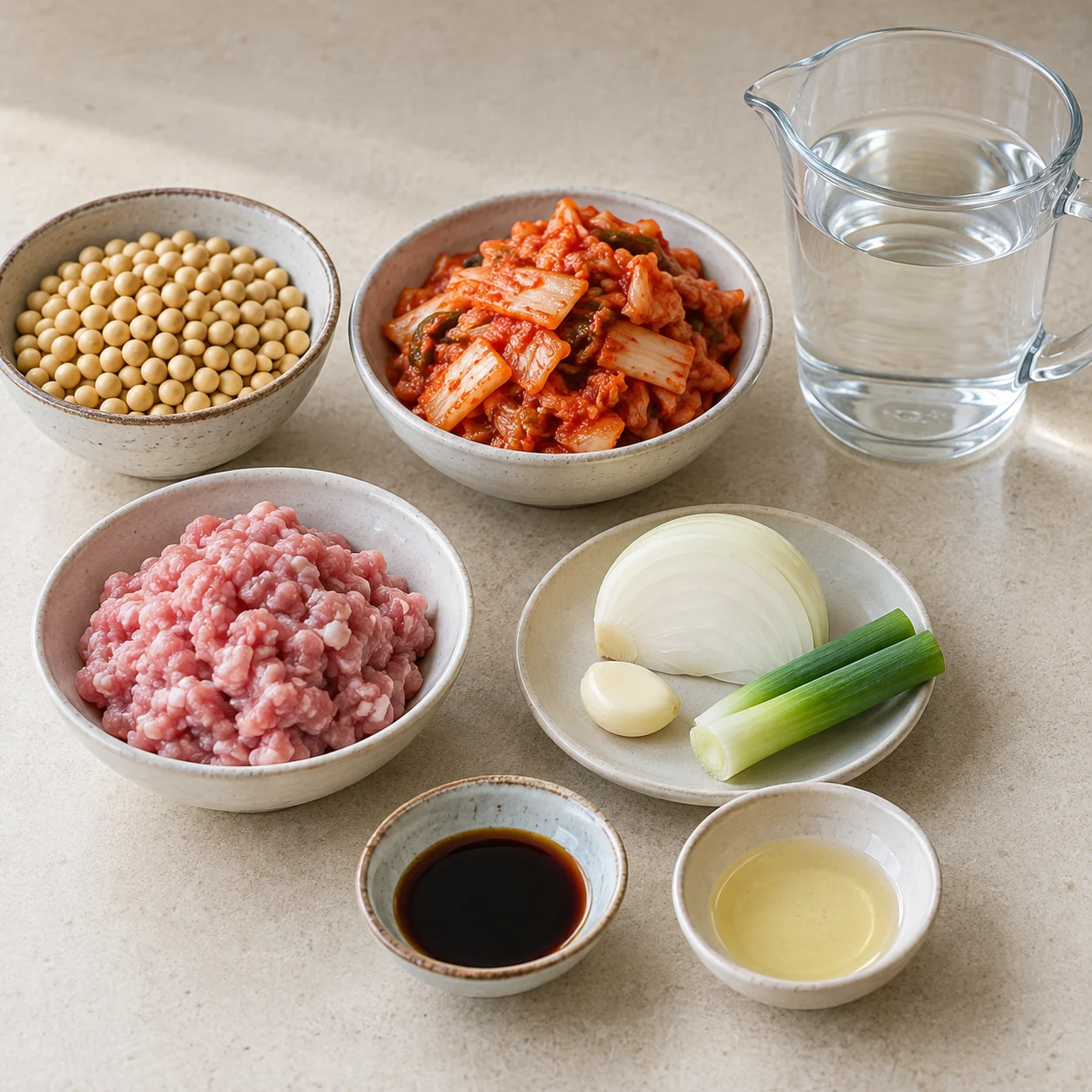
Everyday kitchen measurements
For 2 servings. Use a small 180 ml paper cup, a level eating spoon (about 15 ml) and a small teaspoon (about 5 ml).
How to fill the cup and spoons
Use the same cup and spoons throughout. Their sizes vary, so these amounts are approximate. Spoon flour in loosely and level the top without pressing. Measure vegetables after chopping, without packing them down. The amounts in g/ml are the original reference quantities. For part of a pack, use the specified pack weight and divide the contents evenly.
King Arthur Baking-
Essential
Use dried food-grade yellow soybeans, not kidney beans, chickpeas or soybean flour. Soak and blend as instructed; never taste the raw purée.
-
Essential
Use 2 cups (360 ml) to blend and 1 cup (180 ml) in the pot. Soaking water is extra and is discarded.
-
Essential
Use ready-to-eat, pleasantly sour kimchi. It provides the main seasoning; plain cabbage makes a different, milder version.
-
Substitute available
If Ground pork is unavailable
If pork is unavailable, use 1 paper cup finely chopped fresh mushrooms (100 g). Fry for 4–5 minutes until their water evaporates. Use vegetarian kimchi for a meat-free stew.
-
Optional
May be omitted; skip chopping and frying it. Keep the liquid amounts unchanged.
-
Substitute available
If Neutral cooking oil is unavailable
If neutral oil is unavailable, use 1 small teaspoon (5 ml) canola or sunflower oil at the same frying stage.
-
Optional
May be omitted; skip its preparation and addition.
-
Substitute available
If Soy sauce is unavailable
If soy sauce is unavailable, use ⅛ teaspoon fine salt (about 0.75 g) mixed with 1 teaspoon water (5 ml). Add only after tasting the cooked stew; the flavour will be simpler.
-
Optional
May be omitted; skip the final addition.
Tap each ingredient as you prepare it. Check product labels for egg, soy, sesame, wheat, fish or shellfish where relevant.
Step-by-step cooking
-
Step 1

Rinse the dried soybeans and soak in plenty of extra cold water in the refrigerator for 8–12 hours. Drain and rinse. Rub off loose skins if desired and discard them. The soaking water is not part of the measured 3 cups.
-
Step 2

Blend the drained soaked beans with 2 paper cups water (360 ml) until very smooth, stopping to scrape the jug if needed. This purée is still raw: do not taste it. Keep the remaining 1 cup water for the pot.
-
Step 3

Chop kimchi and optional onion. Heat the oil in a roomy 2–3 litre pot and fry pork over medium heat for 3–4 minutes, breaking it up, until cooked to 71°C. Add kimchi, optional onion and garlic; stir for 2–3 minutes. Add the reserved 1 cup water and simmer for 5 minutes.
-
Step 4

Pour in the bean purée, stir and bring to a gentle simmer. Cook uncovered on low to medium-low heat for 20–25 minutes, scraping the bottom every 1–2 minutes. The mixture can foam and spit; never leave it unattended. Add a tablespoon of hot water if too thick. Once fully cooked, taste and add the soy sauce gradually. Finish with optional spring onion for 1 minute and serve.
Finished dish
The displayed time includes 8 hours soaking plus about 50 minutes preparation and cooking; a colder fridge may need 12 hours soaking. Do not skip the full bean cooking stage. Contains soy; soy sauce and kimchi may contain wheat, fish or shellfish. Rice is separate. Cool in shallow containers and refrigerate within 2 hours, or 1 hour above 32°C. Store at 4°C or colder for up to 3 days and reheat only the needed portion to 74°C.
Enjoy every bite
How to enjoy it
Stir gently before serving and let the thick stew cool a little on the spoon. Enjoy small spoonfuls with rice and a crisp vegetable side.
Serve it with

Korean steamed eggs
Soft, gently seasoned egg contrasts with a stronger sauce or a crisp bite.
View recipe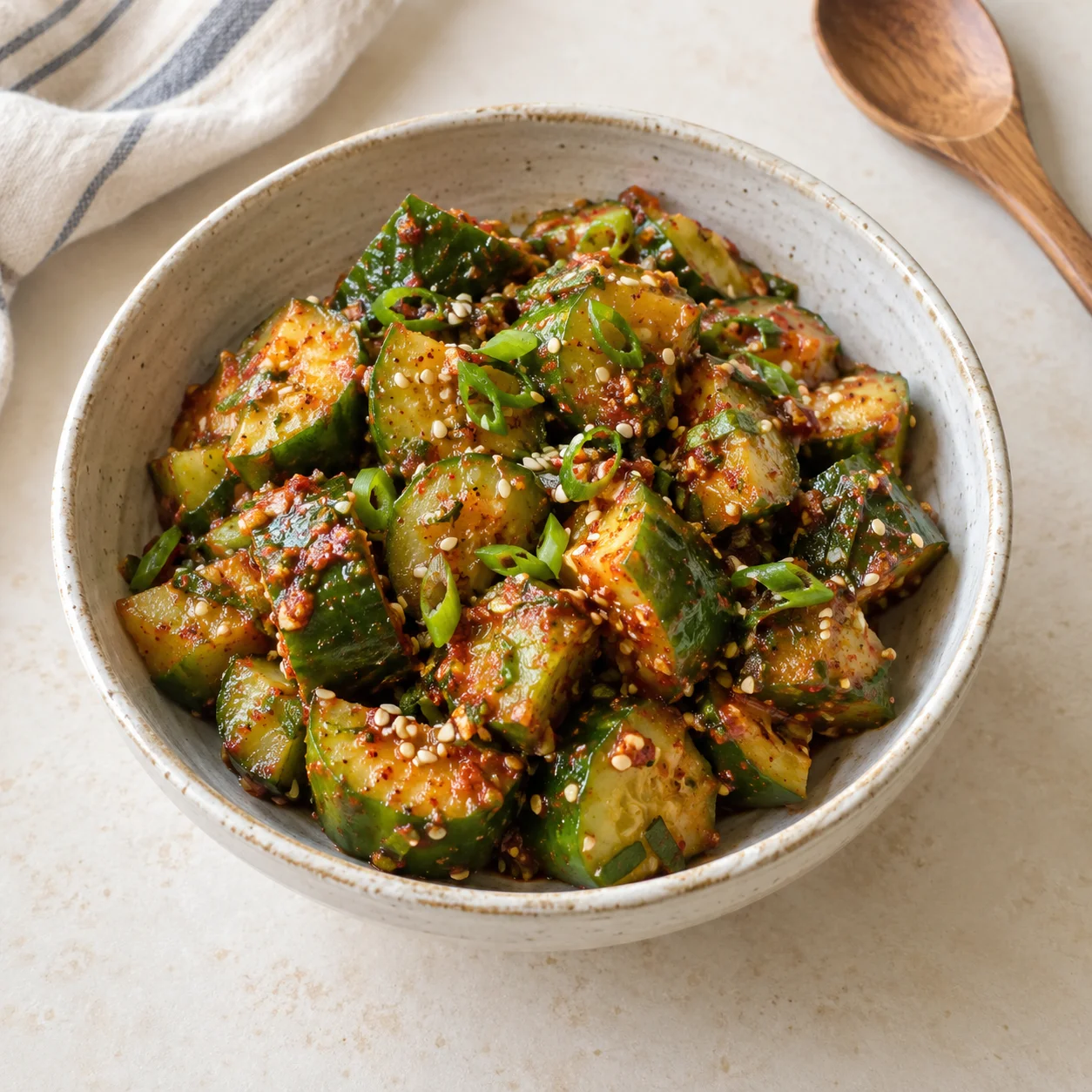
Korean spicy cucumber salad (oi-muchim)
A crisp vegetable bite contrasts with a richer or spicier dish.
View recipe