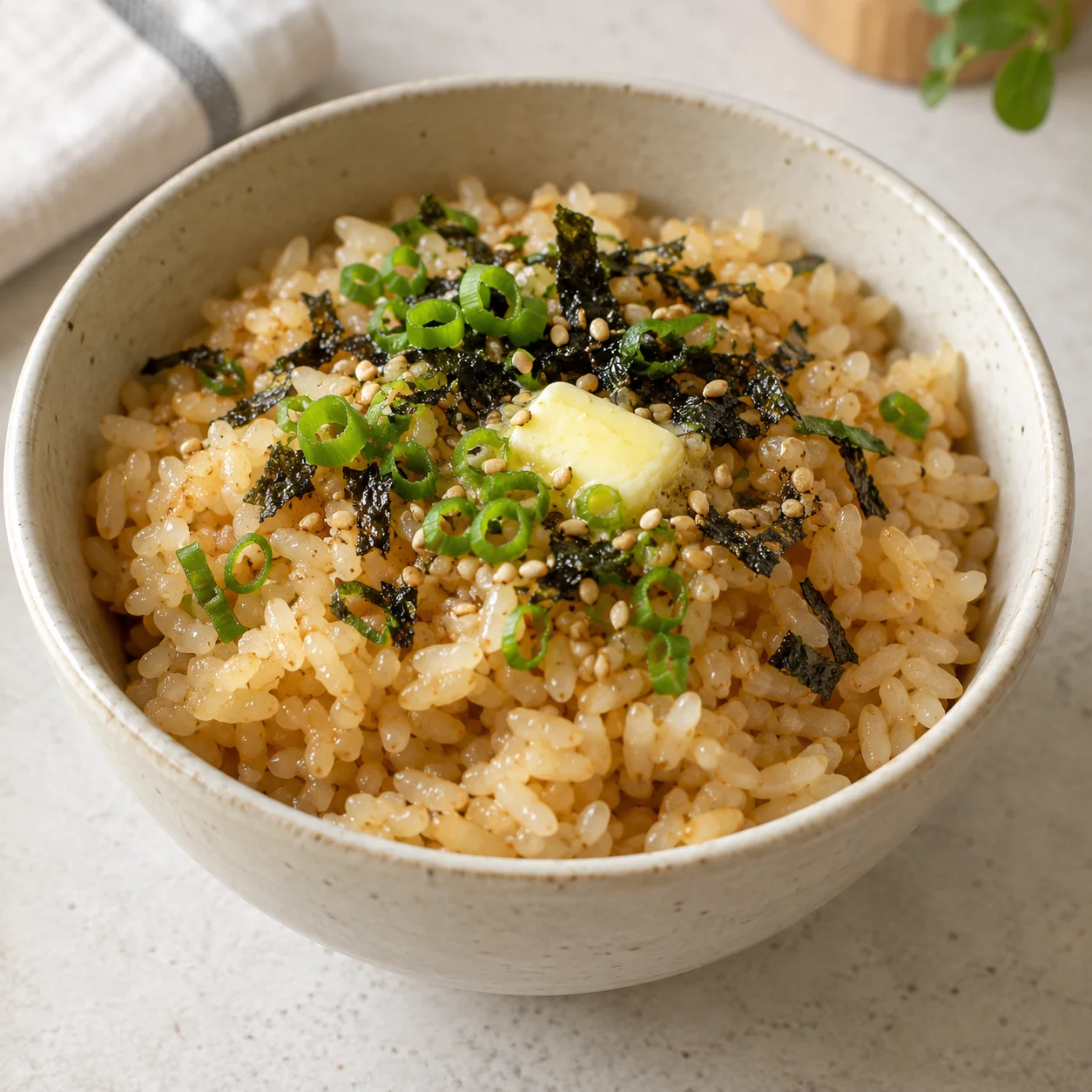
Kkotgetang — spicy Korean crab stew
Sweet swimming crab, radish and zucchini in a warming red broth. Start the radish before adding the crab, and check that the crab meat is fully cooked before serving.
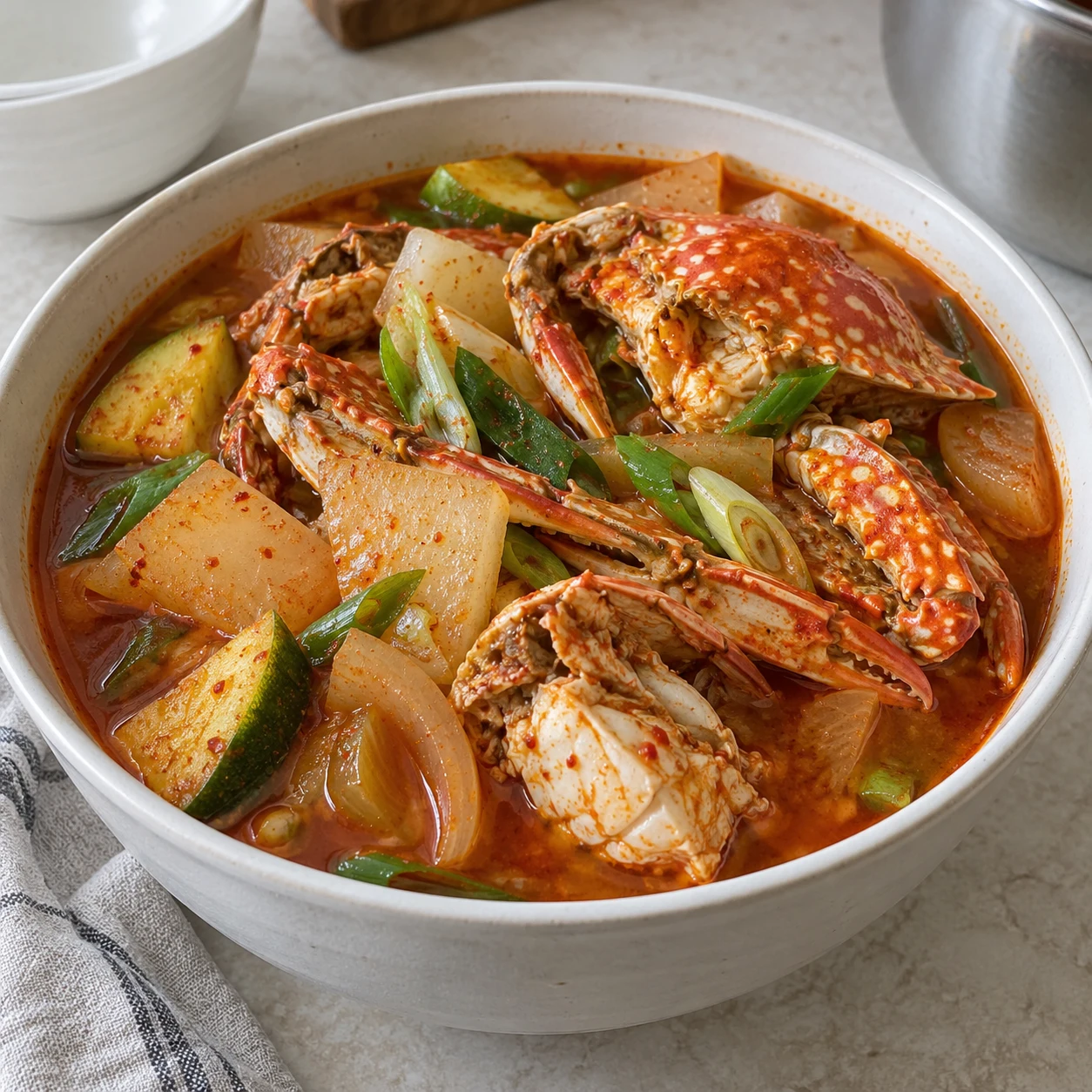
AI-generated cooking illustrations. Follow the written quantities and instructions.
Ingredients
3 servings
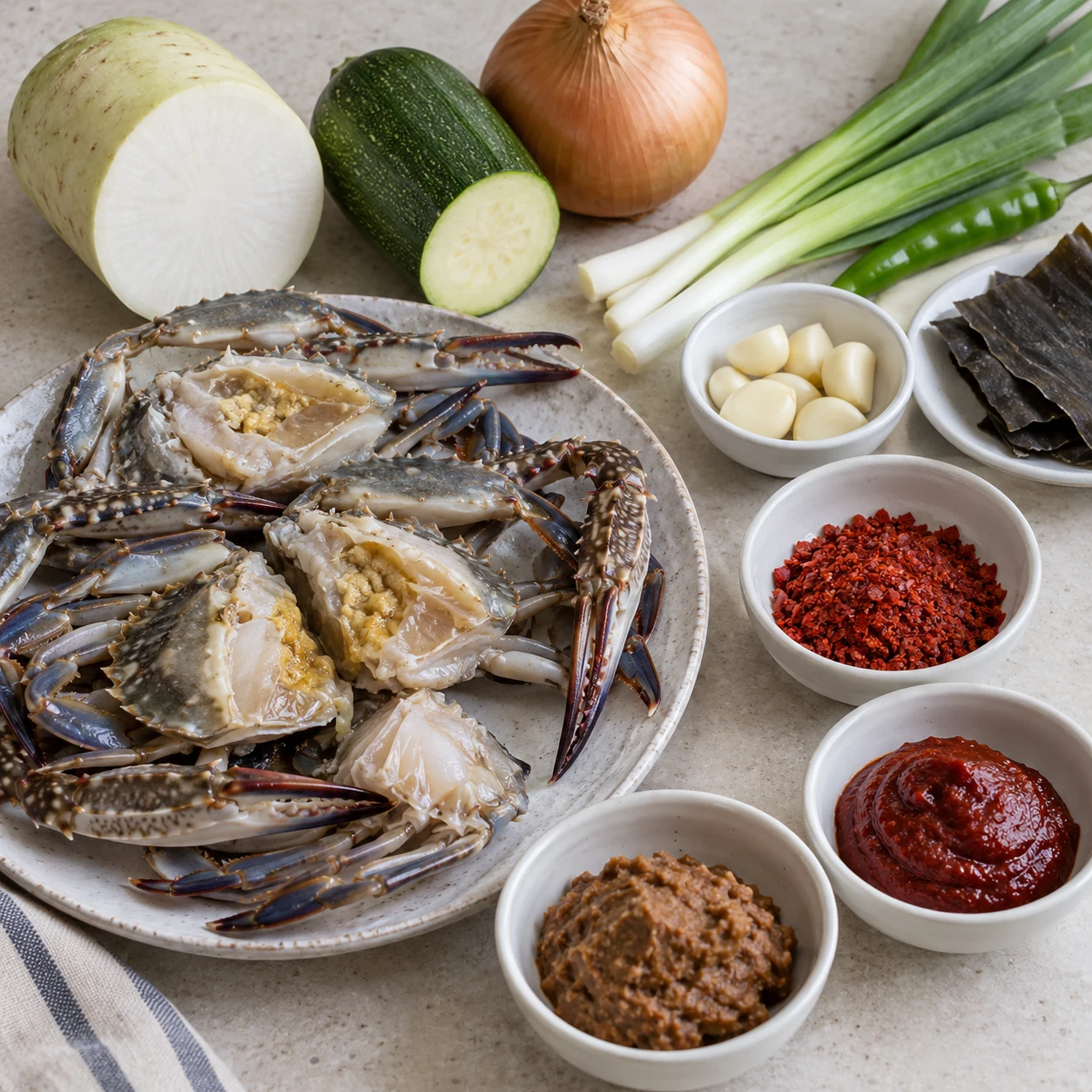
Everyday kitchen measurements
For 3 servings. Use a small 180 ml paper cup, a level eating spoon (about 15 ml) and a small teaspoon (about 5 ml).
How to fill the cup and spoons
Use the same cup and spoons throughout. Their sizes vary, so these amounts are approximate. Spoon flour in loosely and level the top without pressing. Measure vegetables after chopping, without packing them down. The amounts in g/ml are the original reference quantities. For part of a pack, use the specified pack weight and divide the contents evenly.
King Arthur Baking-
Substitute available
If Cleaned raw swimming crab is unavailable
- Use instead
- Raw blue crab pieces
- Substitute quantity
- 1 of a 600 g packReference quantity: 600 g
Use one 600 g pack of cleaned raw blue crab pieces. Thaw in the refrigerator and cook at the crab step until the flesh is firm and opaque throughout, at least 63°C. Larger pieces may take longer.
-
Substitute available
If Korean radish is unavailable
- Use instead
- Daikon radish
- Substitute quantity
- 1 paper cupReference quantity: about 120 g
Peel and slice the same cupful thinly. Add at the radish step and simmer until a fork enters easily.
-
Essential
Keep this ingredient: it provides the main structure or seasoning of this dish.
-
Essential
Keep this ingredient: it provides the main structure or seasoning of this dish.
-
Essential
Keep this ingredient: it provides the main structure or seasoning of this dish.
-
Substitute available
If Doenjang (Korean soybean paste) is unavailable
- Use instead
- Red miso
- Substitute quantity
- 1 level eating spoonReference quantity: about 18 g
Use the same spoon quantity. Dissolve it with a little broth near the end rather than boiling it with the radish. The broth will be milder and taste different.
-
Essential
Keep this ingredient: it provides the main structure or seasoning of this dish.
-
Essential
Keep this ingredient: it provides the main structure or seasoning of this dish.
-
Substitute available
If Minced garlic is unavailable
- Use instead
- Garlic powder
- Substitute quantity
- ¼ small teaspoonReference quantity: about 0.5 g
Use plain garlic powder at the garlic step. Do not use garlic salt; it changes the salt level.
-
Optional
Omit the kelp from the broth and its removal step if unavailable. Crab and soybean paste still provide flavor.
-
Optional
Omit the spring onion at the last simmer if unavailable; no other change is needed.
-
Optional
Omit the fresh chili for less heat. The chili paste and flakes still make this a spicy stew.
Tap each ingredient as you prepare it. Check product labels for egg, soy, sesame, wheat, fish or shellfish where relevant.
Step-by-step cooking
-
Step 1
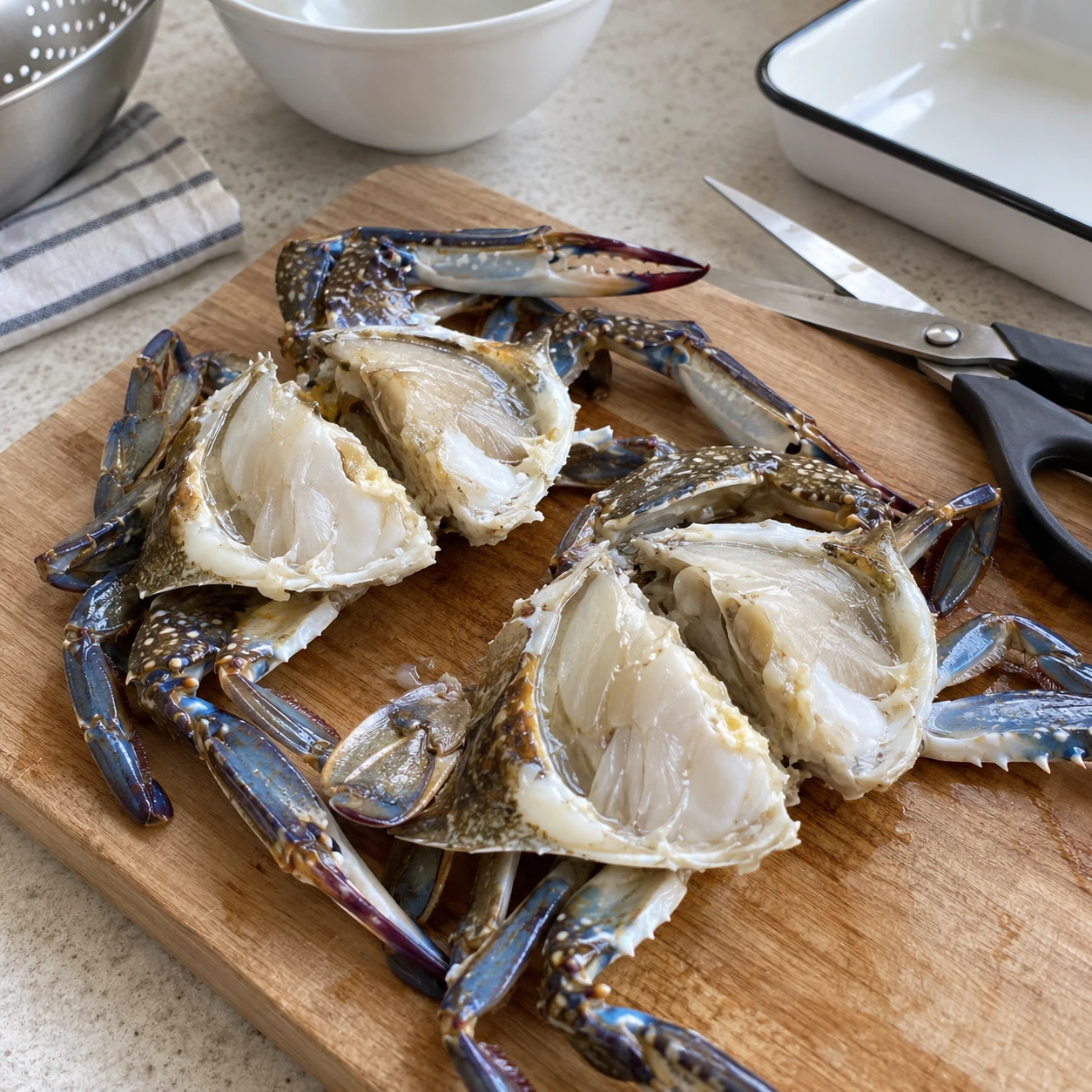
Prepare the crab carefully. Use cleaned raw swimming crabs from a reliable chilled supplier; thaw frozen pieces in the refrigerator. Ask the fishmonger to remove the gills, stomach sac and apron. Check for loose shell fragments, rinse briefly in cold water without splashing, drain and cut each body in half. Keep chilled. Wash hands, board and tools after handling raw crab; cover any cuts on your hands.
-
Step 2
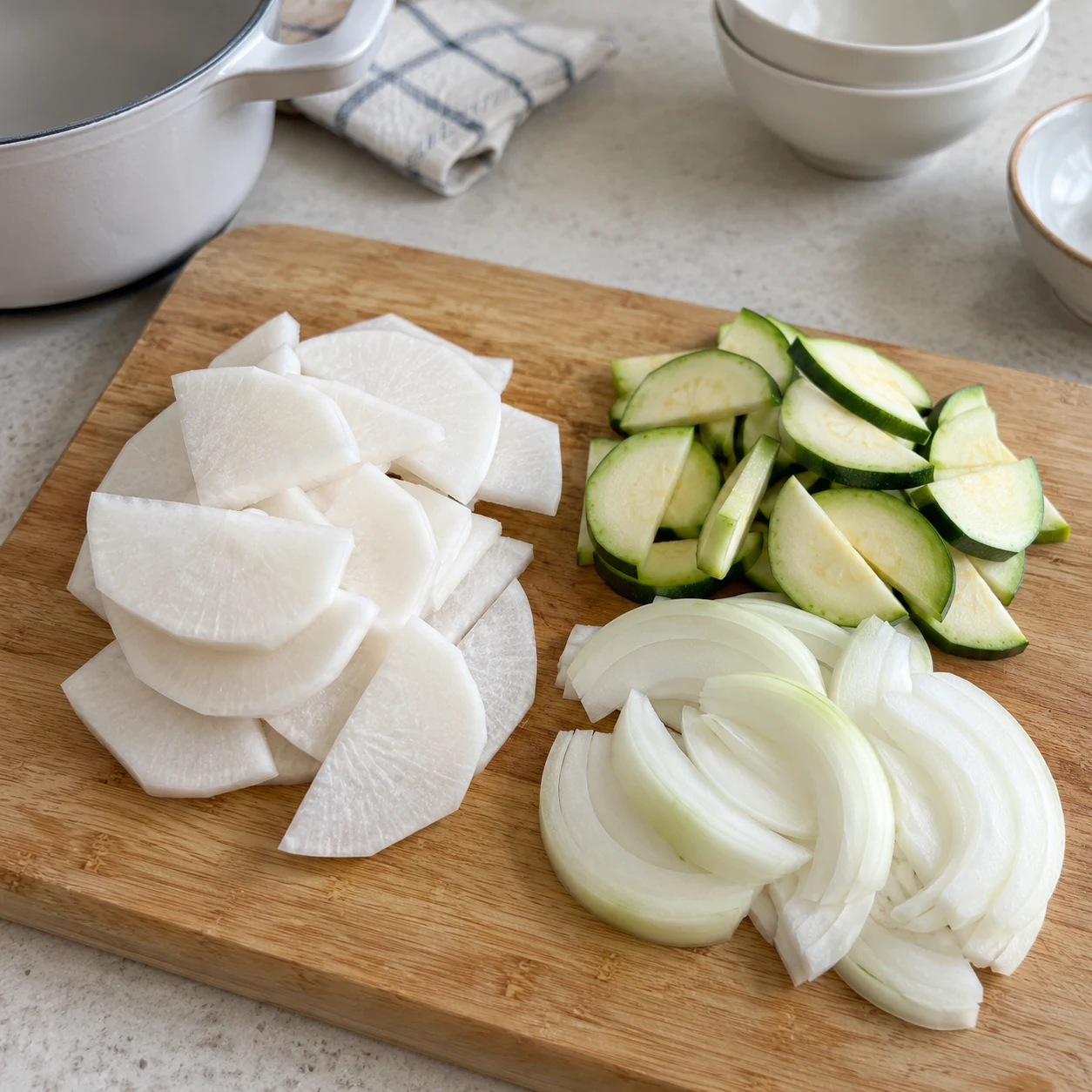
Cut the vegetables. Peel and slice the radish thinly to fill 1 small paper cup. Cut ½ zucchini into half-moons and slice ½ onion. Chop 1 spring onion and the optional ½ green chili. Keep the vegetables separate from the raw crab and its board.
-
Step 3
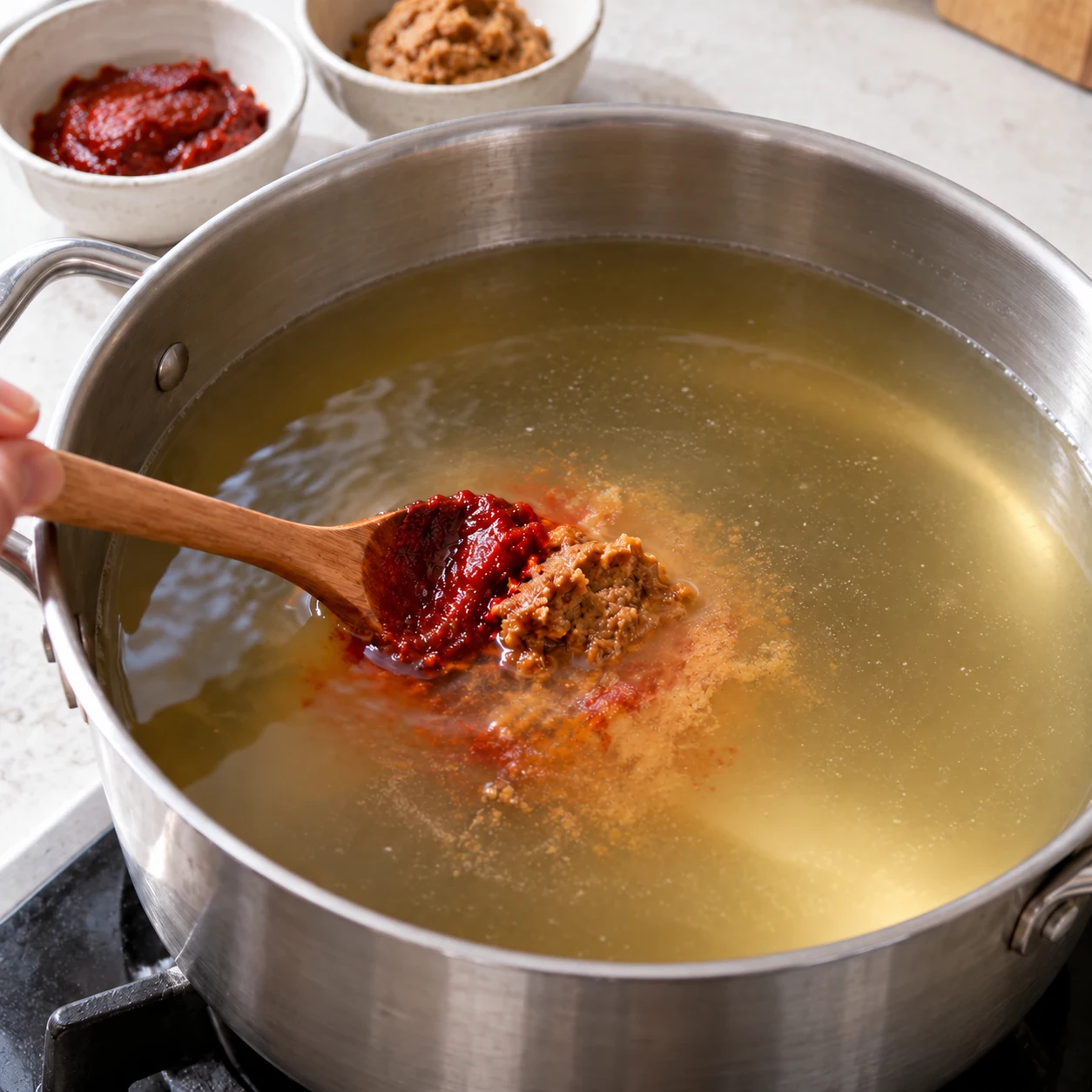
Start the broth. Put 5 small paper cups water and the optional palm-size kelp in a medium pot. Bring to a gentle boil, simmer for 5 minutes and remove the kelp. Stir in 1 level eating spoon doenjang, 1 level eating spoon gochujang, 1 small teaspoon chili flakes and 1 small teaspoon minced garlic, breaking up the paste completely.
-
Step 4
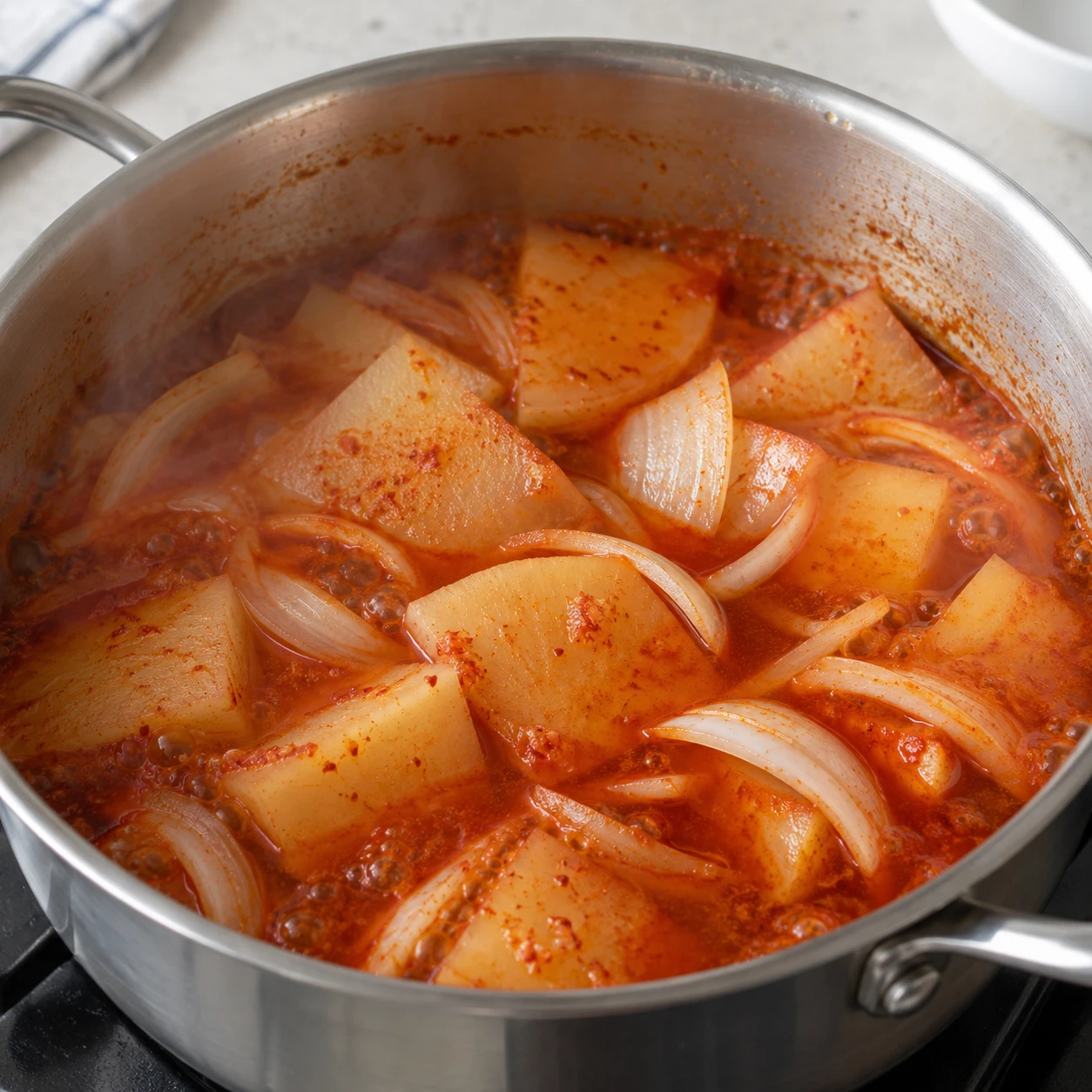
Soften the radish first. Add the radish and onion to the broth. Simmer gently for 8–10 minutes, until the radish edges look slightly translucent. Skim loose foam. If using the miso alternative, keep the miso aside for now and add it near the end as described in the replacement note.
-
Step 5
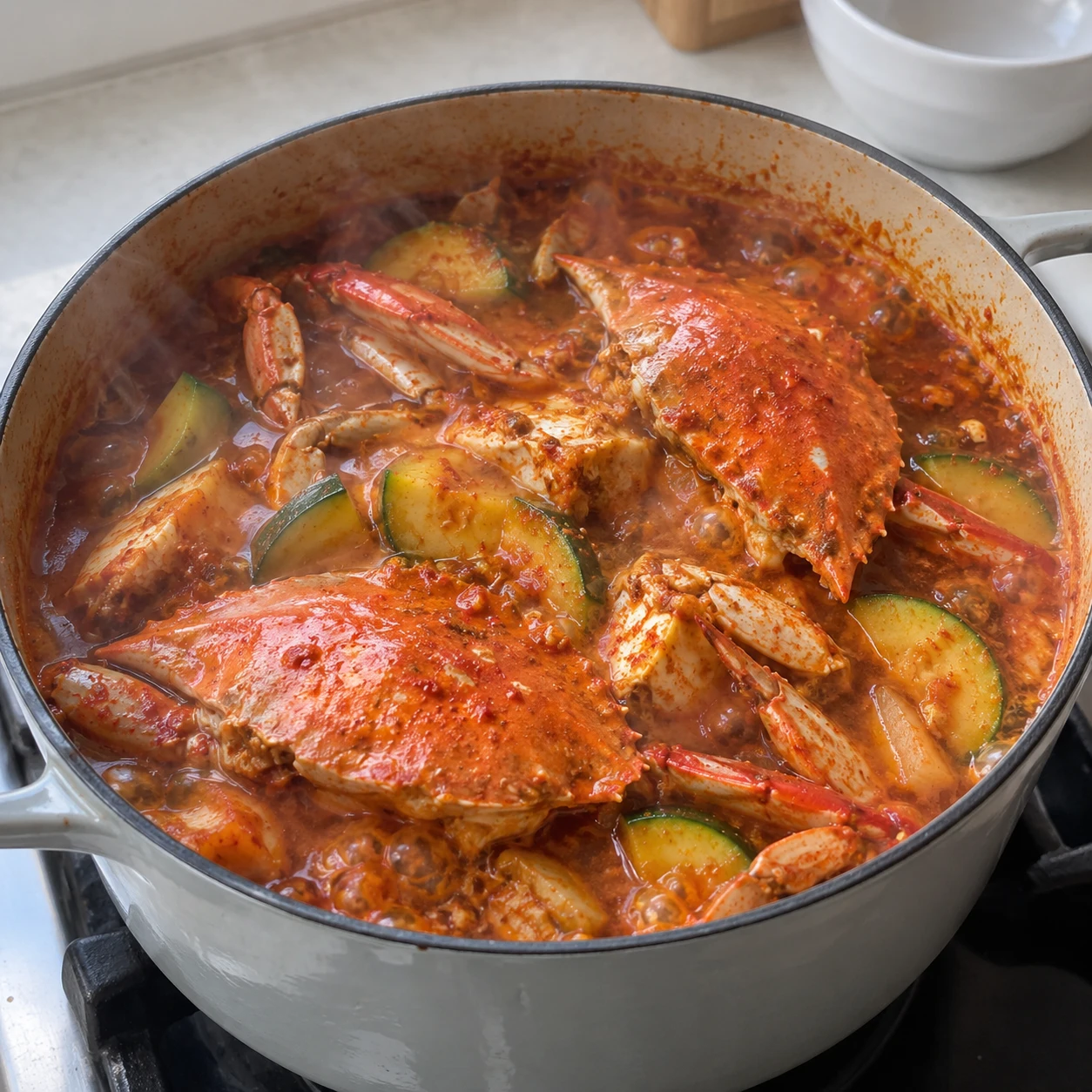
Cook the crab through. Add the crab and zucchini, bring back to a gentle boil, cover loosely and simmer for 12–15 minutes. Turn the pieces carefully once. The shells should become orange and the thickest crab meat must be firm, pearly and opaque throughout, at least 63°C. Large pieces need longer; shell color alone does not prove the meat is done.
-
Step 6
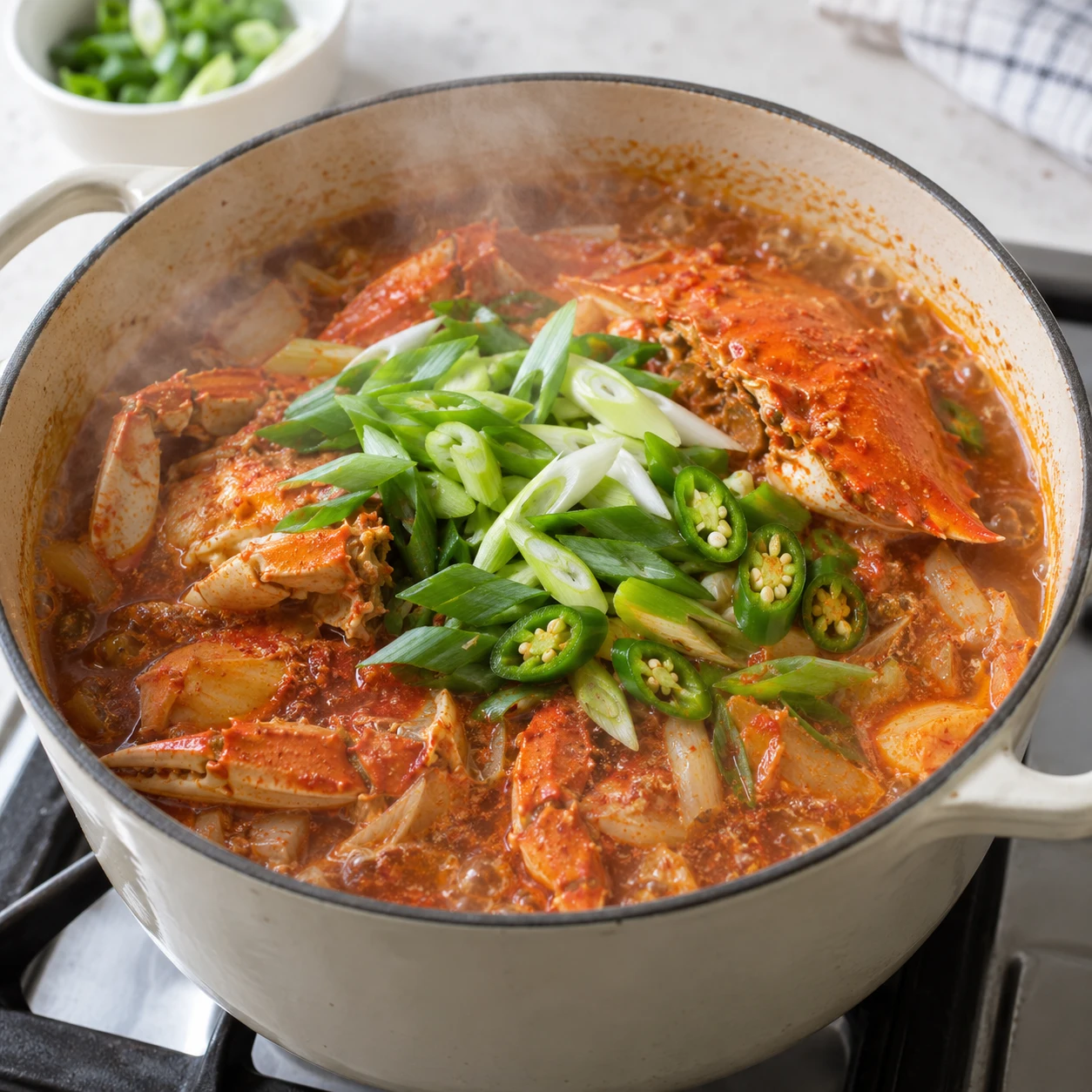
Finish and serve carefully. Add the spring onion and optional green chili and simmer for 2 more minutes. Taste a cooled spoonful. If too salty, add hot water 1 level eating spoon at a time. Serve in deep bowls with a shell bowl and crab tools. Remove shell fragments carefully; do not bite through hard claws. Cool a separate portion and remove all shells before offering fully cooked meat to children.
Finished dish
A level eating spoon here is about 15 ml, a small teaspoon about 5 ml, and a small paper cup about 180 ml. Use the same spoon and cup throughout; household sizes and ingredient weights vary. Crab is a crustacean allergen. Doenjang and gochujang commonly contain soy and may contain wheat. Keep raw crab separate from ready-to-eat food. Refrigerate cooked leftovers within 2 hours, use within 3 days and reheat thoroughly to 74°C.
Enjoy every bite
How to enjoy it
Start with a small sip of broth, then enjoy the cooked crab with rice. Take your time with the shells and use only a little broth on each rice spoonful.
Serve it with
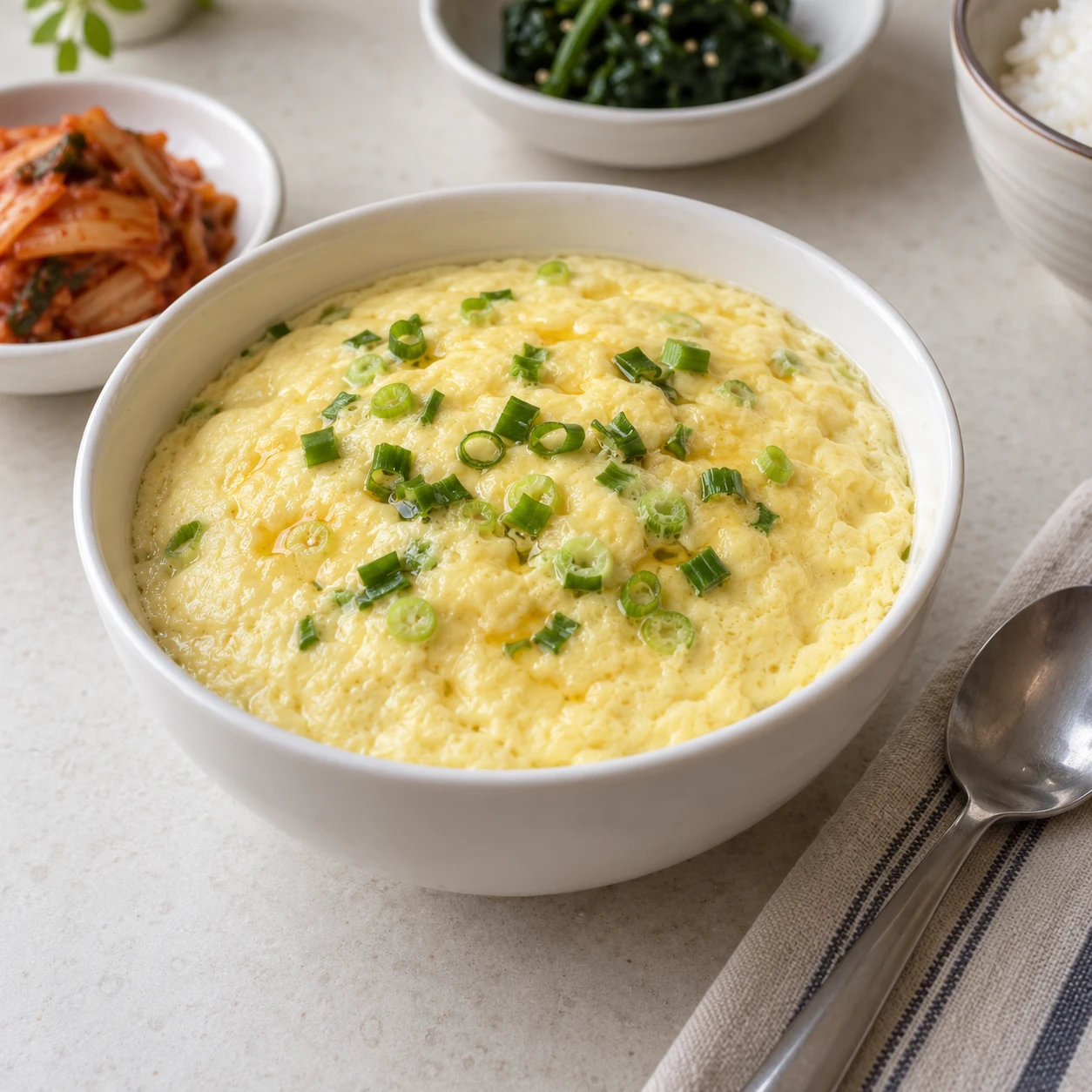
Korean steamed eggs
Soft, gently seasoned egg contrasts with a stronger sauce or a crisp bite.
View recipe