Kkakdugi fried rice — radish kimchi rice
A meat-free Korean fried rice with small, pleasantly crunchy radish kimchi pieces. Reducing the kimchi liquid before adding rice keeps the grains separate instead of soggy.

AI-generated cooking illustrations. Follow the written quantities and instructions.
Ingredients
2 servings

Everyday kitchen measurements
For 2 servings. Use a small 180 ml paper cup, a level eating spoon (about 15 ml) and a small teaspoon (about 5 ml).
How to fill the cup and spoons
Use the same cup and spoons throughout. Their sizes vary, so these amounts are approximate. Spoon flour in loosely and level the top without pressing. Measure vegetables after chopping, without packing them down. The amounts in g/ml are the original reference quantities. For part of a pack, use the specified pack weight and divide the contents evenly.
King Arthur Baking-
Essential
Needed for the flavor and texture of this version. Use the listed amount.
-
Essential
Needed for the flavor and texture of this version. Use the listed amount.
-
Substitute available
If Radish kimchi brine is unavailable
- Use instead
- Water
- Substitute quantity
- 2 level eating spoonsReference quantity: 30 ml
Use this water instead of the brine, in the same amount. The rice will have a milder fermented flavor.
-
Essential
Needed for the flavor and texture of this version. Use the listed amount.
-
Optional
May be omitted. Skip only preparing and adding this ingredient; keep the other quantities unchanged.
-
Essential
Needed for the flavor and texture of this version. Use the listed amount.
-
Substitute available
If Soy sauce is unavailable
- Use instead
- Tamari soy sauce
- Substitute quantity
- 1 small teaspoonReference quantity: 5 ml
Replace the original soy sauce with this amount. Keep the water and method unchanged; check tamari labels for soy and possible wheat.
-
Optional
May be omitted. Skip only preparing and adding this ingredient; keep the other quantities unchanged.
-
Optional
May be omitted. Skip only preparing and adding this ingredient; keep the other quantities unchanged.
-
Optional
May be omitted. Skip only preparing and adding this ingredient; keep the other quantities unchanged.
Tap each ingredient as you prepare it. Check product labels for egg, soy, sesame, wheat, fish or shellfish where relevant.
Step-by-step cooking
-
Step 1
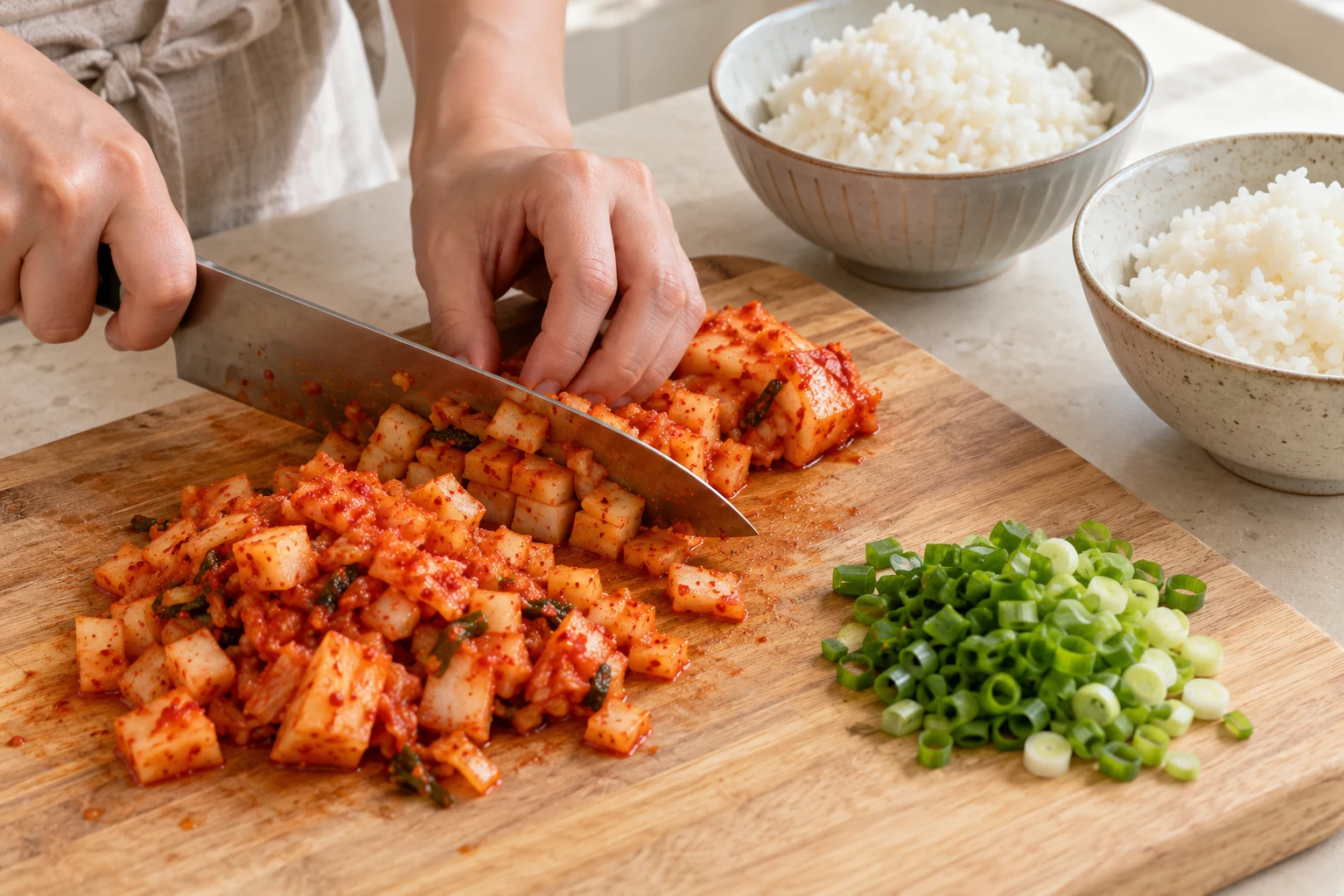
Drain 150 g ripe kkakdugi, saving 2 tablespoons brine. Cut the radish into 5 mm pieces and slice 1 spring onion. Loosen 300 g cooked rice with a spoon. Use freshly cooked rice or rice promptly chilled after cooking; do not use rice left at room temperature.
-
Step 2
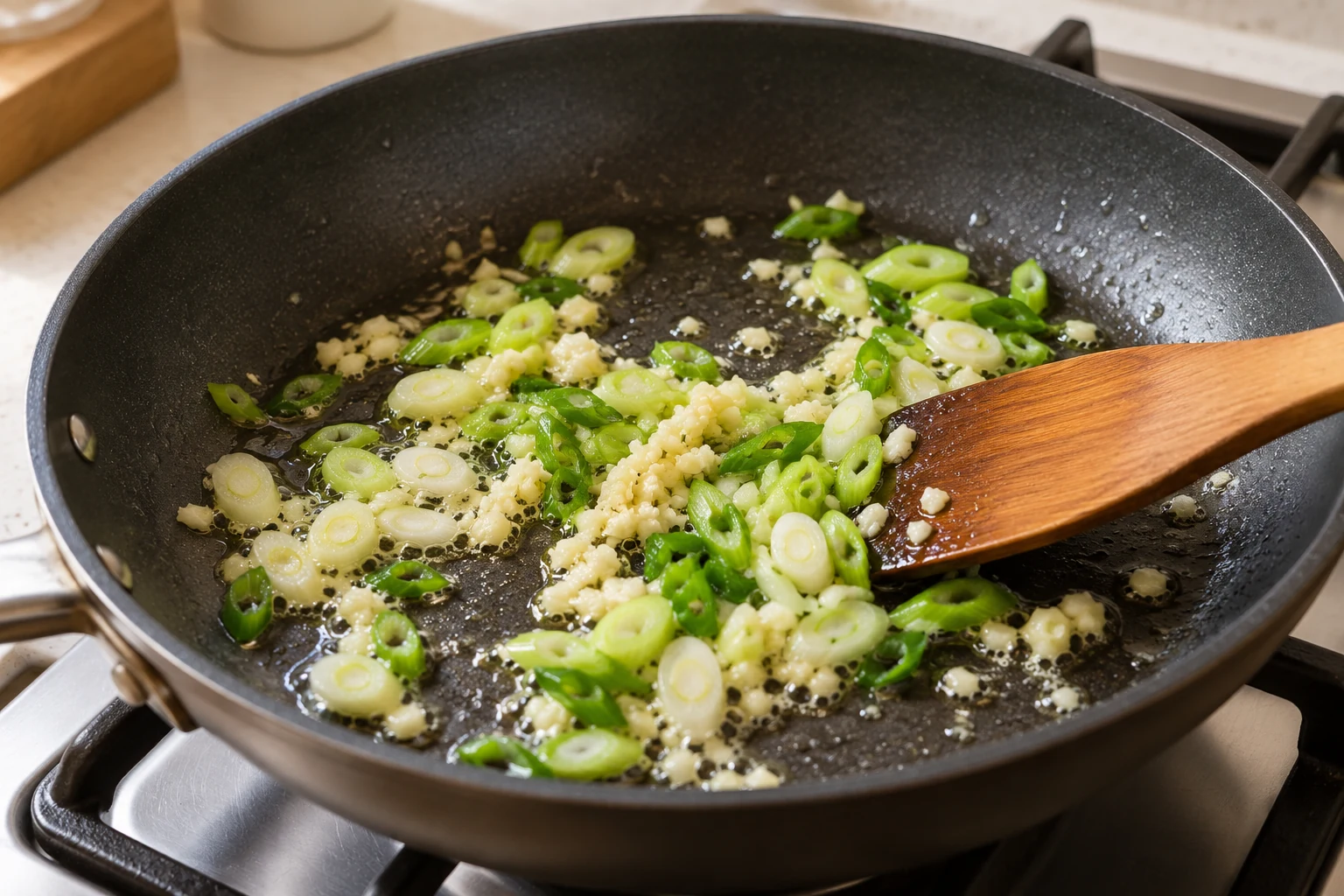
Heat 1 tablespoon neutral oil in a wide nonstick pan over medium heat. Add the spring onion and stir for 1 minute. Add optional ½ teaspoon minced garlic and stir for 20 seconds without browning. A wide pan helps moisture escape.
-
Step 3
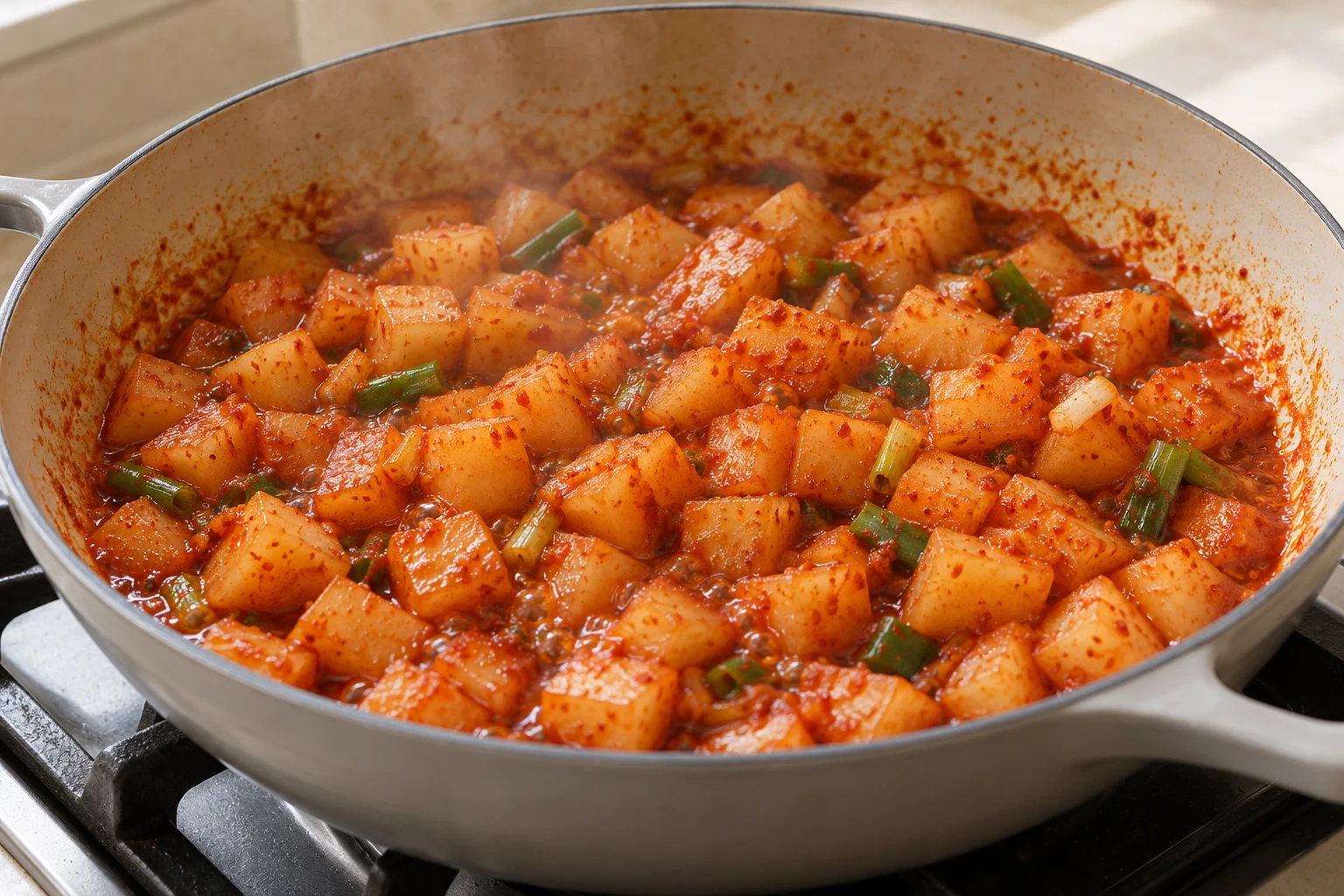
Add the chopped kkakdugi and reserved brine. Stir-fry for 3–4 minutes, until the radish softens slightly and almost no loose liquid remains. Add 1 teaspoon soy sauce and optional ½ teaspoon sugar. Stir for 30 seconds; lower the heat if the sauce starts sticking.
-
Step 4
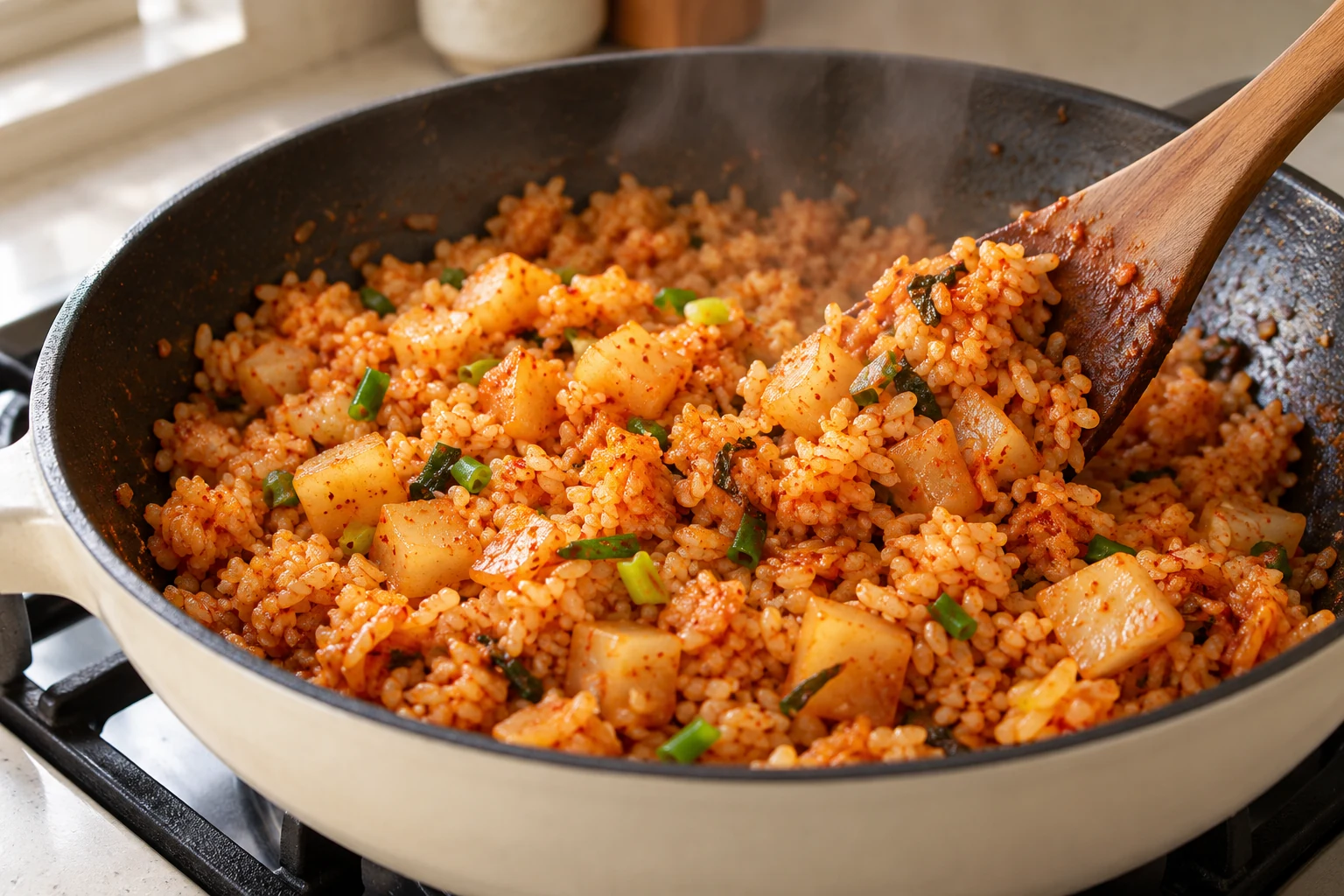
Add the rice and separate clumps with the spatula. Toss over medium-high heat for 3–4 minutes until evenly orange and piping hot, reaching 74°C throughout if reheating chilled rice. Turn off the heat and stir in optional 1 teaspoon sesame oil. Divide between 2 bowls and serve immediately.


Finished dish
For 2 servings. Use fermented radish kimchi, not fresh radish or cabbage kimchi. If the radish is very firm, add 2 tablespoons water in step 3 and cook until it evaporates before adding rice. Kimchi may contain fish or shellfish; soy sauce may contain wheat, and sesame oil contains sesame. Cool rice leftovers within 1 hour, refrigerate at 4°C or below, use within 24 hours and reheat only once to 74°C. Household spoon measures are approximate; 1 tablespoon = 15 ml and 1 teaspoon = 5 ml.
Related recipes


Enjoy every bite
How to enjoy it
Serve while the rice is hot and the radish still has a gentle bite. A small bowl of clear soup and a mild egg side make a balanced meal.

