Rolled omelette (Gyeran mari)
A soft rolled omelette with tiny carrot and scallion pieces. Three thin layers are rolled together in an ordinary frying pan; no special rectangular pan is needed.
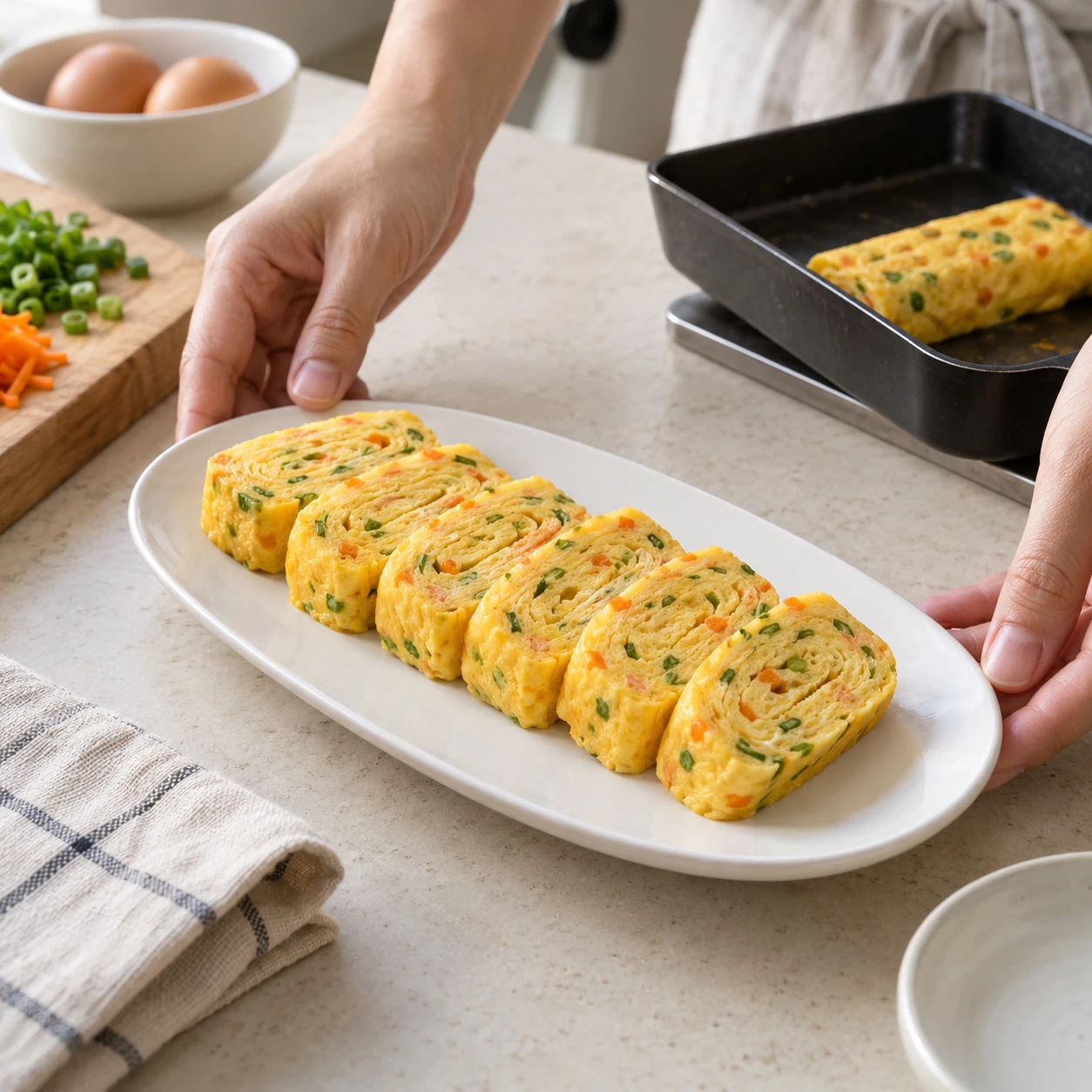
AI-generated cooking illustrations. Follow the written quantities and instructions.
Ingredients
4 servings
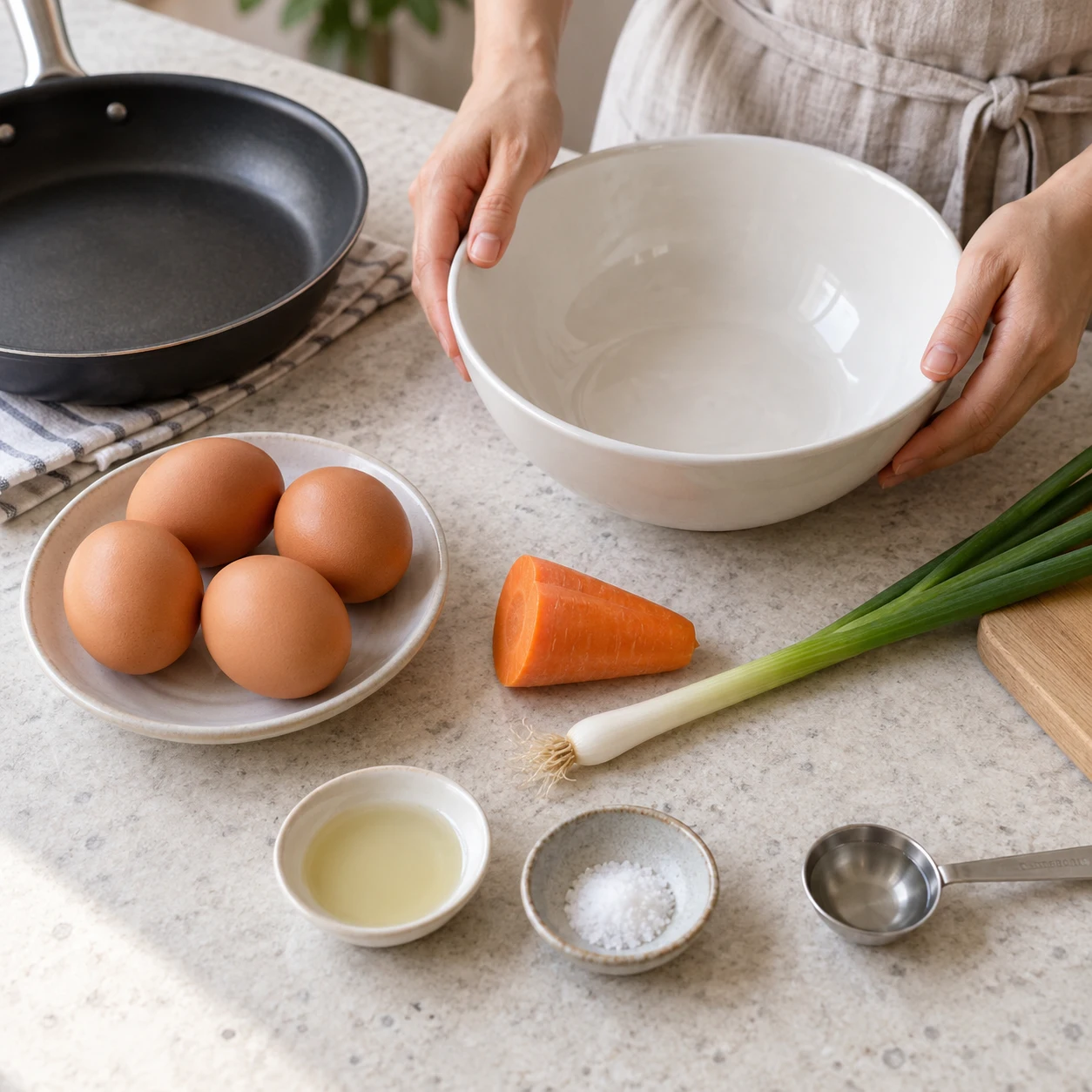
Everyday kitchen measurements
For 4 servings. Use a small 180 ml paper cup, a level eating spoon (about 15 ml) and a small teaspoon (about 5 ml).
How to fill the cup and spoons
Use the same cup and spoons throughout. Their sizes vary, so these amounts are approximate. Spoon flour in loosely and level the top without pressing. Measure vegetables after chopping, without packing them down. The amounts in g/ml are the original reference quantities. For part of a pack, use the specified pack weight and divide the contents evenly.
King Arthur Baking-
Essential
Whole eggs are essential to form the rolled layers. Use all whites and yolks. This frying-and-rolling method has no direct plant-based replacement.
-
Optional
May be omitted. Skip chopping and adding it. Egg roll or fishcake cooking continues as written, with less sweetness and fewer orange flecks.
-
Optional
May be omitted. Skip chopping and adding it; the main ingredient and cooking time stay the same. It supplies fresh onion aroma and green flecks.
-
Substitute available
If Neutral cooking oil is unavailable
- Use instead
- Canola, sunflower or rice-bran oil
- Substitute quantity
- 2 small teaspoonsReference quantity: 10 ml
Choose one unflavored oil and use the replacement amount shown. Keep the same heat and cooking steps. These replace the frying oil, not extra oil added on top.
-
Optional
May be reduced or omitted for a lower-salt dish. Add no more than the listed quantity, and taste only cooked food before adding more. Cooking time is unchanged.
-
Optional
May be omitted from the egg mixture. The roll will be slightly firmer. Keep all eggs and the same gentle cooking method; no milk is needed.
Tap each ingredient as you prepare it. Check product labels for egg, soy, sesame, wheat, fish or shellfish where relevant.
Step-by-step cooking
-
Step 1
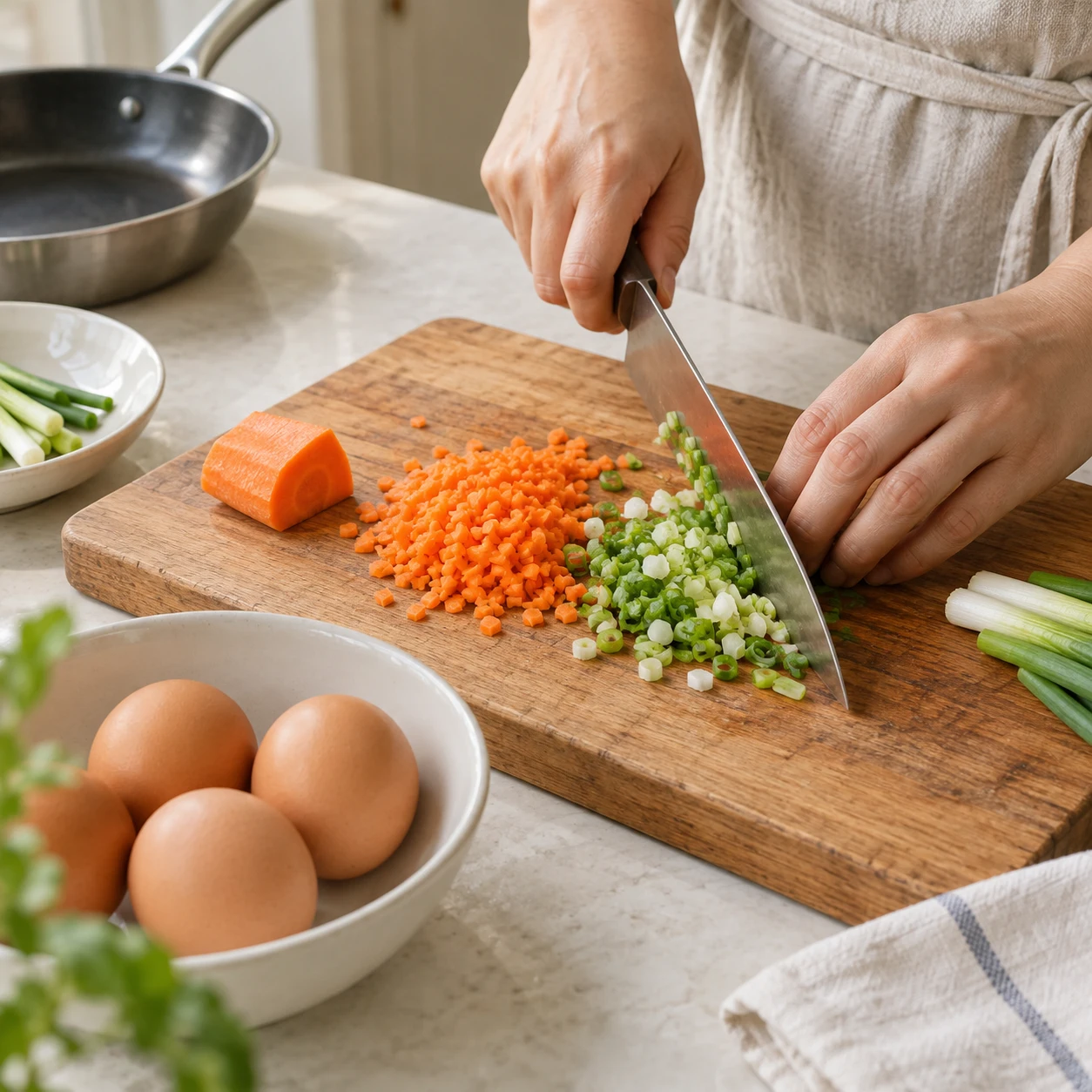
Finely chop quarter carrot and one scallion into pieces about 2 mm small, then drain any moisture. Large chunks tear the egg layers. Prepare a nonstick pan about 20–22 cm wide and a broad spatula; a second spatula helps support the roll.
-
Step 2
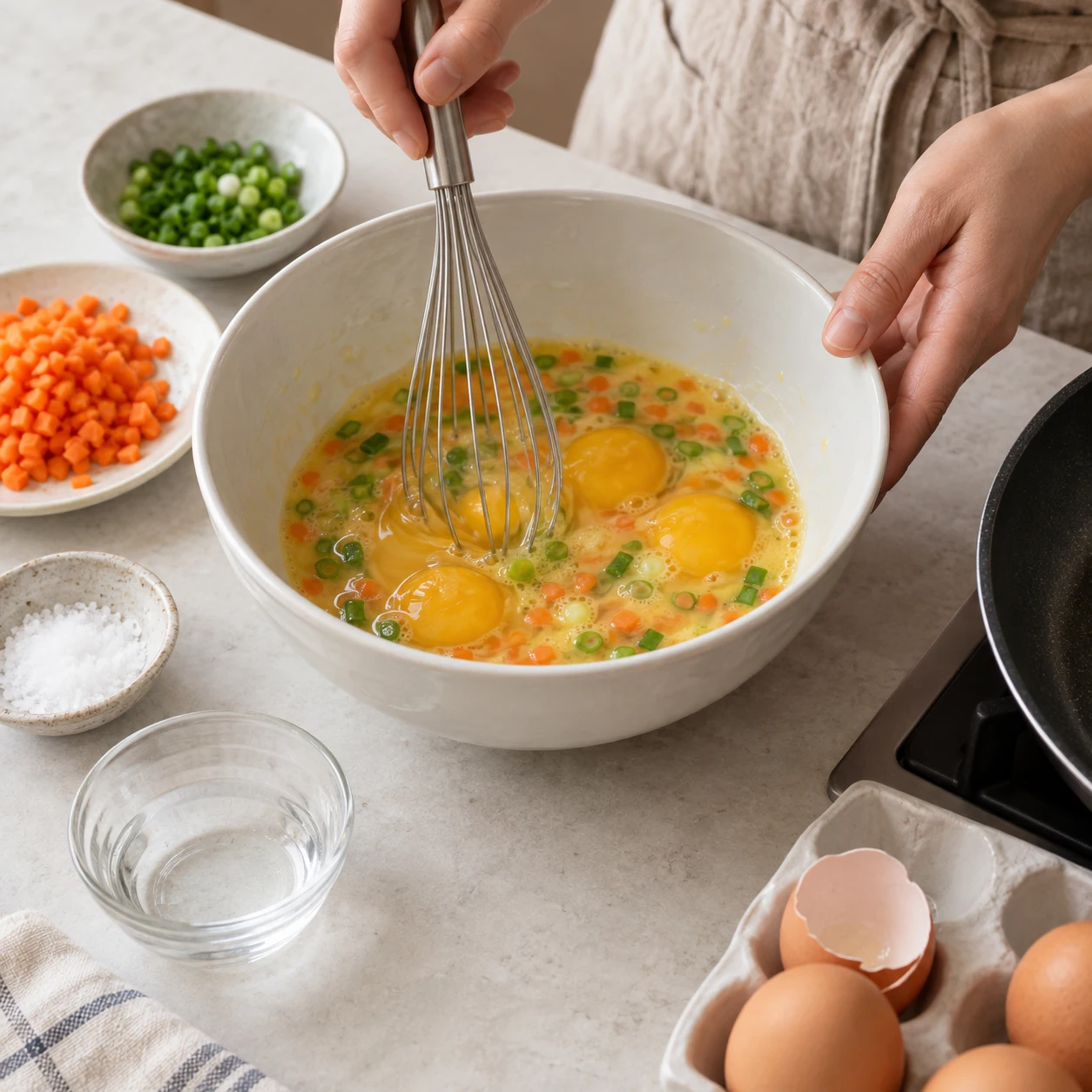
Beat 4 whole eggs gently in a bowl. Mix in the finely chopped vegetables, optional ¼ teaspoon salt and optional 1 tablespoon water. Do not whisk into a big foam. Measure 2 teaspoons oil separately: 1 for the first layer and the remaining 1 for the next two layers.
-
Step 3
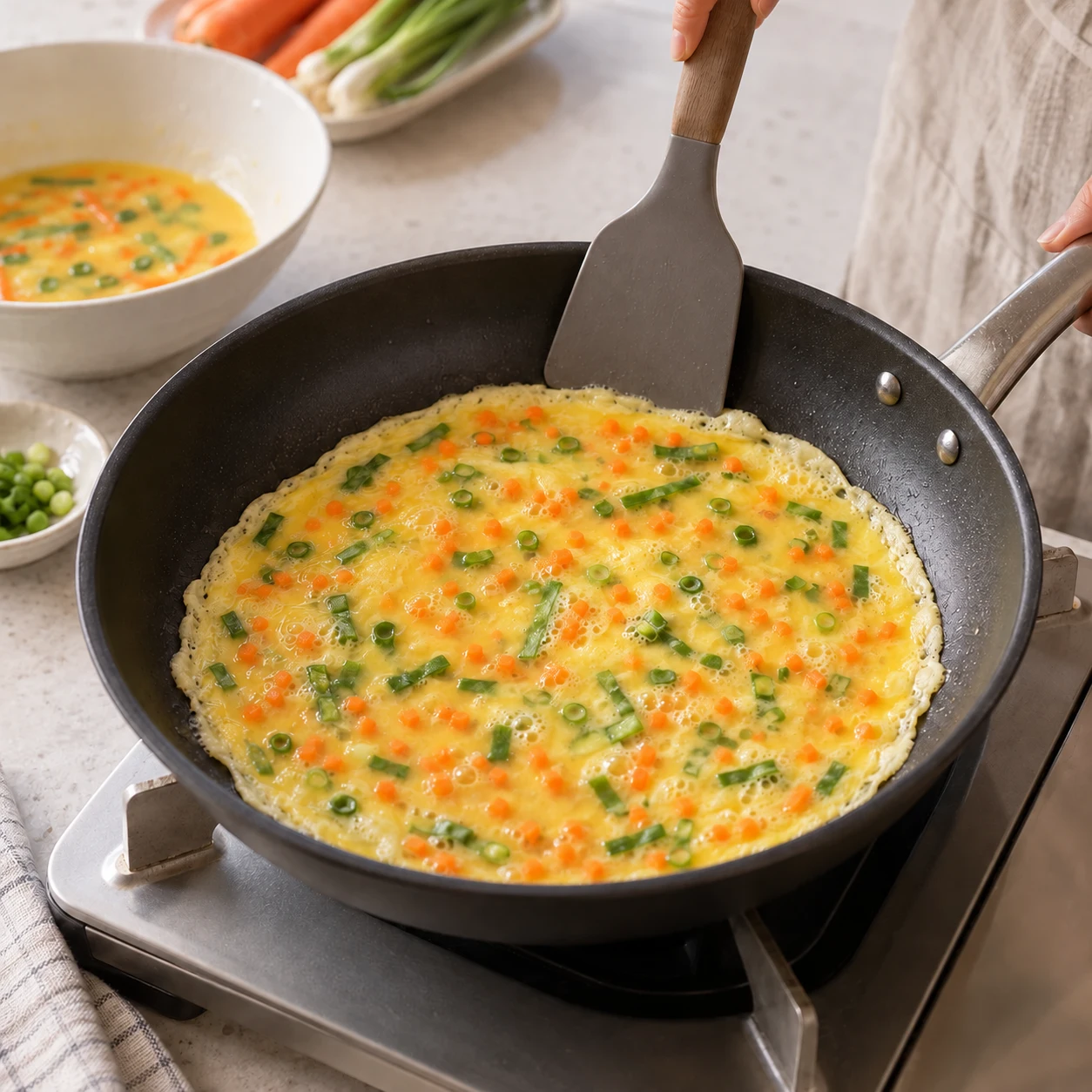
Heat the pan on medium-low and spread 1 teaspoon oil thinly. Pour in about one third of the egg mixture, tilting the pan to make a thin layer. Cook for 1–2 minutes until edges set and the surface is barely moist, not a flowing puddle.
-
Step 4
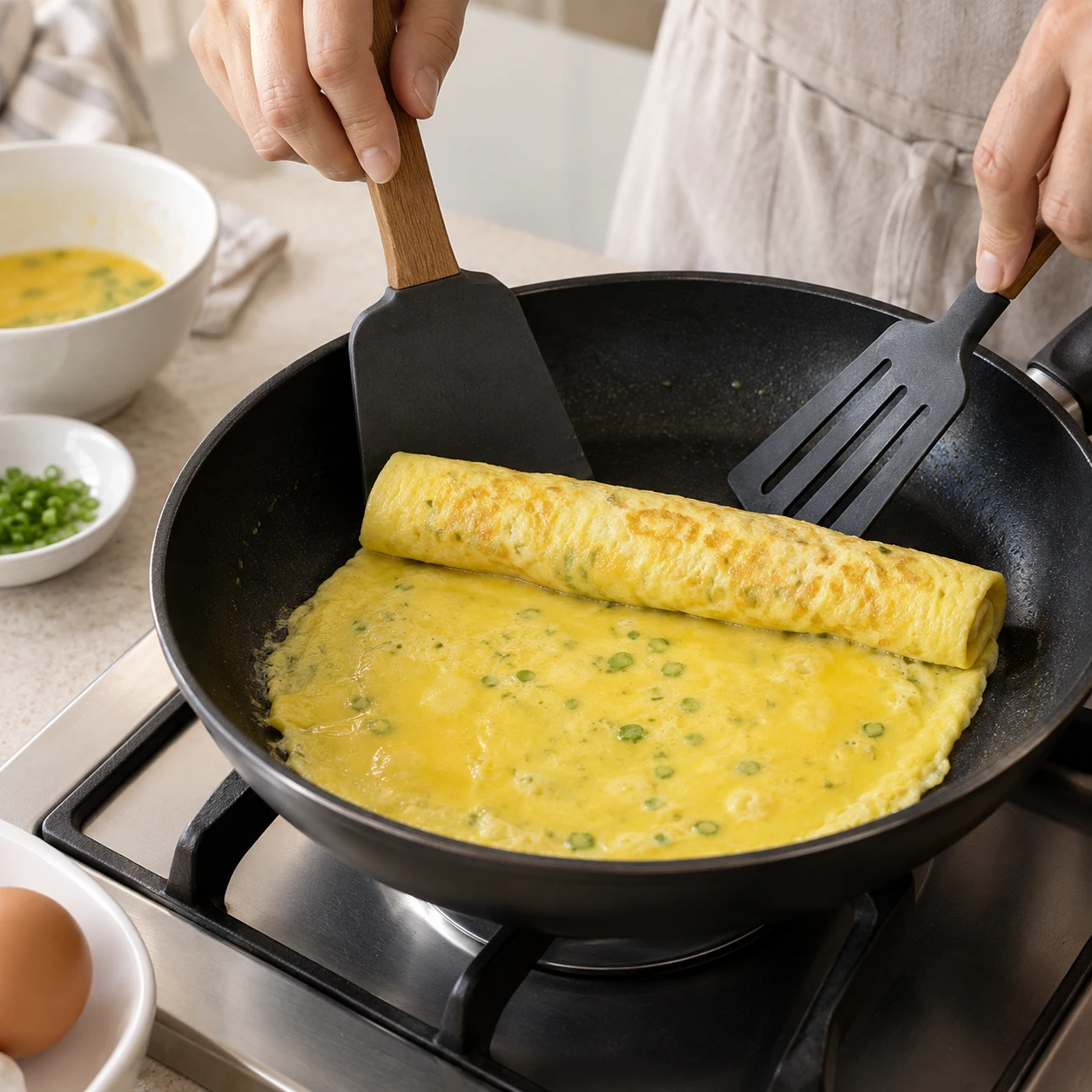
Roll the layer gently toward you, leaving a 2 cm strip unrolled. Push the roll to the far side. Grease the empty area with ½ teaspoon oil and pour in the next third of egg so it joins the loose strip. Let it set for 1–2 minutes and roll again.
-
Step 5
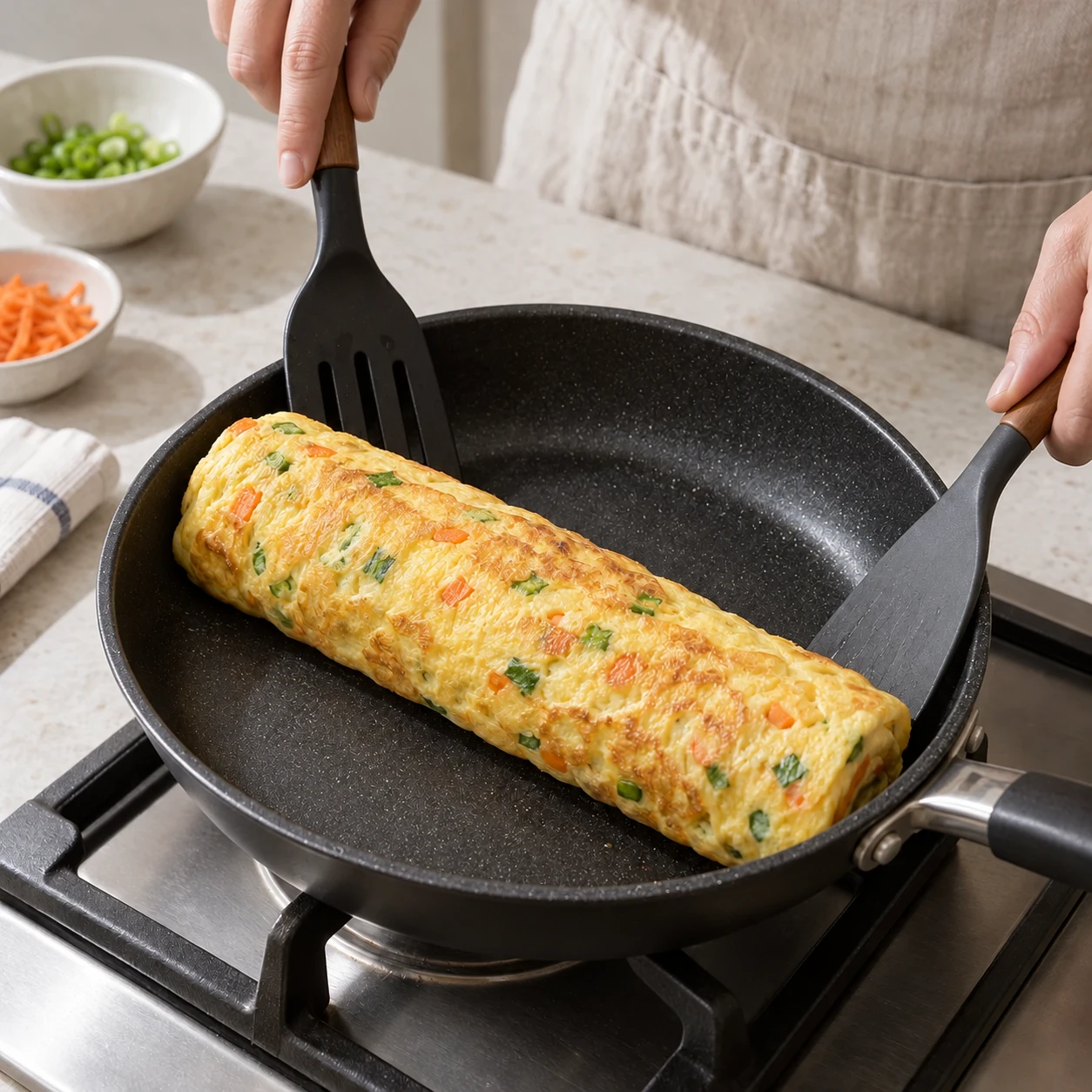
Repeat with the last ½ teaspoon oil and final third of egg, joining to the loose edge before rolling. Turn the completed roll gently on its sides for another 1–2 minutes on low heat. The center must be fully set, without raw egg; if measured, egg dishes reach 71°C. Cook longer gently if needed.
-
Step 6
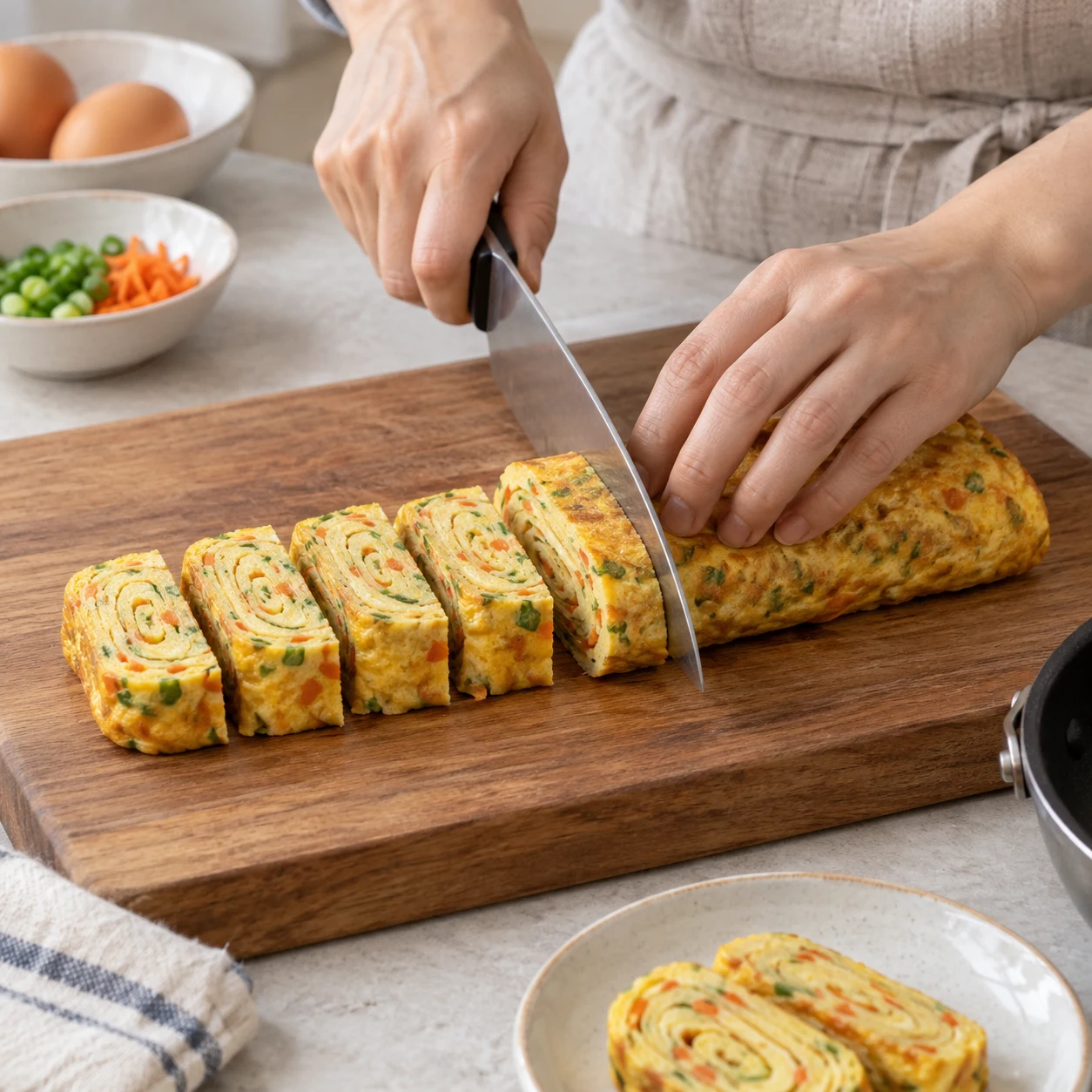
Transfer to a clean board, rest for 2 minutes and cut into 6–8 slices about 1.5 cm thick. Divide into four small side portions. If a layer tears, fold it into the next one; shape can vary. Serve after cooling slightly, and make children’s pieces easy to chew.
Finished dish
Use refrigerated leftovers within 2 days for best texture. Contains egg. The recipe uses all whites and yolks, no cheese or ham. Start with low heat so layers set before the outside browns. The listed time includes rolling and resting, but different frying pans can need a few extra minutes. Use a small paper cup of 180 ml, a level ordinary eating spoon of about 15 ml and a small teaspoon of about 5 ml. Spoon and vegetable sizes vary; package weights are useful references. A quarter carrot or half onion is approximate. Photos show the original recipe including optional ingredients; replacements can change its appearance. These are small rice-side portions, not complete meals. Use clean serving utensils and keep the remaining batch separate. Put leftovers in shallow containers and refrigerate within 2 hours, or within 1 hour above 32°C, at 4°C or colder. If serving hot, reheat only the portion needed thoroughly to 74°C. Do not leave a lunchbox unrefrigerated all day.