Kimchi oyakodon chicken and egg bowl
A Korean-Japanese fusion bowl: kimchi adds tang to chicken and onion simmered under softly textured but fully cooked egg. This home adaptation uses water instead of dashi and omits mirin.

Ingredients
2 servings

Everyday kitchen measurements
For 2 servings. Use a small 180 ml paper cup, a level eating spoon (about 15 ml) and a small teaspoon (about 5 ml).
How to fill the cup and spoons
Use the same cup and spoons throughout. Their sizes vary, so these amounts are approximate. Spoon flour in loosely and level the top without pressing. Measure vegetables after chopping, without packing them down. The amounts in g/ml are the original reference quantities. For part of a pack, use the specified pack weight and divide the contents evenly.
King Arthur Baking-
Essential
Needed for this version; use the listed amount at the stated step.
-
Substitute available
If Boneless skinless chicken thigh is unavailable
- Use instead
- Boneless skinless chicken breast
- Substitute quantity
- 1 small pack of 200 gReference quantity: 200 g
If chicken thigh is unavailable, use this amount of boneless skinless breast, cut into the same 2 cm pieces. It may cook faster, but the thickest center must reach 74°C. Proceed to the egg step as soon as it is cooked to avoid drying it out.
-
Essential
Needed for this version; use the listed amount at the stated step.
-
Essential
Needed for this version; use the listed amount at the stated step.
-
Essential
Needed for this version; use the listed amount at the stated step.
-
Essential
Needed for this version; use the listed amount at the stated step.
-
Substitute available
If Soy sauce is unavailable
- Use instead
- Tamari soy sauce
- Substitute quantity
- 1 level tablespoonReference quantity: 15 ml
If ordinary soy sauce is unavailable, replace it with the same indicated amount of tamari, not both. It still contains soy; check the label for wheat and other allergens. Saltiness can differ.
-
Essential
Needed for this version; use the listed amount at the stated step.
-
Optional
May be omitted without changing the other quantities.
Tap each ingredient as you prepare it. Check product labels for egg, soy, sesame, wheat, fish or shellfish where relevant.
Step-by-step cooking
Check off a completed step to move to the next one. After the last step, you will move to the finished dish.
Completed steps are saved in this browser. Start over to clear this recipe’s progress.
-
Step 1
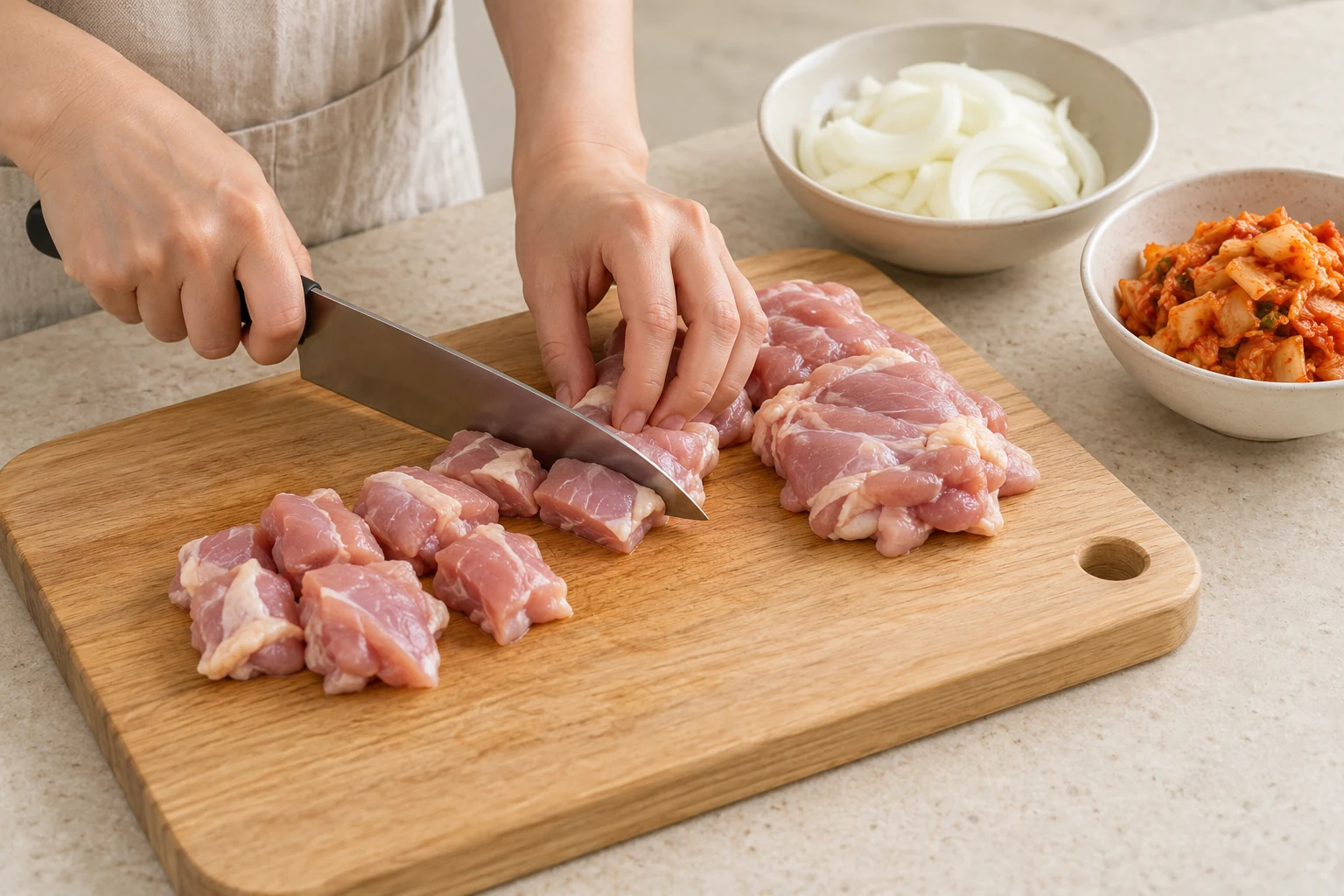
Prepare the vegetables first. Peel half an onion and slice 3 mm thick; lightly drain 100 g kimchi and chop into 2 cm pieces. Wash and slice the optional half spring onion. On a separate board, cut 200 g boneless skinless chicken into even 2 cm pieces. Do not rinse raw chicken. Wash hands, knife and board before handling cooked food.
-
Step 2
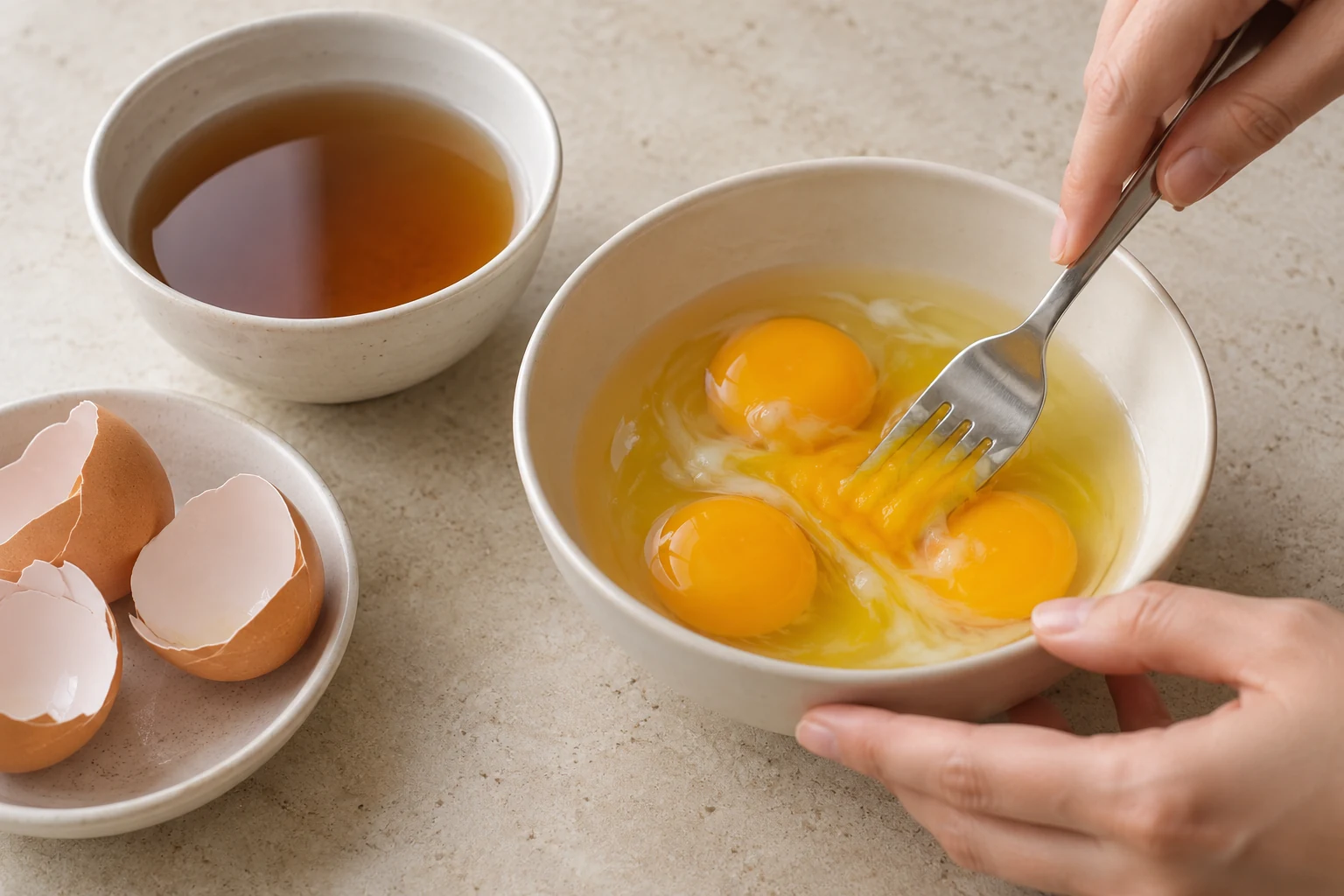
In a small bowl dissolve 1 small teaspoon sugar in 1 paper cup water and 1 level tablespoon soy sauce. In a separate bowl crack 3 eggs and stir gently with a fork just enough to break up the yolks, leaving some white streaks. Keep raw-egg utensils separate from serving utensils.
-
Step 3
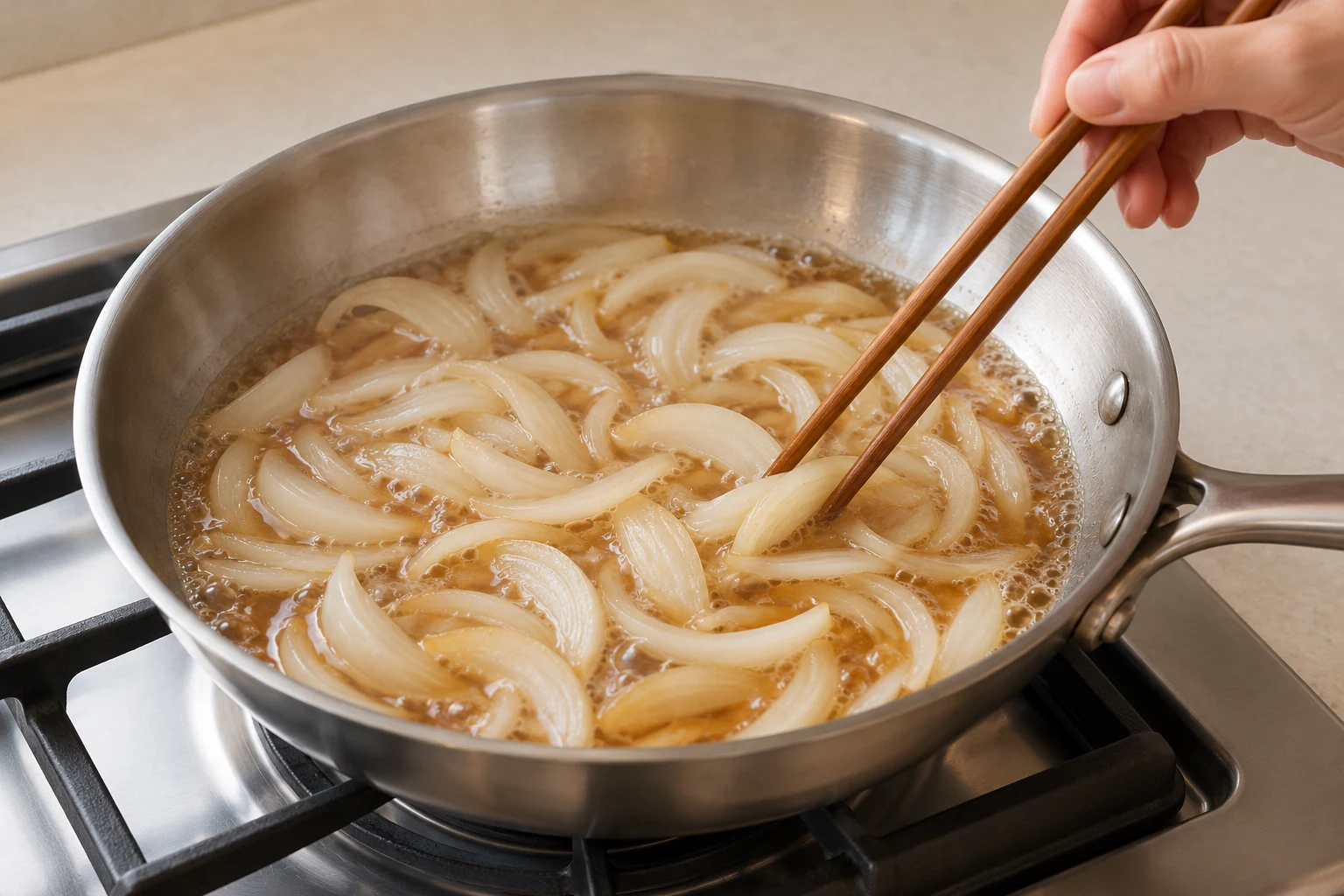
Put the onion and the seasoned water in a 24–26 cm frying pan. Bring to a simmer over medium heat and cook uncovered for 3 minutes until the onion starts to soften. Use a pan with enough room to spread the chicken in one layer.
-
Step 4
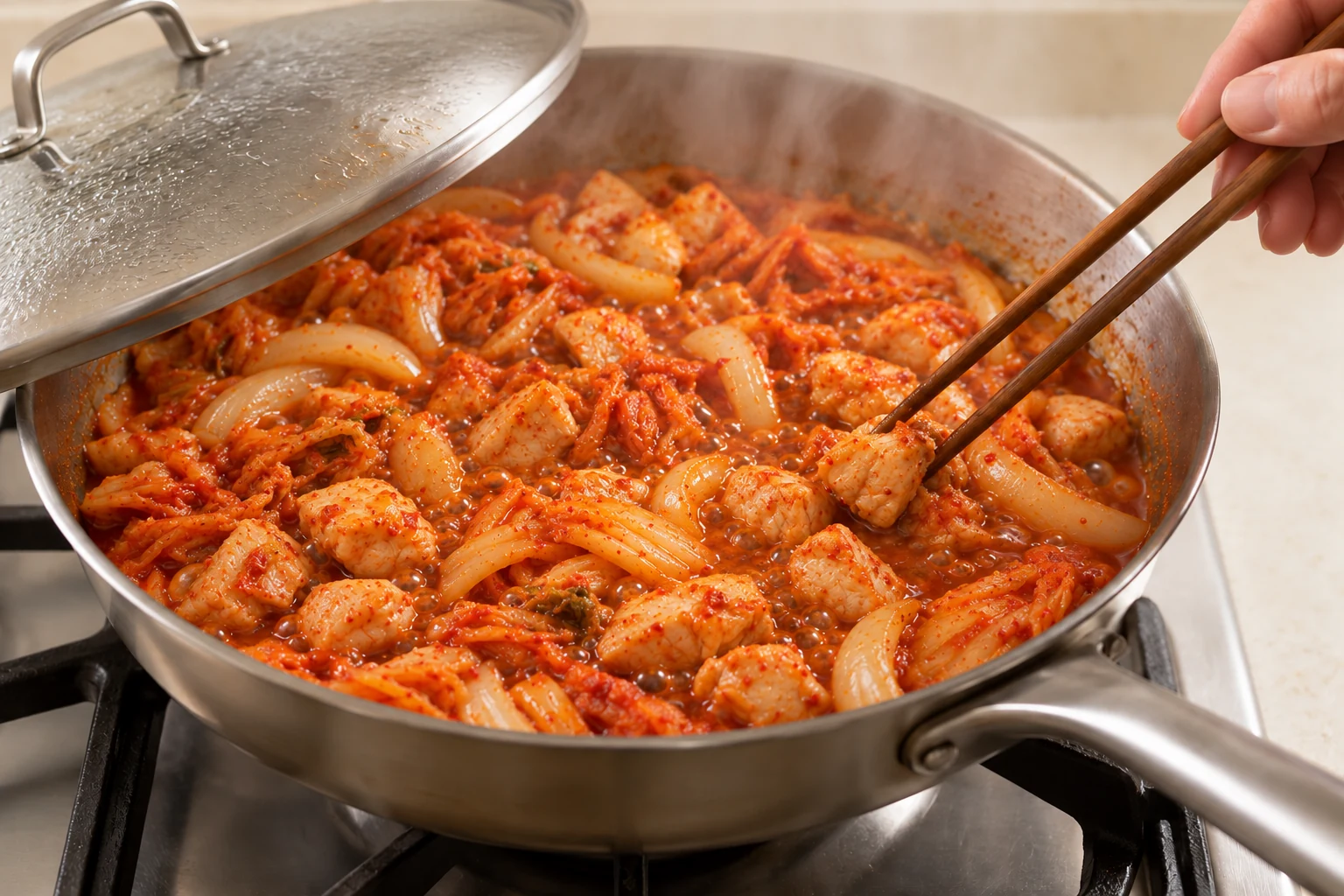
Add the chicken and kimchi, spreading the chicken out. Return to a simmer, then partly cover and cook over medium-low heat for 6–8 minutes, turning the pieces halfway. Check the thickest pieces reach 74°C; continue cooking if needed. Do not judge doneness by color alone.
-
Step 5
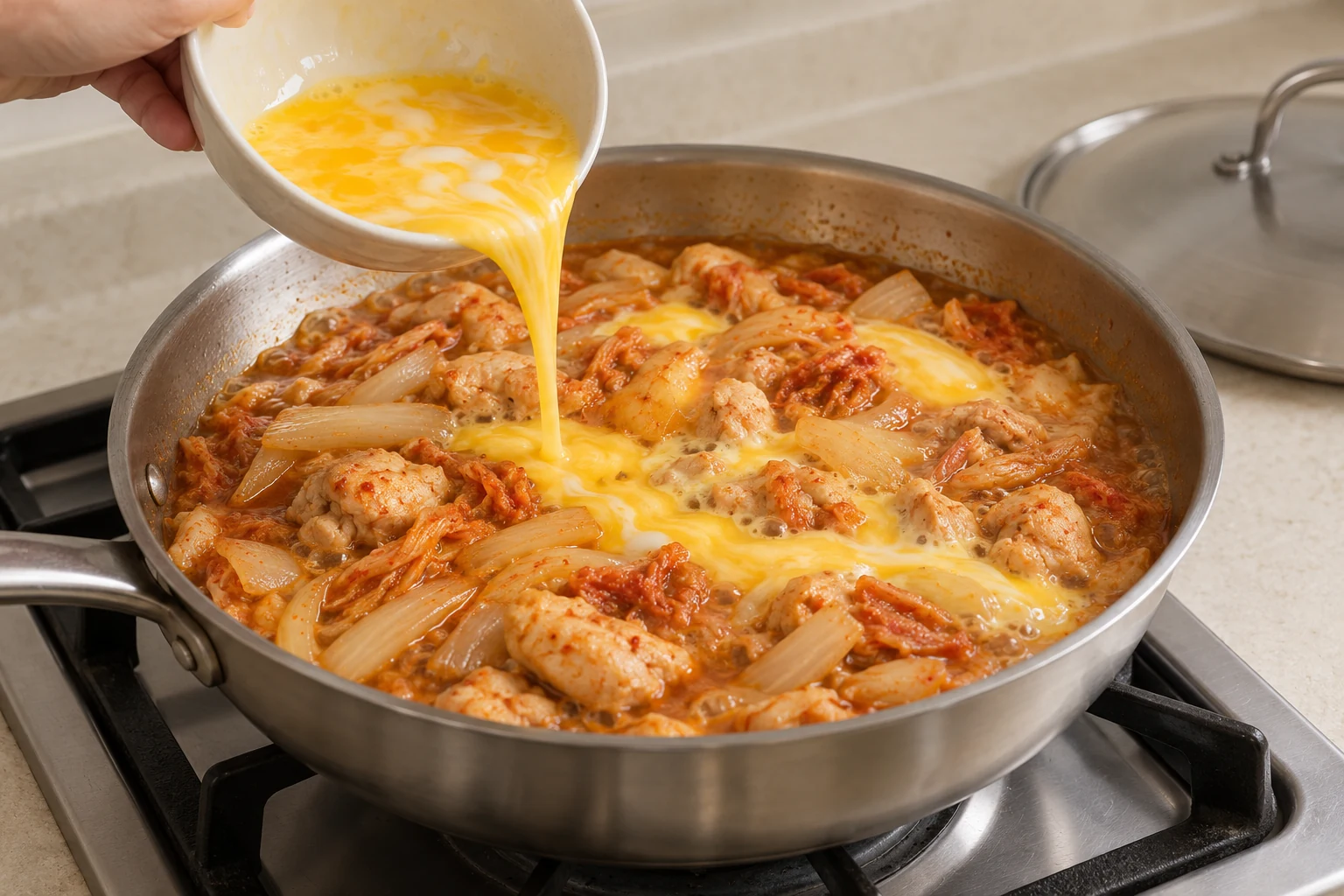
When the chicken is cooked and the liquid is gently simmering, drizzle the eggs evenly over the chicken and onion without stirring. Cover and cook on low heat for 3–4 minutes until whites and yolks are fully set, with no liquid raw egg; the egg layer should reach at least 71°C. If still wet, cook another minute and check again.
-
Step 6
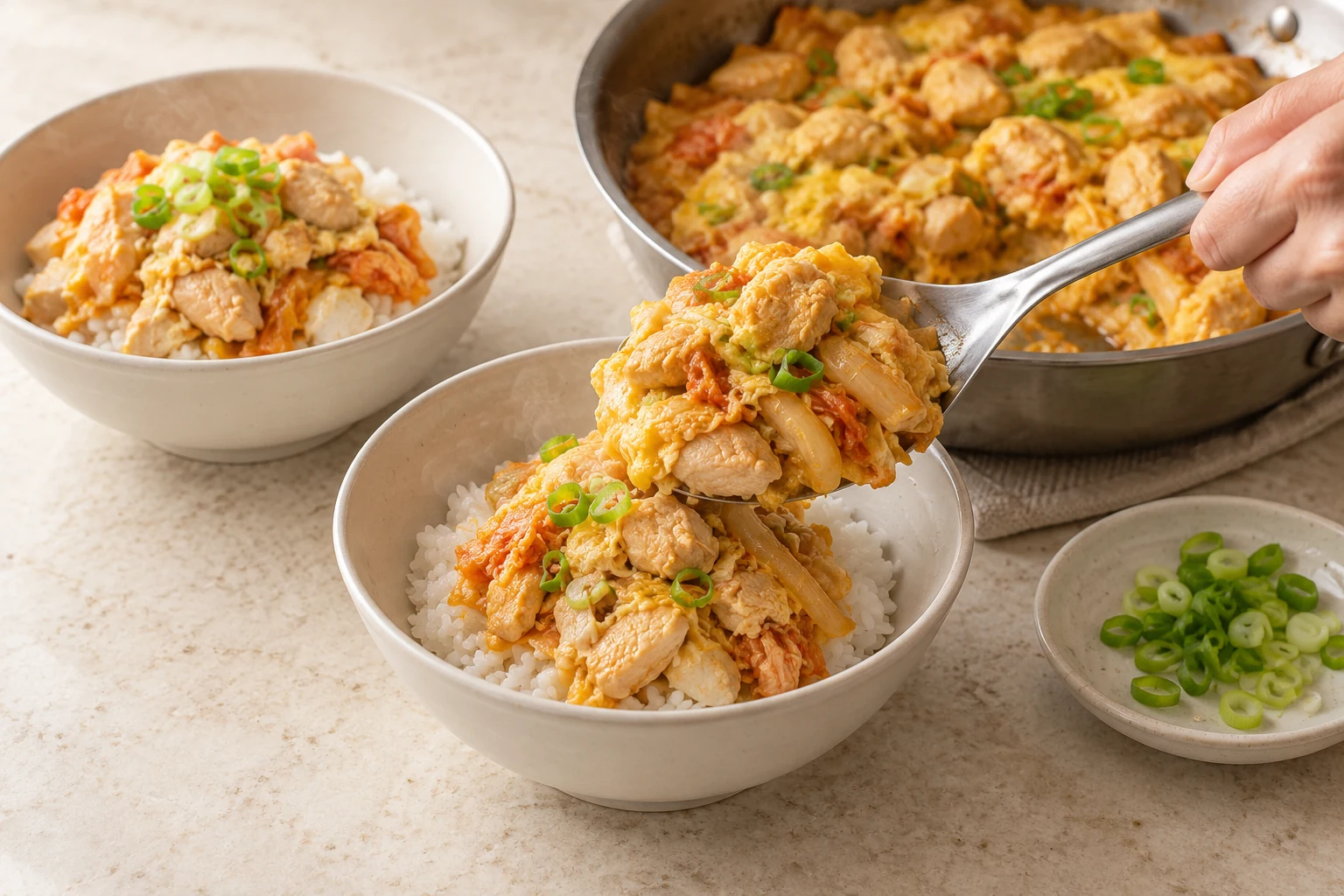
Heat the two 200 g rice packs according to their labels until steaming hot, then place in two bowls. Divide the cooked chicken-egg topping over the rice with a clean wide spoon and add a little pan sauce. Add optional spring onion and serve immediately. Do not pour in all the liquid if the bowls would become soupy.


Finished dish
2 meal servings. Paper cup 180 ml; level tablespoon 15 ml; small teaspoon 5 ml. Contains egg, soy and possibly wheat; kimchi may contain fish or shellfish, so read the label. This is a fusion adaptation, not the classic Japanese recipe. Refrigerate leftovers within 2 hours at 4°C or below and eat within 2 days; reheat chicken, egg and rice thoroughly to 74°C.
Related recipes


Enjoy every bite
How to enjoy it
Serve with a mild vegetable side. Keep the egg layer intact while cooking and spoon on only enough sauce to moisten the rice.
Serve it with

Seasoned mung bean sprouts (sukju-namul)
A mild Korean vegetable side with fully cooked mung bean sprouts, garlic and a little sesame oil. A light, simple banchan with thin stems and small heads, distinct from soybean sprouts.

Chilled Korean cucumber soup (oi-naengguk)
Thin cucumber strips in a cool, sweet-sour broth with a little garlic and sesame. A traditional Korean cold side soup with straightforward home measures.