Kimchi-jjim — slow-braised kimchi and pork
Well-fermented kimchi and pork shoulder turn meltingly tender together in a savory, gently spicy pot. Serve the soft leaves over rice.
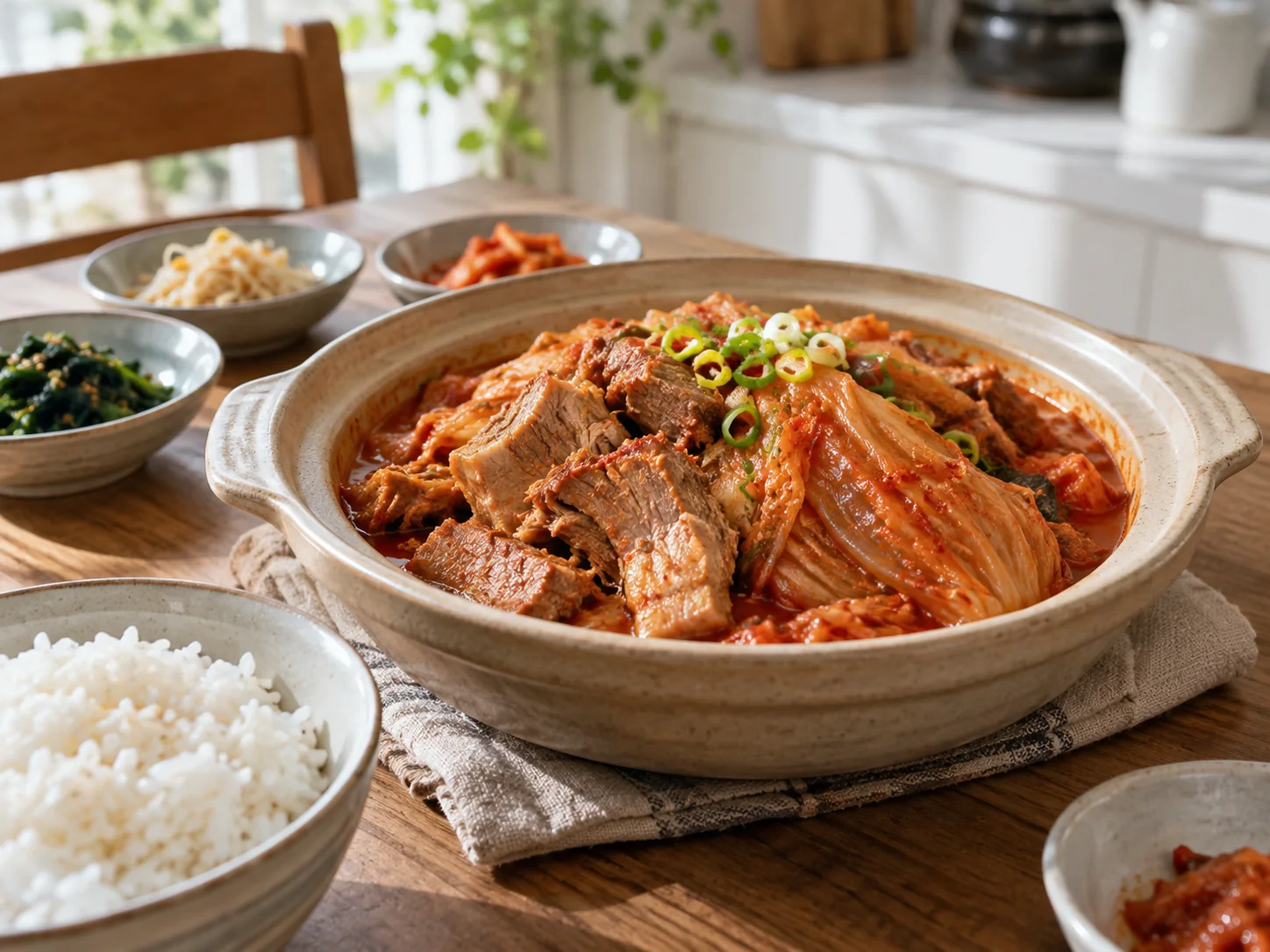
AI-generated cooking illustrations. Follow the written quantities and instructions.
Ingredients
4 servings
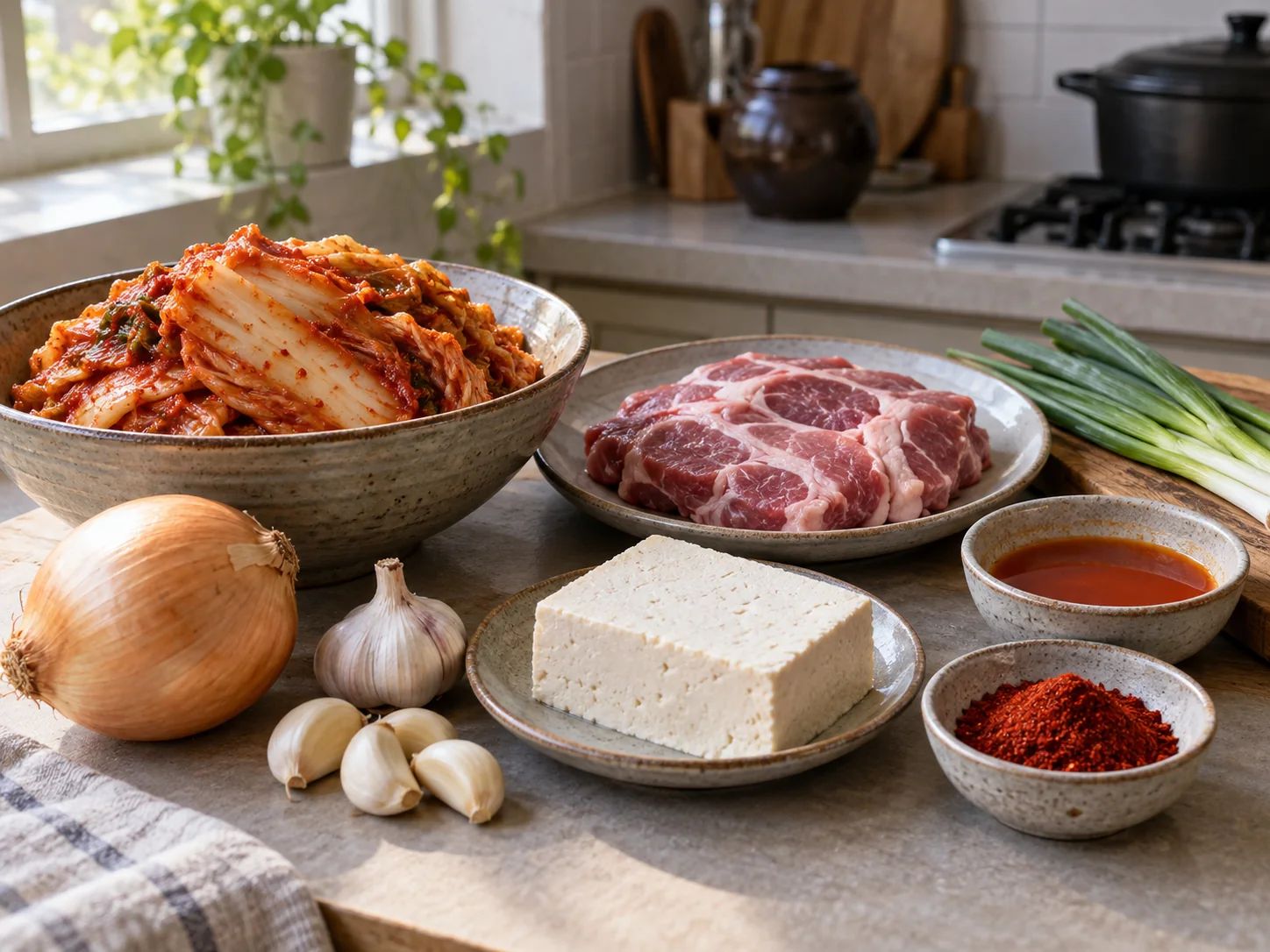
Everyday kitchen measurements
For 4 servings. Use a small 180 ml paper cup, a level eating spoon (about 15 ml) and a small teaspoon (about 5 ml).
How to fill the cup and spoons
Use the same cup and spoons throughout. Their sizes vary, so these amounts are approximate. Spoon flour in loosely and level the top without pressing. Measure vegetables after chopping, without packing them down. The amounts in g/ml are the original reference quantities. For part of a pack, use the specified pack weight and divide the contents evenly.
King Arthur Baking-
Essential
Use sour, well-fermented cabbage kimchi for the best flavor. Fresh kimchi tastes less rounded.
-
Substitute available
If Pork shoulder or pork belly — 600 g (about 1 1/3 lb), in 4 thick pieces is unavailable
Use pork ribs or chicken thighs; cooking time may change.
-
Essential
Use water if stock is unavailable.
-
Optional
Omit if unavailable.
-
Essential
Use 1 teaspoon garlic powder if needed.
-
Optional
Omit for mild flavor.
-
Optional
Use only if the kimchi is very sour; it balances sharpness.
-
Optional
Omit if unavailable; it adds a deeper savory note.
-
Optional
Omit or add mushrooms near the end.
-
Optional
Omit or use chives.
Tap each ingredient as you prepare it. Check product labels for egg, soy, sesame, wheat, fish or shellfish where relevant.
Step-by-step cooking
-
Step 1
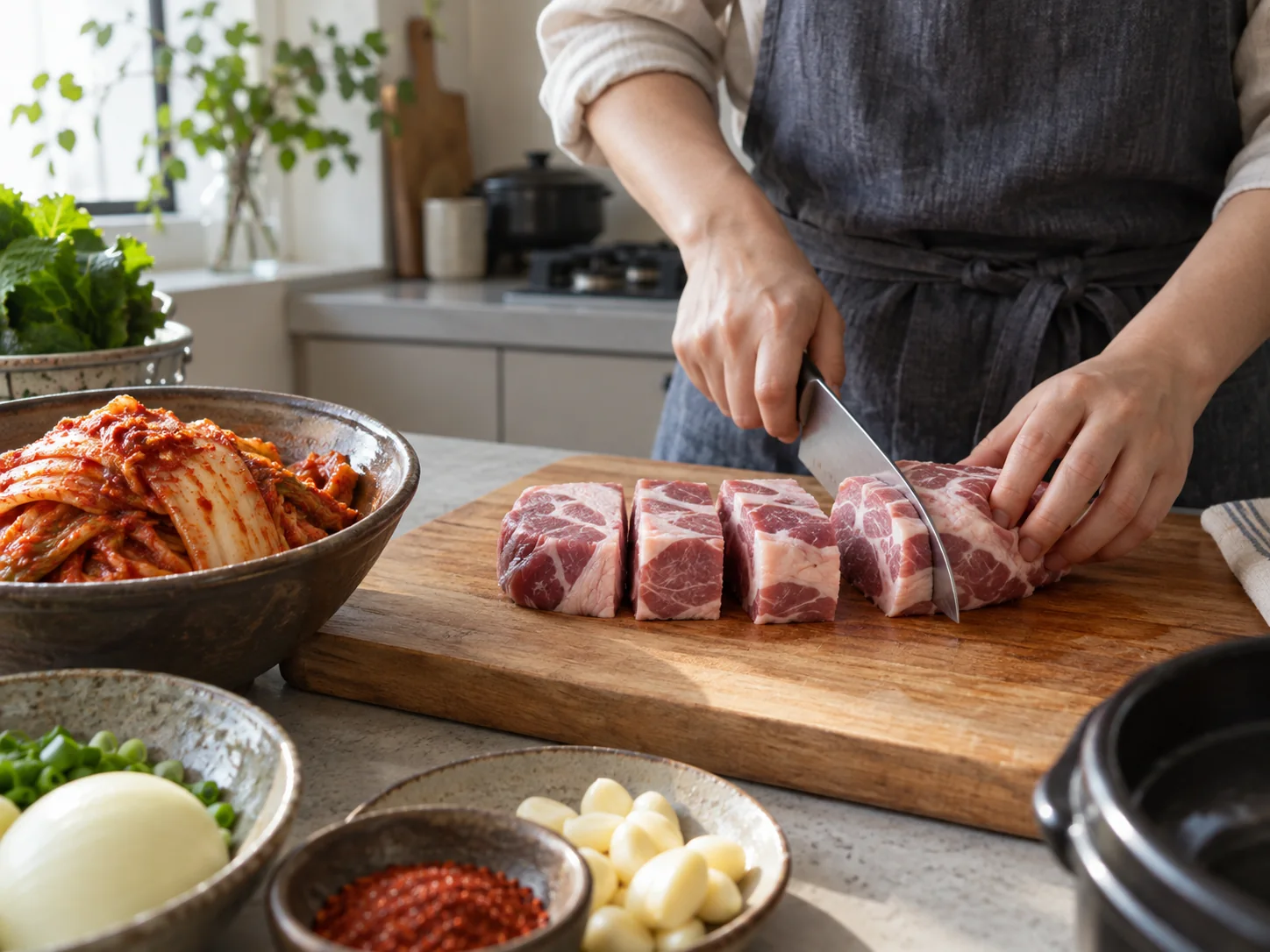
Cut the pork into 4 large pieces. Slice the onion and crush the garlic. Use a clean board for vegetables after handling raw pork.
-
Step 2
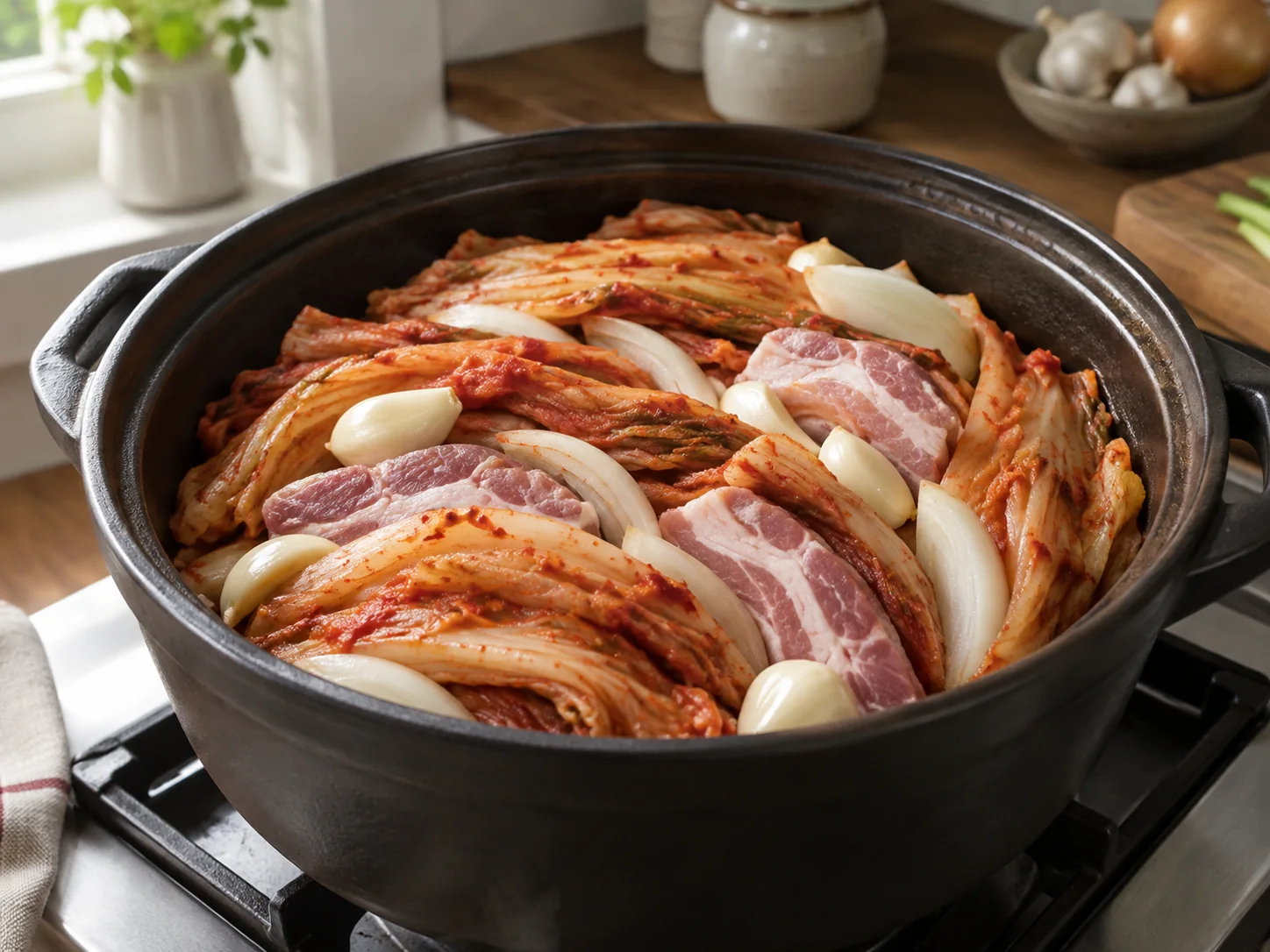
Lay the kimchi in a heavy pot and tuck the pork, onion and garlic between the leaves. Pour in kimchi juice and water or stock.
-
Step 3
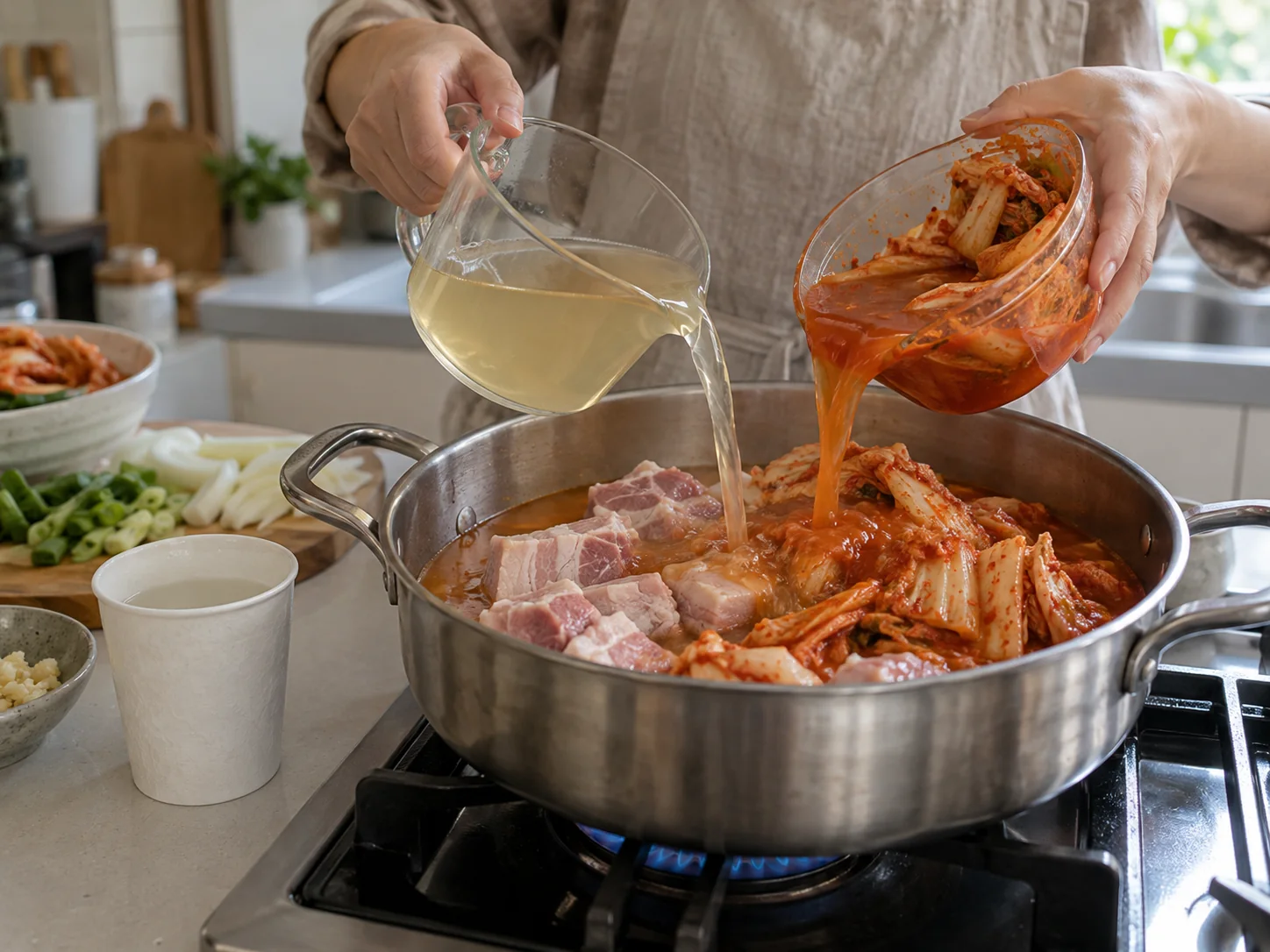
If the kimchi is not very sour, add 1 teaspoon sugar. Add gochugaru and doenjang if using. Bring the pot to a boil over medium-high heat.
-
Step 4
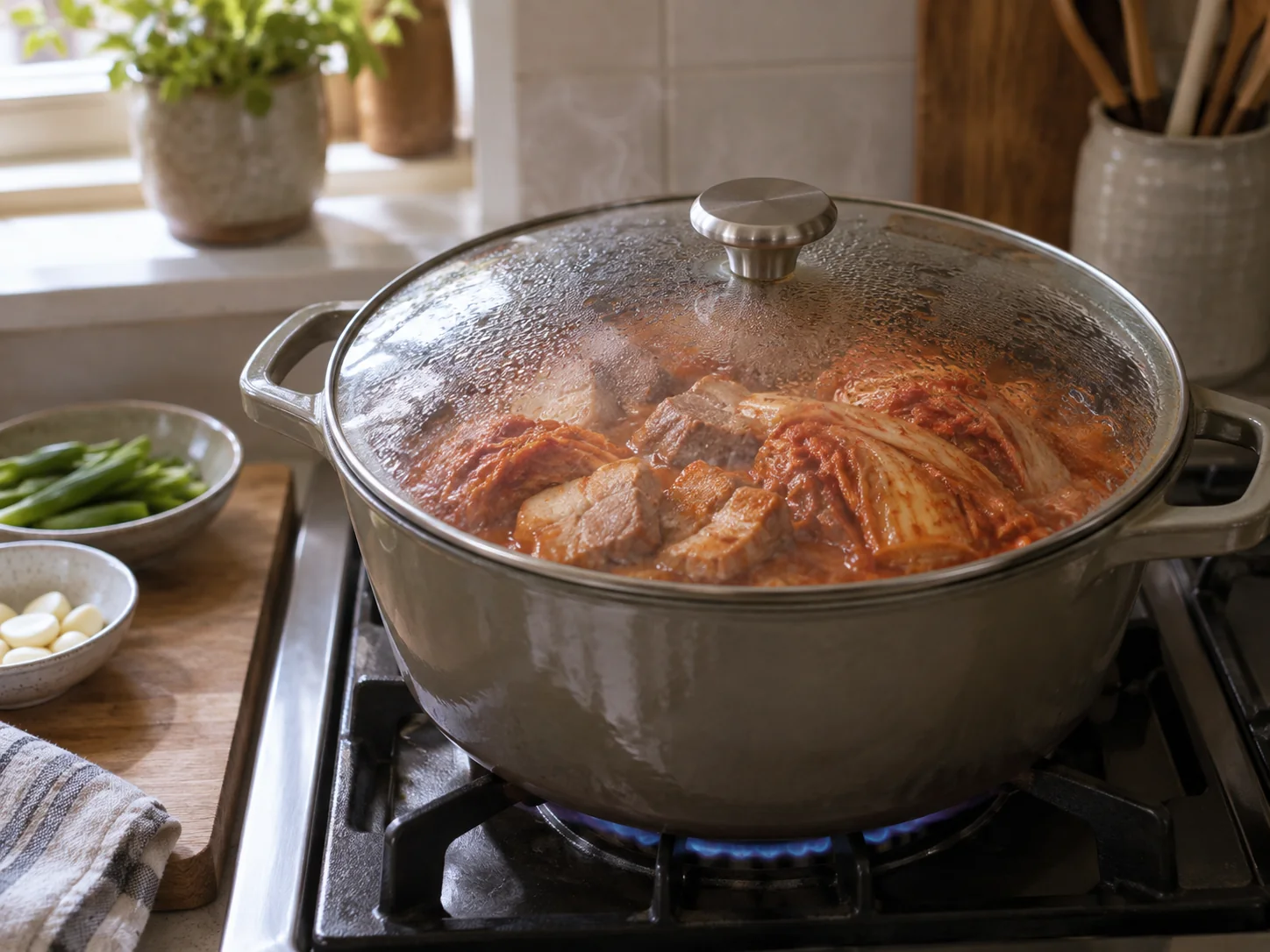
Cover, lower the heat and simmer gently for 60 to 75 minutes. Turn the pork and loosen the kimchi once or twice; add a little water if the pot looks dry.
-
Step 5
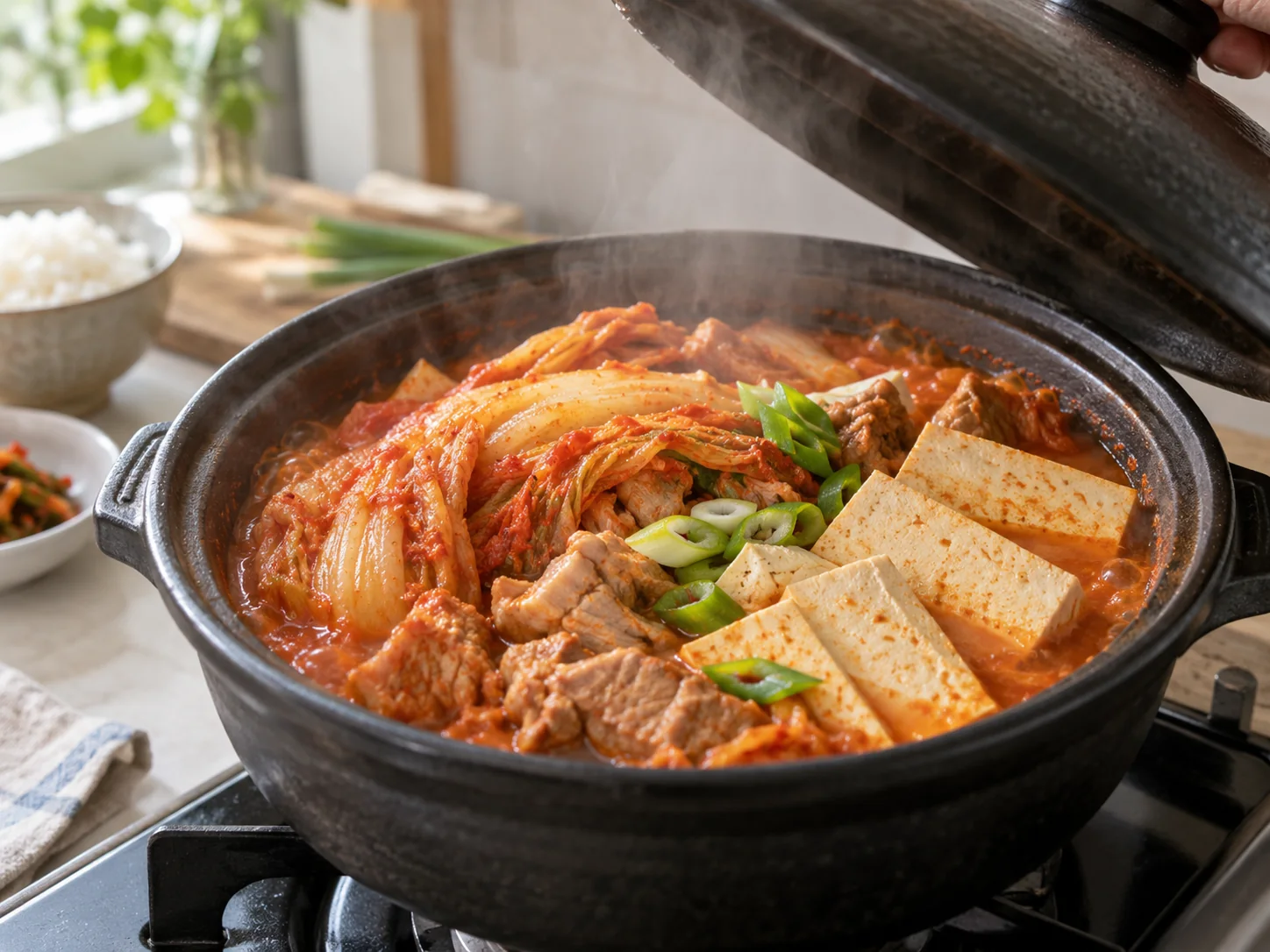
When pork pulls apart easily and the thick kimchi stems are tender, add tofu and scallions if using. Simmer uncovered for 5 minutes.
-
Step 6
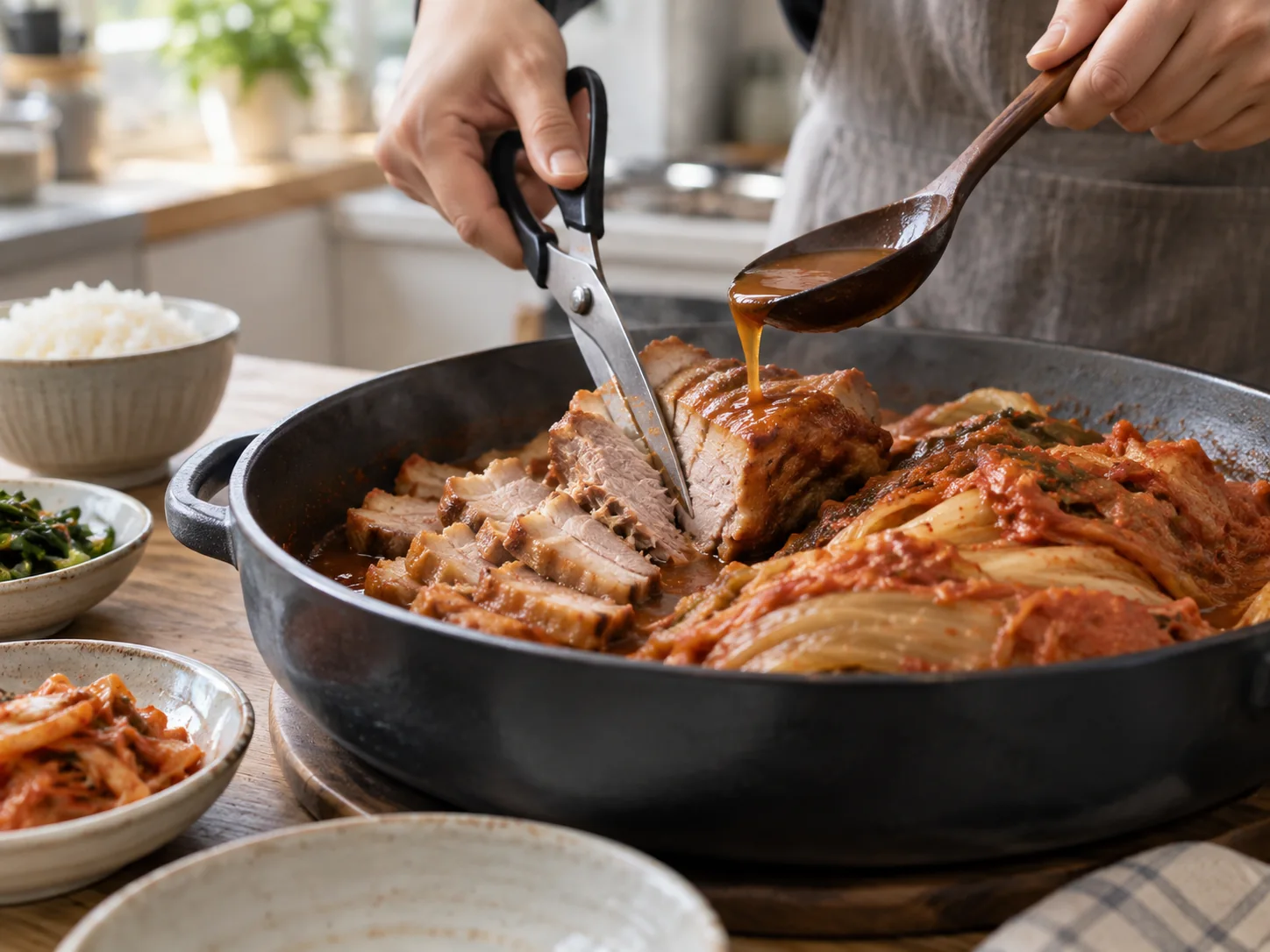
Taste the broth before adding salt because kimchi is already salty. Serve the pork and kimchi over warm rice with some braising liquid.
Finished dish
A paper cup is 180 ml; a level tablespoon is 15 ml and a teaspoon is 5 ml. Use fully fermented sour kimchi and keep the pot at a gentle simmer. Cook pork until tender and safely cooked through. This recipe contains soy only if you use doenjang or tofu.
Enjoy every bite
How to enjoy it
Bring the pot to the table while gently simmering, then ladle broth and a mix of ingredients into each bowl. Taste before adding salt or extra seasoning.
Serve it with

Rolled omelette (Gyeran mari)
Soft, gently seasoned egg contrasts with a stronger sauce or a crisp bite.
View recipe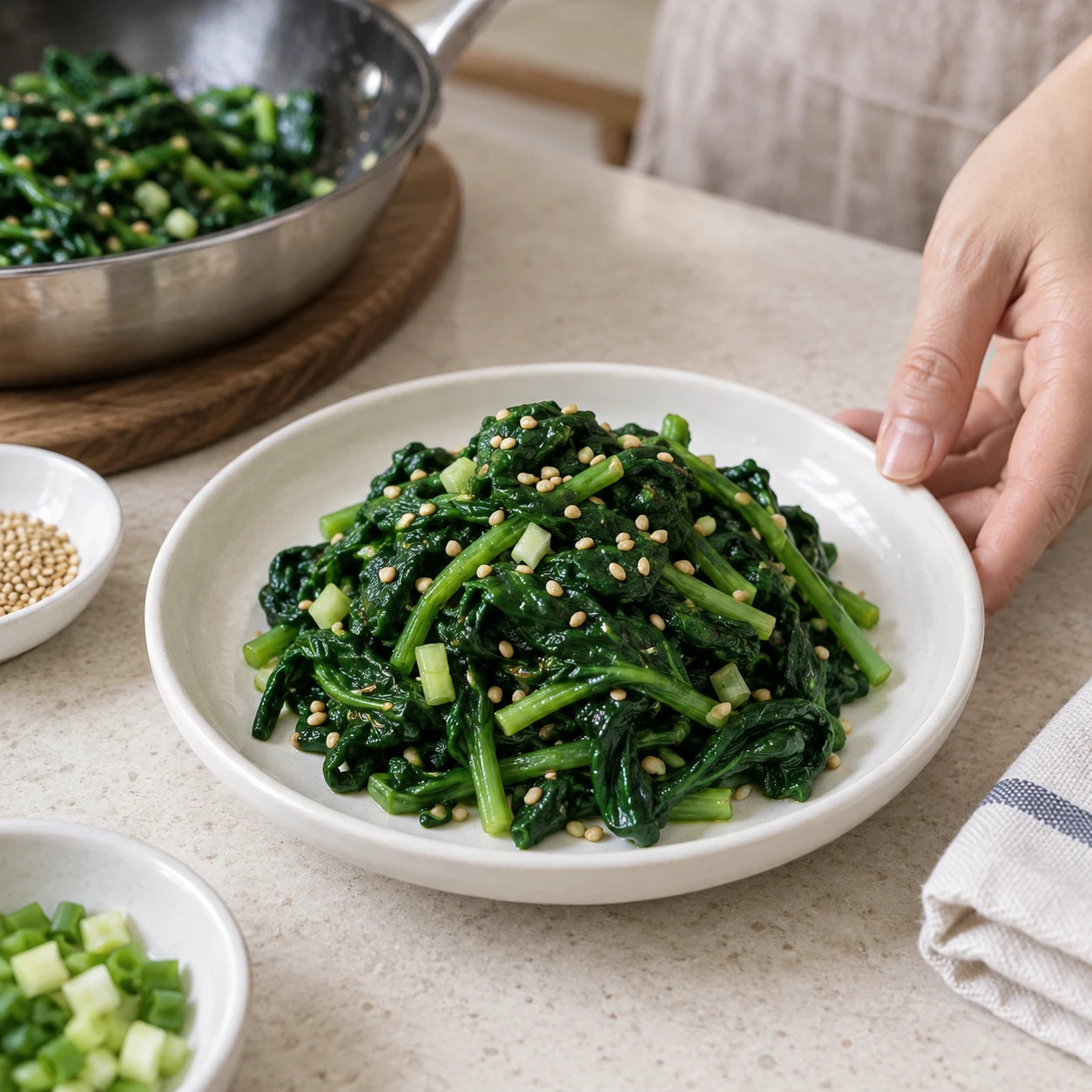
Seasoned spinach (Sigeumchi namul)
Lightly seasoned vegetables let the main dish stand out.
View recipe