Kimchi-braised chicken (kimchi dakjjim)
Boneless chicken thighs simmer with mature cabbage kimchi until the leaves are tender and the broth coats the meat. A chicken alternative to pork kimchi braise, without potatoes.

Ingredients
2 servings

Everyday kitchen measurements
For 2 servings. Use a small 180 ml paper cup, a level eating spoon (about 15 ml) and a small teaspoon (about 5 ml).
How to fill the cup and spoons
Use the same cup and spoons throughout. Their sizes vary, so these amounts are approximate. Spoon flour in loosely and level the top without pressing. Measure vegetables after chopping, without packing them down. The amounts in g/ml are the original reference quantities. For part of a pack, use the specified pack weight and divide the contents evenly.
King Arthur Baking-
Essential
Required; thighs stay juicy during braising.
-
Essential
Required; choose fermented sour kimchi rather than fresh sweet kimchi.
-
Essential
Use the liquid from the kimchi container; do not substitute extra salt.
-
Essential
Add a little more only if the pot starts drying before the chicken cooks.
-
Essential
Adds sweetness to balance sour kimchi.
-
Essential
For the braising liquid.
-
Essential
Adds seasoning; taste at the end before adding any more.
-
Essential
For the finish.
-
Optional
Optional extra heat; omit for a milder dish.
-
Optional
Optional; add only at the end if the cooked kimchi is excessively sour.
Tap each ingredient as you prepare it. Check product labels for egg, soy, sesame, wheat, fish or shellfish where relevant.
Step-by-step cooking
Check off a completed step to move to the next one. After the last step, you will move to the finished dish.
Completed steps are saved in this browser. Start over to clear this recipe’s progress.
-
Step 1
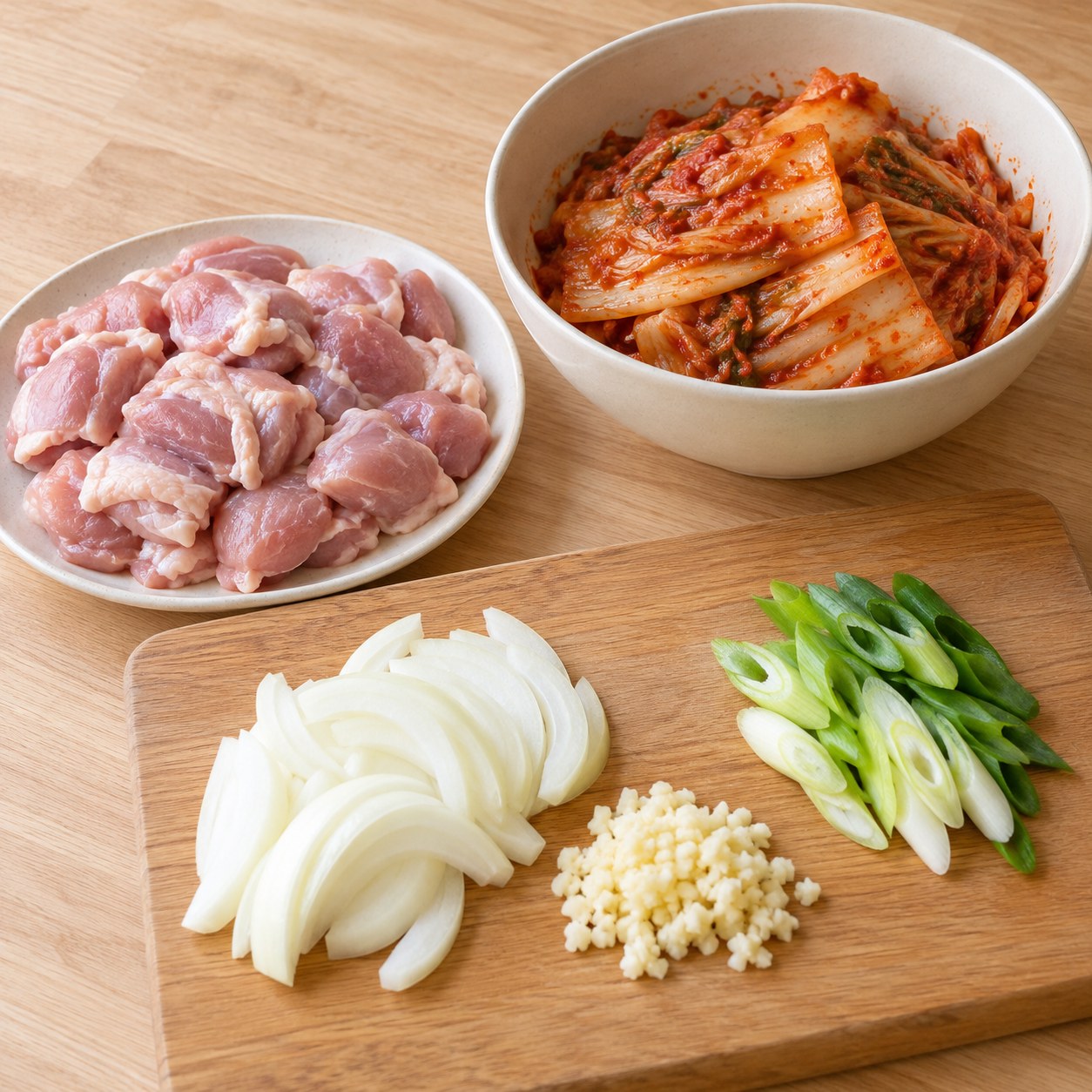
Slice onion and spring onions and mince garlic on a clean board. Cut kimchi into broad 5 cm pieces. On a separate board cut chicken thighs into 5 cm chunks; do not wash raw chicken. Wash hands, the knife and board after handling it.
-
Step 2
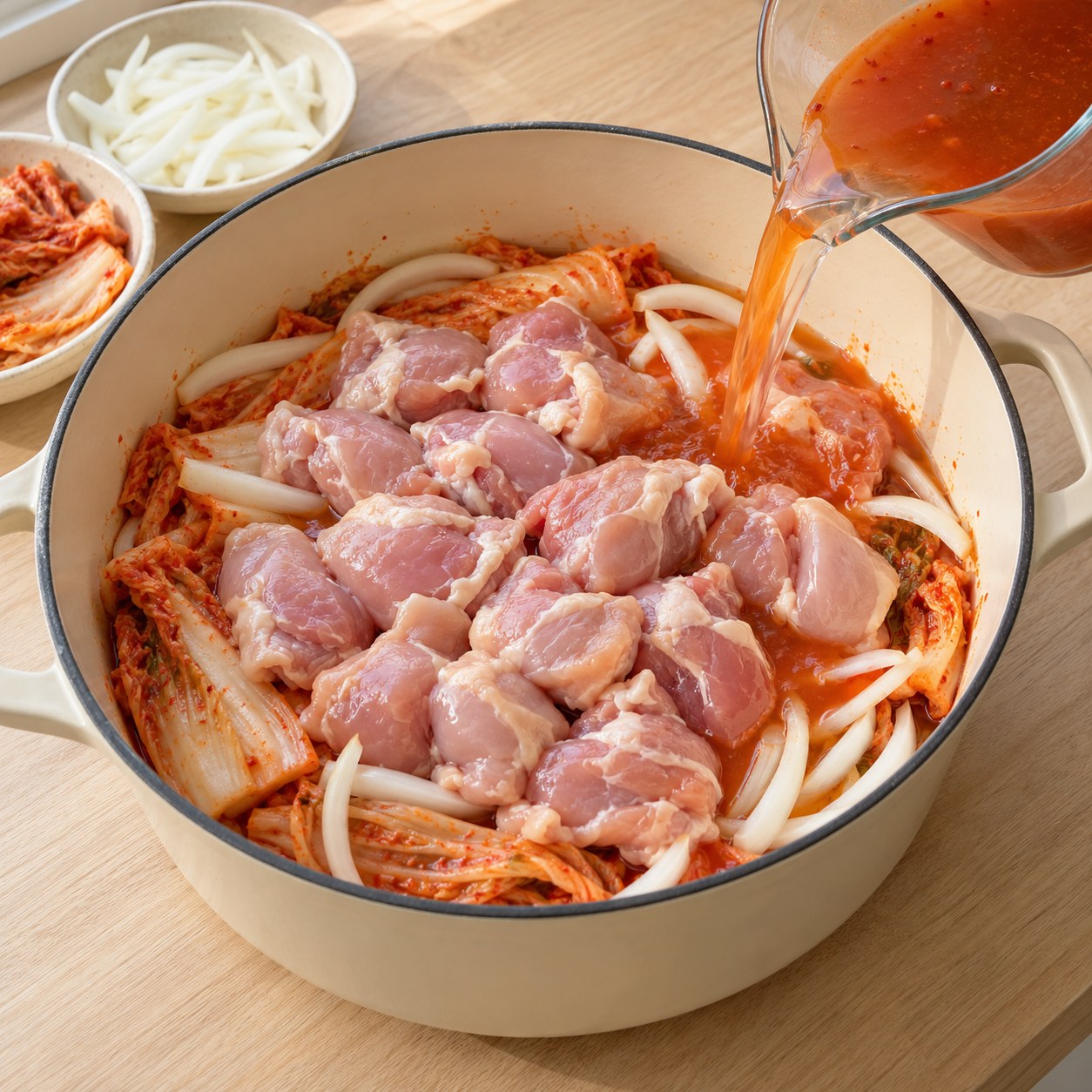
Lay onion and kimchi across the bottom of a wide heavy pot and place chicken on top. Mix kimchi juice, water, garlic, soy sauce and optional chili flakes; pour over. The liquid should come partway up the food, not cover it completely.
-
Step 3
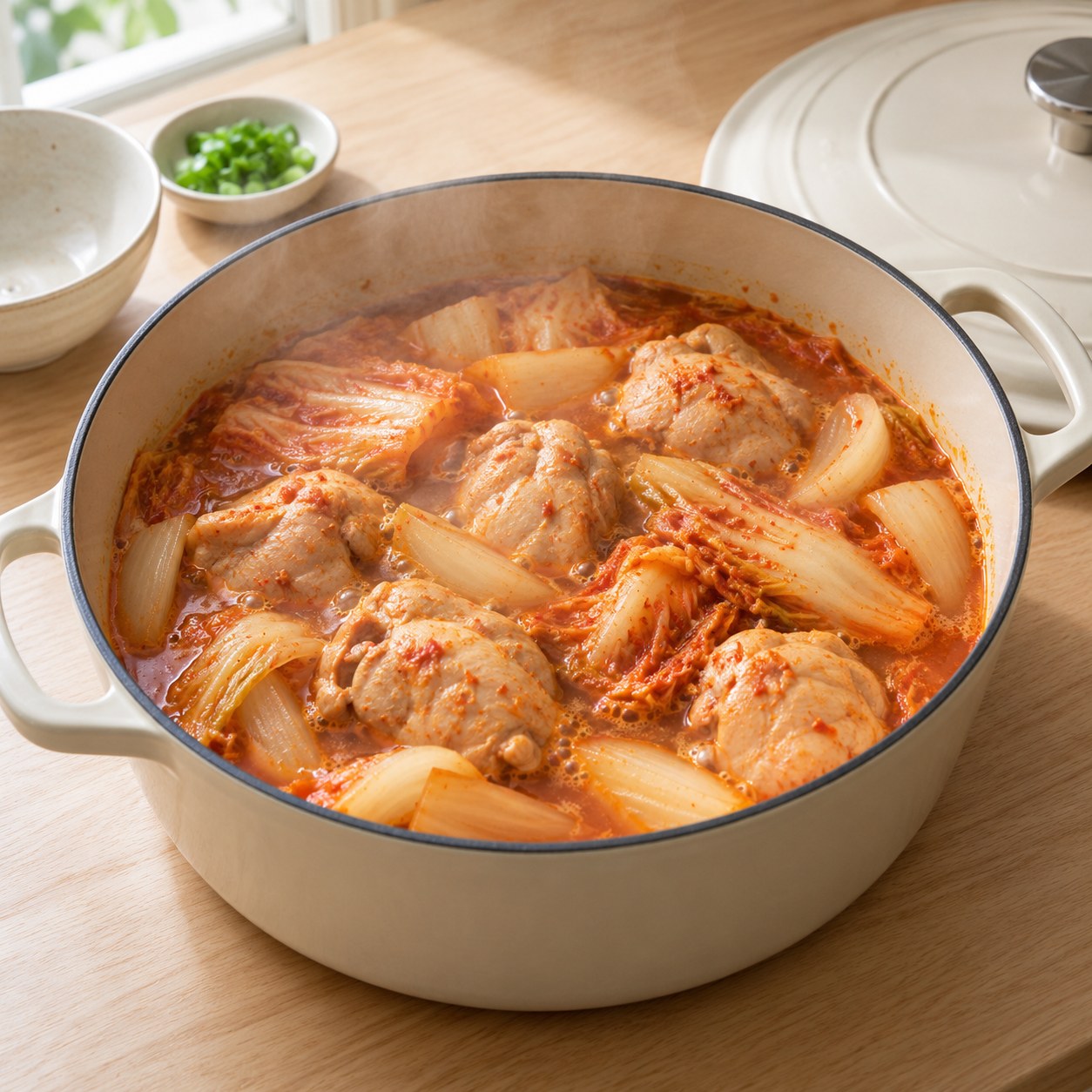
Set over medium heat and bring to a gentle simmer, about 5 minutes. Use a spoon to submerge the kimchi edges. Once small bubbles appear, reduce to low and cover; a hard boil can dry out the meat and scorch the bottom.
-
Step 4
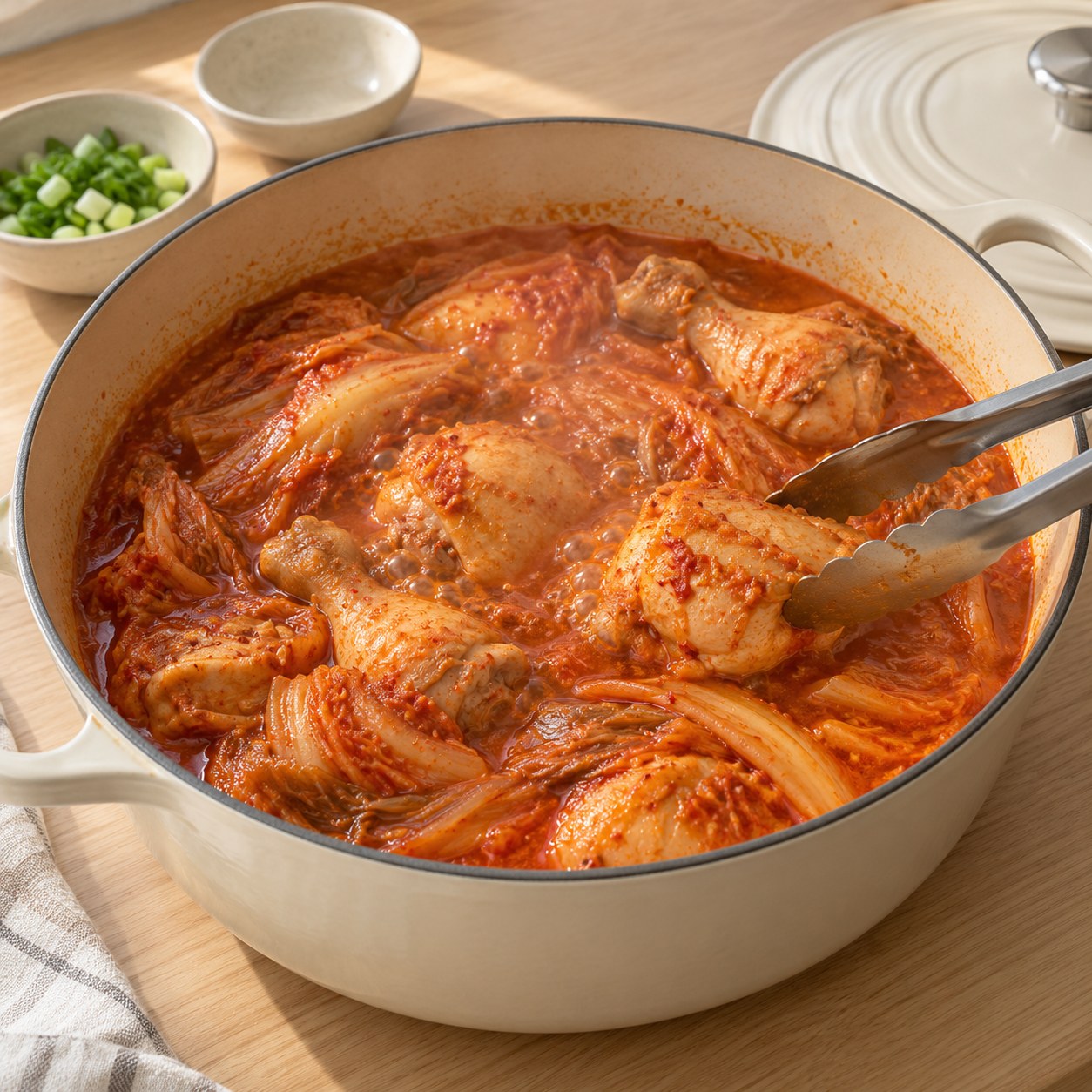
Braise covered for 30–35 minutes, turning the chicken gently after 15 minutes. Maintain a few small bubbles. If the bottom starts drying or sticking, add about ¼ paper cup + 1 small teaspoon (50 ml) hot water. The cabbage should become soft enough to cut with a spoon, not remain crunchy.
-
Step 5
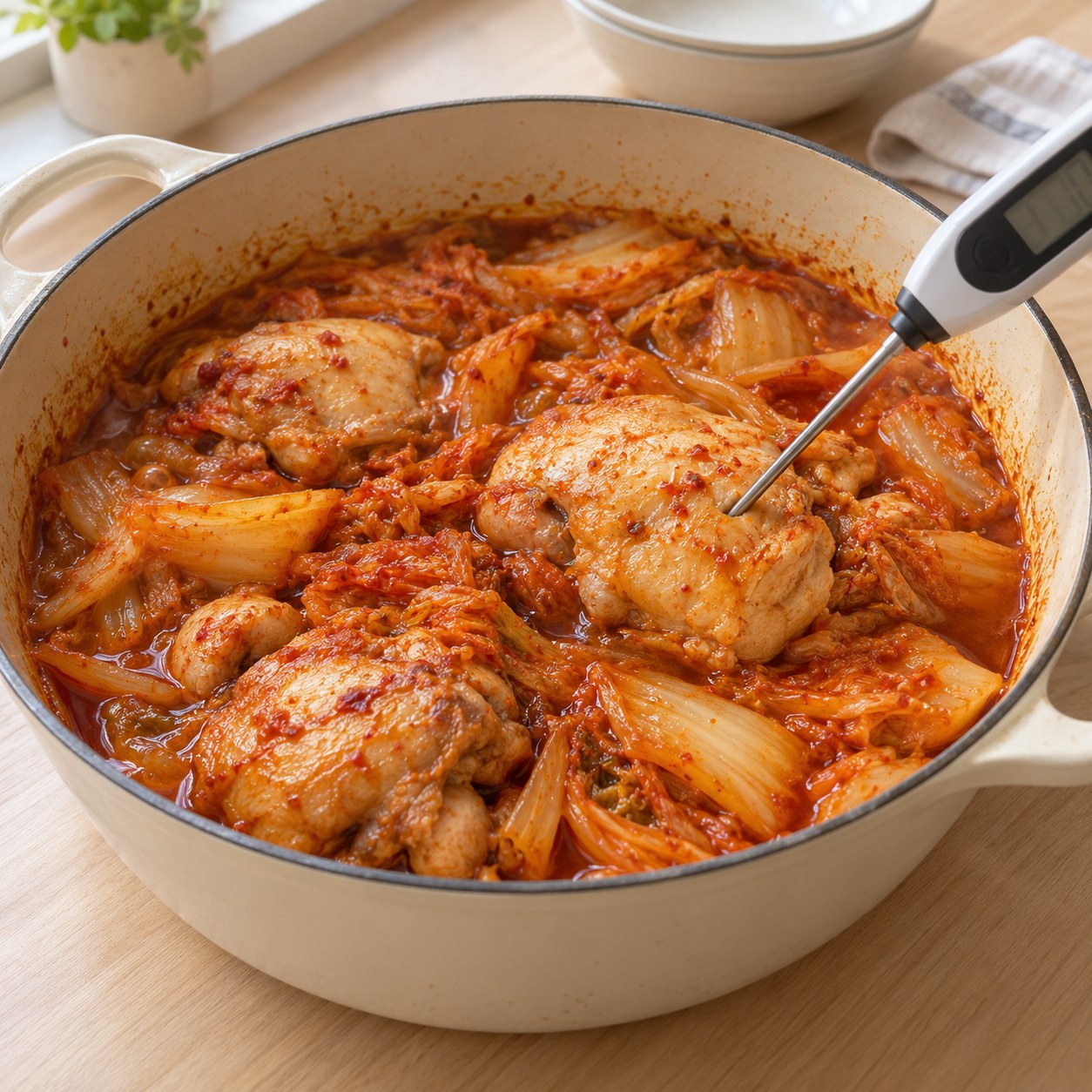
Uncover and simmer 5–8 minutes to reduce the liquid to a loose sauce. Check the thickest chicken piece with a thermometer: its center must reach 74°C. If it is cooler, cover and keep cooking before reducing further. If the sauce sticks, lower the heat and add a little water.
-
Step 6
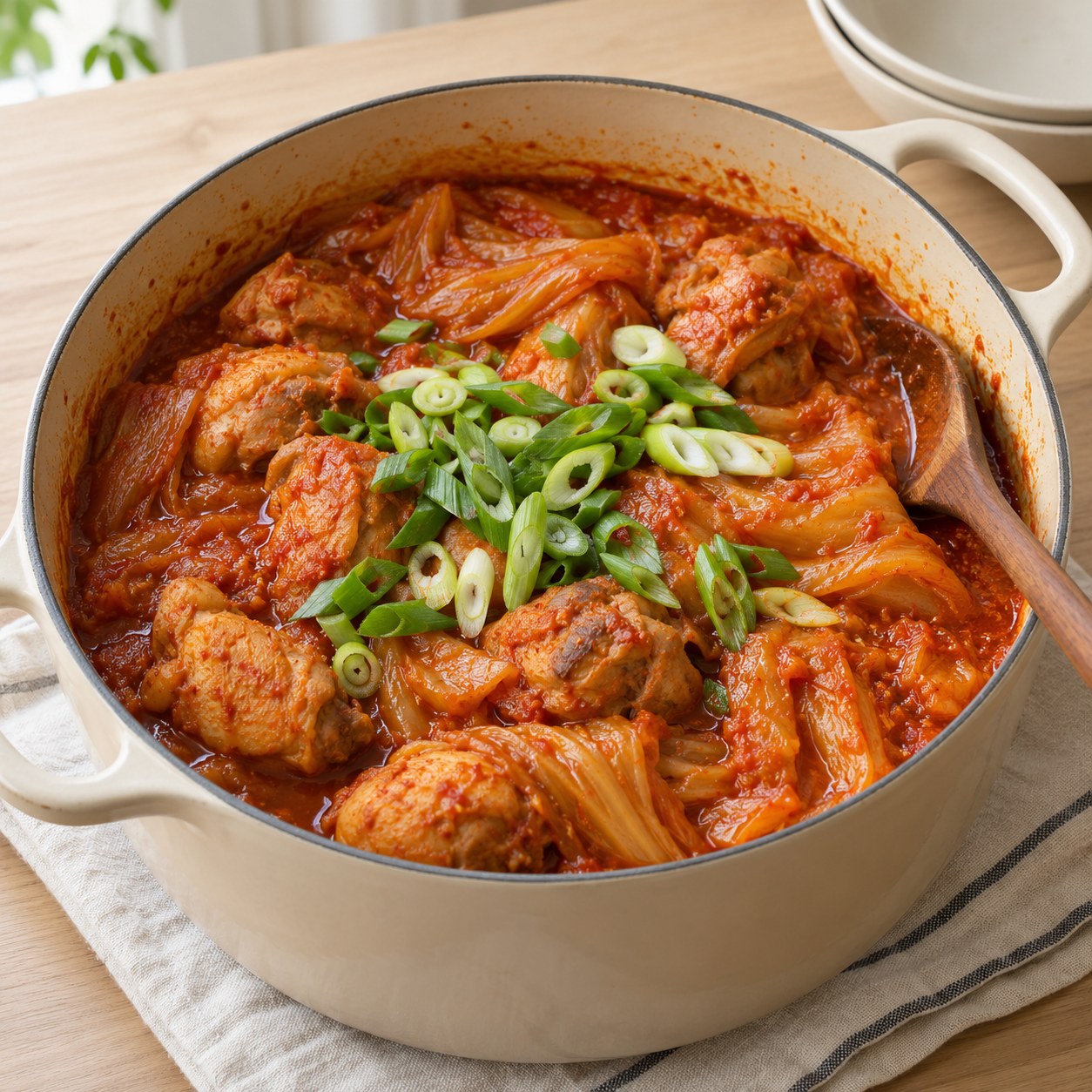
Add spring onions and cook 1–2 minutes. Taste the cooked sauce and add the optional sugar only if sharply sour. Serve hot with rice; keep enough sauce to moisten it. Never taste the raw chicken marinade or reuse utensils that touched raw chicken without washing them.


Finished dish
2 generous servings. Kimchi often contains fish or shrimp; check its label, as well as soy and wheat in soy sauce. Use thawed boneless thighs; bone-in pieces need a different cooking time. Refrigerate cooled leftovers within 2 hours, use within 3 days and reheat throughout to 74°C.
Related recipes


Enjoy every bite
How to enjoy it
Serve with rice, spooning a little kimchi sauce over it. Add a mild vegetable side.
Serve it with

Tender sesame radish (mu namul)
A mild Korean cooked radish side dish: gentle sautéing and covered steaming soften the strips without browning. Different from a raw spicy radish salad.

Korean spicy cucumber salad (oi-muchim)
A crisp cucumber side dish with gochugaru, vinegar and sesame. Mix shortly before serving for the freshest texture.