Jjolmyeon — spicy chewy noodles
Chilled, springy wheat noodles with crunchy cabbage, cucumber and cooked soybean sprouts in a sweet-sour chili dressing. Rinse the cooked noodles thoroughly and drain well before mixing.
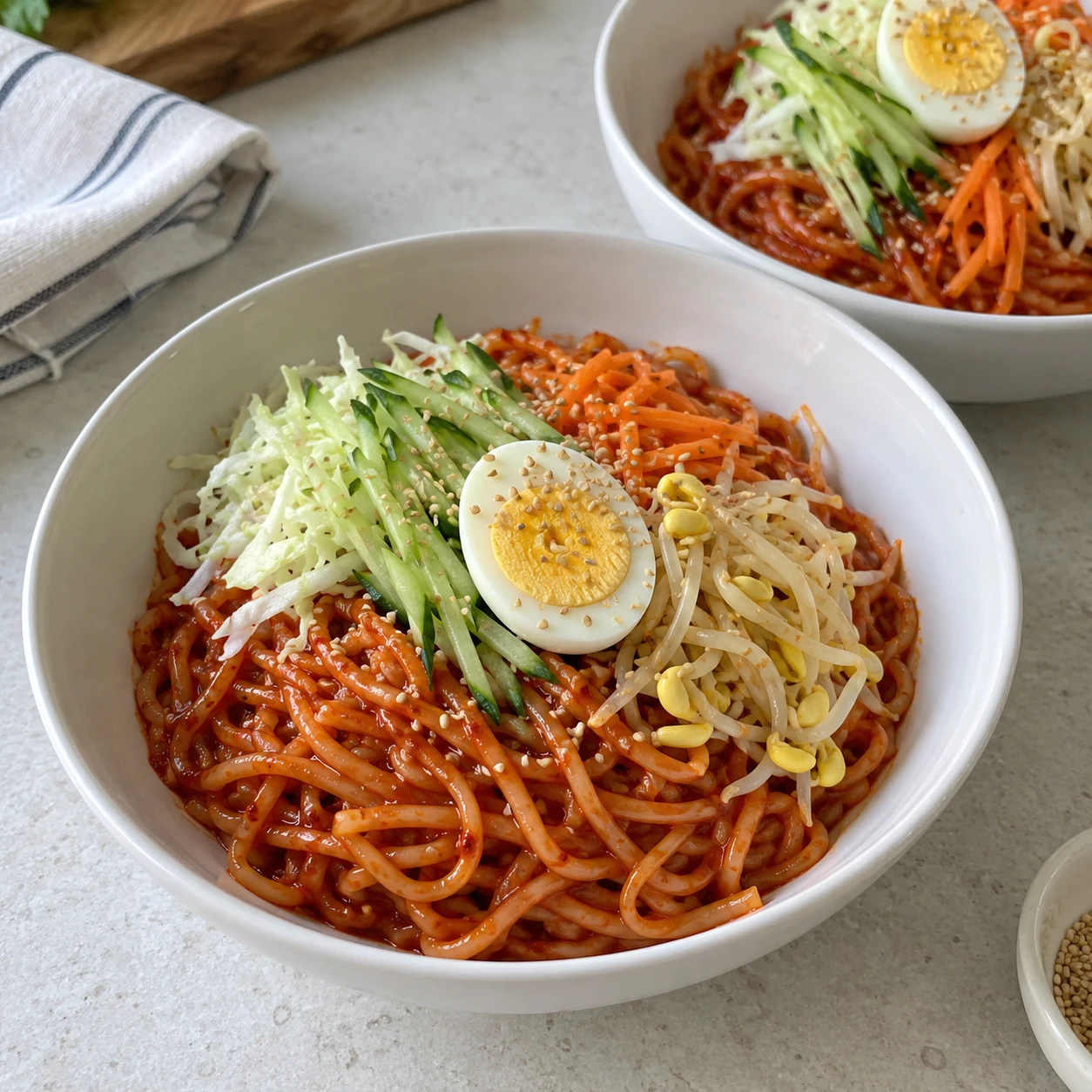
AI-generated cooking illustrations. Follow the written quantities and instructions.
Ingredients
2 servings
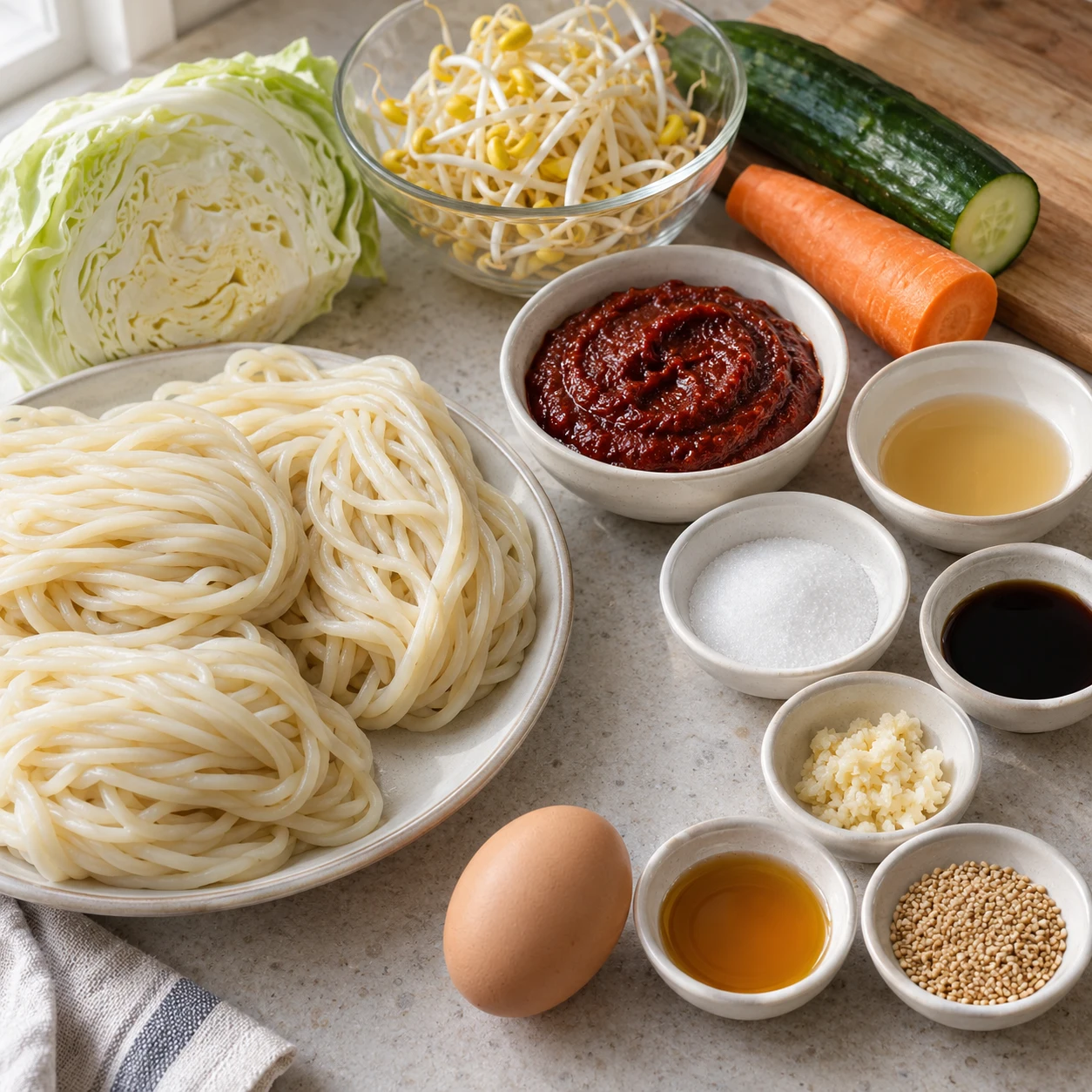
Everyday kitchen measurements
For 2 servings. Use a small 180 ml paper cup, a level eating spoon (about 15 ml) and a small teaspoon (about 5 ml).
How to fill the cup and spoons
Use the same cup and spoons throughout. Their sizes vary, so these amounts are approximate. Spoon flour in loosely and level the top without pressing. Measure vegetables after chopping, without packing them down. The amounts in g/ml are the original reference quantities. For part of a pack, use the specified pack weight and divide the contents evenly.
King Arthur Baking-
Substitute available
If Fresh jjolmyeon noodles is unavailable
- Use instead
- Dry spaghetti
- Substitute quantity
- ½ of a 400 g packReference quantity: 200 g
Use half of a 400 g pack of dry spaghetti. Cook according to its packet until tender, rinse cold and drain. It is less springy than jjolmyeon; the fresh and dry weights are intentionally different.
-
Essential
Keep this ingredient: it provides the main structure or seasoning of this dish.
-
Essential
Keep this ingredient: it provides the main structure or seasoning of this dish.
-
Optional
Omit the carrot from the topping if unavailable. Keep the sauce unchanged.
-
Substitute available
If Soybean sprouts is unavailable
- Use instead
- Mung bean sprouts
- Substitute quantity
- 1 paper cupReference quantity: about 80 g
Cook the same cupful in boiling water for 3–4 minutes until steaming hot throughout, then drain and cool. They are thinner and less nutty than soybean sprouts. Do not substitute raw sprouts.
-
Essential
Keep this ingredient: it provides the main structure or seasoning of this dish.
-
Substitute available
If Rice vinegar is unavailable
- Use instead
- Apple cider vinegar
- Substitute quantity
- 2 level eating spoonsReference quantity: 30 ml
Use the same spoon quantity of ordinary food vinegar with about 5% acidity, not vinegar concentrate. It gives a fruitier flavor.
-
Essential
Keep this ingredient: it provides the main structure or seasoning of this dish.
-
Substitute available
If Soy sauce is unavailable
- Use instead
- Tamari
- Substitute quantity
- 1 level eating spoonReference quantity: 15 ml
Use the same spoon quantity of regular-strength tamari. Saltiness varies, so taste before adding any extra seasoning. Check the label if avoiding wheat.
-
Substitute available
If Minced garlic is unavailable
- Use instead
- Garlic powder
- Substitute quantity
- ¼ small teaspoonReference quantity: about 0.5 g
Use plain garlic powder at the garlic step. Do not use garlic salt; it changes the salt level.
-
Essential
Keep this ingredient: it provides the main structure or seasoning of this dish.
-
Optional
Leave out the egg topping and its boiling step if unavailable. It adds protein but the noodle dish still works.
-
Optional
Omit the sesame seeds at the final garnish if unavailable or avoiding sesame. No other quantity changes are needed.
Tap each ingredient as you prepare it. Check product labels for egg, soy, sesame, wheat, fish or shellfish where relevant.
Step-by-step cooking
-
Step 1
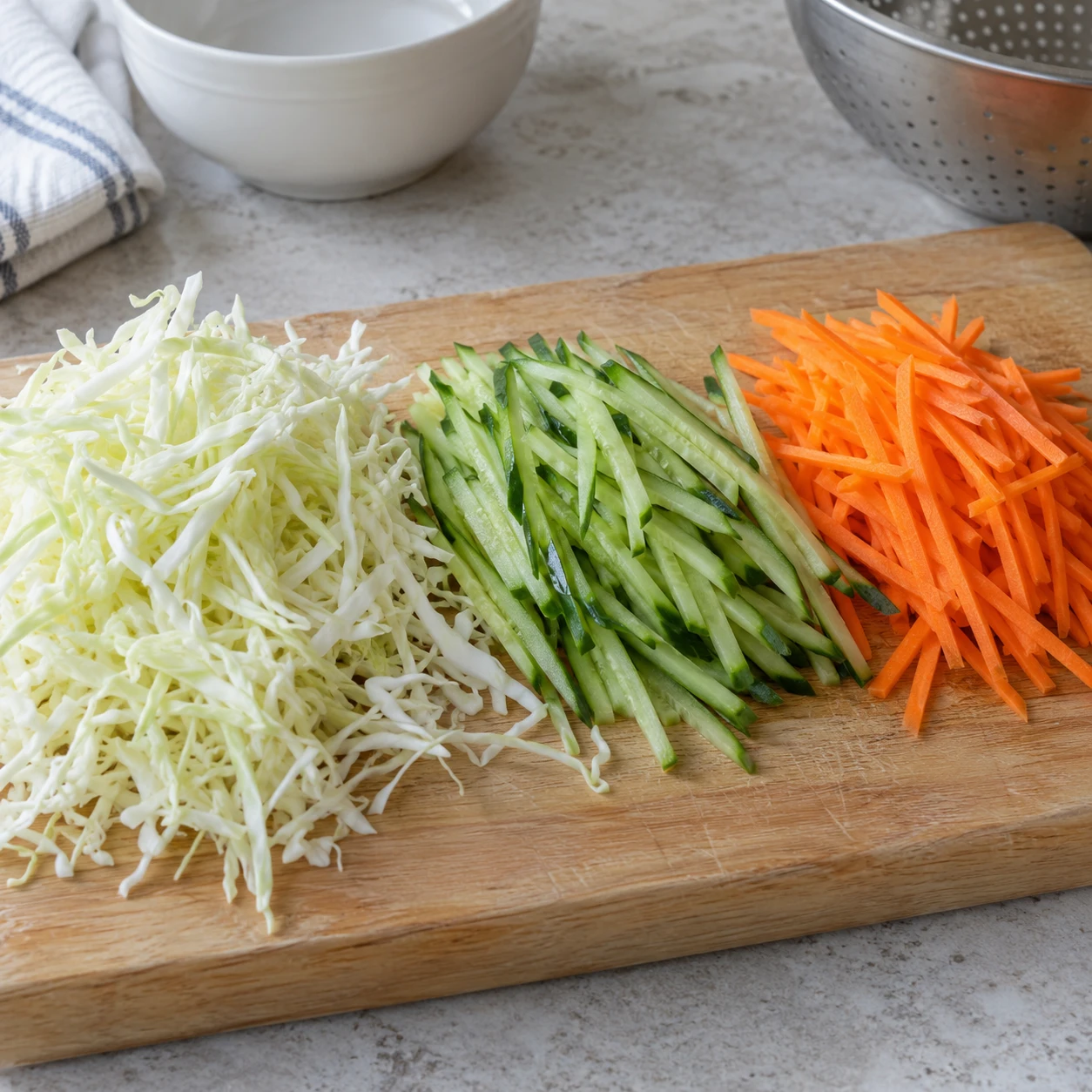
Prepare the crunchy vegetables. Wash the cabbage, cucumber and optional carrot. Thinly shred enough cabbage to loosely fill 1 small paper cup. Cut ½ cucumber and ¼ carrot into fine matchsticks. Keep everything chilled and dry; wet vegetables will dilute the sauce.
-
Step 2
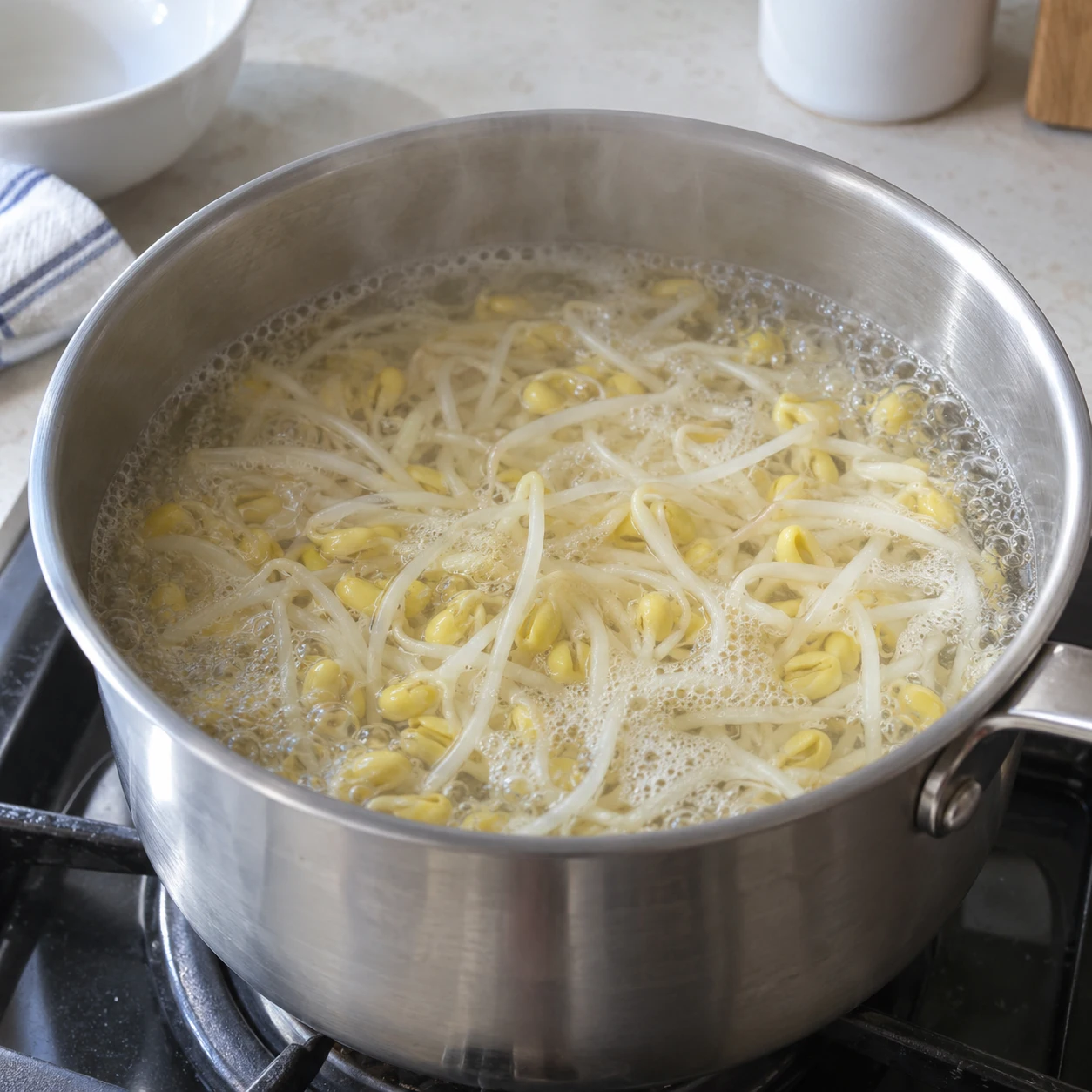
Cook the sprouts. Rinse 1 small paper cup soybean sprouts. Bring a saucepan of water to a boil, add the sprouts and boil with the lid off for 7–8 minutes, until the beans are tender and the sprouts are steaming hot throughout. Drain and spread on a clean plate to cool. If using mung bean sprouts, follow their shorter cooking note. Do not serve raw sprouts.
-
Step 3

Prepare the optional egg. Cover 1 egg with water in a small pan, bring to a gentle boil and simmer for 10 minutes. Cool in cold water, peel and cut in half. The yolk should be completely set. Keep chilled with the vegetables.
-
Step 4
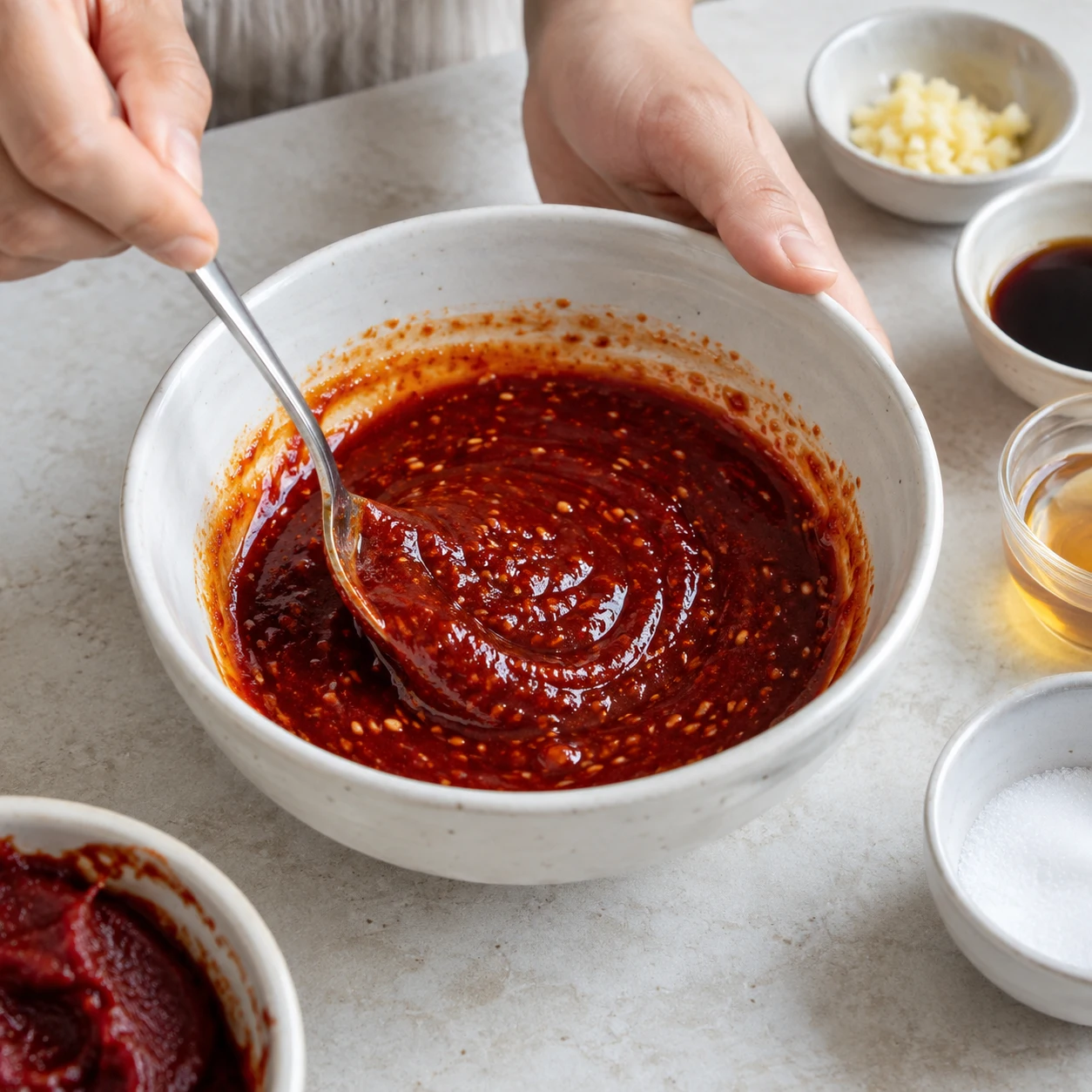
Mix the dressing. Stir together 2 level eating spoons gochujang, 2 level eating spoons rice vinegar, 1 level eating spoon sugar, 1 level eating spoon soy sauce, 1 small teaspoon minced garlic and 2 small teaspoons sesame oil. Stir until the sugar dissolves. Keep 1 level eating spoon of this mixed sauce aside so you can control the final strength.
-
Step 5
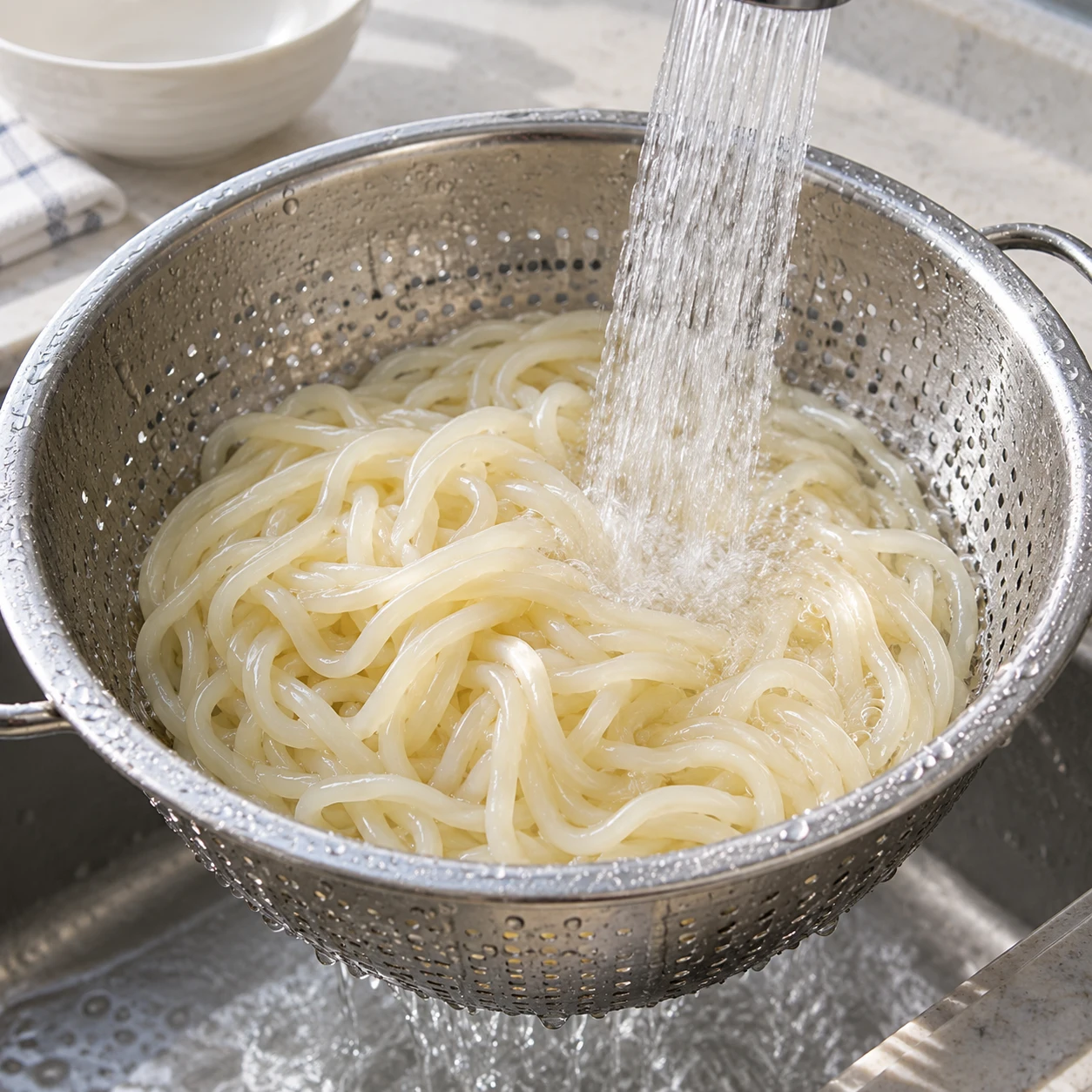
Boil and rinse the noodles. Separate 1 full 400 g pack of fresh jjolmyeon with your fingers. Add to a large pot of rapidly boiling water and stir to prevent sticking. Follow the packet time, usually about 4–6 minutes; test a strand for a tender, chewy center without hardness. Drain, rinse thoroughly under cold running water while gently rubbing the strands, then drain very well.
-
Step 6
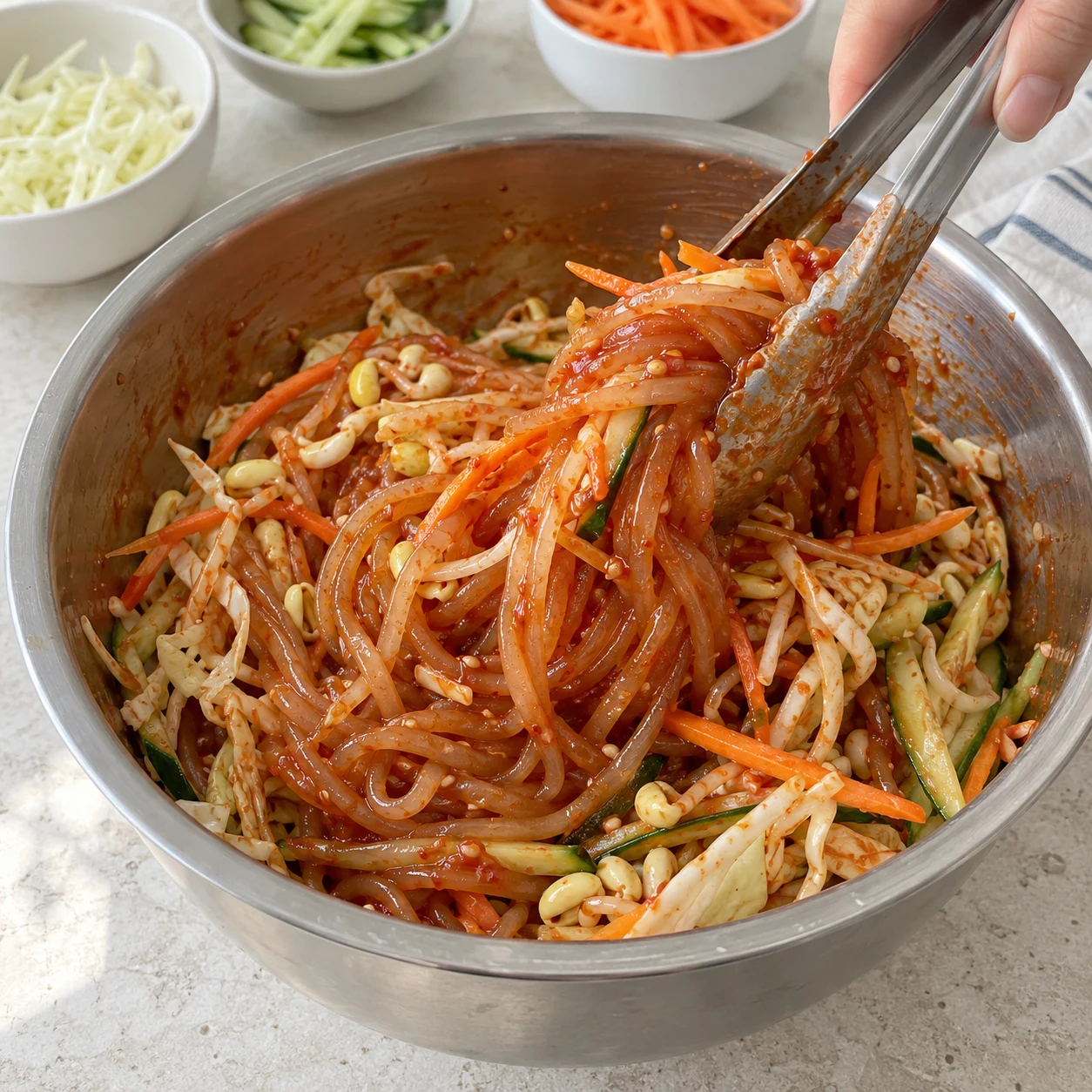
Toss and serve immediately. Put the cold drained noodles, cooked sprouts and vegetables in a large bowl. Add the dressing except the reserved spoonful and toss until evenly coated. Taste, then add some or all of the remaining dressing if wanted. Divide into 2 bowls and top with egg halves and sesame if using. Eat promptly: the noodles absorb sauce and become sticky as they stand.
Finished dish
A level eating spoon here is about 15 ml, a small teaspoon about 5 ml, and a small paper cup about 180 ml. Use the same spoon and cup throughout; household sizes and ingredient weights vary. Jjolmyeon is chewy, not undercooked. Package instructions take priority because fresh and frozen noodles vary. This recipe contains wheat and sesame and may contain egg and soy; check the chili paste and sauce labels. For less heat, use only part of the prepared sauce and serve the rest separately. This is still a spicy dish.
Enjoy every bite
How to enjoy it
Toss the chewy noodles with the vegetables just before serving. Take both in the same bite, then follow with warm dumpling or egg.
Serve it with
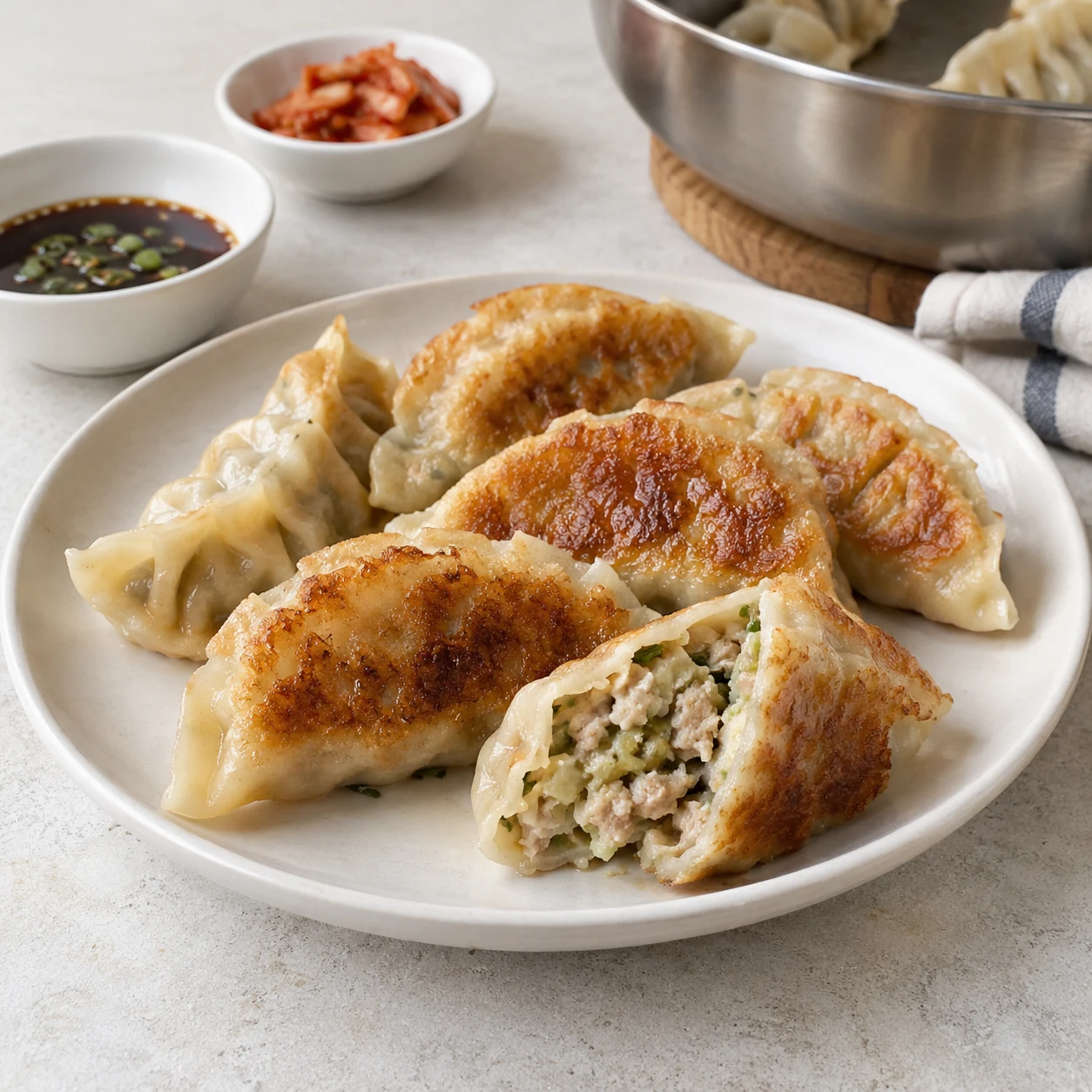
Homemade pan-steamed mandu dumplings
A small savory bite complements a lighter noodle or vegetable dish.
View recipe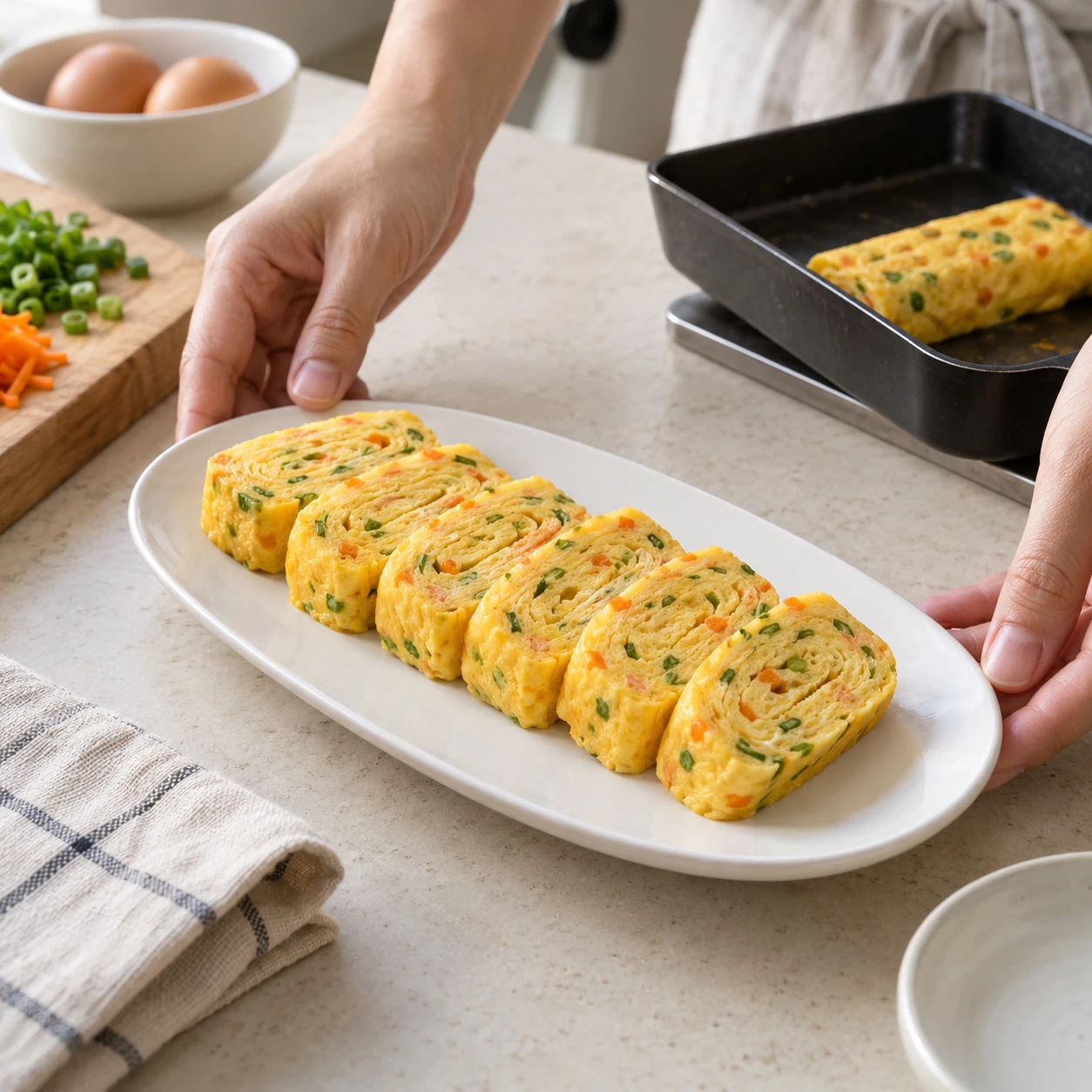
Rolled omelette (Gyeran mari)
Soft, gently seasoned egg contrasts with a stronger sauce or a crisp bite.
View recipe