Chili-glazed dried pollock (hwangtae-gui)
Headless, gutted, butterflied winter-dried pollock is rehydrated, deboned and gently pan-cooked before a thin chili glaze is added. Detailed trimming, moist-heat and temperature checks keep it tender.

Ingredients
2 servings

Everyday kitchen measurements
For 2 servings. Use a small 180 ml paper cup, a level eating spoon (about 15 ml) and a small teaspoon (about 5 ml).
How to fill the cup and spoons
Use the same cup and spoons throughout. Their sizes vary, so these amounts are approximate. Spoon flour in loosely and level the top without pressing. Measure vegetables after chopping, without packing them down. The amounts in g/ml are the original reference quantities. For part of a pack, use the specified pack weight and divide the contents evenly.
King Arthur Baking-
Essential
Required for this recipe; use the listed amount.
-
Essential
Required for this recipe; use the listed amount.
-
Essential
Required for this recipe; use the listed amount.
-
Essential
Required for this recipe; use the listed amount.
-
Substitute available
If White sugar is unavailable
- Use instead
- Light brown sugar
- Substitute quantity
- 2 level teaspoons (8 g)Reference quantity: 8 g
Replace white sugar with 2 level teaspoons (8 g) light brown sugar at the same glaze-mixing stage. Keep water, LOW heat and all timings unchanged. It adds a slight caramel note and can still burn; do not increase the heat.
-
Essential
Required for this recipe; use the listed amount.
-
Essential
Required for this recipe; use the listed amount.
-
Essential
Required for this recipe; use the listed amount.
-
Essential
Required for this recipe; use the listed amount.
-
Essential
Required for this recipe; use the listed amount.
-
Optional
May be omitted without changing the other quantities.
-
Optional
May be omitted without changing the other quantities.
-
Optional
May be omitted without changing the other quantities.
Tap each ingredient as you prepare it. Check product labels for egg, soy, sesame, wheat, fish or shellfish where relevant.
Step-by-step cooking
Check off a completed step to move to the next one. After the last step, you will move to the finished dish.
Completed steps are saved in this browser. Start over to clear this recipe’s progress.
-
Step 1
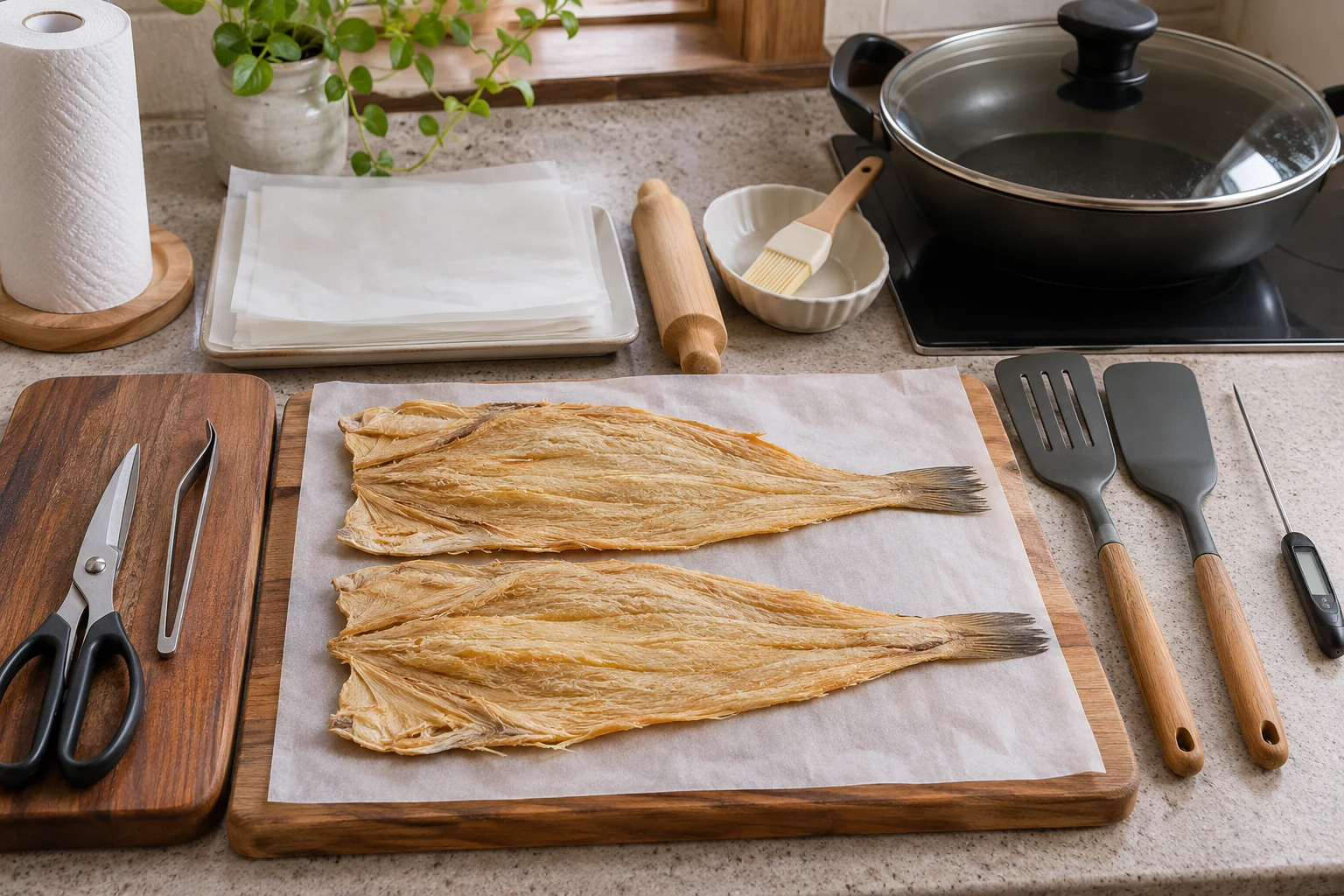
Allow 60 minutes: around 25 for preparation, 10 for rehydration, 10 for an oil coating rest and 15 for cooking; mix the glaze during the rest. Prepare a shallow dish, kitchen shears, bone tweezers, separate boards, towels, two food-safe sheets, rolling pin, brush, wide 28 cm nonstick pan with lid, two spatulas and thin-probe thermometer. Buy TWO plain headless, gutted, butterflied DRIED Alaska pollock sheets, total dry weight 120 g. Not fresh fish, salted cod, shreds or ready-glazed cooked fish. Drying does not make this product ready to eat. Reject mold, damp spoilage or rancid smell; follow storage labeling.
-
Step 2
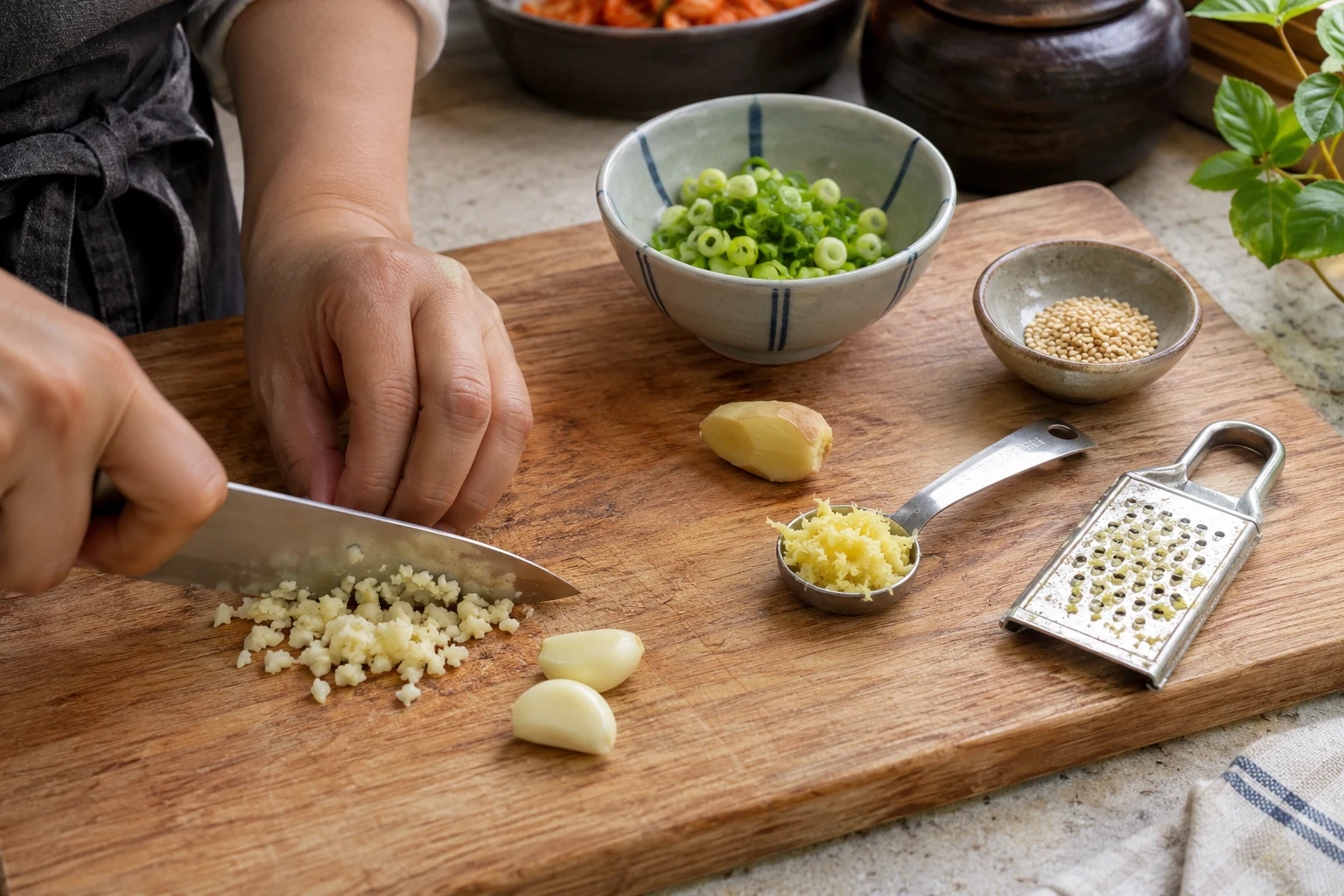
Prepare aromatics BEFORE handling fish. Peel, rinse and dry the two garlic cloves, then mince (6 g). Scrub and rinse ginger, peel thinly and grate ½ teaspoon (2 g); discard tough strings left on the grater. For optional scallion, trim root and wilted leaves, open dirty folds, rinse and finely slice. Keep scallion and sesame garnish in a separate clean area. Measure all sauce ingredients.
-
Step 3
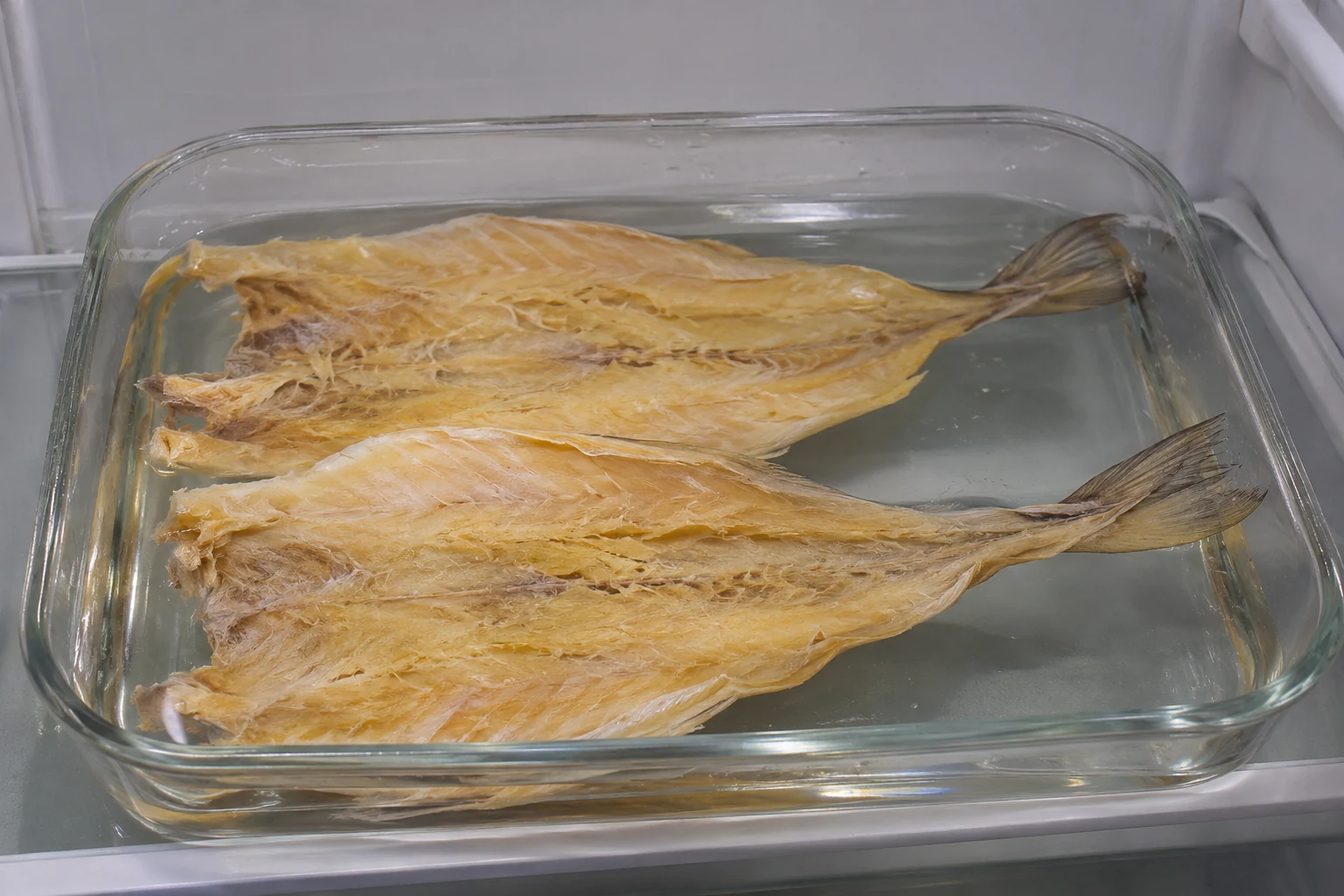
Inspect the dry fish and briefly rinse dust away with gentle cold water without splashing nearby food. Put flesh-side down in the shallow dish with 5 paper cups COLD water (900 ml). Refrigerate for 10 minutes, turning at 5 minutes. The flesh should bend without snapping. If still rigid, soak in the refrigerator for another 5 minutes and check; do not waterlog it for hours. Drain and discard the soaking water; do not use as stock.
-
Step 4
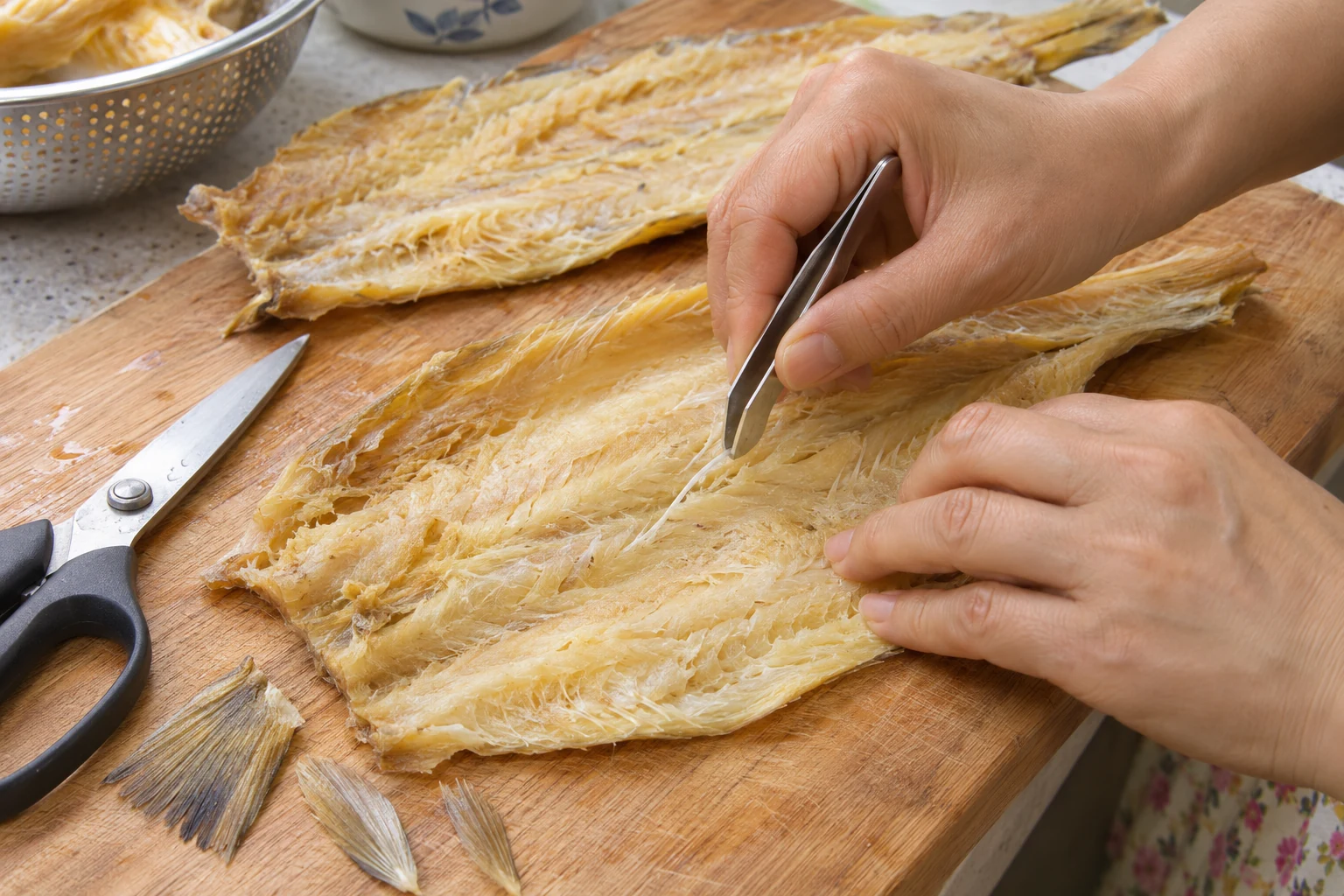
Gently press between paper towels without wringing. On the fish board, use shears to trim tail tips, ALL fins and ragged hard edges. Lift out the central backbone if present and pull rib and pin bones along the fibers with tweezers. Feel over the entire flesh under bright light and recheck. Remove any black membrane or dried gut residue inside the already-gutted cavity; spot-rinse if needed and pat dry again. This method requires a headless, gutted purchase, not an intact unprocessed fish. Make two shallow diagonal slits in the SKIN ONLY to reduce curling; do not cut through the flesh.
-
Step 5
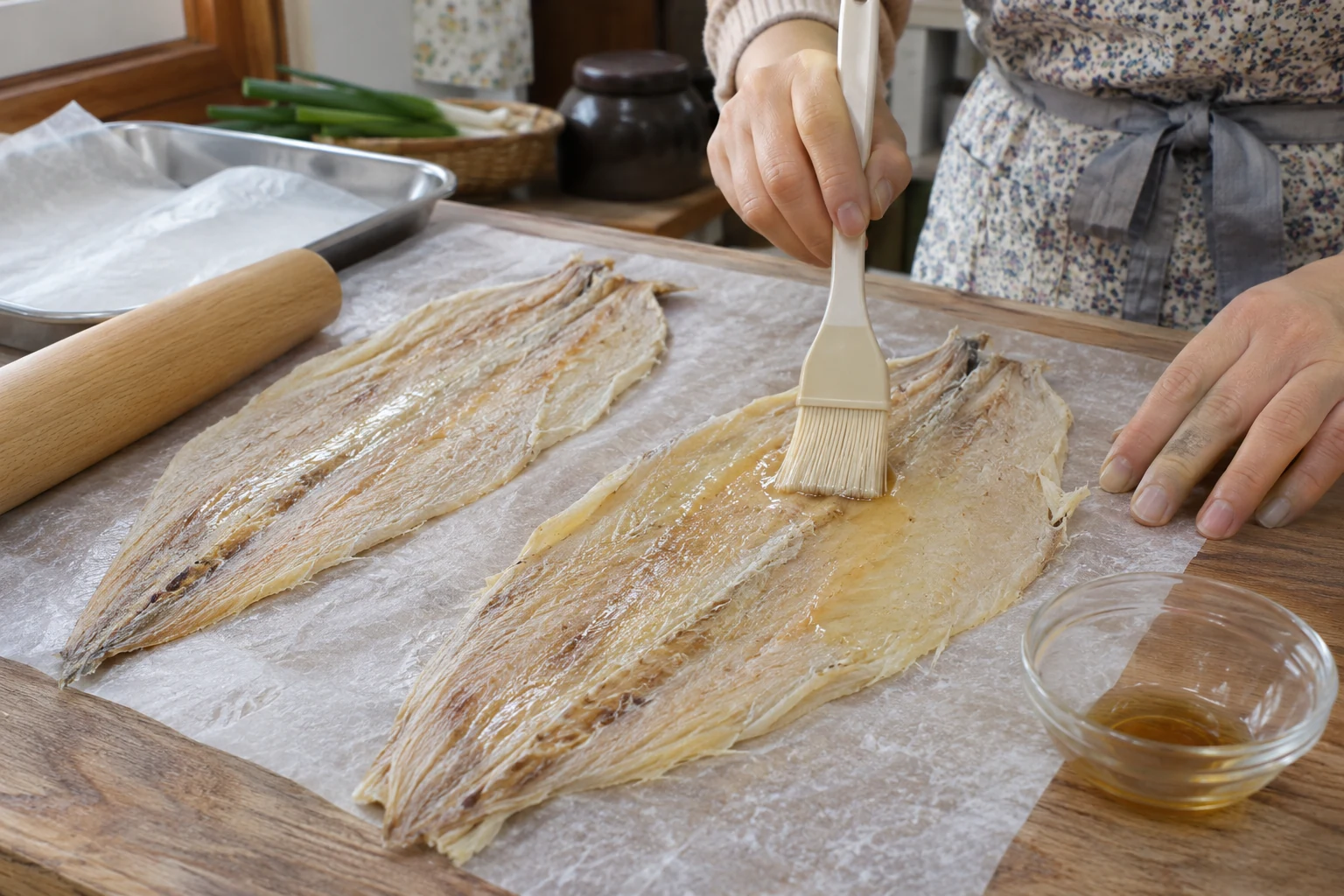
Place fish between two food-safe sheets and gently press or roll to even thickness, keeping each sheet whole rather than pounding into shreds. Mix 1 teaspoon soy sauce (5 ml) with 1 teaspoon sesame oil (5 ml); brush thinly on both sides. Reserve the other teaspoon soy for the glaze. Cover and refrigerate 10 minutes. Wash and sanitize fish-contact boards, shears and utensils; wash the brush before it touches cooked fish. Wash hands and prepare a clean cooked-food plate.
-
Step 6
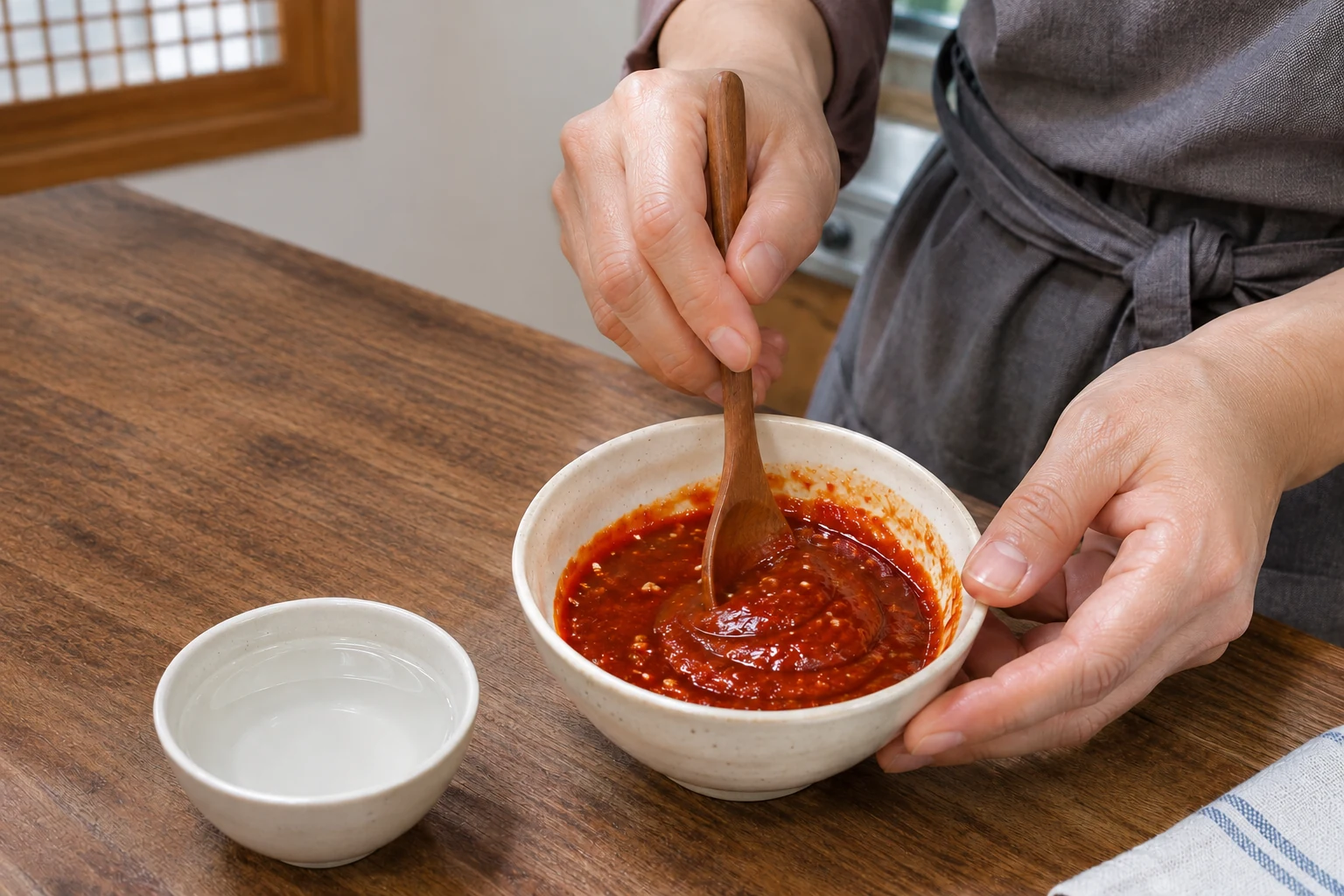
In a clean bowl mix 2 level tablespoons gochujang (36 g), remaining 1 teaspoon soy sauce (5 ml), 2 level teaspoons sugar (8 g), garlic, ginger and 1 tablespoon drinking water (15 ml). Add optional 1 teaspoon gochugaru if desired. Stir until sugar dissolves into a smooth brushable glaze, not a soup. Reserve the remaining 2 tablespoons water (30 ml) for steaming. Keep raw-fish utensils out of the glaze; do not use soaking water.
-
Step 7
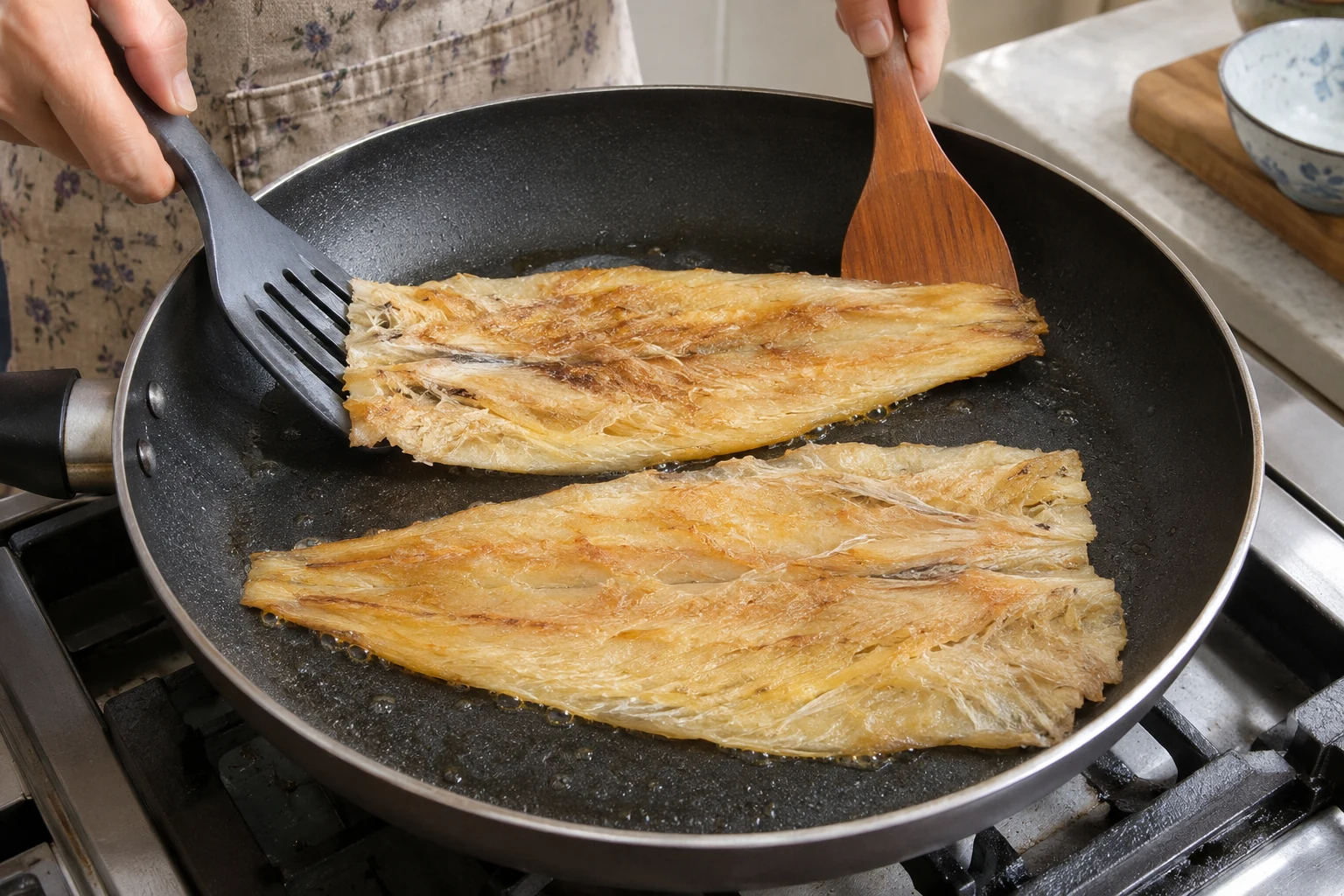
Warm the wide pan on medium-low heat for 90 seconds and add 2 teaspoons neutral oil (10 ml). Lay both fish SKIN DOWN in one layer. If crowded, cook two batches, dividing oil and steaming water equally. Cook 3 minutes, supporting curling areas lightly with a spatula, then use two spatulas to turn and cook the flesh side 2 minutes. Aim for light gold, not a dark dry crust. Do not add the sugary glaze yet.
-
Step 8
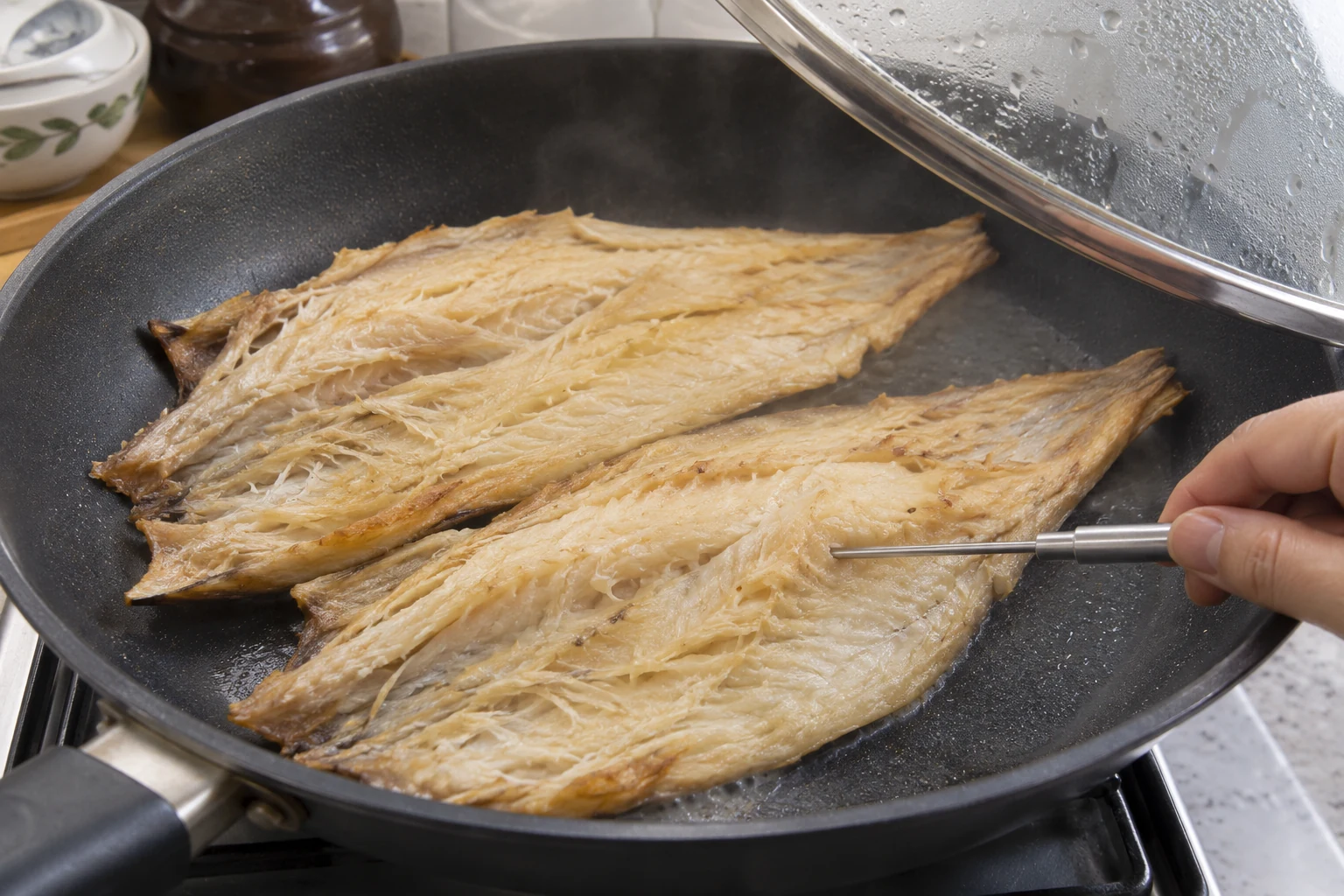
Turn skin-side down. Briefly take the pan off the burner and carefully add the reserved 2 tablespoons water (30 ml) down the side, avoiding a sudden splash onto oil. Cover and cook on LOW for 3–4 minutes; open the lid away from your face. Insert a clean thin probe sideways into the thickest flesh without touching the pan: reach at least 63°C for 15 seconds. Flesh must also be opaque, separate easily and have no dry hard center. If needed, cover and cook 1–2 minutes longer, then recheck. Uncover to evaporate excess water briefly. Confirm tenderness as well as temperature.
-
Step 9
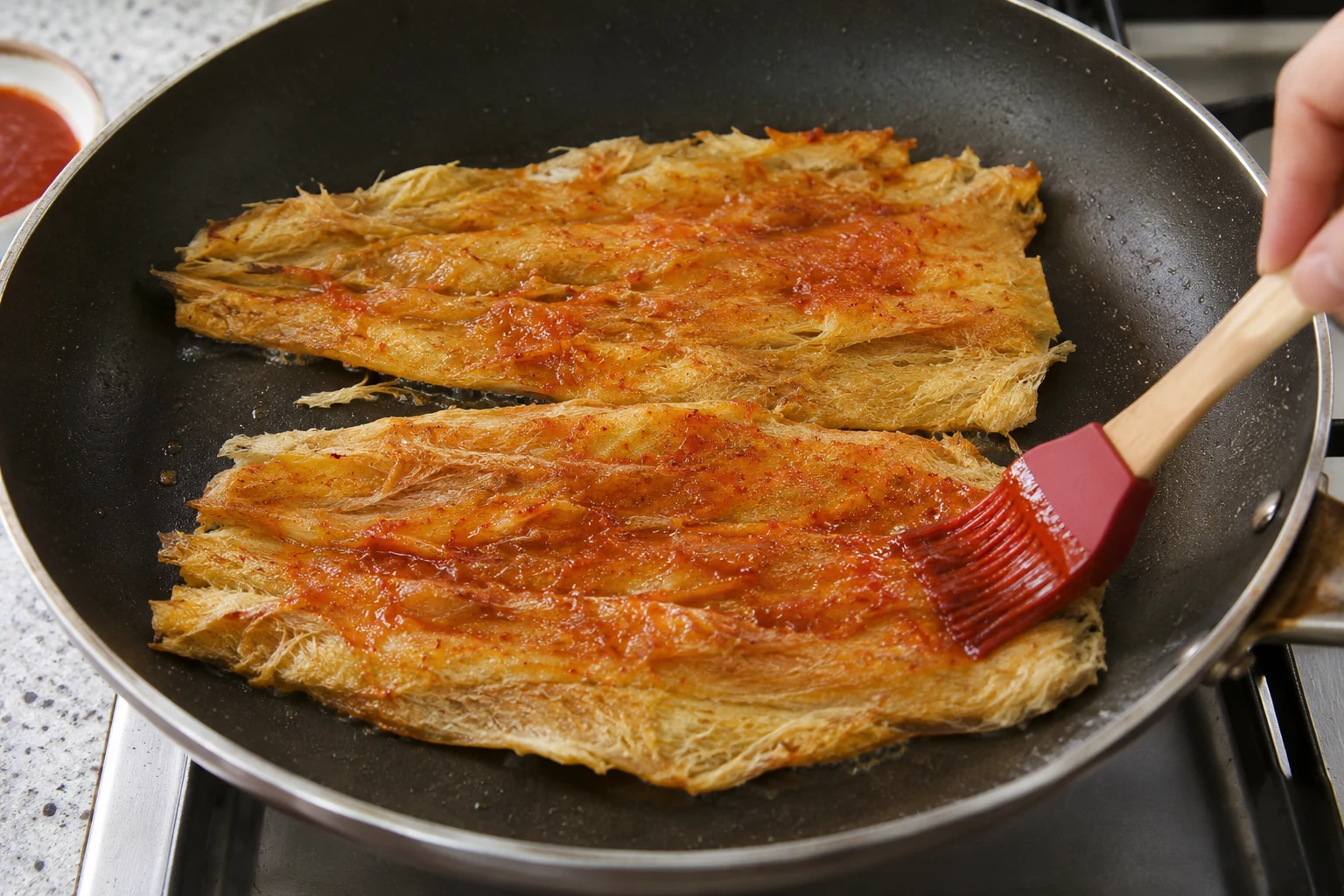
Keep heat LOW. With the washed brush spread a thin glaze on the COOKED flesh. Turn flesh-down for only 30 seconds, then skin-down; spread remaining glaze thinly over the top and heat 1–2 minutes, around 2–3 minutes glazing total. It should cling and gently bubble with lightly toasted spots, never black sugar or garlic. If it catches or smokes, take off heat and lower it. Discard leftover glaze from the working bowl; do not pour uncooked leftovers onto the plate.
-
Step 10
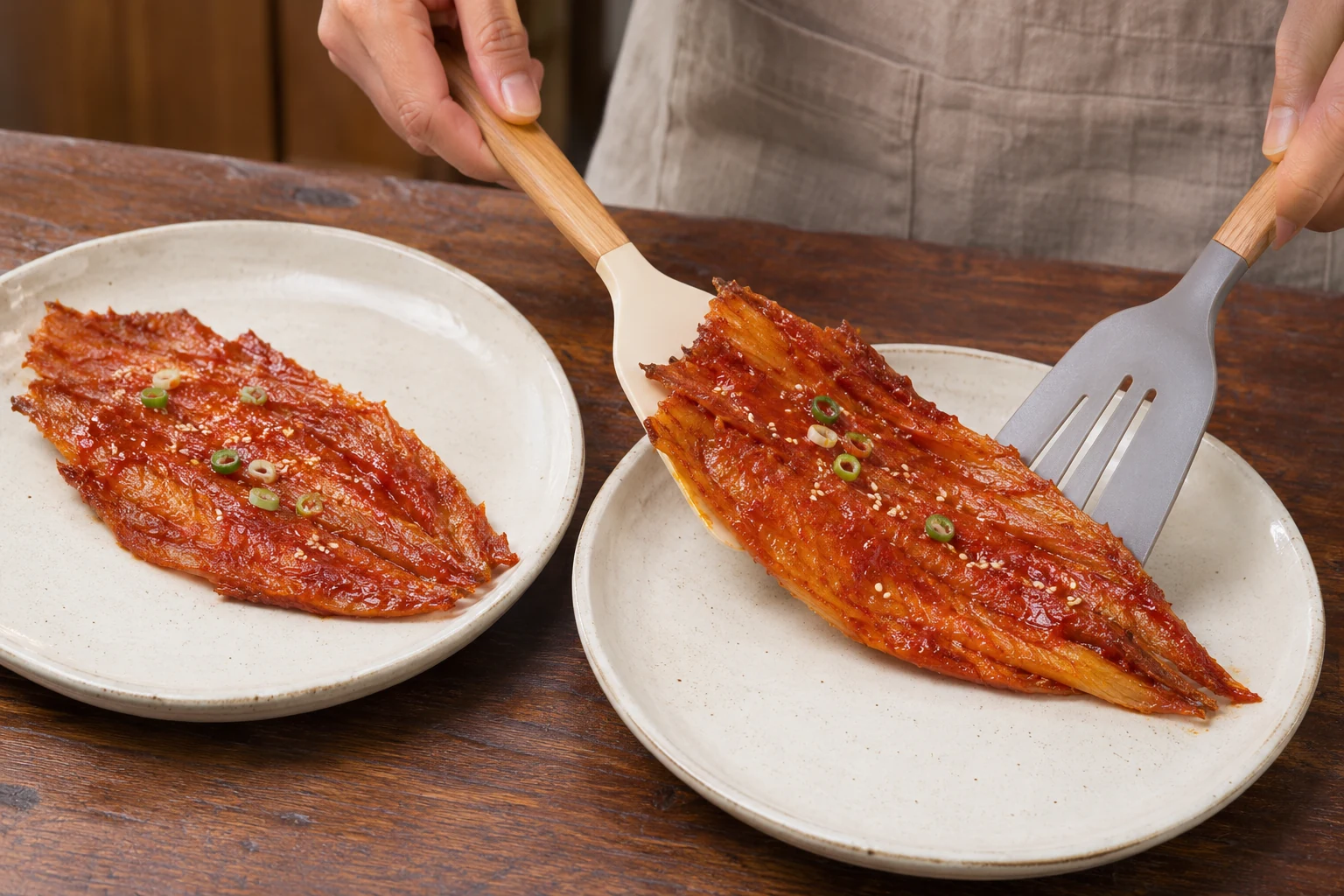
Transfer one fish per person onto two clean plates with clean spatulas. Optional sliced scallion and ½ teaspoon sesame seeds garnish the whole batch; either may be omitted without timing changes. Serve hot but not scalding. Use clean shears for bite-size pieces and check again for remaining bones. Expect moist flakes, tender fibers, a thin glossy red coating and a little dried-fish chew. Rice and mild vegetables are separate serving suggestions, not ingredients. Refrigerate leftovers promptly.


Finished dish
Measures: tablespoon 15 ml, teaspoon 5 ml, paper cup 180 ml. The 120 g is TOTAL DRY weight of TWO headless, gutted, butterflied fish, not fresh or salted fish. Discard 900 ml soaking water. Divide soy sauce 5 + 5 ml, cooking water 15 + 30 ml. Keep soaking and resting fish refrigerated. Remove fins and bones; clean raw-fish tools before cooked food. Verify 63°C for 15 seconds and tender flesh; glaze color is not a temperature check. Contains fish, soy, sesame and possibly wheat in sauces. Optional chili, scallion and seeds can be omitted, but sesame OIL remains. Refrigerate in shallow covered containers at 4°C or below within 2 hours, or 1 hour above 32°C; use within 2 days. Reheat leftovers covered with a little water to 74°C at the center, then cool to a comfortable eating temperature. Never leave out overnight.
Related recipes


Enjoy every bite
How to enjoy it
Cut across the fibers into small bites after checking for bones. Offer plain rice and a mild vegetable side separately; use the pan lid to soften the fish before glazing rather than increasing the sauce.

