Gul muchim — spicy seasoned raw oysters
Traditional freshly seasoned raw oysters with crisp radish, garlic and red chili flakes. Mix only just before eating; the notes include an explicitly different fully cooked oyster version.
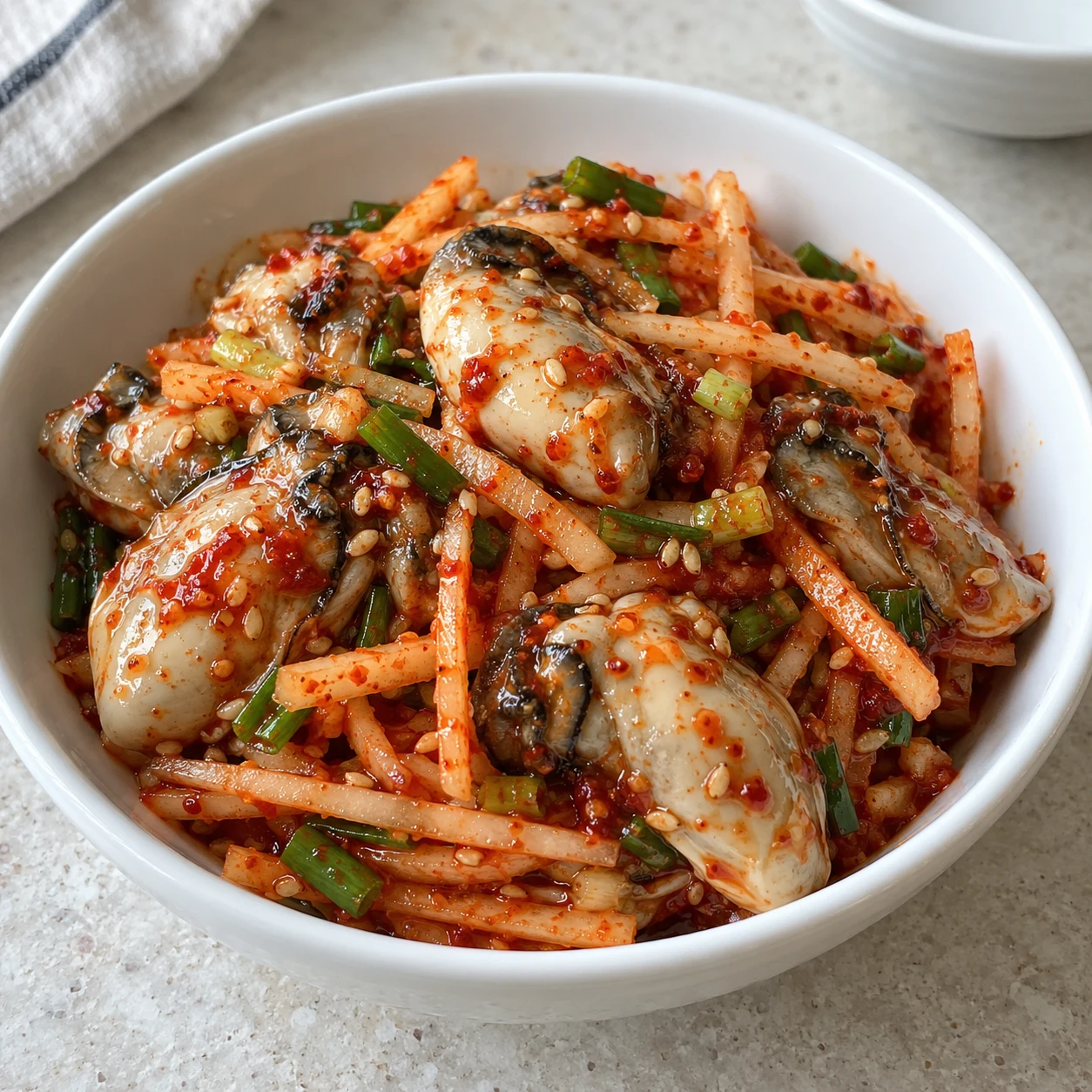
AI-generated cooking illustrations. Follow the written quantities and instructions.
Ingredients
3 servings
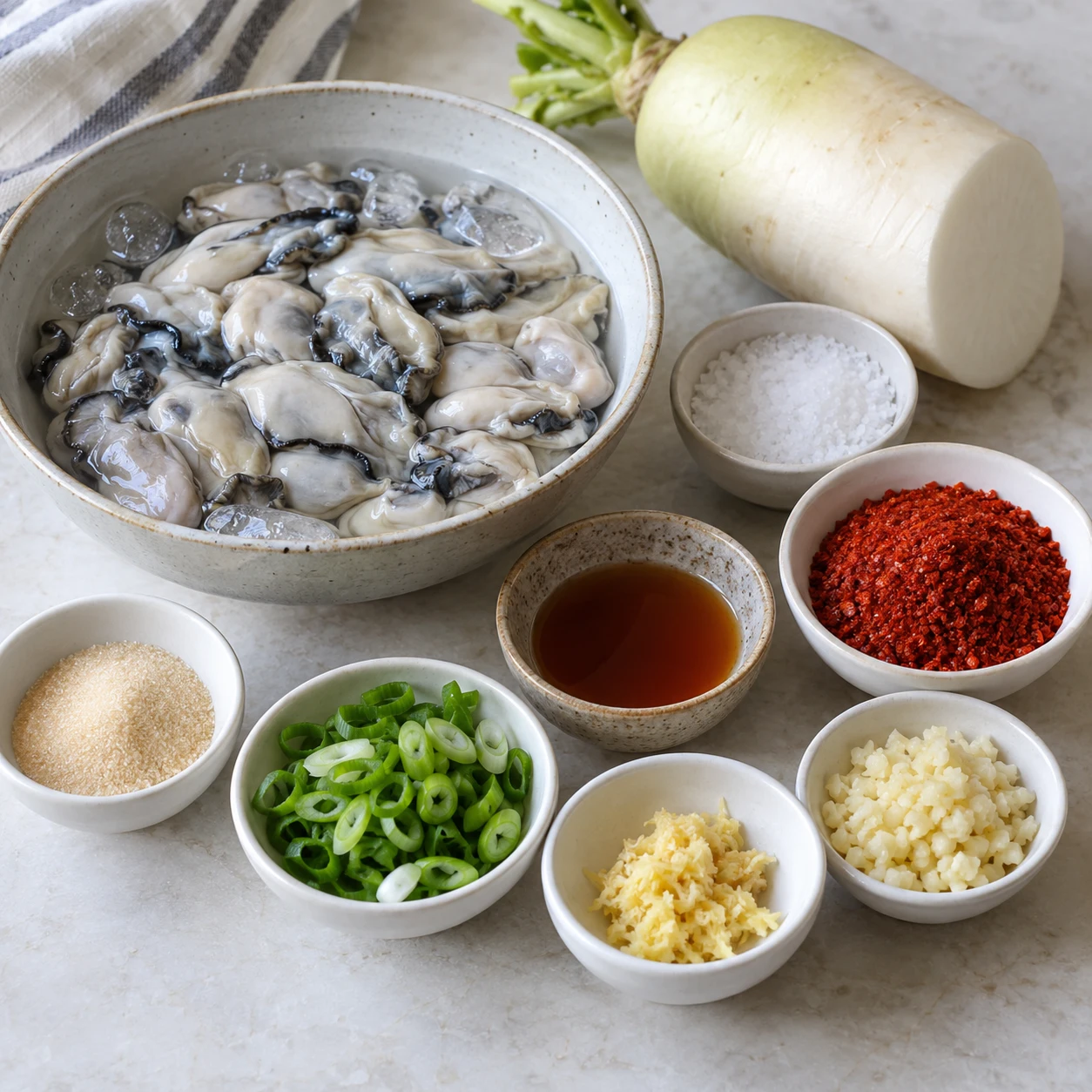
Everyday kitchen measurements
For 3 servings. Use a small 180 ml paper cup, a level eating spoon (about 15 ml) and a small teaspoon (about 5 ml).
How to fill the cup and spoons
Use the same cup and spoons throughout. Their sizes vary, so these amounts are approximate. Spoon flour in loosely and level the top without pressing. Measure vegetables after chopping, without packing them down. The amounts in g/ml are the original reference quantities. For part of a pack, use the specified pack weight and divide the contents evenly.
King Arthur Baking-
Essential
Use one 200 g pack from a regulated supplier with traceable harvest or processing information and an explicit intended raw use. Follow recalls and the use-by label. Raw oysters still carry risk; use the cooked alternative if uncertain.
-
Substitute available
If Korean radish is unavailable
- Use instead
- Daikon radish
- Substitute quantity
- ½ paper cupReference quantity: about 60 g
Use the same loosely filled half cup of thin matchsticks. Salt and squeeze as described for Korean radish.
-
Essential
Keep this ingredient: it provides the main structure or seasoning of this dish.
-
Essential
Keep this ingredient: it provides the main structure or seasoning of this dish.
-
Substitute available
If Fish sauce is unavailable
- Use instead
- Soy sauce
- Substitute quantity
- 1 small teaspoonReference quantity: 5 ml
Use 1 small teaspoon soy sauce in the dressing. It tastes different and may contain wheat and soy; it does not make the oyster dish vegetarian.
-
Substitute available
If Minced garlic is unavailable
- Use instead
- Garlic powder
- Substitute quantity
- ¼ small teaspoonReference quantity: about 0.5 g
Use plain garlic powder at the garlic step. Do not use garlic salt; it changes the salt level.
-
Essential
Keep this ingredient: it provides the main structure or seasoning of this dish.
-
Essential
Keep this ingredient: it provides the main structure or seasoning of this dish.
-
Optional
Omit the spring onion from the final mix if unavailable.
-
Optional
Omit the sesame seeds at the final garnish if unavailable or avoiding sesame. No other quantity changes are needed.
Tap each ingredient as you prepare it. Check product labels for egg, soy, sesame, wheat, fish or shellfish where relevant.
Step-by-step cooking
-
Step 1
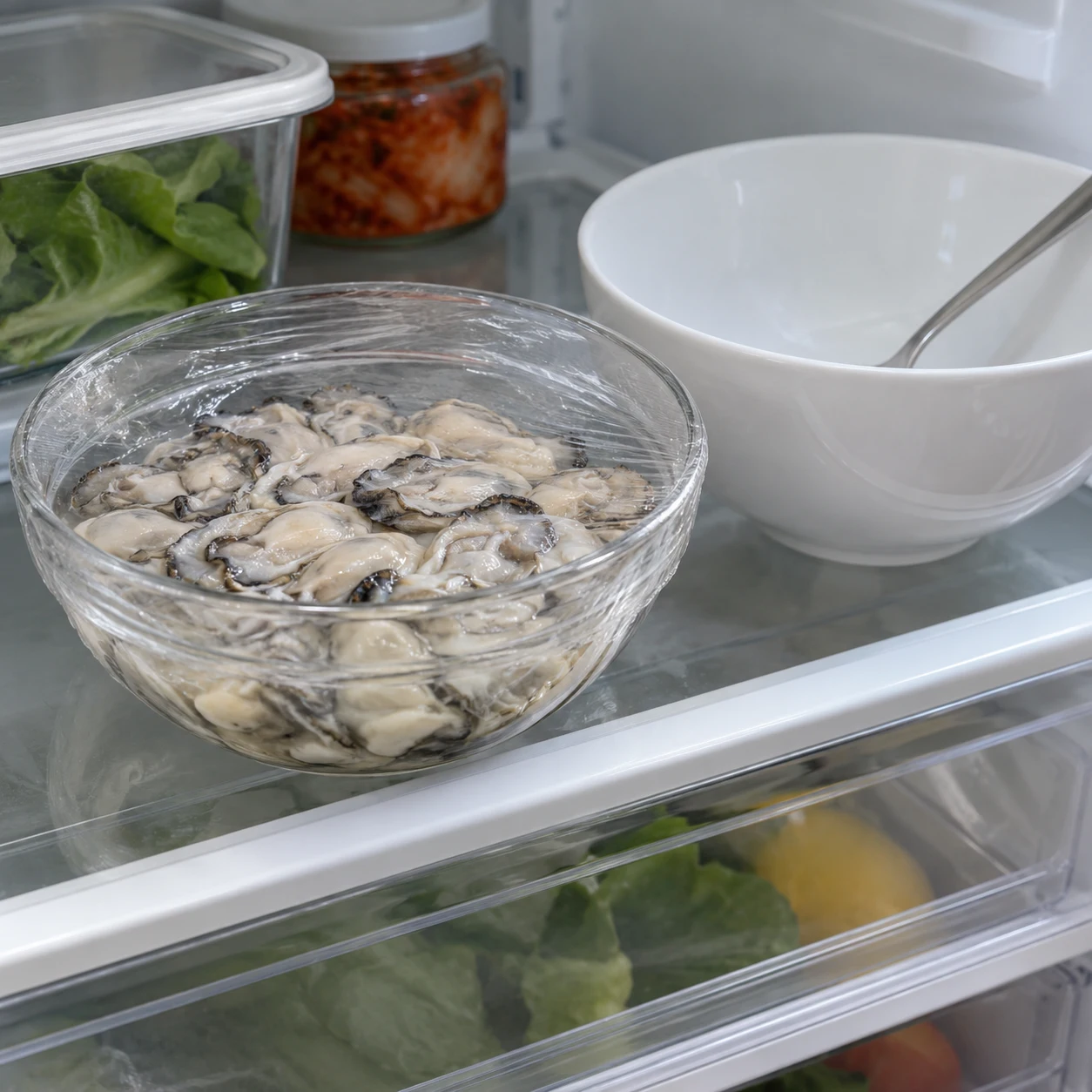
Decide between raw and cooked first. This traditional recipe contains raw oysters, which can carry Vibrio and other harmful germs. Chili, salt and acid do not make them safe. Children, pregnant people, older adults and people with liver disease or weakened immunity should avoid the raw version. Use the fully cooked option in the notes instead. Keep the oysters at 4°C or colder until the final mix.
-
Step 2
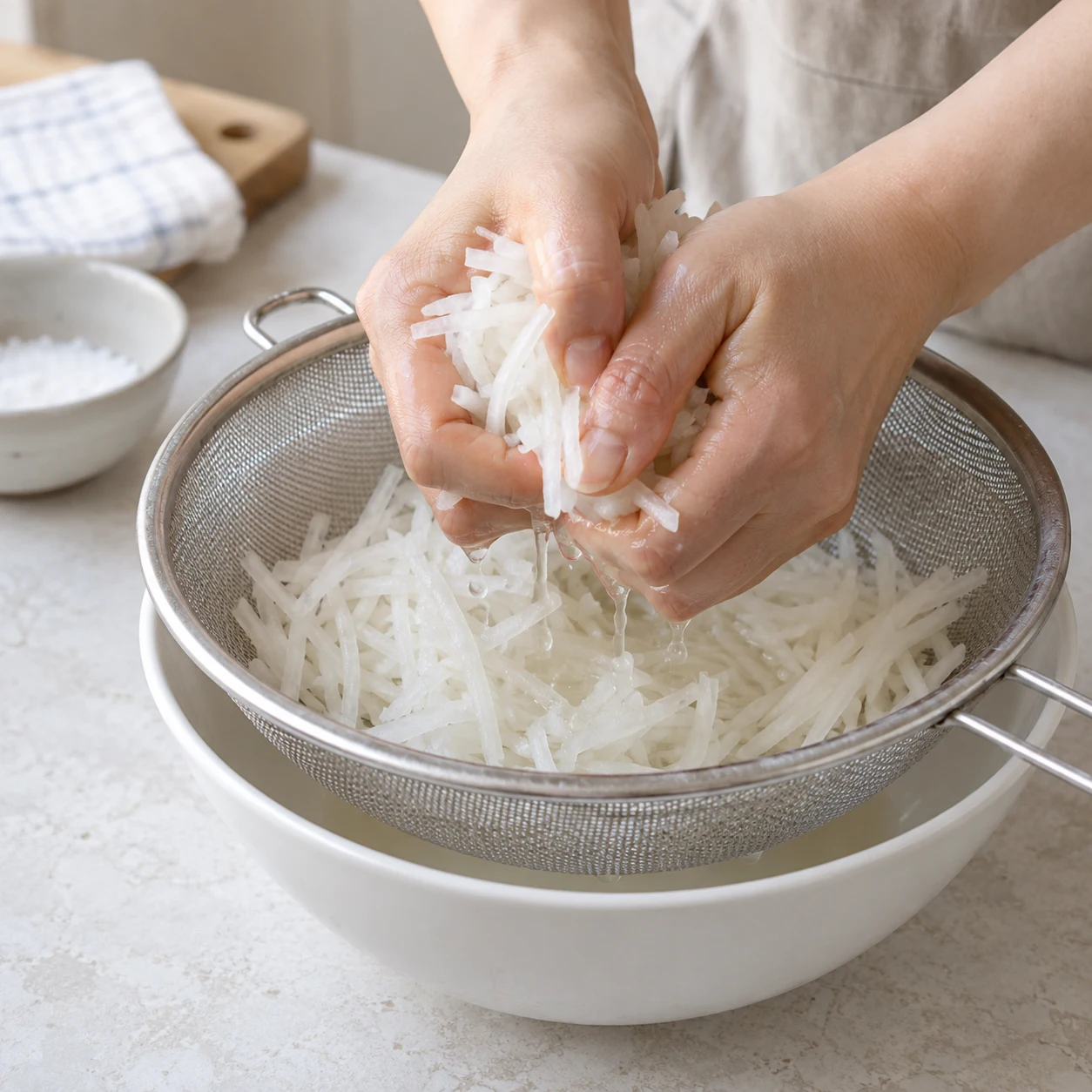
Salt the radish. Peel and cut enough radish into fine matchsticks to loosely fill ½ small paper cup. Toss with ¼ small teaspoon salt and leave for 10 minutes. Gently squeeze out released water with clean hands, then blot dry. Do not add the salty drained water to the dressing.
-
Step 3
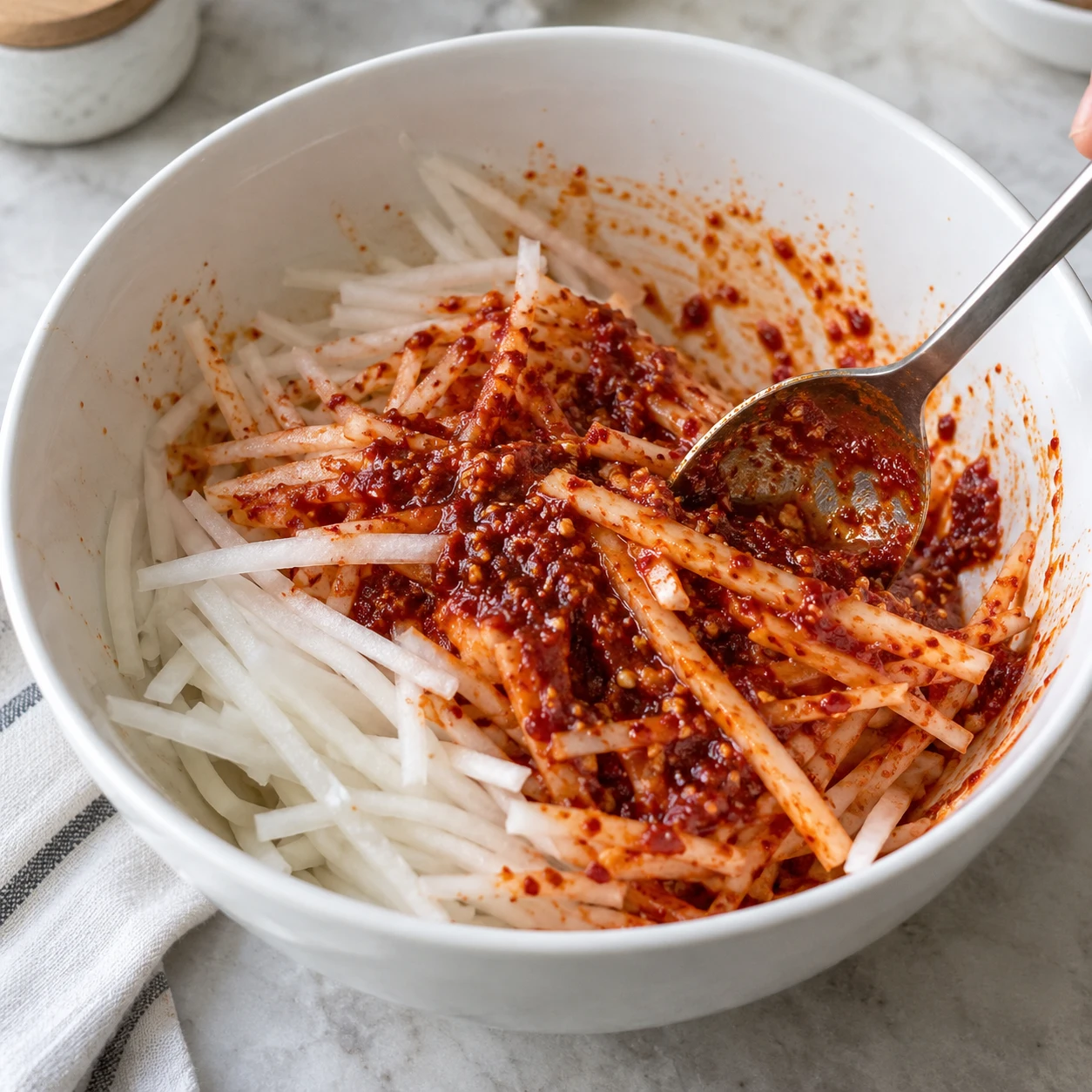
Make a small thick dressing. In a clean bowl, stir 1 level eating spoon chili flakes, 1 small teaspoon fish sauce, 1 small teaspoon minced garlic, ¼ small teaspoon grated ginger and 1 small teaspoon sugar. Add the dry radish and mix so its surface is evenly red. Let stand for 3 minutes while keeping the oysters refrigerated.
-
Step 4
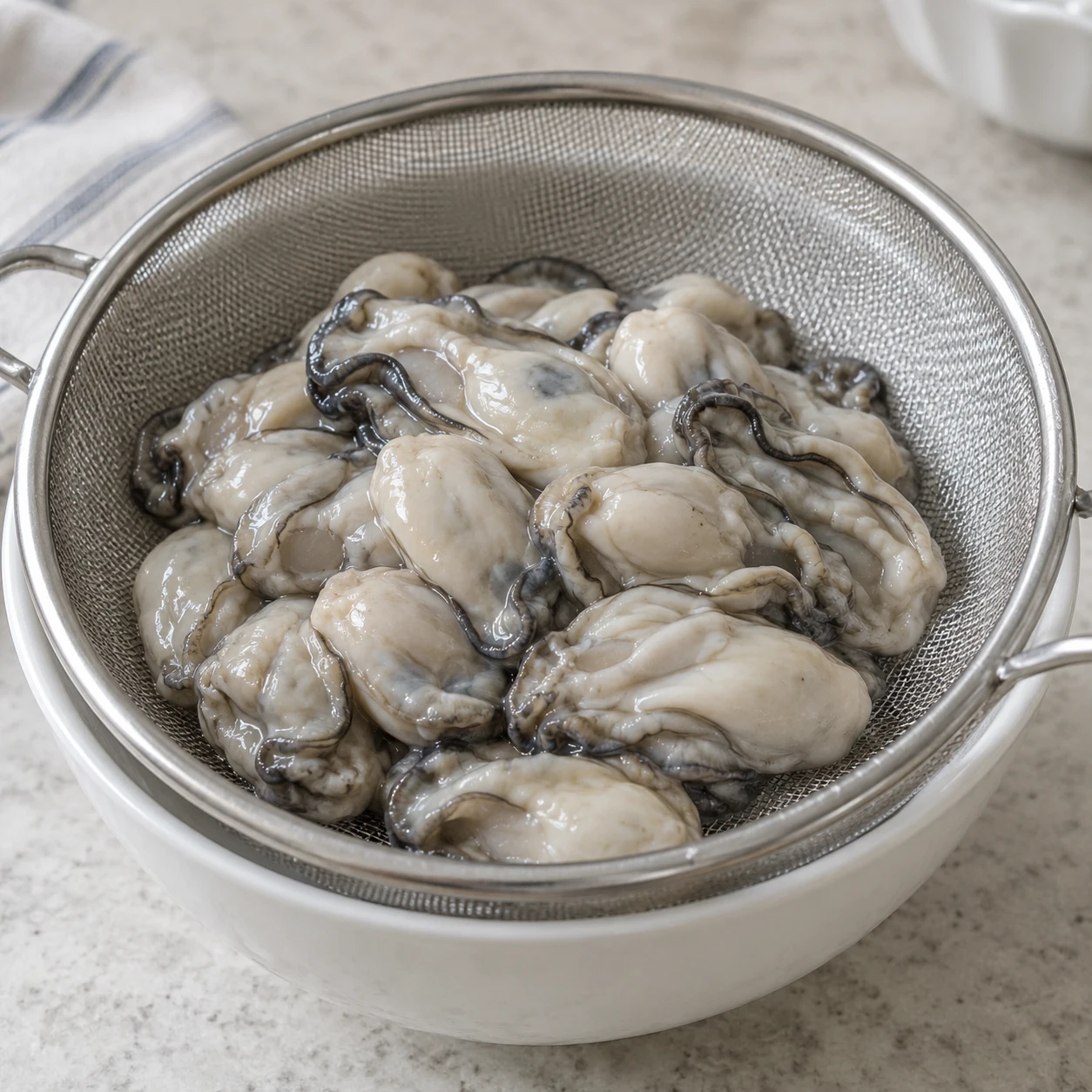
Inspect the oysters just before mixing. Open one 200 g pack of properly chilled oysters intended for raw consumption and check for shell fragments. If gritty, rinse briefly with cold drinking water and drain thoroughly without splashing; rinsing does not kill germs. Do not soak for a long time or leave on the counter. Use clean utensils and wash after handling oyster juices.
-
Step 5
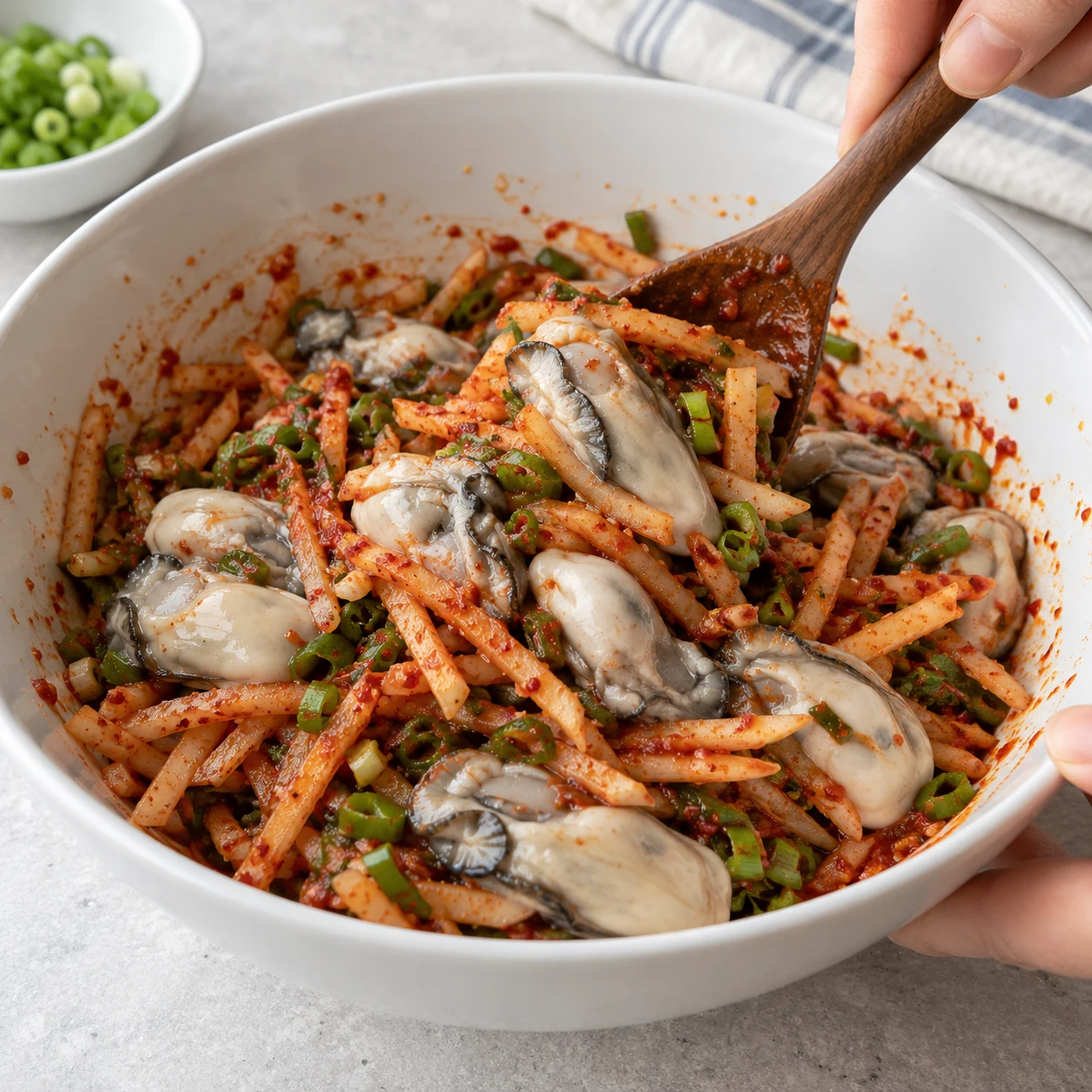
Fold carefully without crushing. Add the cold drained oysters to the radish dressing and gently turn with a spoon a few times. Add finely chopped spring onion if using. Stop once coated so the oysters keep their shape. Do not leave the mixture at room temperature to ferment; this is a freshly dressed dish, not preserved oyster jeotgal.
-
Step 6
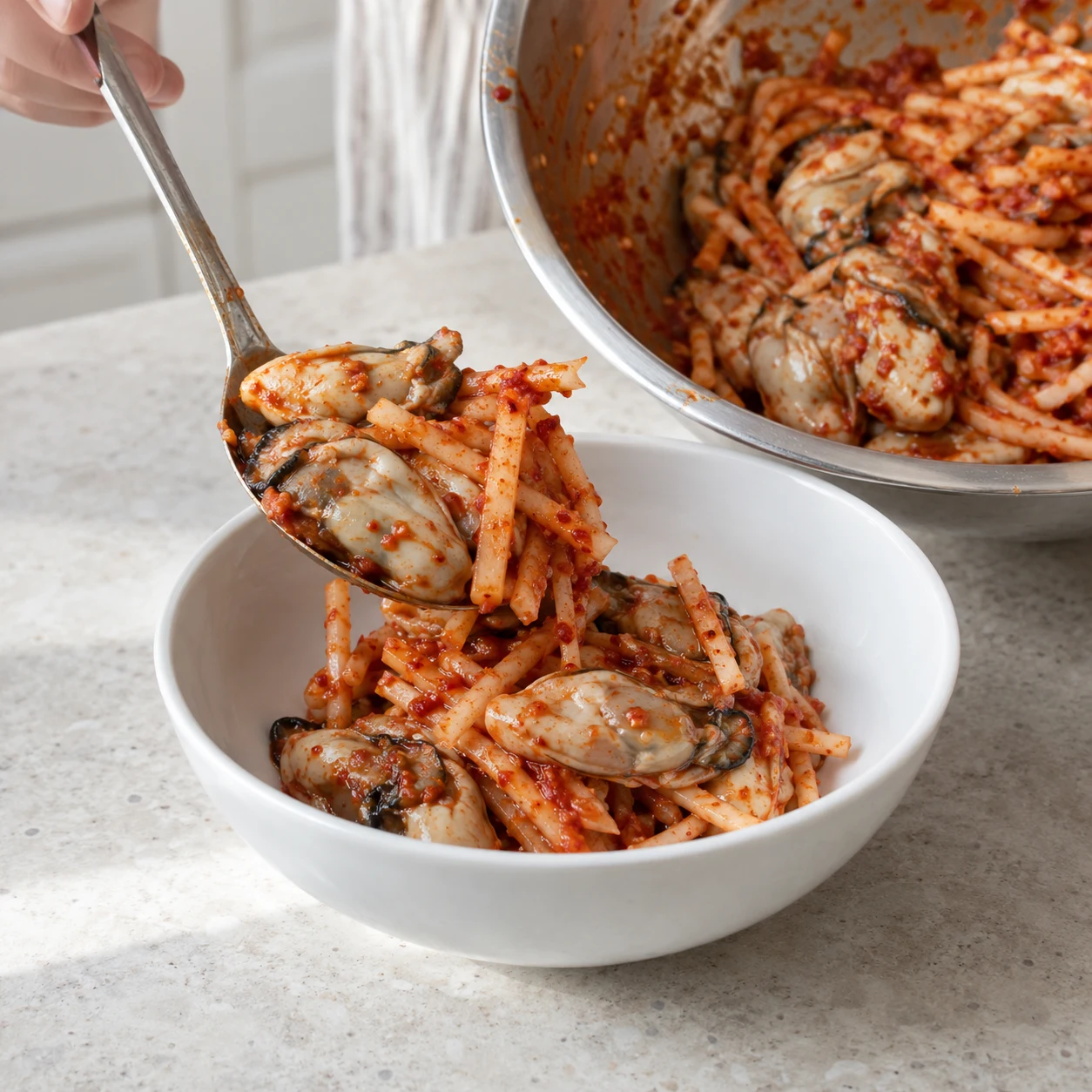
Serve immediately in a small bowl. Sprinkle the optional sesame seeds and eat promptly with a clean utensil, keeping any unserved portion refrigerated. For this raw home version, make only what you will eat at once and discard leftovers after the meal rather than storing for another day. Never return sauce or oysters from the table to unused ingredients.
Finished dish
A level eating spoon here is about 15 ml, a small teaspoon about 5 ml, and a small paper cup about 180 ml. Use the same spoon and cup throughout; household sizes and ingredient weights vary. This traditional version contains raw seafood. Soy sauce, chili, vinegar, alcohol and home freezing do not reliably destroy harmful germs; marinating is not cooking. Even seafood sold for raw consumption can cause illness. Children, pregnant people, older adults and anyone with liver disease or weakened immunity should avoid the raw version and choose the fully cooked alternative. Buy from a regulated supplier who can confirm the seafood is intended for raw consumption and has remained cold; this reduces some risks but does not make it risk-free. Follow local recalls and any shorter supplier use-by limit. Keep at 4°C or colder, thaw only in the refrigerator, and use separate clean utensils. Cover cuts on your hands. Discard seafood with an uncertain cold chain; smell and appearance cannot prove safety. Fully cooked alternative: boil the same quantity of shucked oysters in boiling water for at least 3 minutes after the water returns to a boil. Drain with clean utensils, cool promptly in a clean shallow container and chill before folding into fresh radish dressing. Eat the same day. Cooked oysters are opaque, firmer and smaller than raw oysters; this is a cooked variation. The raw dish remains risky even with short storage. Contains oyster and fish; soy sauce substitutions add possible soy and wheat allergens.
Enjoy every bite
How to enjoy it
Mix with the dressing close to serving time and start with a small bite. Keep a mild cooked egg or rice side separate from the spicy dressing.
Serve it with
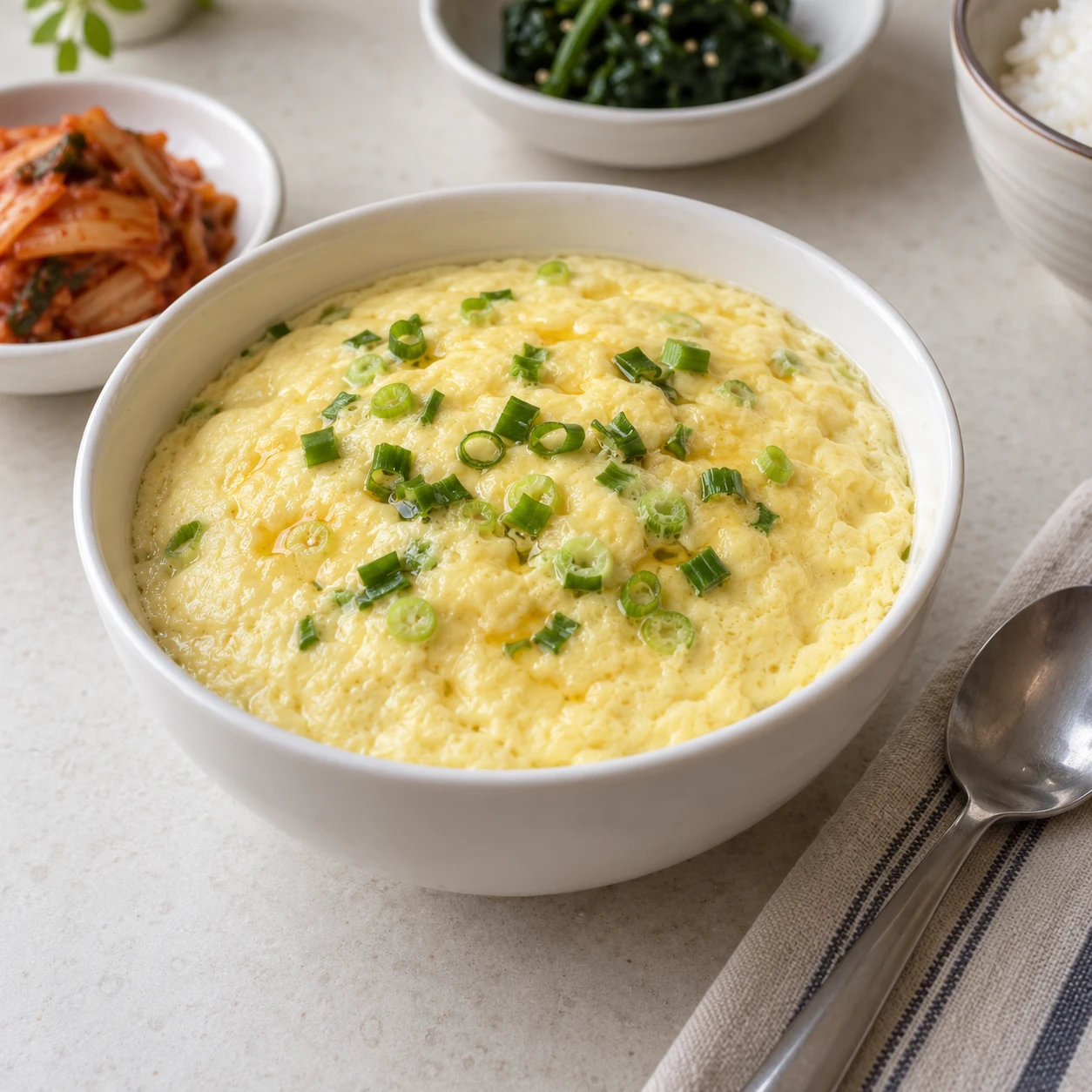
Korean steamed eggs
Soft, gently seasoned egg contrasts with a stronger sauce or a crisp bite.
View recipe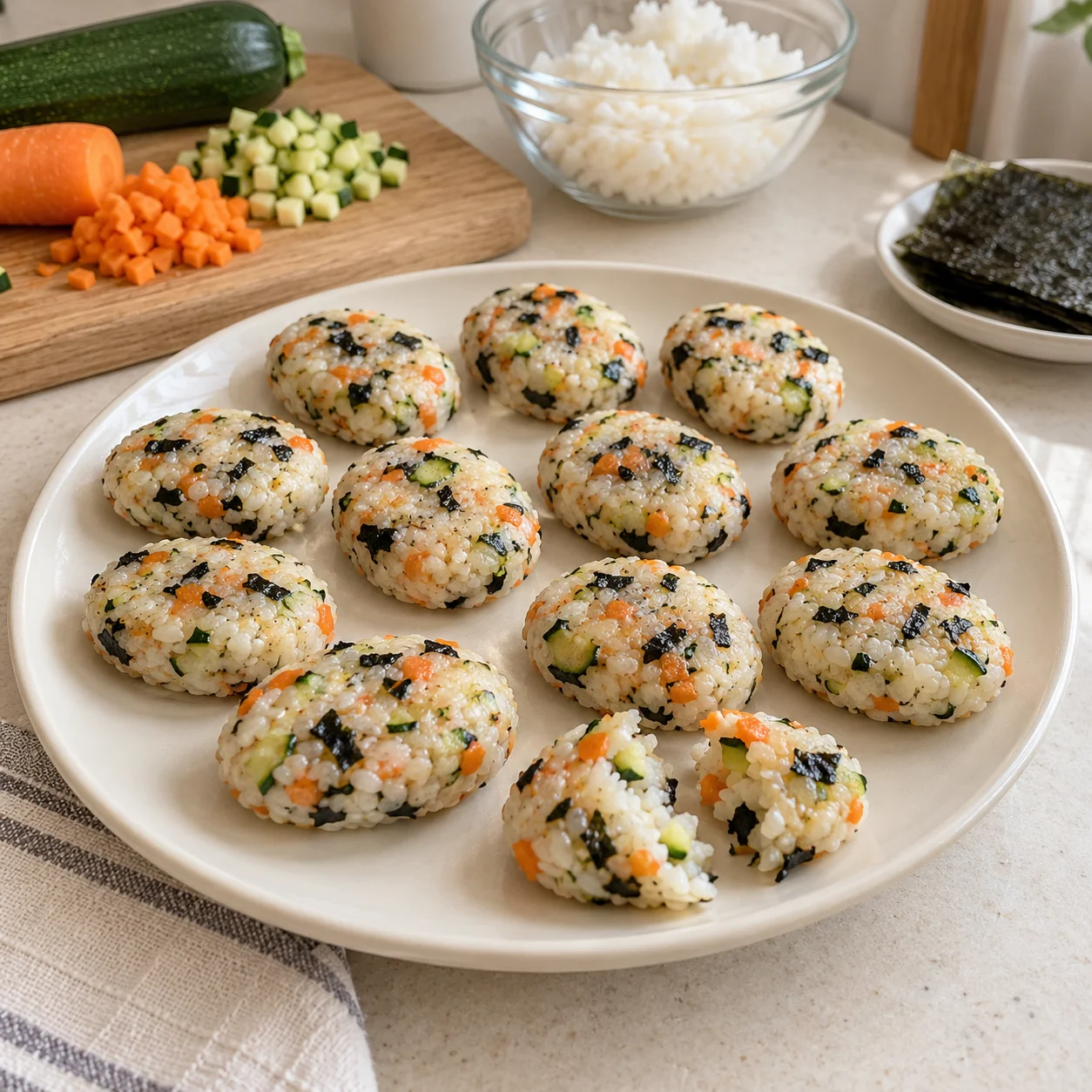
Soft vegetable rice bites (Jumeokbap)
A small rice bite goes well with a more strongly seasoned dish.
View recipe