Gochujang butter pasta
A glossy, gently spicy weeknight pasta. Gochujang, butter and a little pasta water make a sauce that clings to every strand.
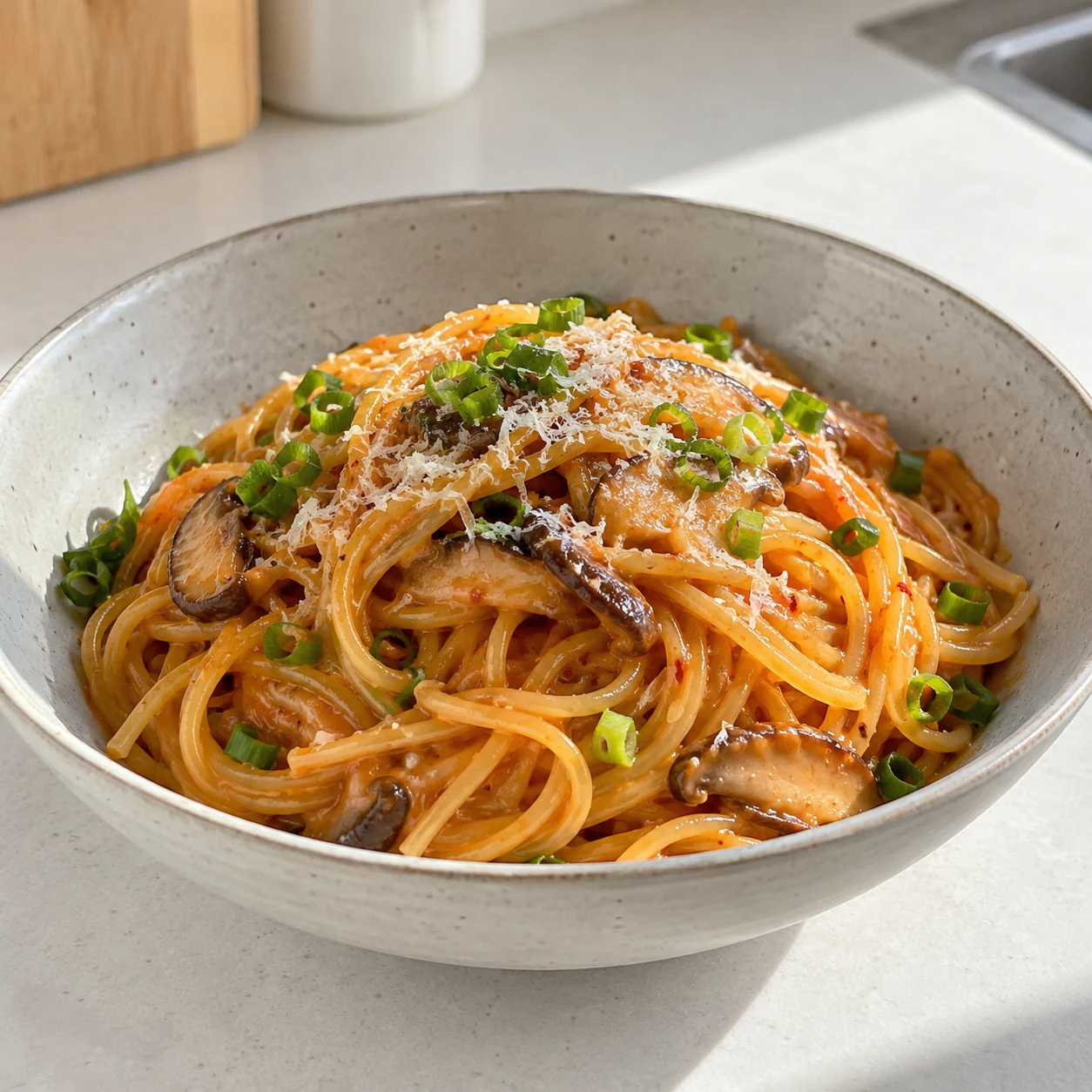
AI-generated cooking illustrations. Follow the written quantities and instructions.
Ingredients
2 servings
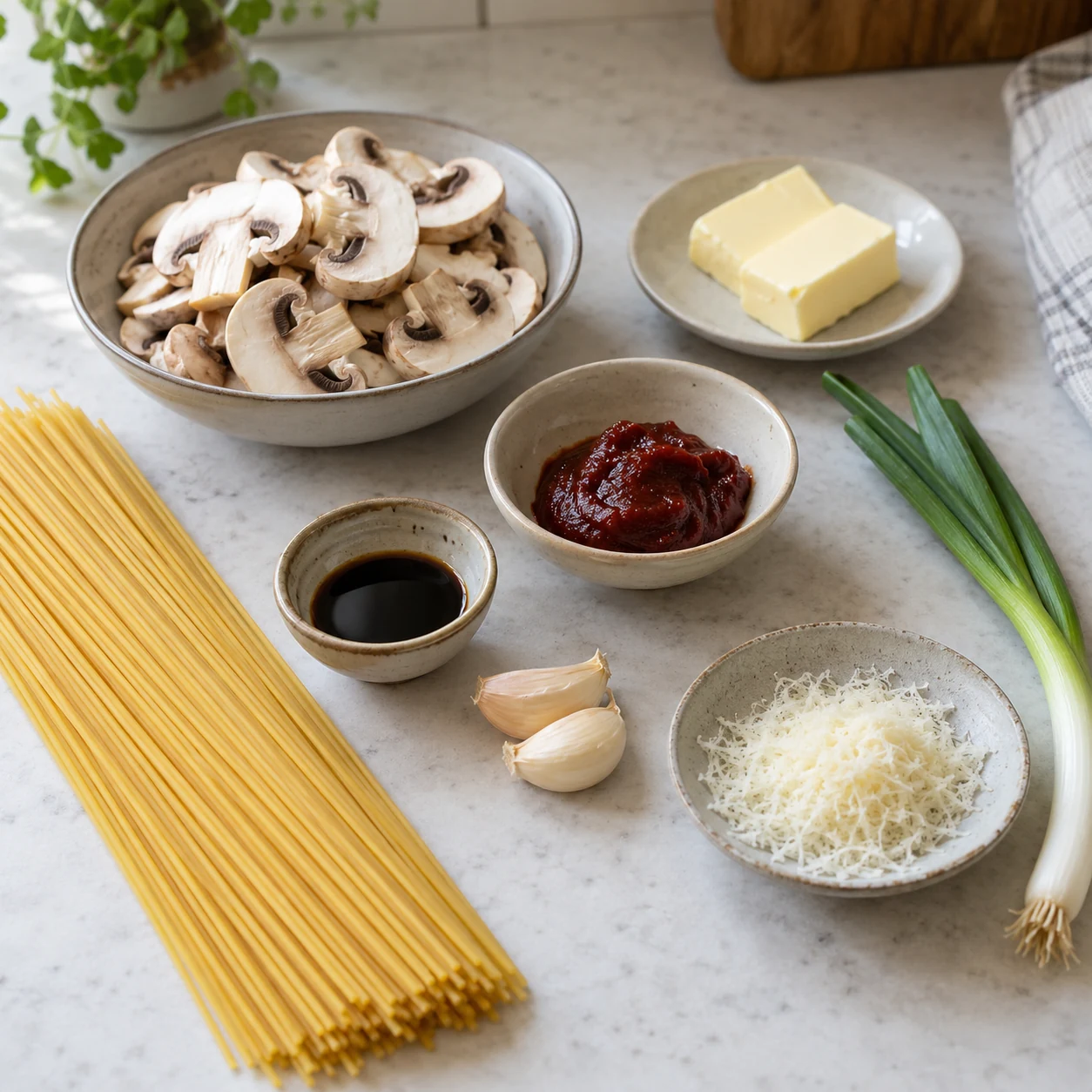
Everyday kitchen measurements
For 2 servings. Use a small 180 ml paper cup, a level eating spoon (about 15 ml) and a small teaspoon (about 5 ml).
How to fill the cup and spoons
Use the same cup and spoons throughout. Their sizes vary, so these amounts are approximate. Spoon flour in loosely and level the top without pressing. Measure vegetables after chopping, without packing them down. The amounts in g/ml are the original reference quantities. For part of a pack, use the specified pack weight and divide the contents evenly.
King Arthur Baking-
Substitute available
If Dry spaghetti is unavailable
- Use instead
- Dry linguine
- Substitute quantity
- about ⅓ of a 500 g packReference quantity: 180 g
Boil to its packet time and save the same amount of starchy cooking water.
-
Essential
This fermented chilli paste defines the flavour. Check its heat and salt on the label; ketchup is not a like-for-like replacement.
-
Substitute available
If Unsalted butter is unavailable
- Use instead
- Mild olive oil
- Substitute quantity
- 2 level eating spoonsReference quantity: 30 ml
Use half to soften the garlic and half after tossing the pasta. The sauce will be less buttery.
-
Essential
Mince finely; do not brown it dark.
-
Substitute available
If Unsweetened soy sauce is unavailable
- Use instead
- Unsweetened tamari
- Substitute quantity
- 1 small teaspoonReference quantity: 5 ml
Use the same amount. Taste after cooking before adding any more salt.
-
Essential
Save before draining. The starch joins the butter and paste; ordinary cold water makes a thinner sauce.
-
Optional
Add for substance or leave out; reduce the pan-cooking time by 2 minutes if omitted.
-
Optional
Sprinkle on top after cooking, or omit.
-
Optional
A finishing topping; omit for a dairy-lighter dish, but the butter remains dairy.
-
Optional
Only add after tasting if the paste is sharper than you like.
Tap each ingredient as you prepare it. Check product labels for egg, soy, sesame, wheat, fish or shellfish where relevant.
Step-by-step cooking
-
Step 1
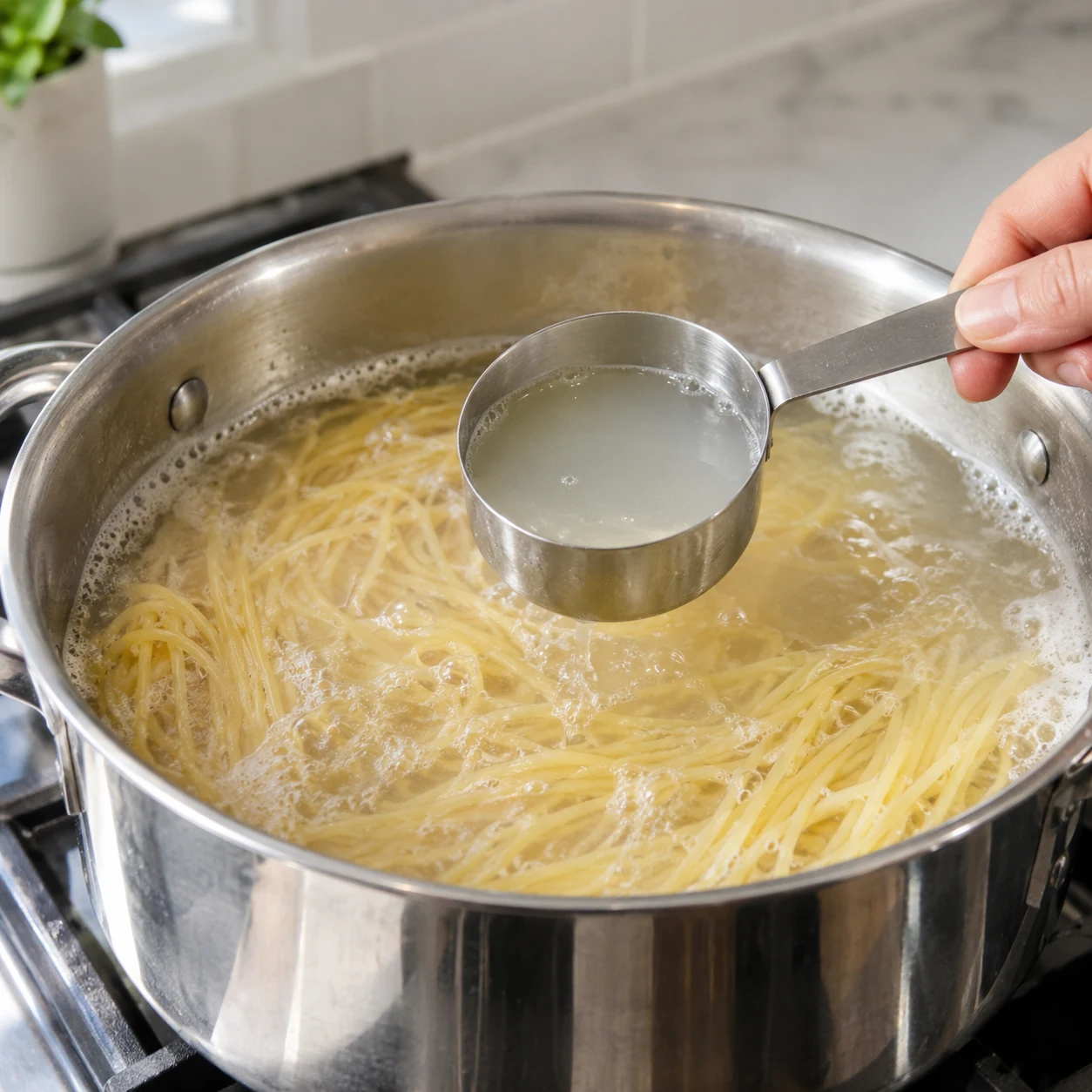
Bring a large pot of water to a boil. Add the 180 g dry spaghetti and cook according to its packet until just tender, usually 8–11 minutes. Stir occasionally. Before draining, scoop out ½ paper cup of cloudy pasta cooking water and set it aside. Drain the pasta; do not rinse.
-
Step 2
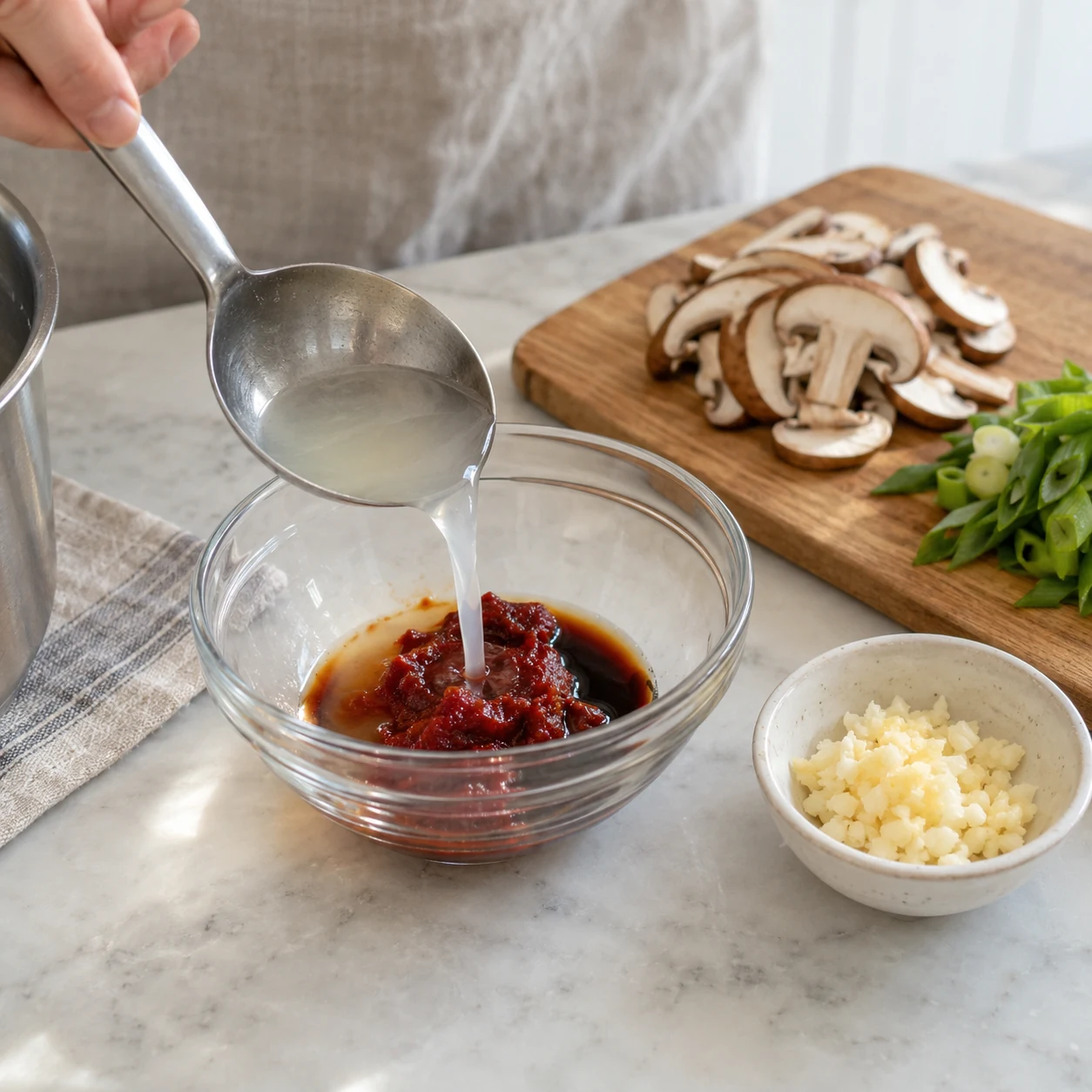
While the pasta boils, slice the optional mushrooms and spring onion. Mince the 2 small garlic cloves. In a small bowl mix the 1 level eating spoon of gochujang with the 1 small teaspoon of soy sauce and 2 level eating spoons of the reserved hot pasta water. Stir until the paste loosens.
-
Step 3
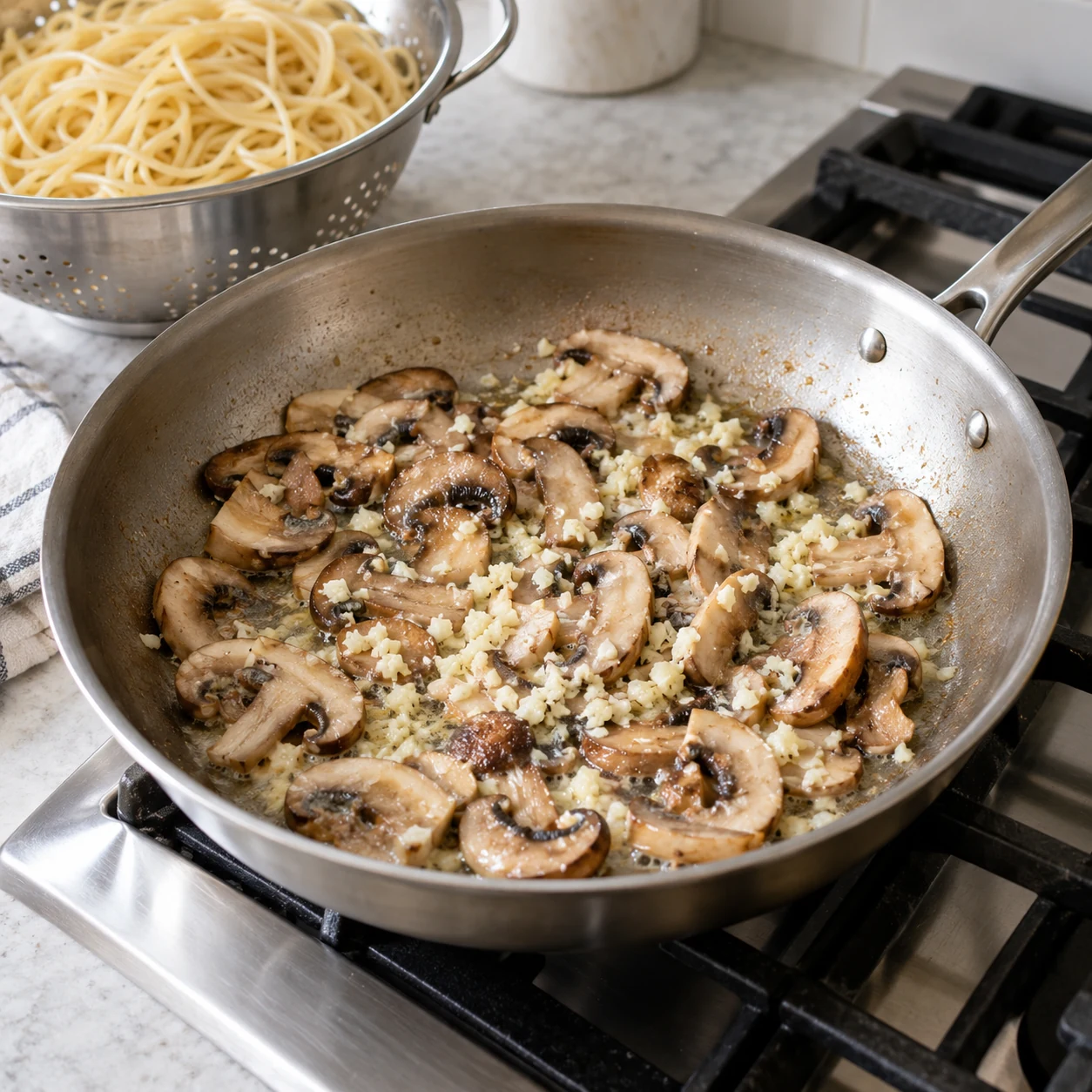
Set a wide pan over medium-low heat. Melt 1 level eating spoon of the butter. Add the minced garlic and optional mushrooms. Stir for 2–3 minutes until the mushrooms are tender and the garlic smells fragrant; lower the heat if the garlic starts to brown.
-
Step 4
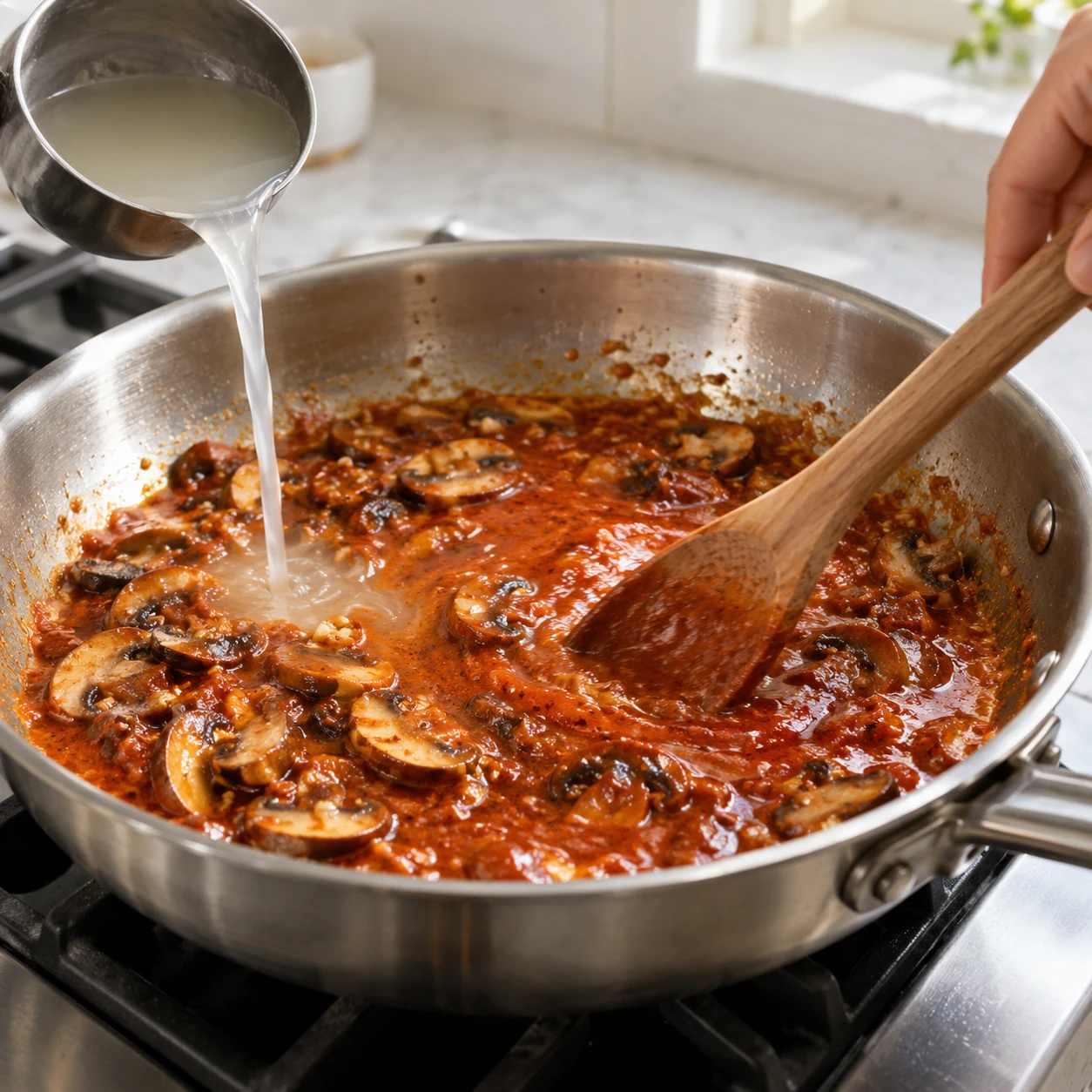
Add the loosened gochujang mixture to the pan and stir for 30 seconds on low heat. Pour in another 2 level eating spoons of reserved pasta water. Keep the sauce at a gentle simmer; do not fry the paste until it burns.
-
Step 5
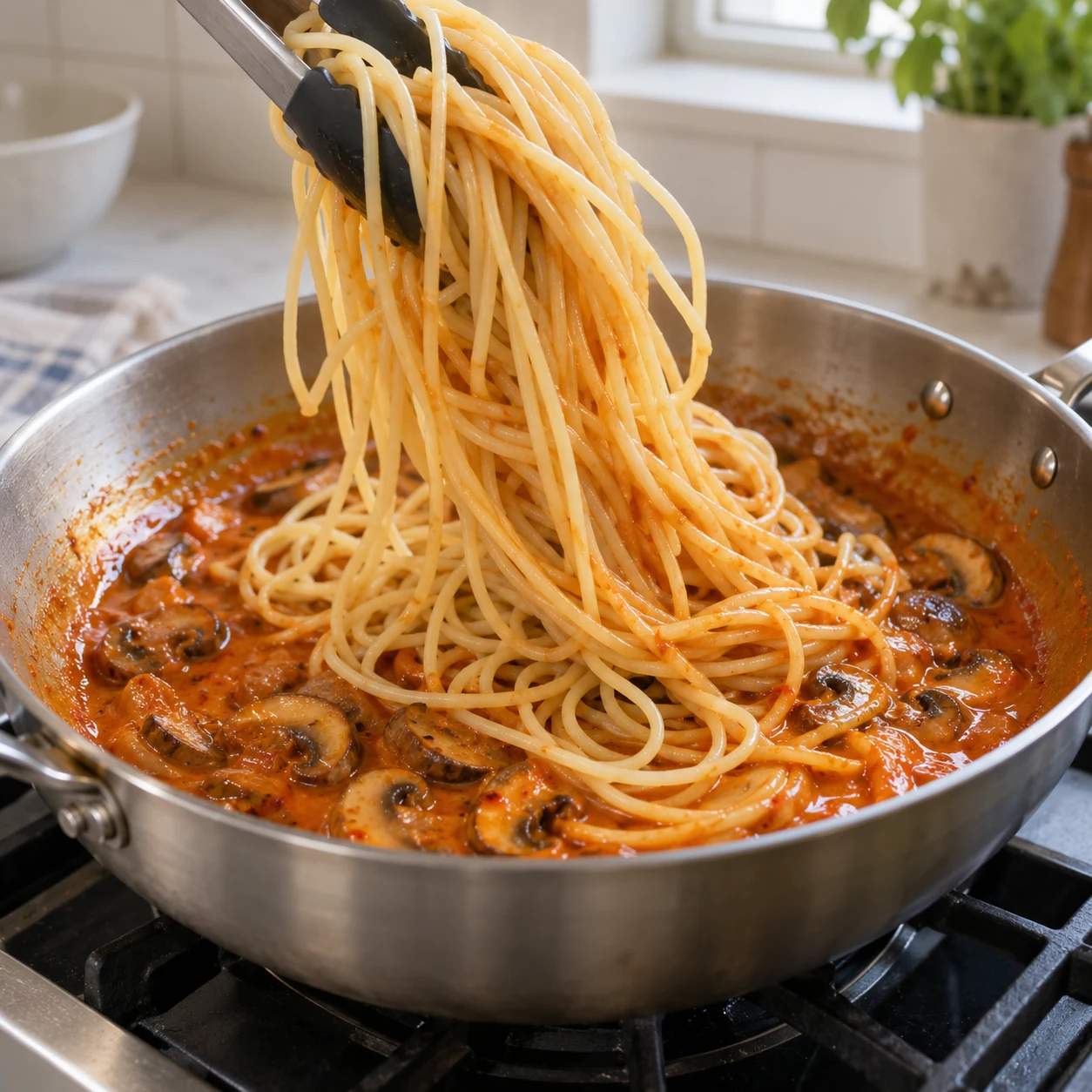
Add the drained pasta and toss for 1–2 minutes until every strand is coated. Add the last 1 level eating spoon of butter, then pour in the remaining reserved water a little at a time until the sauce is glossy and lightly clings to the pasta, not watery. Taste only after the sauce is cooked.
-
Step 6
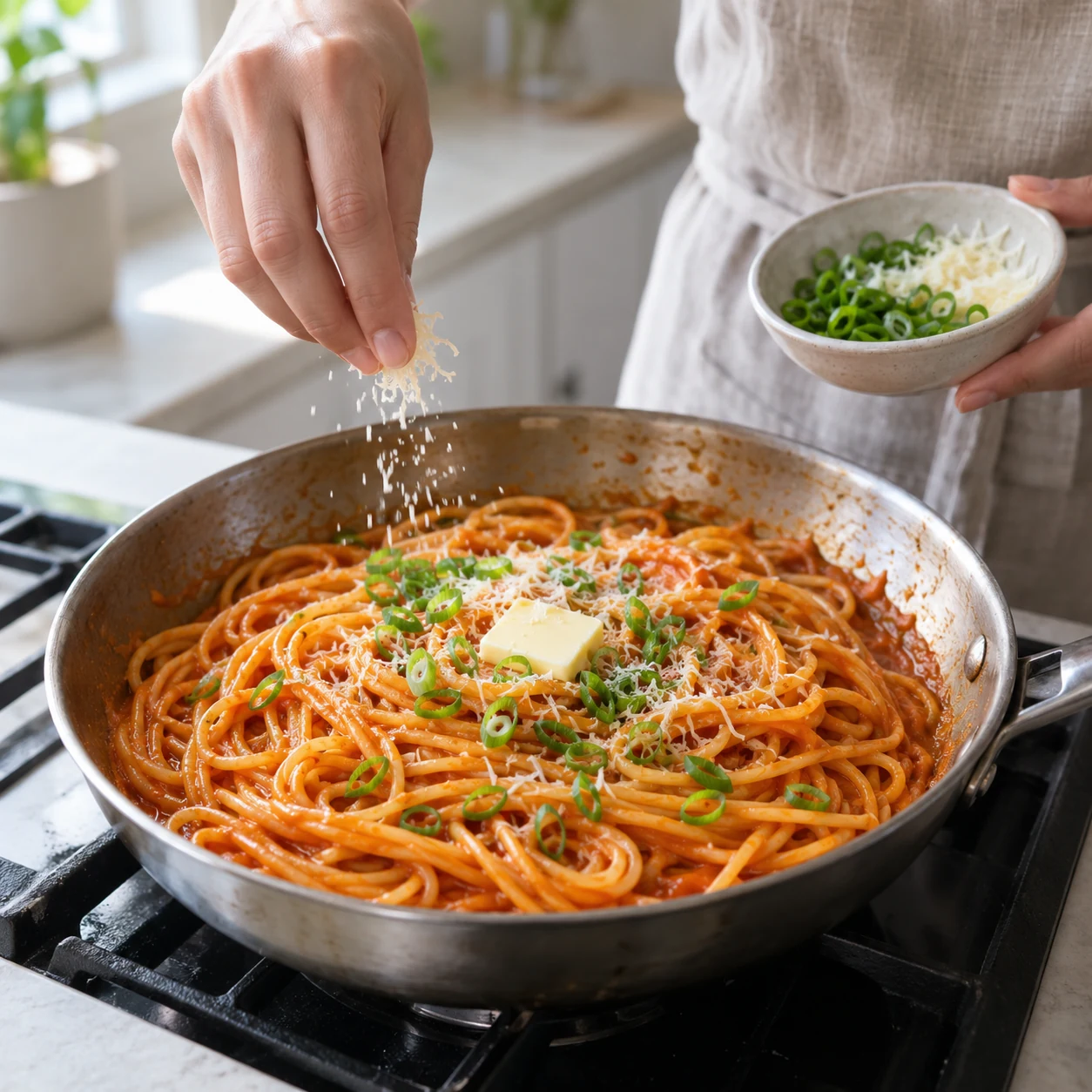
Turn off the heat. Add optional spring onion and grated cheese. If needed, add the optional 1 small teaspoon of sugar after tasting; do not add it automatically. Divide between two bowls and eat hot. Gochujang still has chilli heat even though butter softens the taste.
Finished dish
Makes two main servings. 1 level eating spoon is 15 ml; a paper cup holds 180 ml when full. If cooking on a lower heat, the sauce may need a little more of the reserved pasta water. Check gochujang and soy sauce labels for wheat and soy; cheese and butter contain milk. Refrigerate leftovers in shallow containers within 2 hours, or 1 hour above 32°C. Store at 4°C or below up to 3–4 days and reheat to 74°C, loosening with a spoon of water.
Enjoy every bite
How to enjoy it
Serve immediately while the sauce is silky. Add a crisp cucumber side dish for contrast; keep the cheese optional if the gochujang is already salty.
Serve it with
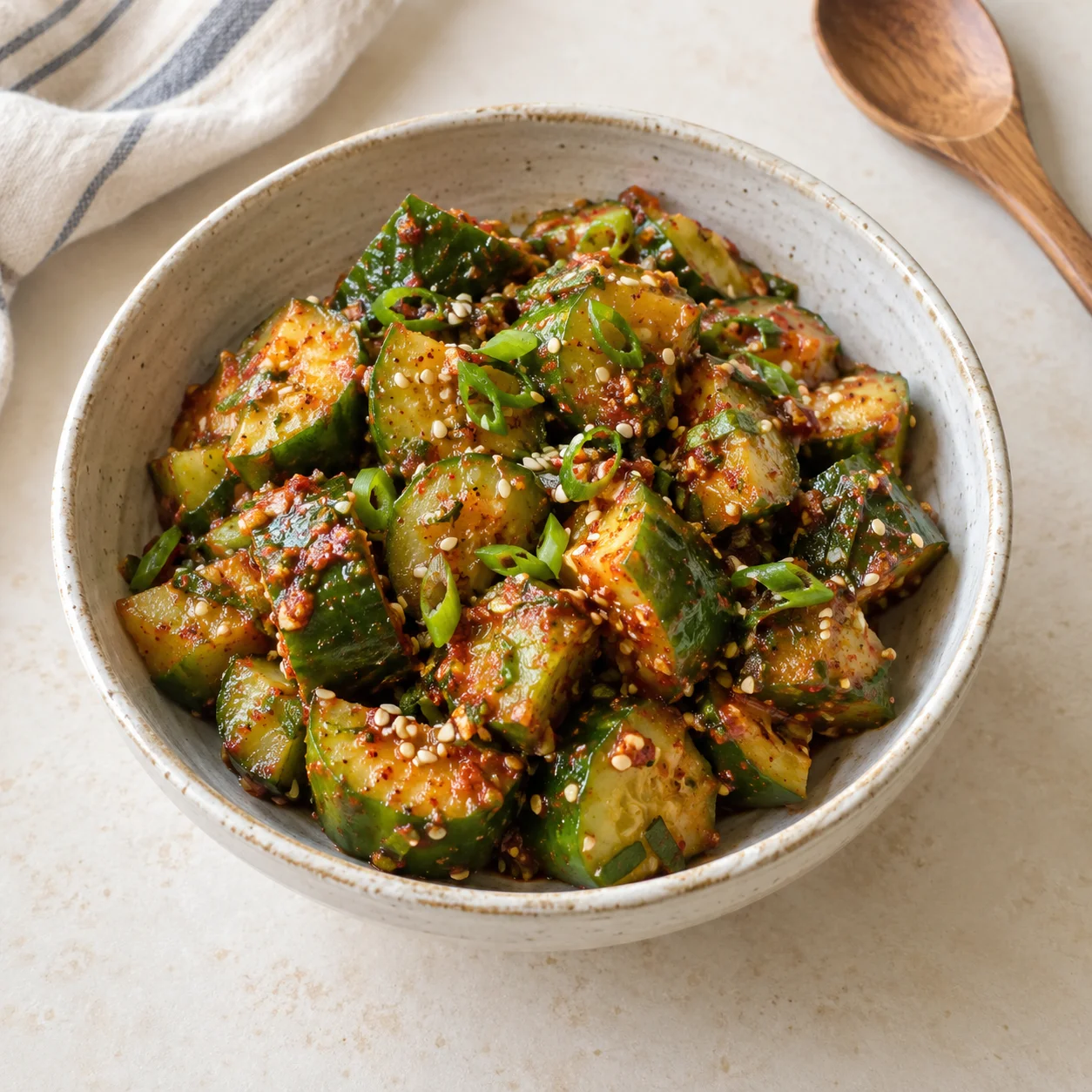
Korean spicy cucumber salad (oi-muchim)
A crisp bite contrasts with the softer main dish; keep its sauce separate.
View recipe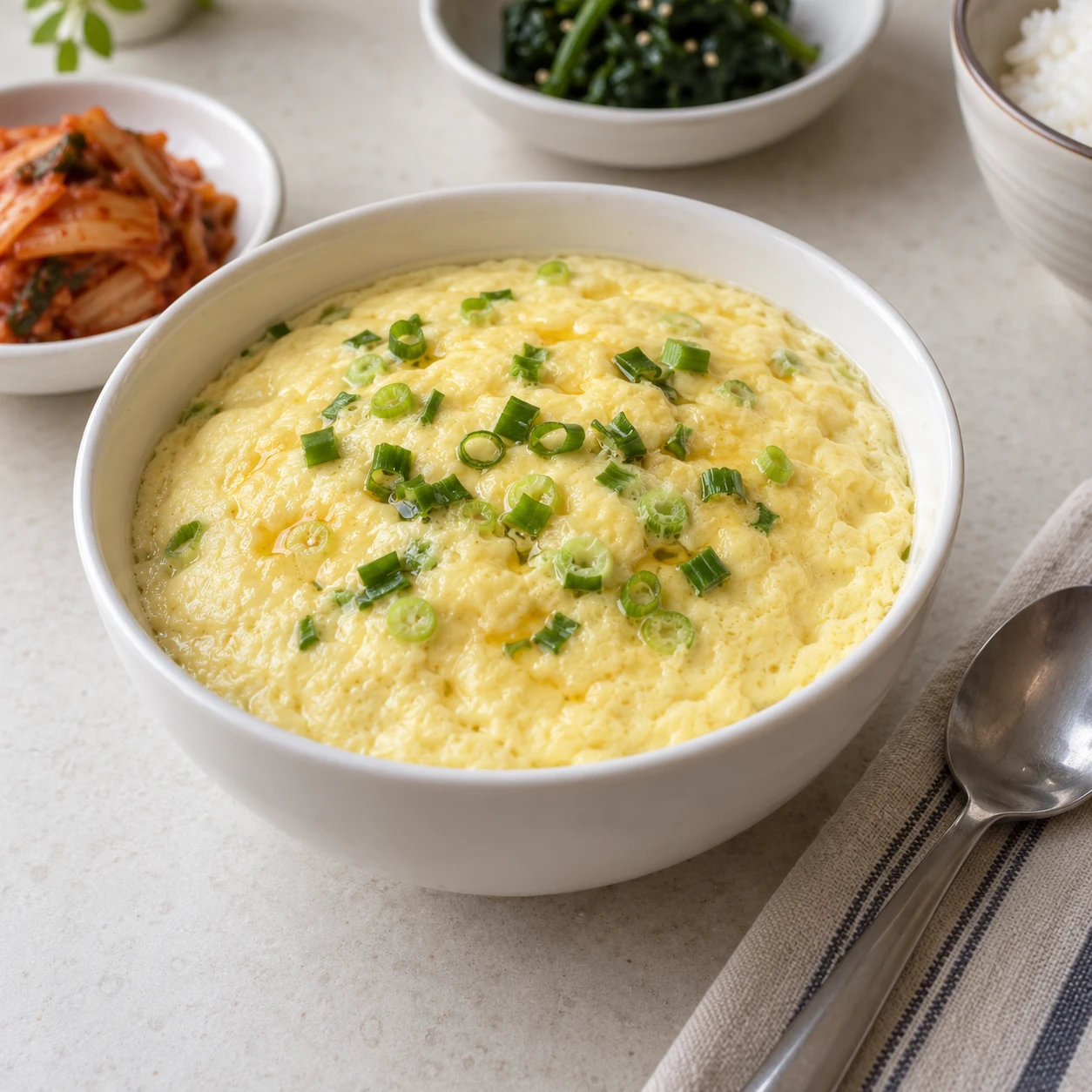
Korean steamed eggs
Soft, gently seasoned egg contrasts with a stronger sauce or a crisp bite.
View recipe