Ganjang gejang — soy-marinated raw crab
Traditional raw crab in a cooled aromatic soy marinade, with 12 hours of refrigerated marinating included in the time. Raw seafood carries a foodborne-illness risk; a fully cooked variation is explained in the notes.
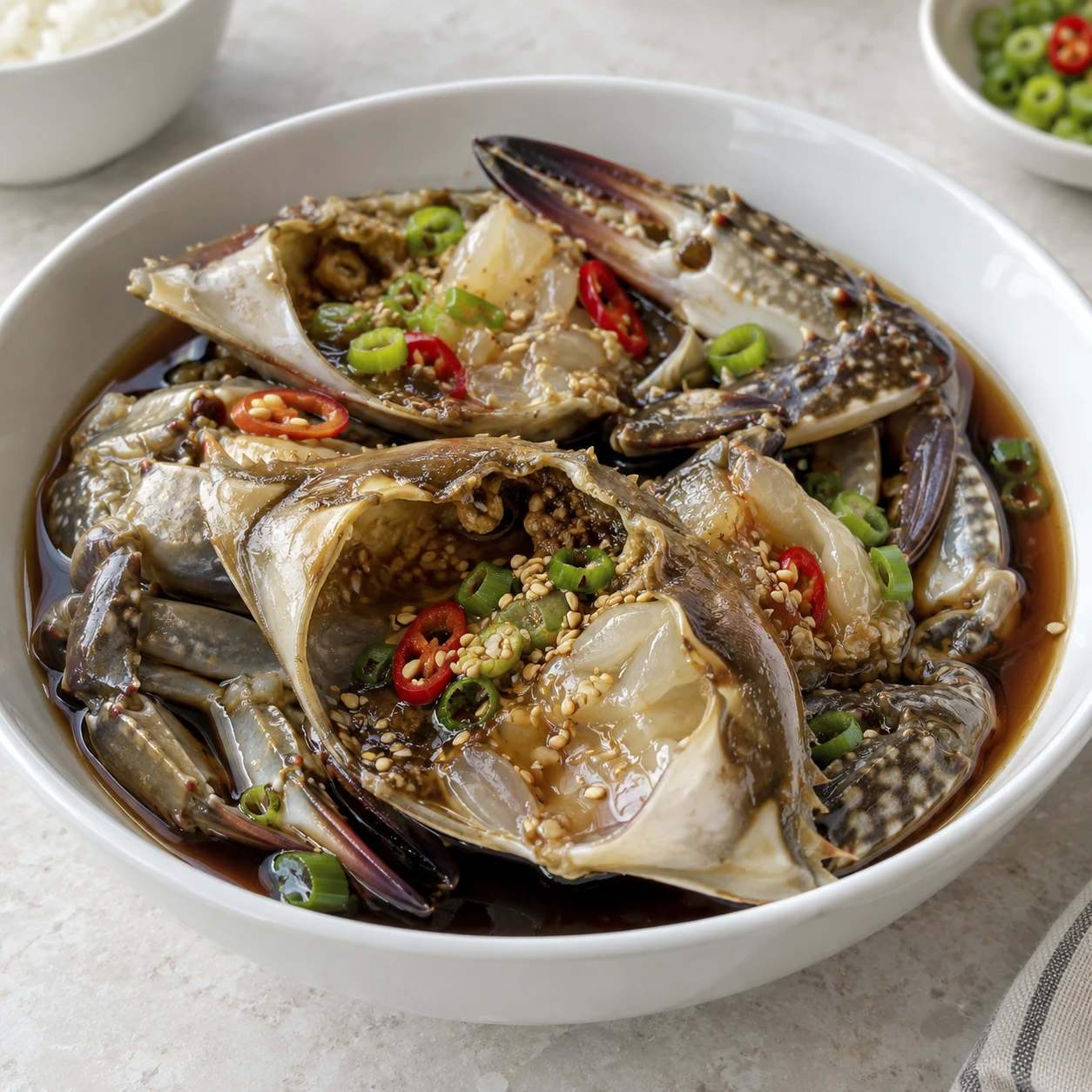
AI-generated cooking illustrations. Follow the written quantities and instructions.
Ingredients
3 servings
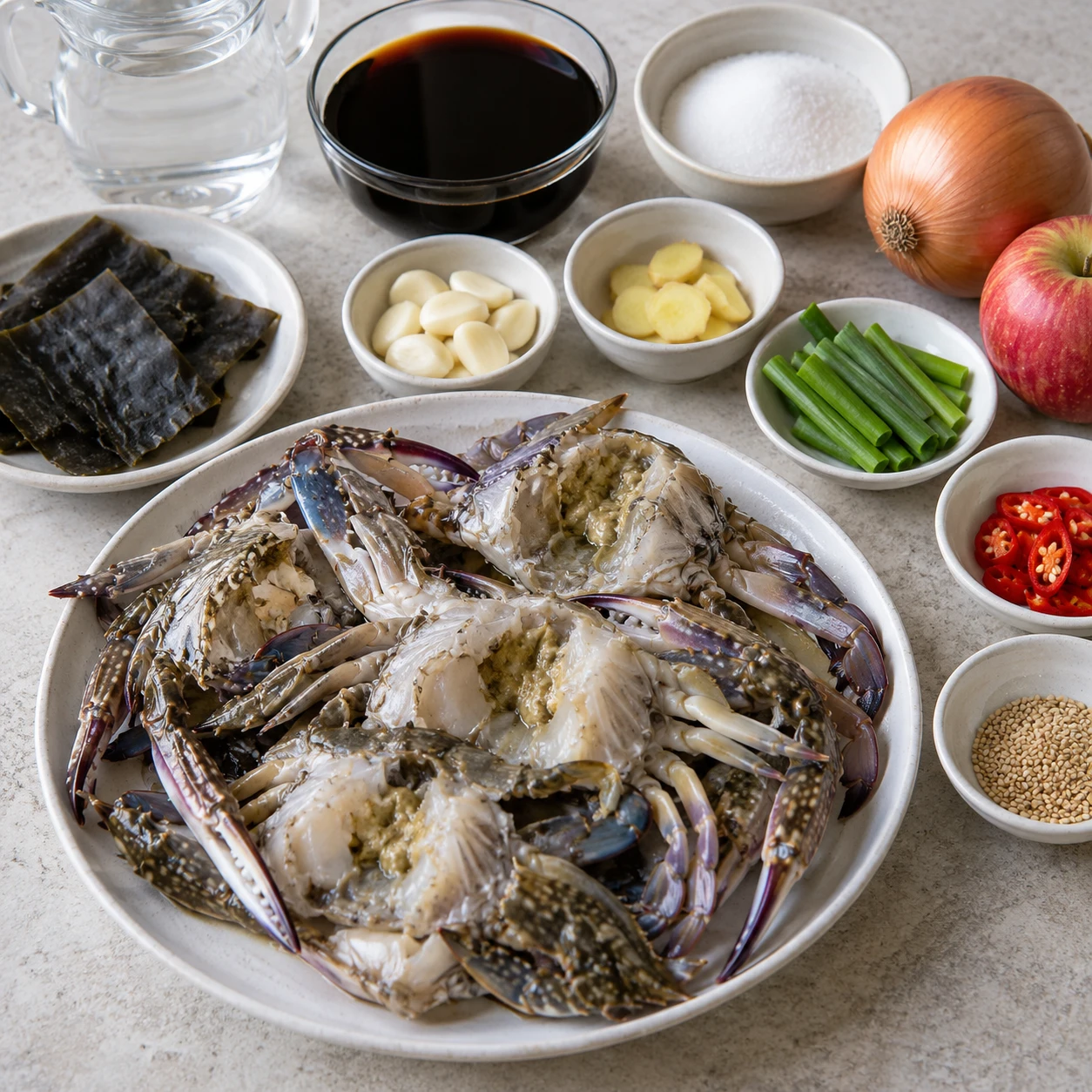
Everyday kitchen measurements
For 3 servings. Use a small 180 ml paper cup, a level eating spoon (about 15 ml) and a small teaspoon (about 5 ml).
How to fill the cup and spoons
Use the same cup and spoons throughout. Their sizes vary, so these amounts are approximate. Spoon flour in loosely and level the top without pressing. Measure vegetables after chopping, without packing them down. The amounts in g/ml are the original reference quantities. For part of a pack, use the specified pack weight and divide the contents evenly.
King Arthur Baking-
Essential
This is the defining ingredient of traditional raw gejang. Ask a regulated supplier specifically about raw consumption and cold-chain handling; ordinary thawed cooking crab is not interchangeable. Raw use still carries risk. Choose the cooked variation if uncertain.
-
Substitute available
If Soy sauce is unavailable
- Use instead
- Tamari
- Substitute quantity
- 8 level eating spoonsReference quantity: 120 ml
Use the same spoon quantity of regular-strength tamari. Saltiness varies, so taste before adding any extra seasoning. Check the label if avoiding wheat.
-
Essential
Keep this ingredient: it provides the main structure or seasoning of this dish.
-
Essential
Keep this ingredient: it provides the main structure or seasoning of this dish.
-
Essential
Keep this ingredient: it provides the main structure or seasoning of this dish.
-
Essential
Keep this ingredient: it provides the main structure or seasoning of this dish.
-
Essential
Keep this ingredient: it provides the main structure or seasoning of this dish.
-
Optional
Omit the apple from the marinade simmer if unavailable. Keep the sugar and water unchanged; the marinade will have less fruity aroma.
-
Optional
Omit the kelp and its removal step if unavailable. No other adjustment is needed.
-
Optional
Omit the spring onion garnish if unavailable.
-
Optional
Omit the chili garnish for a mild version.
-
Optional
Omit the sesame seeds at the final garnish if unavailable or avoiding sesame. No other quantity changes are needed.
Tap each ingredient as you prepare it. Check product labels for egg, soy, sesame, wheat, fish or shellfish where relevant.
Step-by-step cooking
-
Step 1
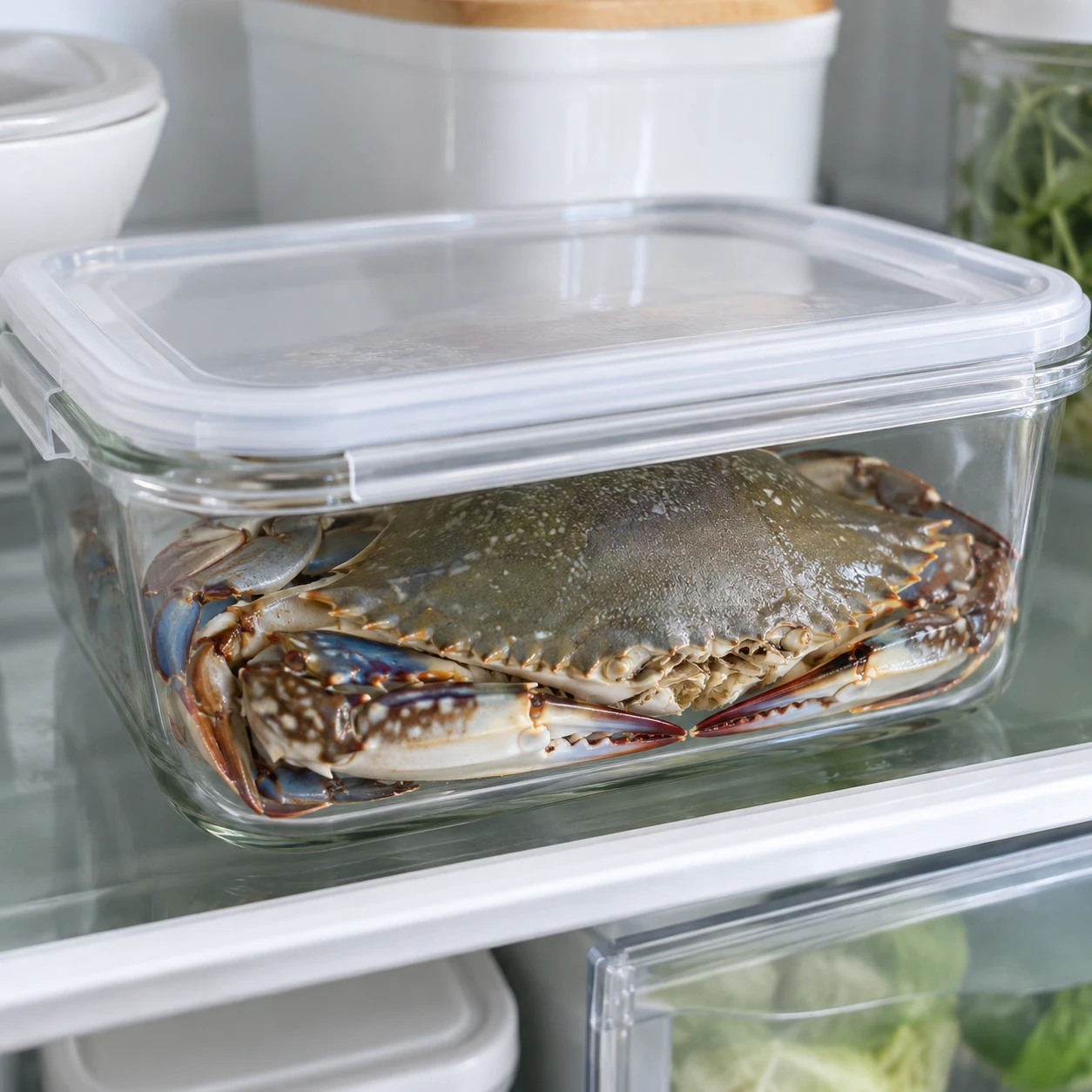
Read before starting: this recipe leaves the crab raw. Marinating does not kill all harmful germs. People at increased risk should use the fully cooked variation in the notes. Keep the crab at 4°C or colder and use only a supplier-confirmed product intended for raw consumption. If you cannot confirm its handling or intended use, cook it instead. Prepare a clean lidded food container and separate seafood tools.
-
Step 2
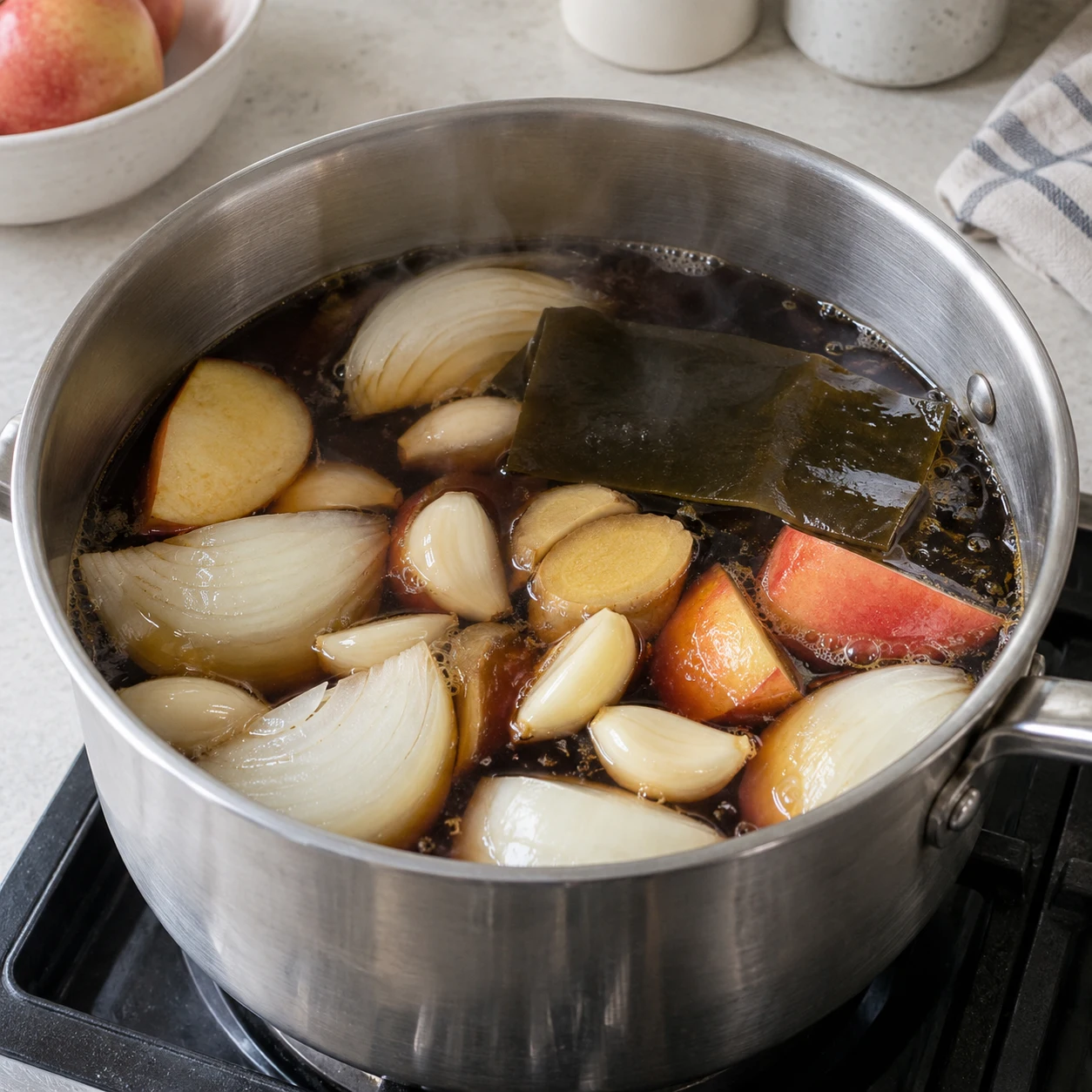
Simmer the marinade before touching the crab. Combine 8 level eating spoons soy sauce, 2 small paper cups water and 2 level eating spoons sugar in a saucepan. Add sliced ½ onion, 4 lightly crushed garlic cloves, 2 thin ginger slices, optional ¼ apple and optional kelp. Bring to a boil, remove the kelp after 5 minutes and gently simmer the remaining mixture for another 5 minutes.
-
Step 3
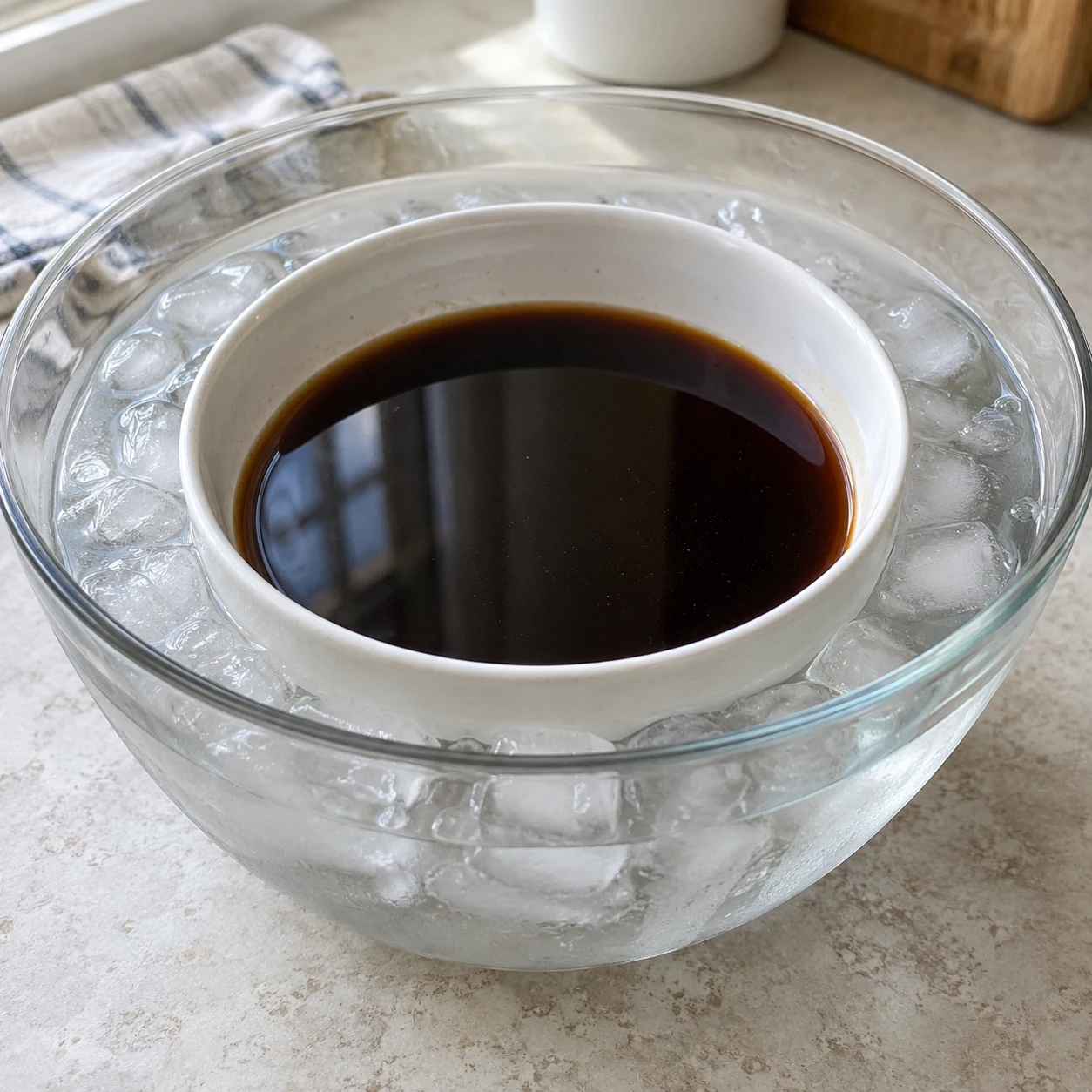
Cool completely and chill. Strain the marinade into a clean heat-safe shallow container. Set it in an ice-water bath, stirring with a clean spoon, then refrigerate until 4°C or colder. Do not pour warm marinade over raw crab. Cooling should take about 30 minutes with an ice bath; allow longer if needed, and keep the crab refrigerated while waiting.
-
Step 4
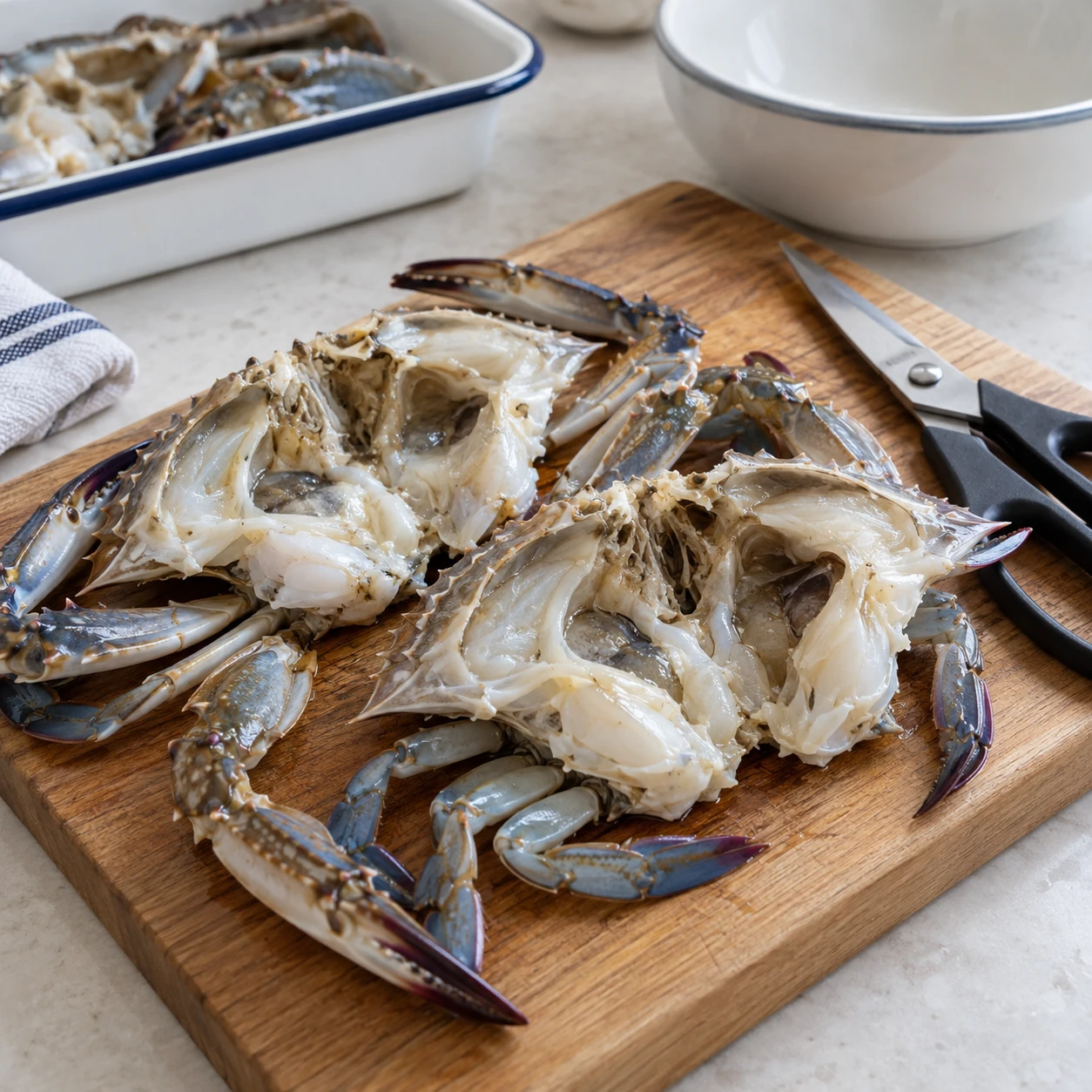
Prepare the cold crab. Prefer crab professionally cleaned for this purpose. Remove any remaining gills, stomach sac and apron, check for shell fragments and cut each body into 2 pieces with dedicated shears. Briefly rinse if needed without splashing and drain well; rinsing does not sanitize it. Do not leave the crab sitting in water. Clean hands, sink, board and shears afterward.
-
Step 5
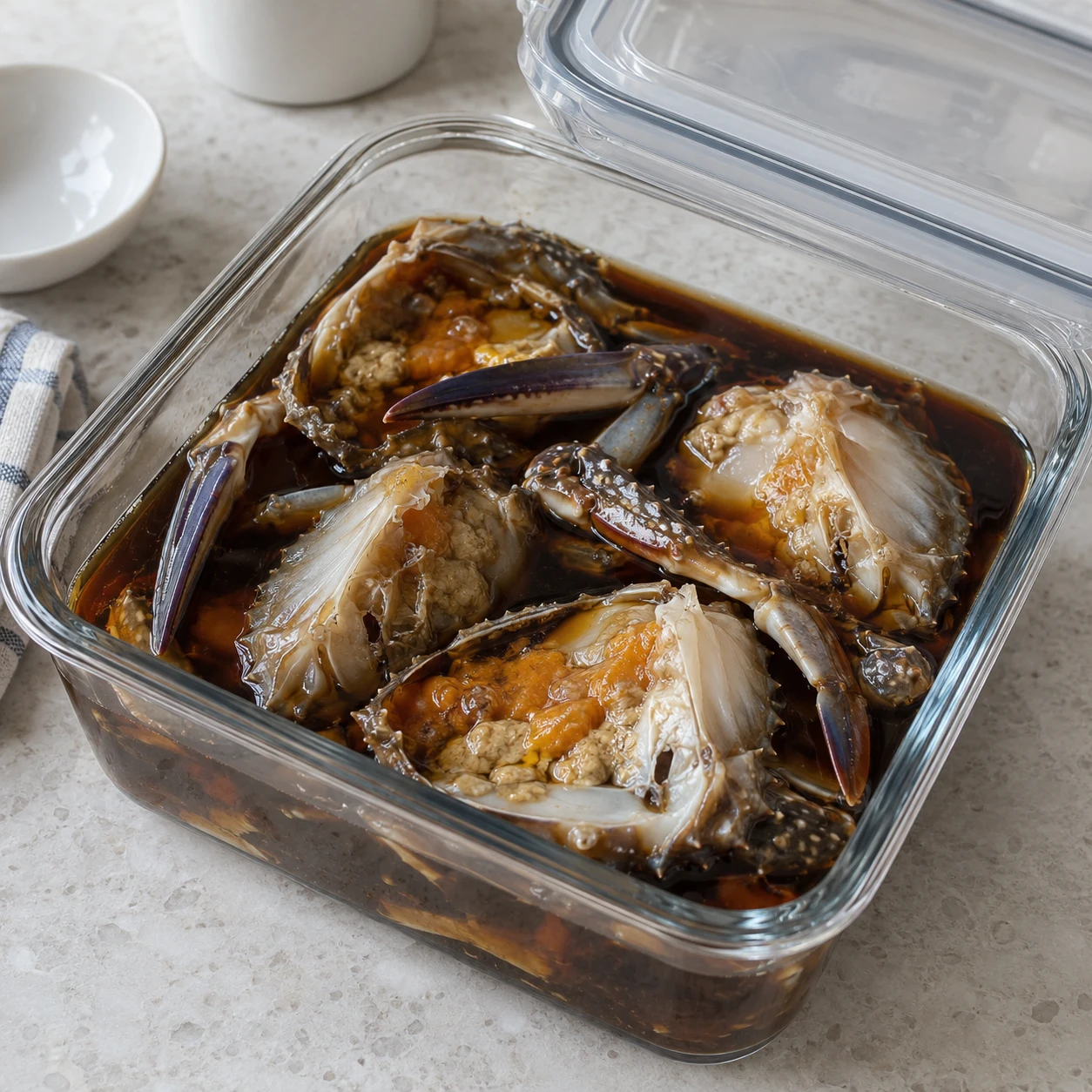
Marinate under refrigeration. Arrange the drained crab in the smallest suitable clean container. Pour over the fully chilled marinade so it covers the pieces; use a clean food-safe insert to keep them submerged if needed. Cover immediately and refrigerate at 4°C or colder for 12 hours. Do not marinate on the counter. The refrigerator time changes flavor and texture, not the raw-seafood risk.
-
Step 6
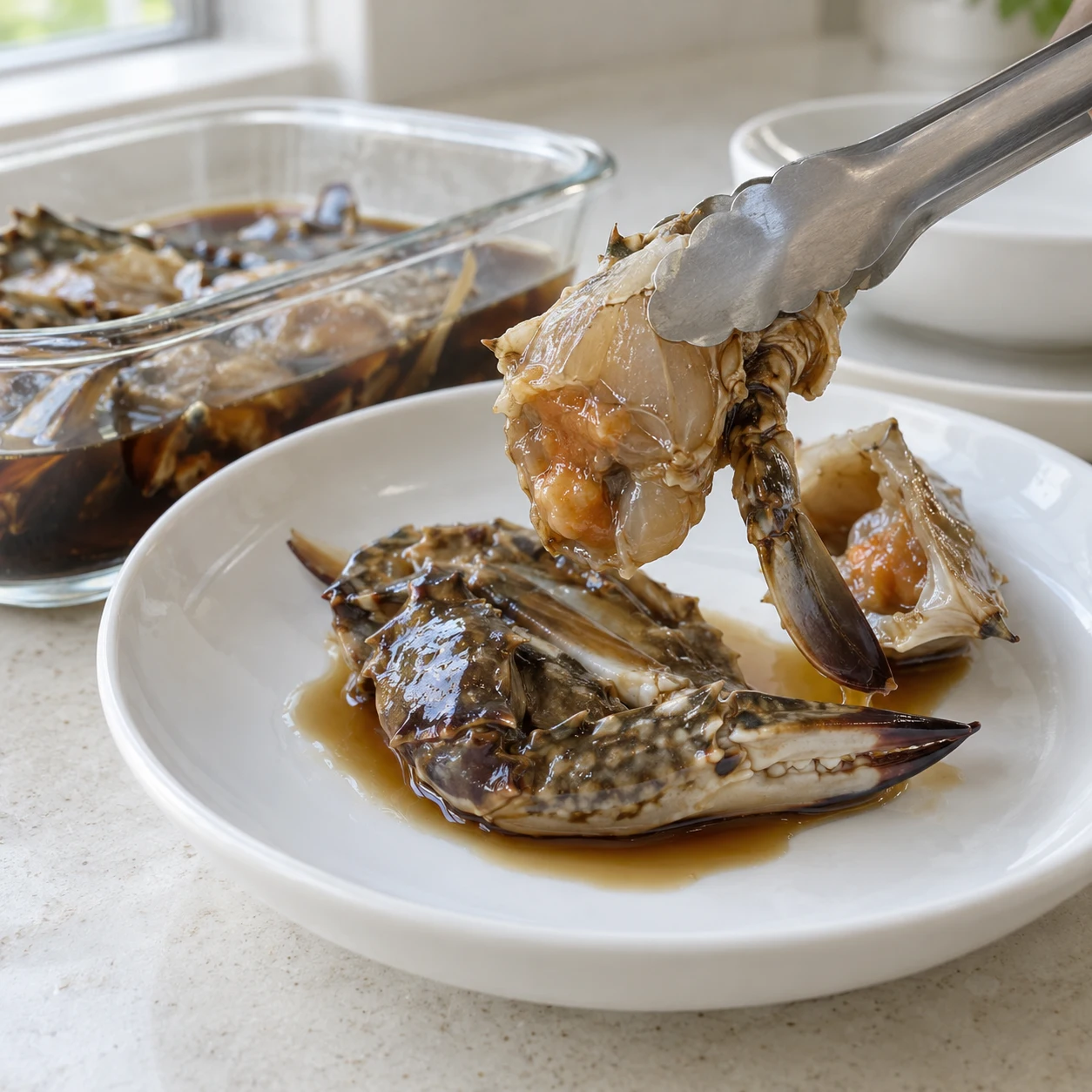
Serve cold in a small portion. Lift out the crab with clean tongs and spoon over a little marinade. Add chopped spring onion, red chili and sesame seeds if using. Use crab tools rather than biting hard shells. Return the rest to the refrigerator promptly. As a conservative home rule, consume within 24 hours of adding the crab, or follow a shorter supplier limit, and discard all used marinade.
Finished dish
A level eating spoon here is about 15 ml, a small teaspoon about 5 ml, and a small paper cup about 180 ml. Use the same spoon and cup throughout; household sizes and ingredient weights vary. This traditional version contains raw seafood. Soy sauce, chili, vinegar, alcohol and home freezing do not reliably destroy harmful germs; marinating is not cooking. Even seafood sold for raw consumption can cause illness. Children, pregnant people, older adults and anyone with liver disease or weakened immunity should avoid the raw version and choose the fully cooked alternative. Buy from a regulated supplier who can confirm the seafood is intended for raw consumption and has remained cold; this reduces some risks but does not make it risk-free. Follow local recalls and any shorter supplier use-by limit. Keep at 4°C or colder, thaw only in the refrigerator, and use separate clean utensils. Cover cuts on your hands. Discard seafood with an uncertain cold chain; smell and appearance cannot prove safety. Fully cooked variation: steam or boil the same cleaned crab until the thickest flesh reaches at least 63°C and is firm, pearly and opaque throughout; small halved crabs commonly need about 12–15 minutes after steaming resumes. Chill promptly in a shallow clean container. Combine with separately prepared cold marinade for 1 hour in the refrigerator and eat the same day. This is cooked soy crab with a firmer texture, not raw gejang. Short storage does not guarantee raw seafood safety. Do not reuse or repeatedly reboil raw-contact marinade.
Enjoy every bite
How to enjoy it
Use a little of the marinade as a rice condiment rather than pouring it over the whole bowl. Keep a mild cooked egg dish beside the plate for contrast.
Serve it with
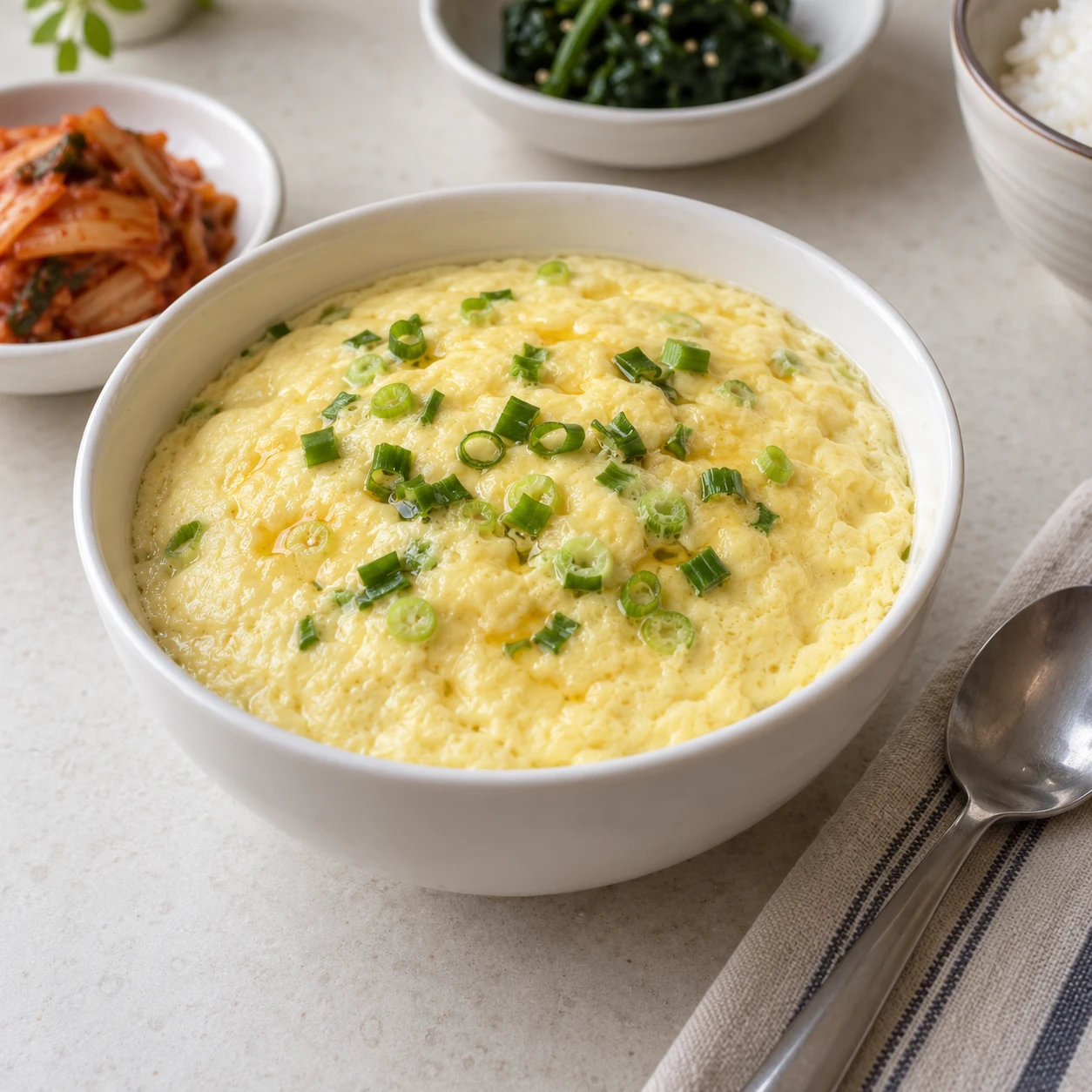
Korean steamed eggs
Soft, gently seasoned egg contrasts with a stronger sauce or a crisp bite.
View recipe