Gamjatang — Korean pork bone and potato stew
A hearty, spicy soup of tender pork neck bones, potatoes and greens, made easier with a long gentle simmer and pantry-friendly swaps.
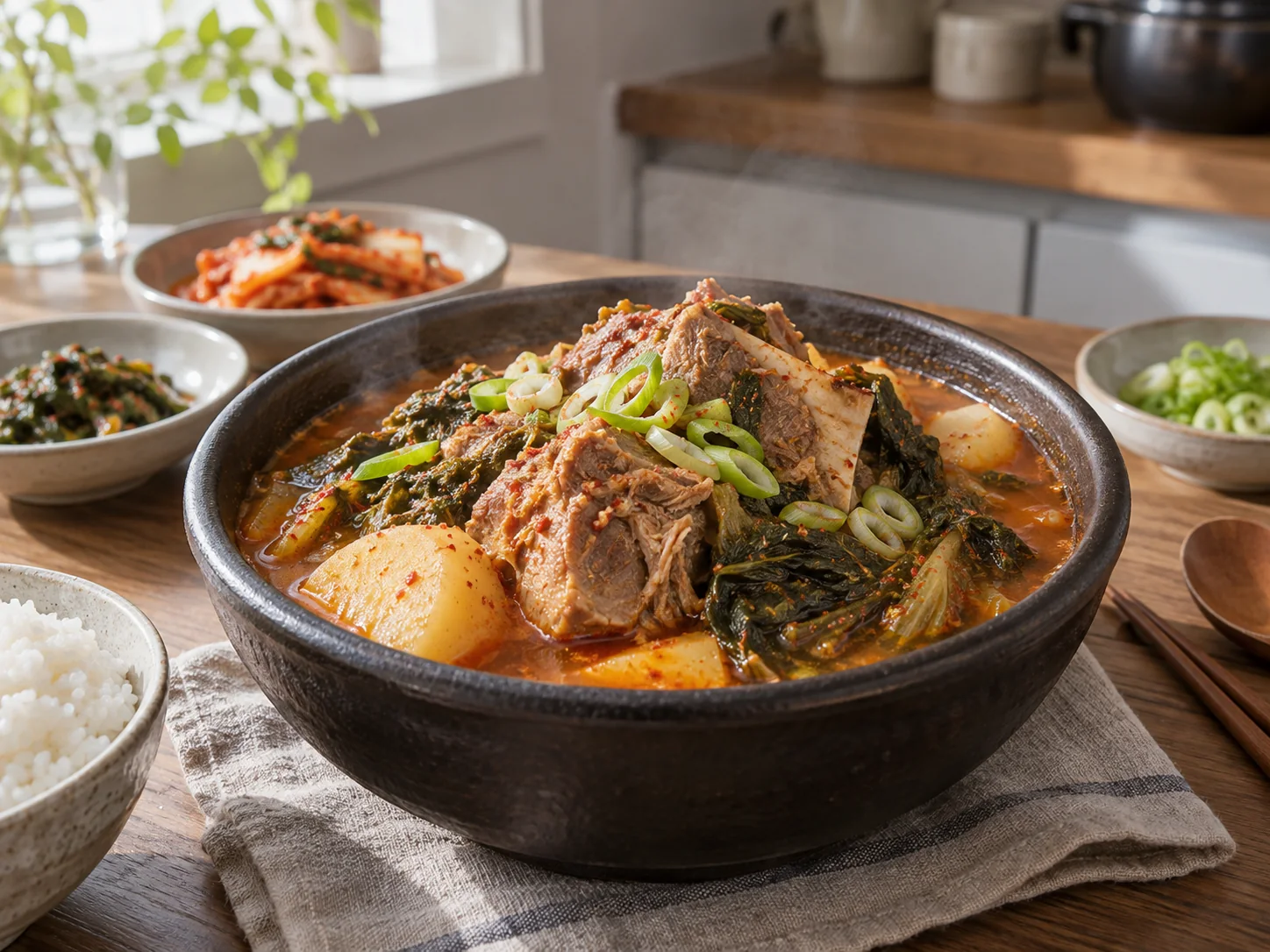
AI-generated cooking illustrations. Follow the written quantities and instructions.
Ingredients
4 servings
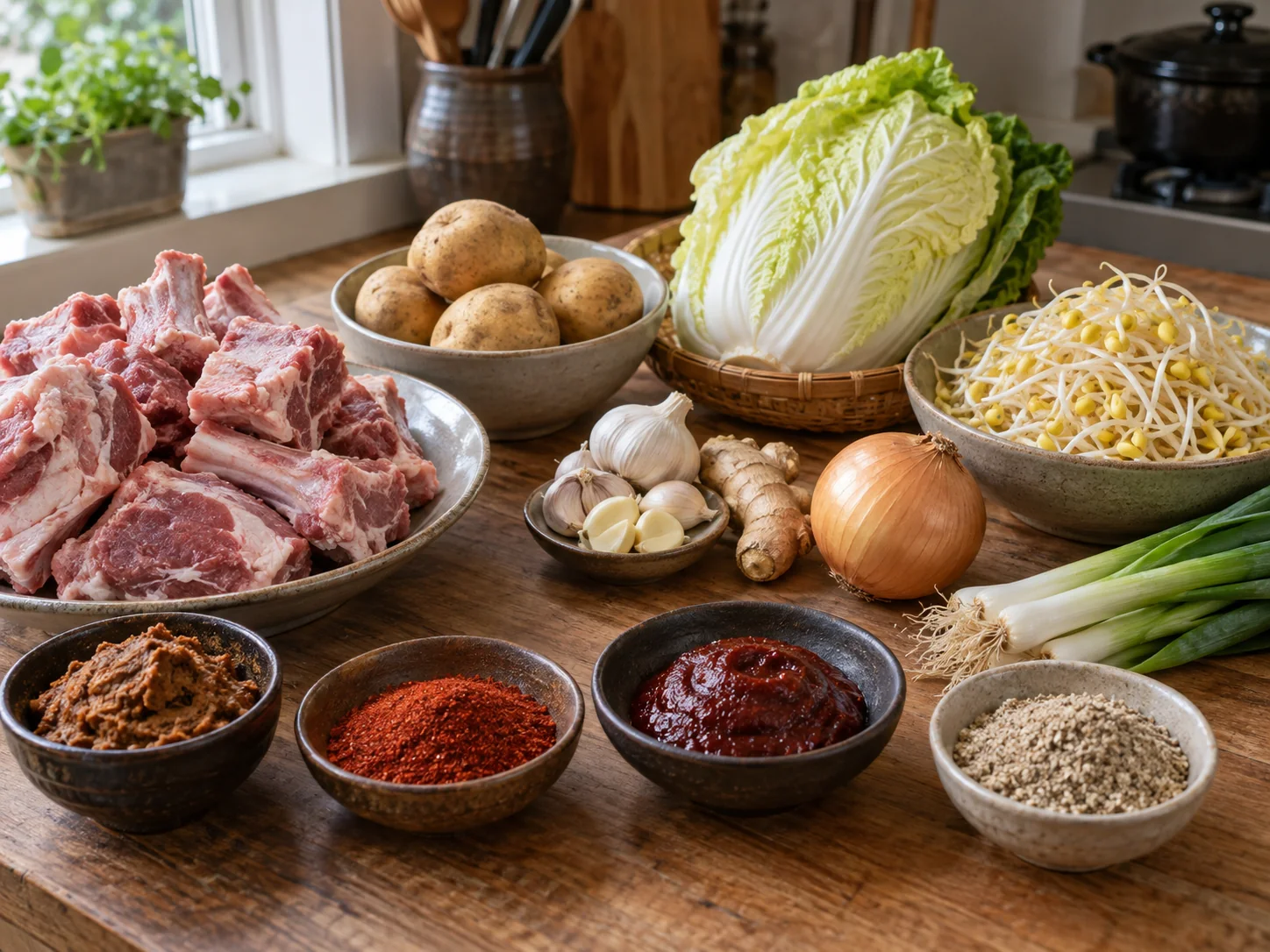
Everyday kitchen measurements
For 4 servings. Use a small 180 ml paper cup, a level eating spoon (about 15 ml) and a small teaspoon (about 5 ml).
How to fill the cup and spoons
Use the same cup and spoons throughout. Their sizes vary, so these amounts are approximate. Spoon flour in loosely and level the top without pressing. Measure vegetables after chopping, without packing them down. The amounts in g/ml are the original reference quantities. For part of a pack, use the specified pack weight and divide the contents evenly.
King Arthur Baking-
Essential
Neck bones give the broth body. Ask a butcher to cut them into soup pieces; pork spare ribs work but taste lighter.
-
Essential
Use enough to keep the bones covered during simmering.
-
Essential
Use 1/2 teaspoon ground ginger if needed.
-
Substitute available
If Yellow onion — 1 medium, halved is unavailable
Use 2 scallions if unavailable.
-
Essential
Use mild Japanese miso if needed; the broth will taste a little sweeter.
-
Essential
Use waxy potatoes so they hold their shape.
-
Substitute available
If Napa cabbage leaves — 3 cups, roughly torn is unavailable
Savoy cabbage or kale works; cook kale a little longer.
-
Essential
Use 1 1/2 teaspoons garlic powder if fresh garlic is unavailable.
-
Substitute available
If Gochugaru (Korean chili flakes) — 2 tablespoons is unavailable
Use 1 tablespoon paprika plus chili flakes to taste; paprika alone is mild.
-
Optional
Omit for less heat or use another teaspoon of doenjang.
-
Substitute available
If Fish sauce — 1 tablespoon is unavailable
Use soy sauce for a fish-free version.
-
Optional
Omit if unavailable.
-
Optional
Omit; toasted sesame powder adds a different but pleasant nutty flavor.
-
Optional
Omit or use chives.
-
Optional
Omit if unavailable.
Tap each ingredient as you prepare it. Check product labels for egg, soy, sesame, wheat, fish or shellfish where relevant.
Step-by-step cooking
-
Step 1
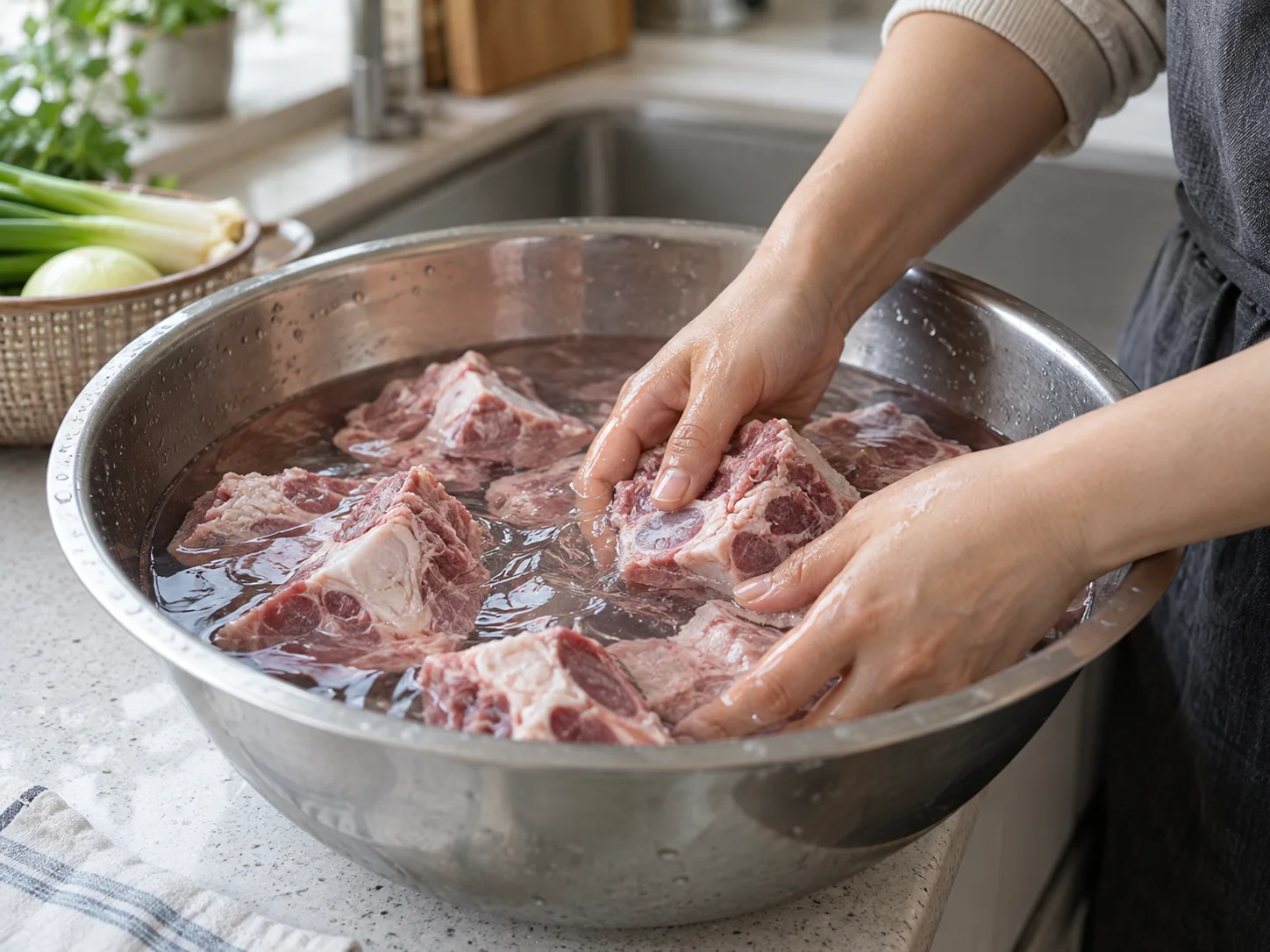
Rinse the pork bones and soak them in cold water for 30 minutes. Drain. This draws out some blood; keep the bowl refrigerated if the kitchen is warm.
-
Step 2
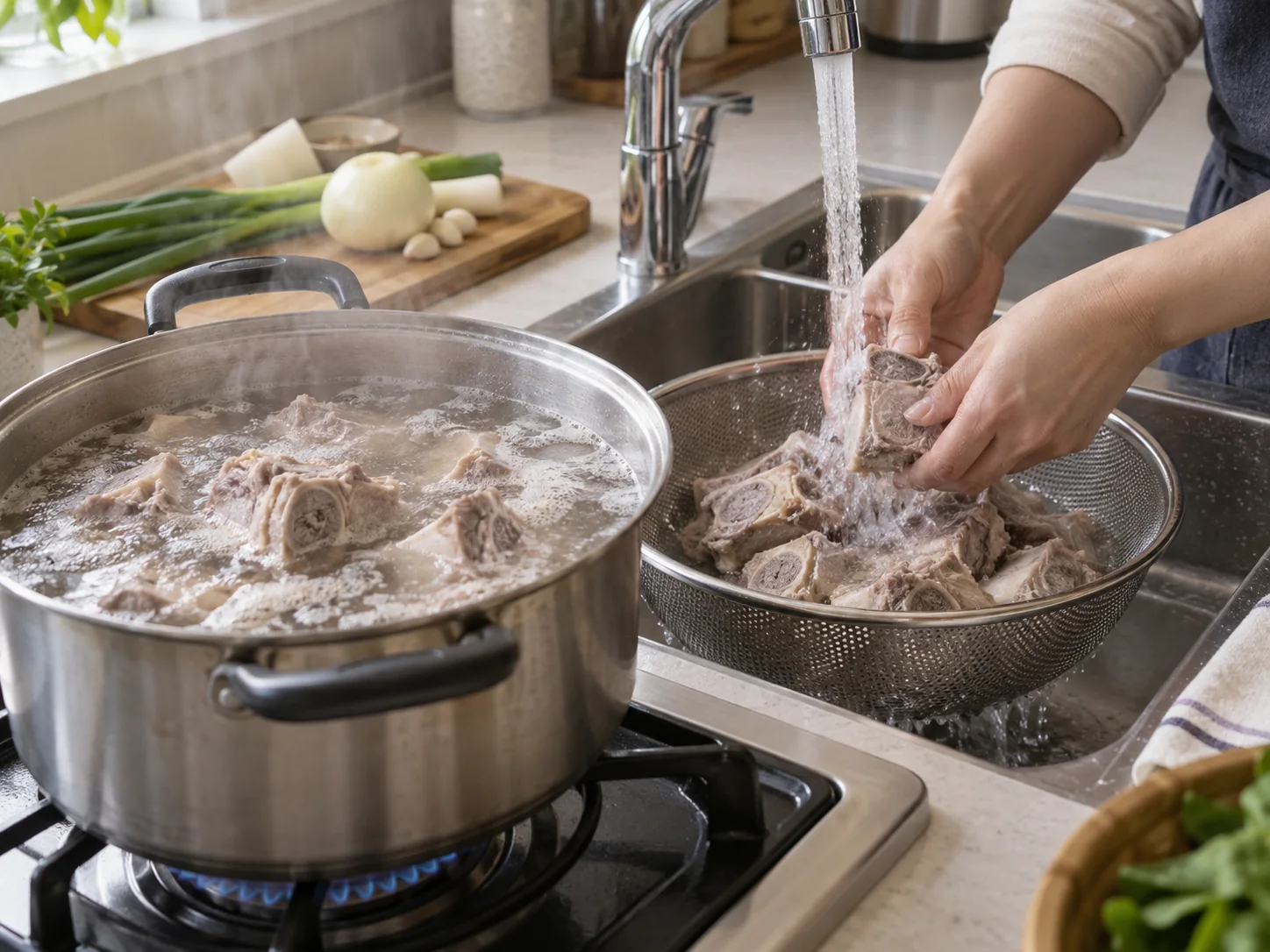
Put bones in a pot, cover with fresh water and bring to a boil for 8 minutes. Drain, rinse the bones and pot, and remove loose foam or bone chips.
-
Step 3
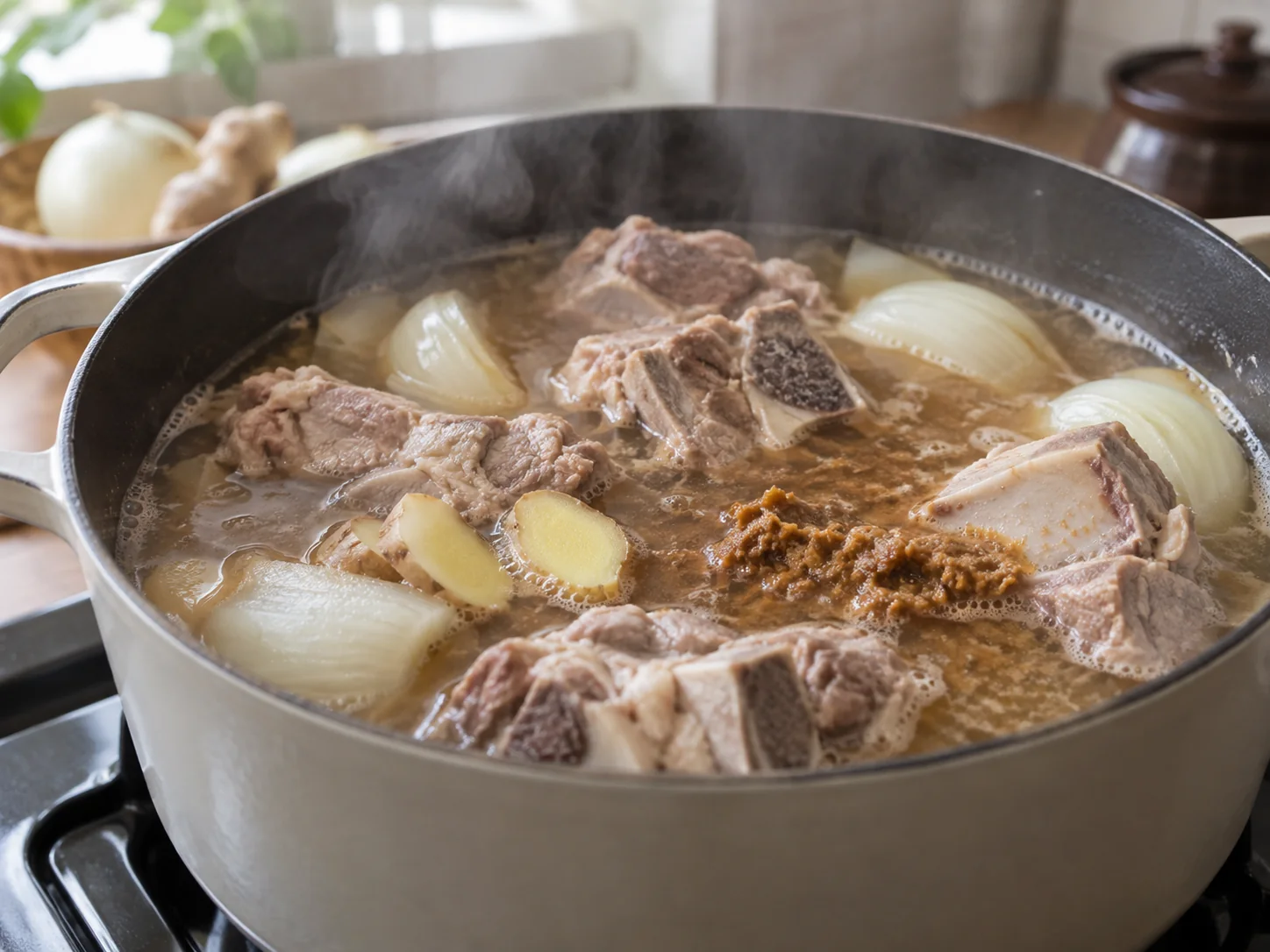
Return bones to the clean pot with 10 paper cups water, ginger, onion and doenjang. Bring to a boil, then cover and simmer gently for 90 minutes until the meat is tender.
-
Step 4
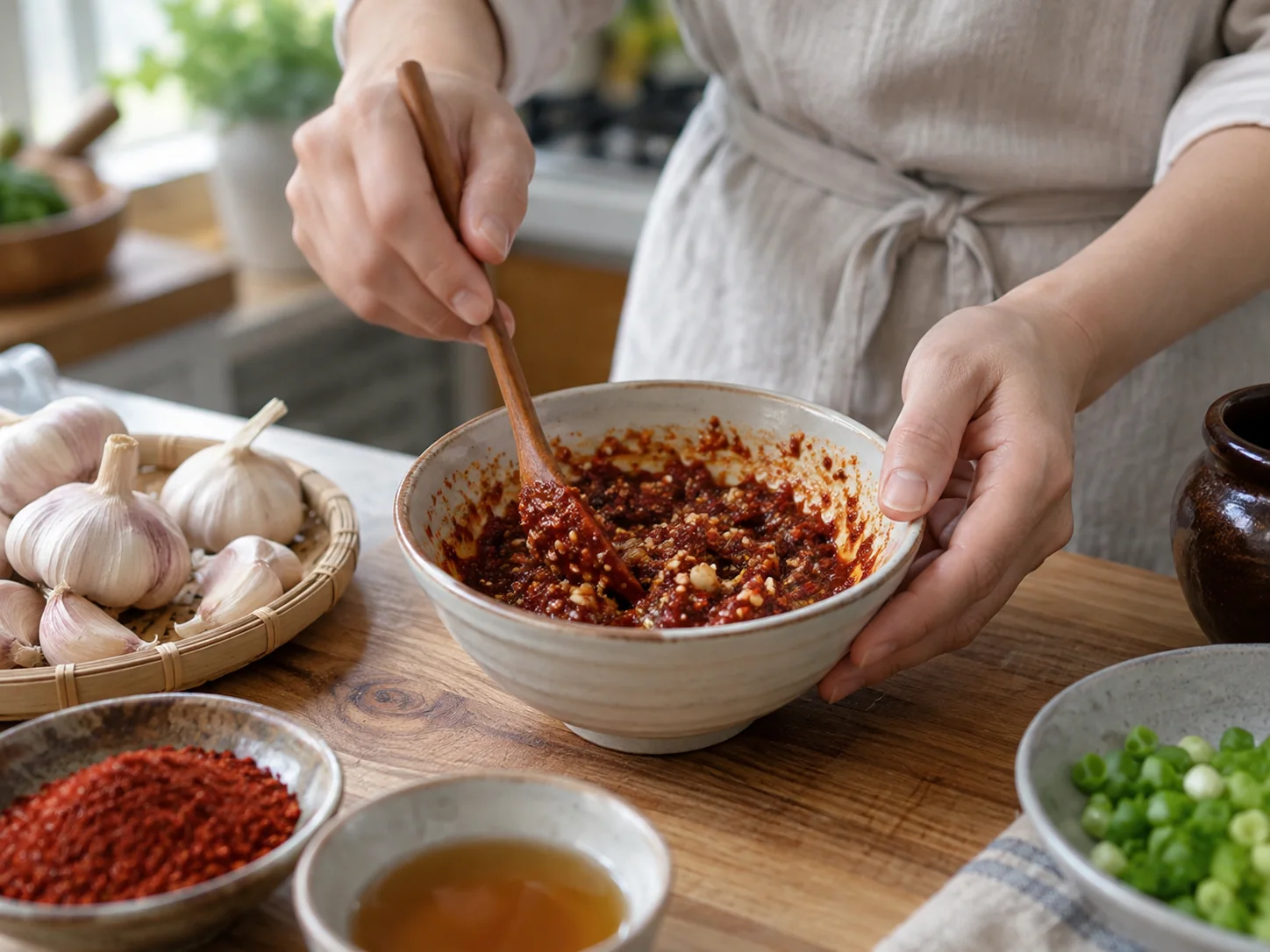
Mix garlic, gochugaru, gochujang and fish sauce in a small bowl. Stir this seasoning into the broth. Add potatoes and simmer 15 minutes.
-
Step 5
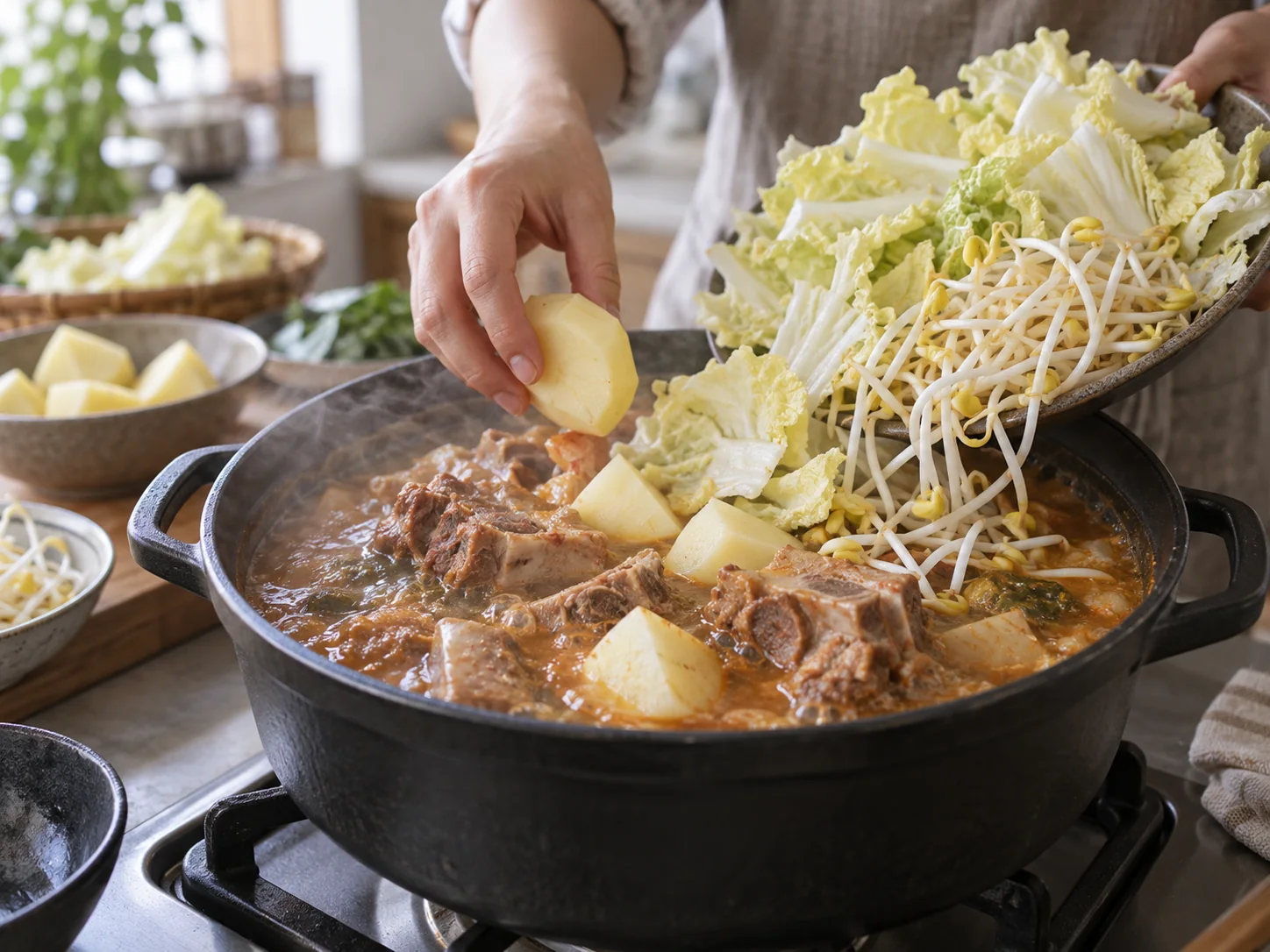
Add torn cabbage and soybean sprouts if using. Simmer 10 to 15 minutes until potatoes are soft and the greens are tender. Add a splash of water if the broth gets too concentrated.
-
Step 6
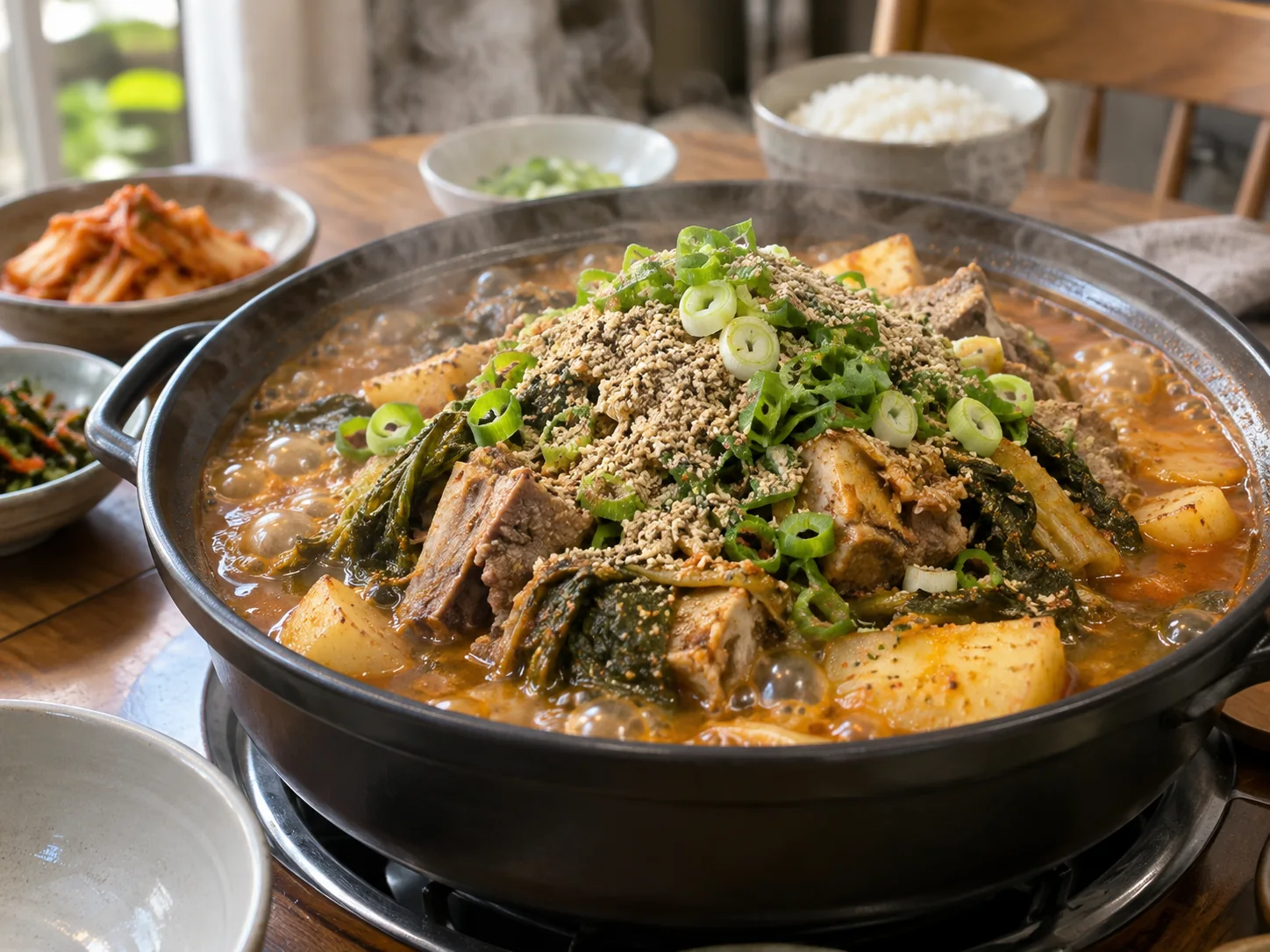
Taste and adjust with a little salt only if needed. Stir in perilla seed powder and scallions; lay perilla leaves on top if using. Serve bubbling hot with rice.
Finished dish
A paper cup is 180 ml; a level tablespoon is 15 ml and a teaspoon is 5 ml. Keep the soup at a gentle simmer so the bones become tender without boiling away the broth. Pork must be thoroughly cooked; refrigerate leftovers promptly. Contains soy; fish sauce is optional to replace with soy sauce.
Enjoy every bite
How to enjoy it
Bring the pot to the table while gently simmering, then ladle broth and a mix of ingredients into each bowl. Taste before adding salt or extra seasoning.
Serve it with
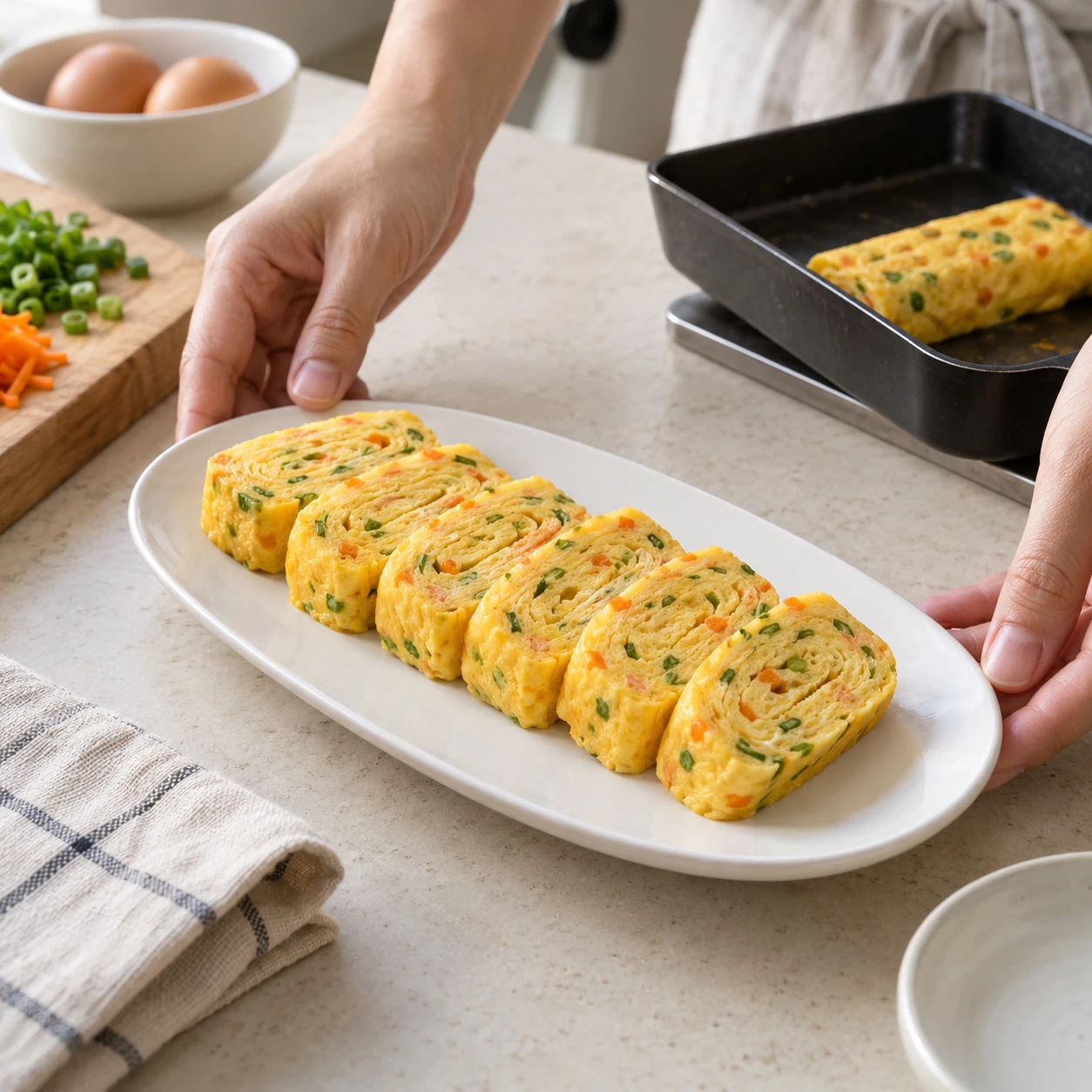
Rolled omelette (Gyeran mari)
Soft, gently seasoned egg contrasts with a stronger sauce or a crisp bite.
View recipe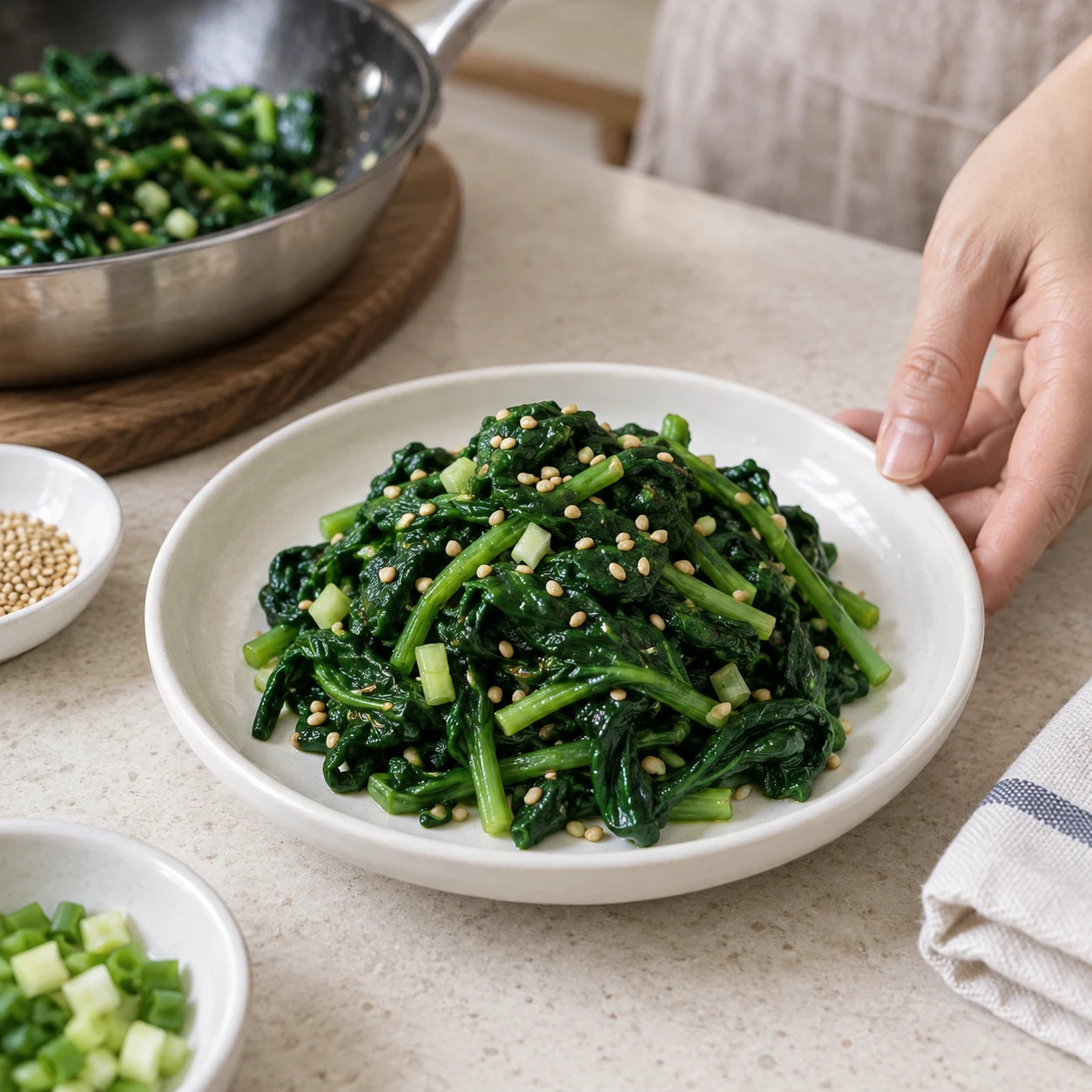
Seasoned spinach (Sigeumchi namul)
Lightly seasoned vegetables let the main dish stand out.
View recipe