Potato and ham jjageuli
A small pot of thick Korean-style potato stew with ready-cooked canned ham and gochujang. The sauce clings to tender potato pieces; this is a hearty rice accompaniment rather than a large bowl of broth.

Ingredients
2 servings

Everyday kitchen measurements
For 2 servings. Use a small 180 ml paper cup, a level eating spoon (about 15 ml) and a small teaspoon (about 5 ml).
How to fill the cup and spoons
Use the same cup and spoons throughout. Their sizes vary, so these amounts are approximate. Spoon flour in loosely and level the top without pressing. Measure vegetables after chopping, without packing them down. The amounts in g/ml are the original reference quantities. For part of a pack, use the specified pack weight and divide the contents evenly.
King Arthur Baking-
Essential
Needed for this version; use the listed amount at the stated step.
-
Substitute available
If Fully cooked canned luncheon meat is unavailable
- Use instead
- Fully cooked chicken sausage
- Substitute quantity
- about 2 small sausages, 150 g totalReference quantity: 150 g
Replace the canned ham. Check that the label says fully cooked, then cut into 1 cm pieces. Do not use raw sausage in this timing.
-
Essential
Needed for this version; use the listed amount at the stated step.
-
Essential
Needed for this version; use the listed amount at the stated step.
-
Essential
Needed for this version; use the listed amount at the stated step.
-
Substitute available
If Gochujang (Korean chili paste) is unavailable
- Use instead
- Sriracha and ketchup
- Substitute quantity
- 2 teaspoons sriracha + 1 teaspoon ketchupReference quantity: 10 ml + 5 ml
Replace the tablespoon of gochujang, keeping the listed soy sauce and sugar. Flavor is tangier and less rich; do not add extra salt.
-
Essential
Needed for this version; use the listed amount at the stated step.
-
Essential
Needed for this version; use the listed amount at the stated step.
-
Essential
Needed for this version; use the listed amount at the stated step.
-
Optional
May be omitted without changing the other quantities.
Tap each ingredient as you prepare it. Check product labels for egg, soy, sesame, wheat, fish or shellfish where relevant.
Step-by-step cooking
Check off a completed step to move to the next one. After the last step, you will move to the finished dish.
Completed steps are saved in this browser. Start over to clear this recipe’s progress.
-
Step 1
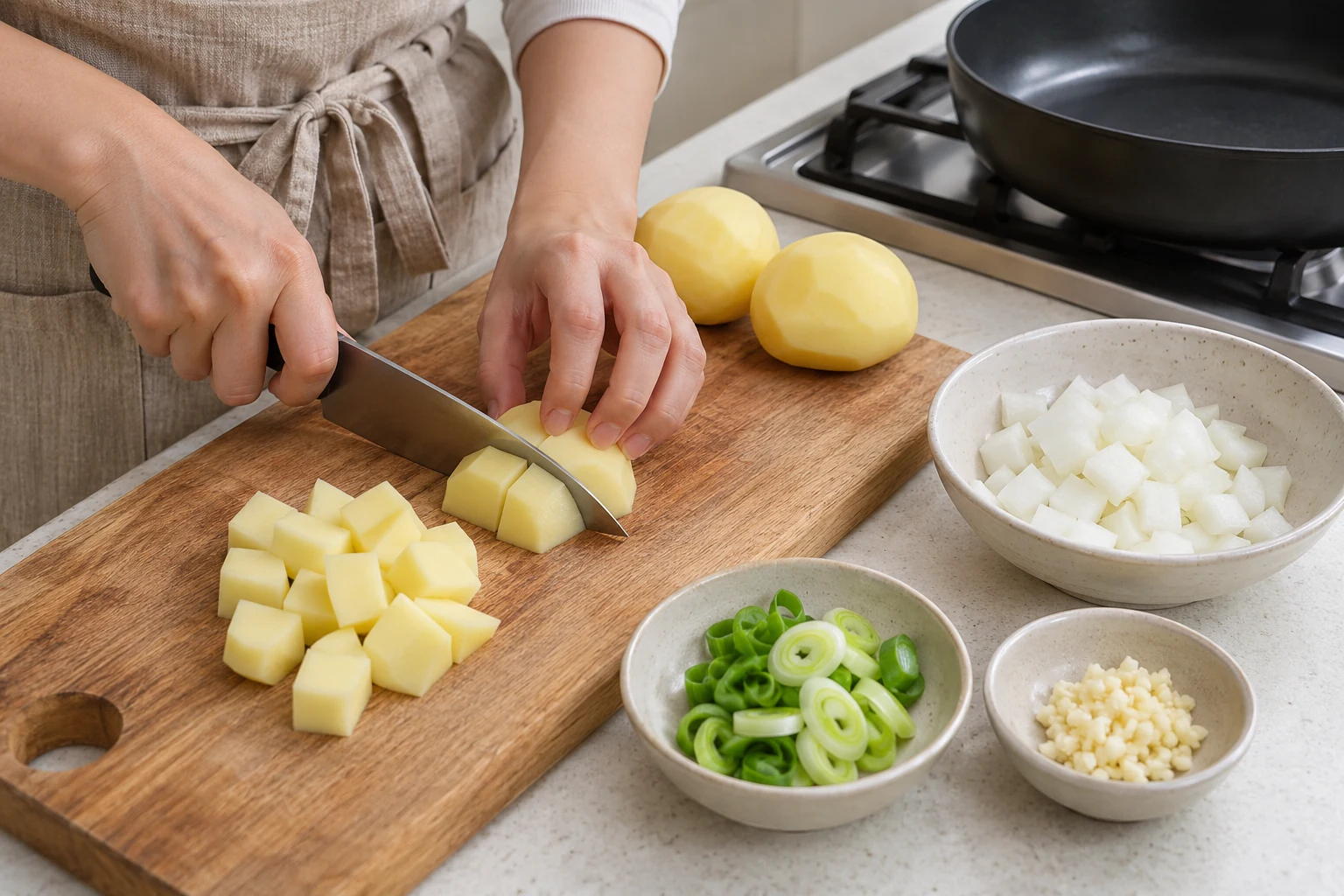
Peel 2 potatoes and cut into 1.5 cm cubes. Cut the onion into 1 cm pieces, slice the spring onion and mince 2 garlic cloves. Keep the spring onion separate for the finish.
-
Step 2
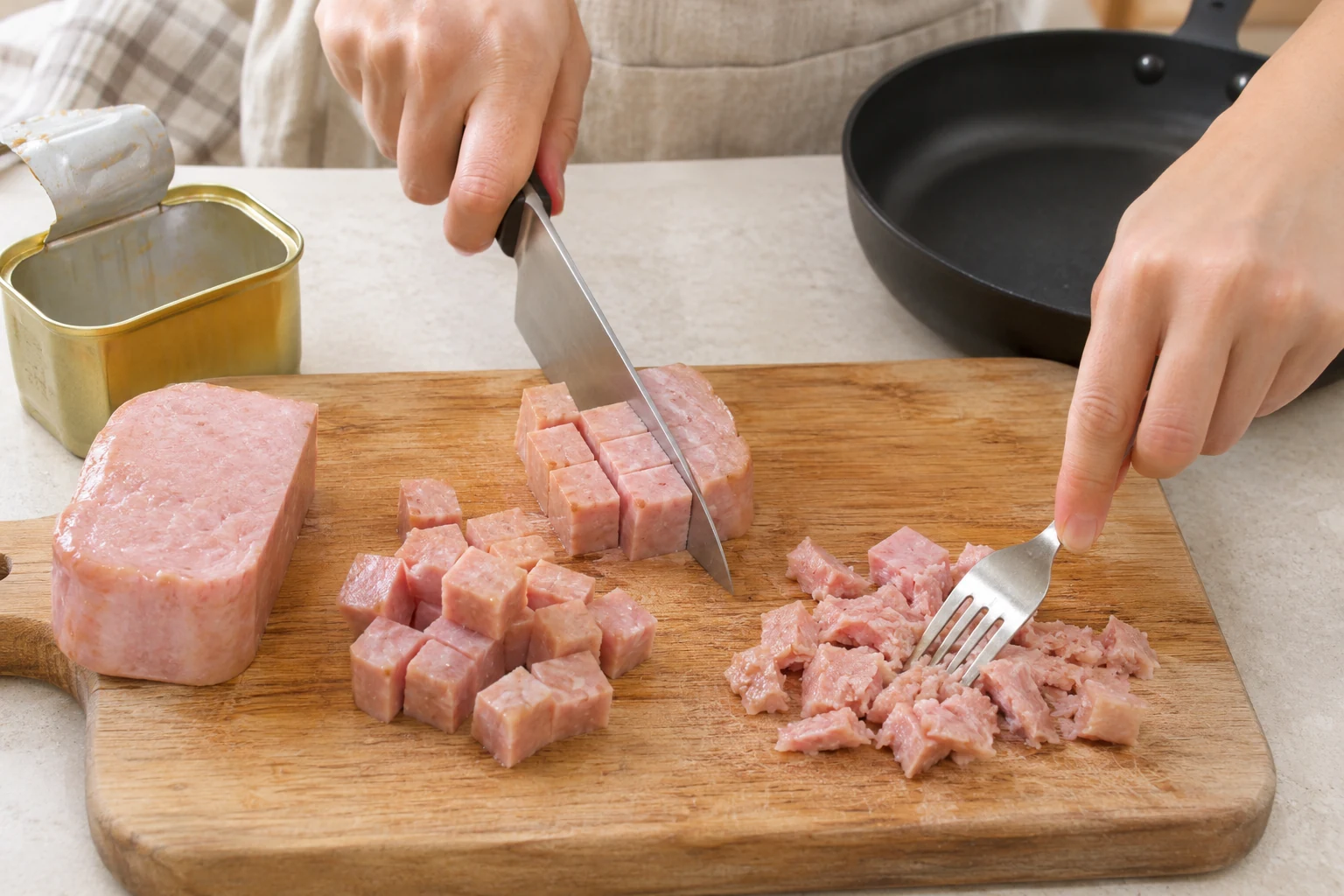
Check that the canned luncheon meat is fully cooked. Take 150 g, cut into 1 cm pieces and roughly break up a few pieces with a fork. Do not substitute raw pork without changing the cooking method.
-
Step 3
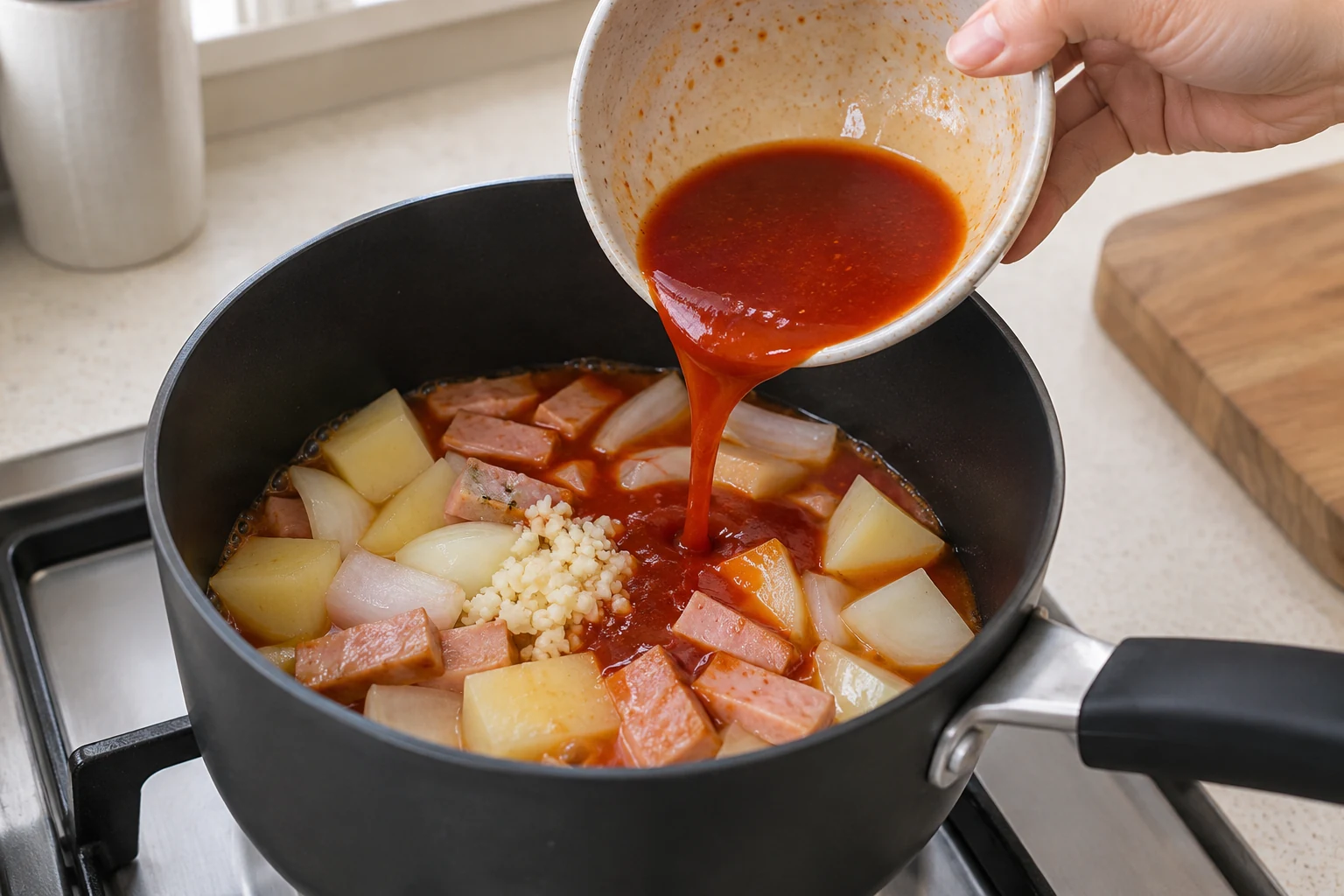
Put potatoes, onion, ham, garlic, 1 tablespoon gochujang, 1 tablespoon soy sauce and 1 teaspoon sugar in a small deep saucepan. Add 2 small paper cups water (360 ml), stir and bring to a boil over medium-high heat.
-
Step 4
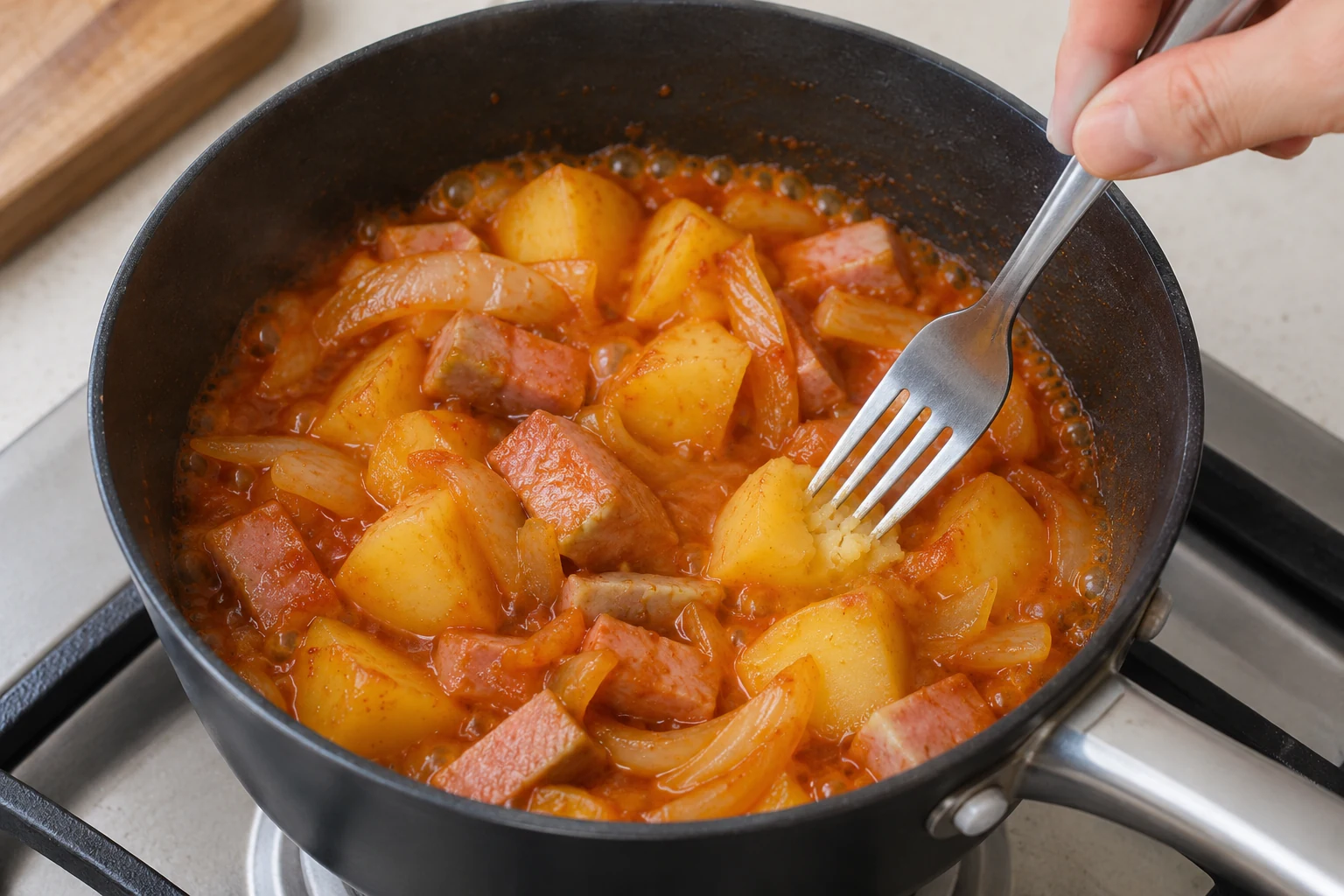
Reduce to medium-low and simmer uncovered for 12–15 minutes, stirring the bottom often, until a fork slides easily through a potato cube. Keep a shallow sauce; if it dries before the potatoes soften, add 2 tablespoons water. Lower the heat if it sticks and cook longer if the potato centers remain firm.
-
Step 5
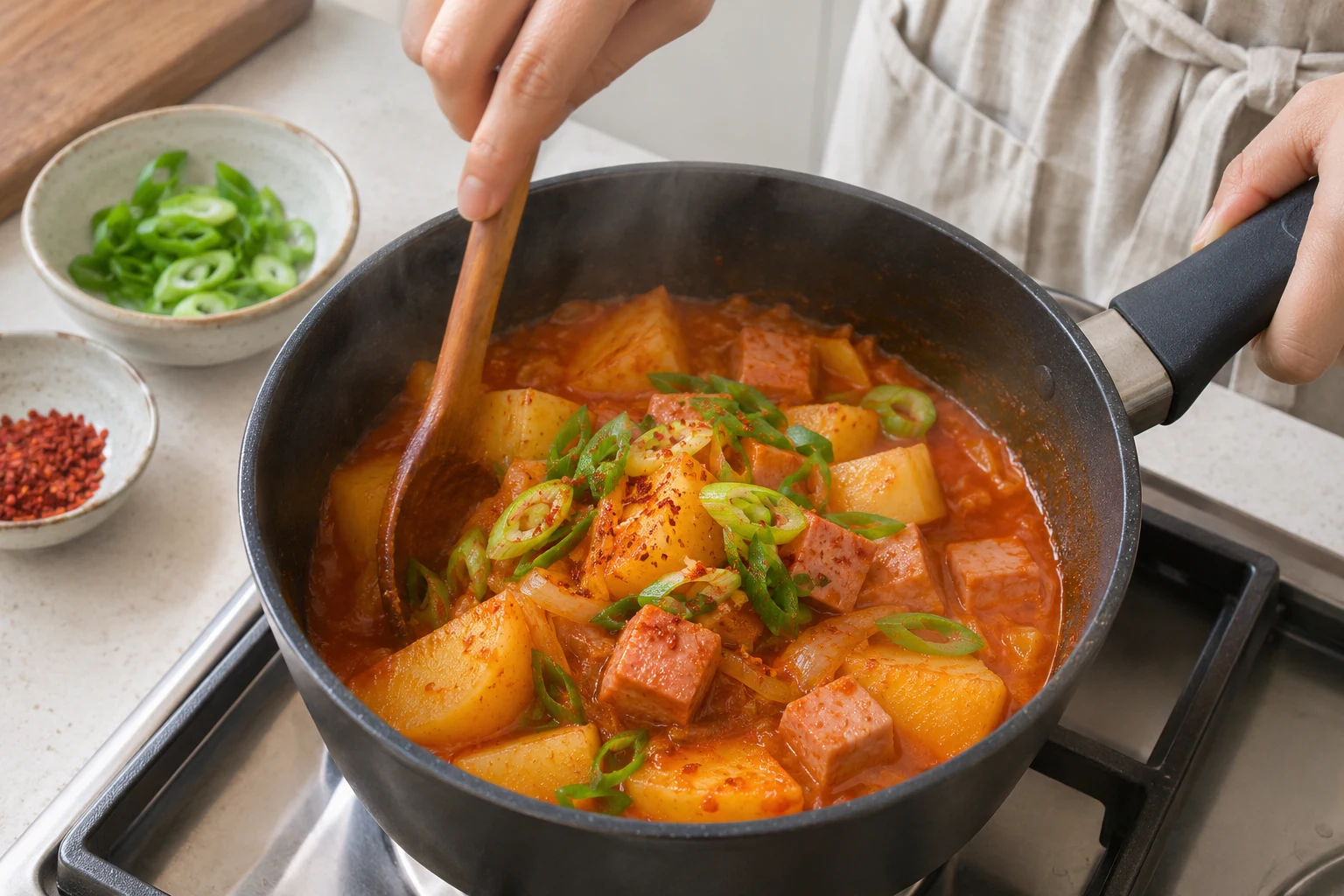
Add the spring onion and optional 1 teaspoon chili flakes. Simmer for 2 more minutes until the onion softens and the sauce coats the potatoes. Turn off and divide between two bowls; serve with rice separately if desired.


Finished dish
Tablespoon = 15 ml; teaspoon = 5 ml; small paper cup = 180 ml. Use level spoonfuls. Check ingredient labels for allergens. Keep leftovers refrigerated at 4°C or colder and eat within 1 day. Use a small saucepan so 360 ml water does not evaporate too quickly. Canned ham is salty, so add no extra salt. Contains soy and possibly wheat; check the ham label for other allergens. Refrigerate within 2 hours and reheat thoroughly before eating.
Related recipes


Enjoy every bite
How to enjoy it
Spoon a little over plain rice and pair with spinach or steamed cabbage. Omit chili flakes for less heat; the gochujang itself is still spicy.
Serve it with

Seasoned spinach (Sigeumchi namul)
Tender blanched spinach with a light sesame-garlic dressing. Drain it well before seasoning so the small side dish stays flavorful rather than watery.

Steamed cabbage with Korean dipping sauce
Tender cabbage leaves with a small bowl of sesame-soy dipping sauce. An easy Korean side dish with a simple steamer and everyday spoon measures.