Gochujang Jjigae — Pork, Potato and Tofu Stew
A hearty red-pepper-paste stew with tender pork, soft potato, zucchini and tofu. A simple one-pot method builds flavor without needing a separate stock.
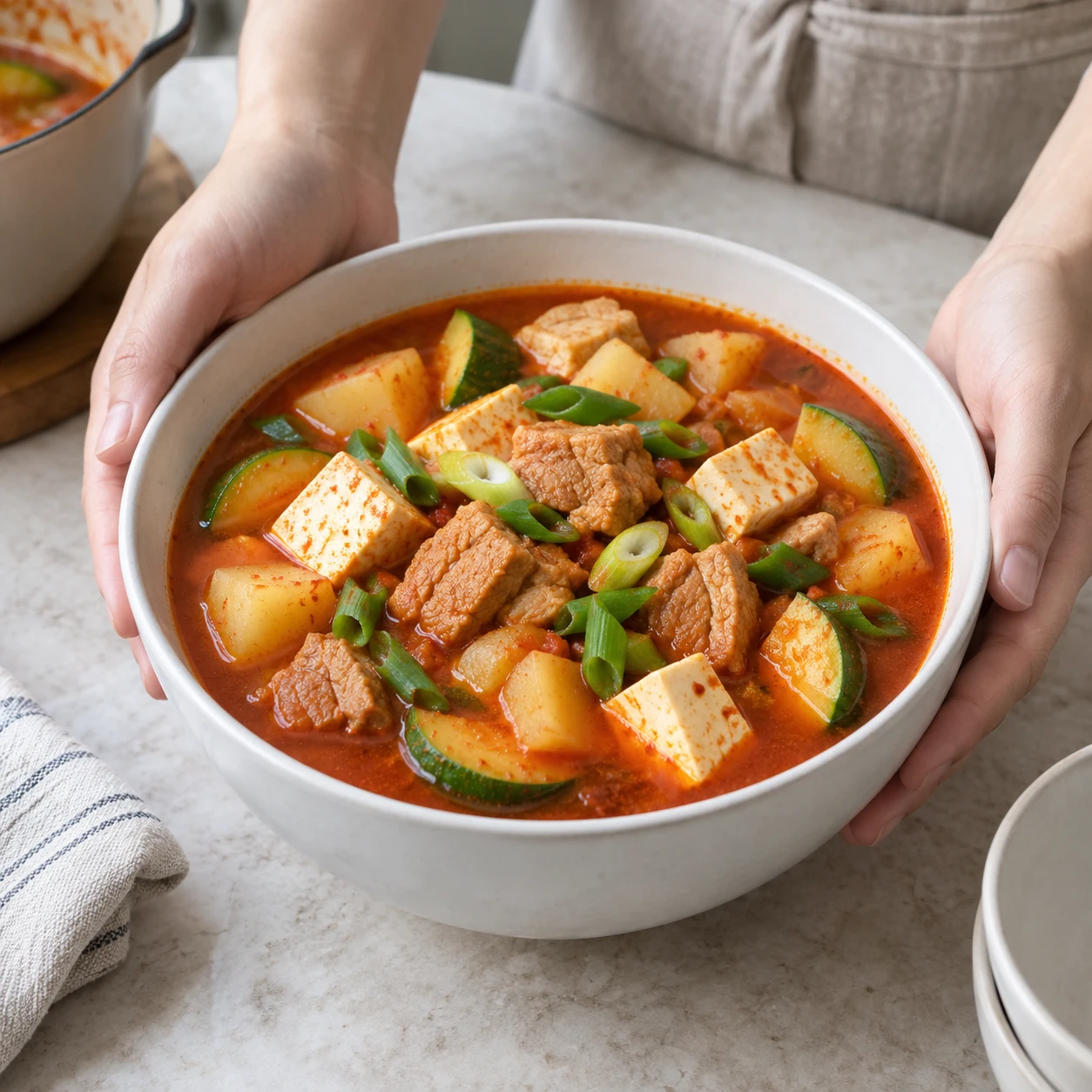
AI-generated cooking illustrations. Follow the written quantities and instructions.
Ingredients
2 servings
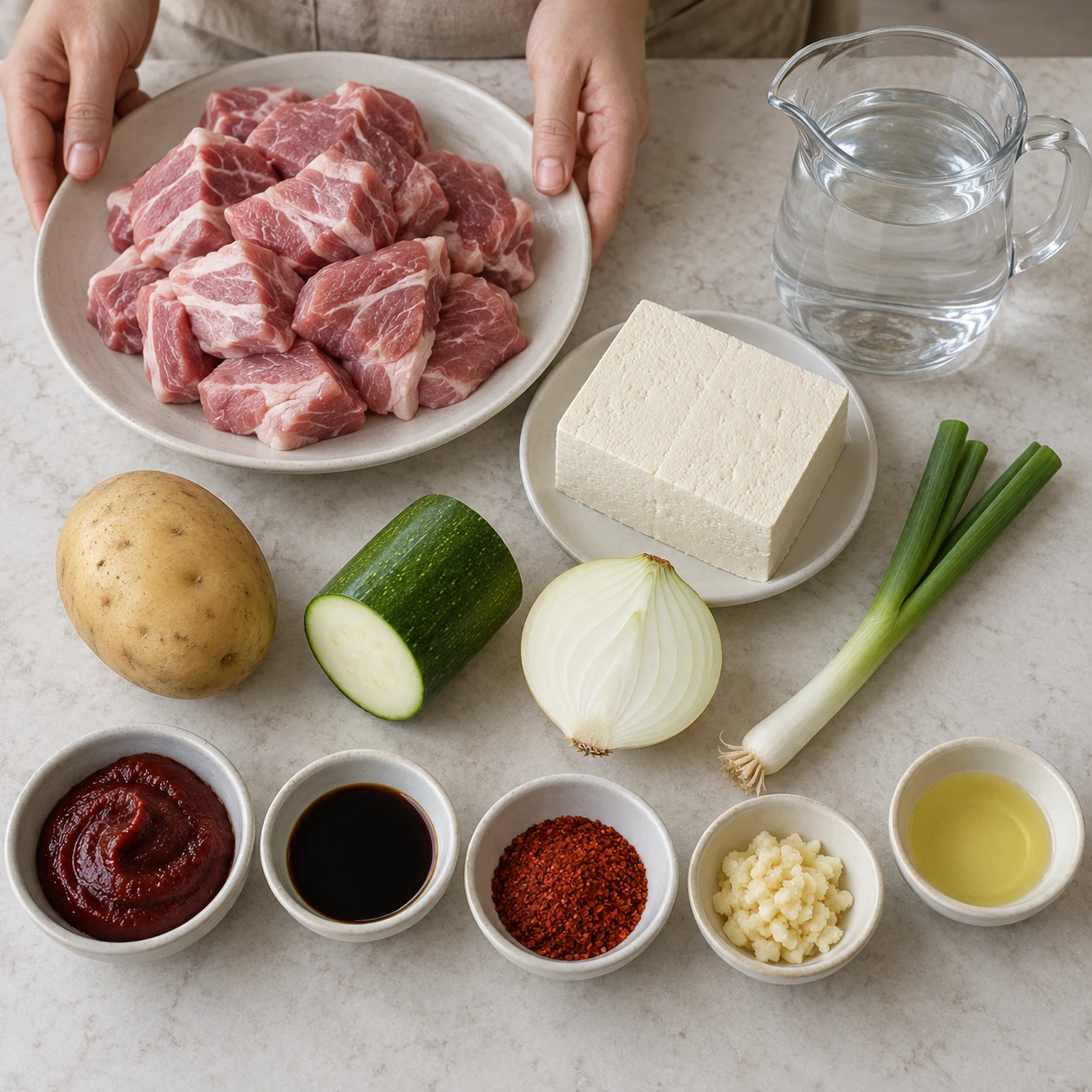
Everyday kitchen measurements
For 2 servings. Use a small 180 ml paper cup, a level eating spoon (about 15 ml) and a small teaspoon (about 5 ml).
How to fill the cup and spoons
Use the same cup and spoons throughout. Their sizes vary, so these amounts are approximate. Spoon flour in loosely and level the top without pressing. Measure vegetables after chopping, without packing them down. The amounts in g/ml are the original reference quantities. For part of a pack, use the specified pack weight and divide the contents evenly.
King Arthur Baking-
Substitute available
If Boneless pork shoulder is unavailable
- Use instead
- Boneless chicken thigh
- Substitute quantity
- ½ of a 400 g packReference quantity: 200 g
Cut into the same 2 cm pieces and use the same simmering sequence. Chicken must reach 74°C in the center before serving. This becomes a chicken variation with a lighter broth.
-
Essential
Peel and cut into 2 cm pieces. Potato gives this stew body; keep the pieces equal in size so they soften together.
-
Substitute available
If Firm tofu is unavailable
- Use instead
- Medium-firm tofu
- Substitute quantity
- ½ of a 300 g packReference quantity: 150 g
Cut gently into 2 cm cubes and add in step 5. Avoid vigorous stirring because it breaks more easily. Silken tofu changes the texture and needs a different handling method.
-
Optional
Omit the zucchini and its cutting and addition in steps 1 and 5 if unavailable. Keep the water and other ingredient amounts the same.
-
Optional
Leave out the onion and its cutting and frying in steps 1 and 2 if unavailable. Begin frying the pork directly in the oil; the broth will be slightly less sweet.
-
Essential
Use thick Korean fermented chili paste. A mild product is easiest for beginners. This is the defining seasoning and cannot be omitted or replaced by ketchup.
-
Substitute available
If Soy sauce is unavailable
- Use instead
- Tamari
- Substitute quantity
- 1 level eating spoonReference quantity: 15 ml
Use unsweetened tamari in place of soy sauce. Taste the finished dish before adding more salt. If avoiding wheat, check every packaged ingredient as well.
-
Essential
Use in step 3. About 2 average peeled cloves make this amount.
-
Essential
Fresh water makes the broth; no stock cube is required. Add extra warm water ½ paper cup at a time only if the simmer reduces it too much.
-
Substitute available
If Neutral cooking oil is unavailable
- Use instead
- Sunflower oil
- Substitute quantity
- 1 small teaspoonReference quantity: 5 ml
Use the same amount in the pan. Choose a plain oil suitable for cooking; do not use butter, which browns and burns sooner.
-
Optional
Leave out in step 3 for less heat. Keep the gochujang amount the same so the stew keeps its basic flavor.
-
Optional
Skip its cutting and its addition in steps 1 and 5 if unavailable. No substitute or extra seasoning is needed.
Tap each ingredient as you prepare it. Check product labels for egg, soy, sesame, wheat, fish or shellfish where relevant.
Step-by-step cooking
-
Step 1
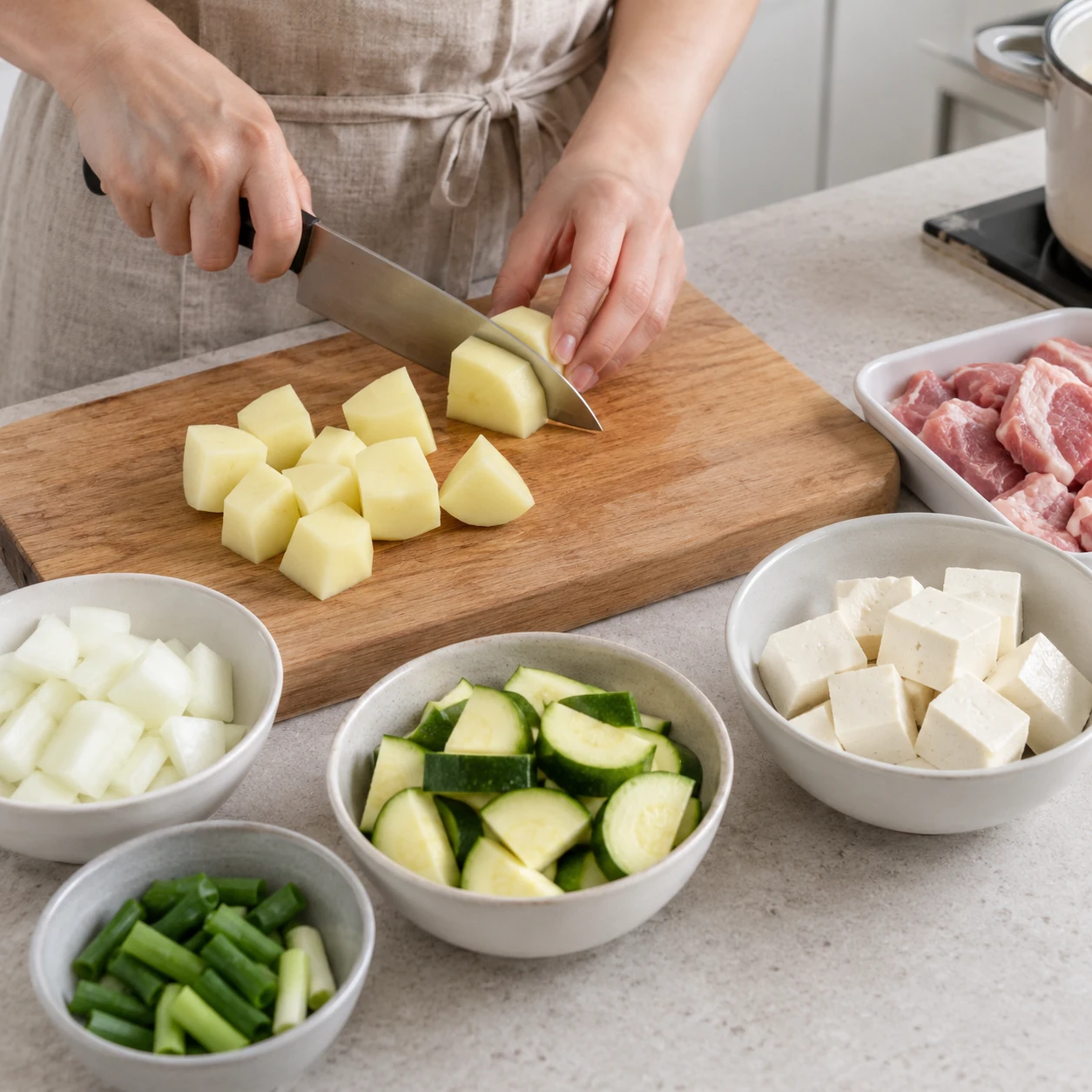
Peel the potato and cut into 2 cm cubes. Cut the optional onion into bite-size pieces, zucchini into thick half-moons and spring onion into 3 cm lengths. Cut the tofu into 2 cm cubes. On a separate raw-meat board, cut the pork into equal 2 cm pieces. Keeping the potato and meat small helps this stew cook in one pot.
-
Step 2
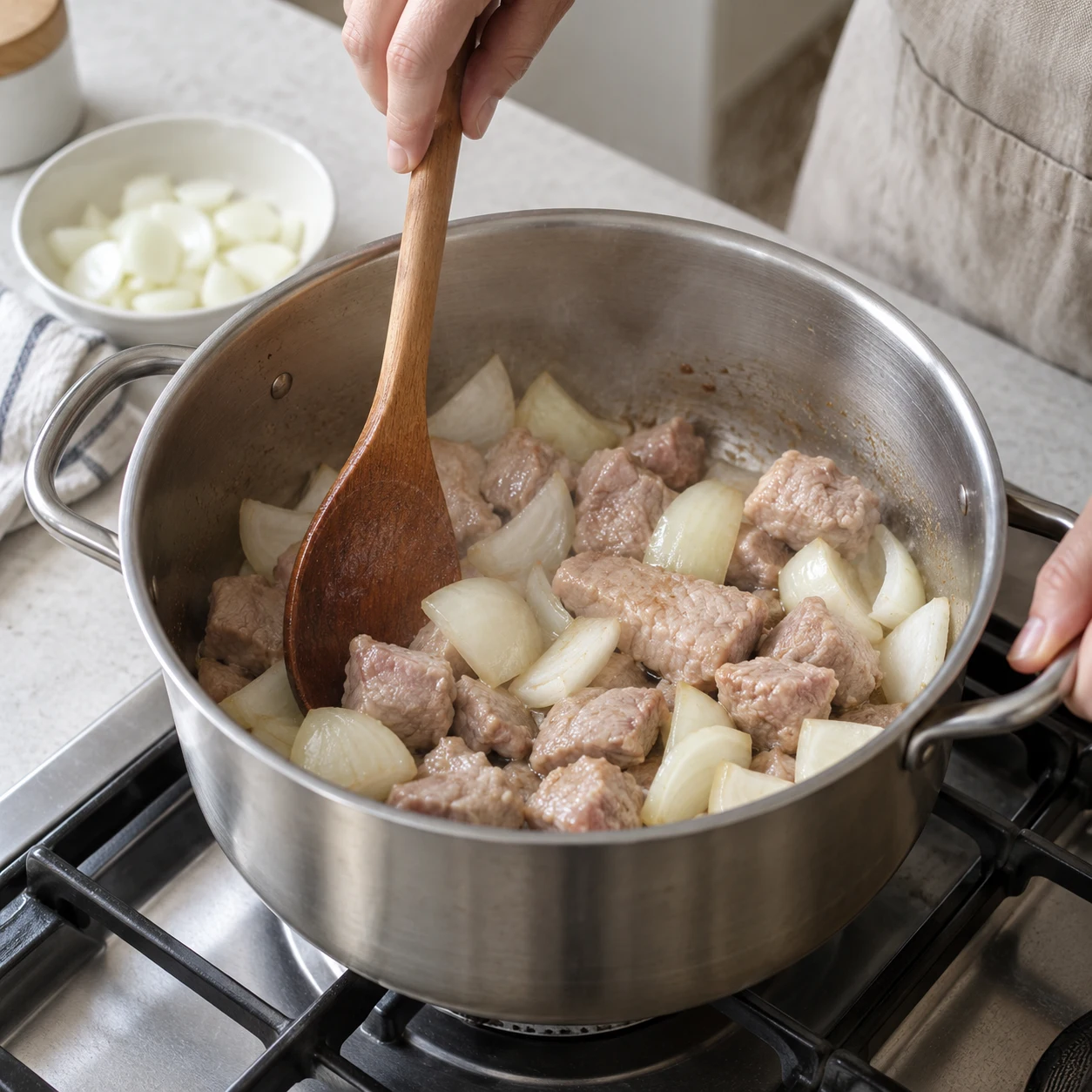
Warm 1 small teaspoon cooking oil in a medium pot over medium heat. Add the pork and optional onion. Stir for 3–4 minutes until the meat surface changes color and the onion begins to soften. This first frying is for flavor only; the pork is not fully cooked yet.
-
Step 3
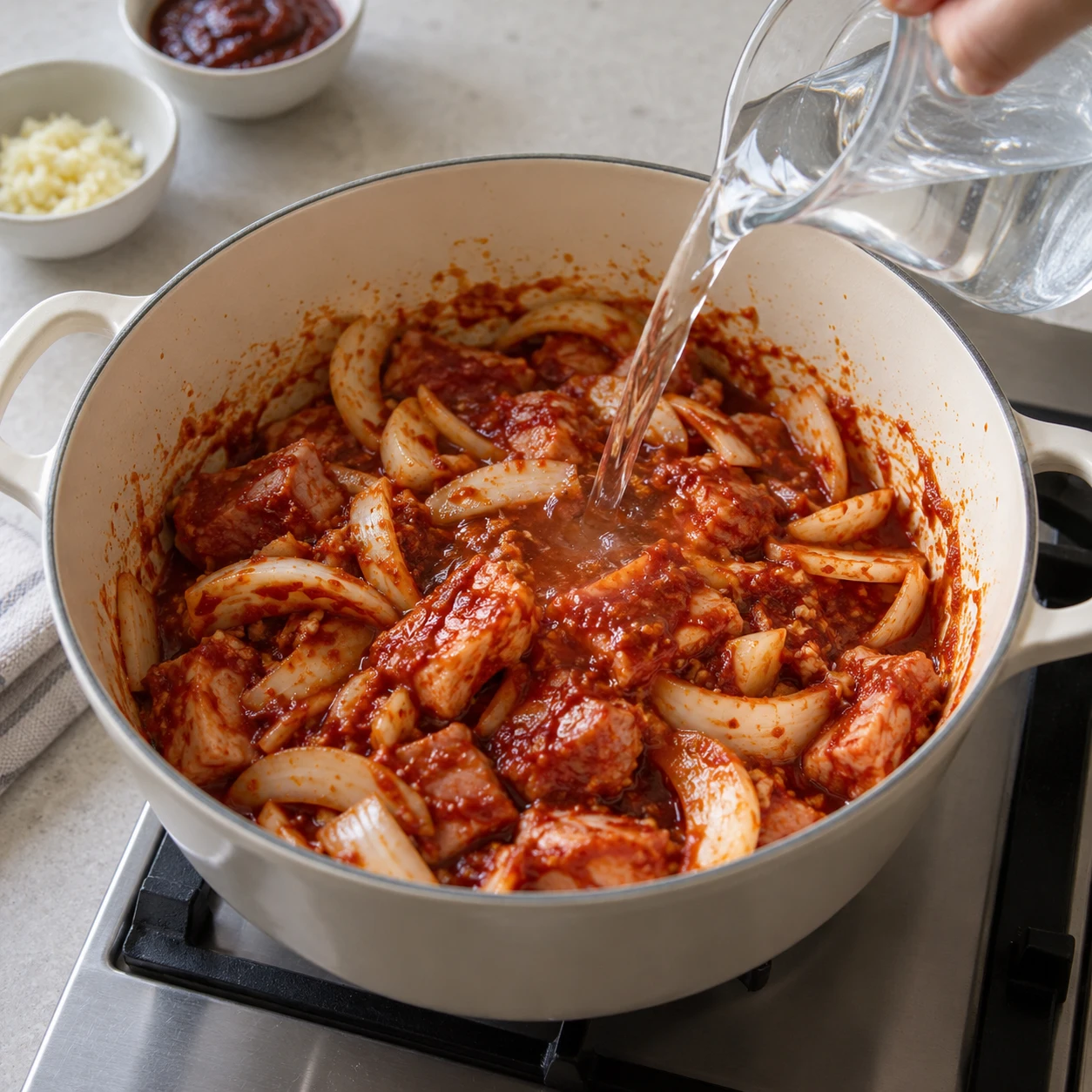
Lower the heat. Add 2 level eating spoons gochujang, 1 level eating spoon soy sauce, 2 small teaspoons minced garlic and the optional 1 small teaspoon chili flakes. Stir for 20–30 seconds to coat the pork, then immediately pour in 4 small paper cups water. Scrape up the flavorful brown bits, leaving any burnt black bits behind.
-
Step 4
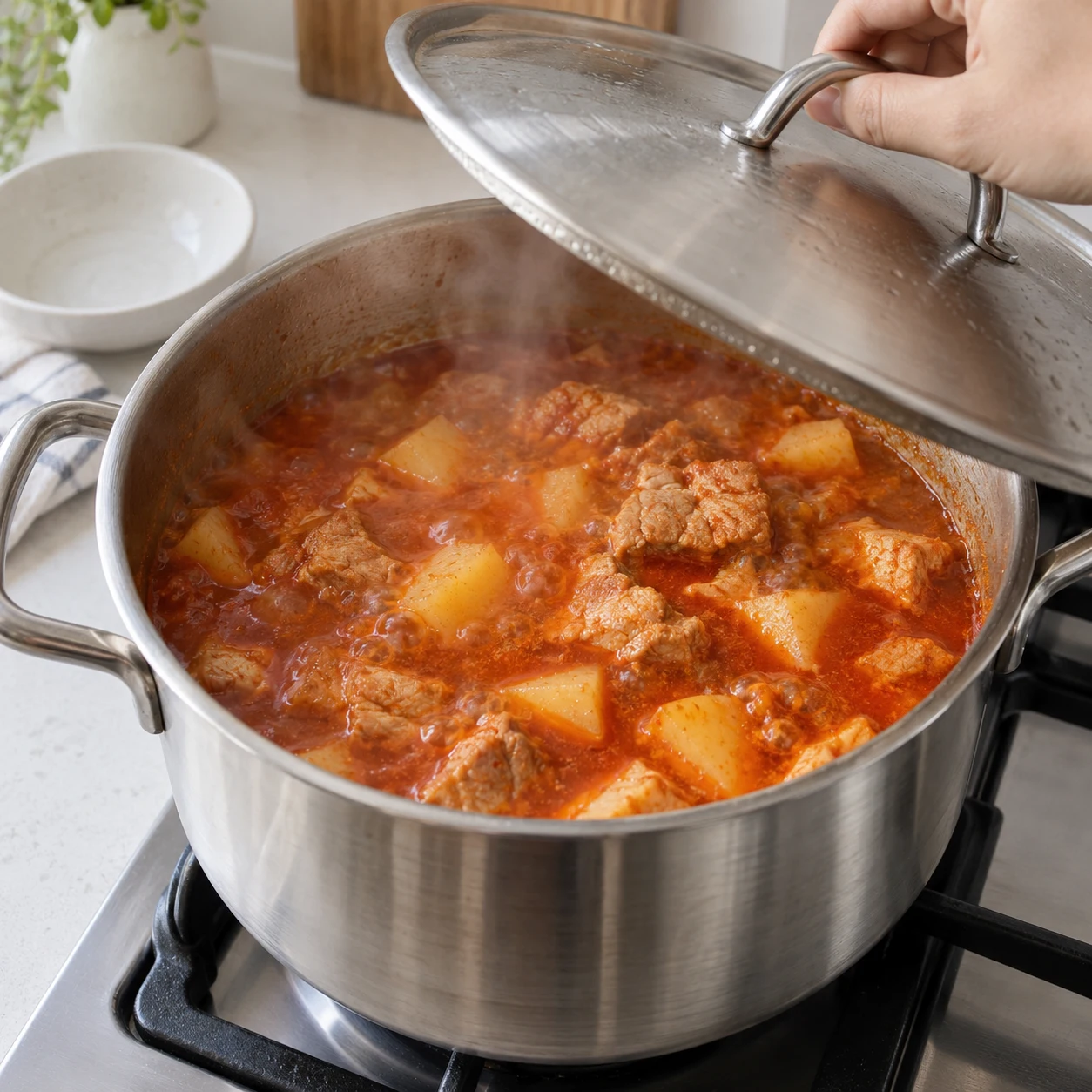
Add the potato and bring to a boil. Skim excess foam, then lower to a steady simmer and cover partly. Cook for 15–20 minutes, stirring once or twice, until the potato is nearly tender and the pork is cooked through. If the liquid gets too low, add warm water ½ paper cup at a time; do not turn up the heat to hurry the potato.
-
Step 5
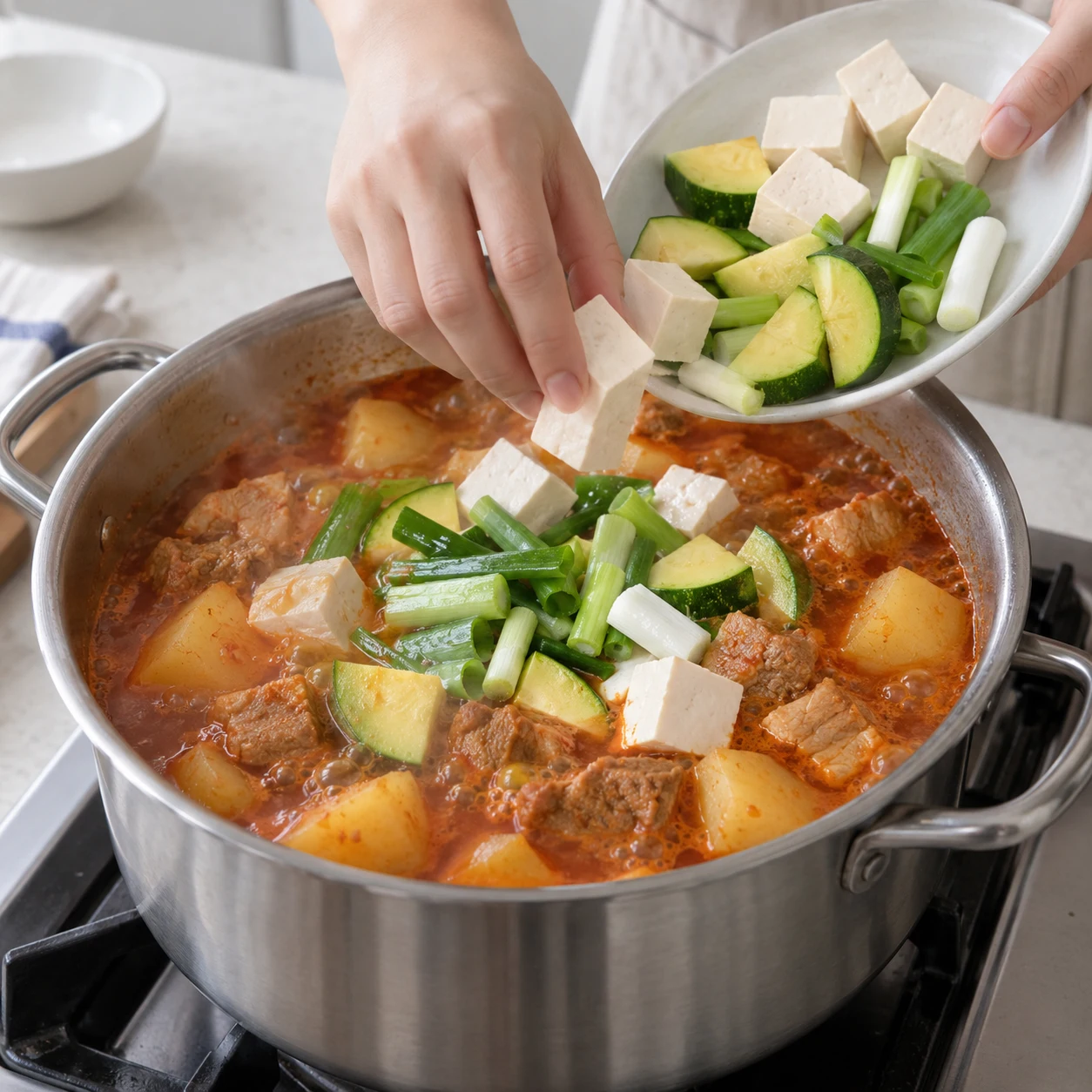
Add the tofu, optional zucchini and optional spring onion. Simmer gently for another 5–7 minutes, until the zucchini is tender and the tofu is hot throughout. Stir carefully so the cubes stay intact. The potato should now yield easily to a fork. For a thermometer check, aim for 74°C in the thickest meat piece, especially when using the chicken alternative.
-
Step 6
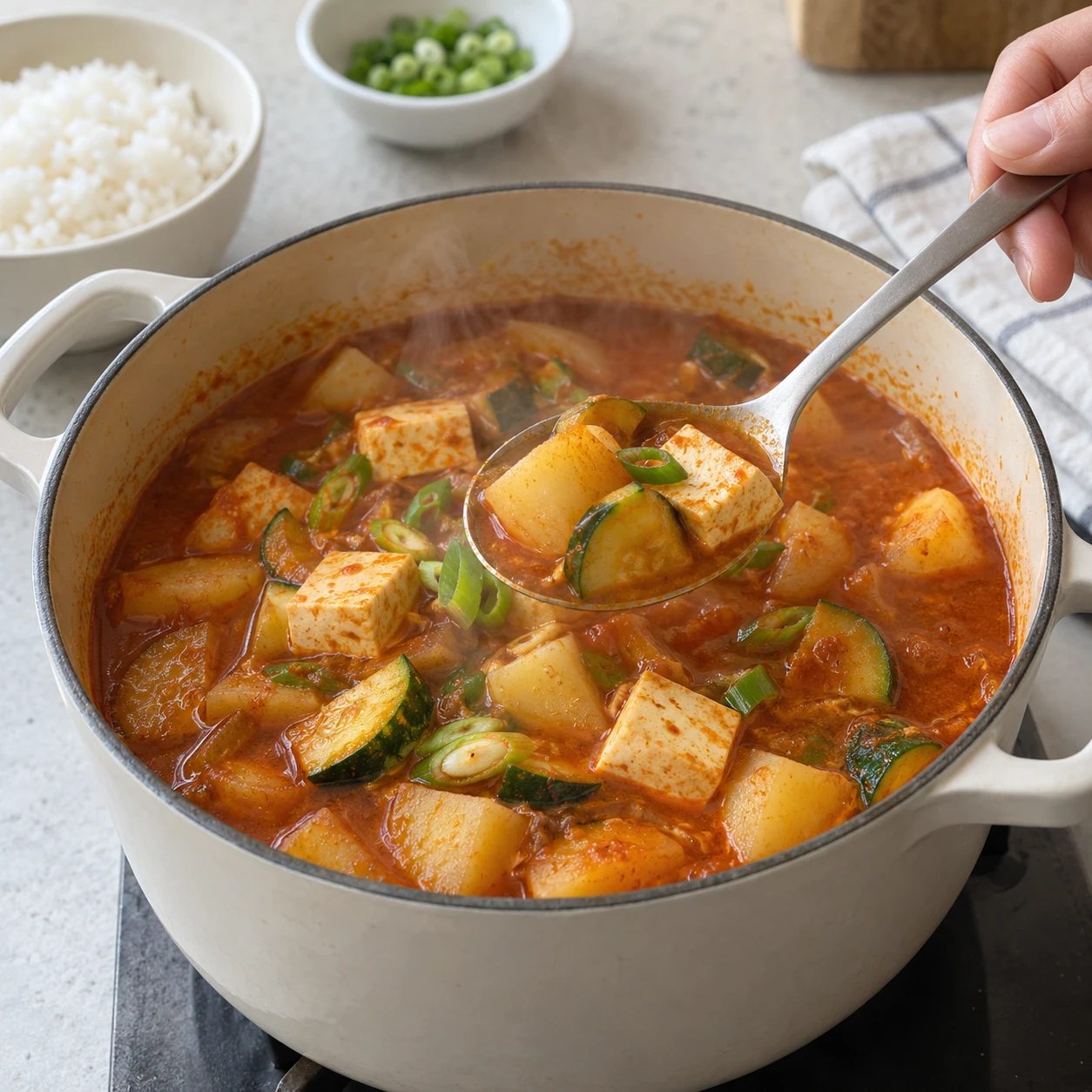
Taste the cooked broth with a clean spoon. If too strong or salty, add warm water 1–2 level eating spoons at a time and bring back to a brief simmer. If mild, simmer uncovered for a few minutes rather than adding a large extra spoon of paste. Turn off the heat and serve with rice if desired, letting the hot tofu and potato cool slightly before eating.
Finished dish
Gochujang jjigae is a red-pepper-paste stew, so kimchi is not required. The pork and onion first build flavor, potato cooks next, and the tofu goes in near the end to keep its shape. Choose mild gochujang and omit the extra chili flakes if you are new to spicy Korean food. Use a small 180 ml paper cup, a level eating spoon of about 15 ml and a small teaspoon of about 5 ml. Household quantities are approximate; use the same cup and spoons throughout. Packet fractions refer to the labeled packet size, not to an unknown bag. Serving rice is optional and is not included in the measured ingredients. The listed water is a starting amount, with small extra additions only when needed. Refrigerate leftovers in a shallow covered container within 2 hours, or within 1 hour if the room is above 32°C. Keep at 4°C or colder and use within 3–4 days. Reheat cooked leftovers until hot throughout, reaching 74°C if measured. Cool in smaller covered containers. Contains soy from tofu and sauce; gochujang and soy sauce may also contain wheat.