Korean pork curry rice (dwaejigogi kare-raisu)
A complete, easy meal of pork, potato, carrot and onion in a smooth yellow Korean curry sauce over rice. Prepared curry sauce powder supplies both seasoning and thickener.

Ingredients
2 servings

Everyday kitchen measurements
For 2 servings. Use a small 180 ml paper cup, a level eating spoon (about 15 ml) and a small teaspoon (about 5 ml).
How to fill the cup and spoons
Use the same cup and spoons throughout. Their sizes vary, so these amounts are approximate. Spoon flour in loosely and level the top without pressing. Measure vegetables after chopping, without packing them down. The amounts in g/ml are the original reference quantities. For part of a pack, use the specified pack weight and divide the contents evenly.
King Arthur Baking-
Essential
Required; use the listed amount and preparation.
-
Essential
Required; use the listed amount and preparation.
-
Essential
Required; use the listed amount and preparation.
-
Essential
Required; use the listed amount and preparation.
-
Essential
Required; use the listed amount and preparation.
-
Essential
Required; use the listed amount and preparation.
-
Substitute available
If Neutral cooking oil is unavailable
- Use instead
- Mild olive oil
- Substitute quantity
- 1 tablespoon (15 ml)Reference quantity: 15 ml
If neutral oil is unavailable, use 1 tablespoon mild olive oil (15 ml) for the initial sauté. Keep the heat at medium and all ingredient quantities and cooking times unchanged.
-
Essential
Required; use the listed amount and preparation.
Tap each ingredient as you prepare it. Check product labels for egg, soy, sesame, wheat, fish or shellfish where relevant.
Step-by-step cooking
Check off a completed step to move to the next one. After the last step, you will move to the finished dish.
Completed steps are saved in this browser. Start over to clear this recipe’s progress.
-
Step 1
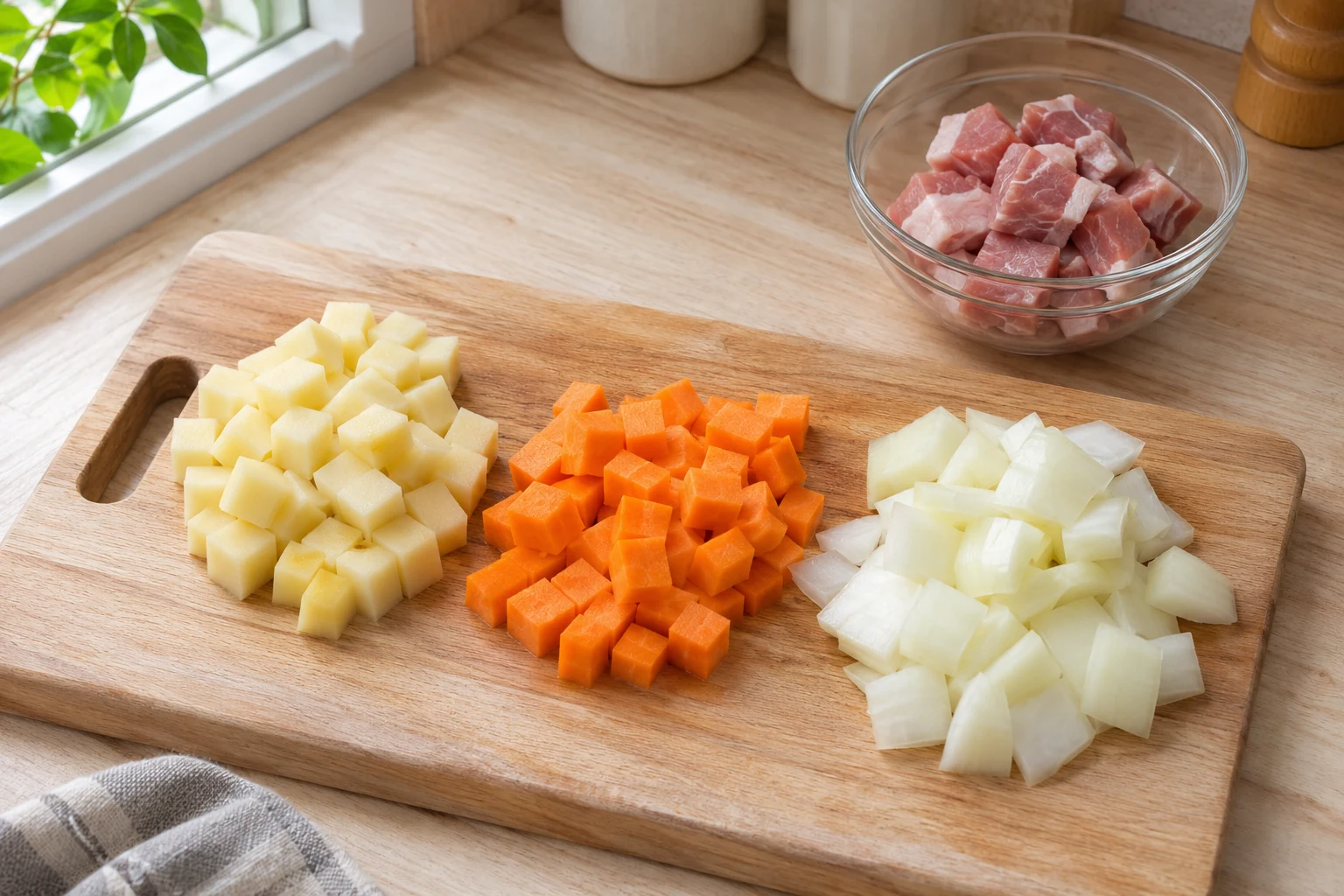
Peel and wash potato, carrot and onion; cut potato and carrot into 1 cm cubes and onion into 1.5 cm squares. On a separate meat board, cut 150 g pork into 1 cm cubes without washing. Measure 50 g prepared Korean curry sauce powder, not plain curry spice. Have 2 paper cups water (360 ml) and up to ⅓ cup (60 ml) extra ready.
-
Step 2
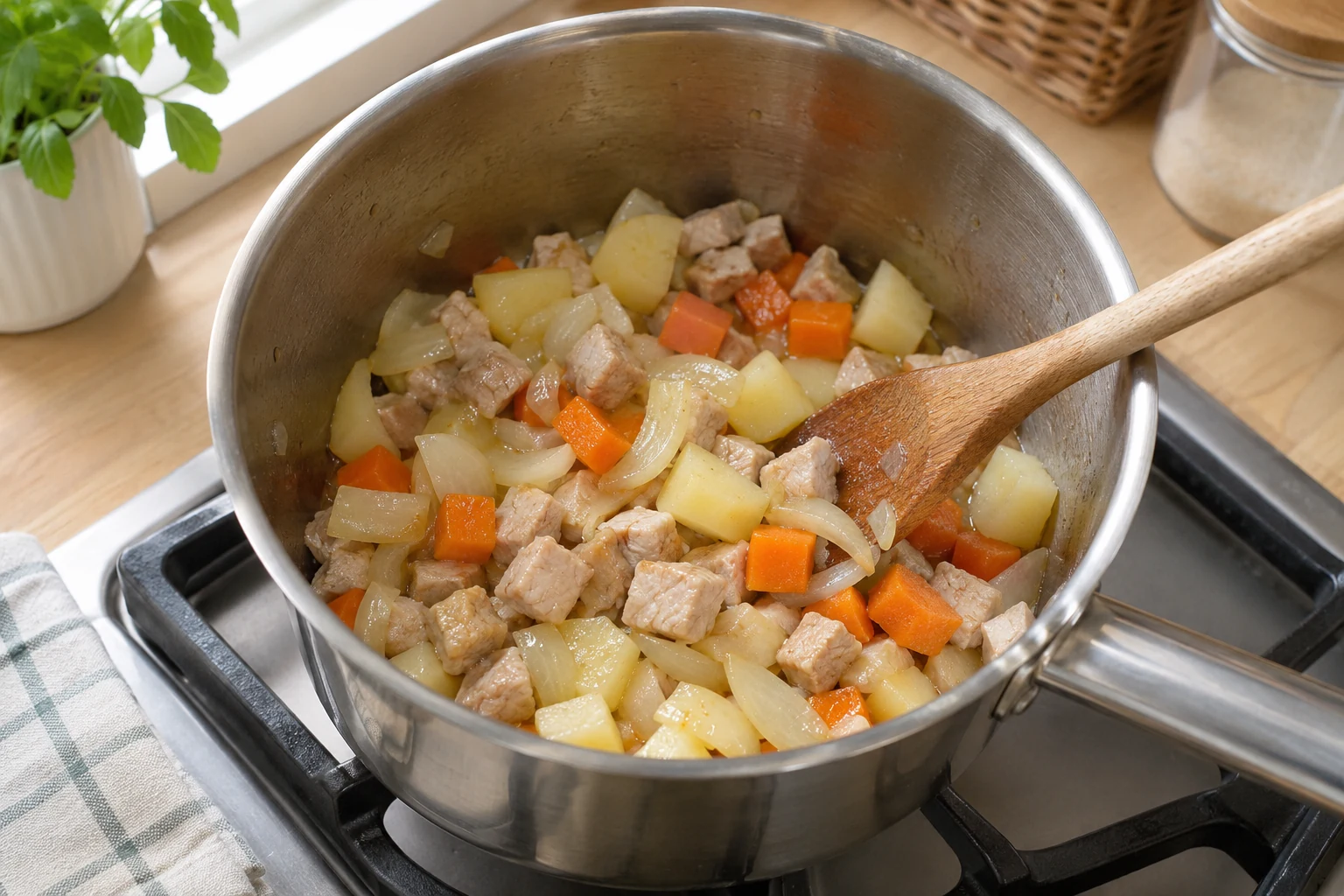
Heat 1 tablespoon oil in a medium saucepan over medium heat. Stir the pork for 3 minutes until the outside turns opaque. Add onion and stir 2 minutes, then potato and carrot for 1 minute. Opaque meat is only a visual stage, not a safety test; it finishes cooking in the simmer.
-
Step 3
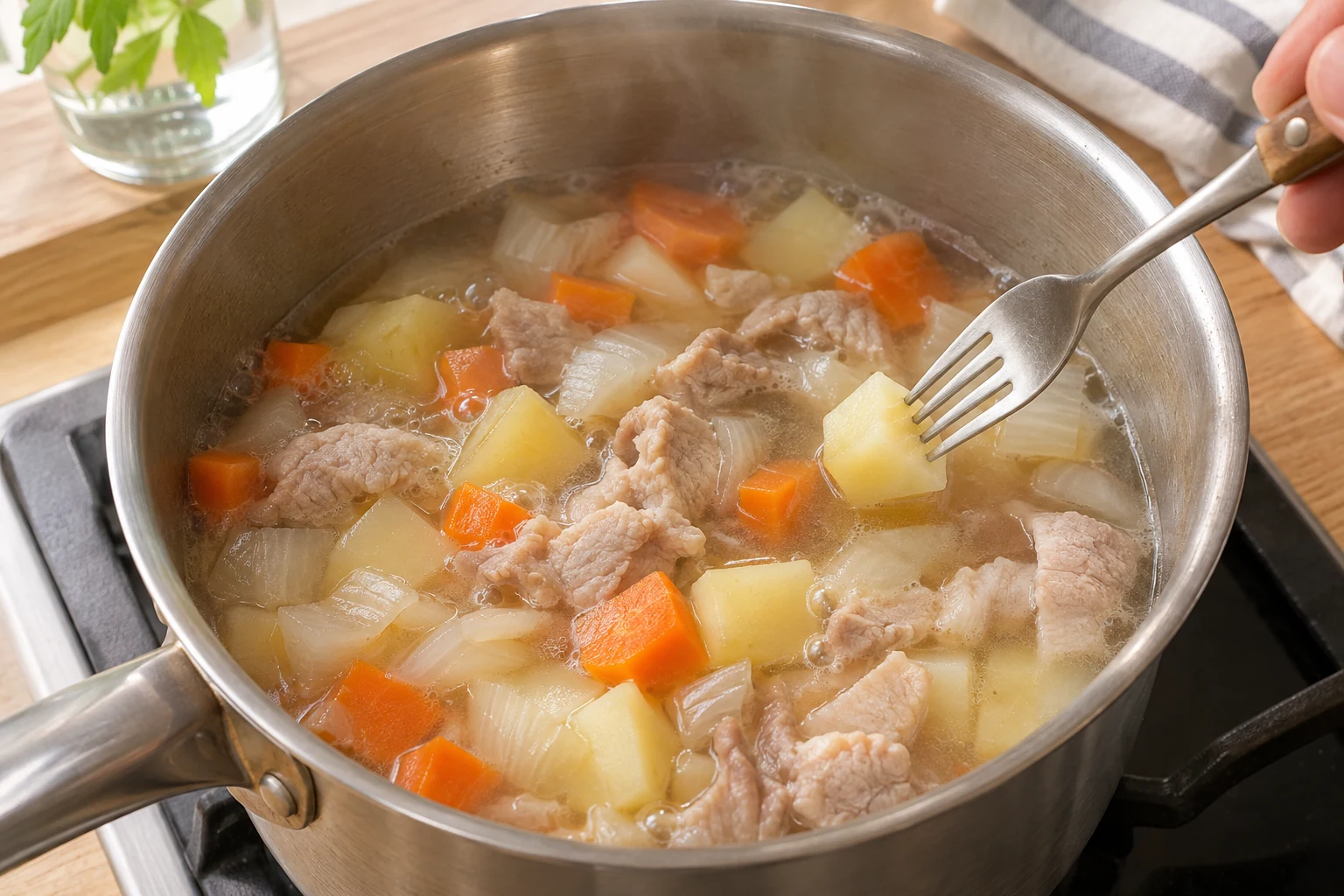
Add 360 ml water, bring to a boil, then simmer partly covered over medium-low heat for 10–12 minutes. Stir twice so the bottom does not catch. A fork must slide easily into a potato cube; if still firm, add a little reserved water and cook 2–3 minutes longer before adding the powder.
-
Step 4
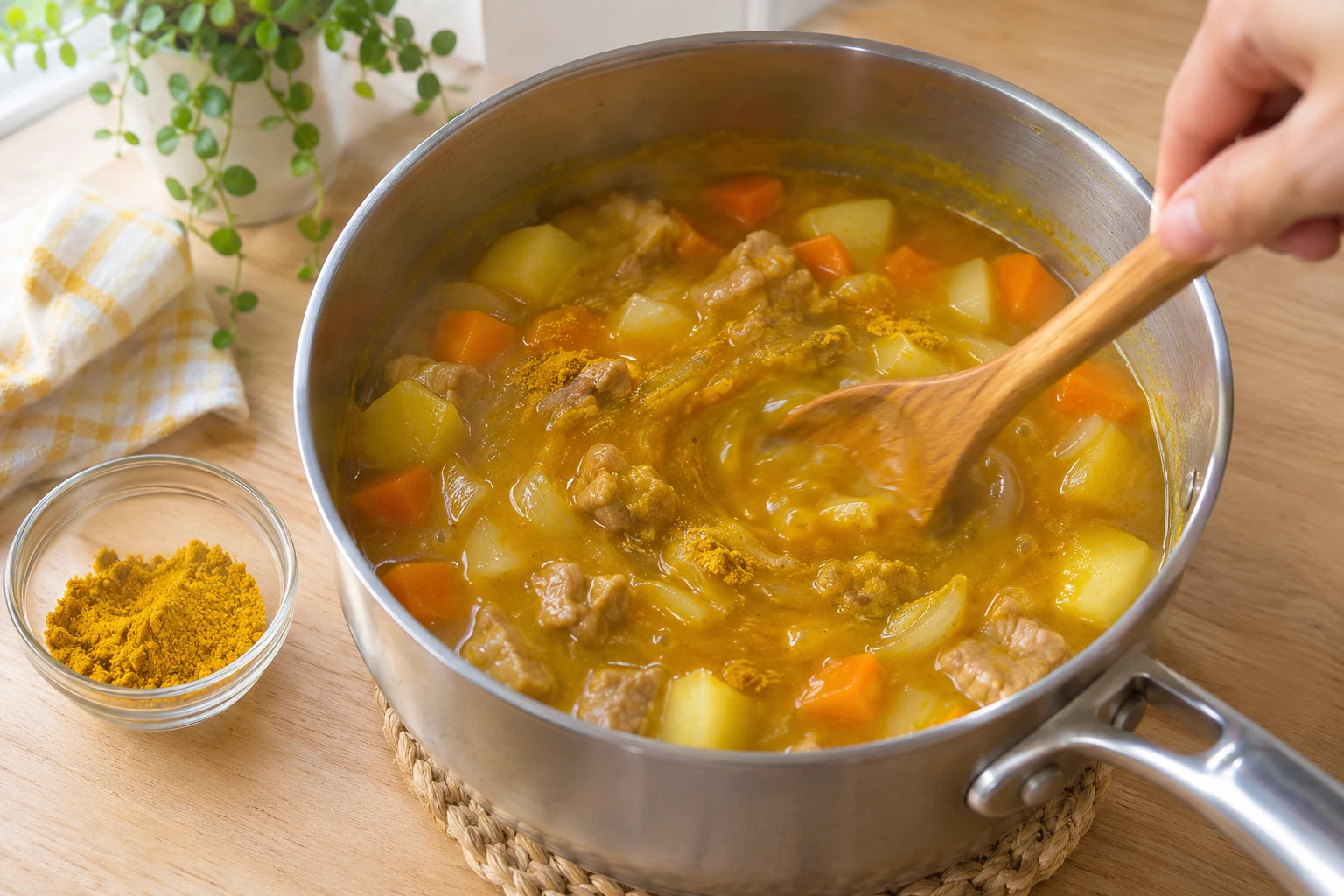
Turn OFF the heat. Sprinkle in the 50 g prepared curry powder in 3 additions, stirring each until smooth. Return to low heat and stir 3–4 minutes until it coats a spoon; add reserved water a tablespoon at a time if too thick. Check pork reaches at least 71°C. Heat the two rice pouches according to their labels and serve curry beside rice on two plates.


Finished dish
A tablespoon is 15 ml, a teaspoon 5 ml and a small paper cup 180 ml. Easy because everything cooks in one saucepan after basic chopping. Use a Korean instant curry SAUCE mix containing thickener; plain curry spice, ready-to-eat sauce pouches and solid roux blocks need different directions. Follow the pack if its dilution differs. Curry mixes may contain wheat, milk, soy or other allergens: read the label. Store curry and rice separately and use refrigerated leftovers within 2 days. Keep raw meat and its utensils separate from cooked food. Refrigerate leftovers in shallow containers at 4°C or below within 2 hours, or within 1 hour above 32°C. Reheat leftovers thoroughly to 74°C.
Related recipes


Enjoy every bite
How to enjoy it
Divide 420 g hot rice and the curry between two plates. Leave a little rice uncovered so each diner can mix a bite at a time; add no extra salt before tasting the prepared mix.

