Doenjang potato potage
A Korean-Western fusion soup combining a simple potato-and-milk potage with the savory depth of Korean soybean paste. Mash by hand for a gently rustic texture; no blender is required.

Ingredients
2 servings

Everyday kitchen measurements
For 2 servings. Use a small 180 ml paper cup, a level eating spoon (about 15 ml) and a small teaspoon (about 5 ml).
How to fill the cup and spoons
Use the same cup and spoons throughout. Their sizes vary, so these amounts are approximate. Spoon flour in loosely and level the top without pressing. Measure vegetables after chopping, without packing them down. The amounts in g/ml are the original reference quantities. For part of a pack, use the specified pack weight and divide the contents evenly.
King Arthur Baking-
Essential
Needed for this version; use the listed amount at the stated step.
-
Essential
Needed for this version; use the listed amount at the stated step.
-
Essential
Needed for this version; use the listed amount at the stated step.
-
Substitute available
If Unsalted butter is unavailable
- Use instead
- Neutral cooking oil
- Substitute quantity
- 1 level tablespoonReference quantity: 15 ml
If butter is unavailable, use this amount of neutral cooking oil for softening the onion and garlic. Do not add butter as well. The soup will have a lighter buttery aroma.
-
Essential
Needed for this version; use the listed amount at the stated step.
-
Substitute available
If Pasteurized milk is unavailable
- Use instead
- Unsweetened oat drink
- Substitute quantity
- 1 small paper cupReference quantity: 180 ml
If milk is unavailable, use this amount of plain unsweetened oat drink. It may taste slightly sweeter or thicken differently; keep the heat gentle. Butter still contains milk unless you also use its listed oil replacement. Check the drink label for allergens; do not use a sweetened or flavored drink.
-
Substitute available
If Korean doenjang soybean paste is unavailable
- Use instead
- Mild miso soybean paste
- Substitute quantity
- 1 level tablespoonReference quantity: 18 g
If doenjang is unavailable, use this amount of mild miso. Dissolve it in warm soup before adding, at the same final step. The flavor is milder and this version loses some distinctly Korean doenjang character. It still contains soy; check the label for wheat. Do not add both pastes.
-
Optional
May be omitted without changing the other quantities.
Tap each ingredient as you prepare it. Check product labels for egg, soy, sesame, wheat, fish or shellfish where relevant.
Step-by-step cooking
Check off a completed step to move to the next one. After the last step, you will move to the finished dish.
Completed steps are saved in this browser. Start over to clear this recipe’s progress.
-
Step 1
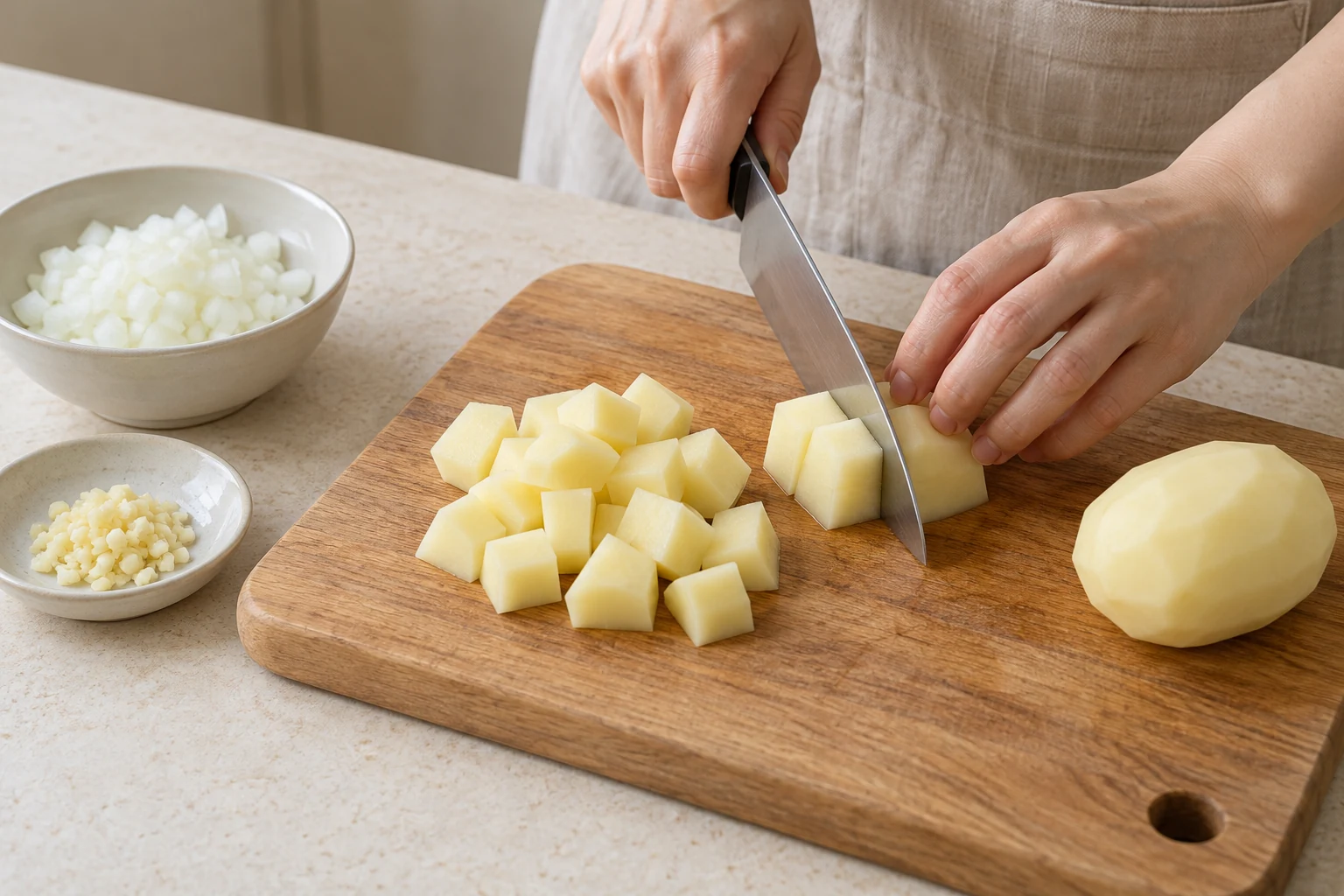
Choose firm potatoes without green patches. Wash and peel 2 medium potatoes, about 300 g, then cut into even 1.5 cm cubes. Peel and finely chop half an onion and 2 garlic cloves. Set aside the milk and doenjang; do not add them yet.
-
Step 2
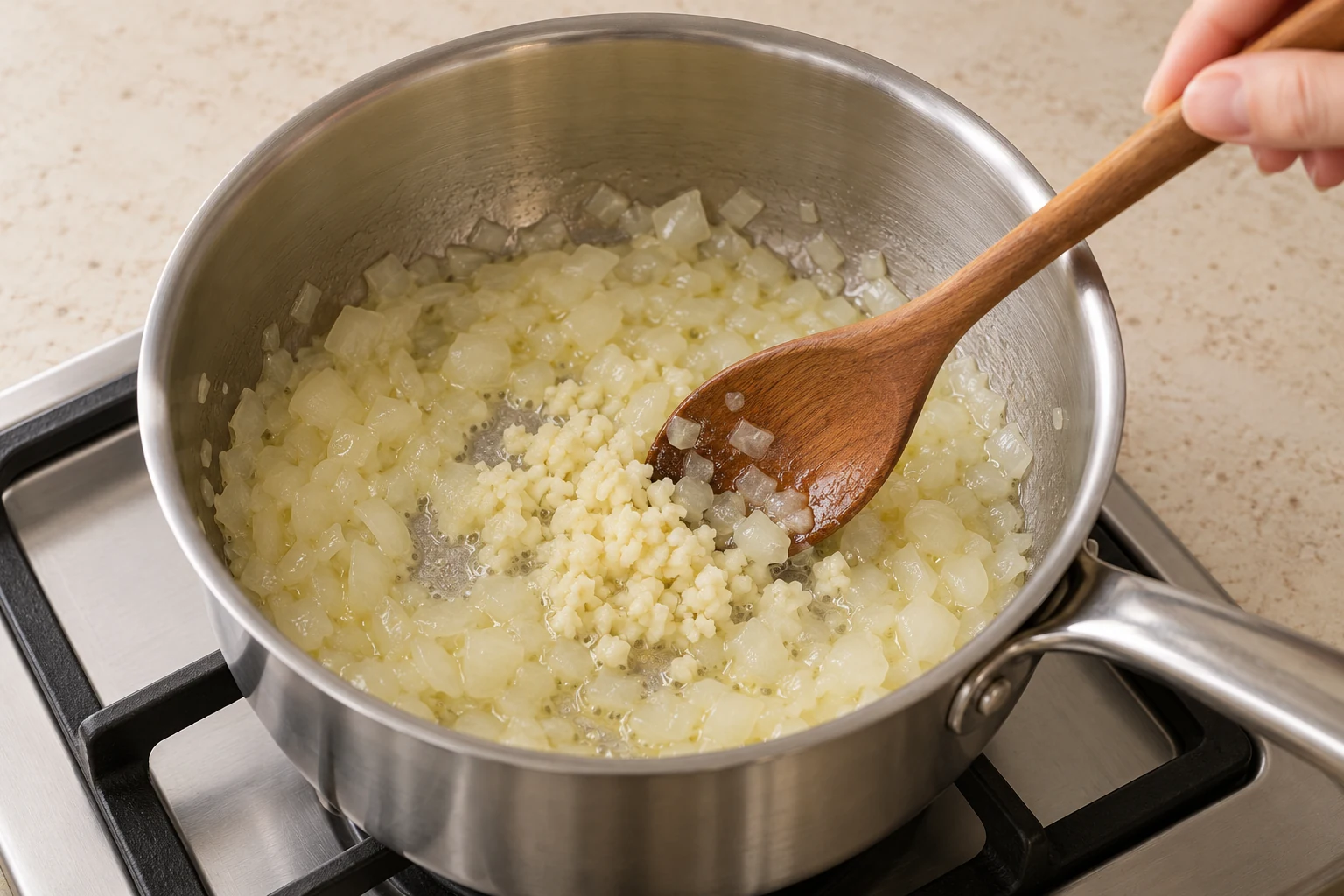
Melt 1 level tablespoon unsalted butter in a medium saucepan over medium-low heat. Add the onion and cook for 4 minutes, stirring, until softened but not brown. Add the garlic and stir for 30 seconds. Lower the heat if it starts coloring.
-
Step 3
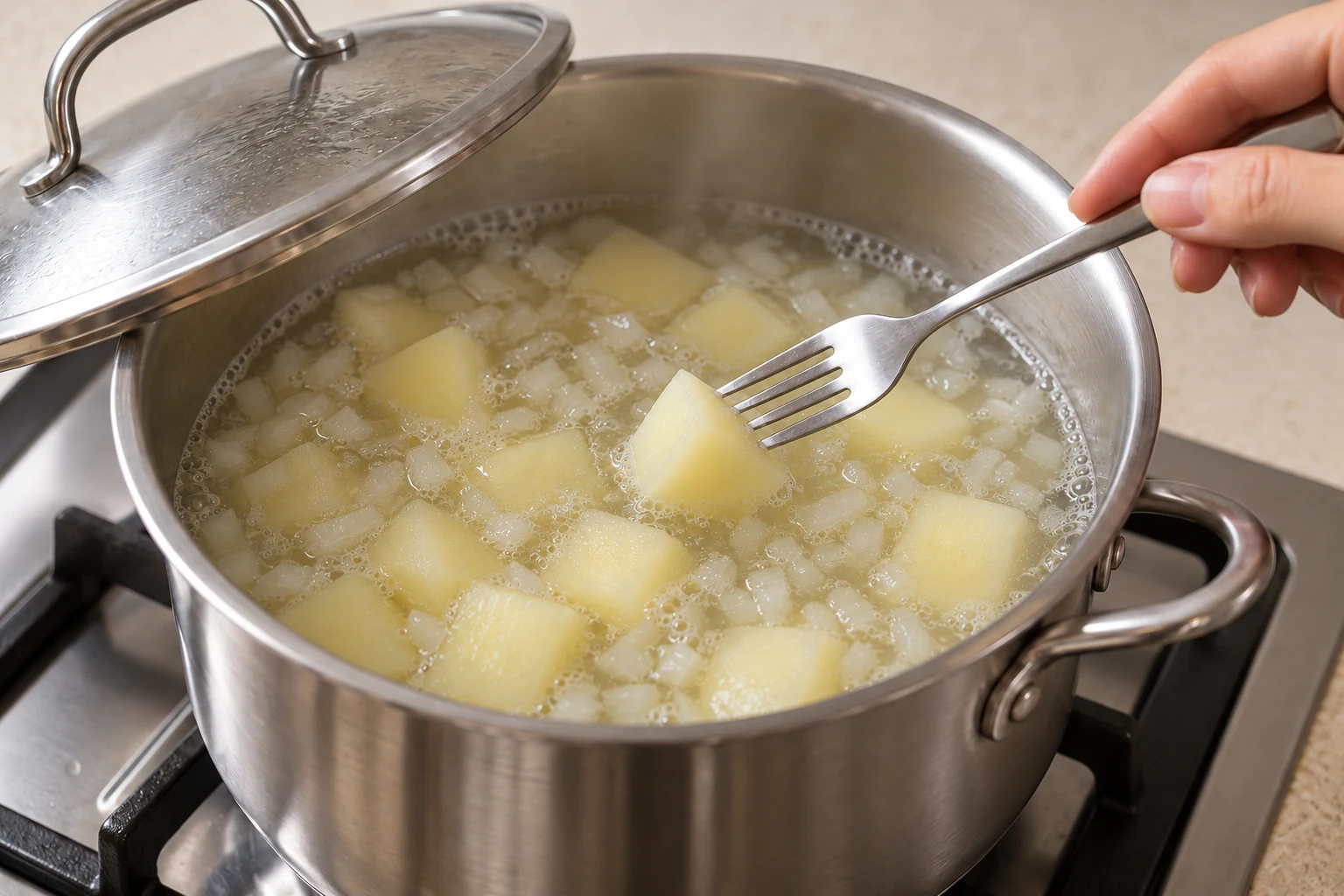
Add the potato cubes and 2 paper cups water, keeping the remaining half cup aside. Bring to a boil, partly cover and simmer gently for 12–15 minutes until a fork passes easily through the potatoes and they crush without resistance. If still firm, simmer a few minutes longer; do not mash undercooked potatoes.
-
Step 4
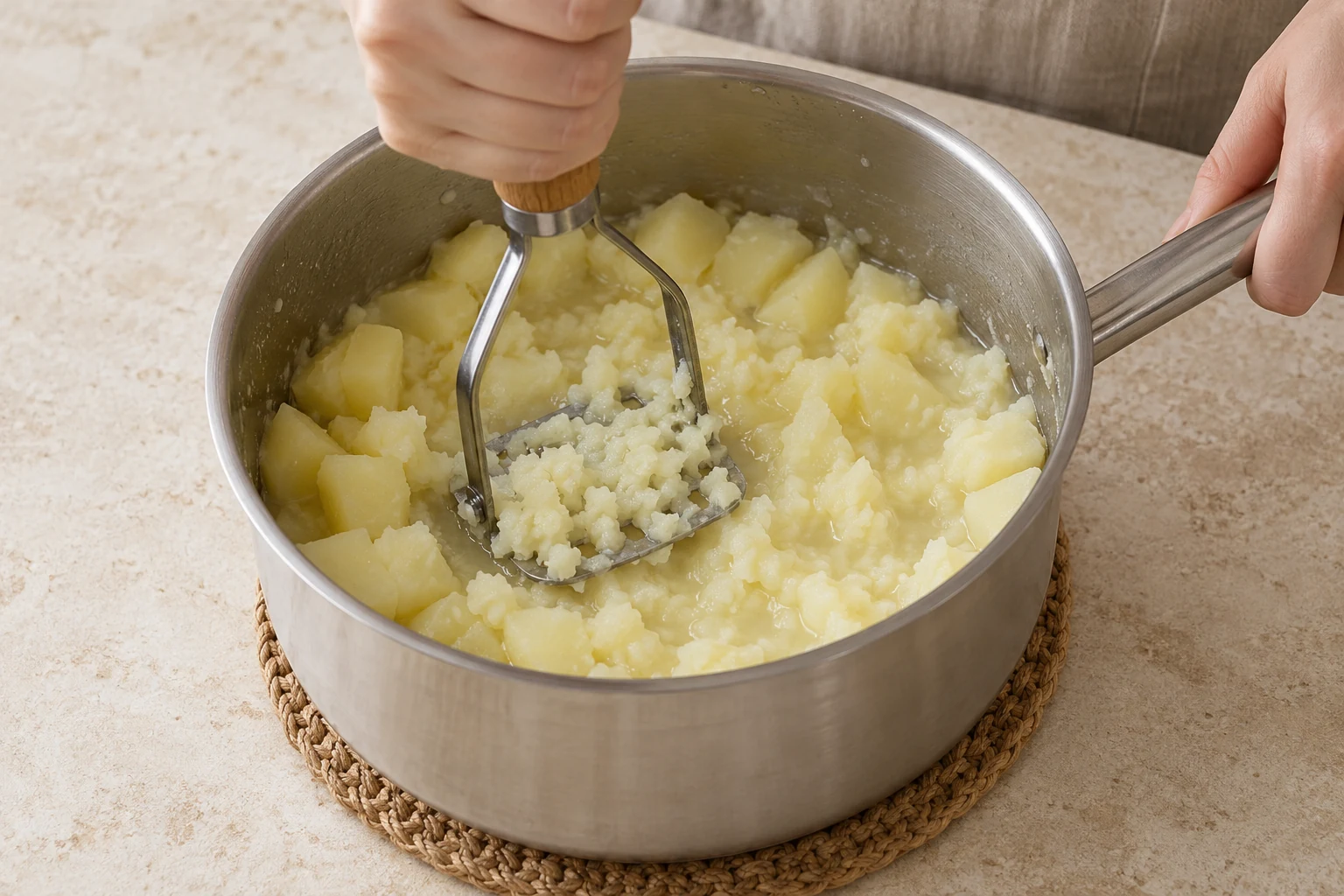
Turn off the heat and keep the saucepan steady on a heatproof surface. Mash the potatoes directly in their cooking liquid with a hand masher or sturdy fork until mostly smooth with a few soft pieces. Do not drain the liquid. Take care around steam and splashes; an electric blender is unnecessary.
-
Step 5
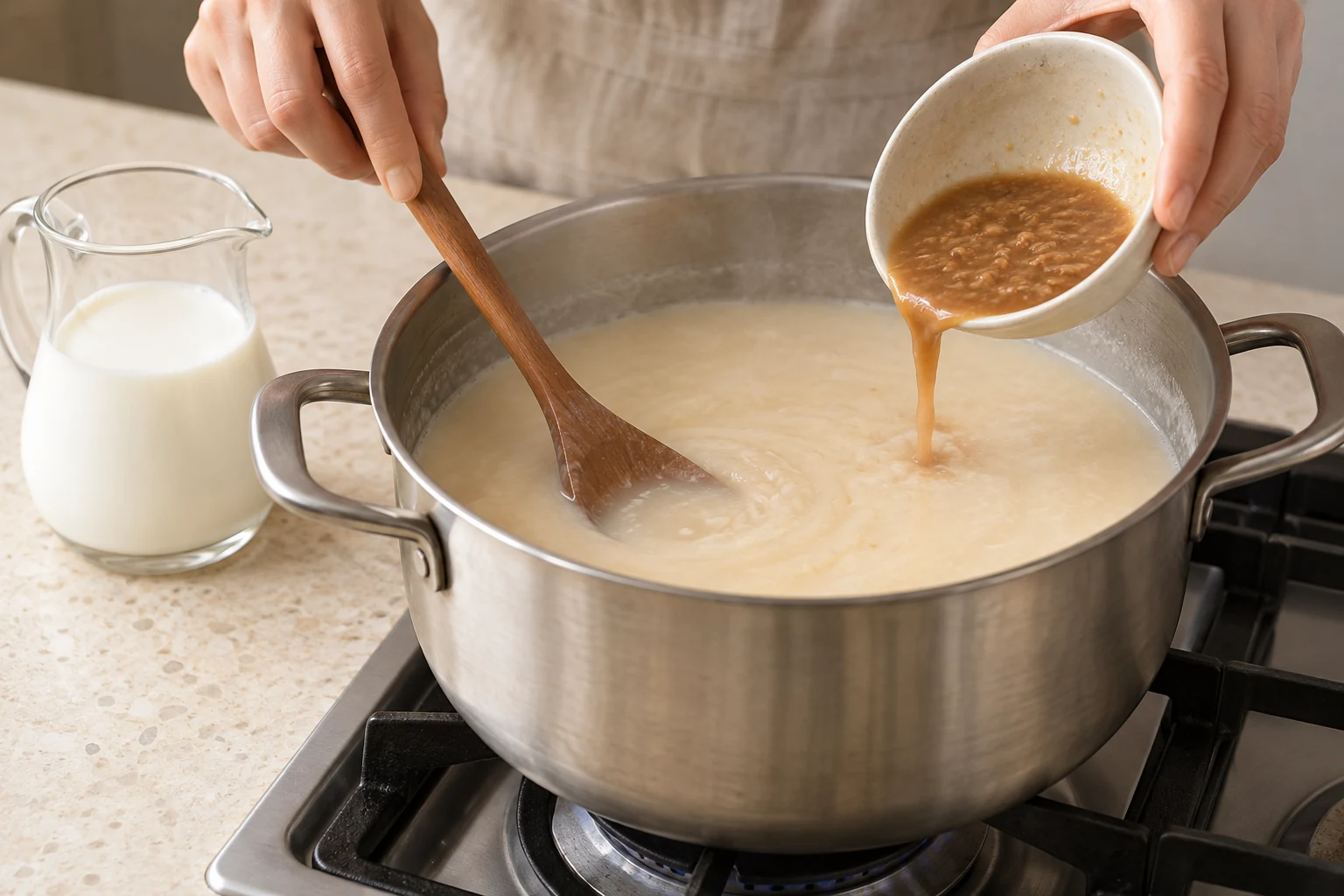
Stir in 1 paper cup milk. Mix 1 level tablespoon doenjang with 2 tablespoons warm soup in a small bowl, then stir it back into the pan. Heat gently for 3–5 minutes, stirring, until evenly hot and lightly simmering; avoid a hard boil. If too thick, add some or all of the reserved half cup water and heat through again. Divide into two bowls and add optional pepper.


Finished dish
2 soup servings. Paper cup 180 ml; level tablespoon 15 ml; small teaspoon 5 ml. Contains milk and soy; some doenjang contains wheat. This is a fusion potato soup, not traditional doenjang jjigae. No cream or extra salt is required. Refrigerate within 2 hours at 4°C or below and eat within 2 days; reheat gently until hot throughout, adding a little water if thick.
Related recipes


Enjoy every bite
How to enjoy it
Serve warm with toast or a small savory pancake. Add the soybean paste at the end and keep the heat gentle after the milk goes in.
Serve it with

King oyster mushroom jeon
Thin king oyster slices with a light flour-and-egg coating, pan-fried until golden and tender. A mild traditional Korean side, made as individual pieces rather than a thick batter pancake.

Old-fashioned Korean street toast
Buttery golden toast around a thin cabbage-and-egg patty, finished with a little sugar and ketchup. A simple sweet-and-savoury Korean street sandwich, without requiring ham or cheese.