Mushroom doenjang-butter udon
Chewy udon and golden mushrooms tossed in a glossy Korean soybean-paste butter sauce. This quick fusion noodle dish uses a little doenjang for deep flavor, with an exact white-miso alternative.

AI-generated cooking illustrations. Follow the written quantities and instructions.
Ingredients
2 servings

Everyday kitchen measurements
For 2 servings. Use a small 180 ml paper cup, a level eating spoon (about 15 ml) and a small teaspoon (about 5 ml).
How to fill the cup and spoons
Use the same cup and spoons throughout. Their sizes vary, so these amounts are approximate. Spoon flour in loosely and level the top without pressing. Measure vegetables after chopping, without packing them down. The amounts in g/ml are the original reference quantities. For part of a pack, use the specified pack weight and divide the contents evenly.
King Arthur Baking-
Substitute available
If Fresh or frozen udon noodles is unavailable
- Use instead
- Dry spaghetti
- Substitute quantity
- ½ of a 360 g packReference quantity: 180 g
Boil according to the packet until just tender; reserve the listed 90 ml cooking water, then drain and follow the sauce steps. Cooking may take 8–12 minutes. The texture will be different.
-
Essential
Needed for the flavor and texture of this version. Use the listed amount.
-
Essential
Needed for the flavor and texture of this version. Use the listed amount.
-
Substitute available
If Unsalted butter is unavailable
- Use instead
- Olive oil
- Substitute quantity
- 2 level tablespoonsReference quantity: 30 ml
Use this instead of the butter, not in addition. Warm the oil without smoking and follow the same garlic or mushroom step. The sauce will have less buttery flavor.
-
Substitute available
If Korean doenjang soybean paste is unavailable
- Use instead
- White miso paste
- Substitute quantity
- 1 level tablespoonReference quantity: 18 g
Replace the 2 teaspoons doenjang with this amount. Dissolve it in the listed noodle water. The flavor is milder; leave out the optional soy sauce initially and taste before adding any.
-
Optional
May be omitted. Skip only preparing and adding this ingredient; keep the other quantities unchanged.
-
Essential
Needed for the flavor and texture of this version. Use the listed amount.
-
Optional
May be omitted. Skip only preparing and adding this ingredient; keep the other quantities unchanged.
Tap each ingredient as you prepare it. Check product labels for egg, soy, sesame, wheat, fish or shellfish where relevant.
Step-by-step cooking
-
Step 1
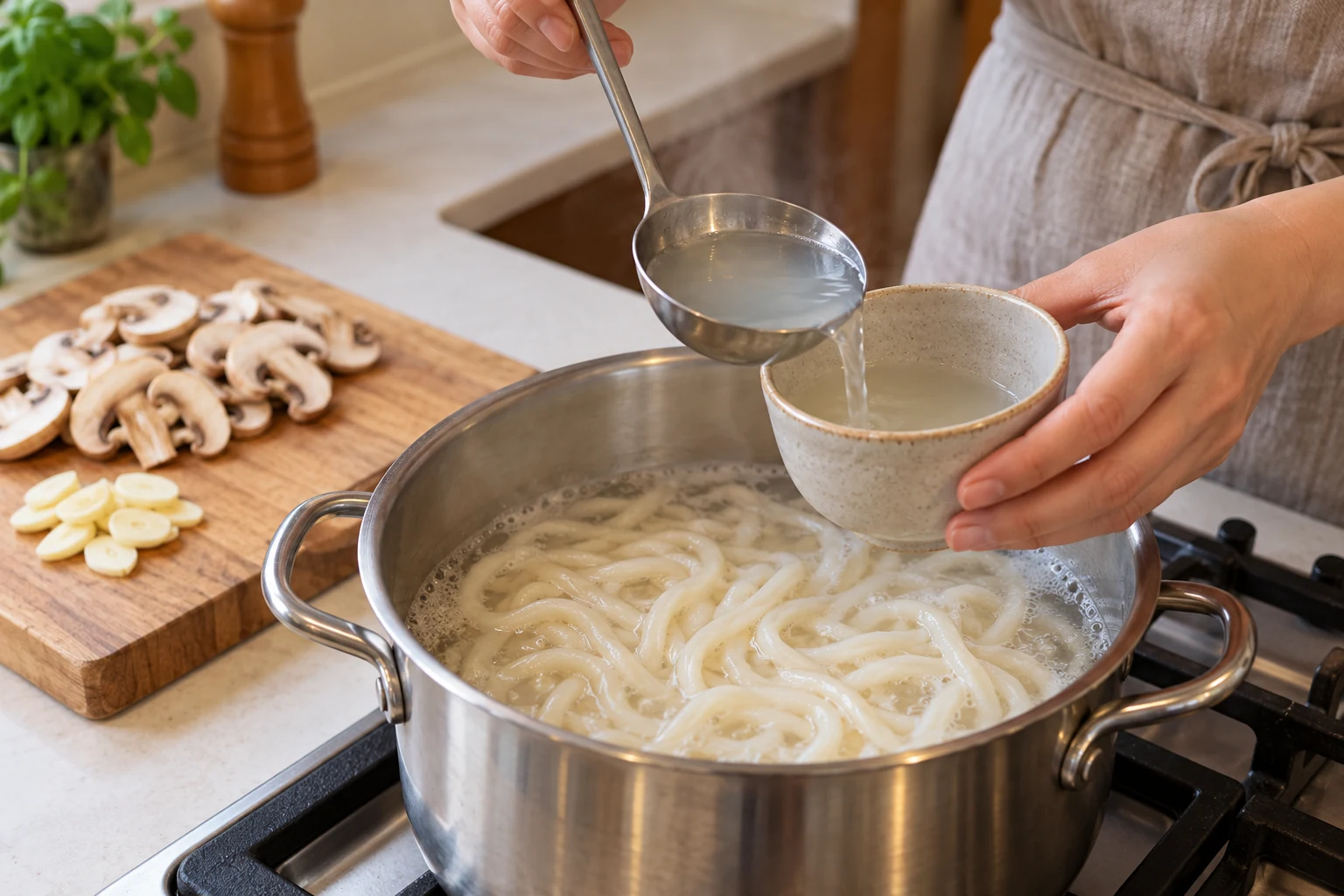
Slice 100 g mushrooms and 2 garlic cloves. Chop the optional spring onion. Bring a pot of water to a boil. Cook 400 g udon according to the packet, separating the strands gently. Before draining, reserve ½ small paper cup cooking water, 90 ml. Do not rinse the hot noodles.
-
Step 2
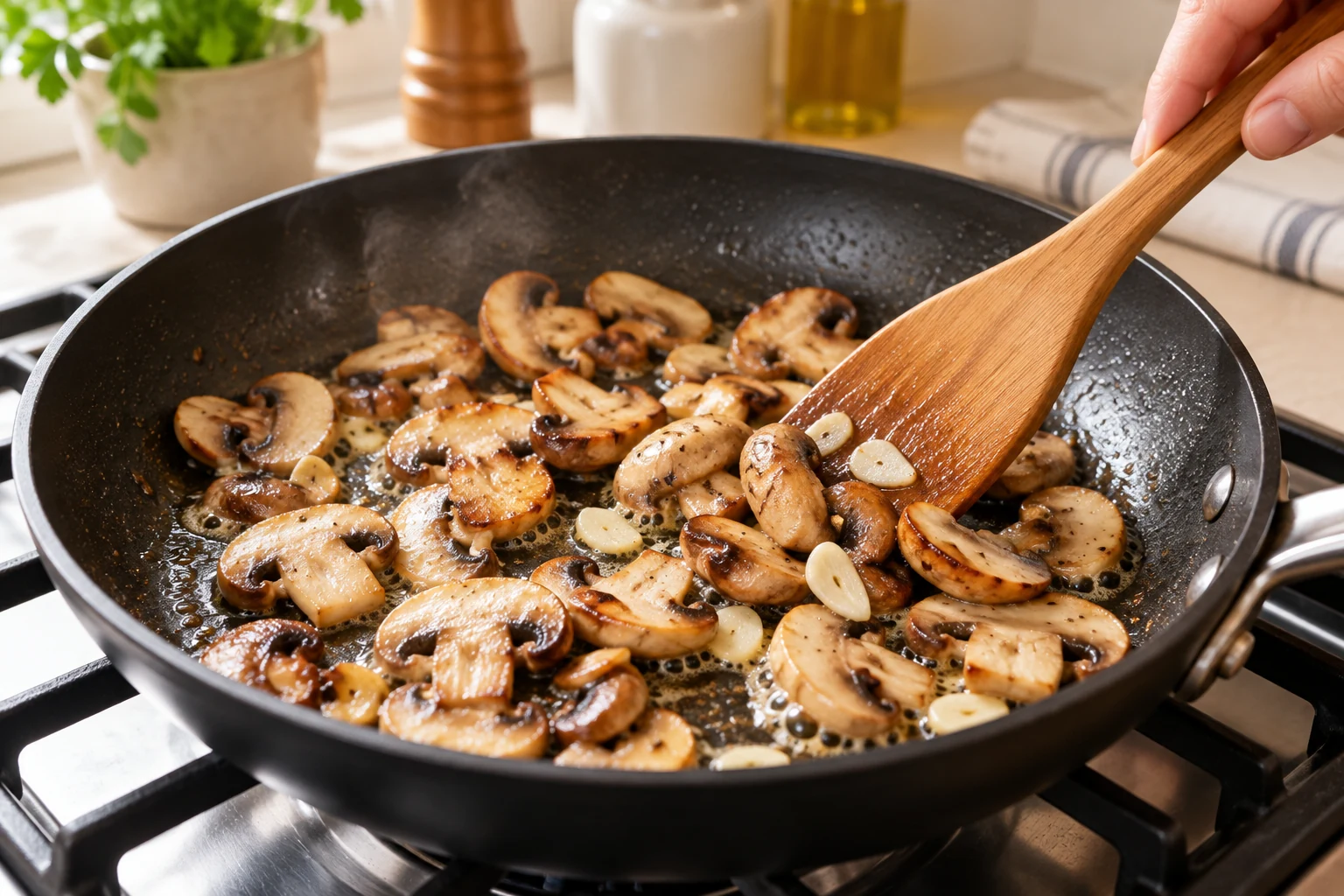
Melt 2 level tablespoons butter in a wide pan over medium heat. Add the mushrooms and cook for 4–5 minutes, stirring, until their moisture evaporates and the edges turn golden. Add the sliced garlic and stir for 30 seconds without browning it.
-
Step 3
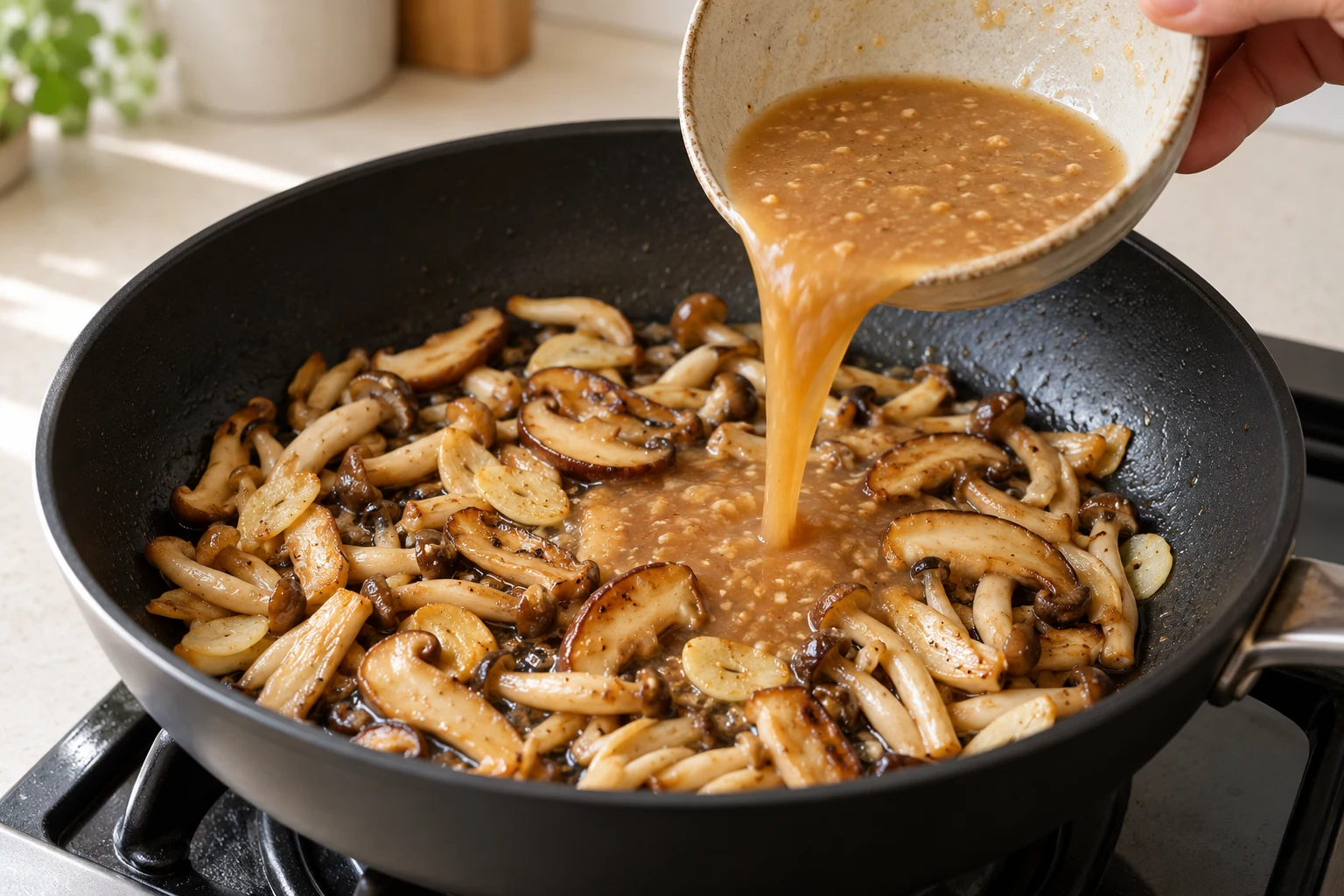
Stir 2 small teaspoons doenjang with the reserved 90 ml noodle water in a small bowl until mostly smooth. Pour it into the mushroom pan. Simmer gently for 1 minute, stirring and scraping the bottom. Small soybean pieces in doenjang are normal; the sauce should stay fluid.
-
Step 4
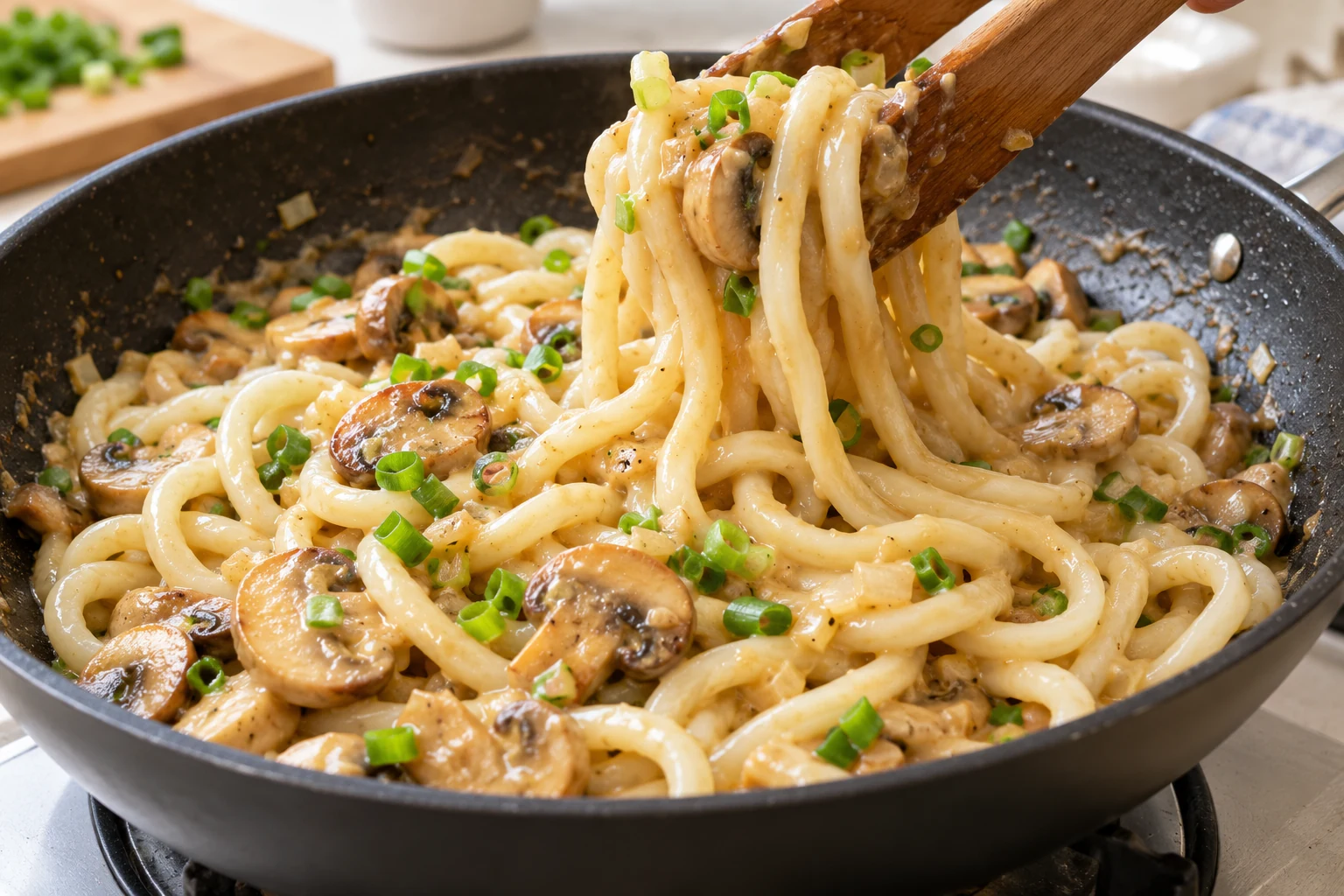
Add the drained udon and toss over low heat for 1–2 minutes until hot and evenly coated. Taste before adding the optional 1 small teaspoon soy sauce; omit it if the paste is already salty enough. Turn off the heat, add the optional spring onion and serve immediately.


Finished dish
For 2 servings. The paper cup holds 180 ml; use half for 90 ml. 1 level tablespoon = 15 ml; 1 small teaspoon = 5 ml. Contains wheat, soy and milk; check noodle and paste labels. This mushroom version is a Korean fusion adaptation, not a traditional udon recipe. Best served fresh. Refrigerate within 2 hours at 4°C or below, use within 24 hours and reheat once until steaming throughout.
Enjoy every bite
How to enjoy it
Serve as soon as the noodles are coated, before they absorb all the sauce. A crisp cucumber side or a small steamed egg dish balances the rich mushroom and butter flavors.
Serve it with

Korean spicy cucumber salad (oi-muchim)
A crisp vegetable bite contrasts with a richer or spicier dish.
View recipe
Korean steamed eggs
Soft, gently seasoned egg contrasts with a stronger sauce or a crisp bite.
View recipe