Bok choy with Korean soybean dressing
Tender-crisp bok choy gently tossed with doenjang and sesame oil. A mild Korean vegetable side with practical alternatives for the greens and soybean paste.

Ingredients
2 servings

Everyday kitchen measurements
For 2 servings. Use a small 180 ml paper cup, a level eating spoon (about 15 ml) and a small teaspoon (about 5 ml).
How to fill the cup and spoons
Use the same cup and spoons throughout. Their sizes vary, so these amounts are approximate. Spoon flour in loosely and level the top without pressing. Measure vegetables after chopping, without packing them down. The amounts in g/ml are the original reference quantities. For part of a pack, use the specified pack weight and divide the contents evenly.
King Arthur Baking-
Substitute available
If Baby bok choy is unavailable
- Use instead
- Napa cabbage
- Substitute quantity
- about ¼ of a small head (300 g)Reference quantity: 300 g
Replace the bok choy with the same amount. Wash and cut into 2 cm strips; blanch the thick stalks for 2 minutes, then add leaves for 1 minute. Cool, drain and gently squeeze as directed.
-
Essential
Needed for this version; use the listed amount at the stated step.
-
Essential
Needed for this version; use the listed amount at the stated step.
-
Substitute available
If Plain doenjang (Korean soybean paste) is unavailable
- Use instead
- Plain Japanese awase or brown miso
- Substitute quantity
- 2 small teaspoons (12 g)Reference quantity: 12 g
Replace the doenjang with this amount; do not add both. The flavour is milder and may be sweeter. Choose plain paste, not a ready-made soup mix.
-
Substitute available
If Toasted sesame oil is unavailable
- Use instead
- Edible perilla oil
- Substitute quantity
- 1 small teaspoon (5 ml)Reference quantity: 5 ml
Use instead of sesame oil, not in addition. The aroma changes; choose oil labelled for food use.
-
Optional
May be omitted without changing the other quantities.
-
Optional
May be omitted without changing the other quantities.
-
Optional
May be omitted without changing the other quantities.
-
Essential
Needed for this version; use the listed amount at the stated step.
Tap each ingredient as you prepare it. Check product labels for egg, soy, sesame, wheat, fish or shellfish where relevant.
Step-by-step cooking
Check off a completed step to move to the next one. After the last step, you will move to the finished dish.
Completed steps are saved in this browser. Start over to clear this recipe’s progress.
-
Step 1
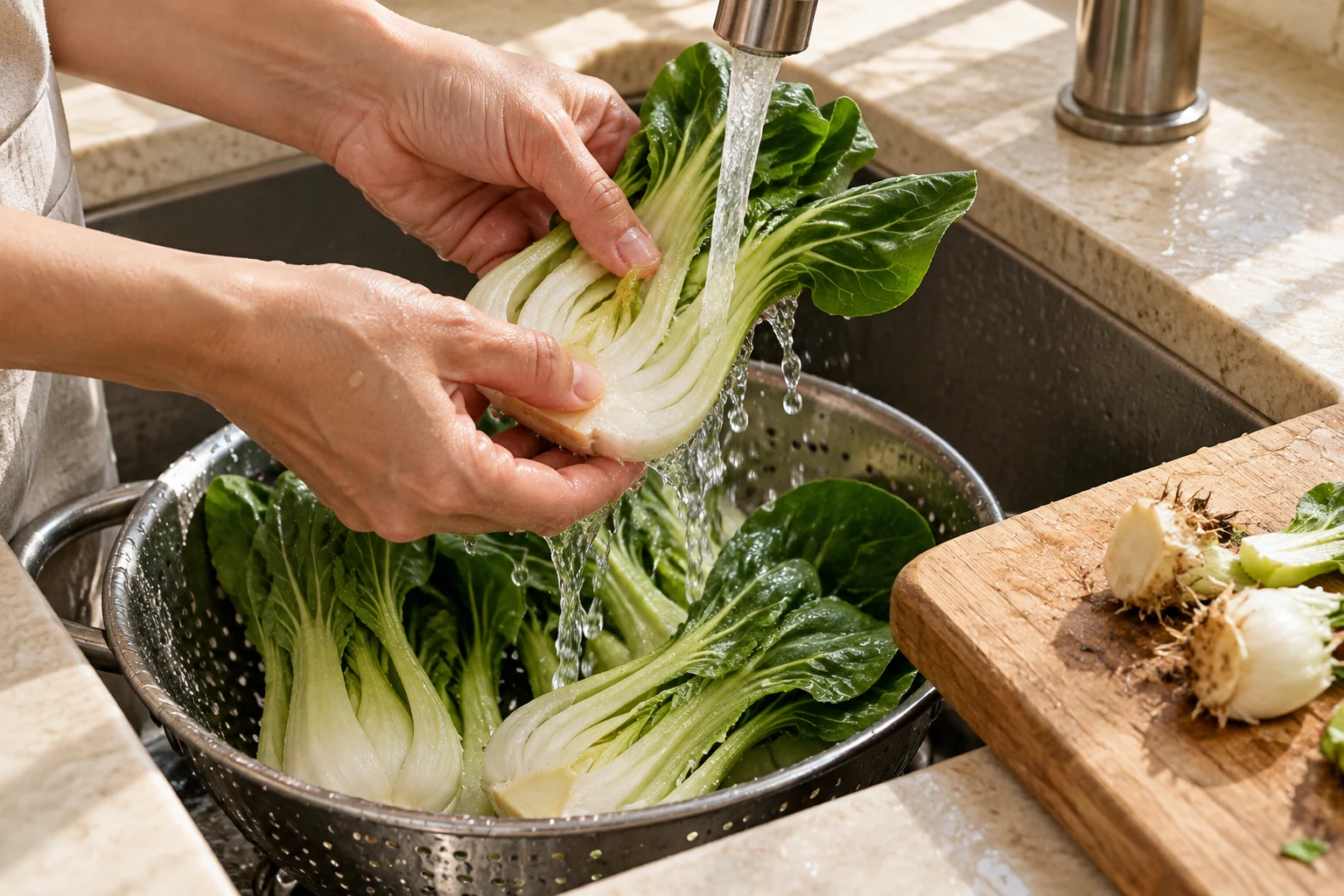
Trim only the dirty root ends from 3–4 baby bok choy heads, about 300 g. Halve small heads lengthways and quarter thick ones. Open the bases and rinse carefully between the stalks to remove grit, then drain. Mince the optional ½ garlic clove.
-
Step 2
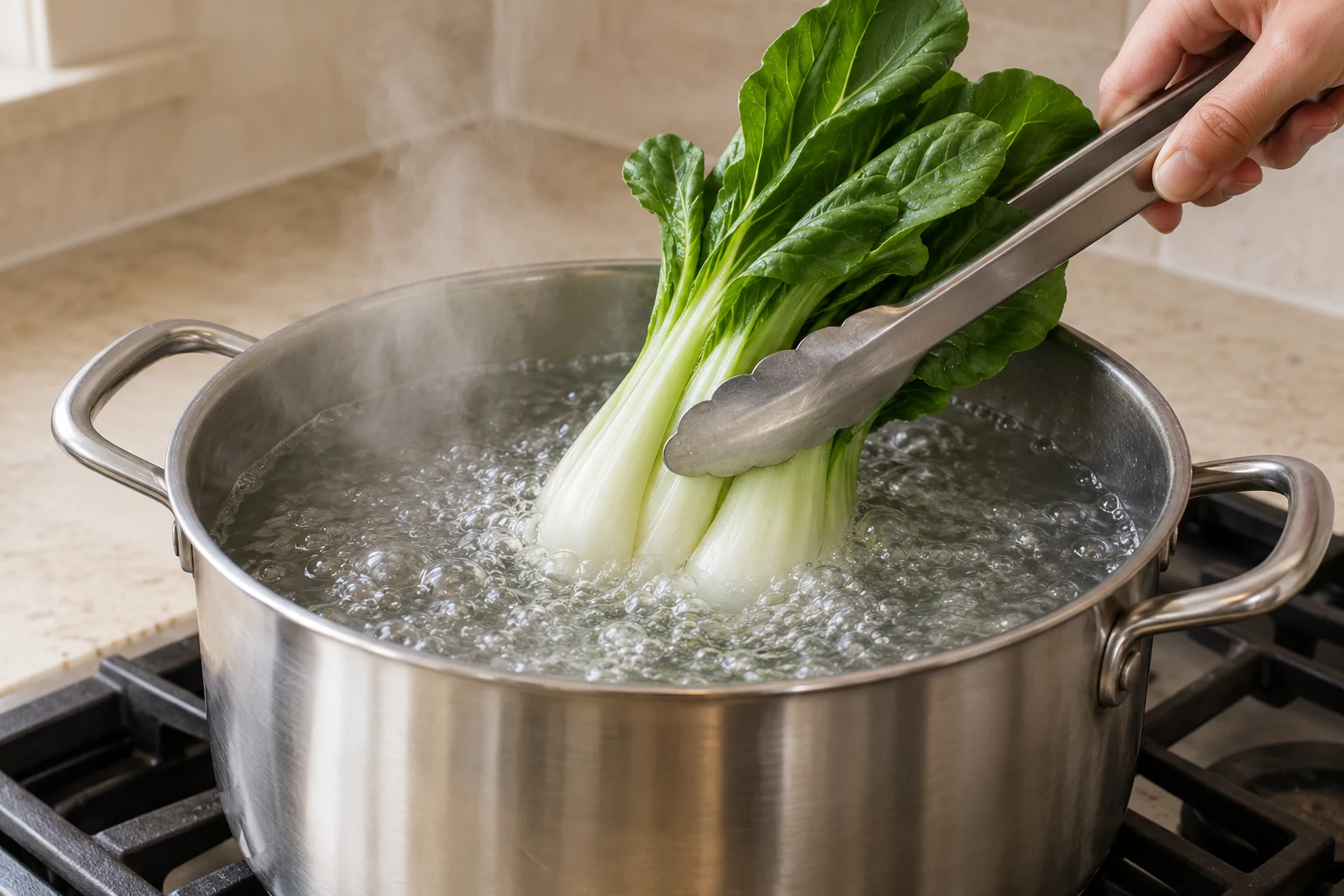
Boil 6 small paper cups water (1,080 ml) in a pot of at least 2 litres. Hold the white stalk ends in the water with tongs for 45 seconds, then lower the leaves too and blanch another 30–45 seconds. The leaves should turn bright green and wilt, while the stalks stay slightly crisp; add only about 15 seconds if still too firm.
-
Step 3
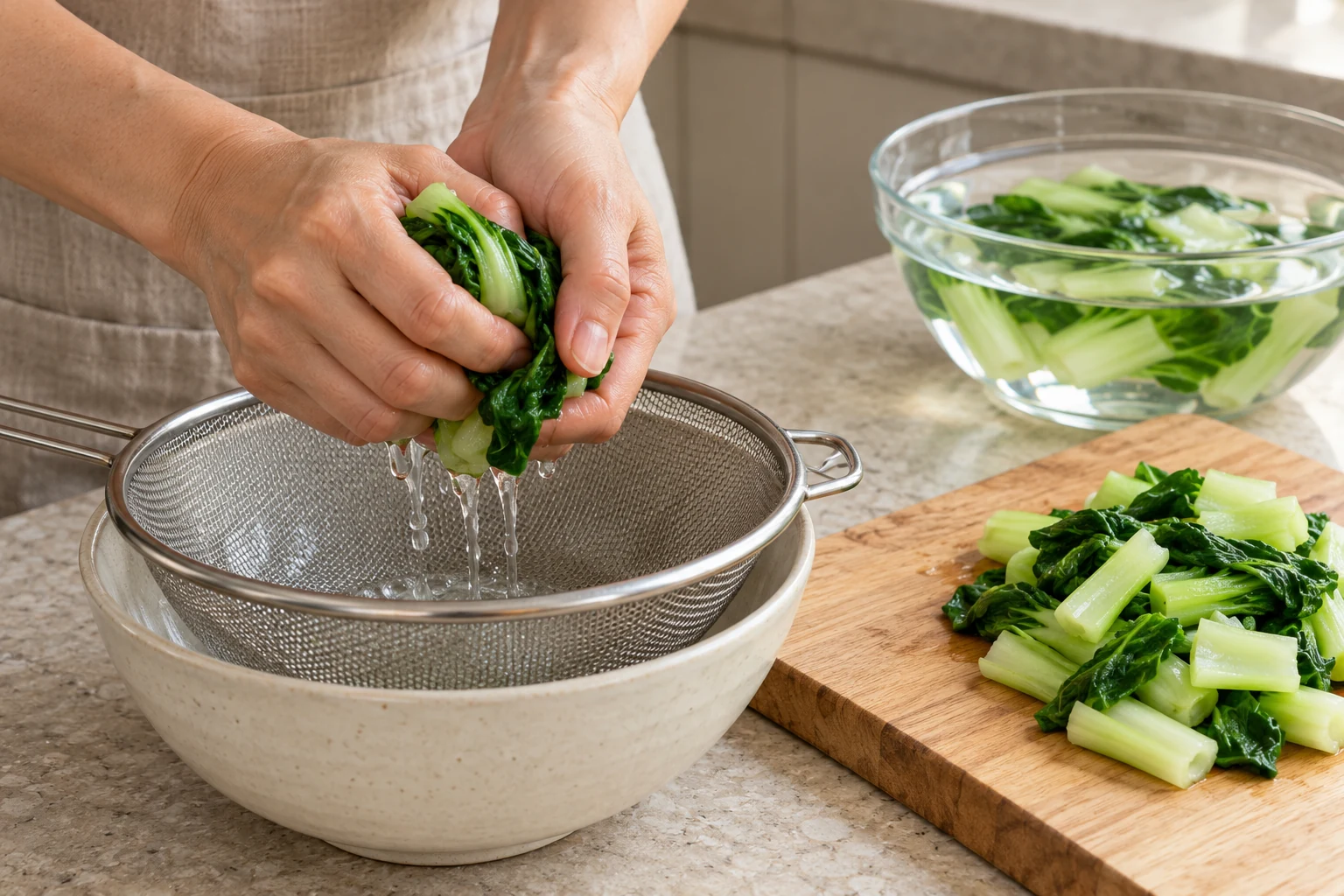
Transfer immediately to 3 small paper cups cold drinking water (540 ml) for about 30 seconds; replace the water once if it warms up. Drain, then gently press small handfuls to remove excess water without twisting into mush. Cut into roughly 4 cm lengths if needed for comfortable bites. Discard the blanching and cooling water.
-
Step 4
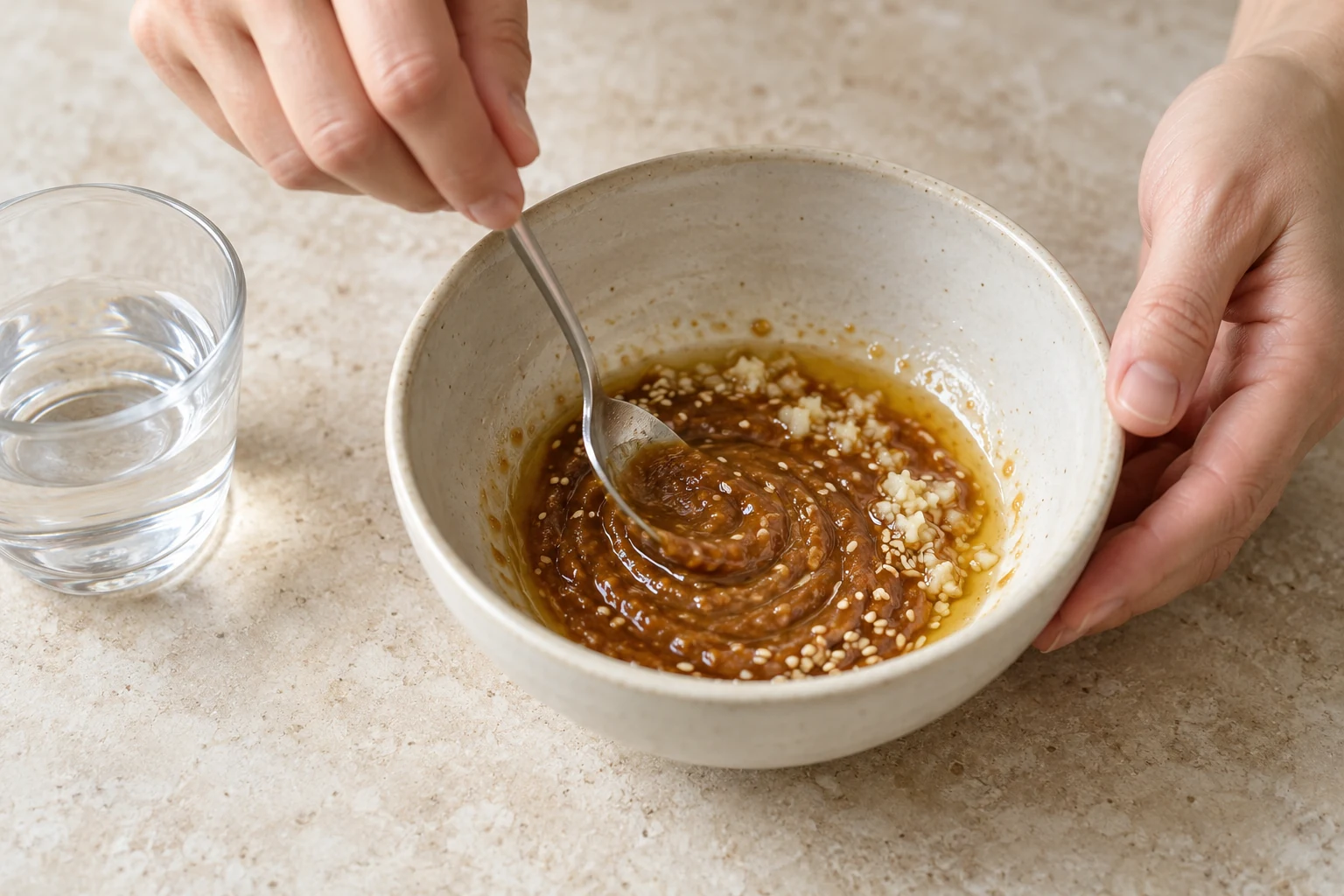
In a clean bowl, mix 2 teaspoons plain doenjang (12 g), 1 teaspoon sesame oil and 1 teaspoon FRESH drinking water (5 ml). Add the optional garlic, 1 teaspoon sesame seeds and ½ teaspoon sugar. Stir into a smooth dressing. Do not use the blanching water in this sauce.
-
Step 5
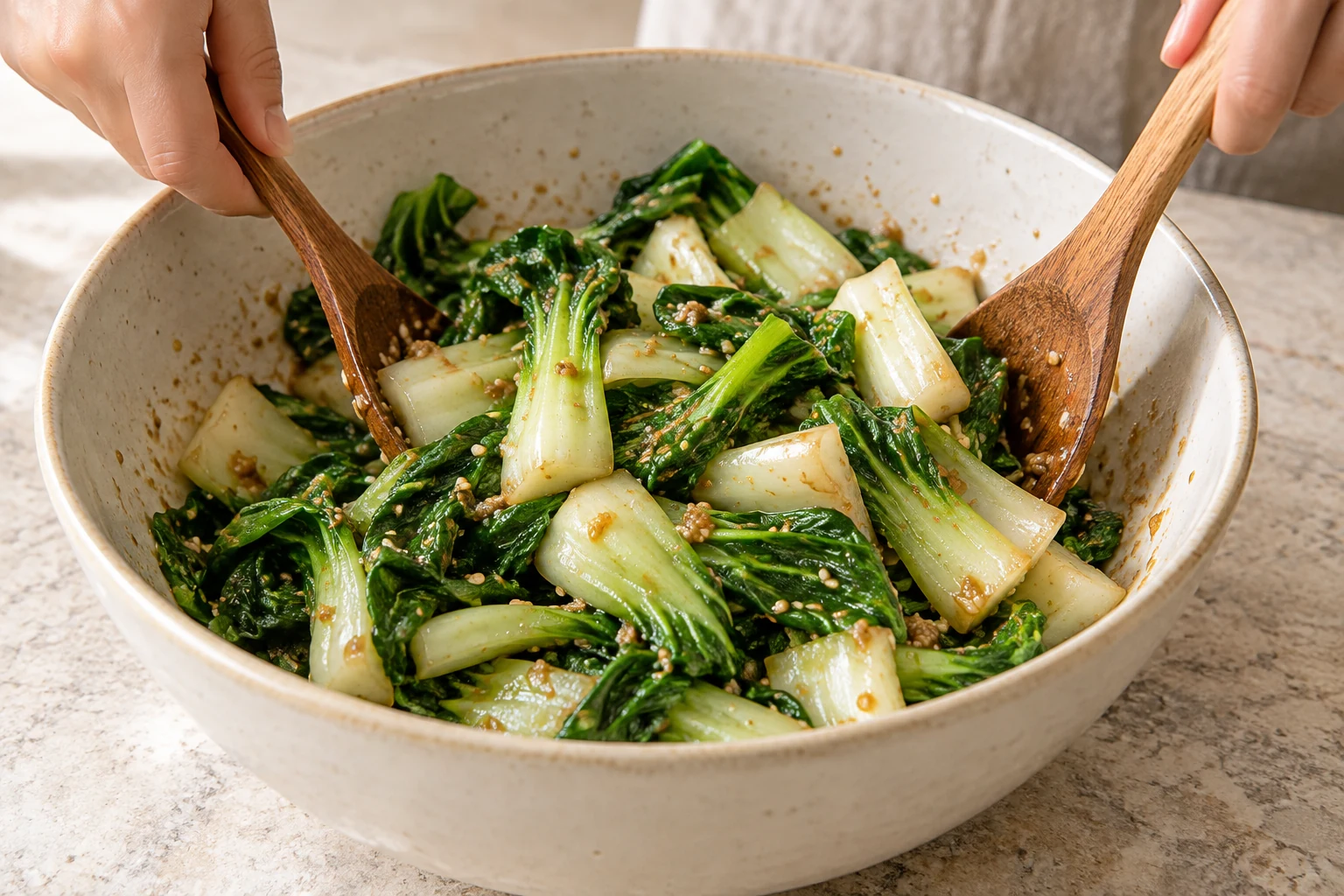
Add the drained bok choy to the dressing and gently toss for about 30 seconds with clean utensils or a clean gloved hand. Coat the stalks and leaves without crushing them. Transfer to a small plate and serve as 2 side portions; excess water left on the greens would dilute the dressing.


Finished dish
Small paper cup = 180 ml; level tablespoon = 15 ml; small teaspoon = 5 ml. Contains soy and sesame; check doenjang or miso labels for wheat and any added seafood. Choose plain paste, not an instant soup base. Refrigerate within 2 hours at 4°C or colder and eat within 2 days.
Related recipes


Enjoy every bite
How to enjoy it
Serve with rice and bulgogi or spicy pork. Keep it in a separate small dish so the mild greens balance the richer main course.

