Tuna kimchi stew (chamchi kimchi jjigae)
An easy, tangy Korean stew made with sour cabbage kimchi and canned tuna. Optional tofu makes it more filling, and plain water is enough for the broth.
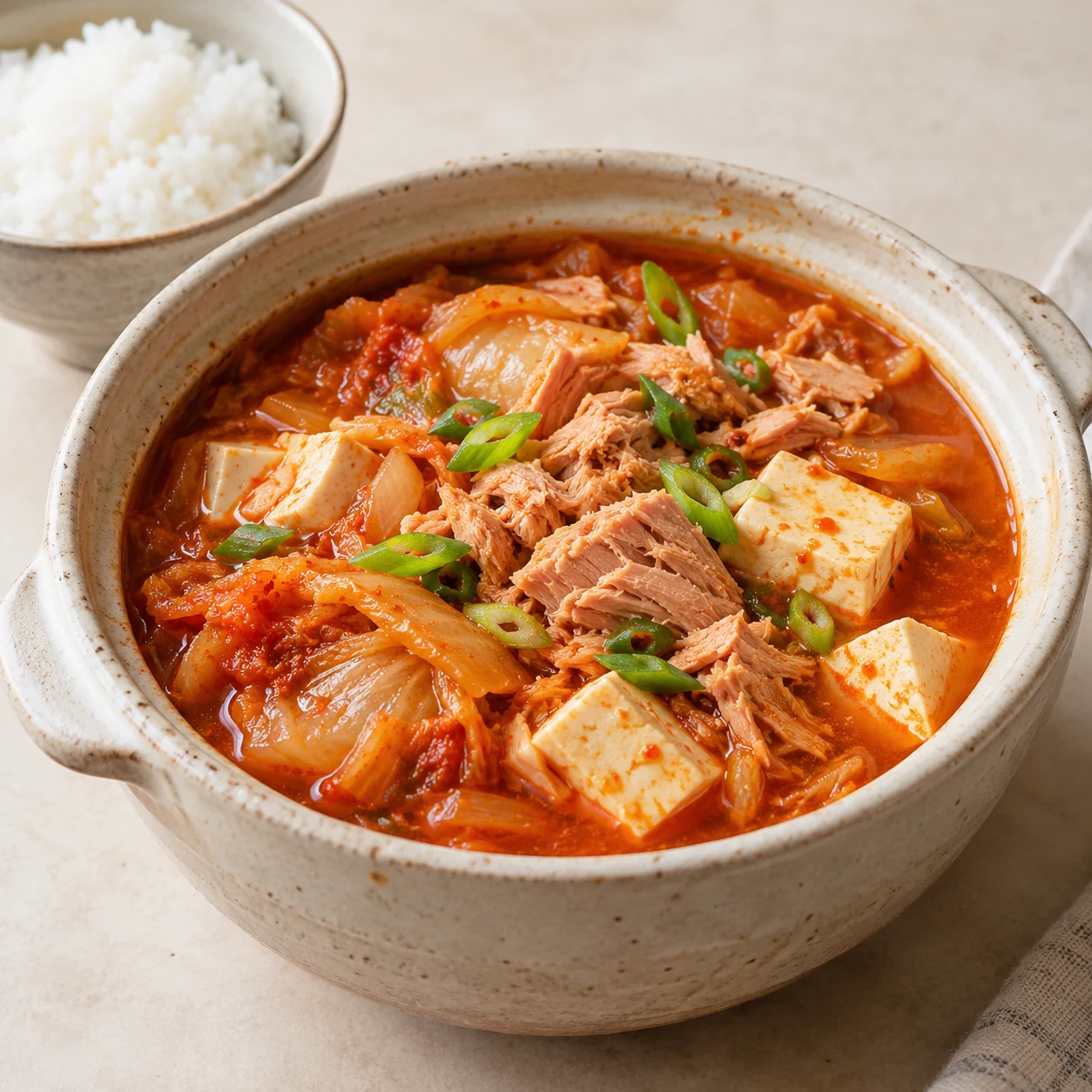
AI-generated cooking illustrations. Follow the written quantities and instructions.
Ingredients
2 servings
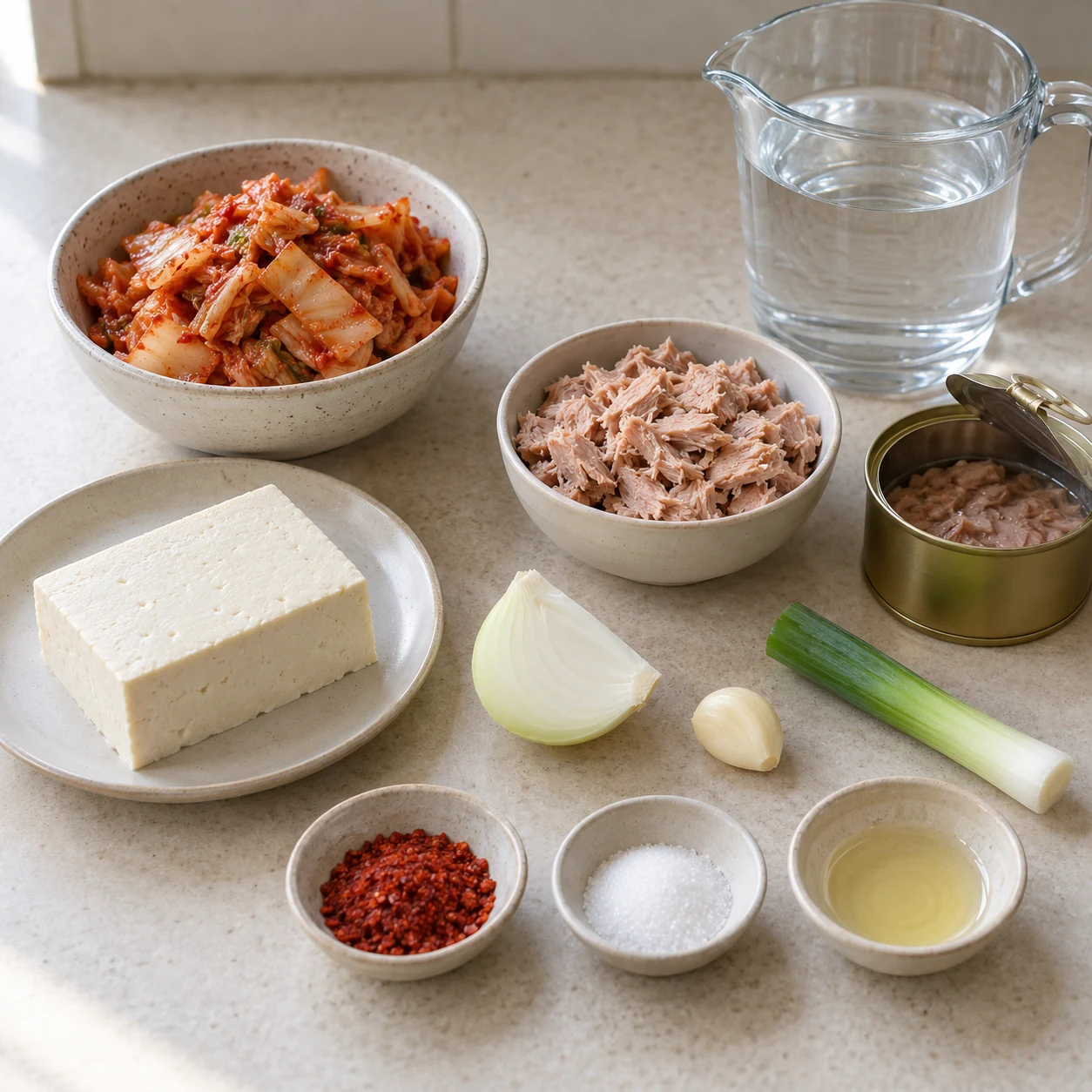
Everyday kitchen measurements
For 2 servings. Use a small 180 ml paper cup, a level eating spoon (about 15 ml) and a small teaspoon (about 5 ml).
How to fill the cup and spoons
Use the same cup and spoons throughout. Their sizes vary, so these amounts are approximate. Spoon flour in loosely and level the top without pressing. Measure vegetables after chopping, without packing them down. The amounts in g/ml are the original reference quantities. For part of a pack, use the specified pack weight and divide the contents evenly.
King Arthur Baking-
Essential
Use pleasantly sour, ready-to-eat kimchi, not spoiled kimchi. Fresh cabbage cannot replace it with the same method.
-
Substitute available
If Canned tuna, drained is unavailable
If tuna is unavailable, use 1 loose paper cup fully cooked shredded chicken (150 g). Add at the same final stage and heat through. Do not add raw chicken here.
-
Essential
Use drinking water and keep the kimchi mostly covered while simmering.
-
Optional
May be omitted. Skip cubing and adding it; keep the same broth and tuna cooking time.
-
Optional
May be omitted; skip preparing and frying it. The stew will be less sweet.
-
Optional
May be omitted; kimchi supplies most of the flavour.
-
Substitute available
If Neutral cooking oil is unavailable
If neutral oil is unavailable, use 1 small teaspoon (5 ml) canola or sunflower oil. Use this instead of the original oil, not in addition.
-
Optional
Omit for less heat. The kimchi itself may still be spicy; do not replace this spoon-for-spoon with cayenne.
-
Optional
Use only if the cooked broth is too sour. May be omitted; do not replace it with extra salt.
-
Optional
May be omitted; skip the final addition.
Tap each ingredient as you prepare it. Check product labels for egg, soy, sesame, wheat, fish or shellfish where relevant.
Step-by-step cooking
-
Step 1
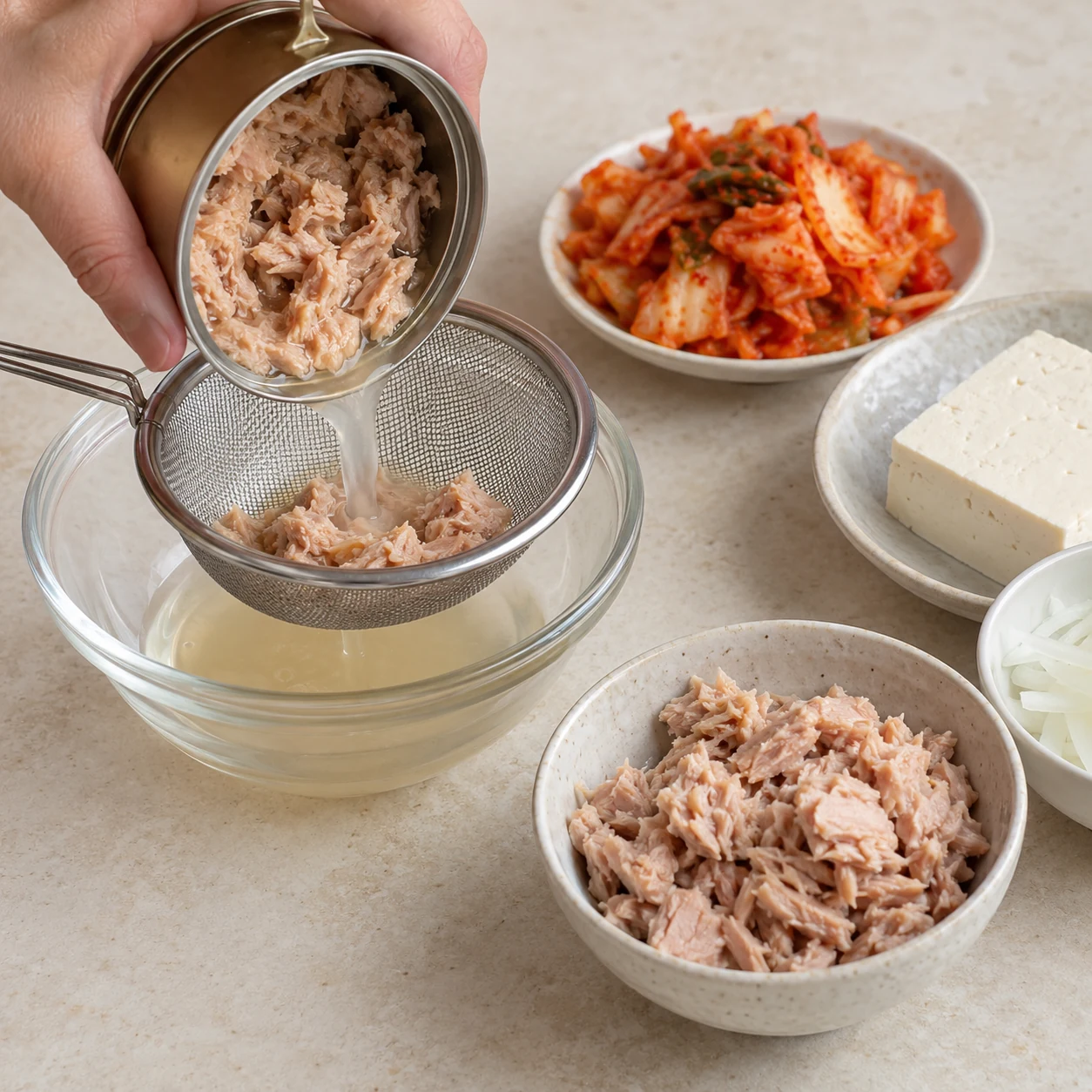
Drain the canned tuna thoroughly and flake it gently. Cut kimchi into short pieces and slice the optional onion and spring onion. If using tofu, drain and cut into 2 cm cubes. This recipe uses cooked canned tuna, not fresh raw fish.
-
Step 2
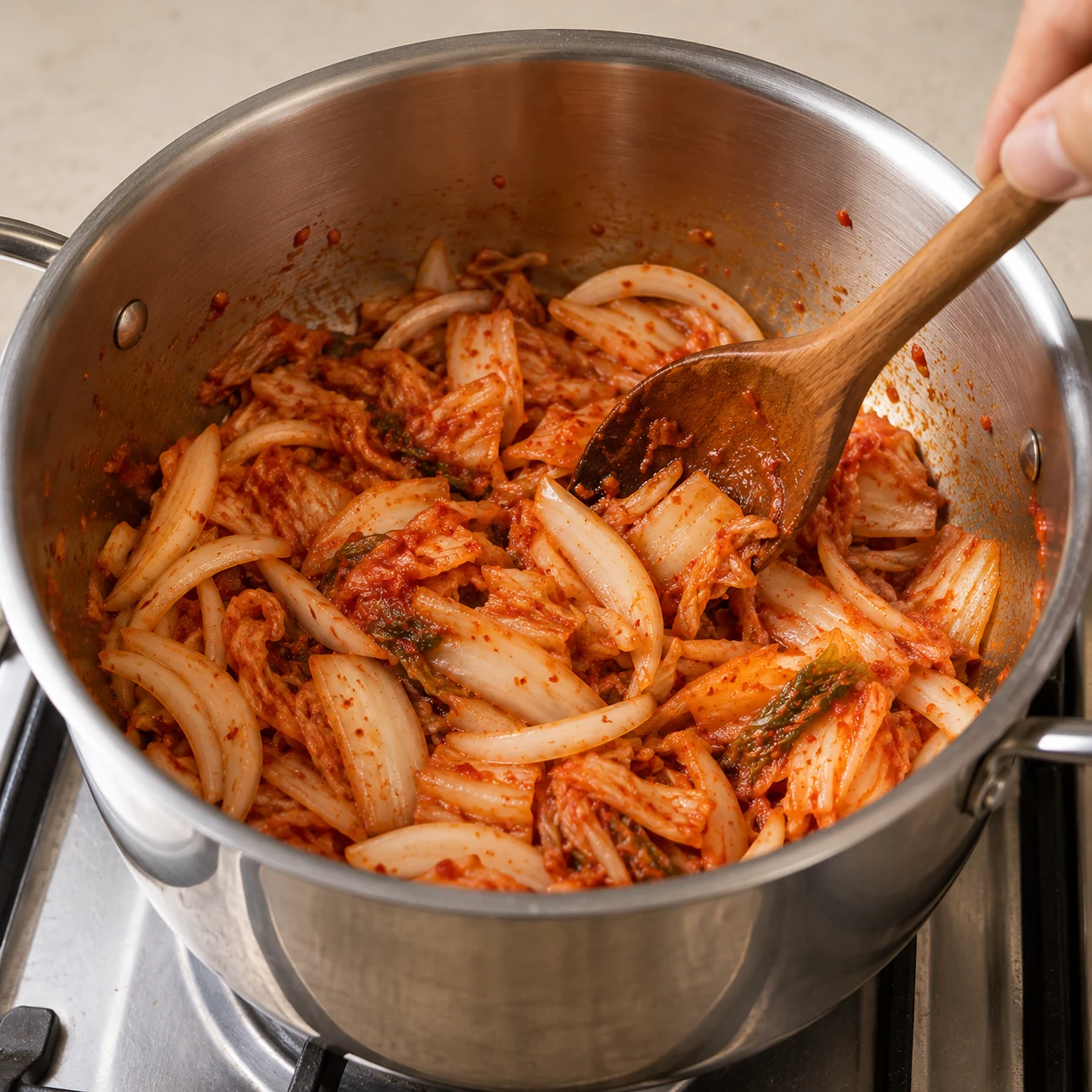
Warm 1 teaspoon oil in a 2-litre pot over medium heat. Stir-fry the kimchi and optional onion for 3 minutes. Add optional garlic for the last 30 seconds; lower the heat if it starts to catch.
-
Step 3
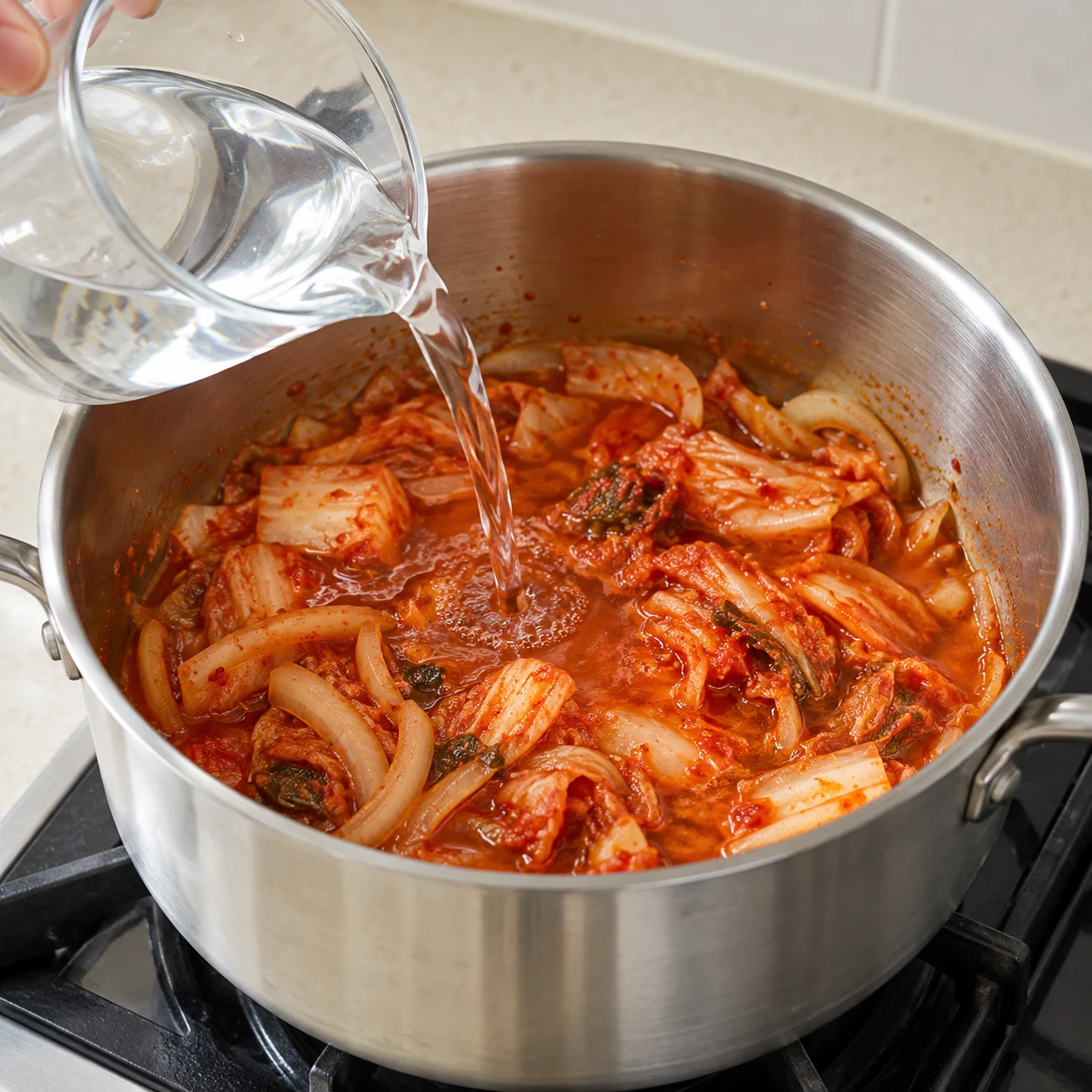
Add 3 paper cups water and optional gochugaru. Bring to a boil, then simmer with the lid partly open for 12–15 minutes, until the cabbage is tender. Stir occasionally and add 1 tablespoon hot water at a time only if the broth reduces too far.
-
Step 4
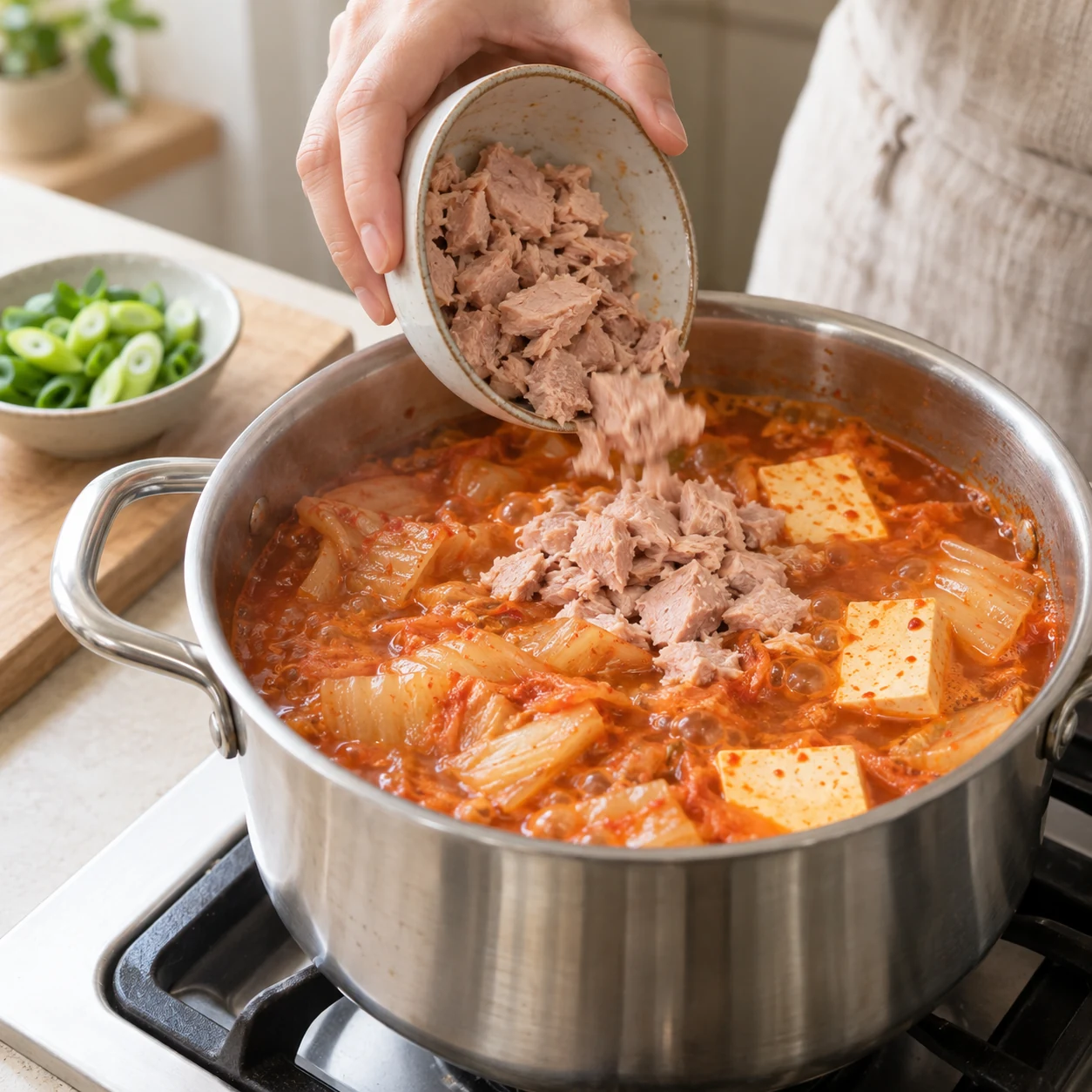
Add the drained tuna and optional tofu. Simmer gently for 5 minutes without breaking the tuna into tiny pieces. Taste; add the optional ½ teaspoon sugar only if too sour. Add optional spring onion for the final minute. Serve hot; taste before any extra salt because both tuna and kimchi are salty.
Finished dish
Allow about 30 minutes using prepared kimchi and canned tuna. Rice is a serving suggestion and is cooked separately. A paper cup is 180 ml; tablespoons and teaspoons are 15 ml and 5 ml. Contains fish, with soy if tofu is used; kimchi may contain shellfish or wheat. Cool promptly and refrigerate within 2 hours, or 1 hour above 32°C. Keep at 4°C or colder for up to 3 days; reheat the portion needed to 74°C.
Enjoy every bite
How to enjoy it
Keep the rice beside the stew and combine one spoonful at a time. Taste before adding salt or more chilli.
Serve it with
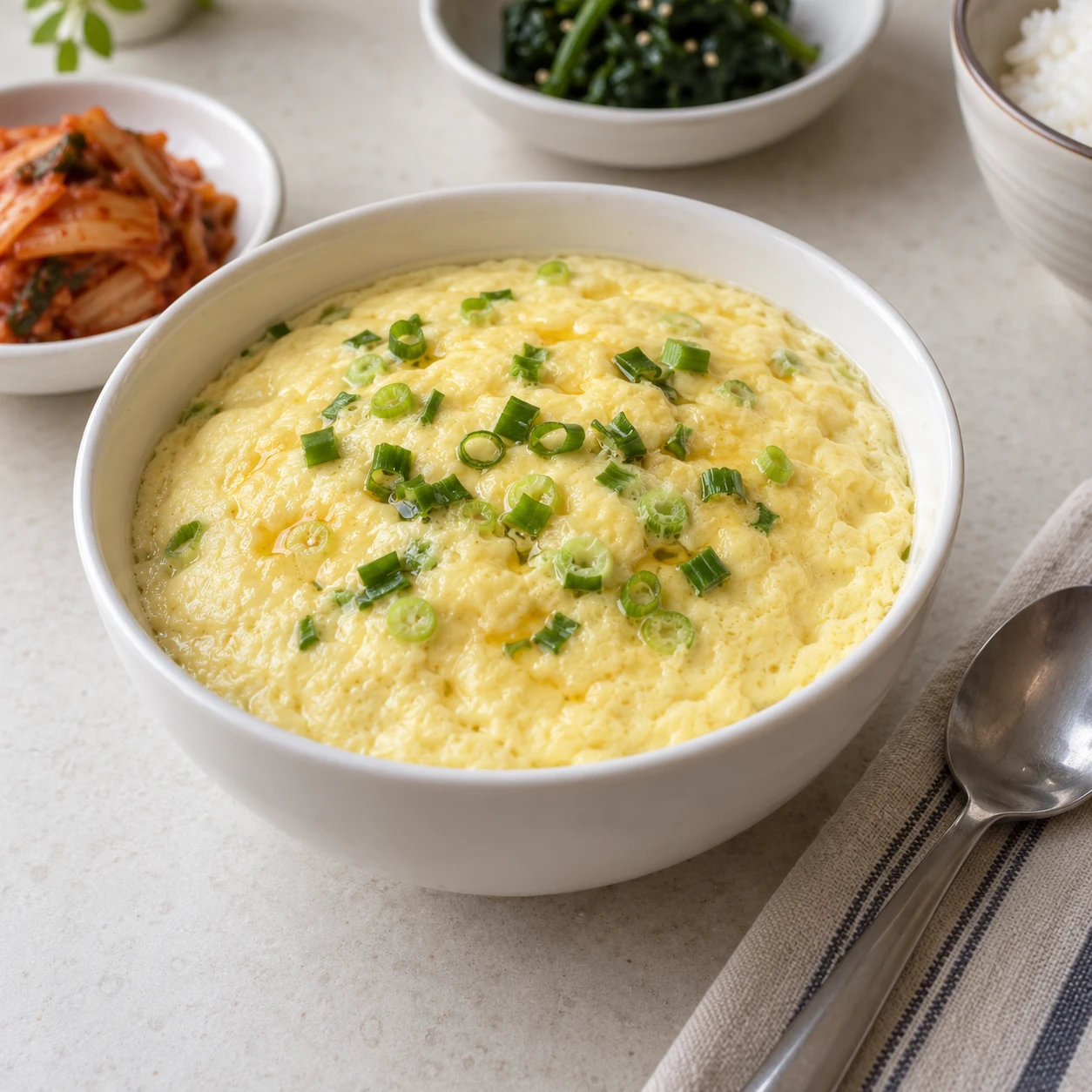
Korean steamed eggs
Soft, gently seasoned egg contrasts with a stronger sauce or a crisp bite.
View recipe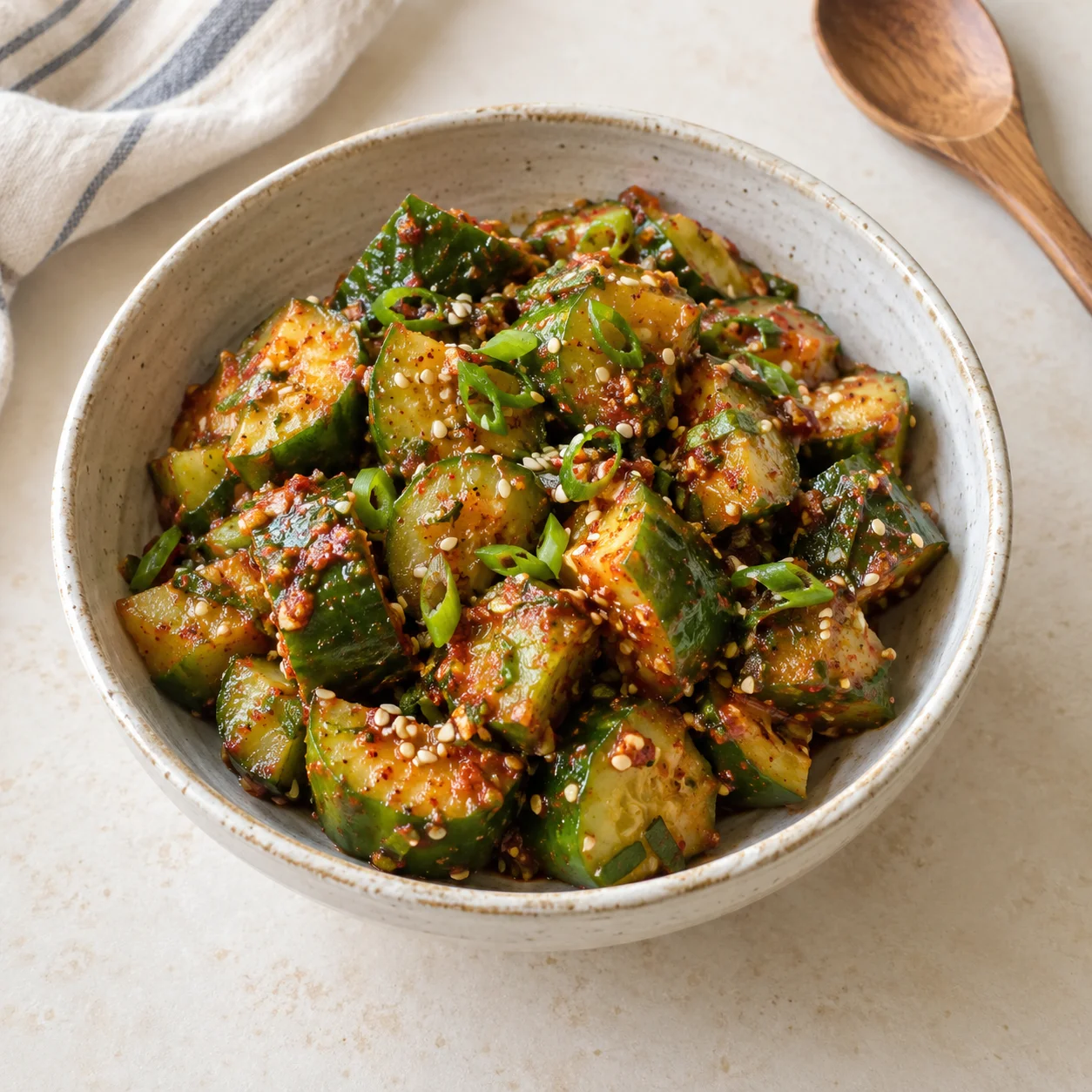
Korean spicy cucumber salad (oi-muchim)
A crisp vegetable bite contrasts with a richer or spicier dish.
View recipe