Sausage and cheese budae-style ramyeon
A home-friendly ramen take on Korean army stew: kimchi, fully cooked sausage and soft noodles in a savoury broth, finished with melting cheese.
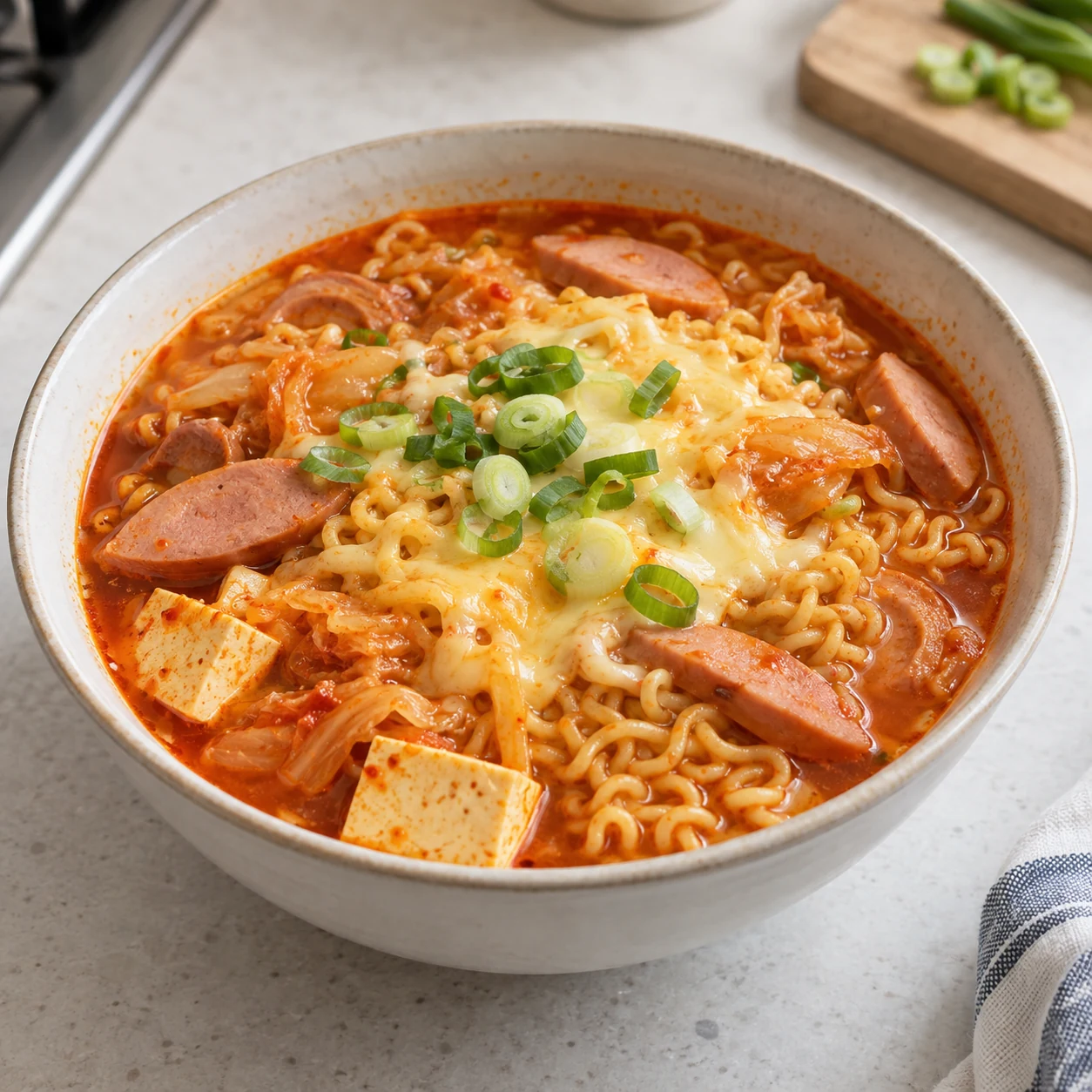
AI-generated cooking illustrations. Follow the written quantities and instructions.
Ingredients
2 servings
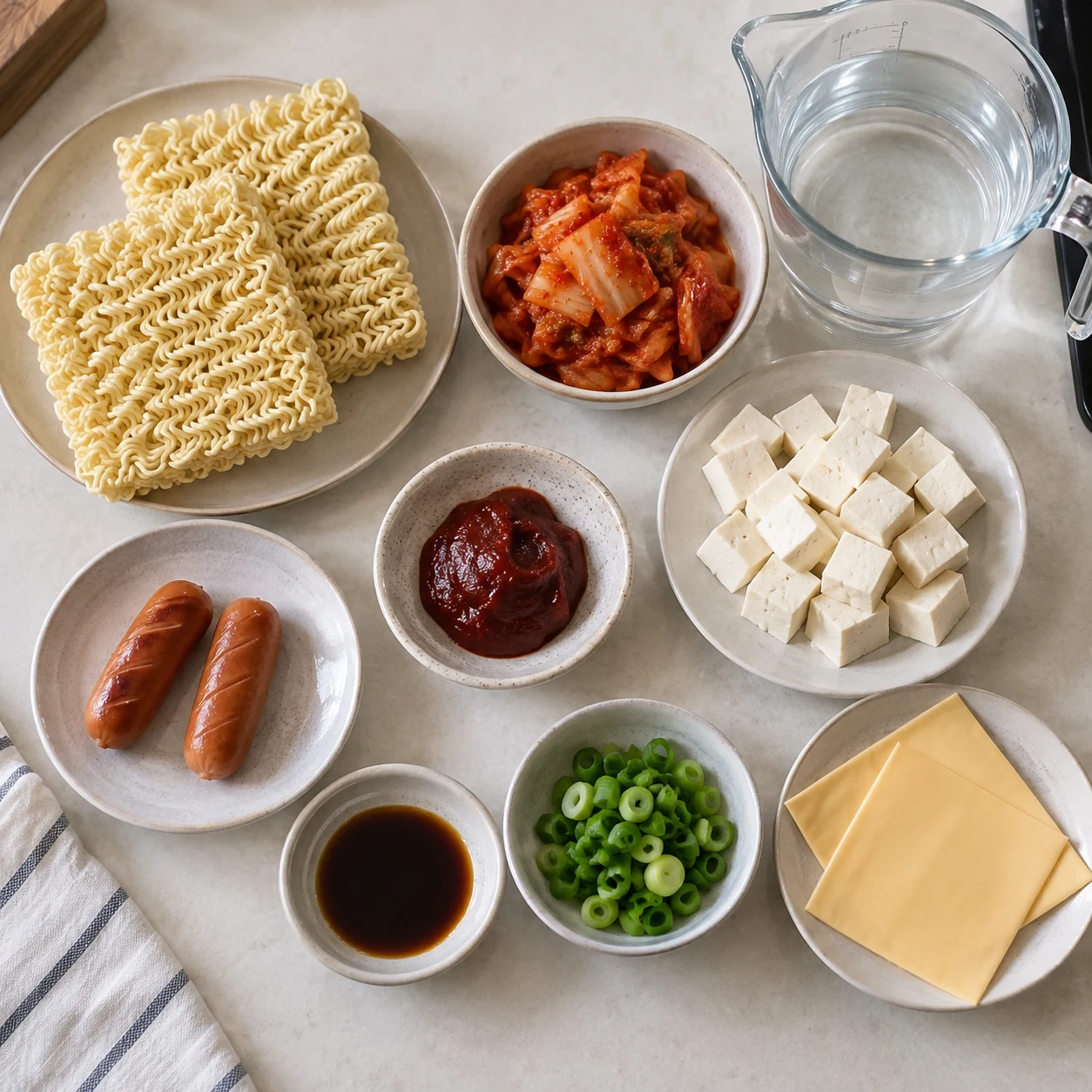
Everyday kitchen measurements
For 2 servings. Use a small 180 ml paper cup, a level eating spoon (about 15 ml) and a small teaspoon (about 5 ml).
How to fill the cup and spoons
Use the same cup and spoons throughout. Their sizes vary, so these amounts are approximate. Spoon flour in loosely and level the top without pressing. Measure vegetables after chopping, without packing them down. The amounts in g/ml are the original reference quantities. For part of a pack, use the specified pack weight and divide the contents evenly.
King Arthur Baking-
Substitute available
If Plain instant ramyeon noodle blocks is unavailable
- Use instead
- Instant noodles sold with seasoning sachets
- Substitute quantity
- 2 noodle blocksReference quantity: about 200 g
Use only the noodle blocks; discard the sachets because the broth is seasoned separately. Follow the pack cooking time if it differs.
-
Essential
Use the same 180 ml paper cup throughout; start with 600 ml for two servings.
-
Substitute available
If Kimchi, chopped is unavailable
- Use instead
- Well-drained fermented cabbage plus gochugaru
- Substitute quantity
- ½ paper cup cabbage + 1 small teaspoon chilli flakesReference quantity: 90 g + about 2 g
The broth will be less tangy and less recognisably kimchi-like; start with the same amount and taste before adding salt.
-
Substitute available
If Fully cooked sausage, sliced is unavailable
- Use instead
- Fully cooked chicken, sliced
- Substitute quantity
- about ½ paper cupReference quantity: 100 g
Warm the chicken fully in the broth. Check that packaged sausages or chicken are fully cooked before use.
-
Optional
Leave out if unavailable; the noodles and sausage still make a complete dish.
-
Substitute available
If Gochujang Korean chilli paste is unavailable
- Use instead
- Mild chilli paste plus a little sugar
- Substitute quantity
- 1 level eating spoon paste + ½ small teaspoon sugarReference quantity: about 18 g + 2 g
Heat and salt vary by brand. This changes the fermented flavour; add chilli paste gradually.
-
Substitute available
If Unsweetened soy sauce is unavailable
- Use instead
- Tamari
- Substitute quantity
- 1 small teaspoonReference quantity: 5 ml
Use a gluten-free labelled tamari if needed; check the label because some contain wheat.
-
Optional
Omit if unavailable; the kimchi and gochujang already flavour the broth.
-
Optional
Leave out for a lighter broth. Cheese softens the heat but adds salt and dairy.
-
Optional
Scatter on top if available; omit without changing the cooking time.
Tap each ingredient as you prepare it. Check product labels for egg, soy, sesame, wheat, fish or shellfish where relevant.
Step-by-step cooking
-
Step 1
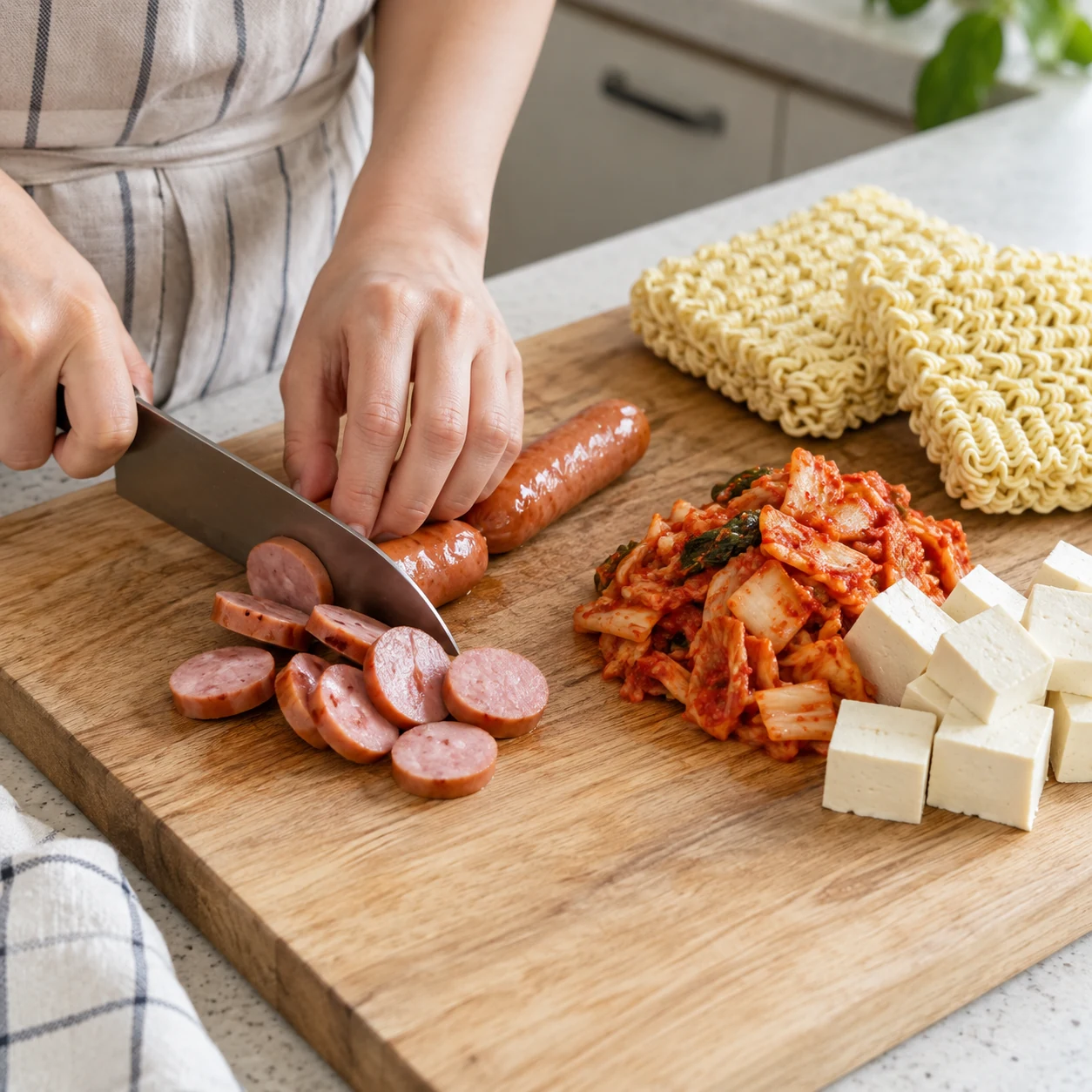
Cut the kimchi into bite-size pieces. Slice the fully cooked sausages into thin coins and cube the optional firm tofu. Mince the garlic and slice the spring onion. Keep the two noodle blocks whole for now; leave any packet seasoning sachets out of this recipe.
-
Step 2
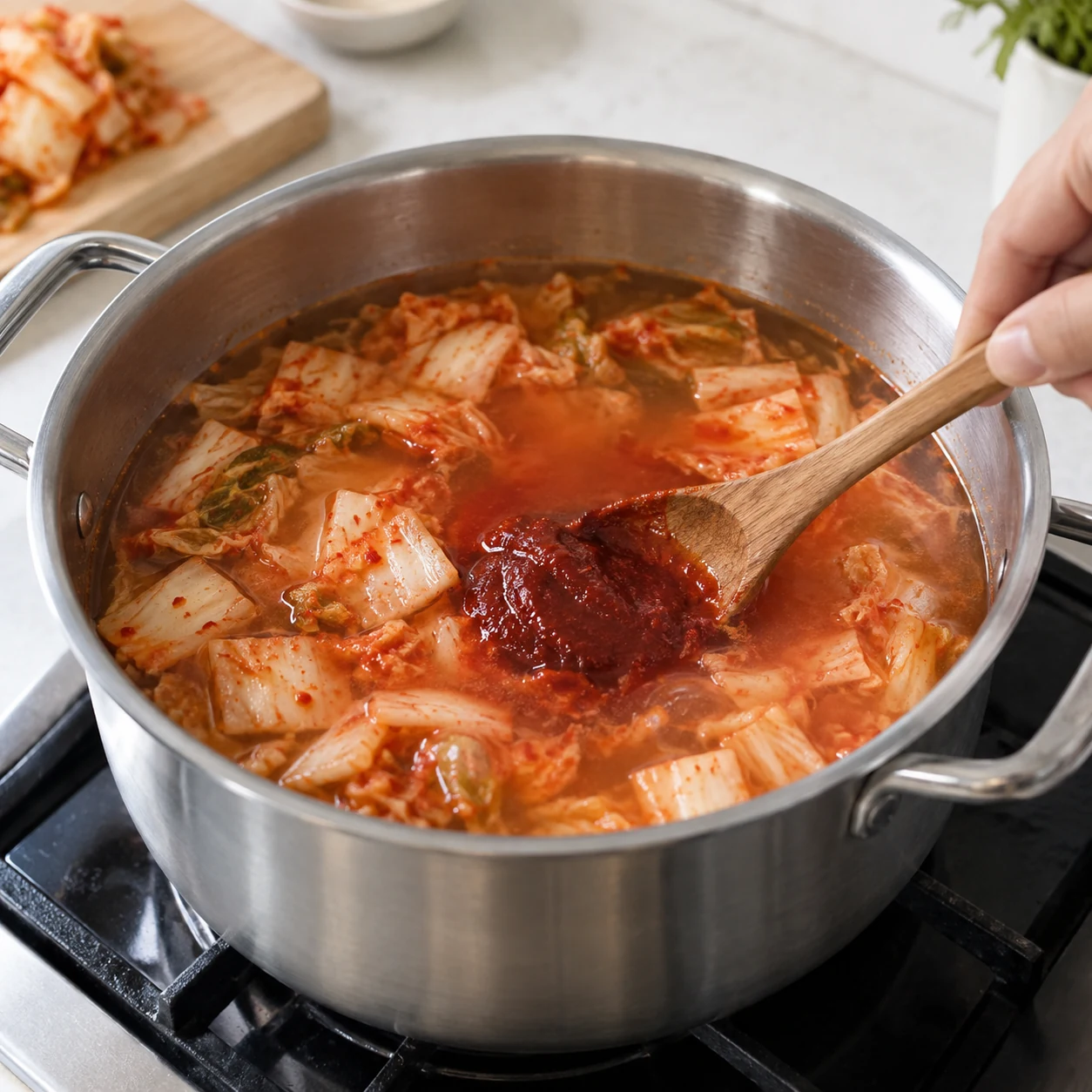
Pour 3⅓ paper cups (600 ml) water into a medium wide pot. Add the chopped kimchi, 1 level eating spoon of gochujang, 1 small teaspoon of unsweetened soy sauce and optional minced garlic. Stir until the chilli paste dissolves, then bring the broth to a gentle boil.
-
Step 3
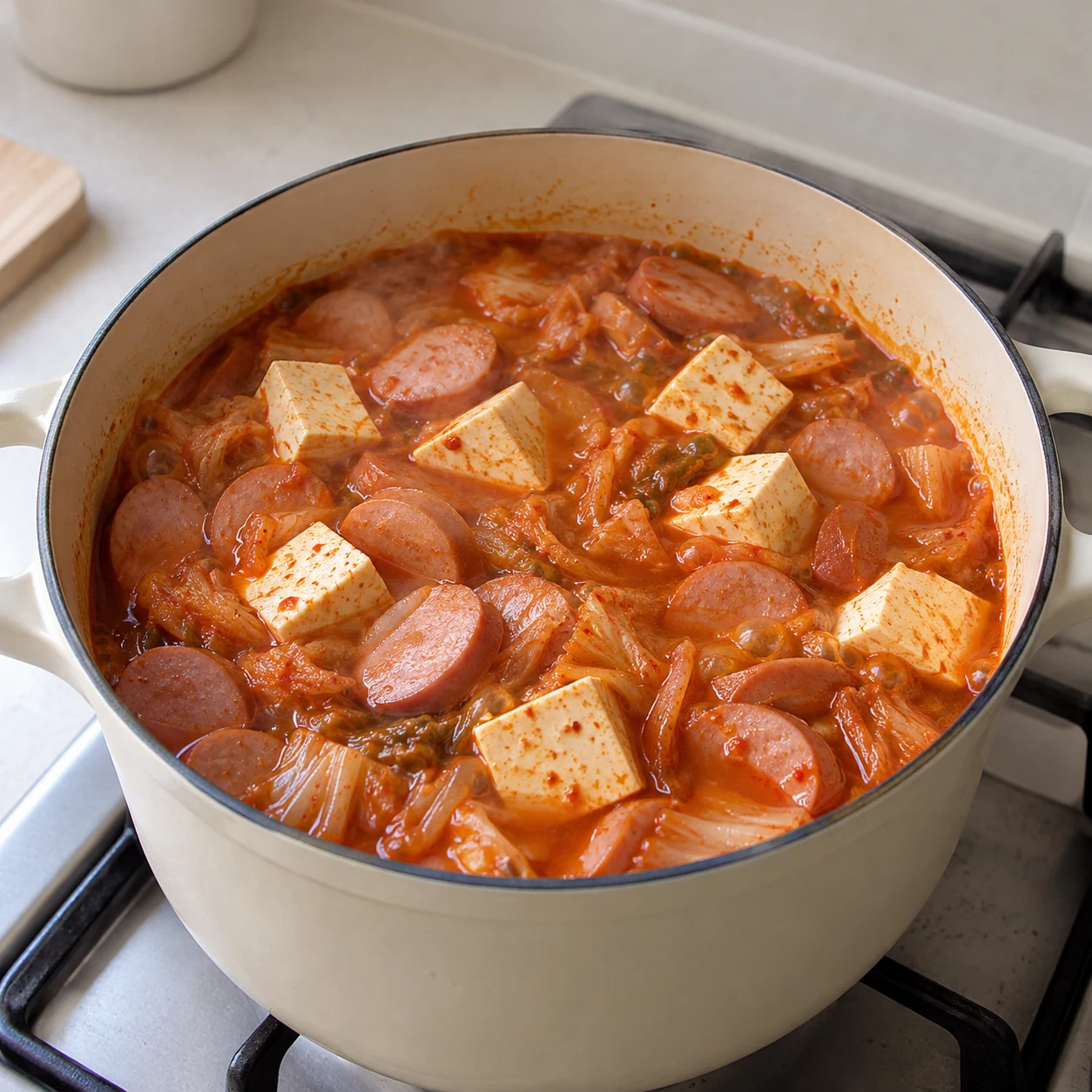
Add the sliced fully cooked sausages and optional tofu. Simmer uncovered for 4–5 minutes so the kimchi softens and the sausage is hot all the way through. Taste a spoonful of broth after it cooks; kimchi and gochujang can already be salty.
-
Step 4
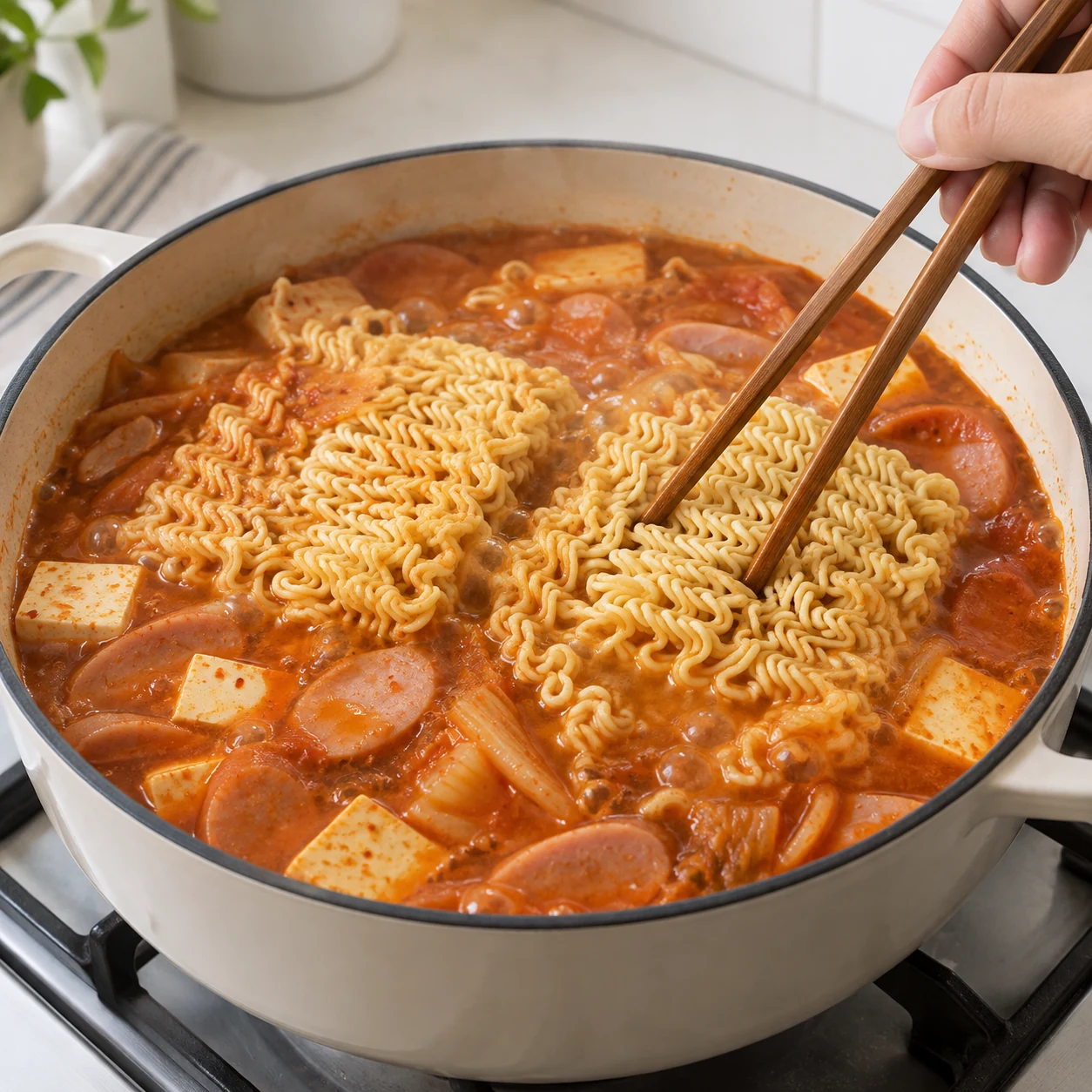
Add the two noodle blocks side by side. Press them under the broth with chopsticks once they soften. Simmer for about 3–4 minutes, or according to the packet, turning them once so both sides cook evenly. Add 1–2 level eating spoons of water only if the pot dries out.
-
Step 5
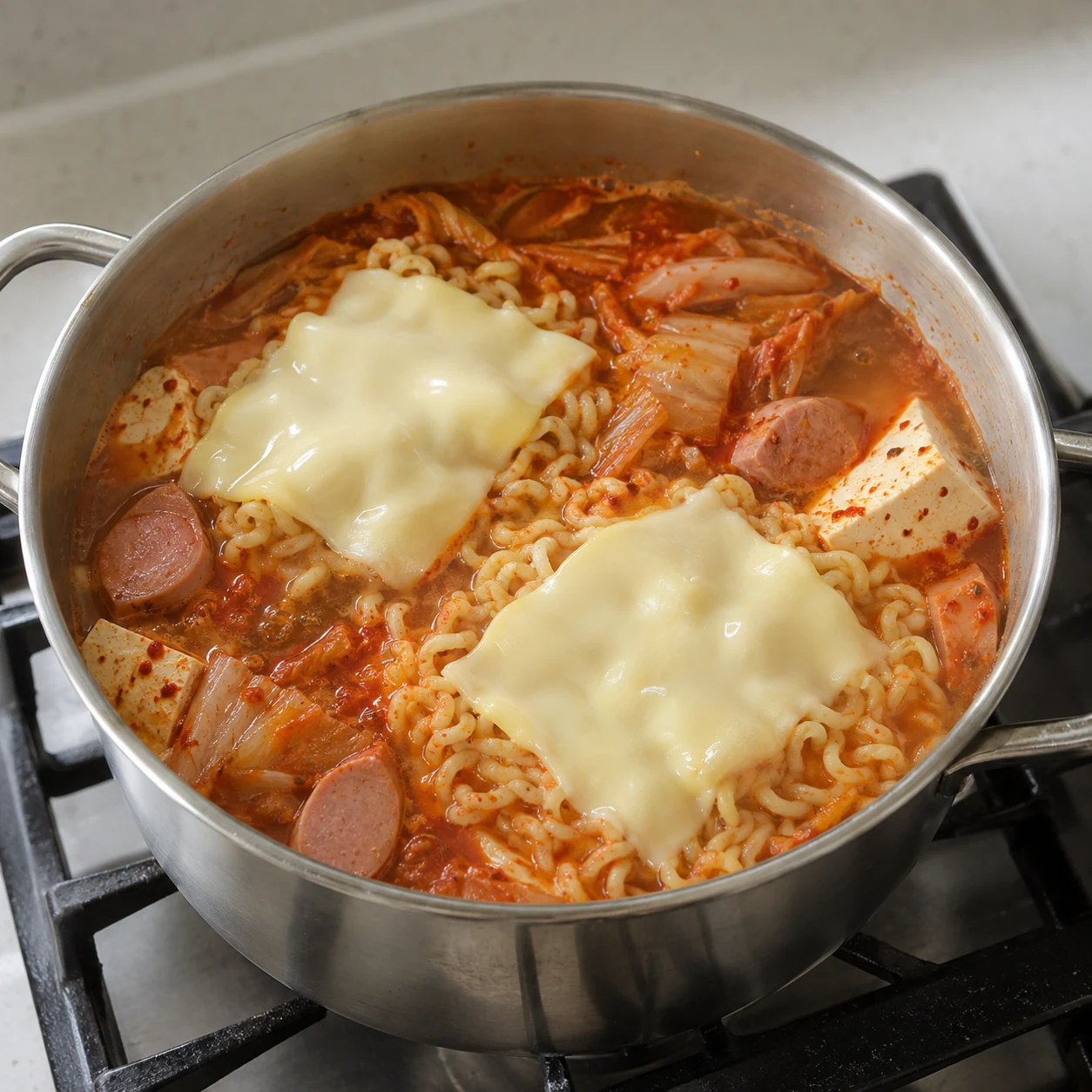
When the noodles are tender but still springy, turn the heat to low. Lay one cheese slice on each portion and cover the pot loosely for about 30–60 seconds, just until the cheese melts. Do not boil hard after adding the cheese.
-
Step 6
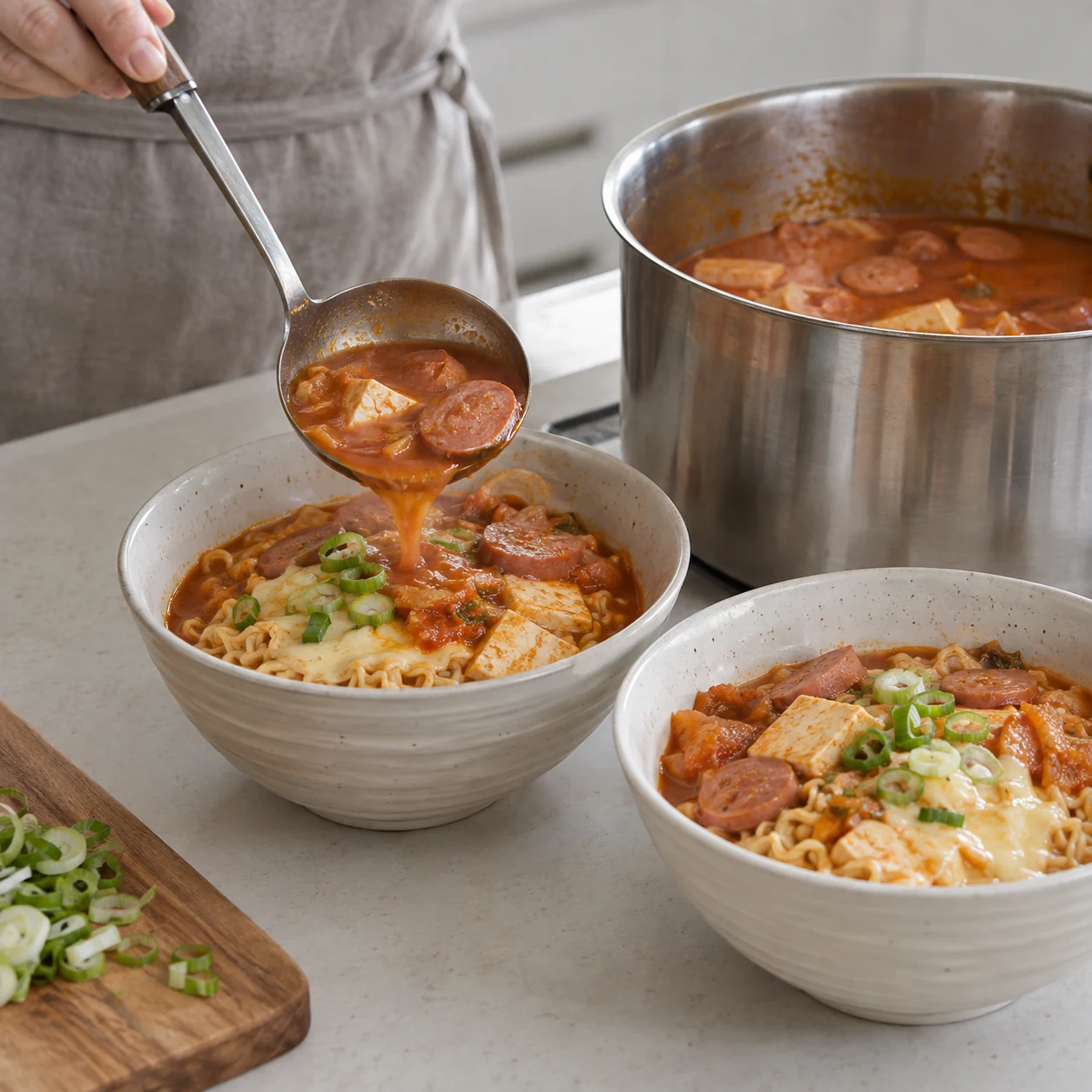
Turn off the heat, divide the noodles, sausage, kimchi and tofu between two bowls, then ladle over the hot broth. Add the optional spring onion. Serve immediately; the noodles continue to absorb liquid as they sit. Check the sausage pieces are hot before serving to children.
Finished dish
Use plain noodle blocks or discard the included seasoning packets to avoid oversalting. Check sausage labels for pork, allergens and whether the product is fully cooked. Refrigerate any leftovers promptly, but freshly cooked noodles have the best texture.
Enjoy every bite
How to enjoy it
For a less spicy bowl, use half the gochujang and more tofu. A crisp cucumber side balances the rich broth.
Serve it with
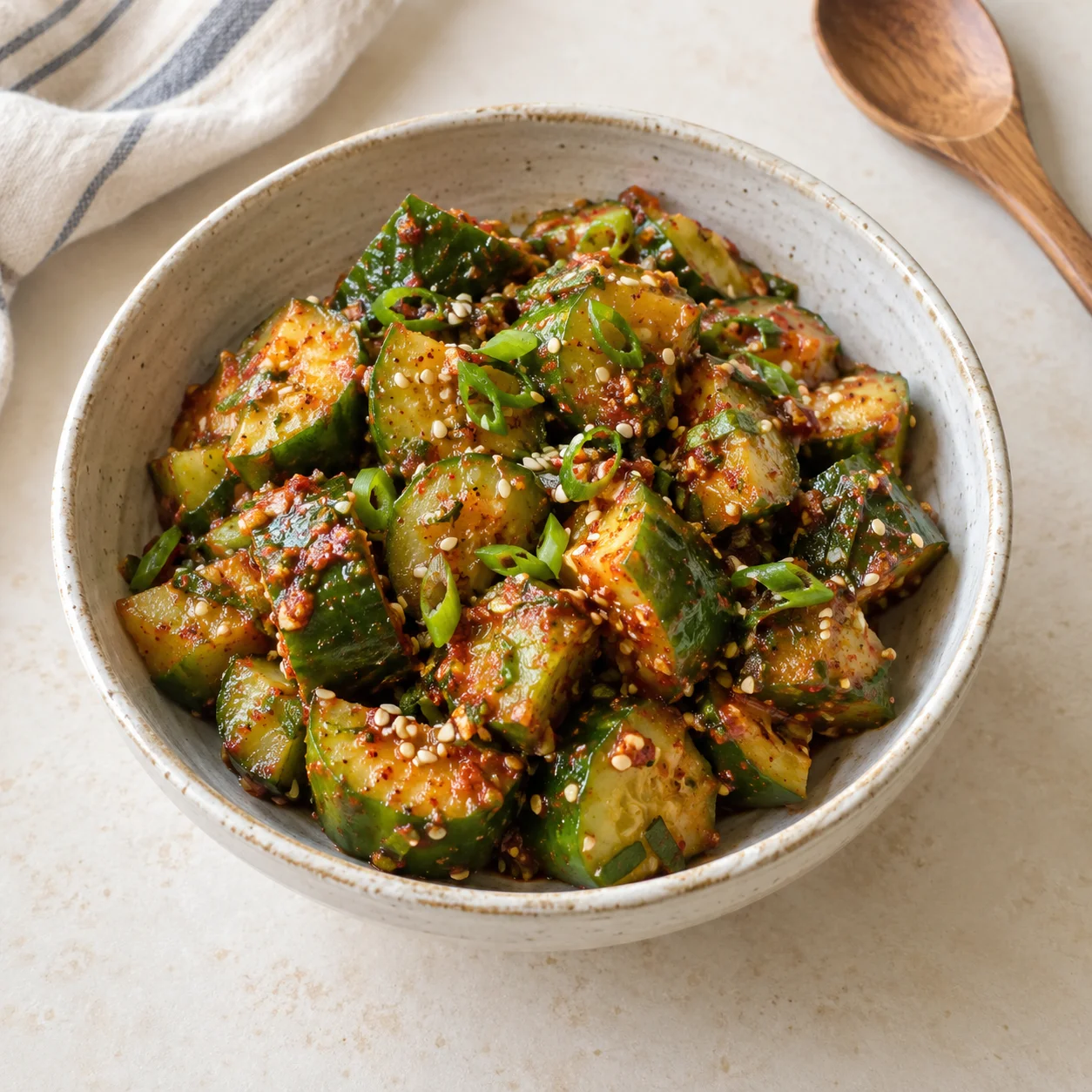
Korean spicy cucumber salad (oi-muchim)
A crisp bite contrasts with the softer main dish; keep its sauce separate.
View recipe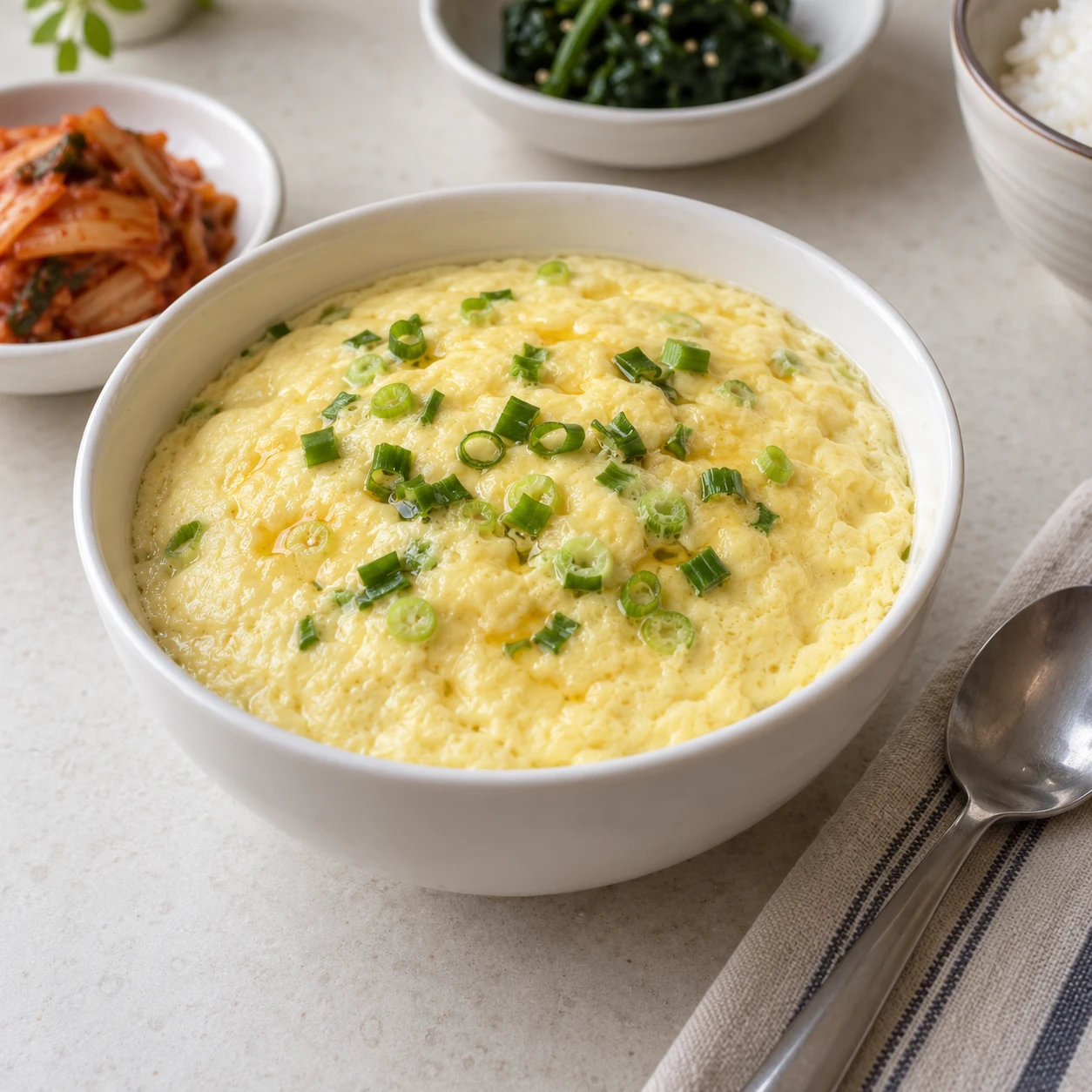
Korean steamed eggs
Soft, gently seasoned egg contrasts with a stronger sauce or a crisp bite.
View recipe