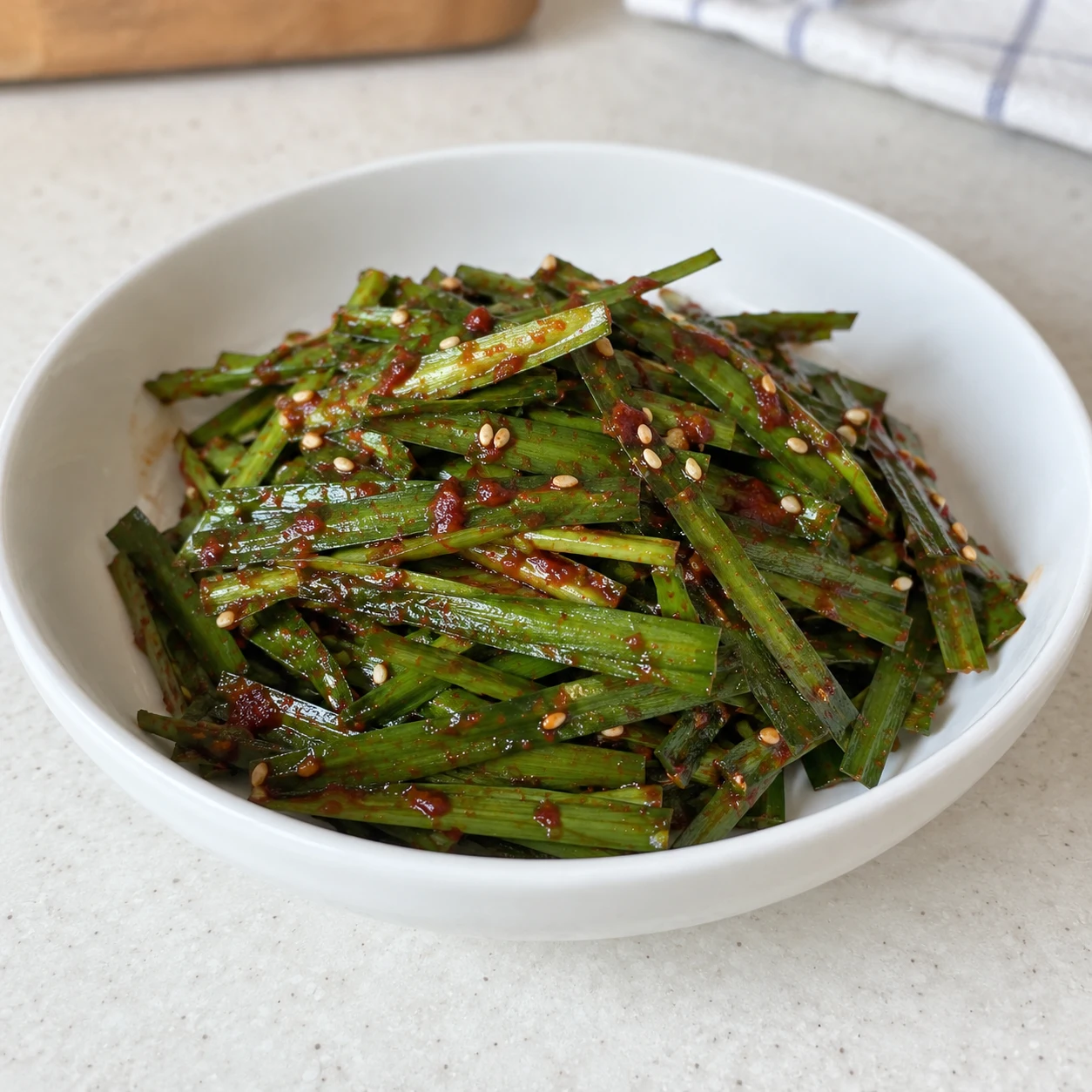
Garlic chive kimchi (buchu-kimchi)
A small batch of fresh garlic chive kimchi, mixed gently so the leaves keep their texture. A spoonful of cooked flour paste helps the seasoning cling.
AI-generated cooking illustrations. Follow the written quantities and instructions.
Ingredients
6 servings
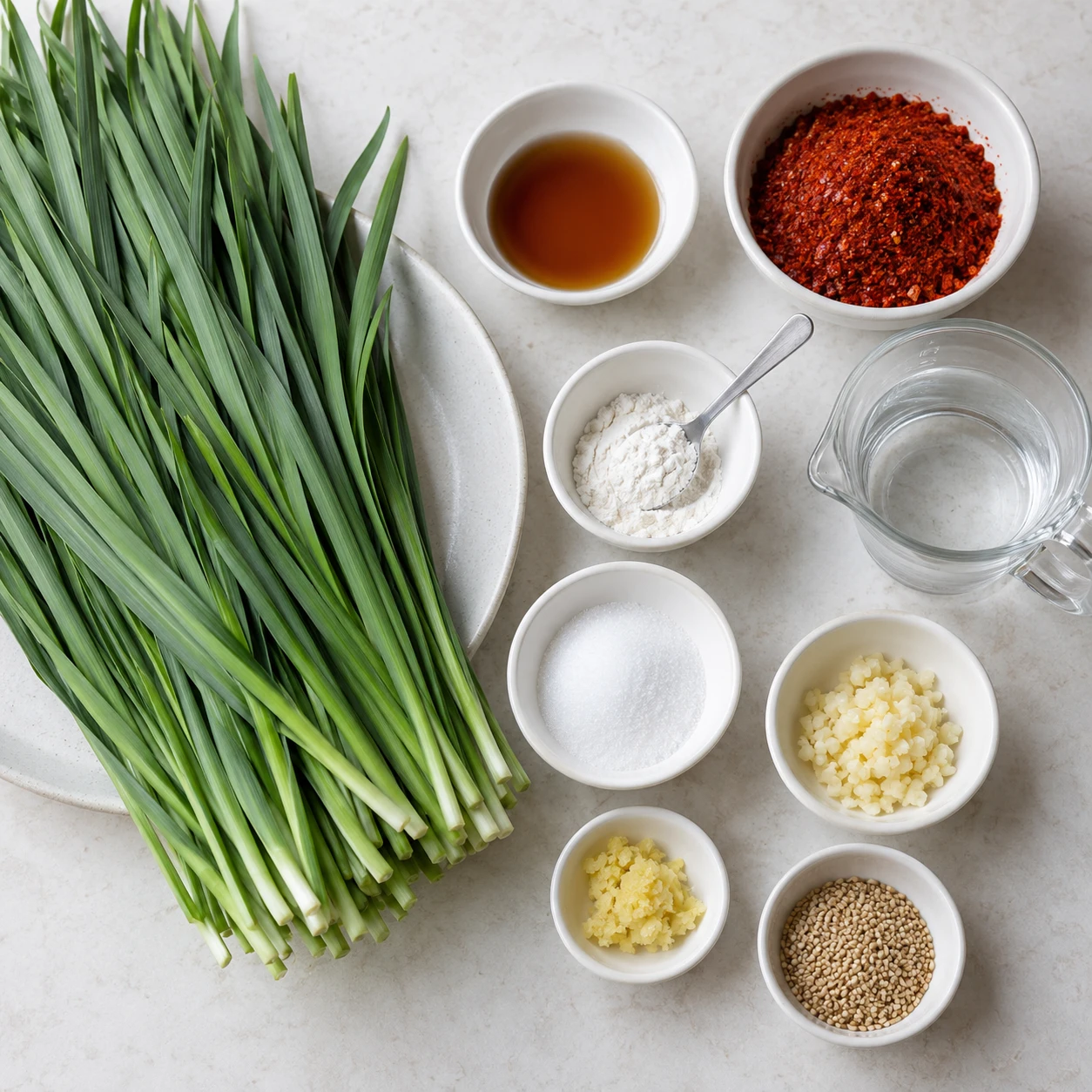
Everyday kitchen measurements
For 6 servings. Use a small 180 ml paper cup, a level eating spoon (about 15 ml) and a small teaspoon (about 5 ml).
How to fill the cup and spoons
Use the same cup and spoons throughout. Their sizes vary, so these amounts are approximate. Spoon flour in loosely and level the top without pressing. Measure vegetables after chopping, without packing them down. The amounts in g/ml are the original reference quantities. For part of a pack, use the specified pack weight and divide the contents evenly.
King Arthur Baking-
Essential
Use flat-leaf garlic chives, not bulb garlic or ordinary spring onions. Their fresh leaves define this kimchi.
-
Substitute available
If Fish sauce is unavailable
- Use instead
- Regular soy sauce
- Substitute quantity
- 2 level eating spoonsReference quantity: 30 ml
Use the same mixing method for a different savoury flavour. Refrigerate immediately and use within 3 days; this is a fresh seasoned-chive alternative, not a long-storage fermentation recipe.
-
Essential
Use Korean chilli flakes. Reduce to 1 eating spoon for less heat, but the dish is still spicy.
-
Substitute available
If Plain wheat flour is unavailable
- Use instead
- Rice flour
- Substitute quantity
- 1 small teaspoonReference quantity: 3 g
Cook with the same water until lightly thickened and cool fully. This gives a slightly smoother paste.
-
Essential
Cook with the flour, then cool fully before it touches the raw chives.
-
Optional
May be omitted. Skip its preparation and addition and keep the other amounts unchanged; the aroma will be milder.
-
Optional
May be omitted. Skip its preparation and addition and keep the other amounts unchanged; the aroma will be milder.
-
Optional
May be omitted. Skip its preparation and addition and keep the other amounts unchanged; the aroma will be milder.
-
Optional
May be omitted. Skip its preparation and addition and keep the other amounts unchanged; the aroma will be milder.
Tap each ingredient as you prepare it. Check product labels for egg, soy, sesame, wheat, fish or shellfish where relevant.
Step-by-step cooking
-
Step 1
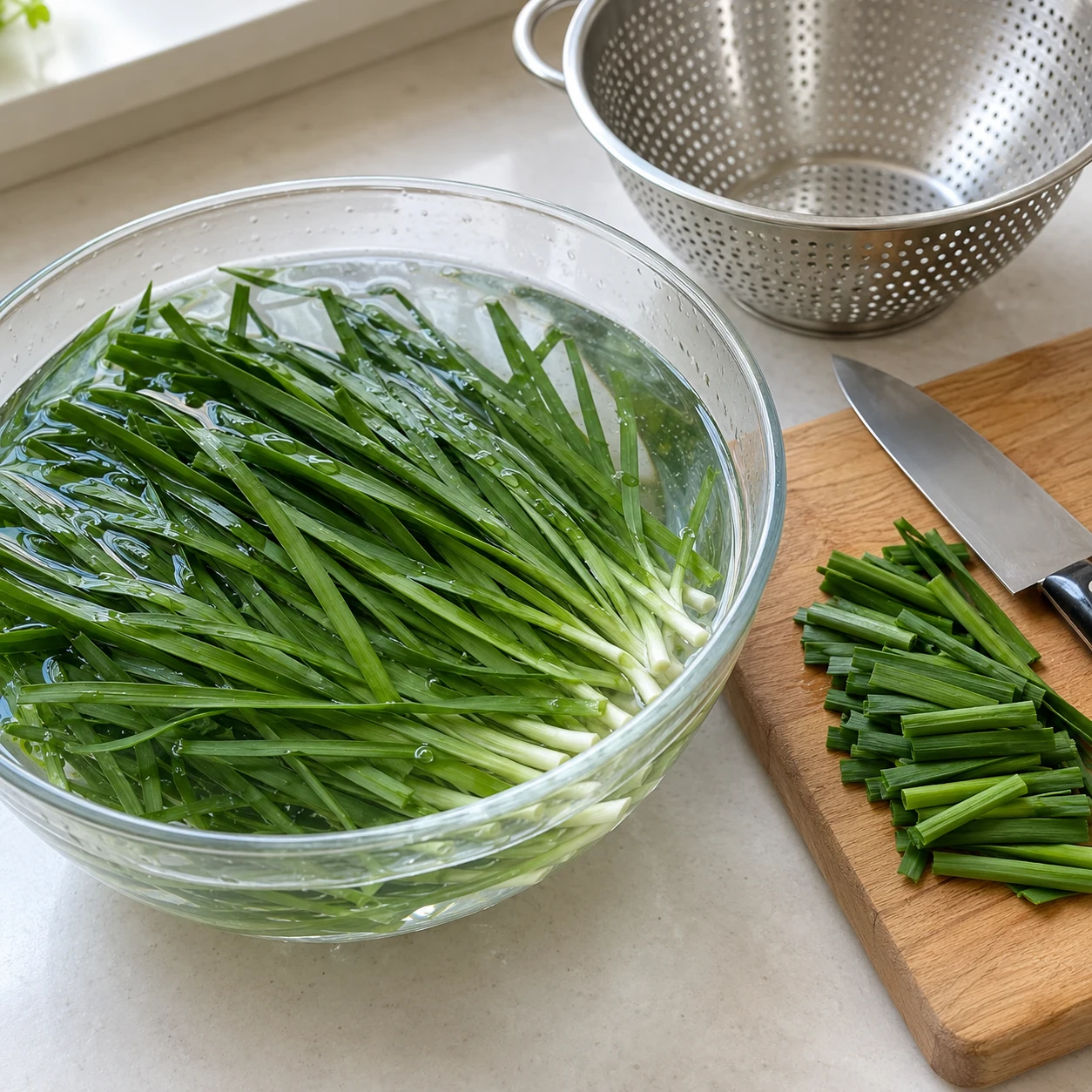
Sort the chives and discard wilted or damaged leaves. Rinse thoroughly in several changes of clean water, checking the base for soil. Drain well and cut into lengths about 5 cm.
-
Step 2
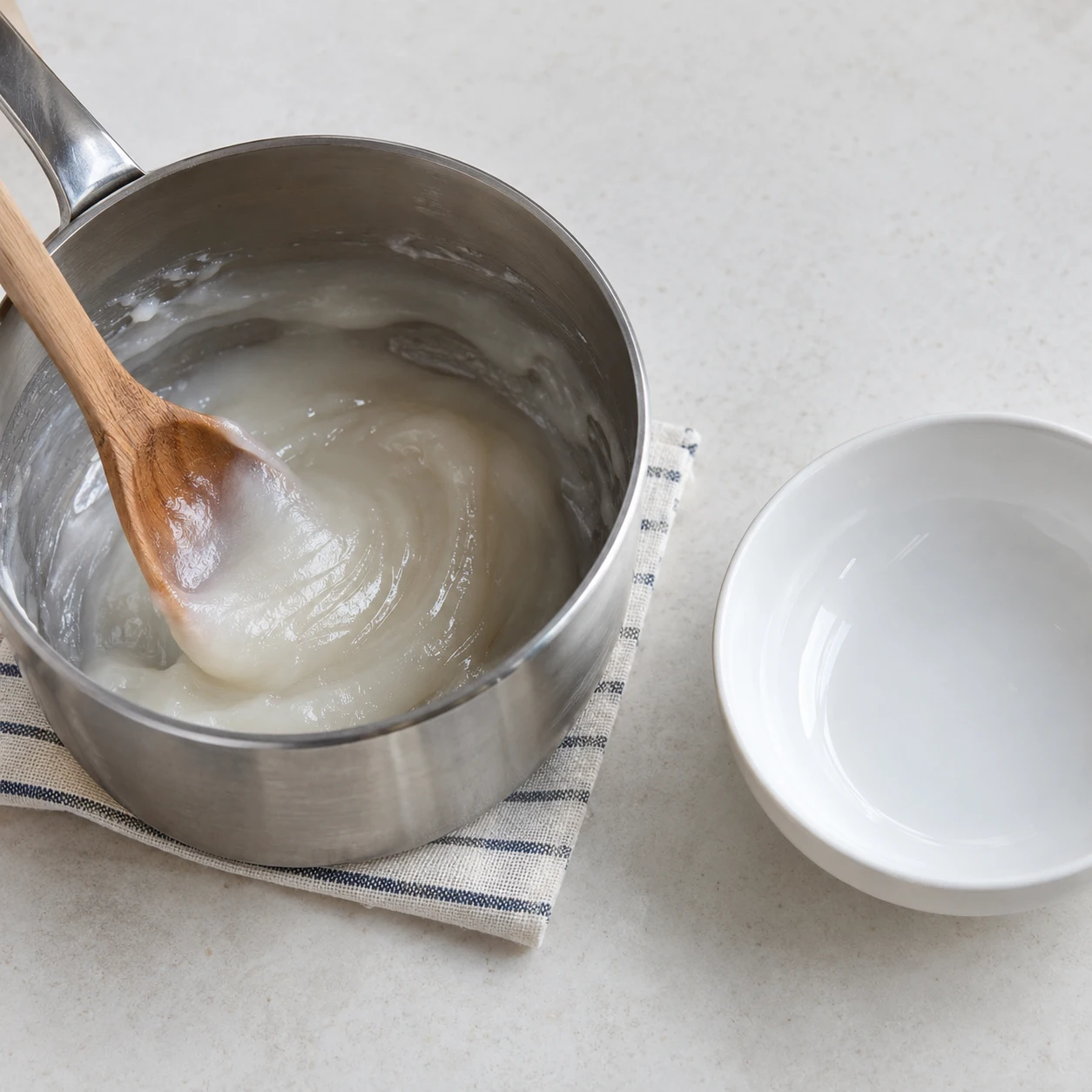
Mix the flour and 3 eating spoons of water in a small saucepan while cold. Heat gently, stirring for 1–2 minutes until it bubbles and becomes a light paste. Transfer to a clean bowl and cool completely.
-
Step 3
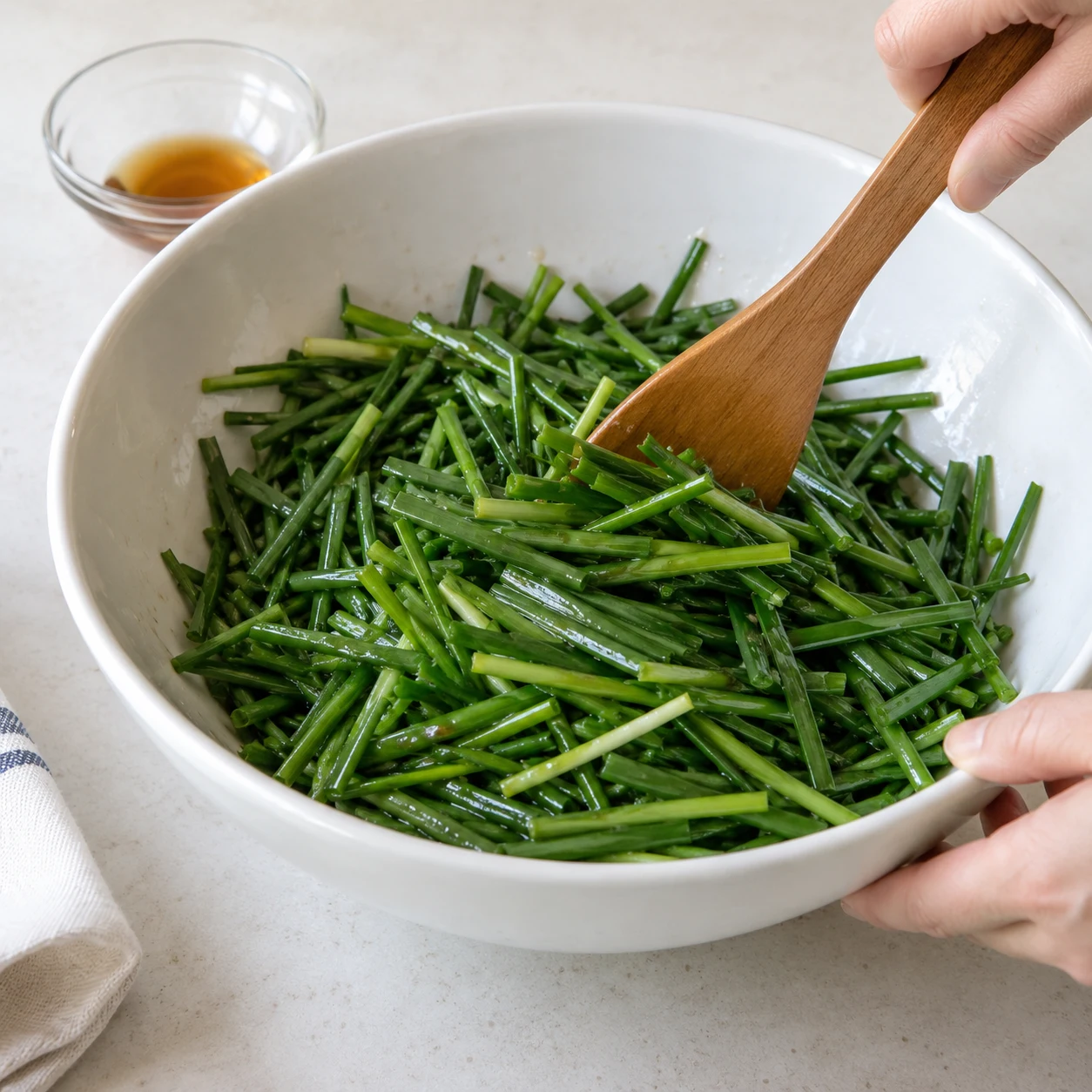
Put the drained chives in a wide clean bowl. Drizzle over the fish sauce and turn gently once or twice. Leave for 10 minutes, turning once so the seasoning reaches the lower leaves too.
-
Step 4
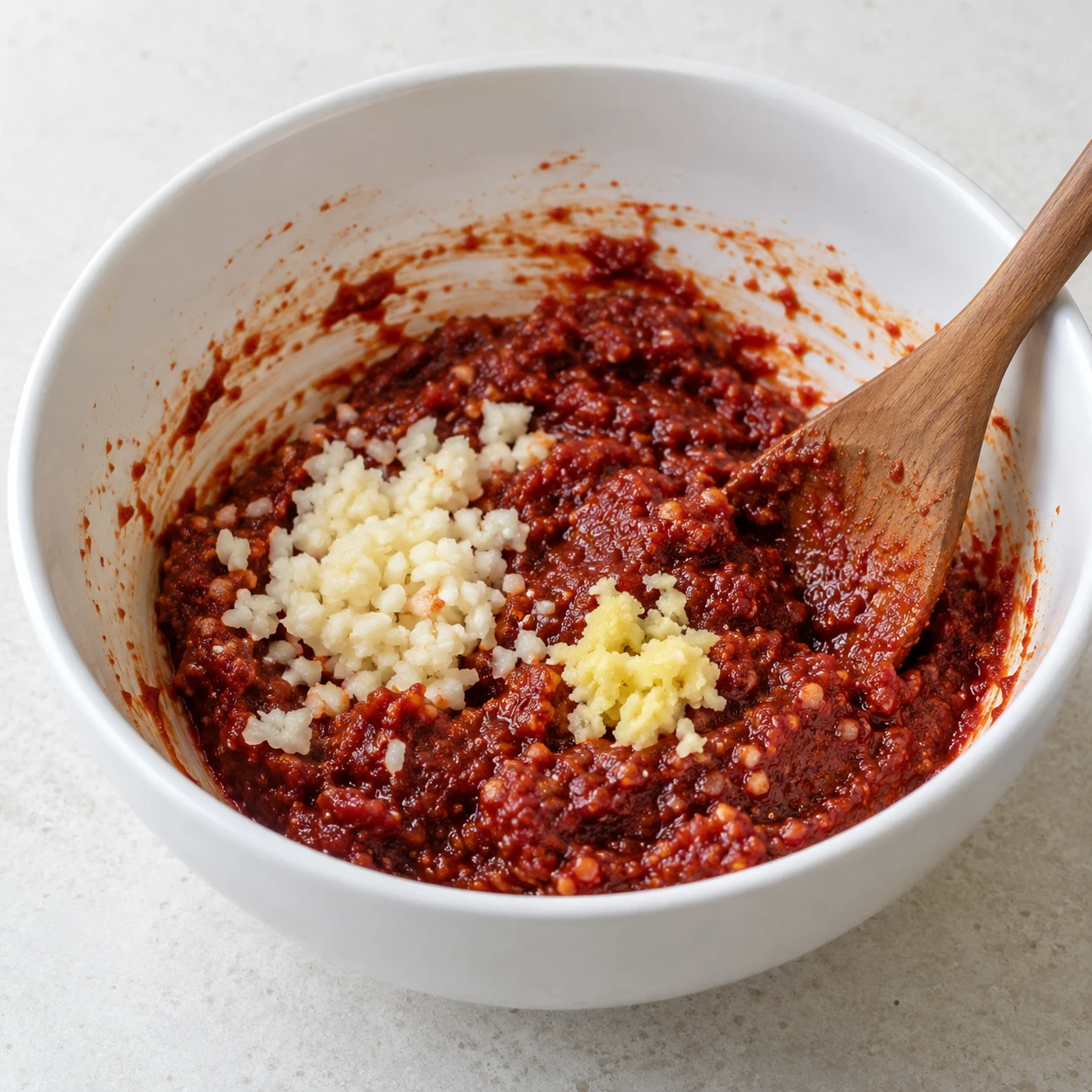
Mix the cooled paste with gochugaru, sugar, garlic and ginger. Pour over the chives, keeping the fish-sauce liquid in the bowl. Lift and fold gently with clean utensils or food-safe gloves; do not squeeze the leaves.
-
Step 5
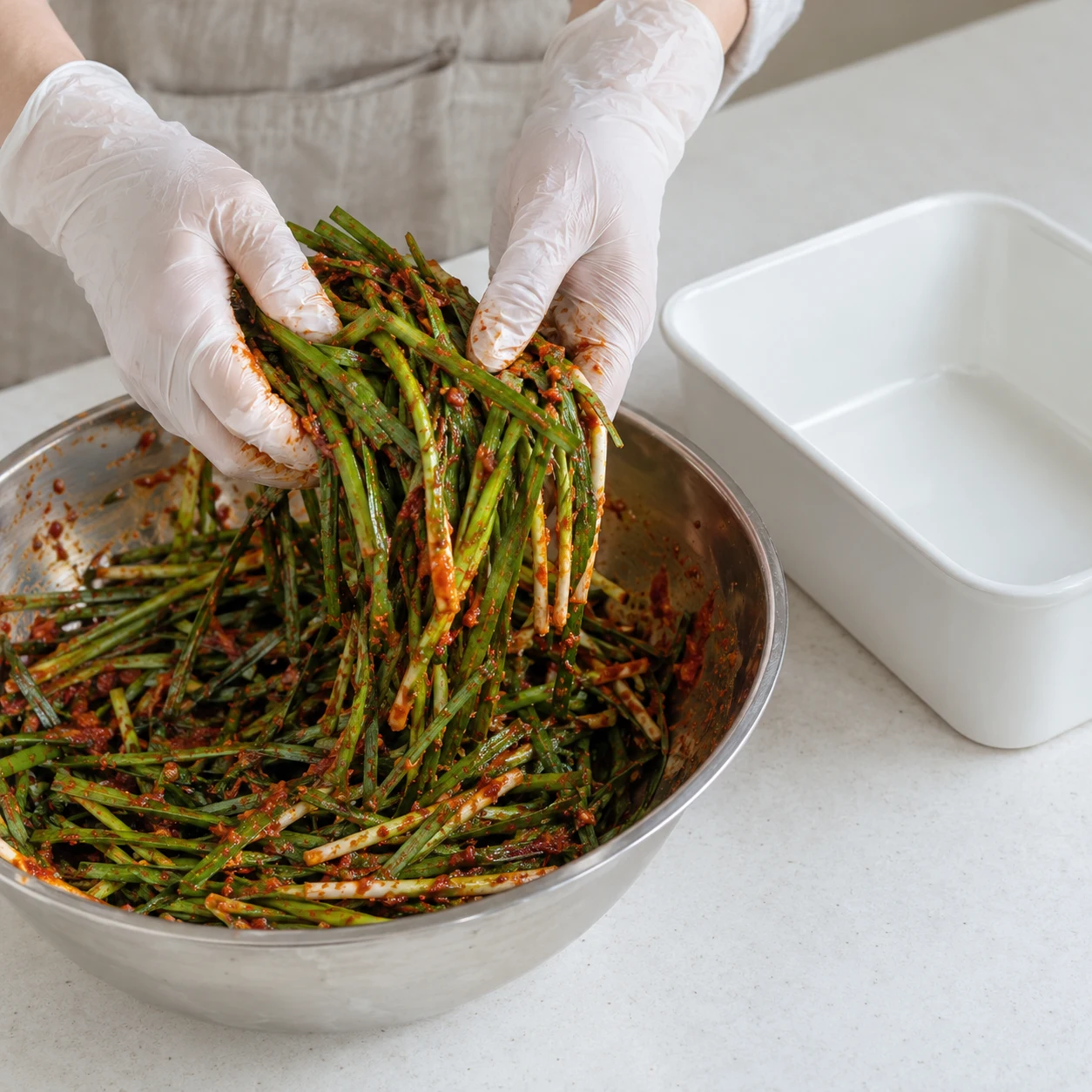
Fold in the sesame seeds if using. Transfer to a clean covered food container with about 3 cm of empty space at the top. Keep all the seasoning liquid and refrigerate immediately at 4°C or below.
-
Step 6
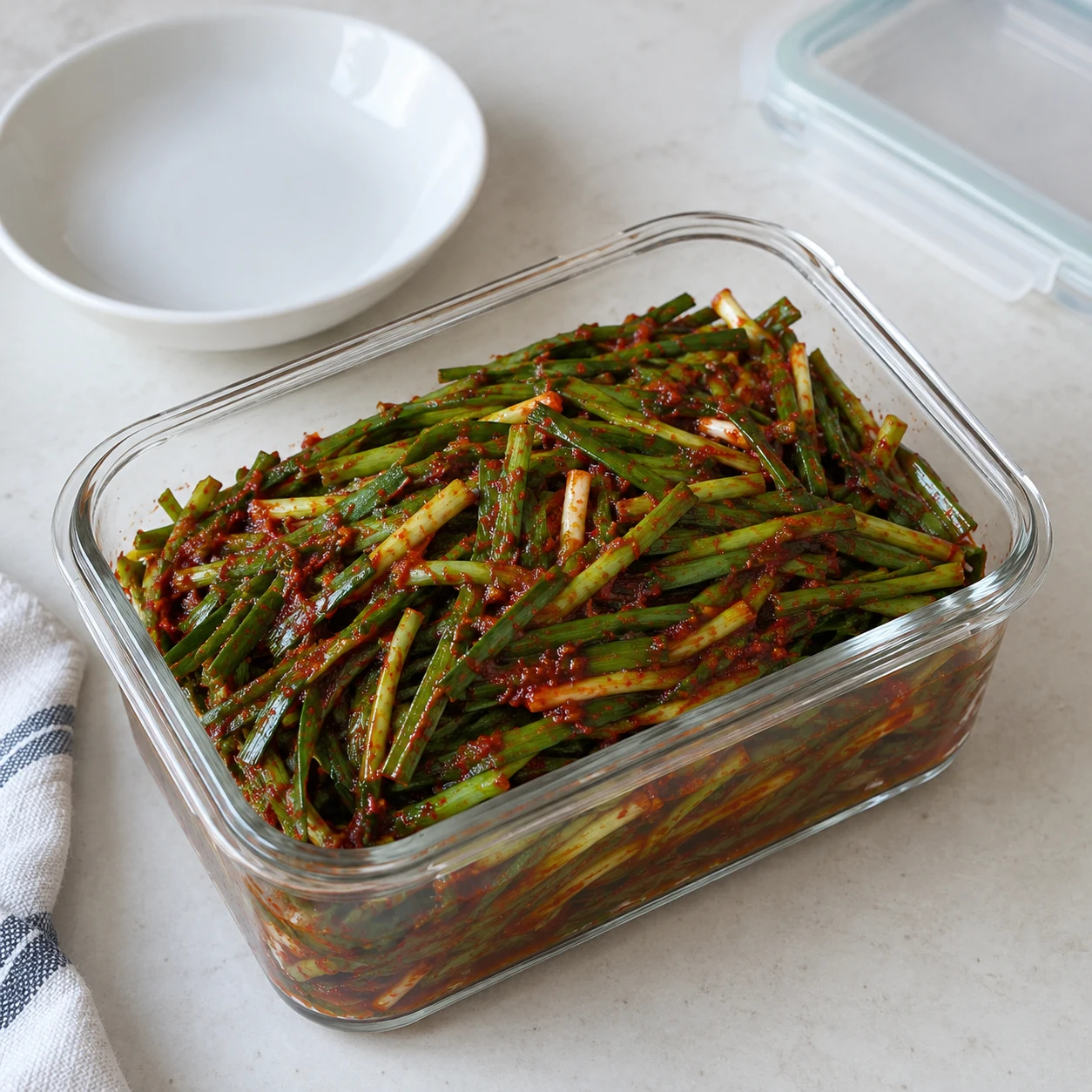
Serve a small portion fresh, or let it mellow in the refrigerator overnight. Use clean utensils each time and keep the remainder cold. The leaves should stay recognisable rather than being mashed into a paste.
Finished dish
Preparation takes about 35 minutes; optional refrigerator resting adds a night. Do not pour hot flour paste over raw chives. Keep at 4°C or below and use within 7 days, or within 3 days for the soy-sauce alternative. This is not shelf-stable food. Discard if mould or other spoilage appears.
Enjoy every bite
How to enjoy it
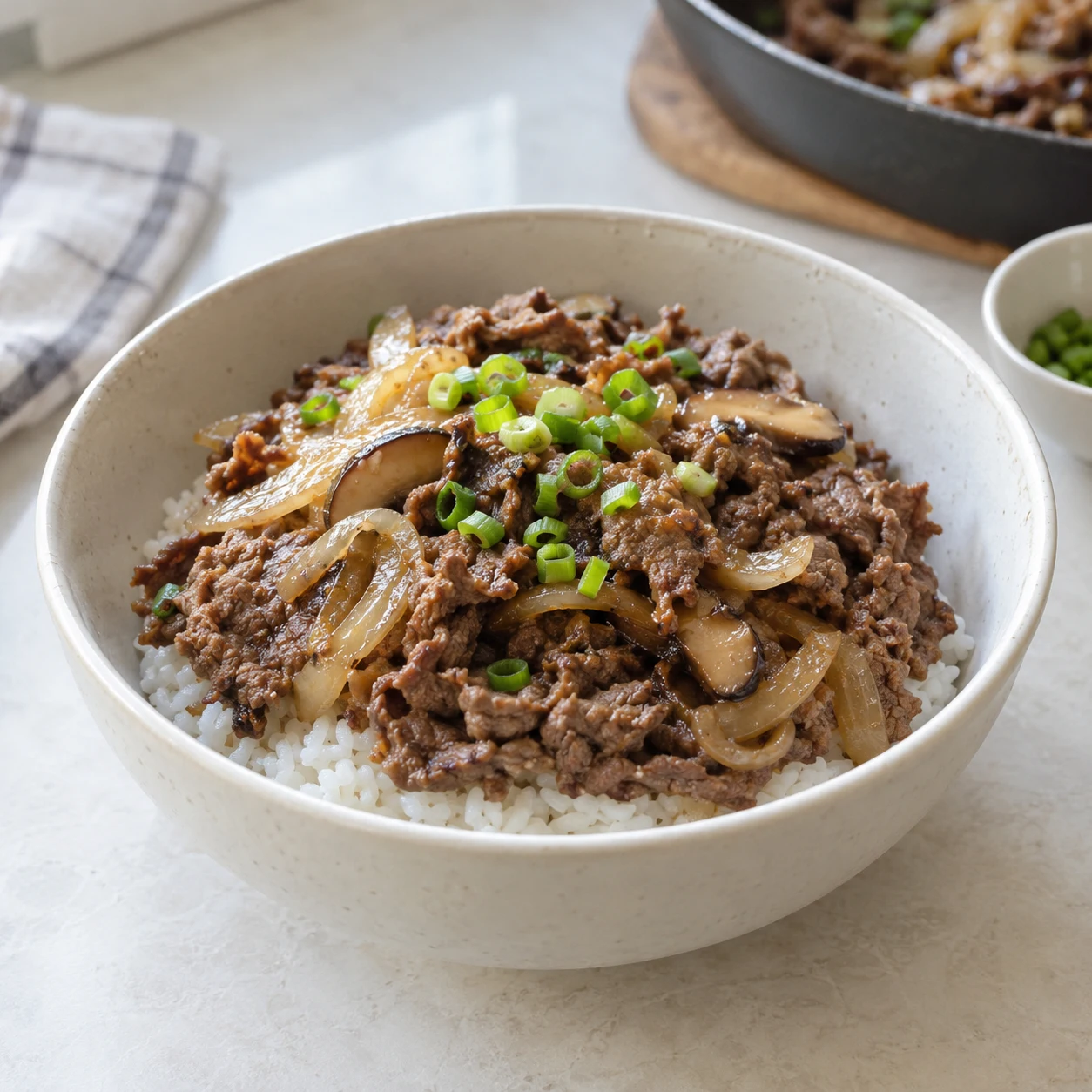
Serve a small portion beside warm rice. Use a clean utensil for each dish and refrigerate the rest promptly.
Serve it with
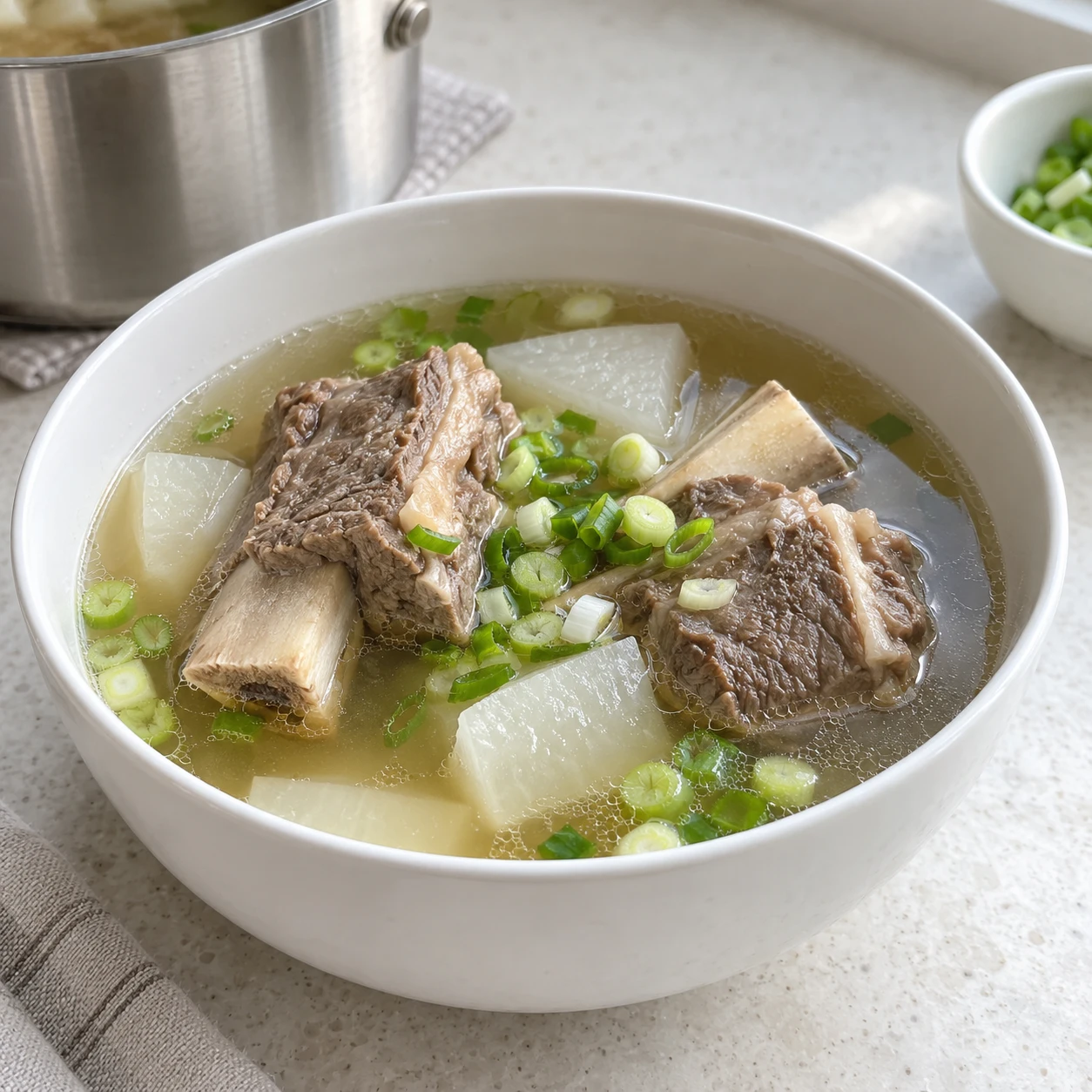
Clear beef short rib soup (galbitang)
A sip of warm broth makes a pleasant change between bites.
View recipe