Clear beef short rib soup (galbitang)
A gentle clear soup of beef short ribs and radish. Blanching and a slow simmer make a cleaner broth; this guide includes the waiting time instead of promising a quick stock.
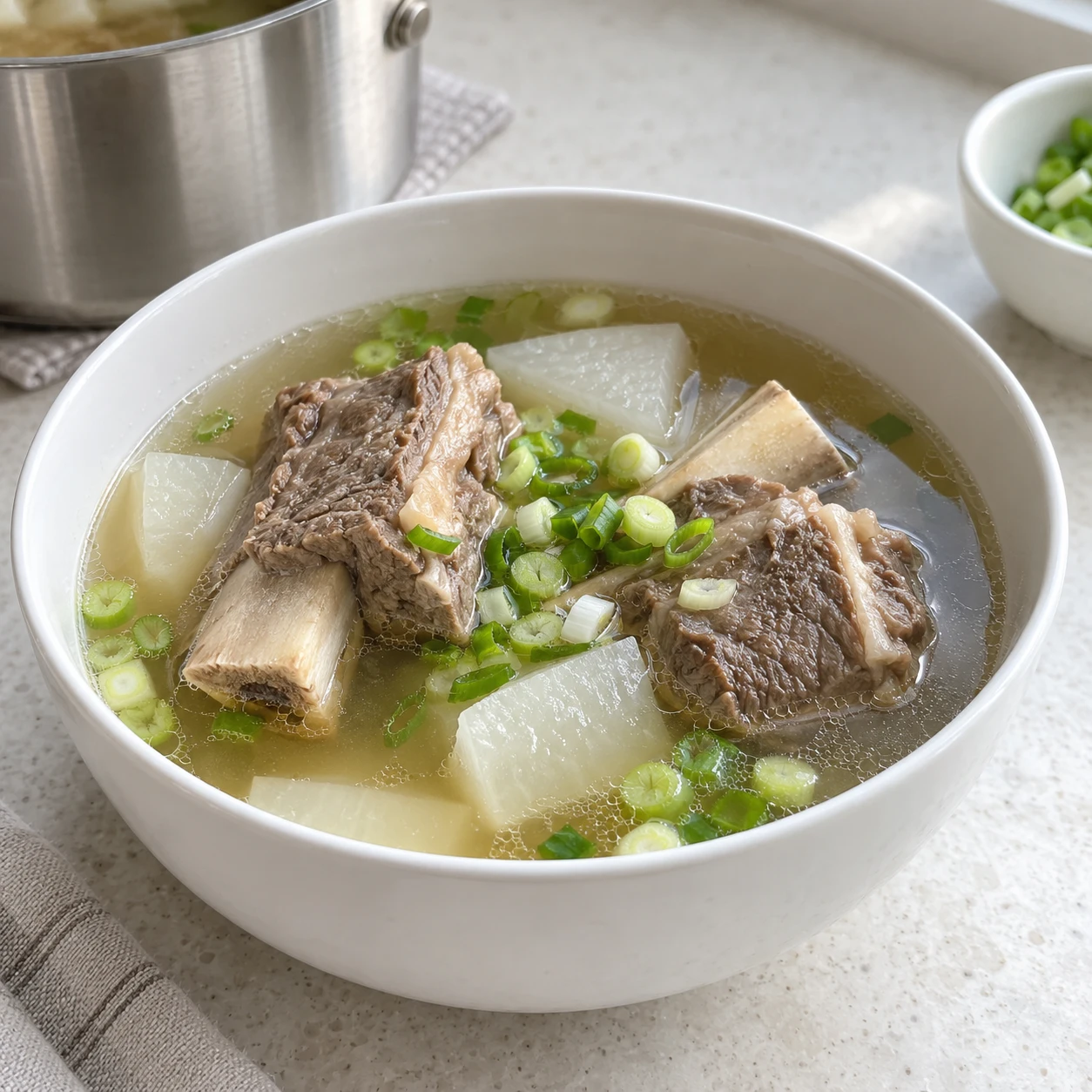
AI-generated cooking illustrations. Follow the written quantities and instructions.
Ingredients
2 servings
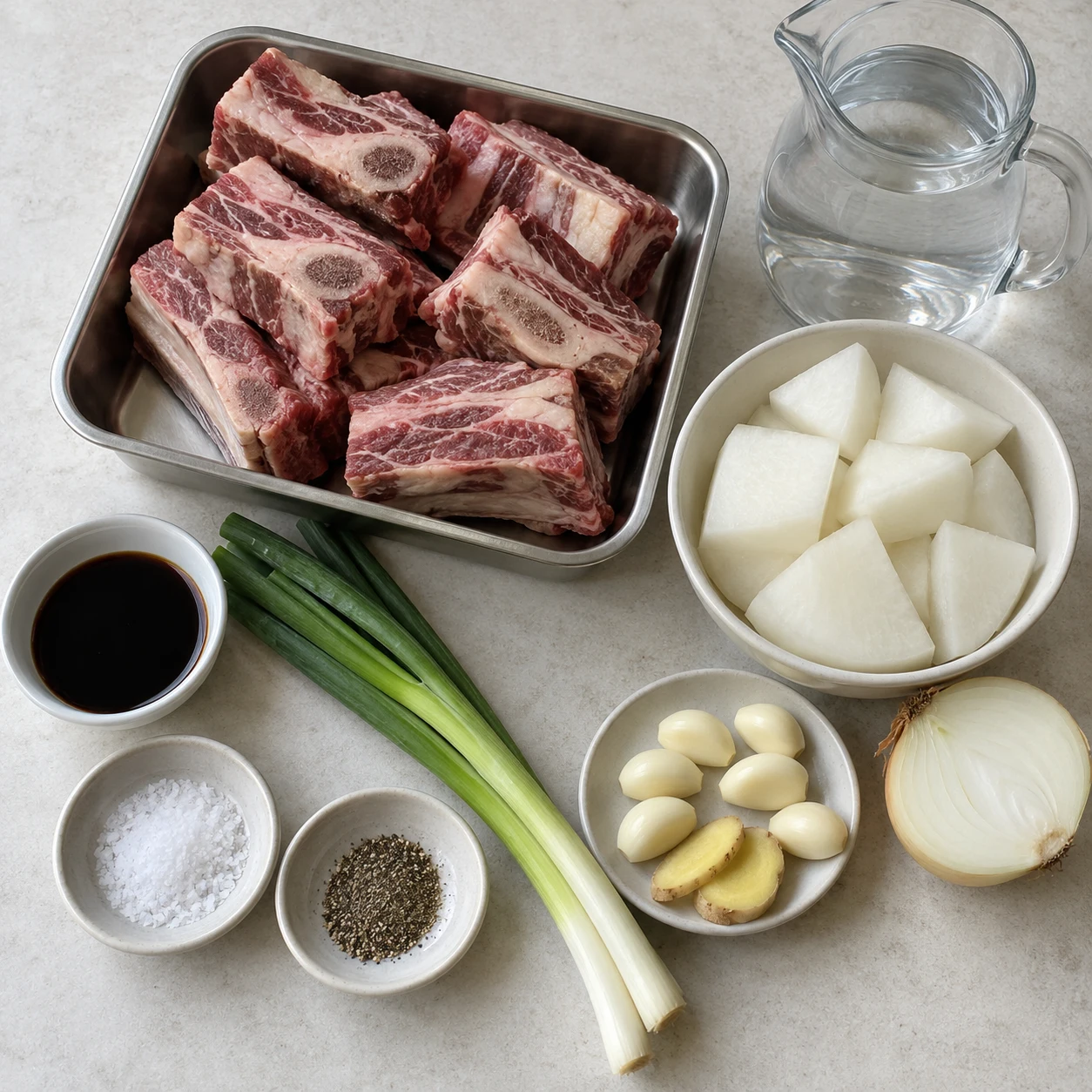
Everyday kitchen measurements
For 2 servings. Use a small 180 ml paper cup, a level eating spoon (about 15 ml) and a small teaspoon (about 5 ml).
How to fill the cup and spoons
Use the same cup and spoons throughout. Their sizes vary, so these amounts are approximate. Spoon flour in loosely and level the top without pressing. Measure vegetables after chopping, without packing them down. The amounts in g/ml are the original reference quantities. For part of a pack, use the specified pack weight and divide the contents evenly.
King Arthur Baking-
Essential
Use thick soup-cut ribs with bones, not thin flanken slices. Check for loose bone fragments after blanching; tenderness takes a long gentle simmer.
-
Substitute available
If Korean radish, bite-size chunks is unavailable
- Use instead
- Daikon radish, bite-size chunks
- Substitute quantity
- 1 paper cupReference quantity: 120 g
Add at the same stage and simmer until tender. The flavour will be slightly milder.
-
Optional
May be omitted. Skip its preparation and addition and keep the other amounts unchanged; the aroma will be milder.
-
Optional
May be omitted. Skip its preparation and addition and keep the other amounts unchanged; the aroma will be milder.
-
Optional
May be omitted. Skip its preparation and addition and keep the other amounts unchanged; the aroma will be milder.
-
Optional
May be omitted. Skip its preparation and addition and keep the other amounts unchanged; the aroma will be milder.
-
Essential
This is fresh broth water; the first blanching water is extra and discarded. Add a little hot water if the ribs become exposed during simmering.
-
Substitute available
If Korean soup soy sauce is unavailable
- Use instead
- Regular soy sauce
- Substitute quantity
- 2 small teaspoonsReference quantity: 10 ml
Use less to avoid darkening the clear broth. Taste before adding the listed salt.
-
Optional
May be omitted. Skip its preparation and addition and keep the other amounts unchanged; the aroma will be milder.
-
Optional
May be omitted. Skip its preparation and addition and keep the other amounts unchanged; the aroma will be milder.
Tap each ingredient as you prepare it. Check product labels for egg, soy, sesame, wheat, fish or shellfish where relevant.
Step-by-step cooking
-
Step 1
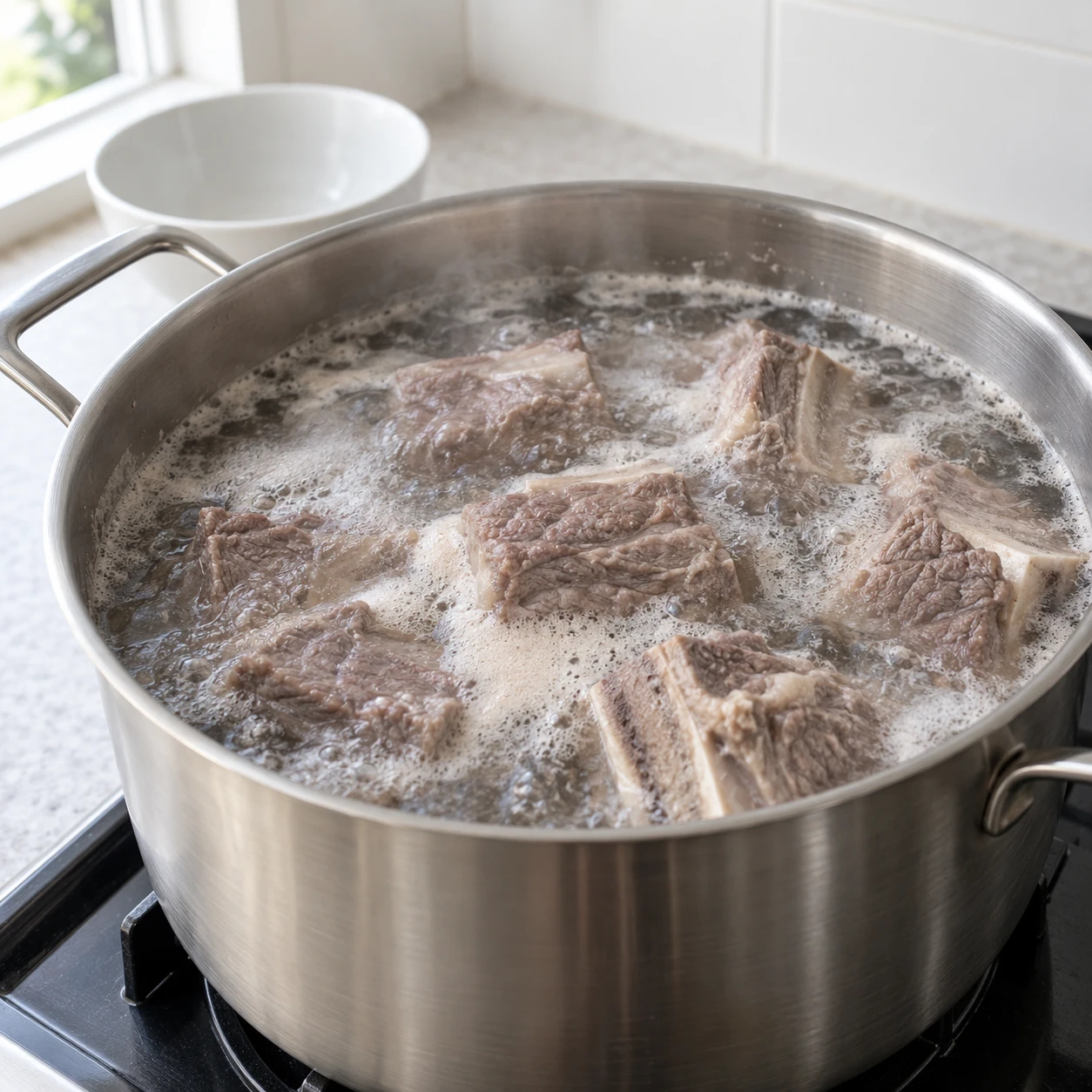
Soak the ribs in cold water in the refrigerator for 30 minutes, then drain. Put them in a large pot, cover with extra fresh water and boil for 5 minutes. Discard this blanching water.
-
Step 2
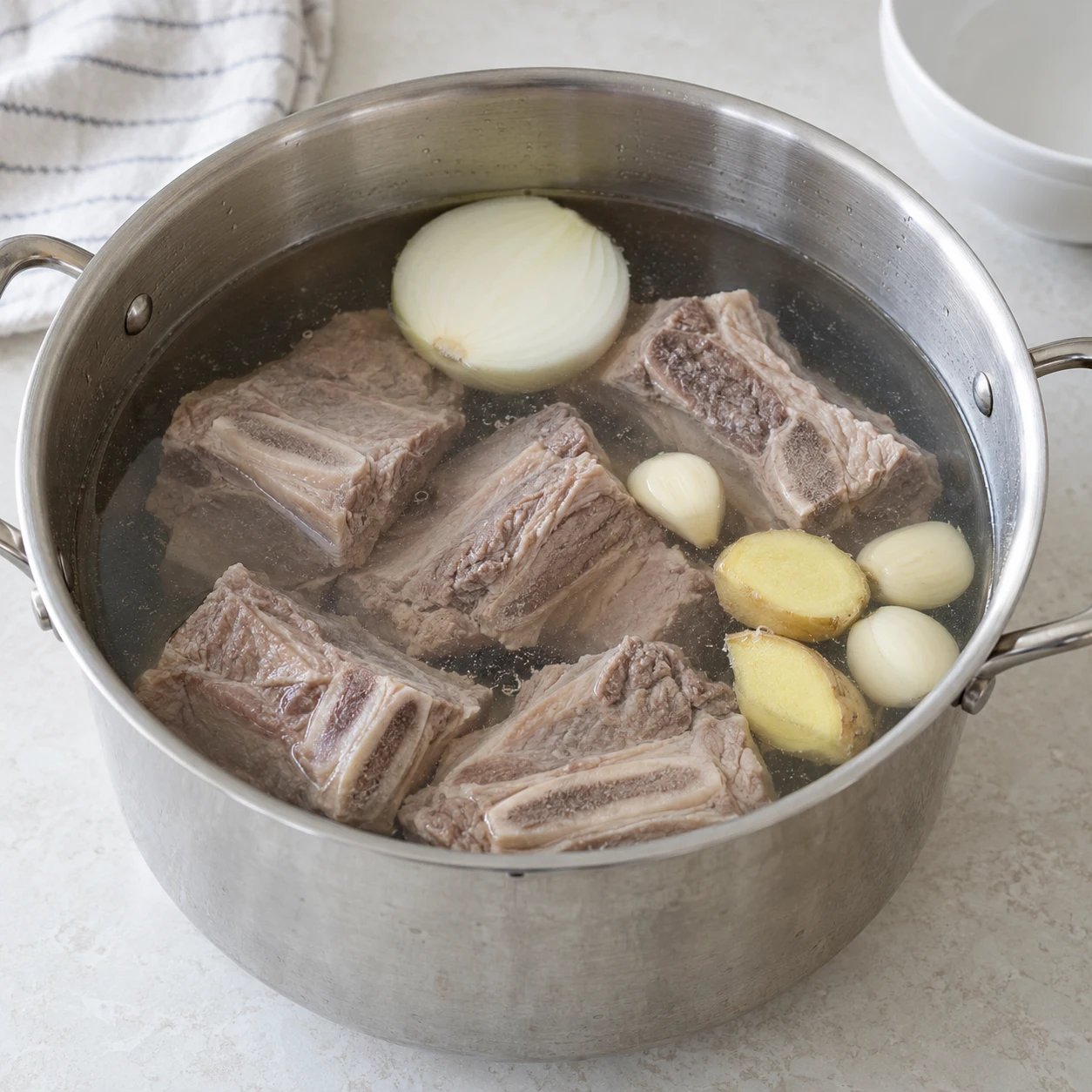
Rinse the blanched ribs carefully to remove loose bone fragments and foam; clean the pot. Return the ribs with the onion, whole garlic and ginger. Add 10 paper cups of fresh water and bring to a boil.
-
Step 3
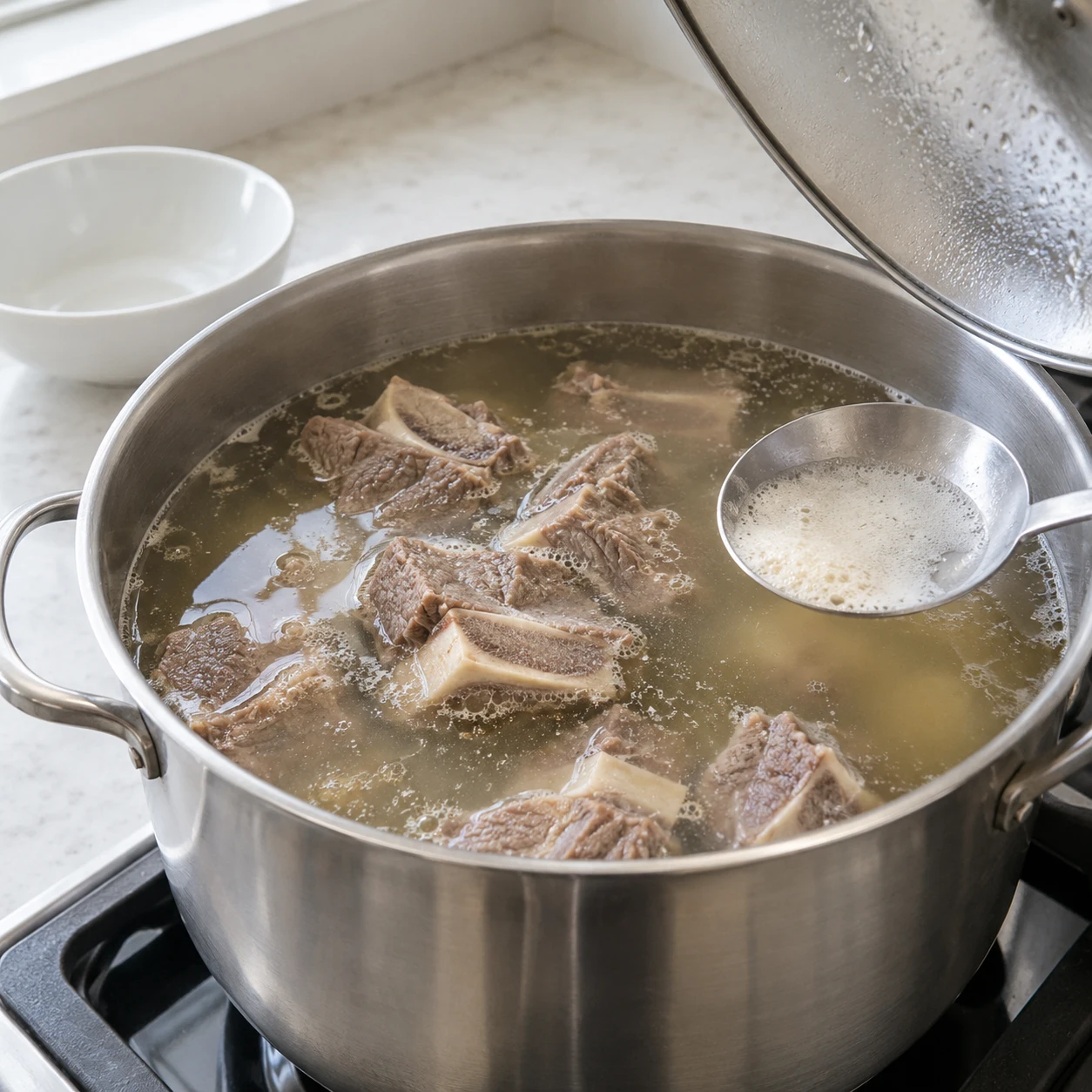
Skim foam, reduce to a gentle simmer and partly cover. Cook for 75–90 minutes, skimming surface fat when needed. Add a little hot water if the meat becomes exposed; do not boil vigorously if you want clear broth.
-
Step 4
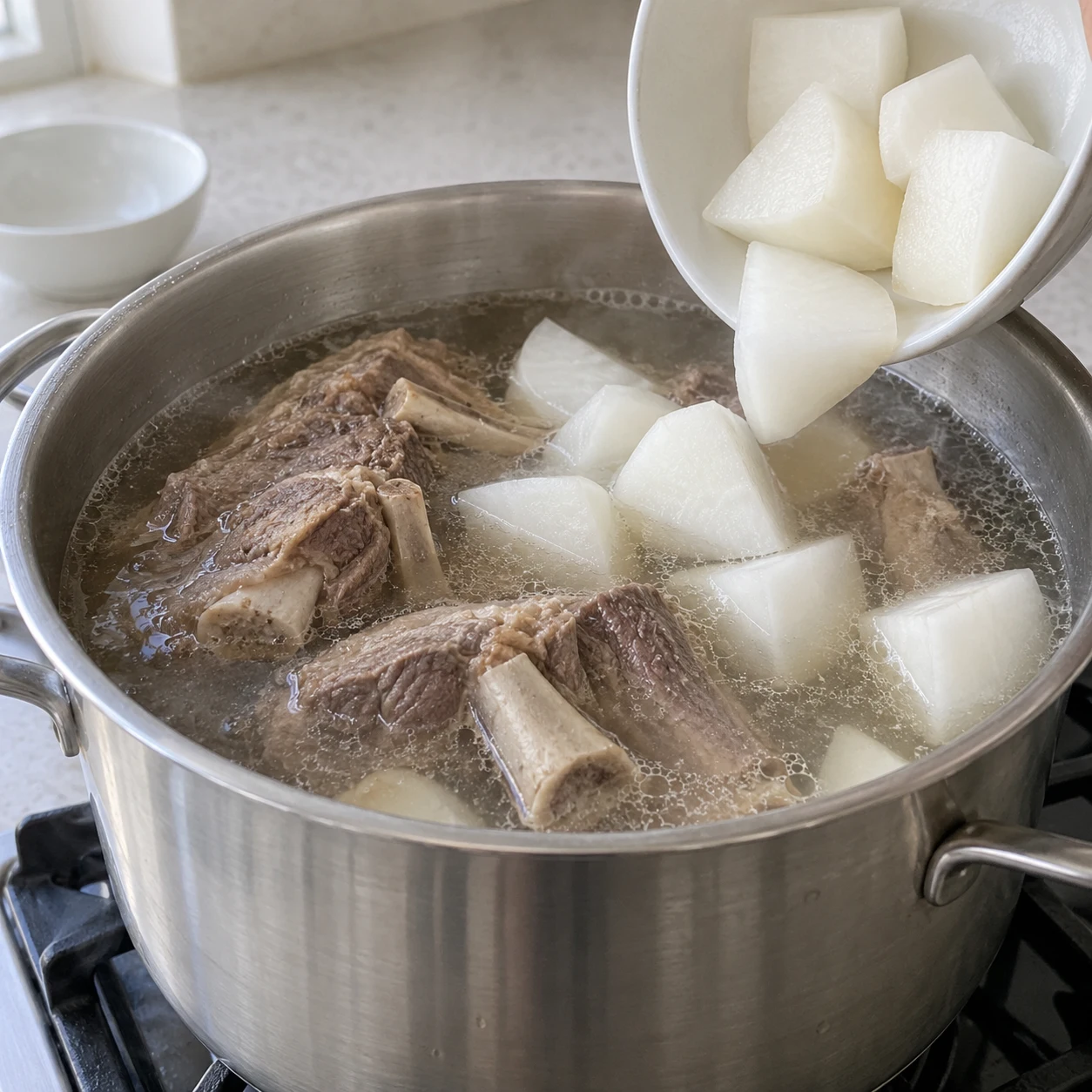
Add the radish chunks and simmer for another 20 minutes, until both radish and rib meat are tender. If the ribs are still chewy, simmer longer before continuing. Elapsed time varies with the cut and size.
-
Step 5
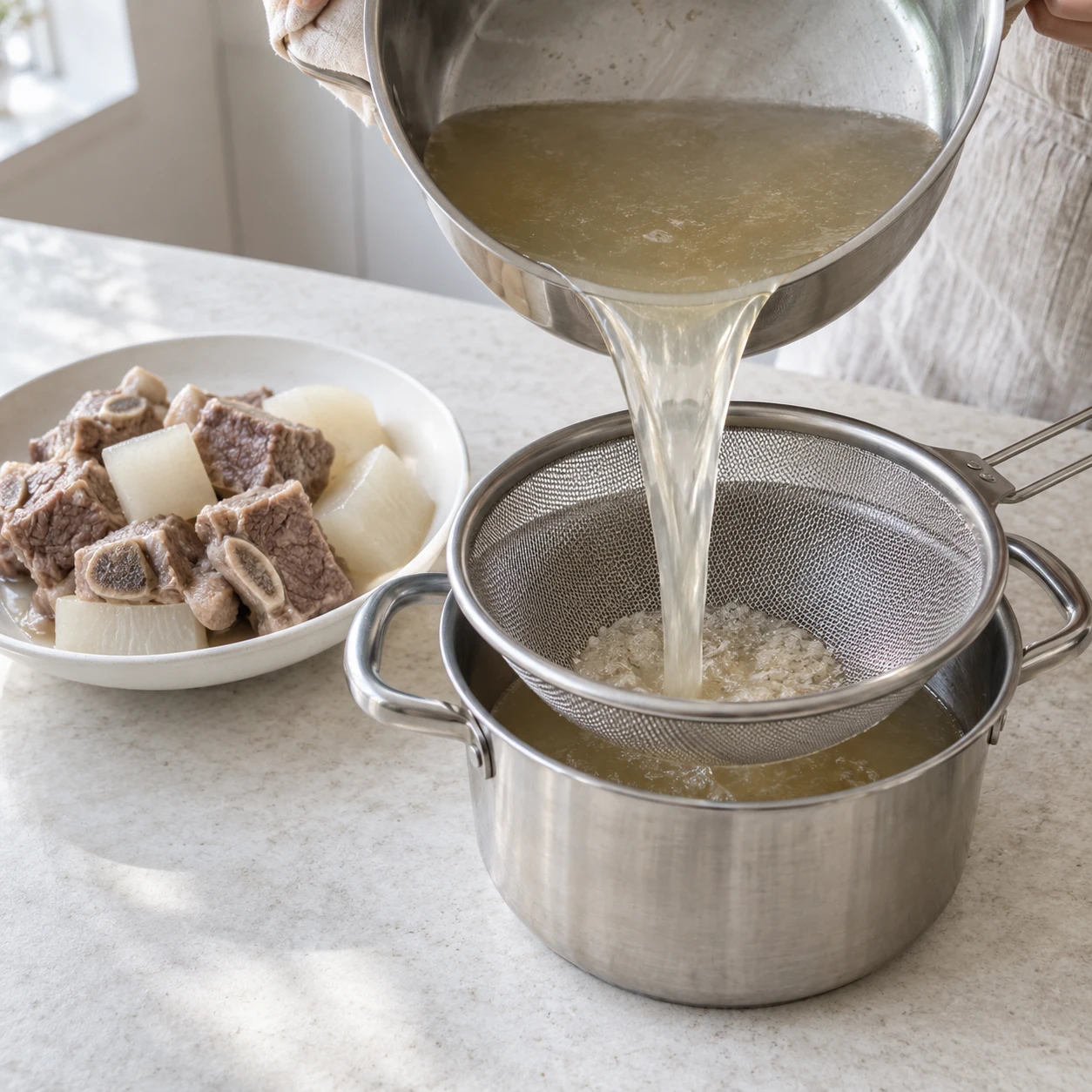
Lift out the ribs and radish. Strain the broth into a clean pot, discarding the onion, garlic and ginger. Skim excess fat, return the ribs and radish and bring to a full simmer. Add the soup soy sauce.
-
Step 6
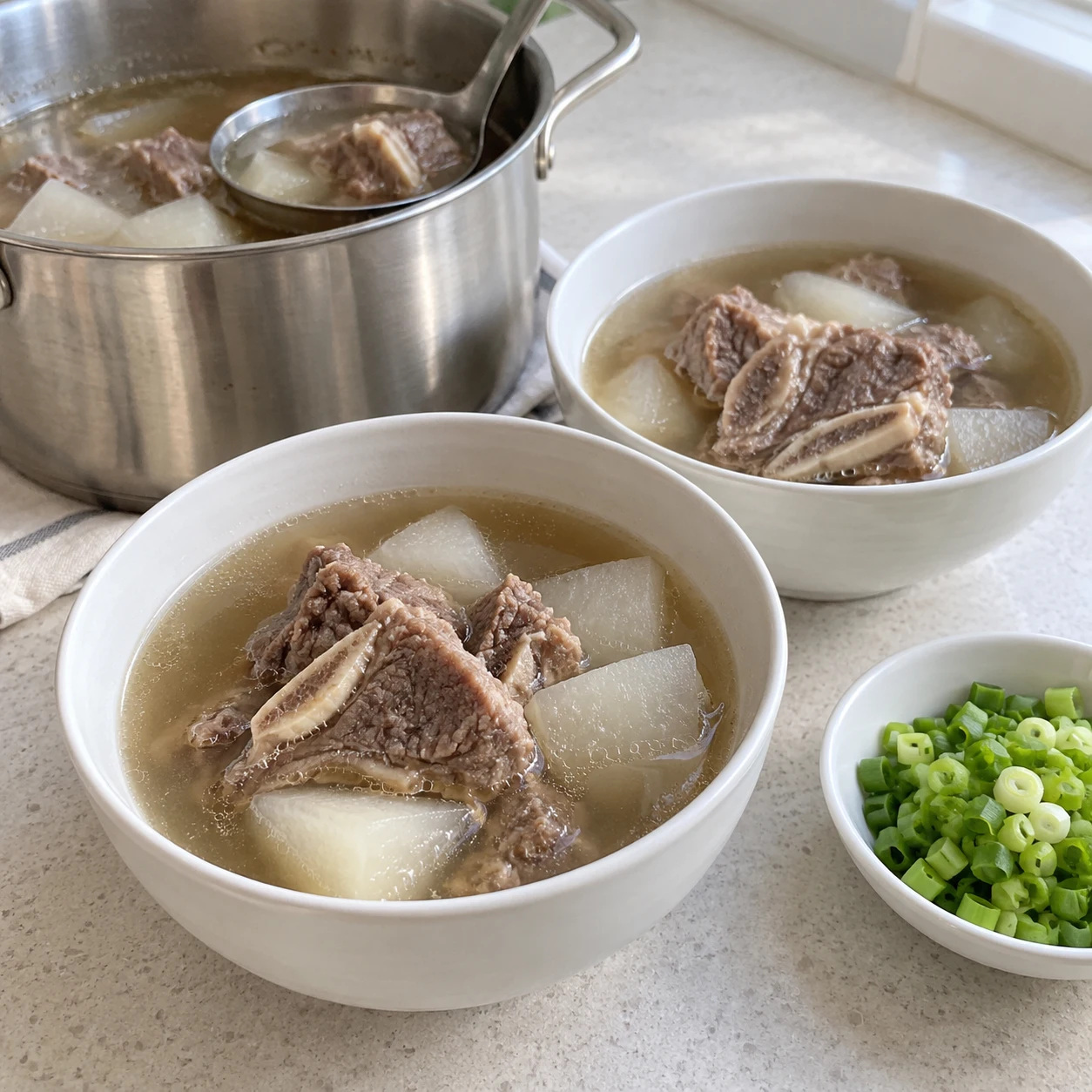
Taste and add the listed salt gradually only if needed. Divide ribs, radish and broth between two deep bowls. Top with chopped spring onion and pepper if using. Check for bone fragments and remove bones before serving meat to children.
Finished dish
Allow about 3 hours including soaking and simmering; thick or tough ribs can take longer. Rice is an optional accompaniment and is not included in the ingredient list. Use clean utensils after handling uncooked meat. Refrigerate leftovers in shallow containers within 2 hours, or within 1 hour above 32°C. Keep at 4°C or below, use within 3–4 days and reheat cooked leftovers to 74°C.
Enjoy every bite
How to enjoy it
Serve a small portion beside warm rice. Use a clean utensil for each dish and refrigerate the rest promptly.
Serve it with
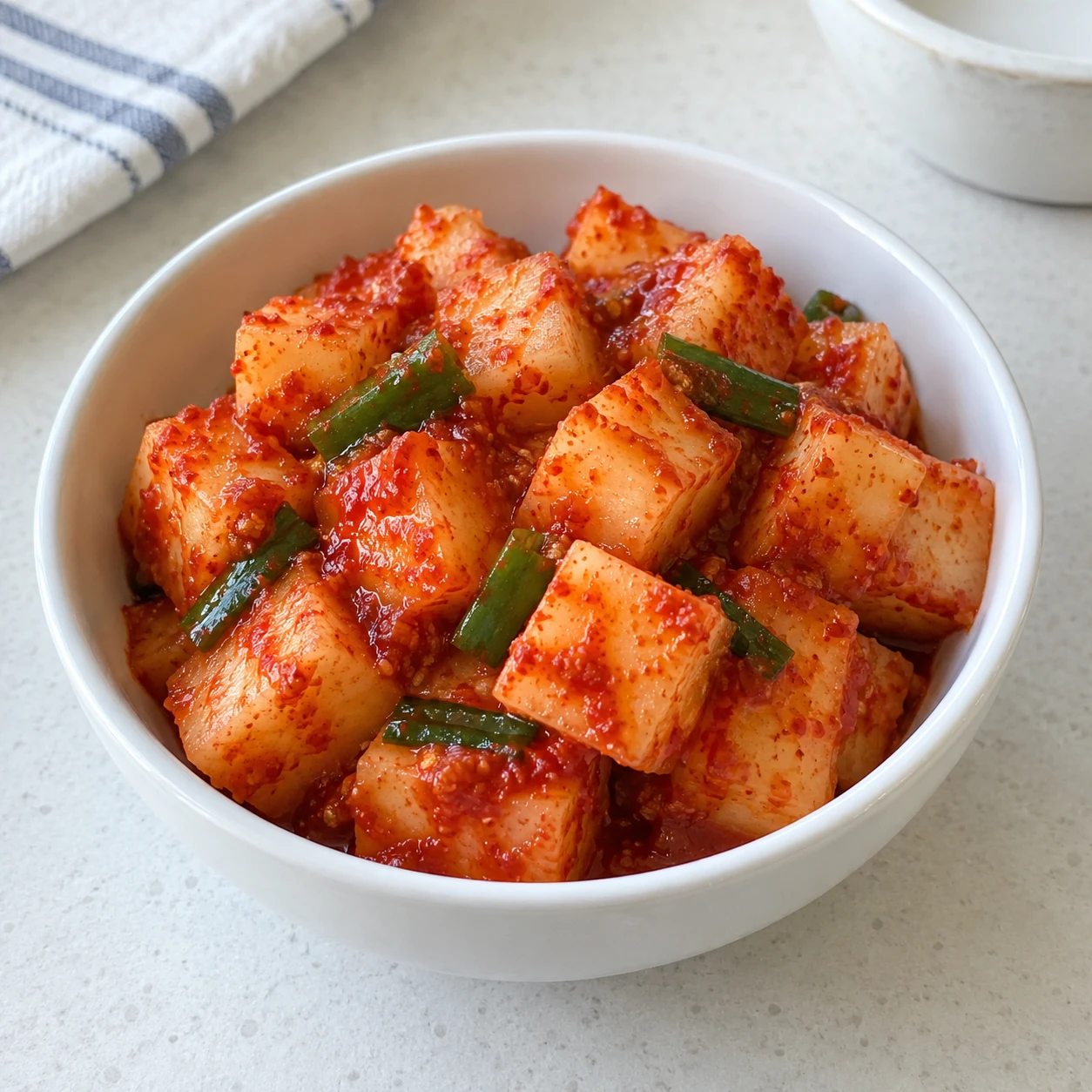
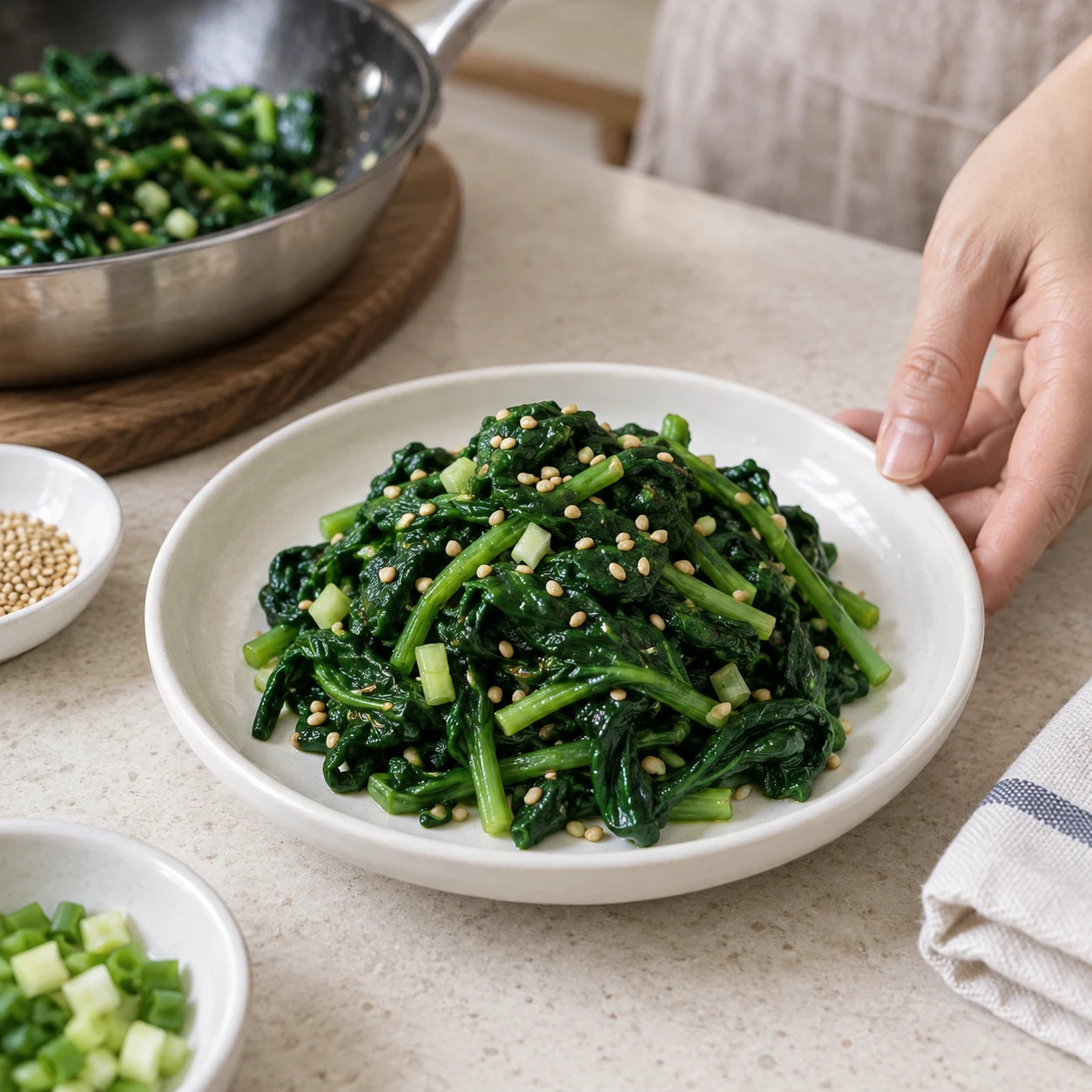
Seasoned spinach (Sigeumchi namul)
Lightly seasoned vegetables let the main dish stand out.
View recipe