Napa Cabbage Doenjang Soup
A mild Korean cabbage soup with tofu and kelp broth, combining sweet cabbage with savory fermented soybean paste.

AI-generated cooking illustrations. Follow the written quantities and instructions.
Ingredients
2 servings

Everyday kitchen measurements
For 2 servings. Use a small 180 ml paper cup, a level eating spoon (about 15 ml) and a small teaspoon (about 5 ml).
How to fill the cup and spoons
Use the same cup and spoons throughout. Their sizes vary, so these amounts are approximate. Spoon flour in loosely and level the top without pressing. Measure vegetables after chopping, without packing them down. The amounts in g/ml are the original reference quantities. For part of a pack, use the specified pack weight and divide the contents evenly.
King Arthur Baking-
Substitute available
If Napa cabbage is unavailable
Choose tender napa cabbage; discard tough outer leaves or cook them longer. The same weight of bok choy can replace it but cooks faster.
-
Essential
Use the listed amount for the base flavor and cooking method; prepare and add it at the stage described.
-
Essential
Use the listed amount for the base flavor and cooking method; prepare and add it at the stage described.
-
Essential
Use the listed amount for the base flavor and cooking method; prepare and add it at the stage described.
-
Essential
Use the listed amount for the base flavor and cooking method; prepare and add it at the stage described.
-
Substitute available
If Doenjang is unavailable
Start with 1 tablespoon Korean doenjang, up to 1.5 tablespoons. Miso can replace it starting at the same amount; add toward the end and simmer briefly.
-
Substitute available
If Dried kelp is unavailable
Without kelp, replace the 720ml water with 720ml unsalted vegetable stock and skip the broth-making stage.
-
Essential
Use the listed amount for the base flavor and cooking method; prepare and add it at the stage described.
Tap each ingredient as you prepare it. Check product labels for egg, soy, sesame, wheat, fish or shellfish where relevant.
Step-by-step cooking
Check off a completed step to move to the next one. After the last step, you will move to the finished dish.
Completed steps are saved in this browser. Start over to clear this recipe’s progress.
-
Step 1
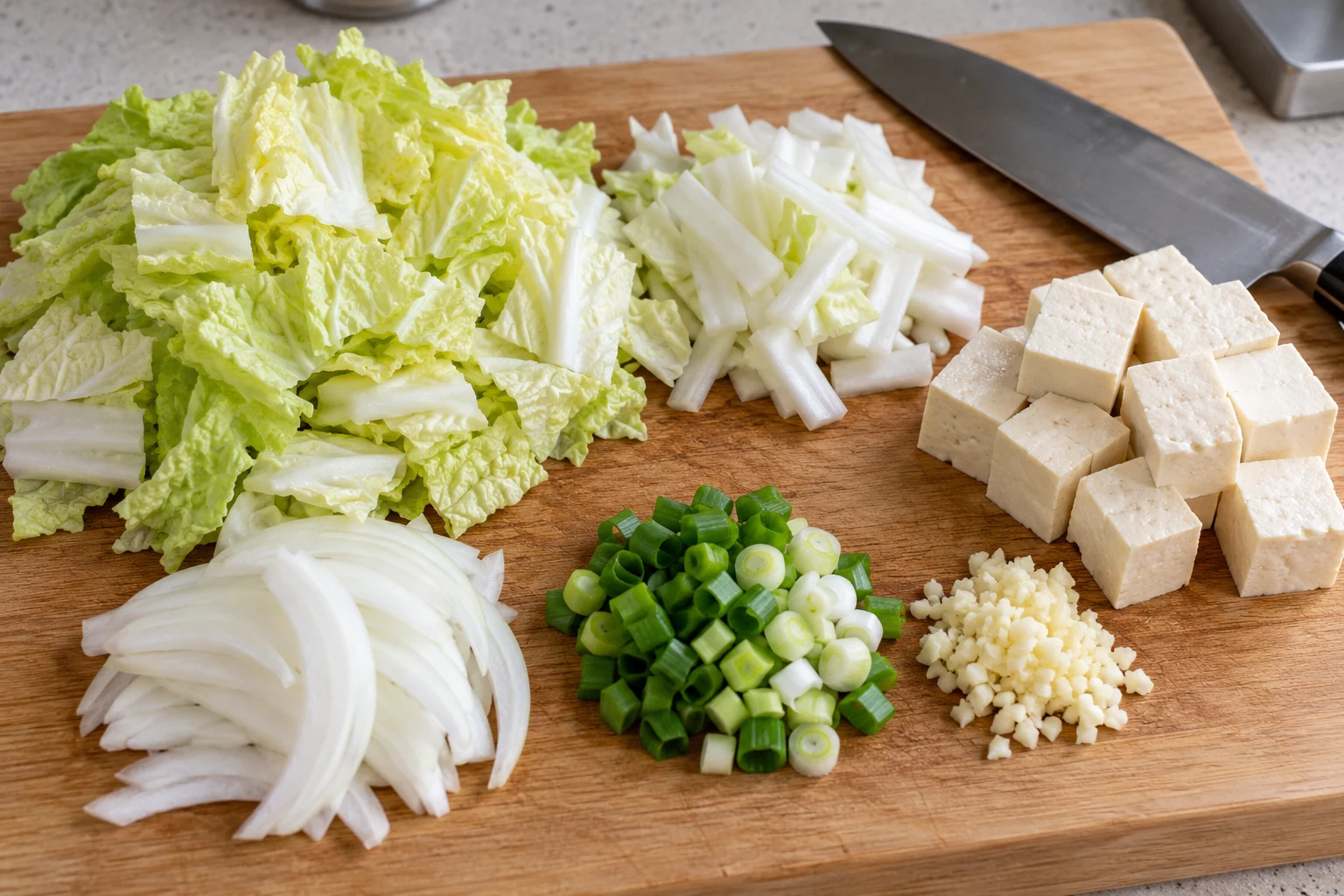
Separate and wash 250g cabbage leaves, rinsing between the ribs. Cut leaves into 3cm pieces and thick white ribs into 1cm strips. Drain 150g tofu and cut into 2cm cubes. Thinly slice 50g onion, slice the scallion, and peel and mince 2 garlic cloves.
-
Step 2
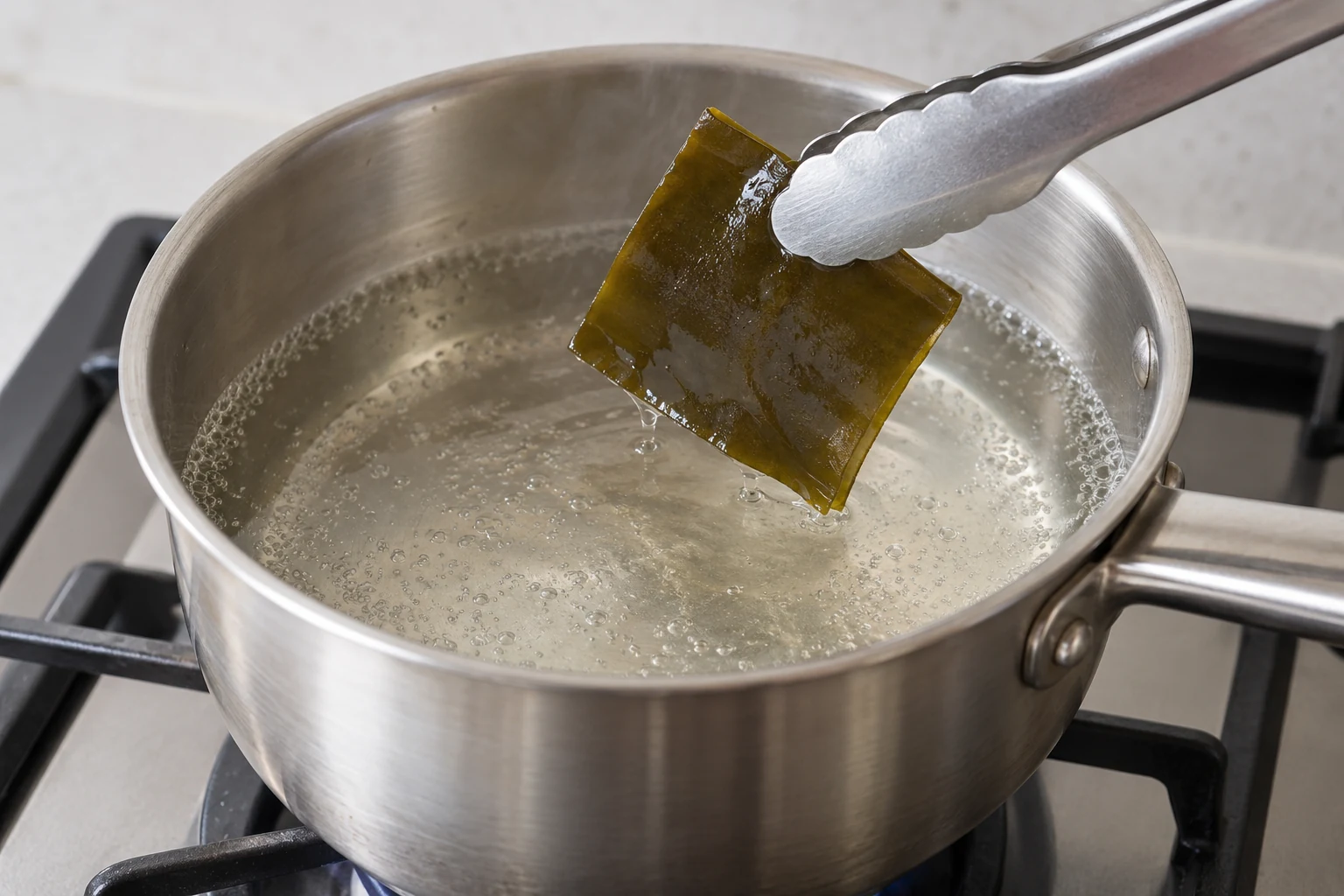
Wipe dust from 1 dried kelp piece, about 5×5cm, with a damp cloth. Put it in 720ml water and heat over medium heat for about 5 minutes. Remove when small bubbles appear around the edges; prolonged hard boiling can make the broth slimy and harsh.
-
Step 3
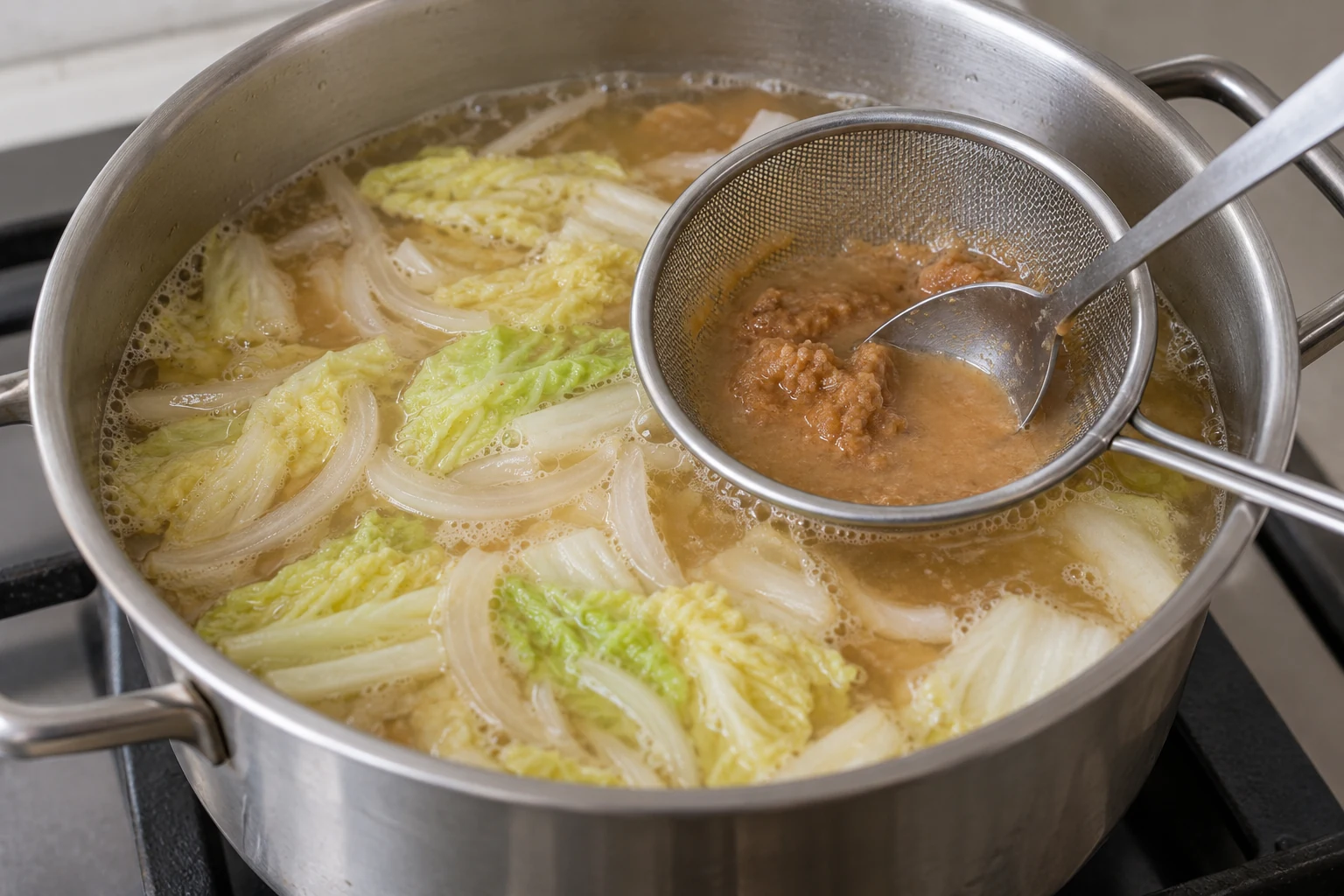
Dissolve 1 tablespoon doenjang in the broth using a small strainer or spoon. Add cabbage and onion. Once boiling, reduce to medium-low and simmer 8–10 minutes. A chopstick should enter the white ribs easily; if firm, cook another 2–3 minutes.
-
Step 4
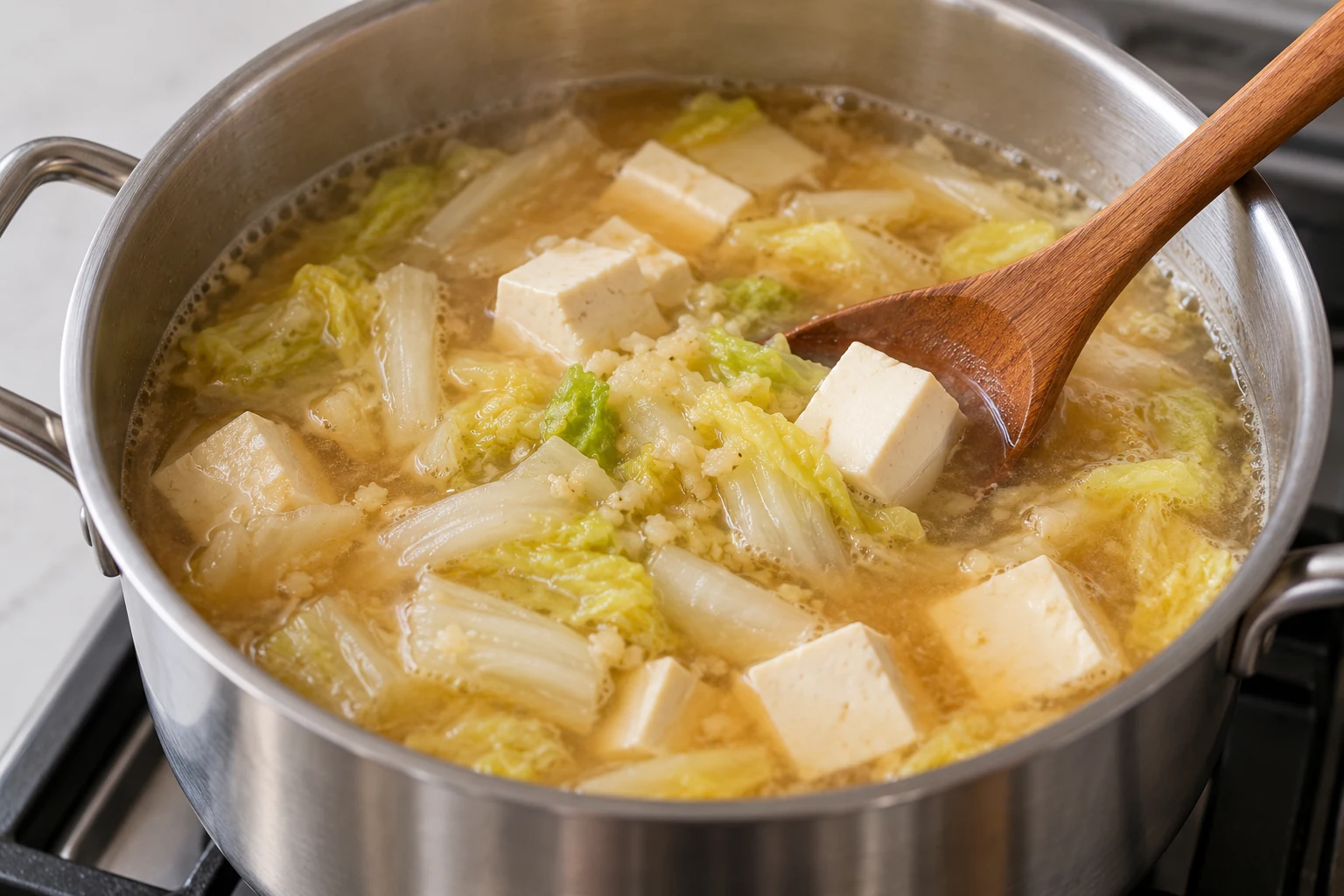
Add tofu and minced garlic and simmer gently for 3–4 minutes. Fold from the bottom only once or twice to keep the cubes intact. Add a little hot water if the broth has reduced too far.
-
Step 5
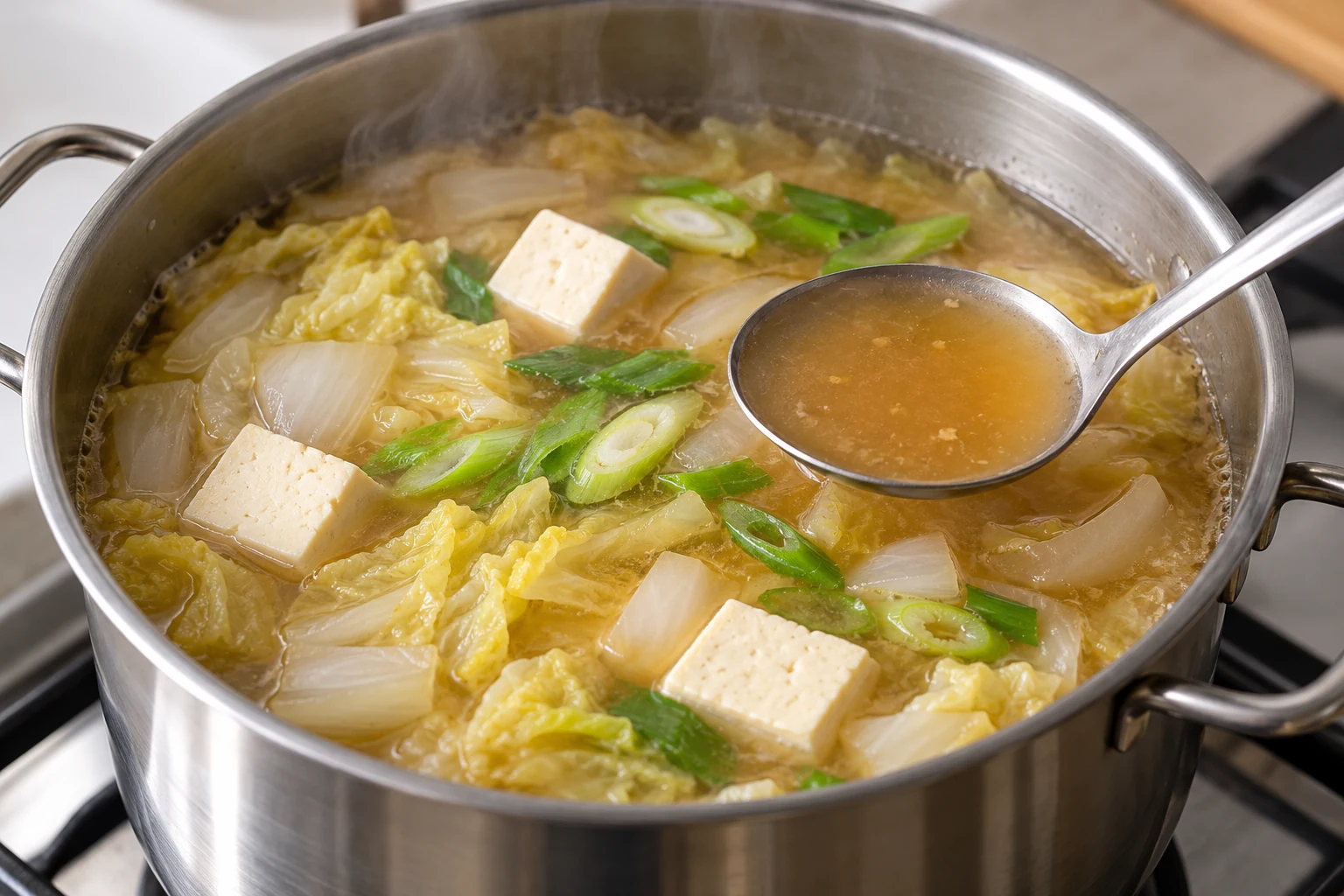
Add scallion and simmer 2 minutes. Taste and only if needed dissolve up to the remaining 1/2 tablespoon doenjang in some broth, adding gradually and briefly simmering again. If salty, add hot water. Turn off the heat and serve with the tofu hot through.


Finished dish
Serves 2; about 30 minutes. The 1.5 tablespoons doenjang is a maximum; use less for salty brands. Water 720ml=4 small 180ml paper cups. Tablespoon=15ml; teaspoon=5ml.
Related recipes


Enjoy every bite
How to enjoy it
Serve with rice, kimchi and a mild vegetable side. Spoon up cabbage ribs and tofu together with the broth.
Serve it with

Easy napa cabbage kimchi
Make a small batch of chopped cabbage kimchi, with clear salting, seasoning and refrigerated fermentation instructions.

Seasoned spinach (Sigeumchi namul)
Tender blanched spinach with a light sesame-garlic dressing. Drain it well before seasoning so the small side dish stays flavorful rather than watery.