Yangnyeom dwaeji galbi — sweet soy-marinated pork ribs
Tender bone-in pork ribs with a sweet garlic, ginger and pear marinade. Bake covered first, then glaze and brown: no charcoal grill is needed.
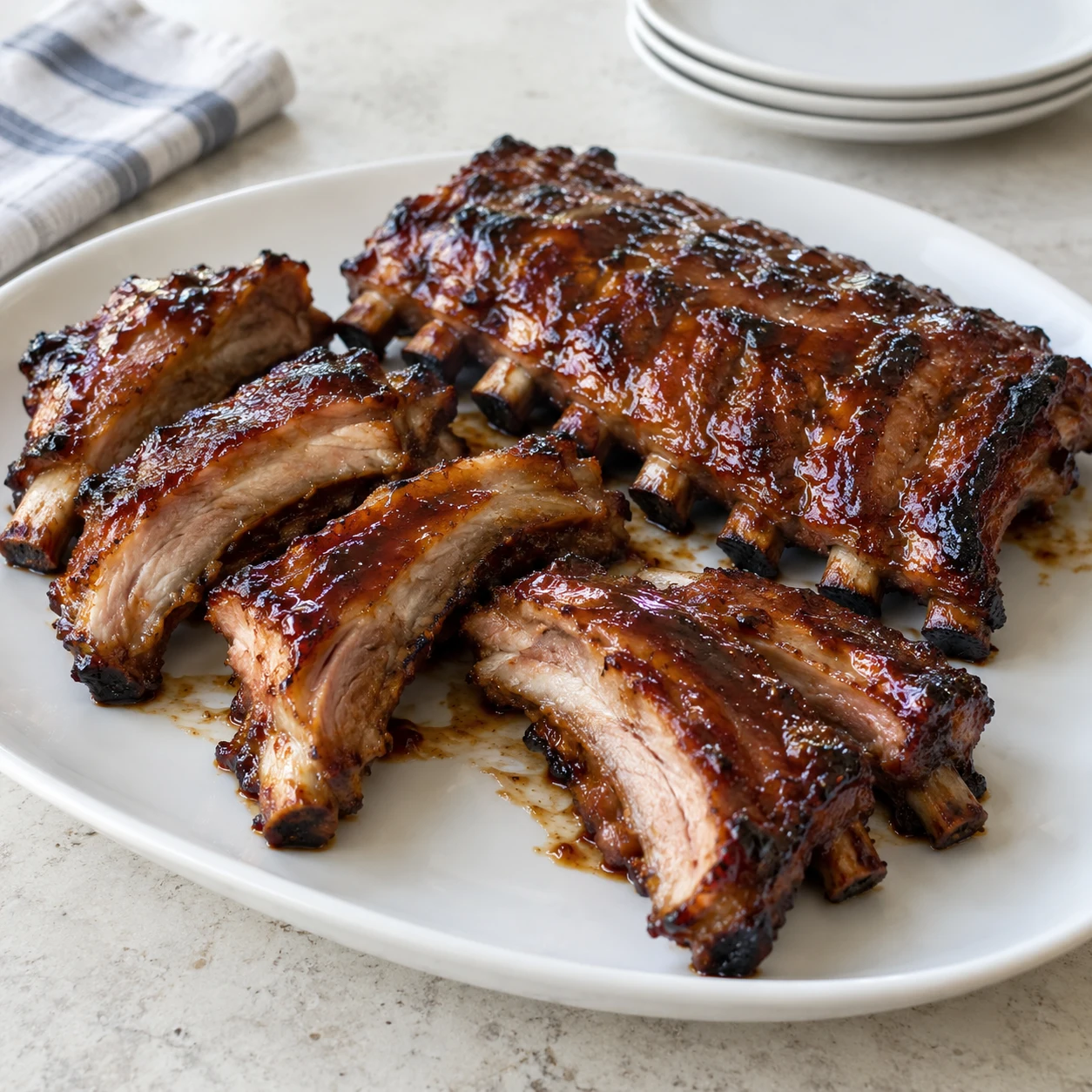
AI-generated cooking illustrations. Follow the written quantities and instructions.
Ingredients
3 servings
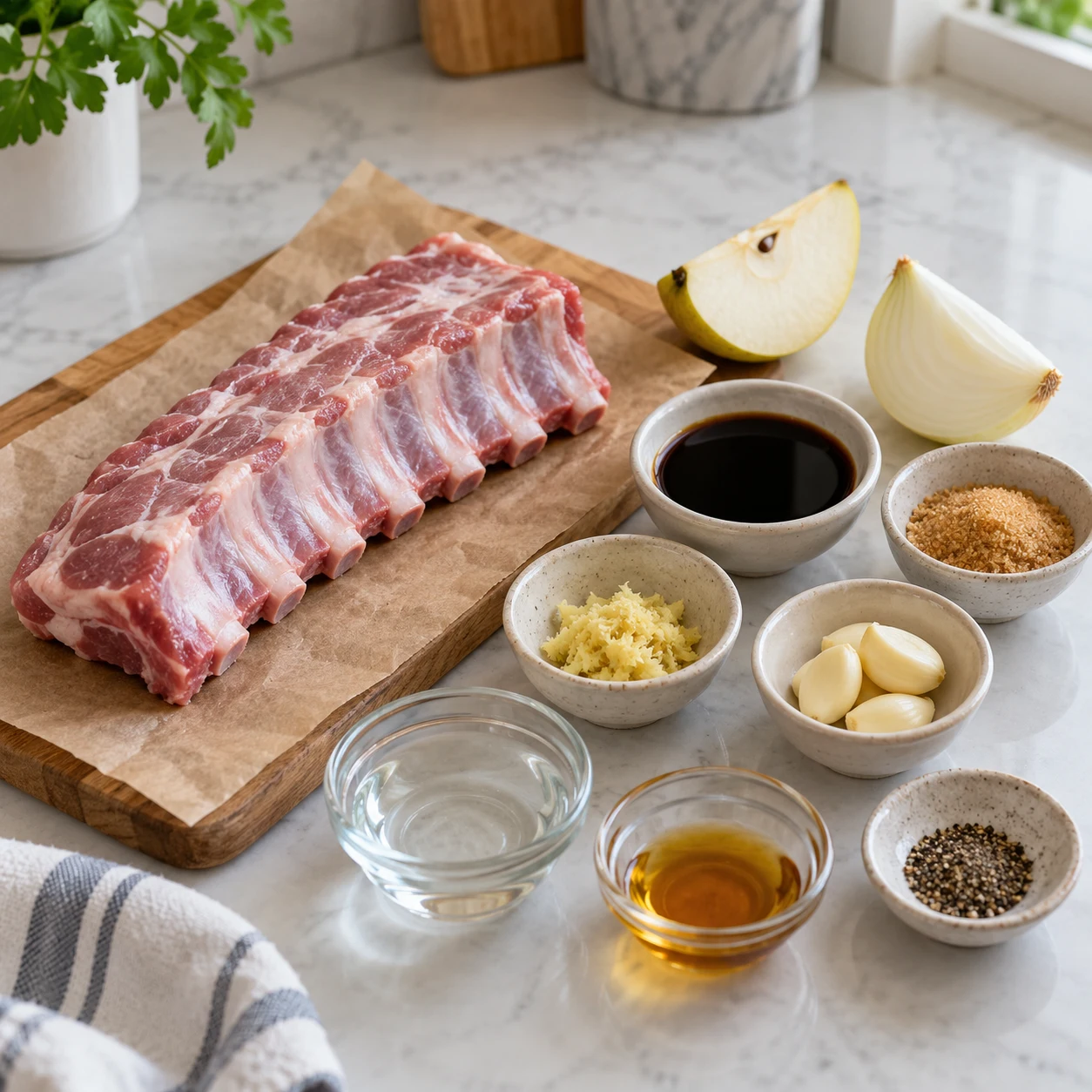
Everyday kitchen measurements
For 3 servings. Use a small 180 ml paper cup, a level eating spoon (about 15 ml) and a small teaspoon (about 5 ml).
How to fill the cup and spoons
Use the same cup and spoons throughout. Their sizes vary, so these amounts are approximate. Spoon flour in loosely and level the top without pressing. Measure vegetables after chopping, without packing them down. The amounts in g/ml are the original reference quantities. For part of a pack, use the specified pack weight and divide the contents evenly.
King Arthur Baking-
Essential
Use one small rack of baby back ribs, not a large thick rack of spare ribs. Choose ribs with plenty of meat. The bones are part of the listed pack weight.
-
Substitute available
If Soy sauce is unavailable
- Use instead
- Tamari
- Substitute quantity
- 3 level eating spoonsReference quantity: 45 ml
Use the same spoon amount in the sauce. Choose a similar salt level; do not add extra salt. Check labels if avoiding wheat.
-
Substitute available
If Sugar is unavailable
- Use instead
- Honey
- Substitute quantity
- 2 level eating spoonsReference quantity: 30 ml
Use the same spoon amount. The sauce will be more moist; simmer briefly to coat the food, and keep the heat gentle once the sweet sauce is added. Do not serve honey to infants under 12 months.
-
Substitute available
If Minced garlic is unavailable
- Use instead
- Garlic powder
- Substitute quantity
- ¾ small teaspoonReference quantity: about 1.5 g
Mix the powder into the sauce or broth instead of the fresh garlic. Do not use garlic salt.
-
Optional
Omit the ginger from the marinade if unavailable. The ribs will have less warm aroma; keep the garlic and cooking instructions unchanged.
-
Substitute available
If Pear is unavailable
- Use instead
- Sweet apple
- Substitute quantity
- ¼ medium appleReference quantity: about 60 g
Peel and finely grate the same quarter of a medium fruit. Mix into the marinade at the same step; the aroma changes slightly.
-
Optional
Omit the grated onion from the marinade. The sauce will be slightly less sweet and aromatic; keep the pear, garlic and liquid amounts unchanged.
-
Essential
Water keeps the covered ribs moist. Do not omit it.
-
Optional
Omit the sesame oil from the marinade if unavailable. The ribs will have less nutty aroma; do not add extra oil or water.
-
Optional
Omit this pinch from the sauce if unavailable. The dish will be less peppery; no other change is needed.
Tap each ingredient as you prepare it. Check product labels for egg, soy, sesame, wheat, fish or shellfish where relevant.
Step-by-step cooking
-
Step 1
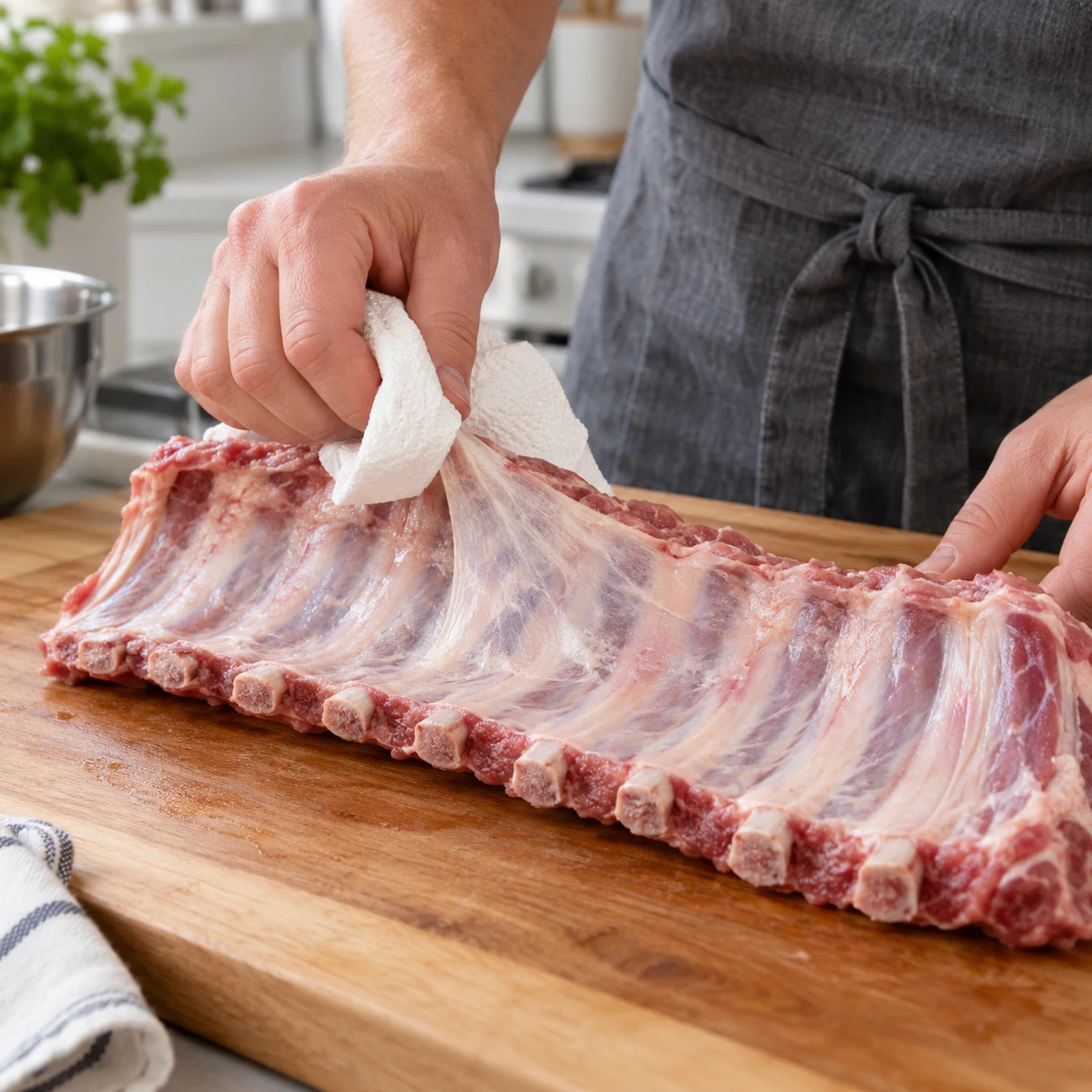
Prepare the ribs. Use 1 small 800 g pack of baby back ribs. Pat dry without washing raw pork. If a tough shiny membrane is still on the bone side, lift one corner with a blunt table knife, grip it with a paper towel and peel it away. Cut the rack into 2 pieces so it fits your baking dish. Keep the meat on the bones.
-
Step 2
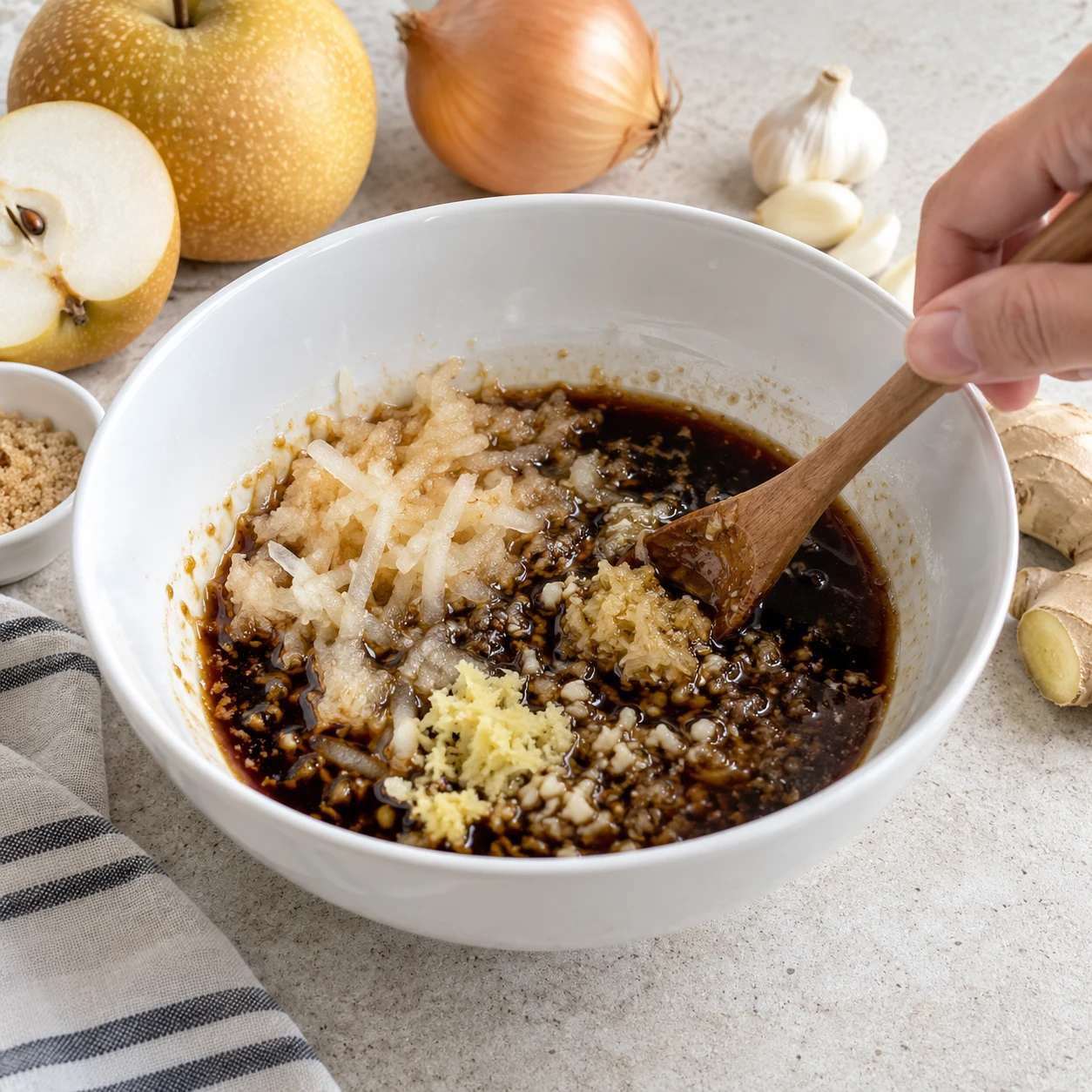
Make the marinade. Peel and finely grate ¼ pear and ¼ onion. Mix with 3 level eating spoons soy sauce, 2 level eating spoons sugar, 3 small teaspoons minced garlic, the optional 1 small teaspoon grated ginger, ½ small paper cup water, the optional 2 small teaspoons sesame oil and a pinch of black pepper. Stir well.
-
Step 3
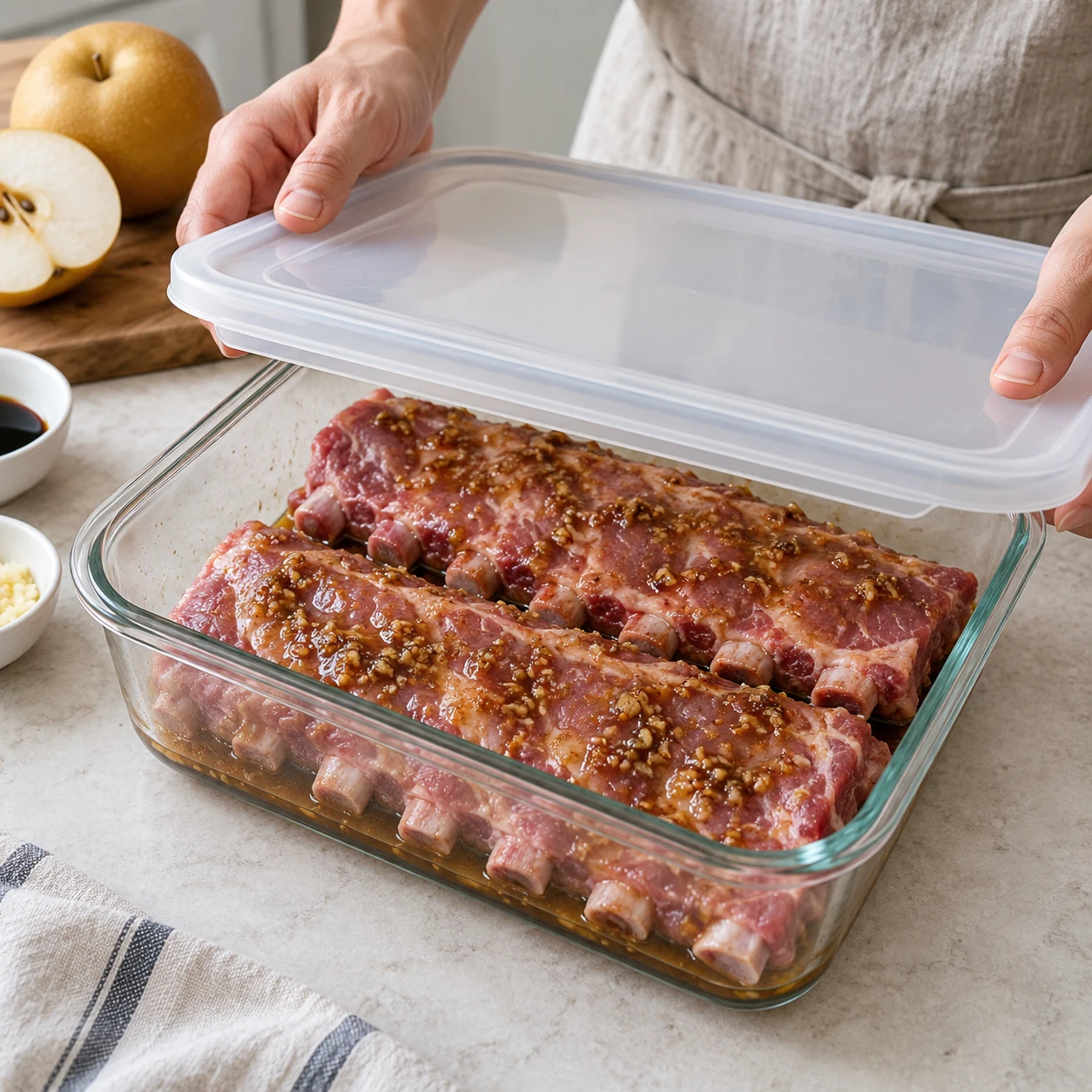
Marinate cold. Put the ribs and all the marinade into a covered food container. Turn the ribs to coat both sides and refrigerate for at least 2 hours. For stronger flavor, refrigerate for 8 hours overnight instead. Turn the ribs once during the marinade. Never marinate raw pork at room temperature; wash the utensils that touched it.
-
Step 4
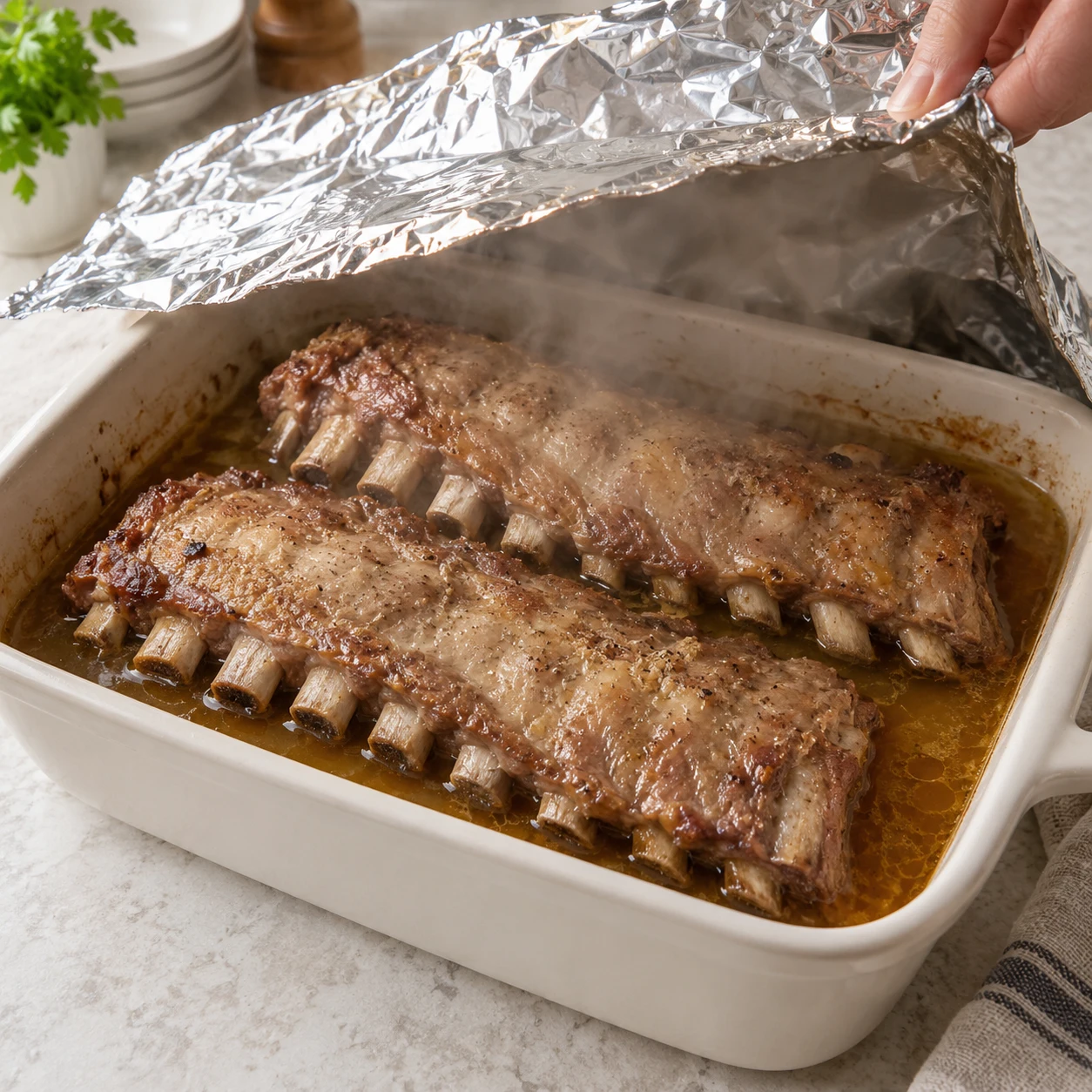
Bake covered. Heat the oven to 160°C (320°F). Place the ribs flat in a small deep ovenproof dish and pour in all the marinade. Cover the dish tightly with foil. Bake for 90 minutes. Carefully lift a corner away from your face to release steam. If the meat is not tender when pierced beside a bone, cover again and bake for another 15–30 minutes. If the dish is drying out, add 2 level eating spoons water before covering.
-
Step 5
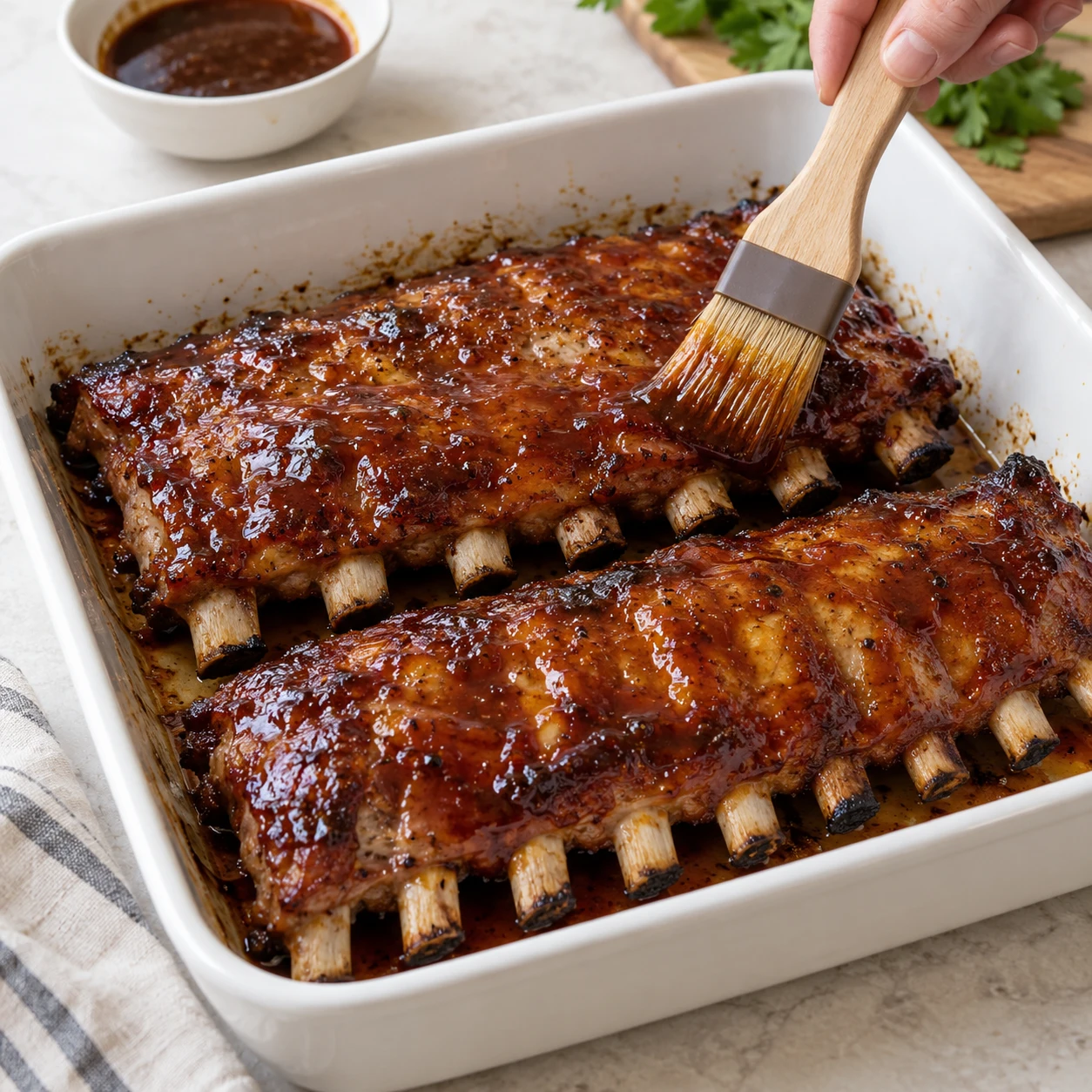
Boil the glaze and brown the ribs. Pour the cooking liquid into a small saucepan. Bring to a full boil, then simmer for 5–8 minutes until lightly syrupy; do not taste any uncooked marinade. Turn the ribs meat-side up and brush with the boiled glaze. Increase the oven to 220°C (428°F) and bake uncovered for 8–12 minutes, watching closely so the sugar does not burn. Stop when the surface is glossy and lightly browned.
-
Step 6
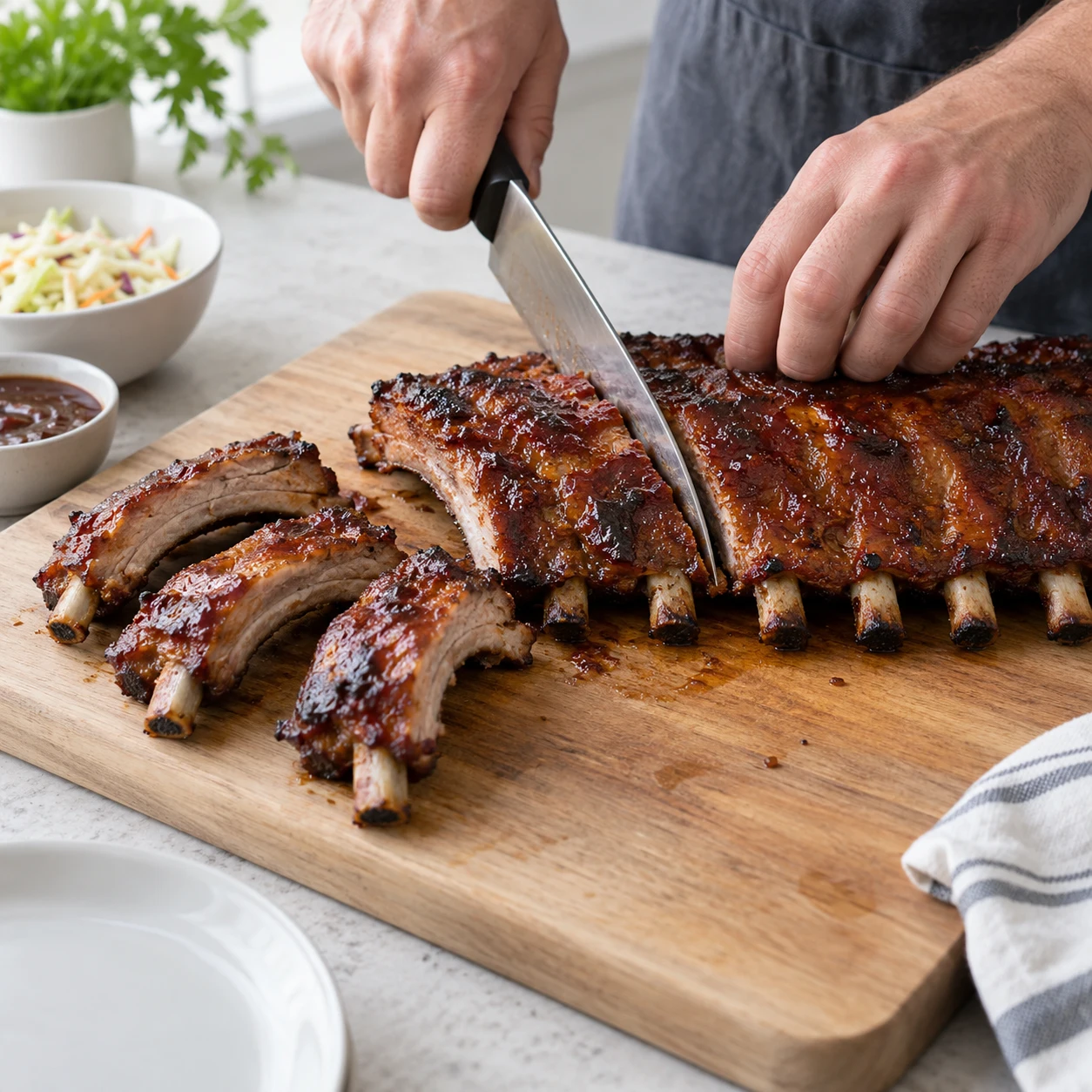
Rest and portion. The pork must reach at least 63°C in the thickest meat away from bone, followed by a 3-minute rest; these slow-cooked ribs should also be tender enough to separate easily with a knife. If still tough, continue covered cooking before glazing. Rest the finished rack for 5 minutes, then cut between the bones and spoon on the remaining boiled glaze. Remove bones before serving meat to young children.
Finished dish
The 255-minute estimate includes the minimum 2-hour marinade and about 2 hours of preparation and oven cooking. An overnight marinade takes longer and is optional. A heavier rack or spare ribs may need considerably more covered cooking; use baby back ribs for this guide. No oven: use a wide heavy pot with a lid. Add the ribs, marinade and 1 extra small paper cup water. Bring to a boil, cover and simmer gently for 60–90 minutes, turning every 20 minutes and adding 2 level eating spoons water if dry. Once tender and fully cooked, uncover and reduce the liquid over low heat for 5–10 minutes, turning to coat. This gives a soft braised finish rather than the browned oven surface. Keep the ribs refrigerated during marinating. Bring any sauce that touched raw pork to a full boil before using it. Refrigerate cooked leftovers within 2 hours, use within 3–4 days and reheat to 74°C.