Stir-fried Gochujang — Beef Chili Paste
Gochujang gently cooked with minced beef, onion and garlic makes a rich rice-mixing condiment. This small batch is easy to portion, with clear instructions for a mushroom alternative.
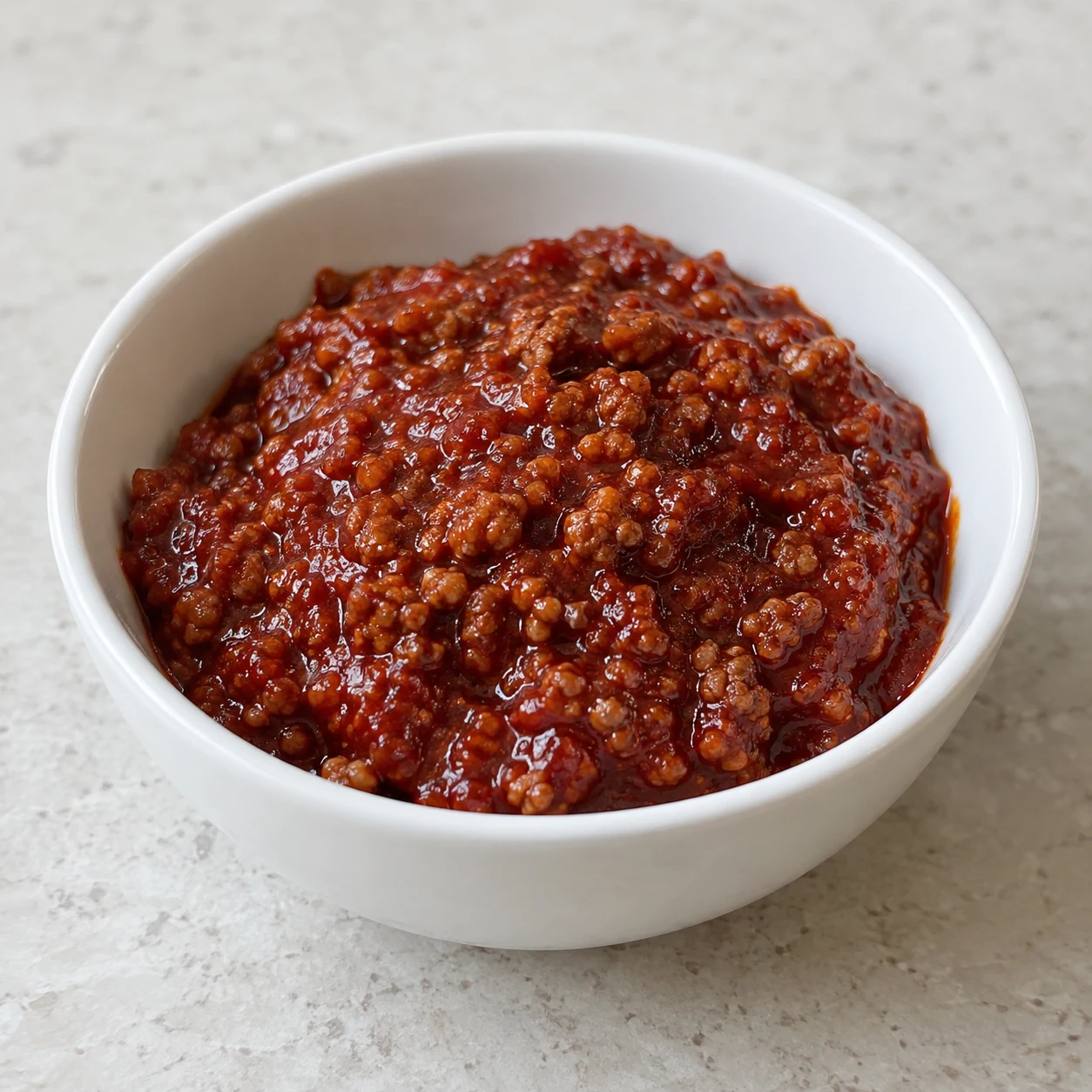
AI-generated cooking illustrations. Follow the written quantities and instructions.
Ingredients
6 servings
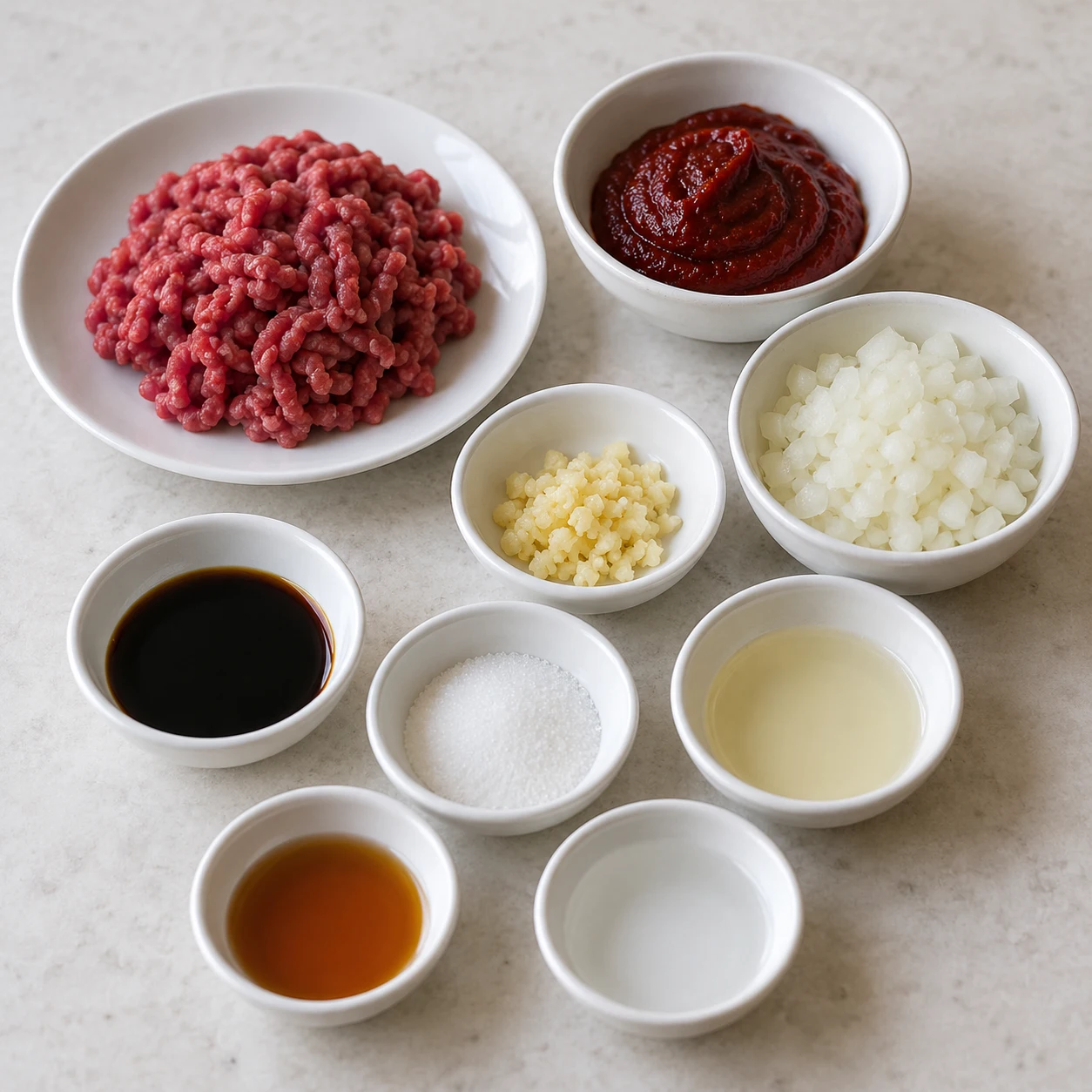
Everyday kitchen measurements
For 6 servings. Use a small 180 ml paper cup, a level eating spoon (about 15 ml) and a small teaspoon (about 5 ml).
How to fill the cup and spoons
Use the same cup and spoons throughout. Their sizes vary, so these amounts are approximate. Spoon flour in loosely and level the top without pressing. Measure vegetables after chopping, without packing them down. The amounts in g/ml are the original reference quantities. For part of a pack, use the specified pack weight and divide the contents evenly.
King Arthur Baking-
Substitute available
If Ground beef is unavailable
- Use instead
- Fresh mushrooms, finely chopped
- Substitute quantity
- ½ of a 200 g packReference quantity: 100 g
Use button or fresh shiitake mushrooms instead of beef in step 3. Cook for 4–6 minutes until softened and their released water has mostly evaporated, then add the sauce. This makes a meat-free variation; check that the pastes are also meat-free. Keep the same short refrigerated storage time.
-
Essential
Use Korean fermented chili paste, preferably a mild one if you are new to it. A thin chili sauce will not make the same thick rice condiment; this is the main flavor and cannot simply be omitted.
-
Optional
Omit the onion and its preparation in steps 1 and 2 if unavailable. Cook the garlic only for 20–30 seconds before adding beef; the result will be a little less sweet.
-
Essential
About 1 peeled garlic clove makes this amount. Cook briefly after the onion in step 2; do not brown or burn it.
-
Substitute available
If Soy sauce is unavailable
- Use instead
- Tamari
- Substitute quantity
- 1 small teaspoonReference quantity: 5 ml
Add with the ground beef in step 3 instead of soy sauce. If you need to avoid wheat, check the gochujang label as well.
-
Substitute available
If Sugar is unavailable
- Use instead
- Maple syrup
- Substitute quantity
- 2 small teaspoonsReference quantity: 10 ml
Mix into the gochujang and water in step 1. It adds a little more moisture, so stir over low heat for an extra 1–2 minutes if the finished paste is too loose.
-
Essential
This loosens the chili paste so it can cook gently without scorching. If it starts catching in step 4, add water 1 small teaspoon at a time rather than raising the heat.
-
Substitute available
If Neutral cooking oil is unavailable
- Use instead
- Mild olive oil
- Substitute quantity
- 1 small teaspoonReference quantity: 5 ml
Use in step 2 instead of neutral oil. Keep the heat medium and then low; butter is not a good substitute here because it scorches easily.
-
Optional
Omit the finishing sesame oil in step 5 if unavailable or unsuitable for you. No extra cooking oil or nuts are needed.
Tap each ingredient as you prepare it. Check product labels for egg, soy, sesame, wheat, fish or shellfish where relevant.
Step-by-step cooking
-
Step 1
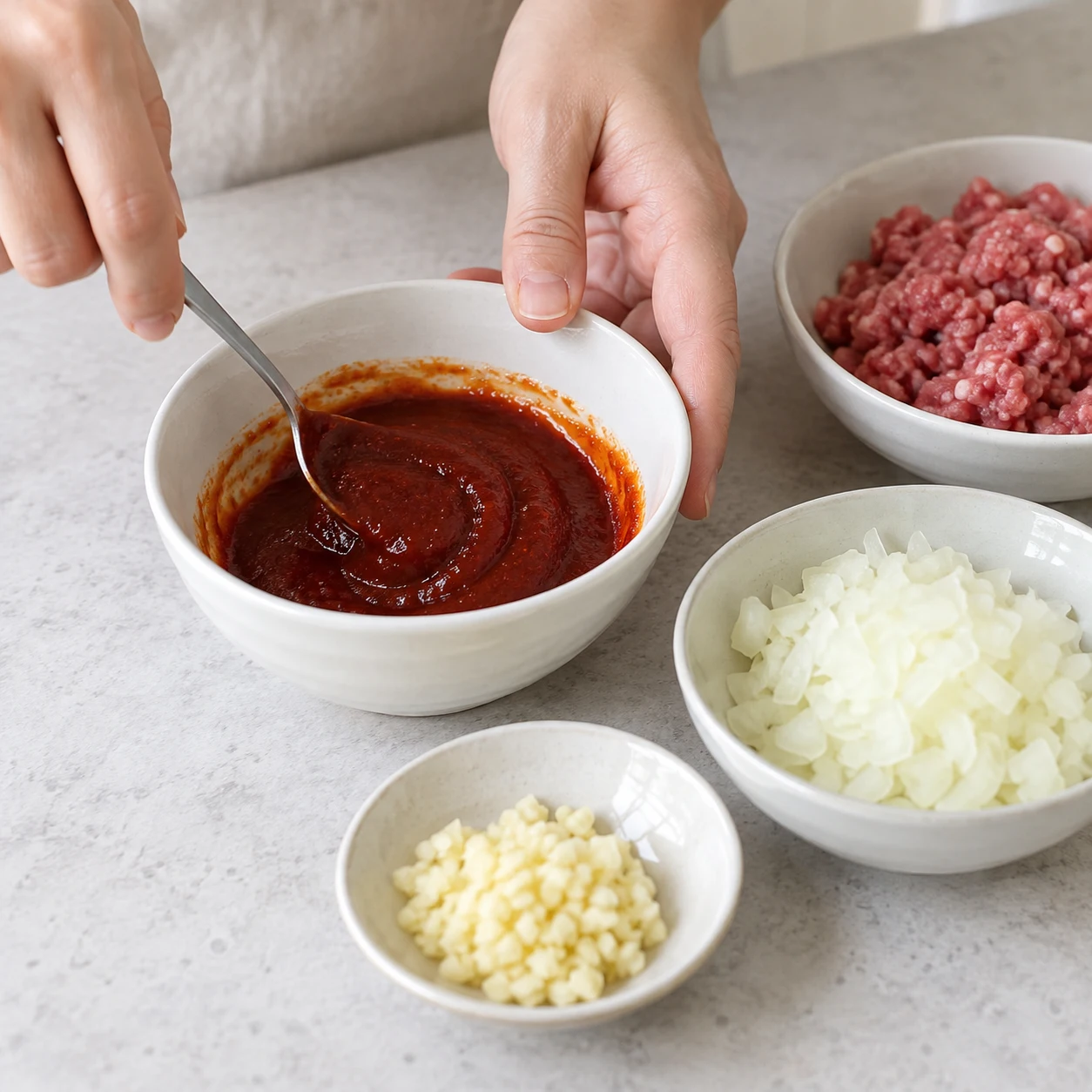
Finely chop enough onion for 3 level eating spoons and mince enough garlic for 1 small teaspoon. Divide a labeled 400 g pack of ground beef into 4 equal portions and use one portion. In a small clean bowl, mix 4 level eating spoons gochujang, 2 small teaspoons sugar and 2 level eating spoons water until smooth. Keep this mixture separate from the raw beef.
-
Step 2
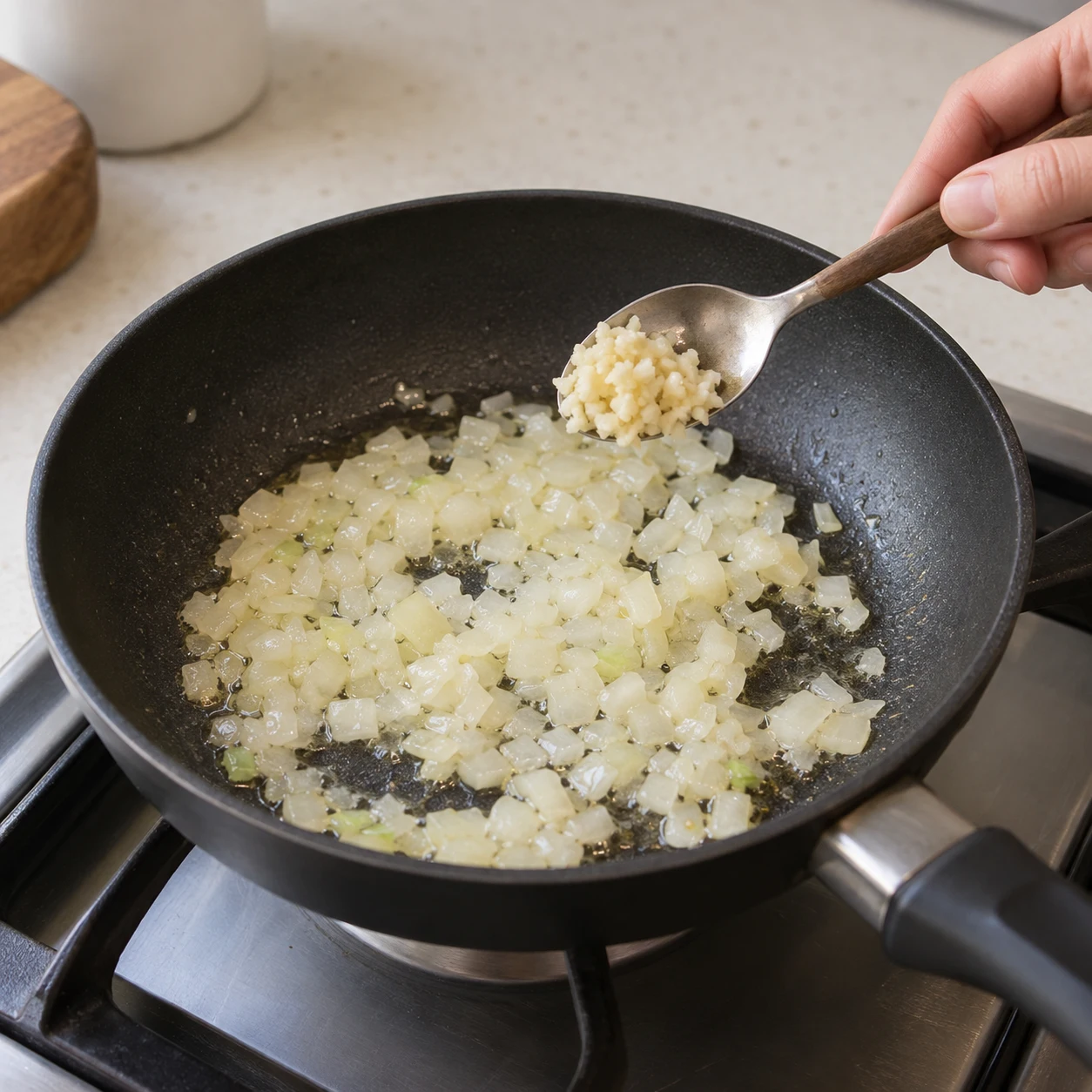
Heat 1 small teaspoon cooking oil in a small frying pan over medium heat. Add the optional chopped onion and stir for 2 minutes until softened. Add the minced garlic and stir for 20–30 seconds, just until fragrant. If omitting onion, add the garlic directly to the warmed oil. Lower the heat if the garlic starts to brown.
-
Step 3
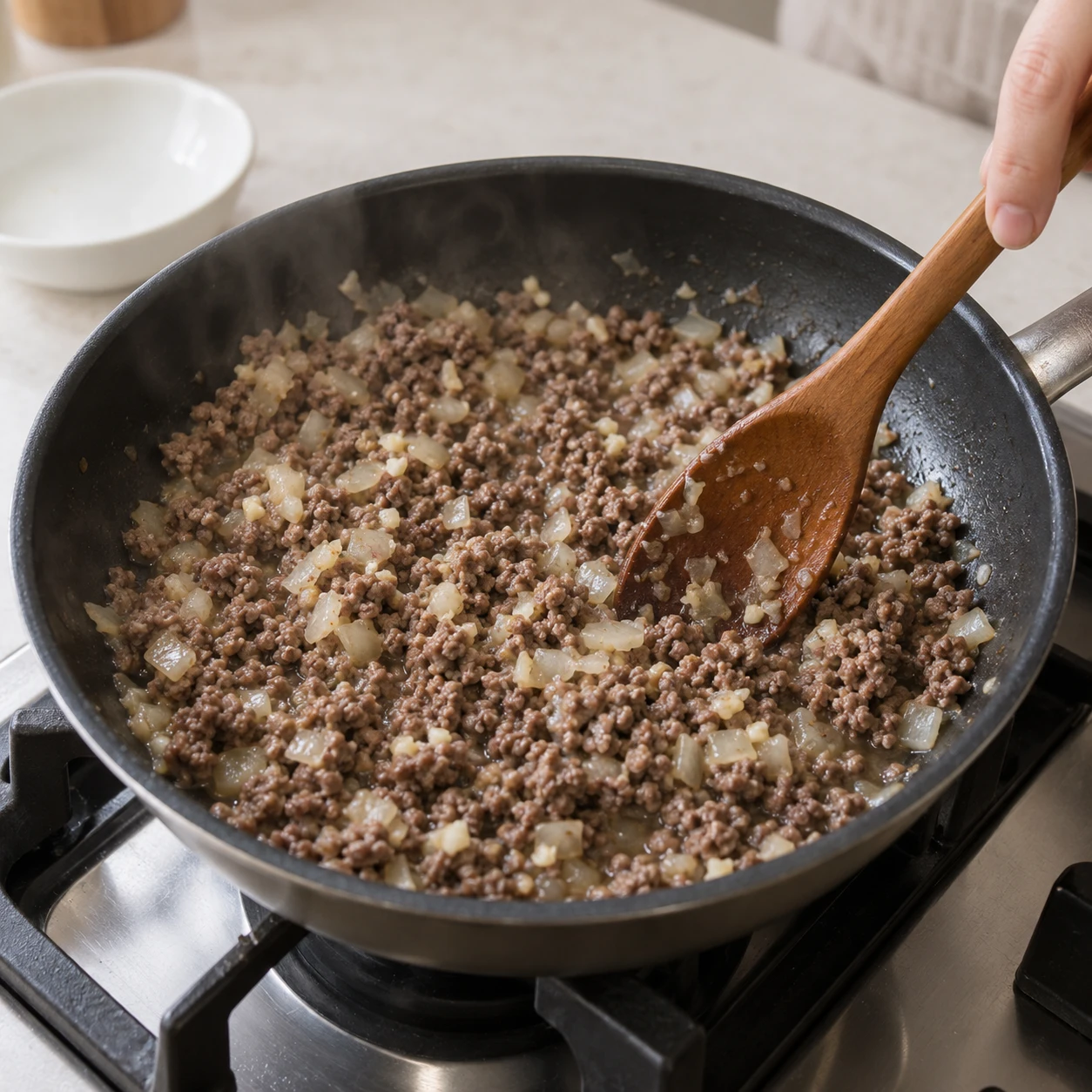
Add the ground beef and 1 small teaspoon soy sauce. Break the beef into small crumbs with a wooden spoon and stir for 4–5 minutes, until it is fully cooked and the released liquid has mostly evaporated. Ground beef must reach 71°C if checked with a thermometer. For the mushroom replacement, follow its 4–6 minute cooking instruction beside the ingredient before adding the sauce.
-
Step 4
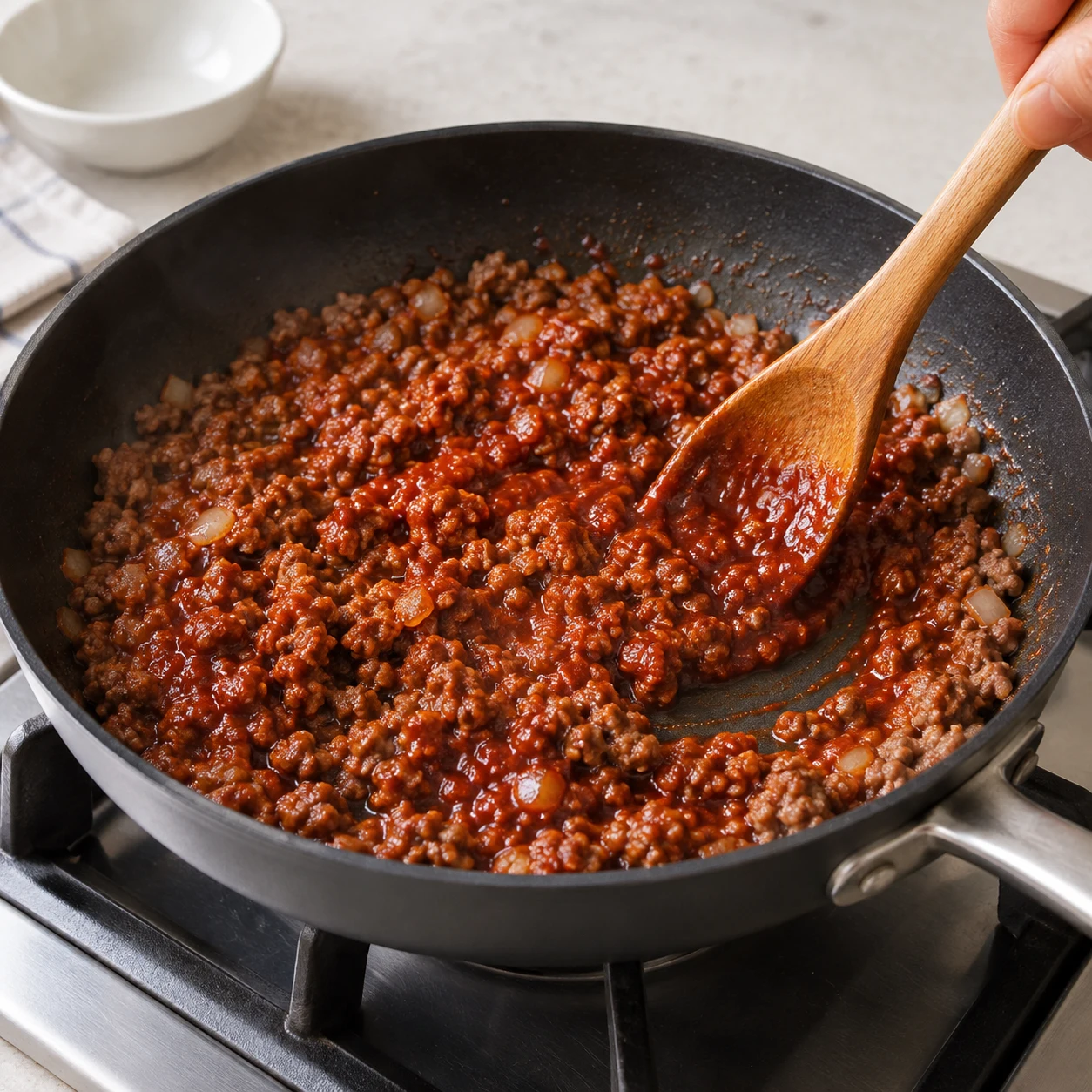
Turn the heat down to low and add the prepared gochujang mixture. Stir continuously for 4–5 minutes, scraping the bottom and corners of the pan. The paste should bubble gently, not spit fiercely. If it starts sticking or darkening on the bottom, lift the pan off the heat briefly and stir in 1 small teaspoon water before continuing.
-
Step 5
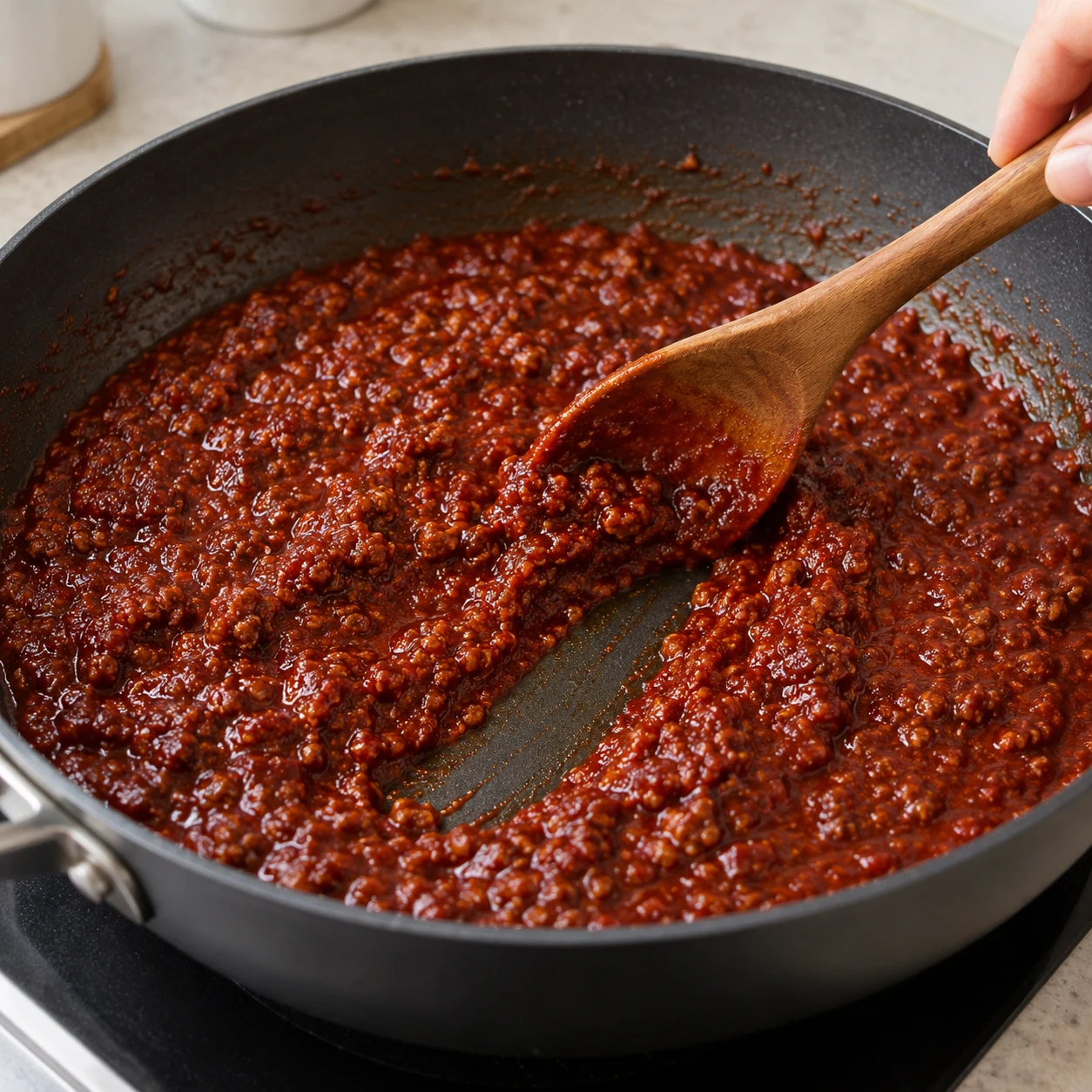
Stop cooking when the mixture is glossy and thick enough that a spoon drawn through it leaves a trail for a moment. Do not fry it dry; it thickens more as it cools. Turn off the heat and stir in the optional 1 small teaspoon sesame oil. Use a clean spoon to taste a tiny cooled portion; do not taste from the raw-meat utensil.
-
Step 6
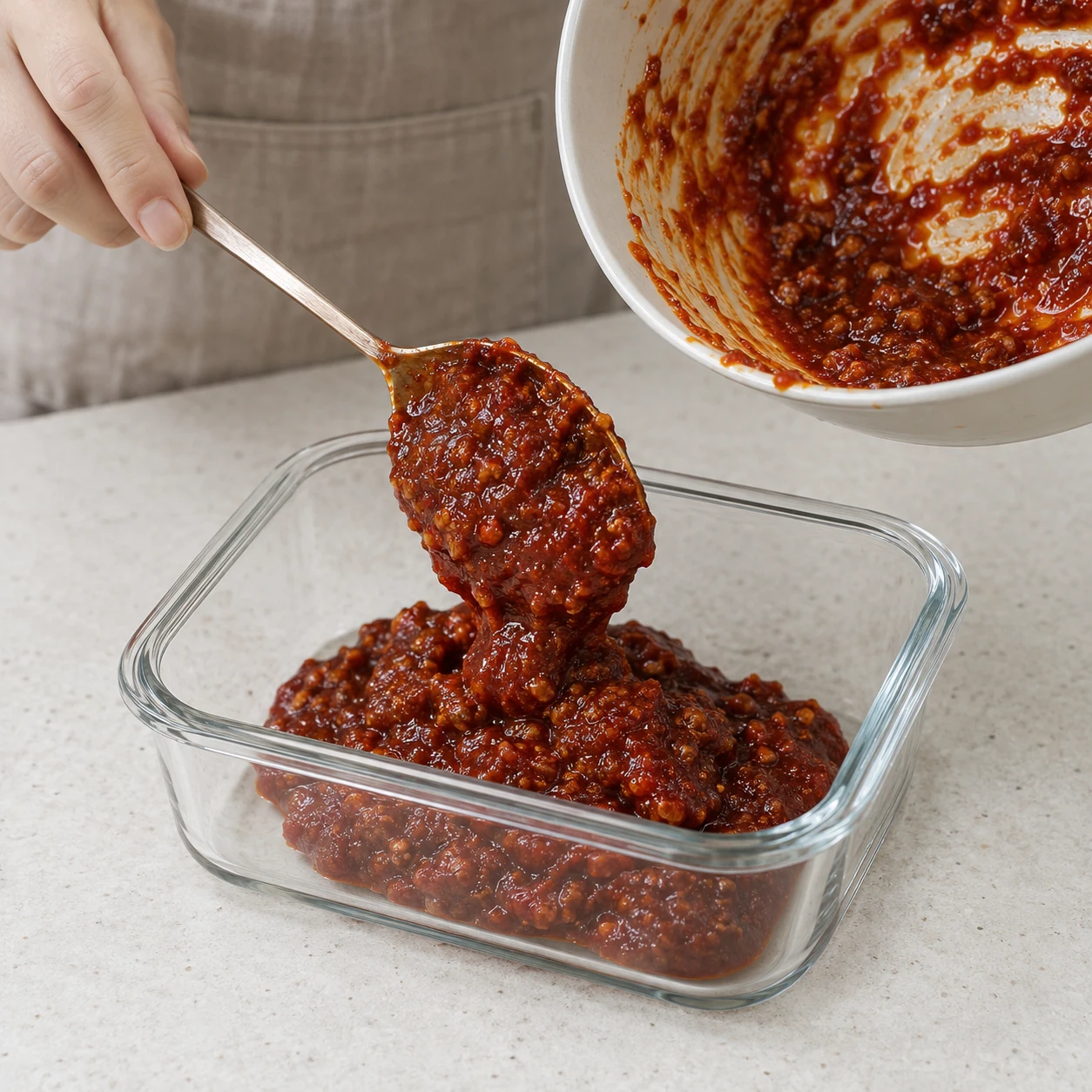
Take out a small portion to serve and spread the remainder in a shallow clean container so it cools quickly. Cover and refrigerate within 2 hours, or within 1 hour above 32°C. For serving, begin with 1 small teaspoon per bowl of cooked rice, mix well and add more if desired. Keep the storage portion separate from the serving bowl and always use a clean spoon.
Finished dish
This is cooked beef gochujang, also called yak-gochujang. It is a strong, salty-spicy condiment, so the small batch makes about 6 modest servings with rice. Rice, lettuce and other serving suggestions are not included in the recipe quantities. The meat-free mushroom replacement is described directly beside the ground beef. Use level eating spoons of about 15 ml and small teaspoons of about 5 ml. The small paper cup used elsewhere on this site holds 180 ml, but this recipe needs no cup. Dividing a labeled 400 g pack into 4 equal portions avoids needing kitchen scales. The original quantities in grams are provided as a reference. Keep the homemade condiment at 4°C or colder and use within 3–4 days. Because it contains cooked meat and fresh onion, it is not shelf-stable and should not be stored at room temperature like an unopened commercial paste. Reheat the portion you need until hot throughout, reaching 74°C if measured. Soy sauce and gochujang can contain soy and wheat; the optional sesame oil contains sesame.