Tuna kimchi ramyeon
A quick pantry-friendly noodle soup with tender kimchi, drained canned tuna and a lively sour-spicy broth. Optional eggs make it extra filling.
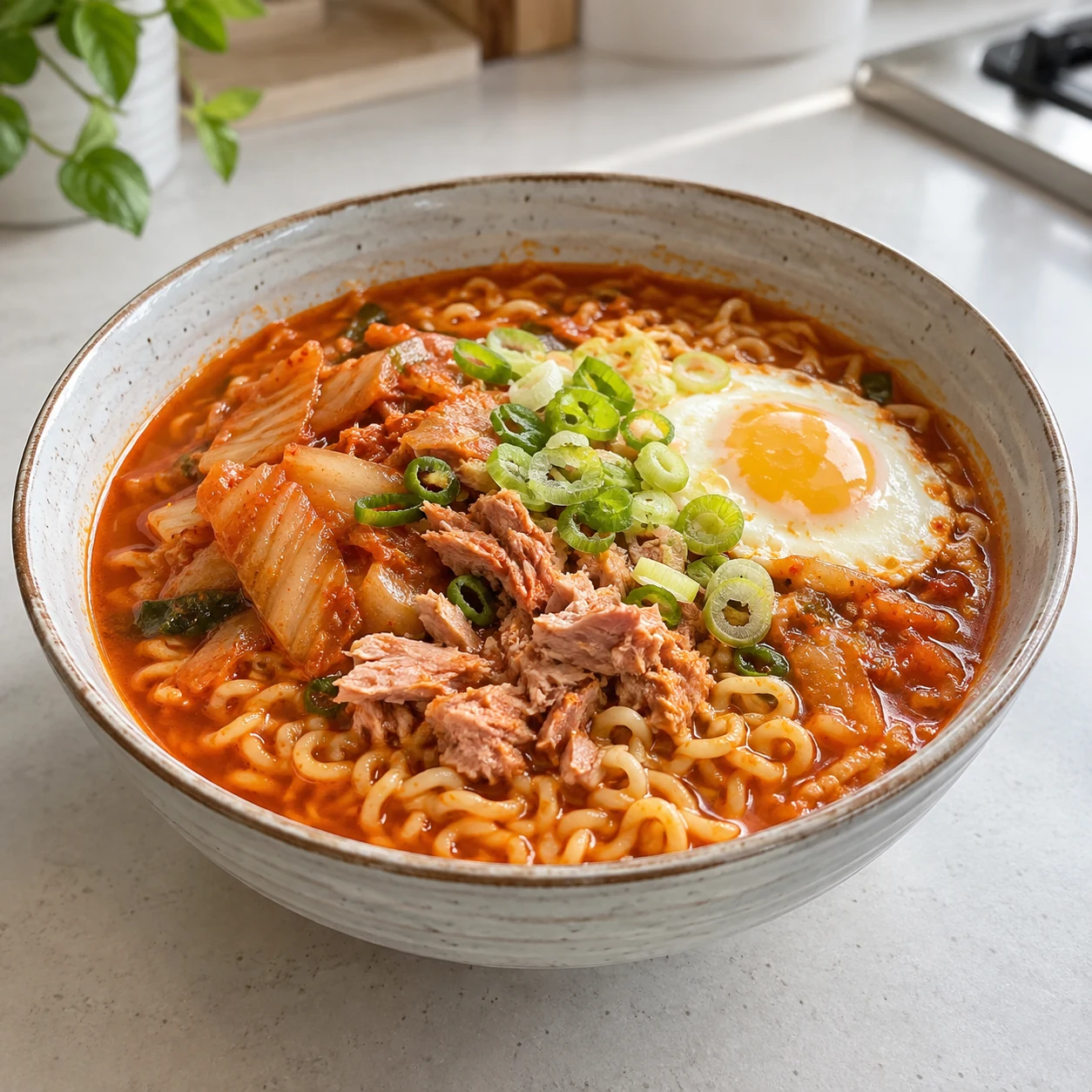
AI-generated cooking illustrations. Follow the written quantities and instructions.
Ingredients
2 servings
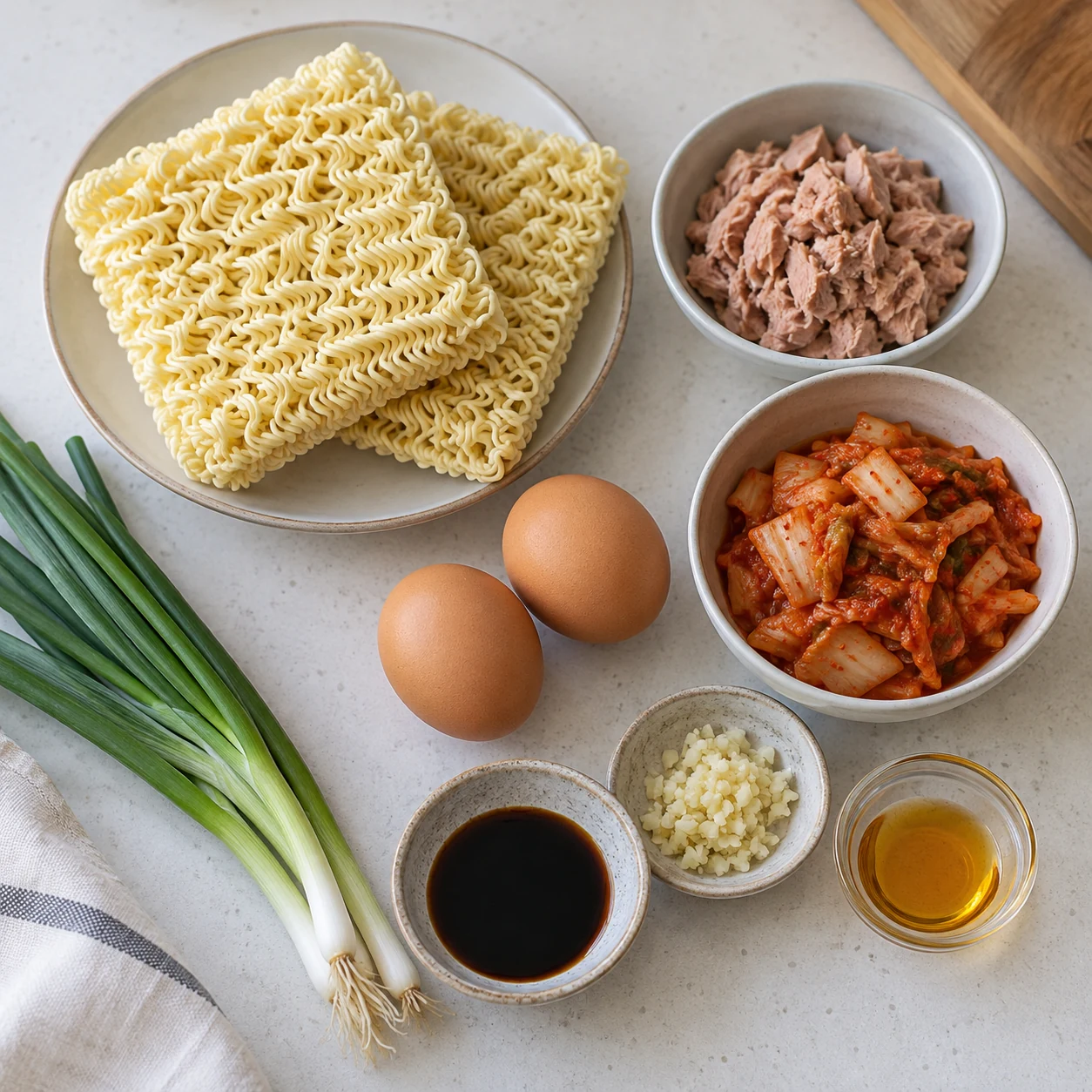
Everyday kitchen measurements
For 2 servings. Use a small 180 ml paper cup, a level eating spoon (about 15 ml) and a small teaspoon (about 5 ml).
How to fill the cup and spoons
Use the same cup and spoons throughout. Their sizes vary, so these amounts are approximate. Spoon flour in loosely and level the top without pressing. Measure vegetables after chopping, without packing them down. The amounts in g/ml are the original reference quantities. For part of a pack, use the specified pack weight and divide the contents evenly.
King Arthur Baking-
Substitute available
If Plain instant ramyeon noodle blocks is unavailable
- Use instead
- Instant noodles sold with seasoning sachets
- Substitute quantity
- 2 noodle blocksReference quantity: about 200 g
Use the noodle blocks only; leave out the seasoning sachets because kimchi and soy sauce flavour this broth.
-
Essential
Measure 600 ml for a light soup; add an eating spoon of water if too much evaporates.
-
Substitute available
If Well-fermented kimchi, chopped is unavailable
- Use instead
- Well-drained fermented cabbage plus gochugaru
- Substitute quantity
- 1 paper cup cabbage + 1 small teaspoon chilli flakesReference quantity: 180 g + about 2 g
Sourness and heat will differ. Do not use sweet pickled cabbage; taste the broth before adding extra seasoning.
-
Substitute available
If Canned tuna in water, well drained is unavailable
- Use instead
- Fully cooked shredded chicken
- Substitute quantity
- about ⅔ paper cupReference quantity: 120 g
Add the cooked chicken at the same stage and heat it through; do not add raw chicken with the noodles.
-
Optional
Omit for an egg-free version. If using, cook until the whites and yolks are firm or to your own food-safety preference.
-
Optional
Use at the end if available; omit without changing the broth.
-
Substitute available
If Unsweetened soy sauce is unavailable
- Use instead
- Tamari
- Substitute quantity
- 1 small teaspoonReference quantity: 5 ml
Use a gluten-free labelled tamari if needed; add only after tasting the kimchi broth.
-
Optional
Omit if unavailable; sour kimchi supplies most of the flavour.
-
Optional
A few drops at the end are enough; leave out if you do not have it.
Tap each ingredient as you prepare it. Check product labels for egg, soy, sesame, wheat, fish or shellfish where relevant.
Step-by-step cooking
-
Step 1
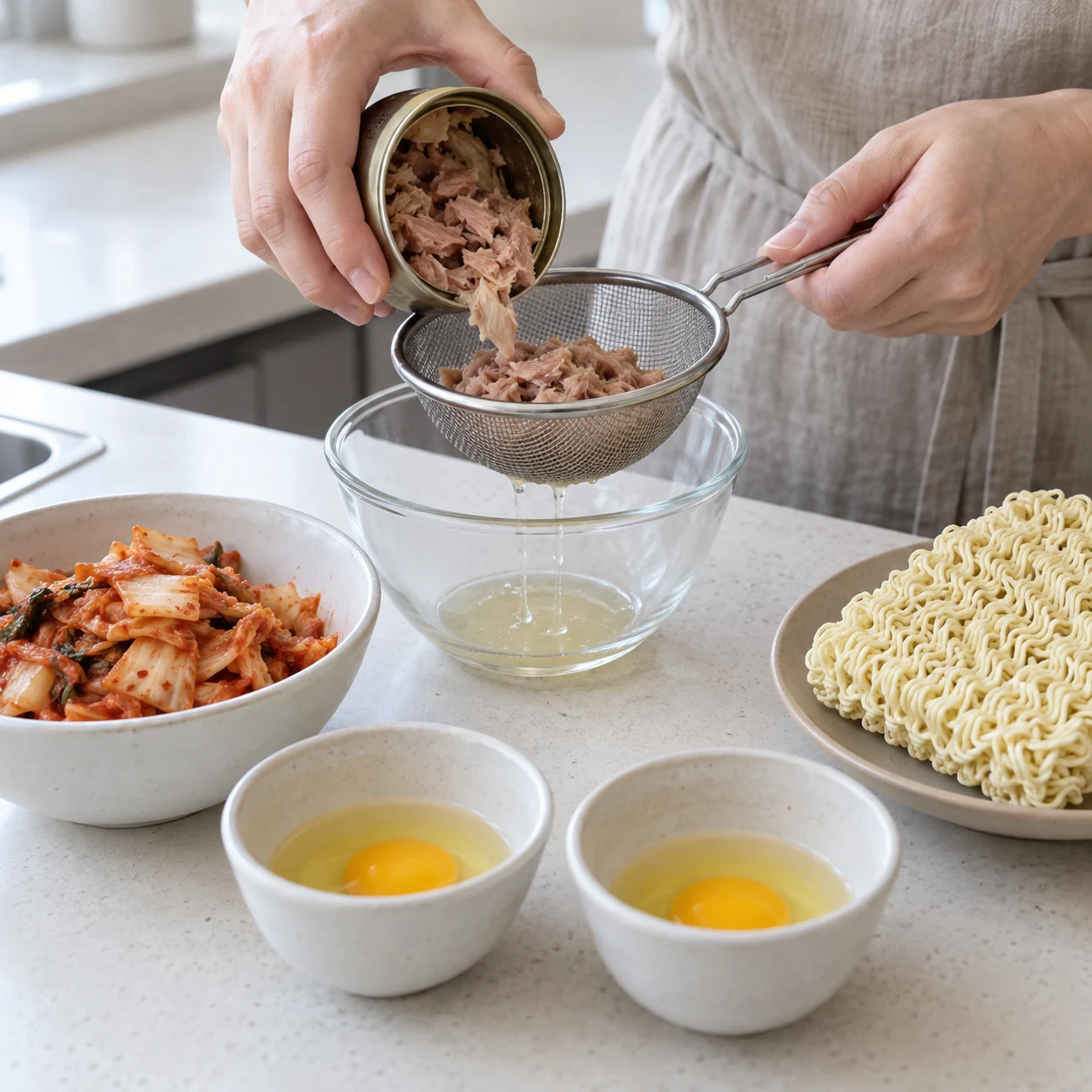
Drain the canned tuna well. Chop the kimchi into short pieces and slice the spring onion. If using eggs, crack each into a separate small cup so no shell falls into the pot. Keep the instant noodle blocks whole and set any seasoning sachets aside; they are not needed.
-
Step 2
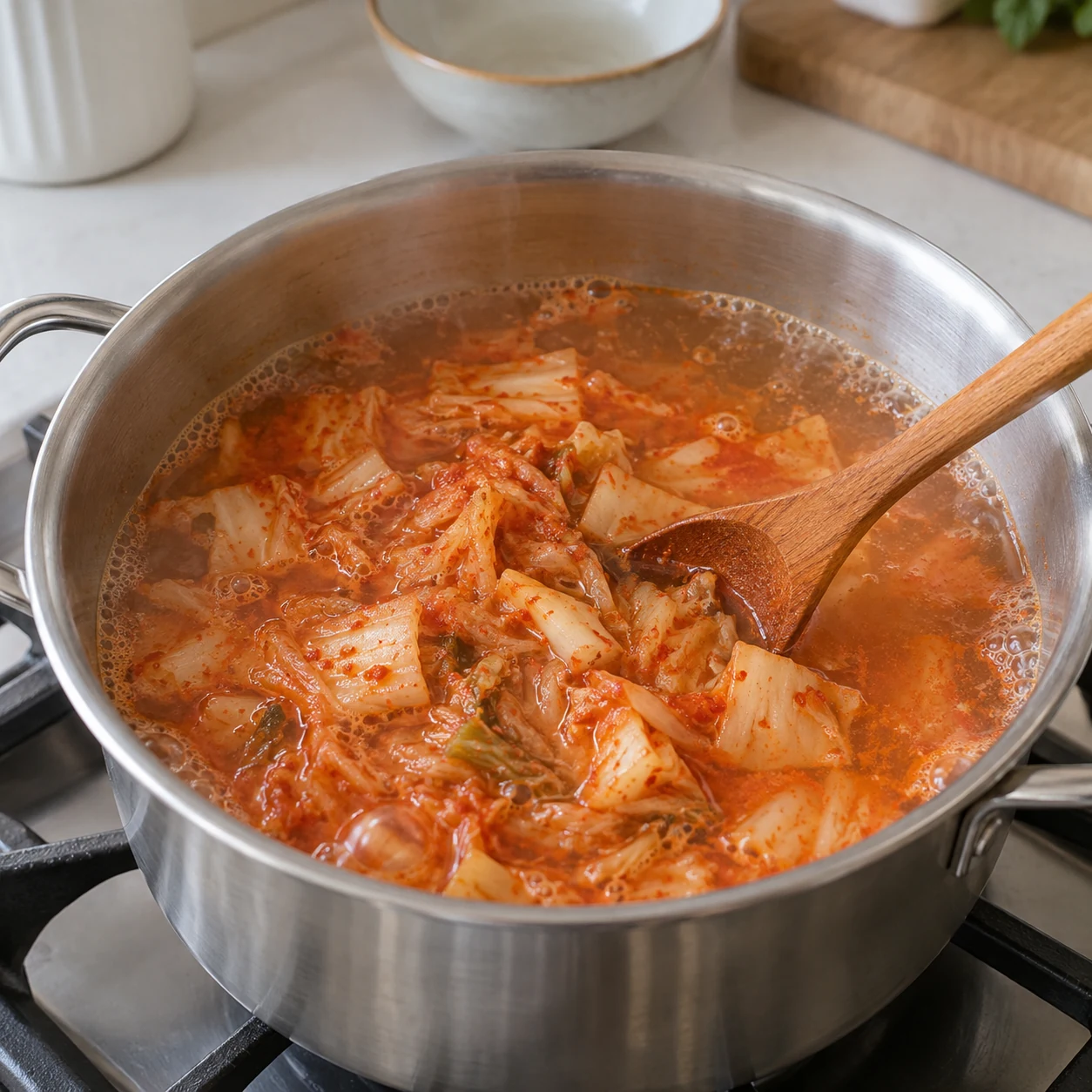
Put the kimchi and 3⅓ paper cups (600 ml) water into a medium pot. Add the optional garlic. Bring to a boil, then simmer for 4–5 minutes until the kimchi softens and the broth turns lightly red. Taste it before adding the small teaspoon of soy sauce.
-
Step 3
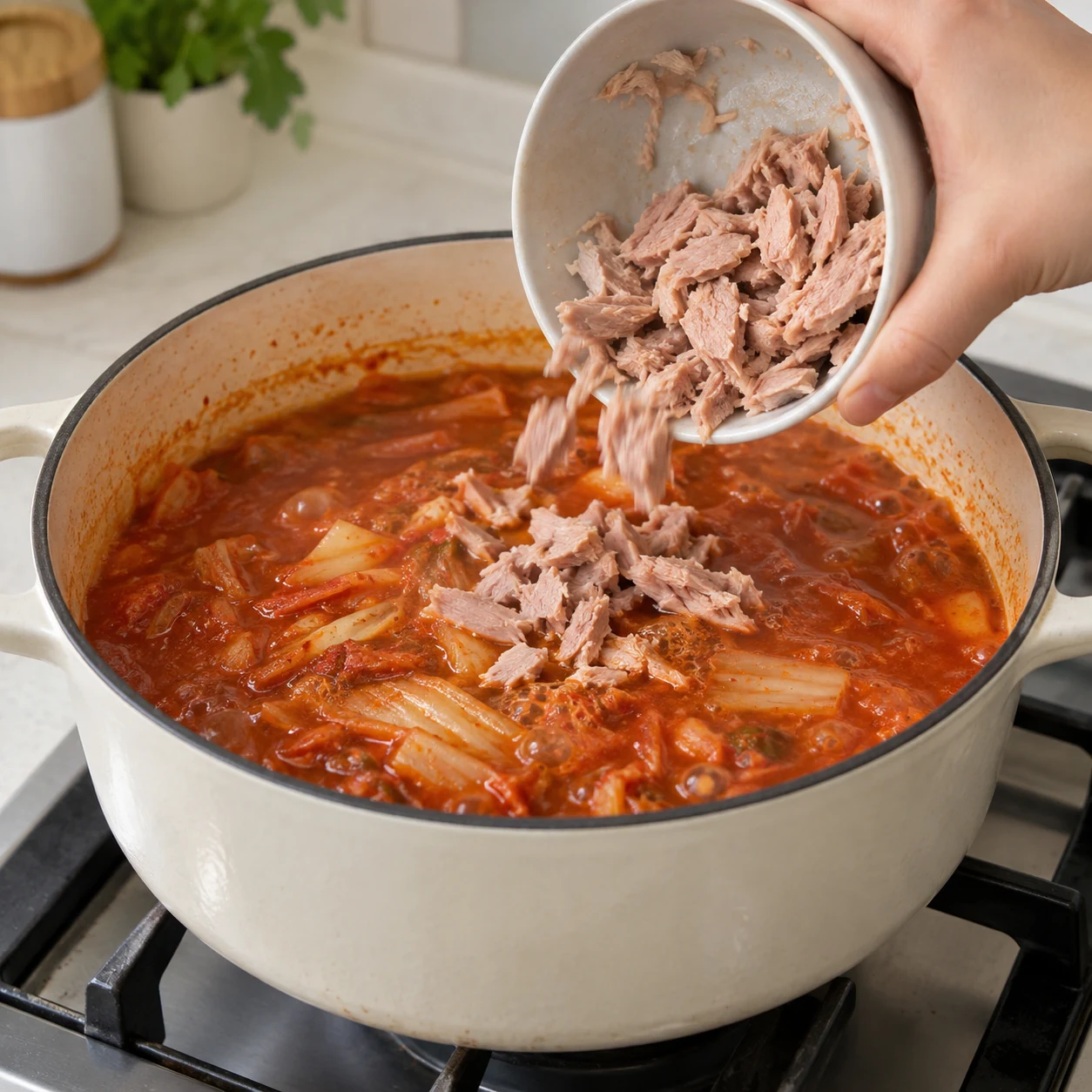
Add the drained tuna and gently break it into bite-size flakes with a spoon. Simmer for 1 minute until hot. Add 1 small teaspoon of soy sauce only if the broth needs it; kimchi brands differ greatly in saltiness.
-
Step 4
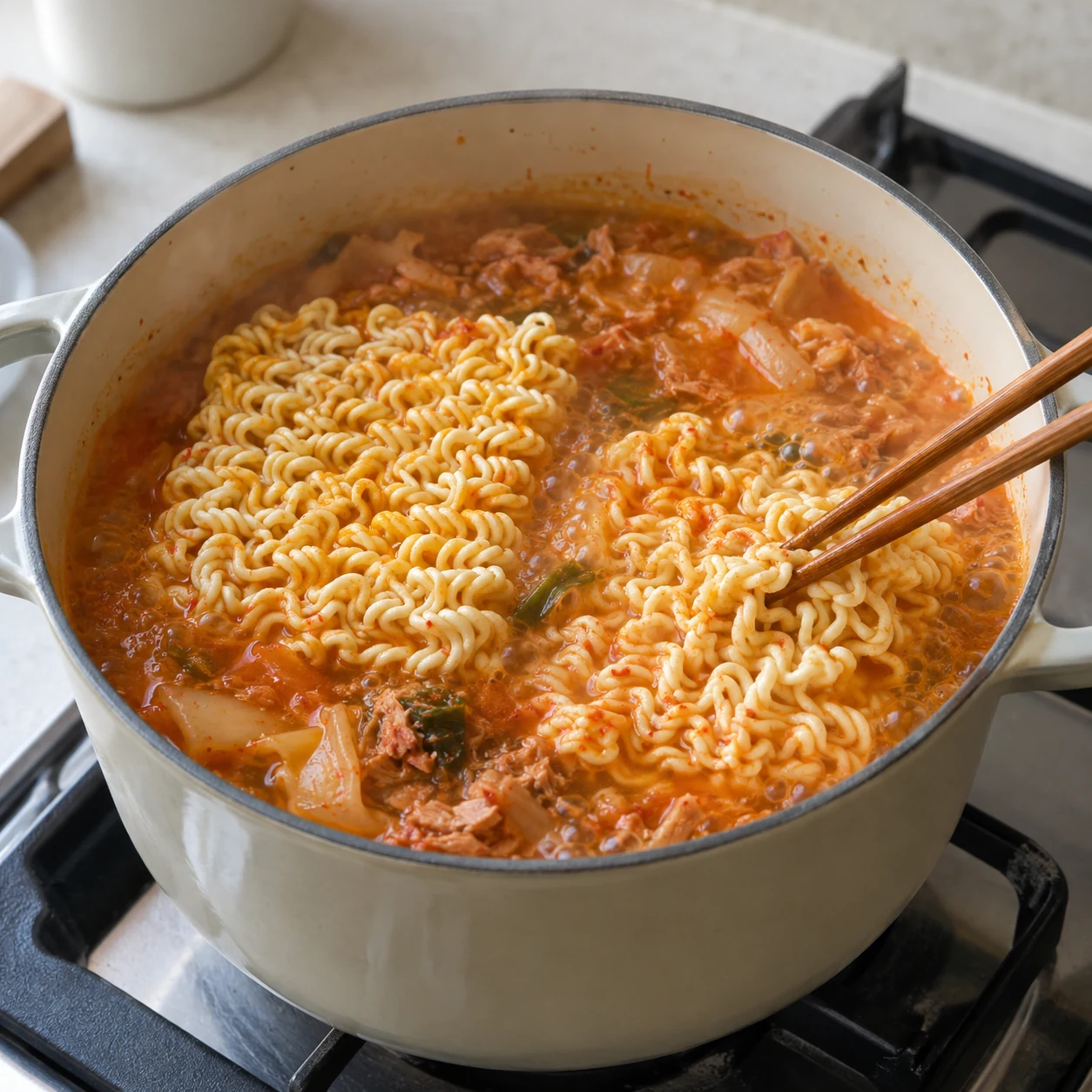
Slide in the two noodle blocks. If adding eggs, cook the noodles for just 1–2 minutes first; if omitting eggs, follow the packet time until just tender. Turn the noodles once when they soften. Keep them beneath the broth but do not stir hard or the tuna will break down too finely.
-
Step 5
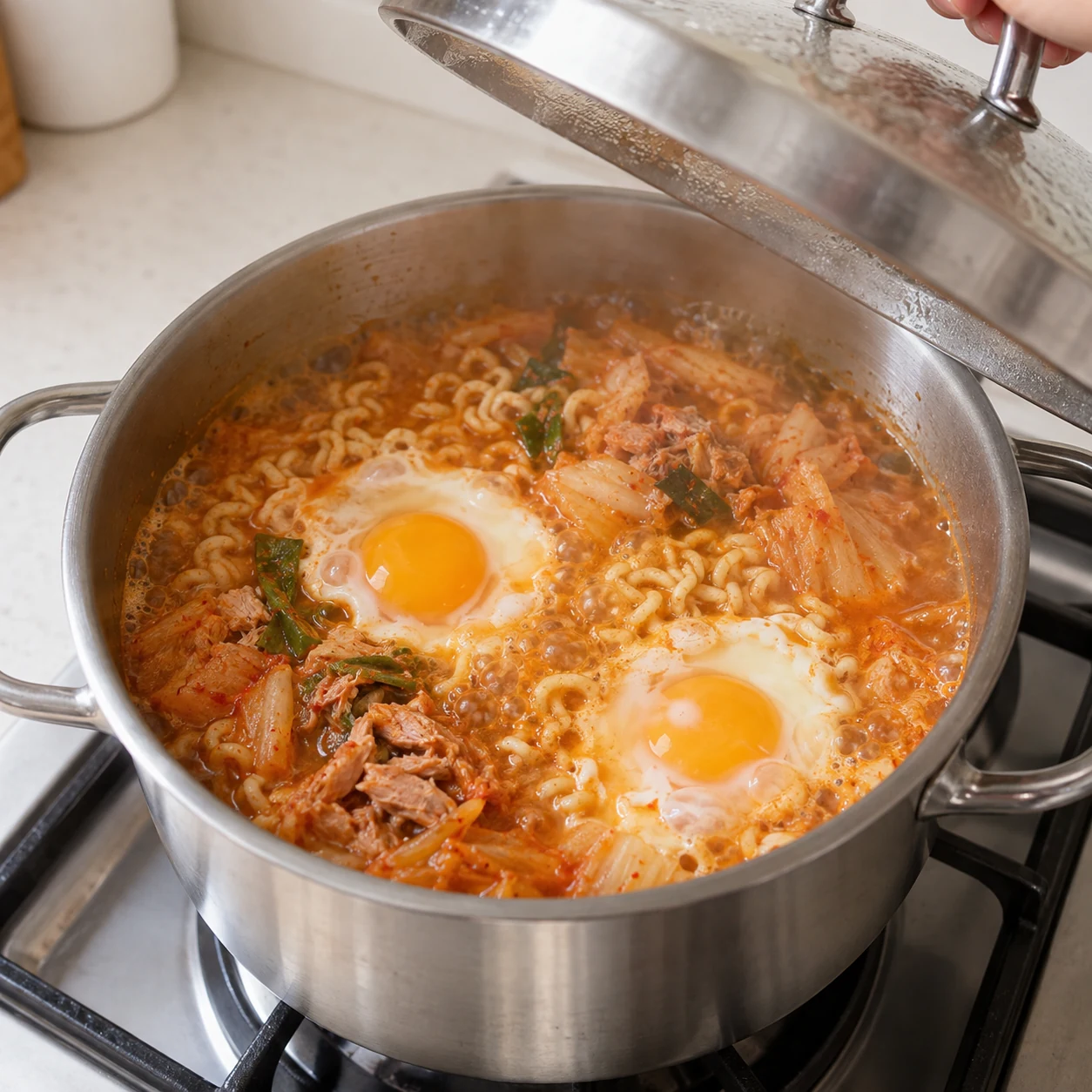
If using eggs, slip one into each side of the bubbling pot. Cover and cook about 2 minutes more, until the egg whites are opaque and the yolks are cooked to your preferred safe doneness. Do not stir during this stage. Check the total noodle cooking time against the packet so they do not turn mushy.
-
Step 6

Turn off the heat and divide the noodles, tuna, kimchi and optional eggs between two bowls. Ladle over the broth. Finish with optional spring onion and a few drops of sesame oil. Serve hot immediately; discard soup left standing at room temperature too long.
Finished dish
Use fully cooked canned tuna, not raw tuna. Drain the can so the broth stays clear; check for fish, soy, wheat and egg allergens as relevant. Canned tuna is salty, so add soy sauce only after tasting.
Enjoy every bite
How to enjoy it
Pair with a mild side such as steamed egg. For more tartness, use older kimchi; for less heat, rinse and squeeze the kimchi briefly before simmering.
Serve it with

Soft vegetable rice bites (Jumeokbap)
A small rice bite goes well with a more strongly seasoned dish.
View recipe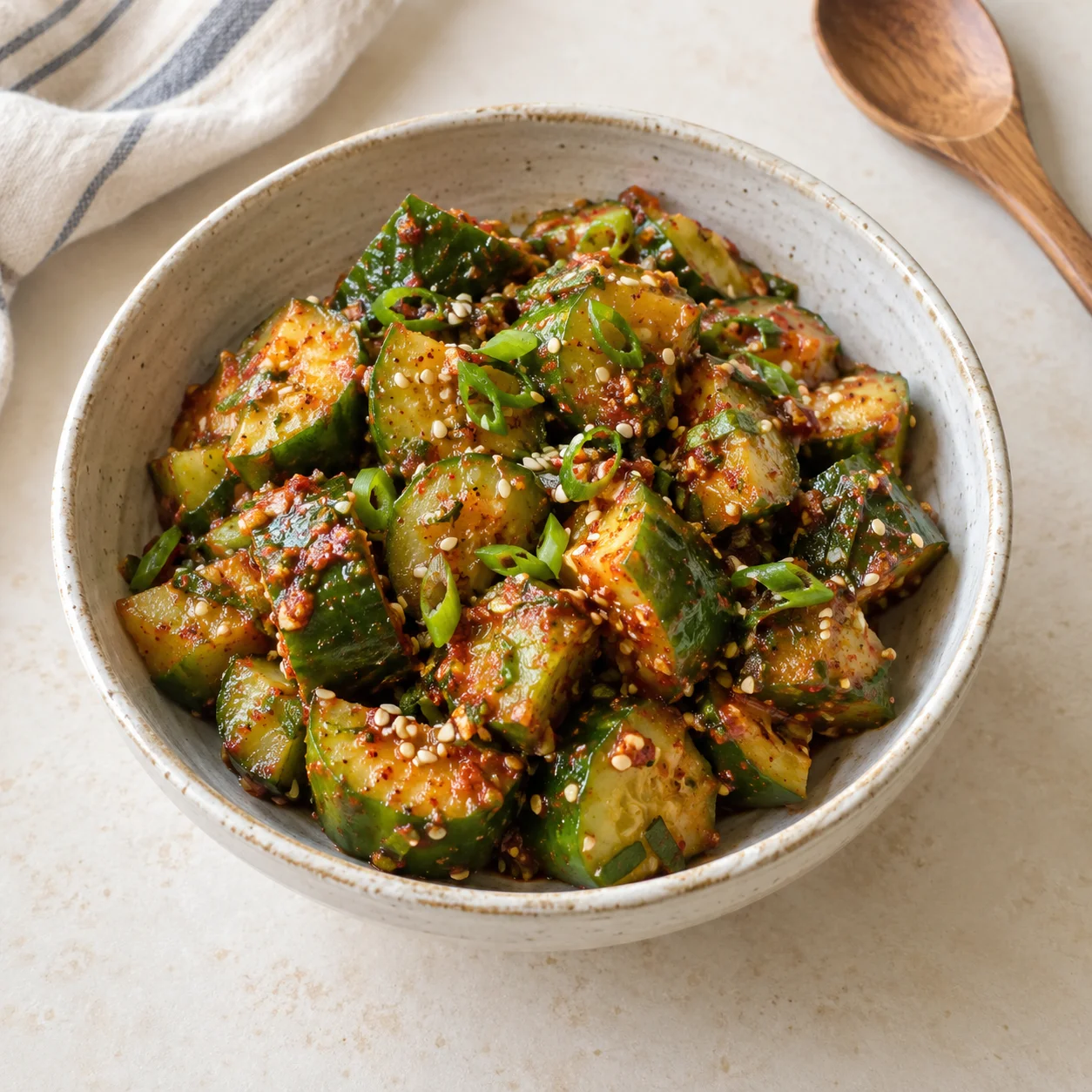
Korean spicy cucumber salad (oi-muchim)
A crisp bite contrasts with the softer main dish; keep its sauce separate.
View recipe