Tangsuyuk — crispy sweet and sour pork
Crisp starch-coated pork strips with a clear sweet-sour vegetable sauce. A simple fresh batter avoids a long starch-soaking step; fry in small batches and serve the sauce separately for the best crunch.
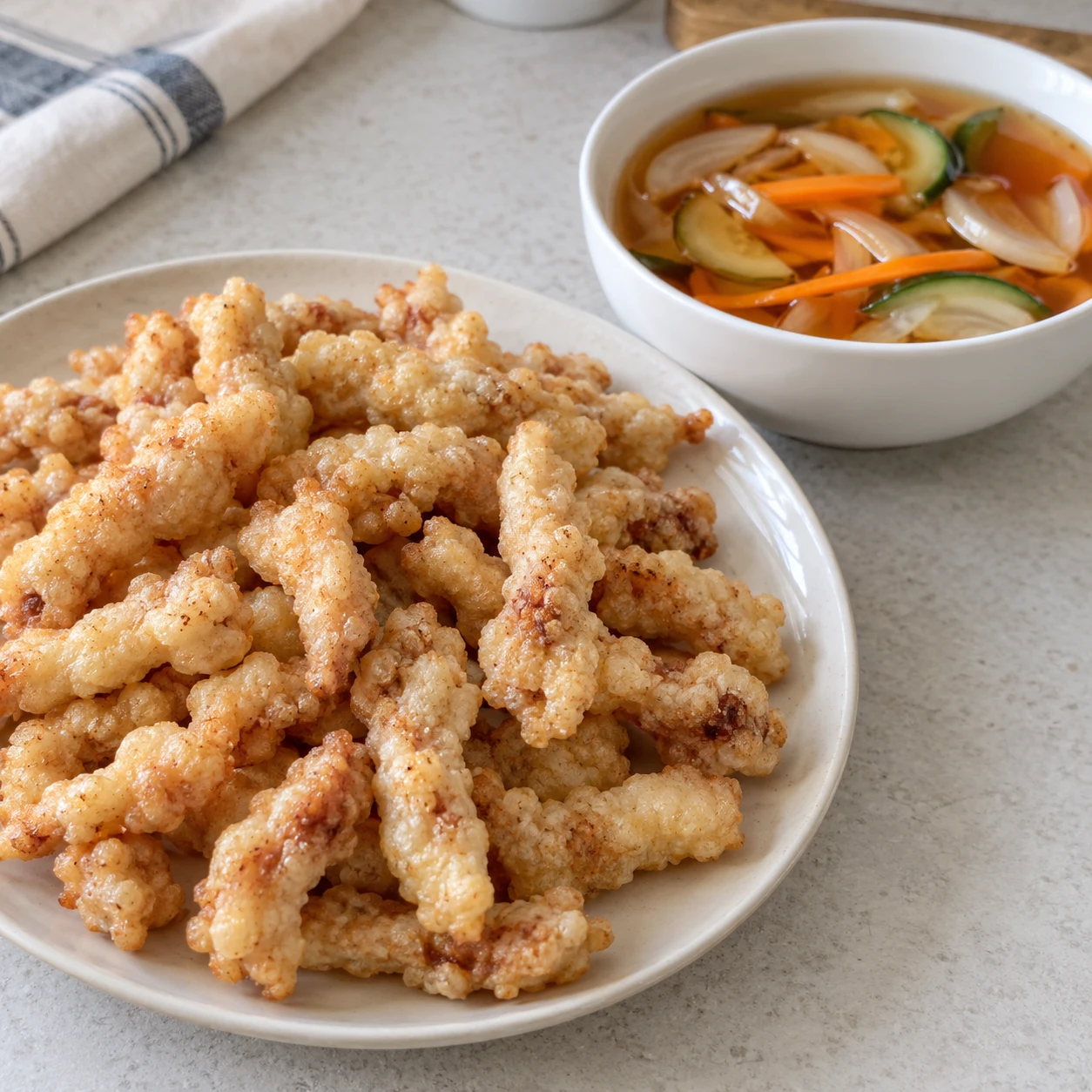
AI-generated cooking illustrations. Follow the written quantities and instructions.
Ingredients
3 servings
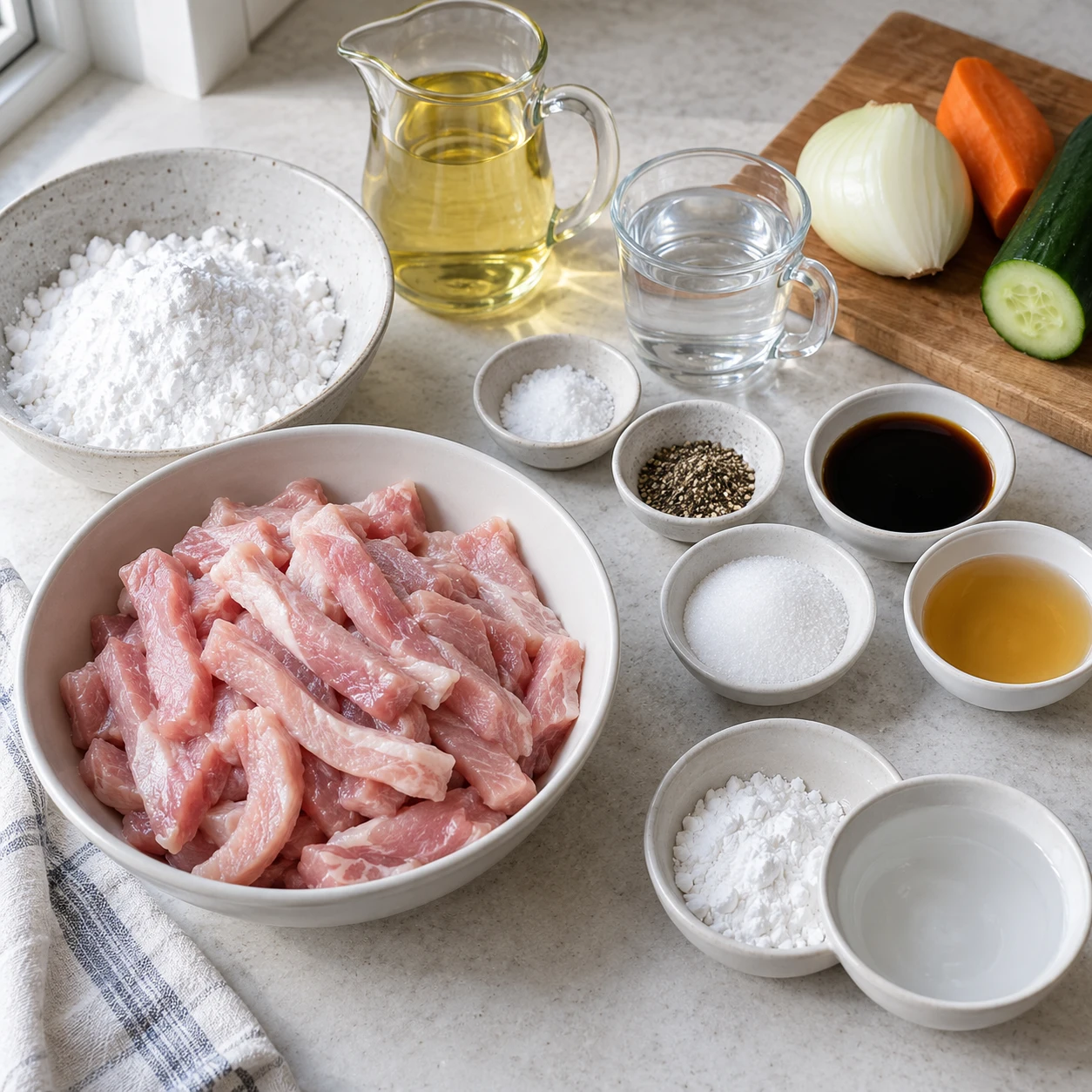
Everyday kitchen measurements
For 3 servings. Use a small 180 ml paper cup, a level eating spoon (about 15 ml) and a small teaspoon (about 5 ml).
How to fill the cup and spoons
Use the same cup and spoons throughout. Their sizes vary, so these amounts are approximate. Spoon flour in loosely and level the top without pressing. Measure vegetables after chopping, without packing them down. The amounts in g/ml are the original reference quantities. For part of a pack, use the specified pack weight and divide the contents evenly.
King Arthur Baking-
Substitute available
If Boneless pork loin is unavailable
- Use instead
- Boneless chicken breast
- Substitute quantity
- 1 of a 300 g packReference quantity: 300 g
Cut one 300 g pack into the same thin strips. Follow the same coating and frying method, but cook the thickest chicken strip to at least 74°C. The flavor is different from pork.
-
Substitute available
If Potato starch is unavailable
- Use instead
- Cornstarch
- Substitute quantity
- 1 paper cupReference quantity: about 100 g
Use 1 small paper cup for the batter and take the sauce-thickening spoon from a separate portion as listed. Start with the same water, adding 1 small teaspoon at a time only if needed. Cornstarch gives a slightly harder, less chewy crust.
-
Essential
Keep this ingredient: it provides the main structure or seasoning of this dish.
-
Essential
Keep this ingredient: it provides the main structure or seasoning of this dish.
-
Essential
Keep this ingredient: it provides the main structure or seasoning of this dish.
-
Optional
Omit pepper from the meat seasoning if unavailable.
-
Essential
Keep this ingredient: it provides the main structure or seasoning of this dish.
-
Optional
Omit the carrot from the sauce simmer if unavailable.
-
Optional
Omit the cucumber from the final sauce step if unavailable.
-
Essential
Keep this ingredient: it provides the main structure or seasoning of this dish.
-
Essential
Keep this ingredient: it provides the main structure or seasoning of this dish.
-
Substitute available
If Rice vinegar is unavailable
- Use instead
- White food vinegar
- Substitute quantity
- 3 level eating spoonsReference quantity: 45 ml
Use ordinary vinegar with about 5% acidity, never cleaning vinegar or concentrate. Start with 2 spoons in the sauce and add the remaining spoon after tasting.
-
Substitute available
If Soy sauce is unavailable
- Use instead
- Tamari
- Substitute quantity
- 1 level eating spoonReference quantity: 15 ml
Use the same spoon quantity of regular-strength tamari. Saltiness varies, so taste before adding any extra seasoning. Check the label if avoiding wheat.
-
Substitute available
If Potato starch for sauce is unavailable
- Use instead
- Cornstarch
- Substitute quantity
- 1 level eating spoonReference quantity: about 9 g
Mix with the listed 2 spoons cold water, stir again just before pouring, and simmer until glossy. Add gradually; you may not need all the slurry.
-
Essential
Keep this ingredient: it provides the main structure or seasoning of this dish.
Tap each ingredient as you prepare it. Check product labels for egg, soy, sesame, wheat, fish or shellfish where relevant.
Step-by-step cooking
-
Step 1
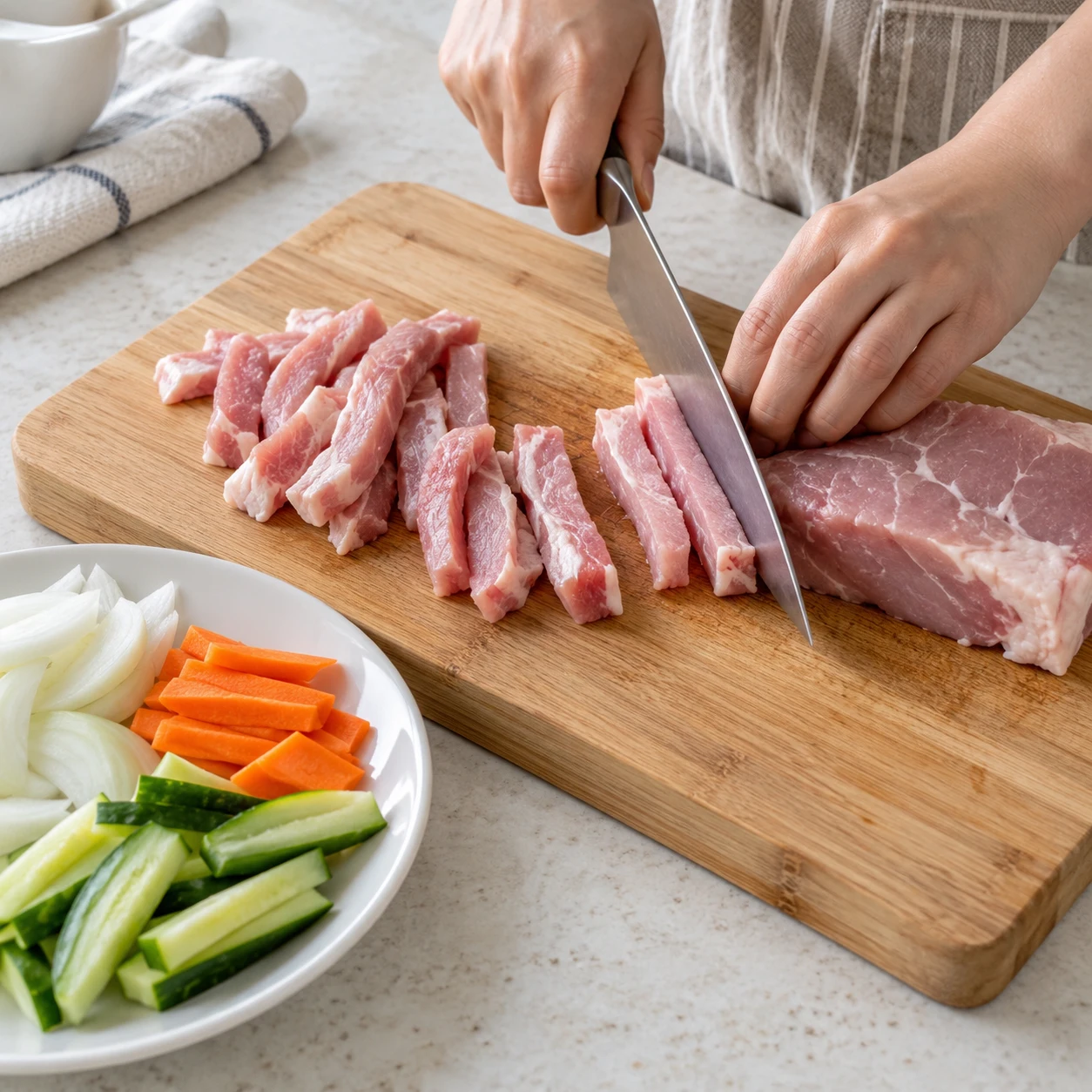
Prepare the meat and vegetables. Pat one 300 g pack of pork loin dry without washing raw meat. Cut into strips about 1 cm thick and 5 cm long. Toss with ¼ small teaspoon salt and optional pepper; leave refrigerated for 10 minutes. Slice ½ onion, ¼ carrot and ¼ cucumber. Keep raw-meat tools separate from vegetables and wash your hands.
-
Step 2
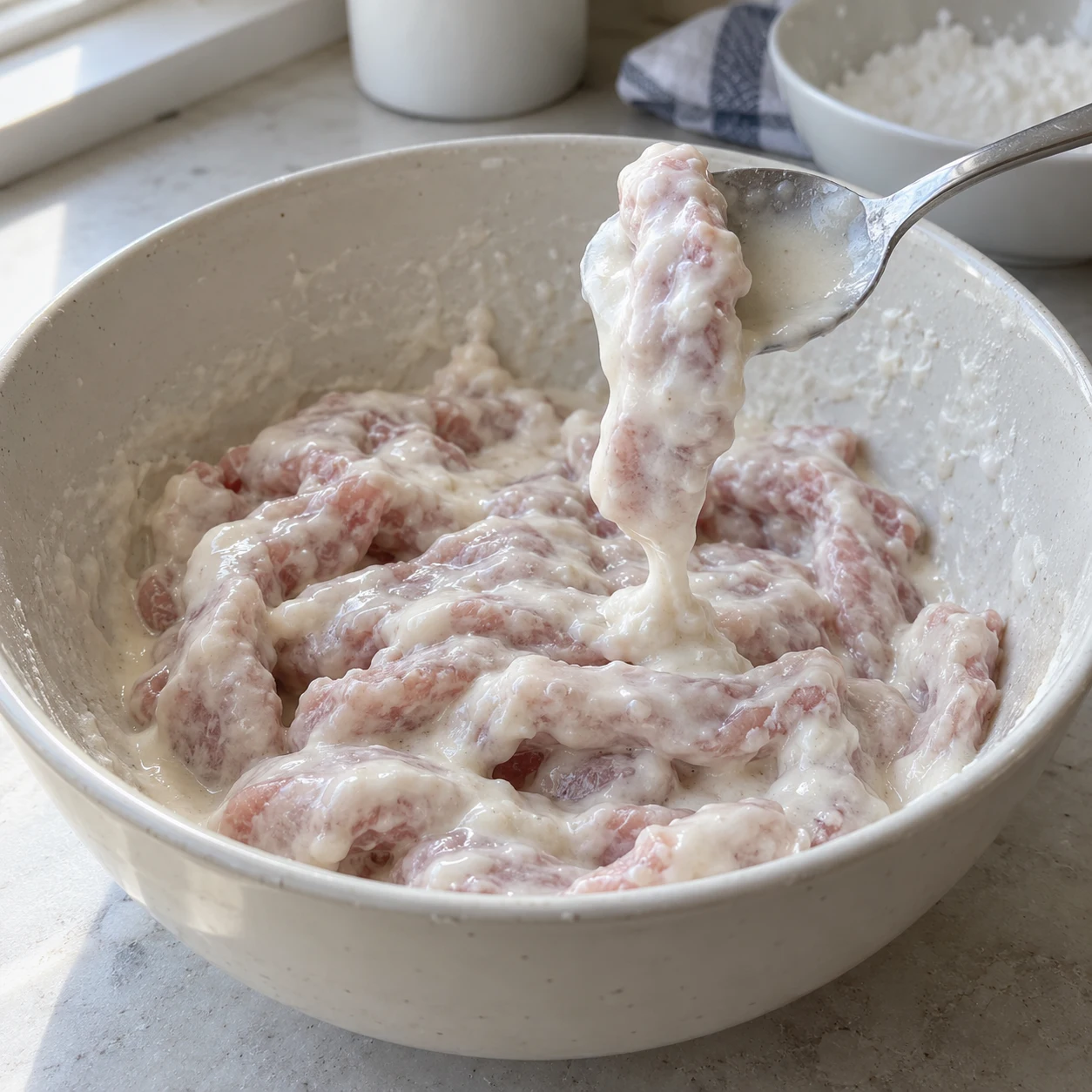
Make a fresh starch batter. Stir 1 small paper cup potato starch with 6 level eating spoons cold water until a thick smooth coating forms. If needed, add extra water 1 small teaspoon at a time; it should cling to the pork rather than run off like water. Stir again because starch settles, then mix in the pork strips so each is thinly coated.
-
Step 3
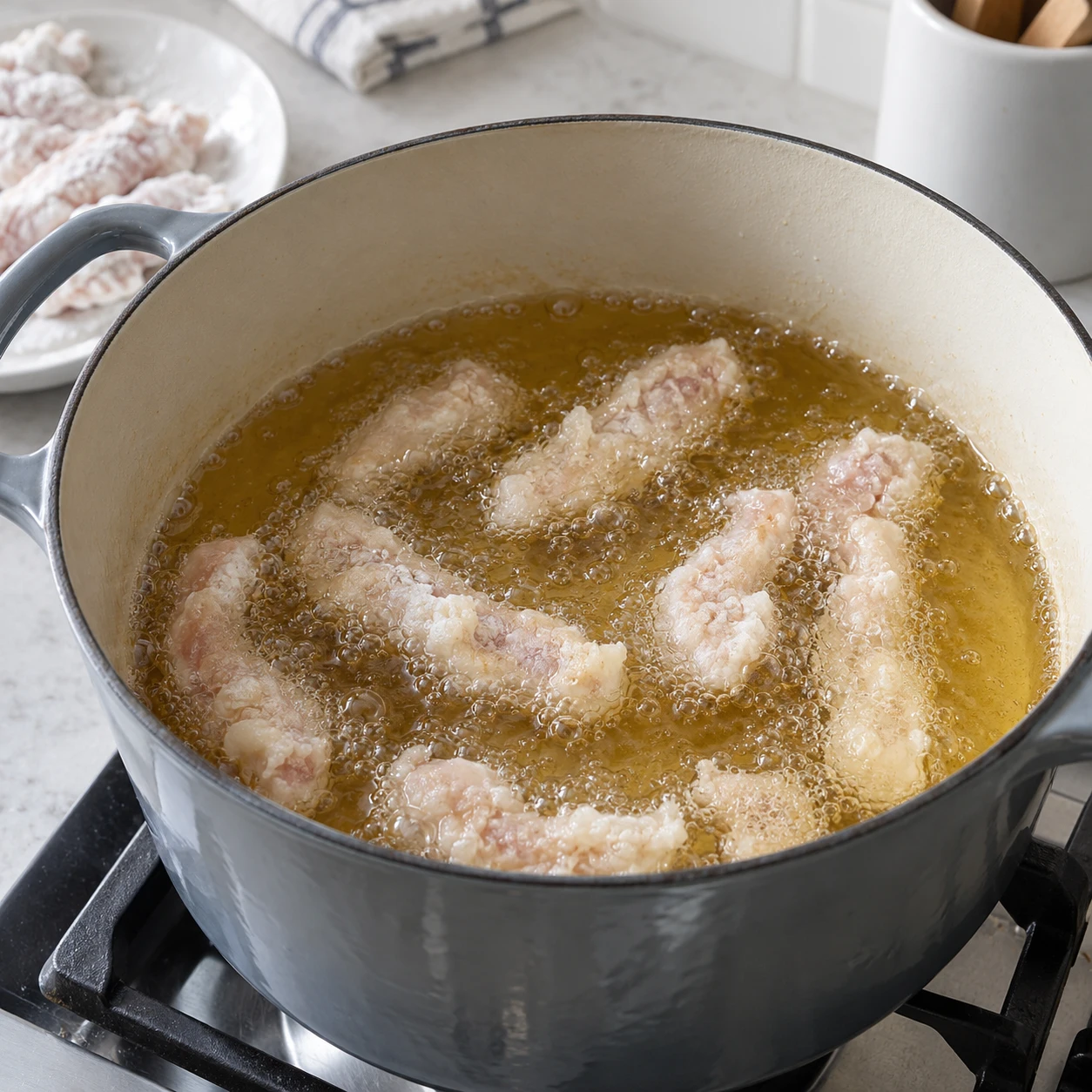
First fry in small batches. Pour 5 small paper cups neutral oil into a deep, heavy dry pot; the oil must be deep enough for the strips and occupy no more than one-third of the pot. Heat to about 170°C. A food thermometer is the reliable check. Carefully lower in separate strips in 3–4 batches, keeping your hands clear of hot oil. Fry each batch for 3–4 minutes until the coating is set and pale golden. Lift onto a rack. Never add wet utensils or water to hot oil.
-
Step 4
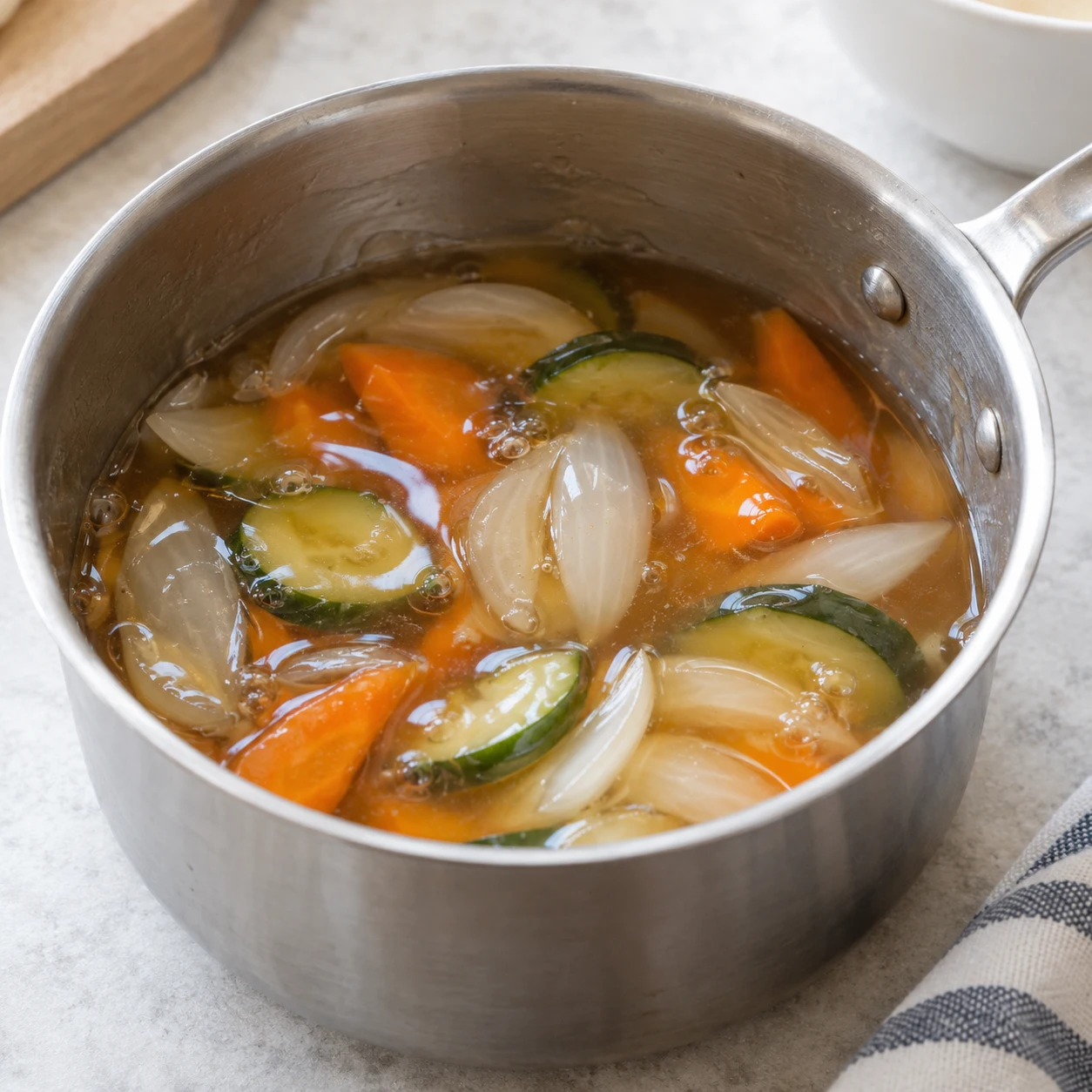
Make the sweet-sour sauce. In a separate saucepan, combine 1 small paper cup water, 3 level eating spoons sugar, 3 level eating spoons rice vinegar and 1 level eating spoon soy sauce. Add onion and carrot, bring to a gentle boil and simmer for 3 minutes. Mix the separate 1 level eating spoon sauce starch with 2 level eating spoons cold water; stir this slurry again, pour in gradually and simmer for 1 minute until glossy. Add cucumber and turn off the heat.
-
Step 5
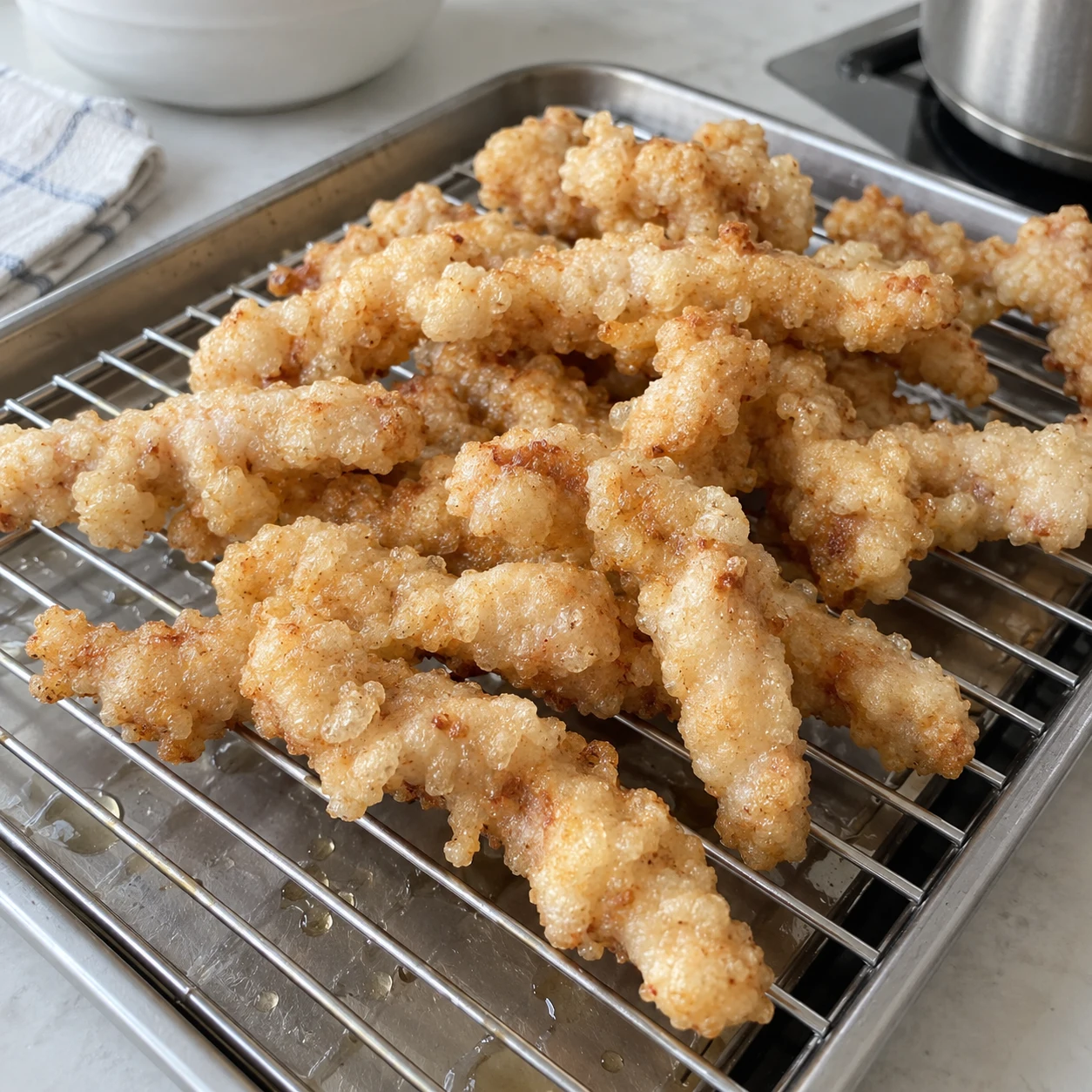
Fry a second time for crunch. Bring the oil to about 180°C. Refry the pork in small batches for 1–2 minutes until crisp and light golden. Check the thickest pork strip reaches at least 63°C, then rest it for 3 minutes; extend cooking if needed. If using chicken, it must reach 74°C. Drain on a rack rather than piling it in a deep bowl.
-
Step 6
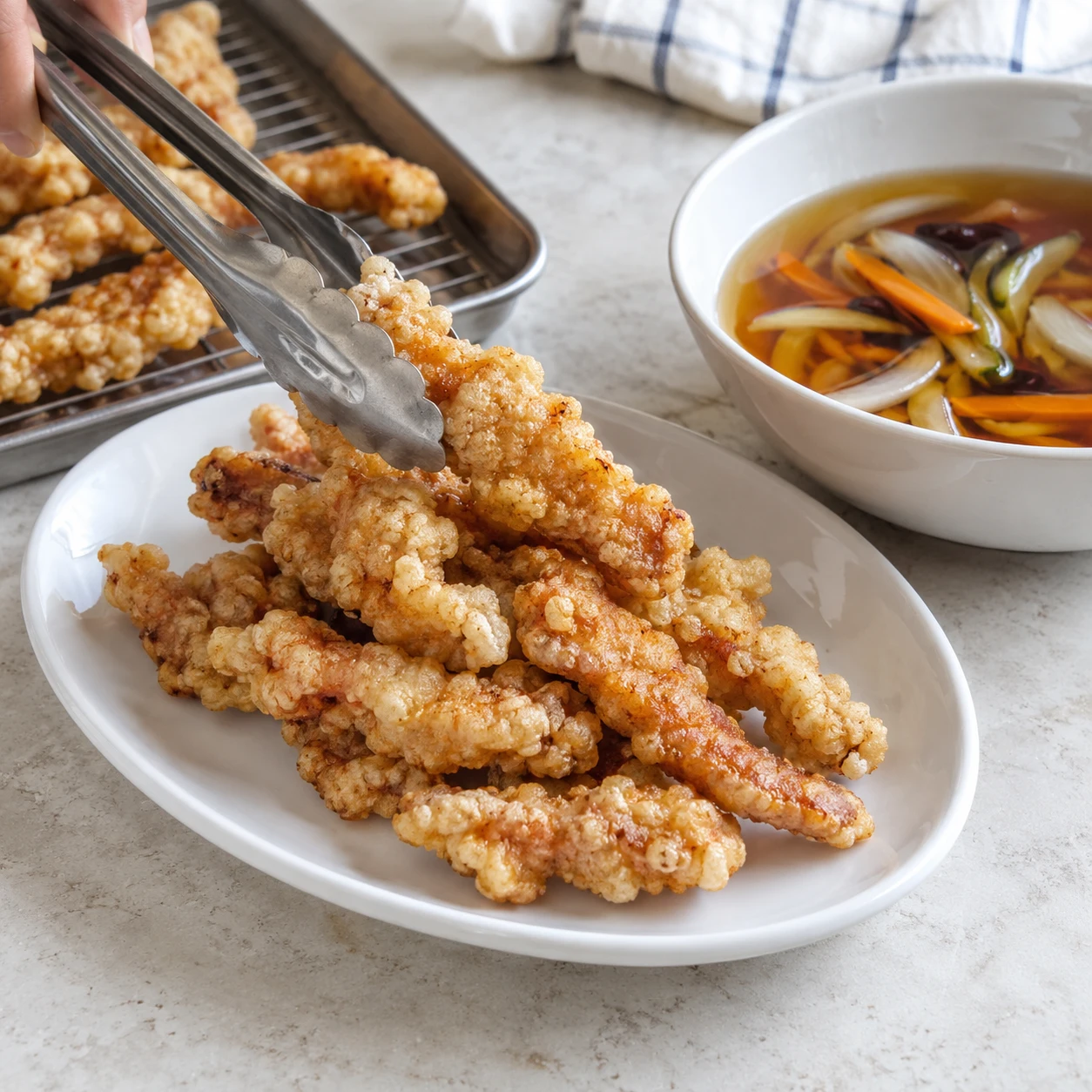
Serve the sauce separately. Arrange the crisp pork on a clean platter and put the warm vegetable sauce in a bowl beside it. Dip each strip just before eating, or pour over only the portion you will eat immediately. Let the hot sauce and meat cool enough before serving to children. Turn off the oil heat and let the pot cool completely before handling or disposing of oil.
Finished dish
A level eating spoon here is about 15 ml, a small teaspoon about 5 ml, and a small paper cup about 180 ml. Use the same spoon and cup throughout; household sizes and ingredient weights vary. Deep frying needs adult supervision and a stable pot with headroom. Do not leave hot oil unattended. This quick fresh-starch batter differs from the traditional settled-starch method but does not require a long soak. Vinegar, soy sauce and starch brands vary: taste the sauce before adding slurry. Refrigerate cooked leftovers within 2 hours, use within 3–4 days and reheat to 74°C; keep sauce separate. Soy sauce may contain soy and wheat.
Enjoy every bite
How to enjoy it
Try dipping a piece in sauce rather than pouring sauce over the whole plate. This lets you choose how much crisp coating to keep.
Serve it with
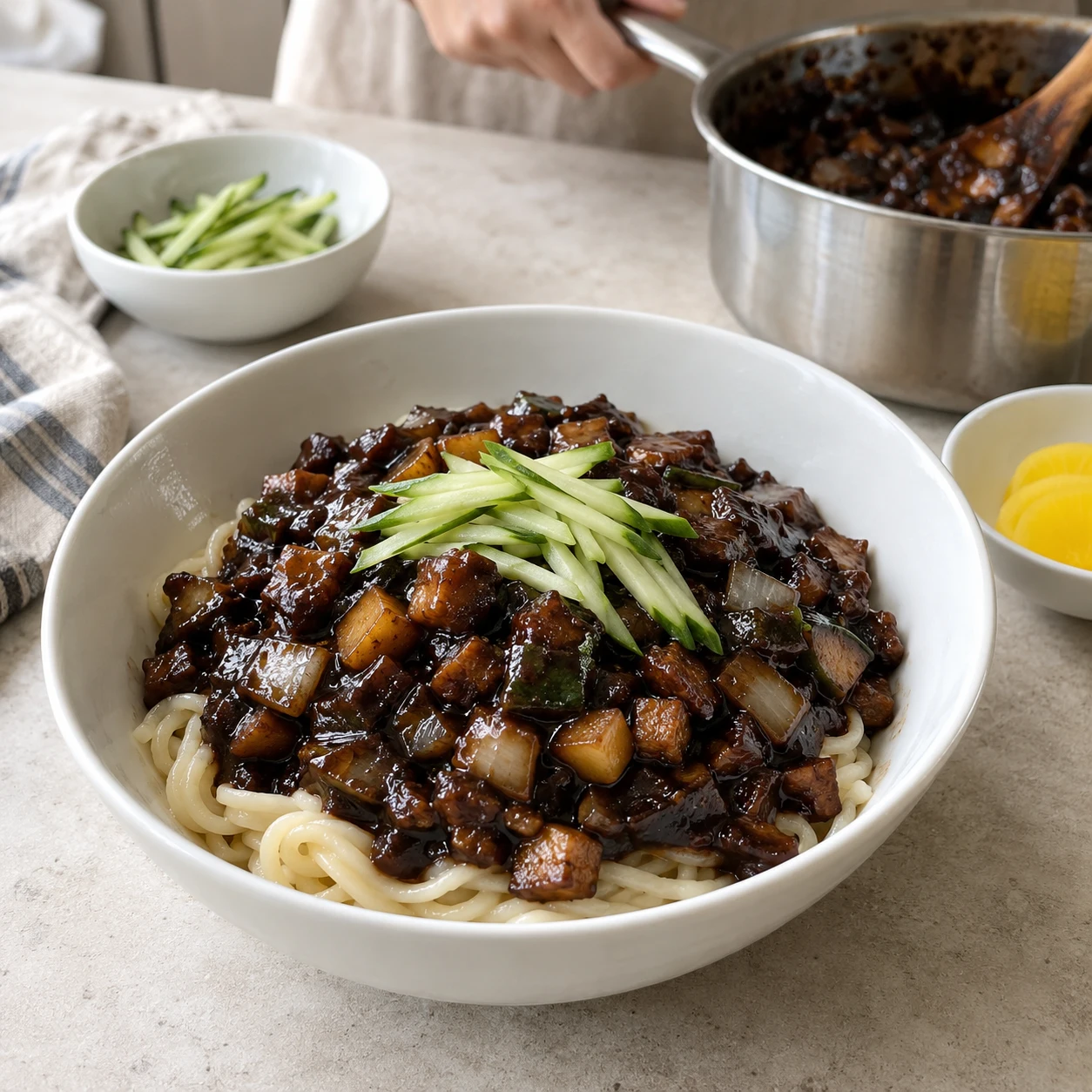
Korean black-bean noodles (Jajangmyeon)
A small savory bite complements a lighter noodle or vegetable dish.
View recipe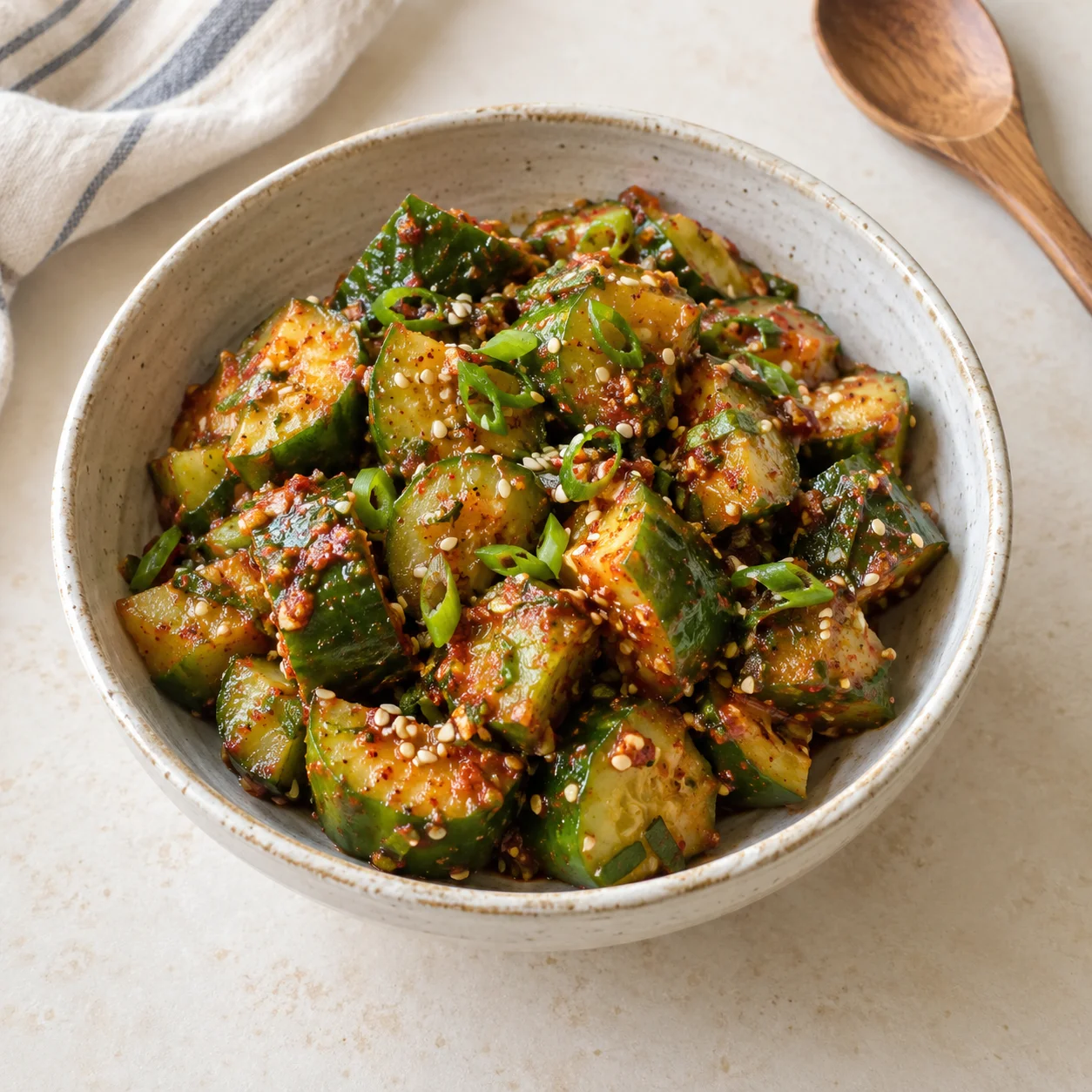
Korean spicy cucumber salad (oi-muchim)
A crisp vegetable bite contrasts with a richer or spicier dish.
View recipe