Korean café-style salt bread
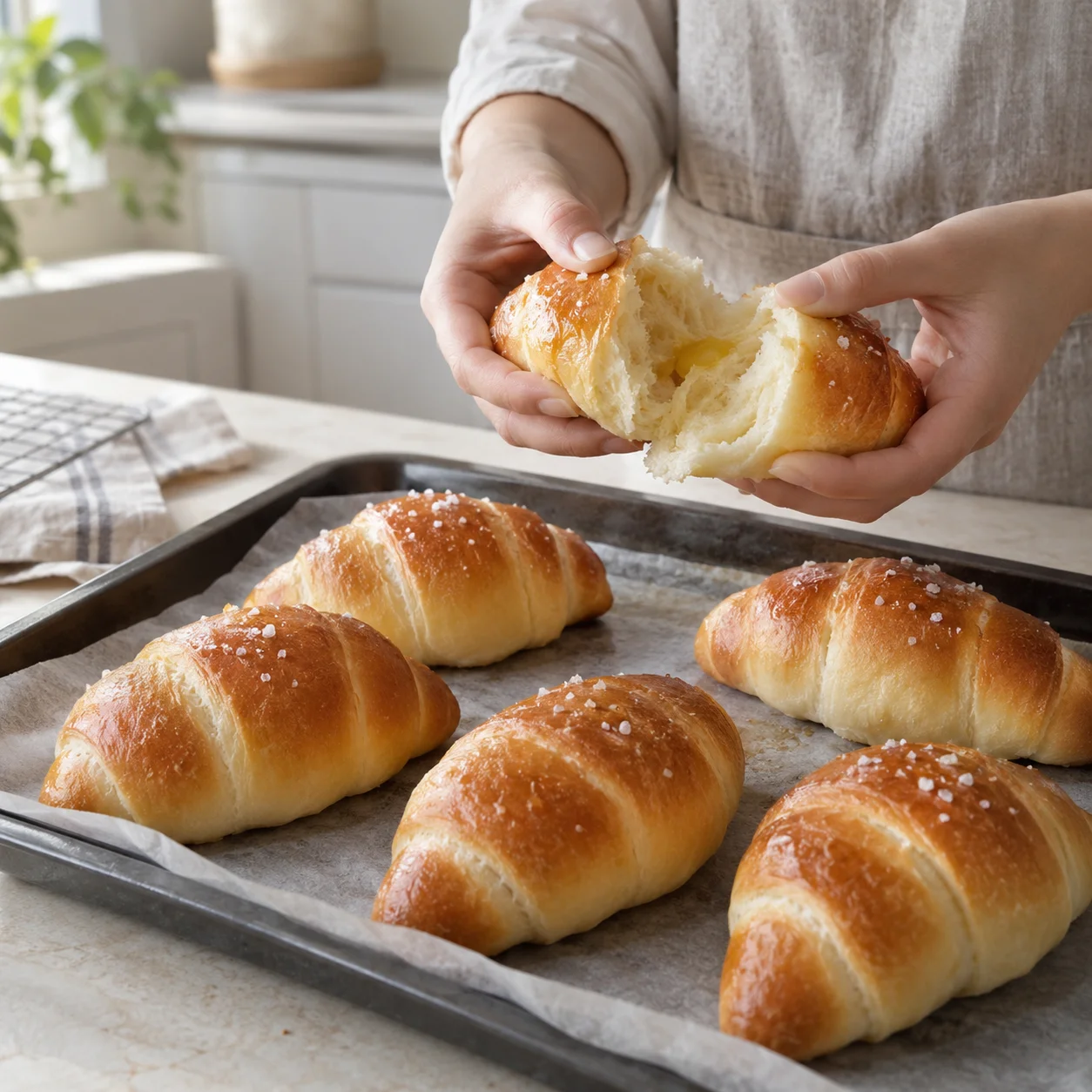
Six buttery rolls with a lightly salted crust and crisp bottoms. Learn the dough, two rises and butter wrapping that create the small hollow pocket inside.
Share recipe
Choose an app on your device, or copy the link for Instagram and other apps.
AI-generated cooking illustrations. Follow the written quantities and instructions.
Ingredients
6 servings
Household amounts
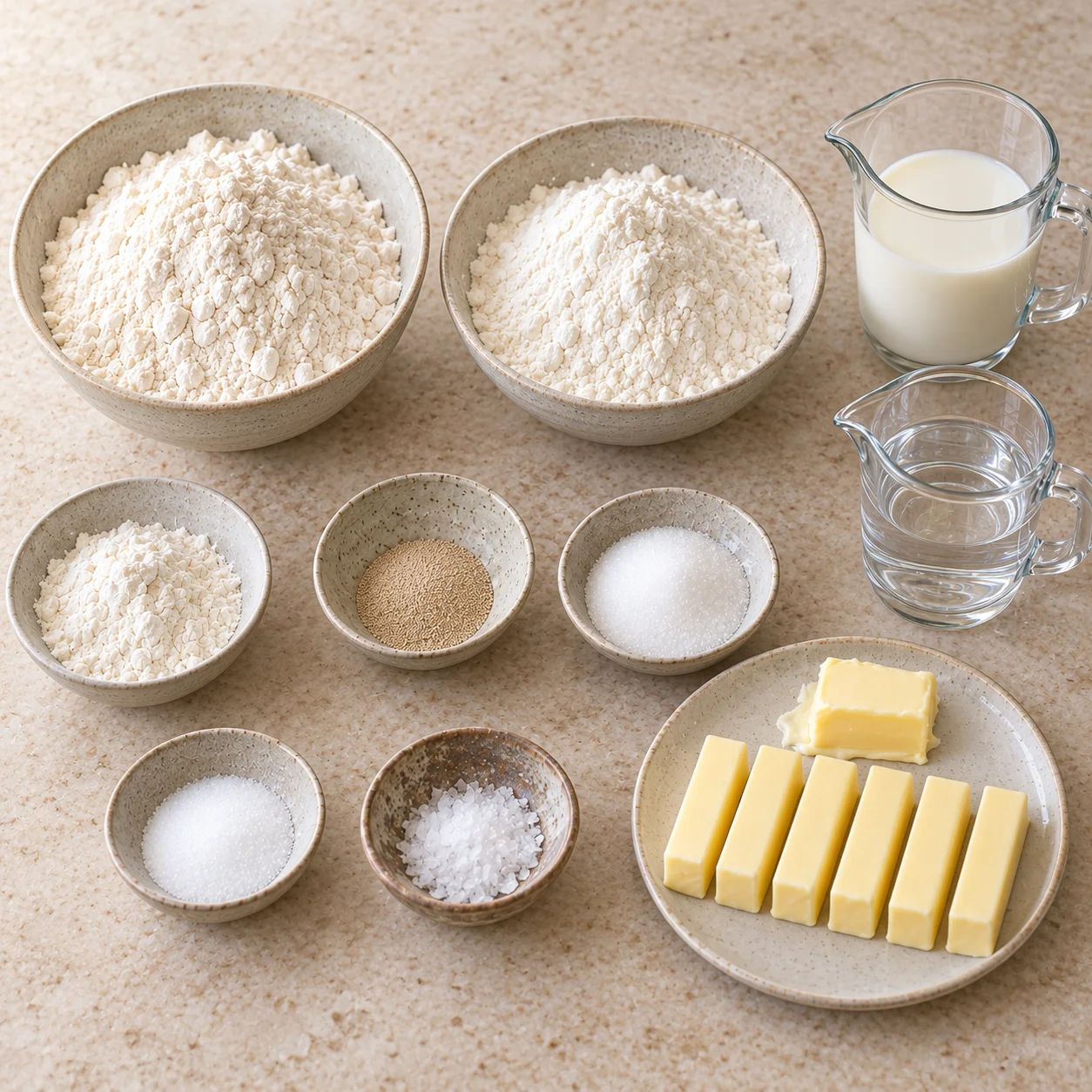
For 6 servings. Use a small 180 ml paper cup, a level eating spoon (about 15 ml) and a small teaspoon (about 5 ml).
How to fill the cup and spoons
Use the same cup and spoons throughout. Actual cup and spoon sizes vary. Fill flour loosely and level it without pressing. Vegetable volume is after cutting, loosely filled. Amounts are approximate; the smaller g/ml amounts are the original reference. For a pack portion, use the stated label weight and divide the contents evenly.
King Arthur Baking- Substitute available
Replace the 250 g bread flour with 250 g plain wheat flour; keep the separate 50 g flour. The rolls will be softer and less chewy.
- Essential
Needed for this batter or coating to hold together. Keep the listed wheat flour; nut flour or starch is not a direct same-amount swap.
- Optional
Can be omitted on a nonstick rolling mat if the dough does not stick. If needed, dust lightly rather than mixing extra flour into the dough.
- Substitute available
Use the same volume of unsweetened, unflavoured oat milk. Richness and colour may change; other dairy ingredients remain unchanged.
- Essential
Keep the listed cooking liquid; it controls hydration and sauce consistency. Use drinking water.
- Substitute available
Use 3 g active dry or instant baker's yeast; follow its activation instructions and wait until the dough doubles. Rising time can change; baking powder is not a swap.
- Substitute available
Use the same weight of caster sugar or fine white granulated sugar. Keep the amount for this batter; liquid sweeteners change its moisture.
- Essential
Keep the measured salt in this dough formula. Omitting it changes flavour and the dough's behaviour; topping salt is a separate item.
- Essential
Keep the 80 g butter split between dough and filling. Cold solid filling butter creates the hollow center; oil cannot replace those sticks.
- Optional
May be omitted from the top. The crust will be less salty; keep the separate 5 g salt already mixed into the dough.
Tap each ingredient as you prepare it. Check product labels for egg, soy, sesame, wheat, fish or shellfish where relevant.
Step-by-step cooking
-
Step 1
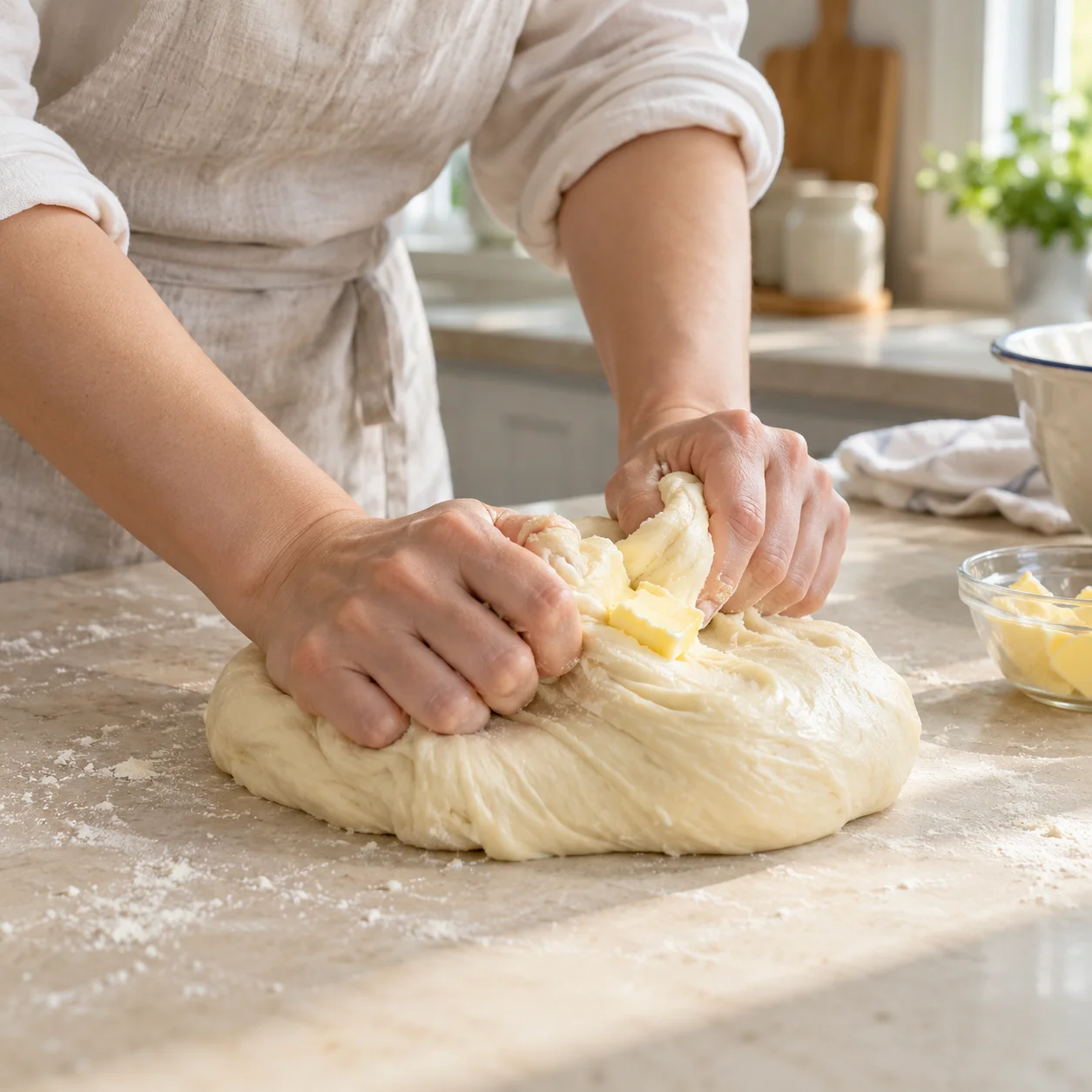
Mix about 2 ¾ paper cups (250 g) bread flour, about ½ paper cup + ⅔ level eating spoon (50 g) plain flour, about 1 small teaspoon (3 g) instant yeast, about 1 ¼ level eating spoons (15 g) sugar and about ¾ small teaspoon (5 g) salt. Add about ½ paper cup + 2 small teaspoons (100 ml) room-temperature milk and about ½ paper cup (90 ml) lukewarm water. Knead 8–10 minutes, then work in about 1 ⅓ level eating spoons (20 g) softened butter and knead 5–8 minutes more until smooth and stretchy.
-
Step 2
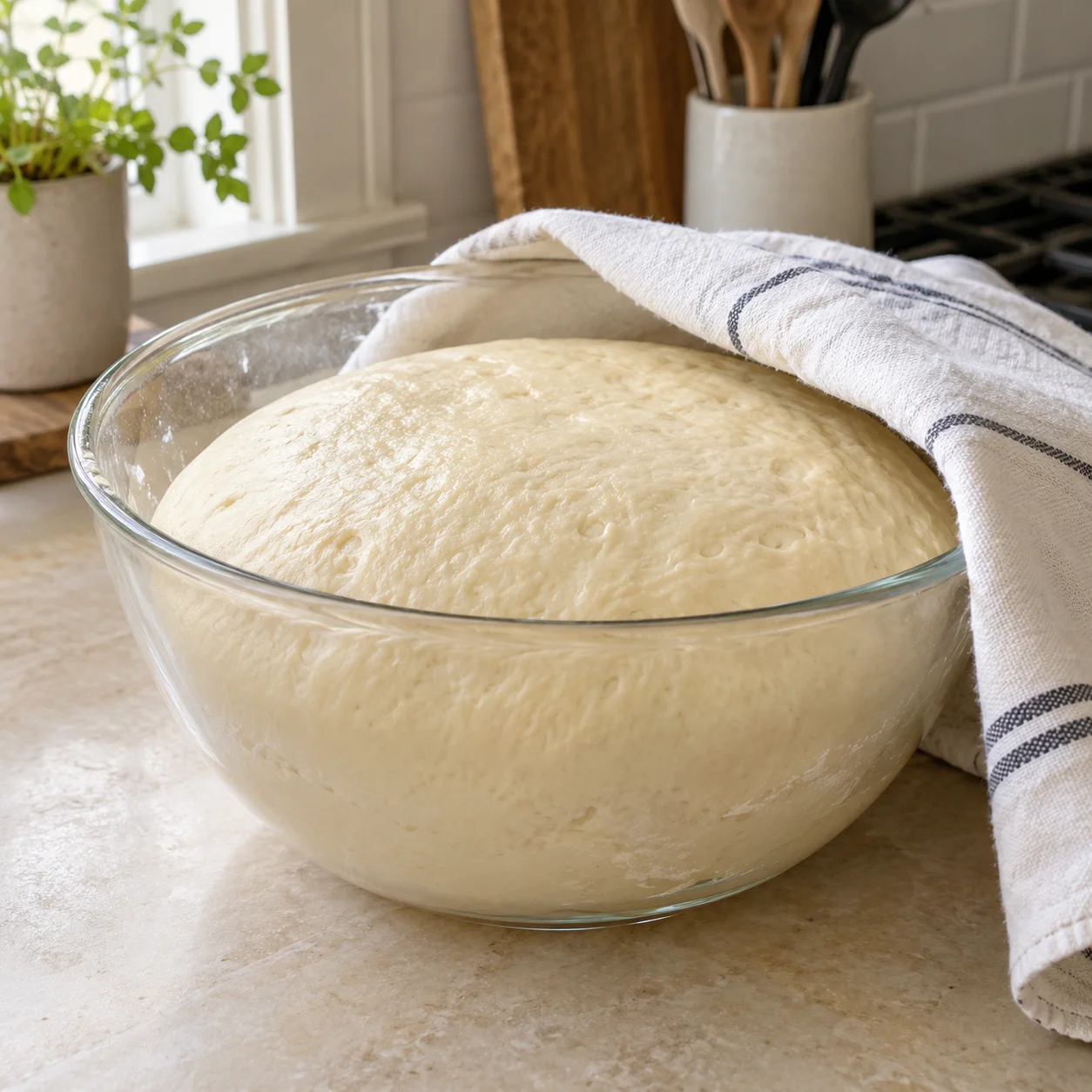
Place the dough in a bowl, cover and leave in a warm, draft-free spot for 60–90 minutes until nearly doubled. Judge the volume, not only the time. A lightly pressed fingertip should leave a mark that returns slowly.
-
Step 3
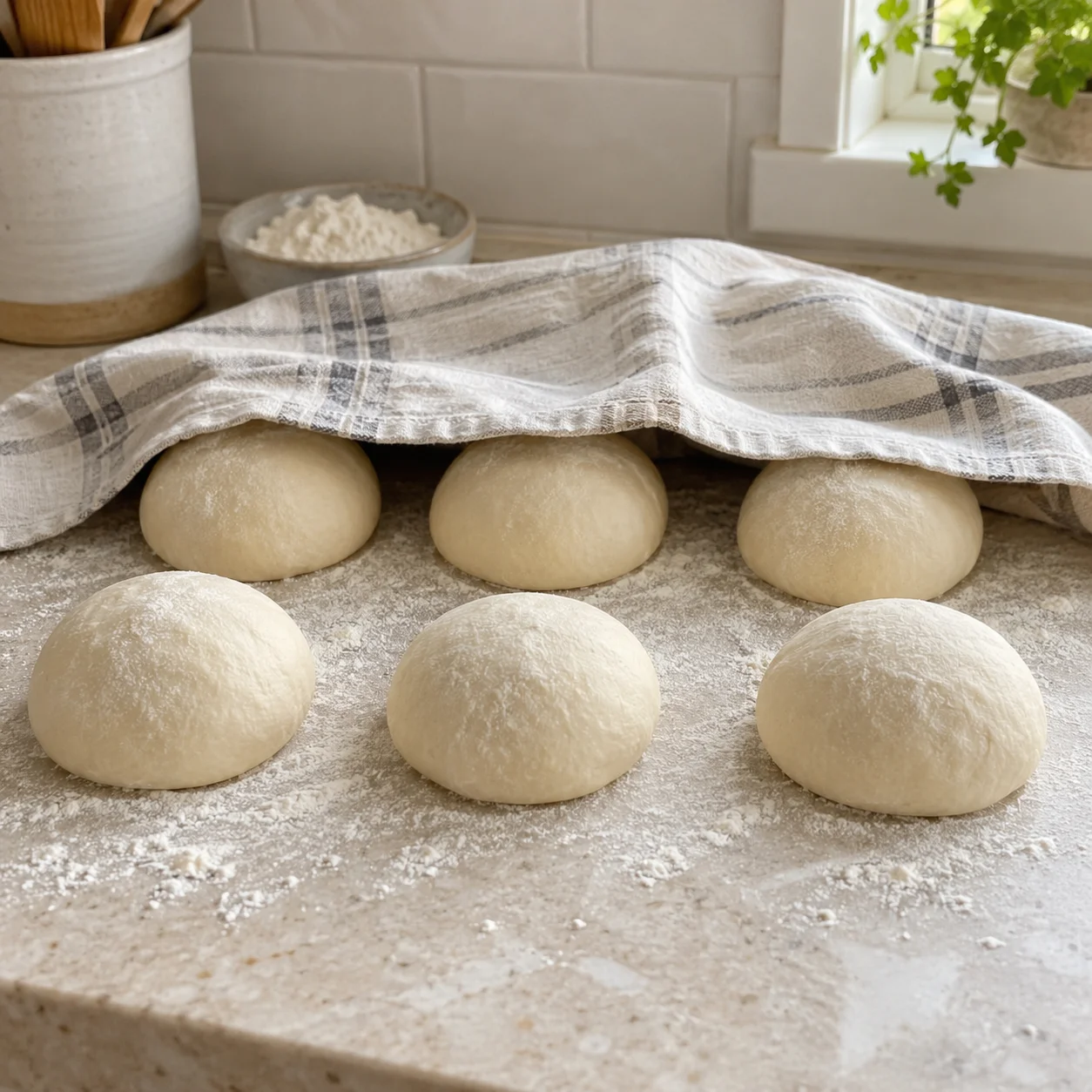
Gently press out large bubbles and divide into six equal pieces, about 89 g each. Round them into balls, cover and rest for 15 minutes. Cut the remaining about 4 ¼ level eating spoons (60 g) butter into six 10 g sticks and keep them refrigerated until shaping.
-
Step 4
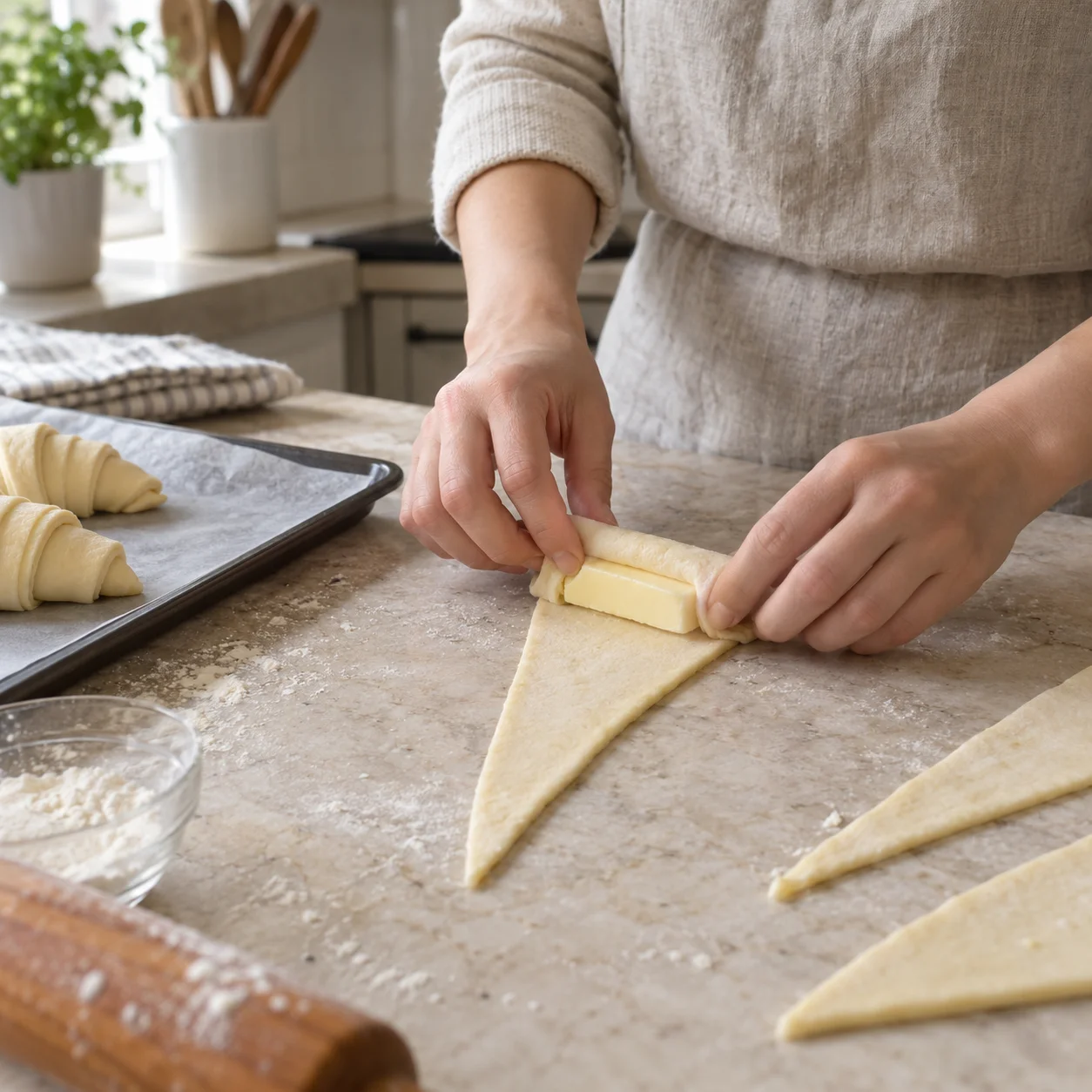
Using the about 1 ⅓ level eating spoons (10 g) dusting flour sparingly, roll each dough ball into a tapered triangle about 25 cm long and 8 cm wide at its base. Put one cold butter stick at the wide end and roll toward the tip. Place the tip underneath to keep the roll from opening.
-
Step 5
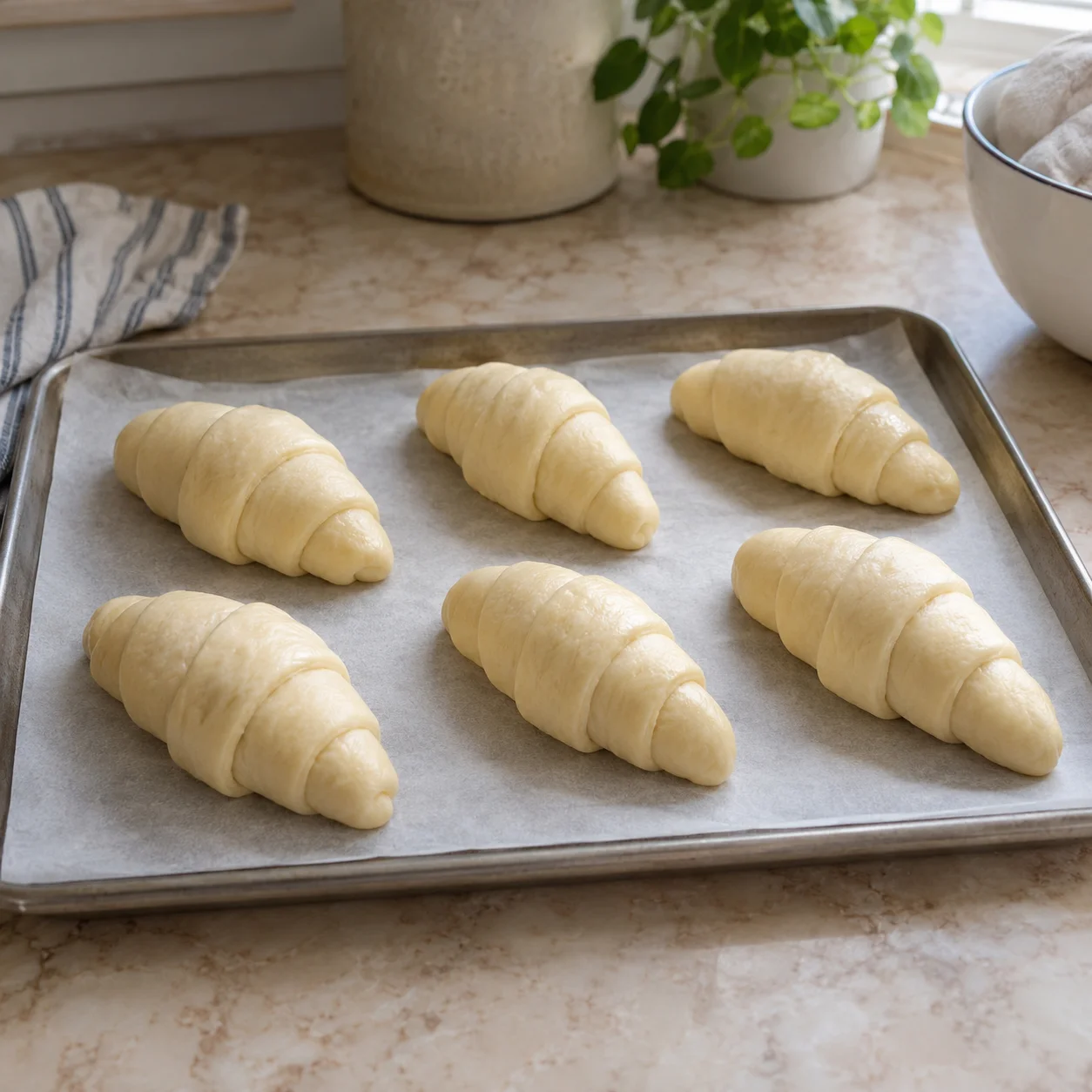
Space the six rolls at least 5 cm apart on a parchment-lined rimmed metal tray. Cover lightly and proof at about 22–24°C for 45–75 minutes until puffy. Keep away from hot ovens so the butter stays inside during proofing. Preheat the oven for 20 minutes to 200°C conventional or 180°C fan.
-
Step 6
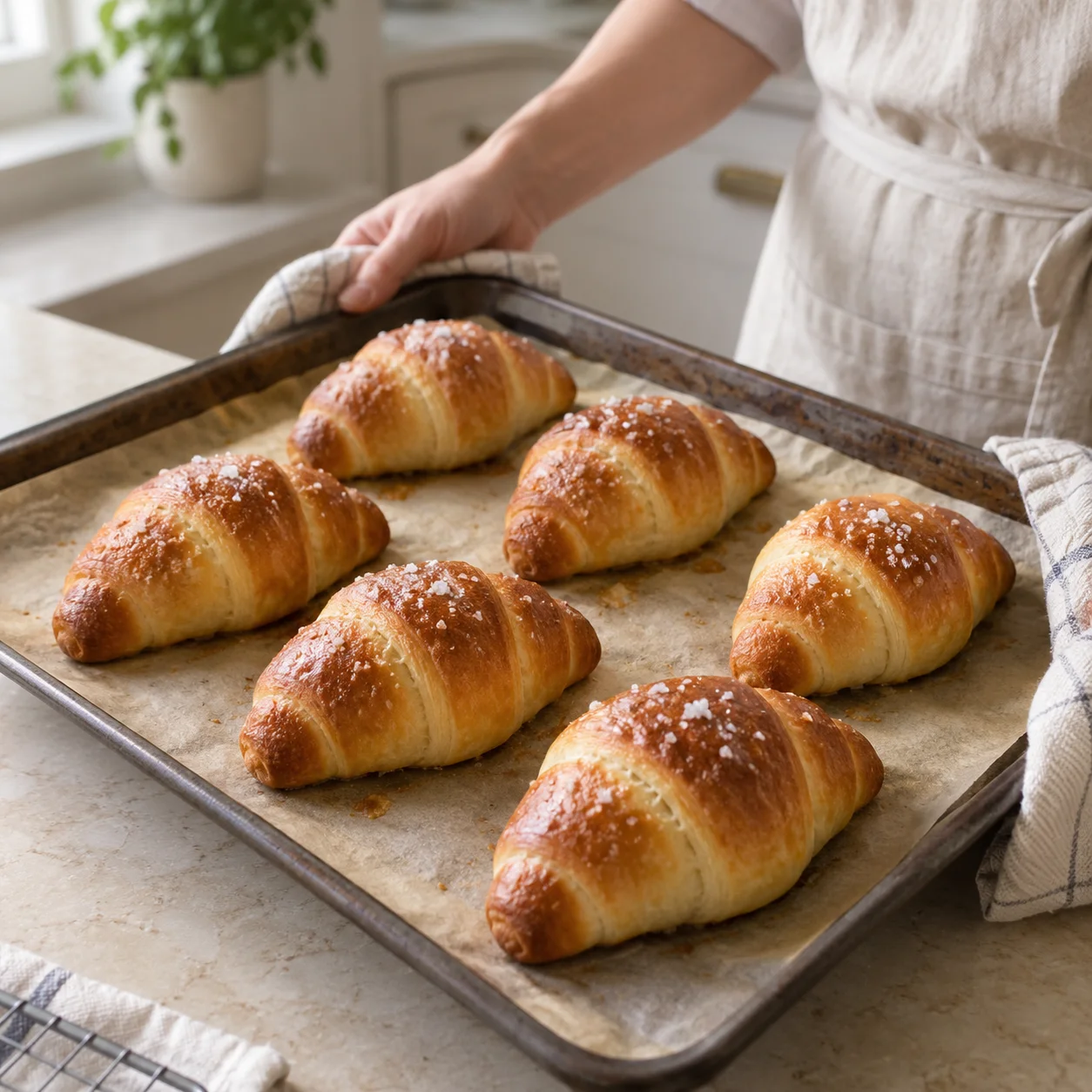
Brush lightly with the remaining about 2 small teaspoons (10 ml) water and distribute about 4 small pinches (2 g) flaky salt over all six rolls. Bake on the middle rack for 18–22 minutes until deeply golden with crisp bottoms. Some butter will melt onto the tray. Move carefully to a rack and cool for 10 minutes before eating.
Finished dish
Makes six rolls; about four hours including two rises, with timing varying by room temperature. The bread has Japanese shio-pan roots and is popular in Korean cafés. Butter is 20 g in the dough plus 60 g inside; water is 90 ml in the dough plus 10 ml to brush. Use an oven, a scale and a rimmed metal tray. Escaping butter during baking helps crisp the base. Contains wheat and milk.
This complete home version was written for this site using the public recipe as a reference. Open the original for another method.
King Arthur Baking · Salt bread; six-roll home adaptationTrending in Korea · 2026
Home adaptation, inspired by a 2026 Korean food trend.
Trend source · Korea Tourism Organization · 2026-03Sources reviewed: 2026-10-14