Soy-braised quail eggs (mechurial jangjorim)
Small hard-boiled quail eggs simmered in a gentle sweet soy sauce. Packaged cooked eggs are an exact shortcut, and the peppers are optional.
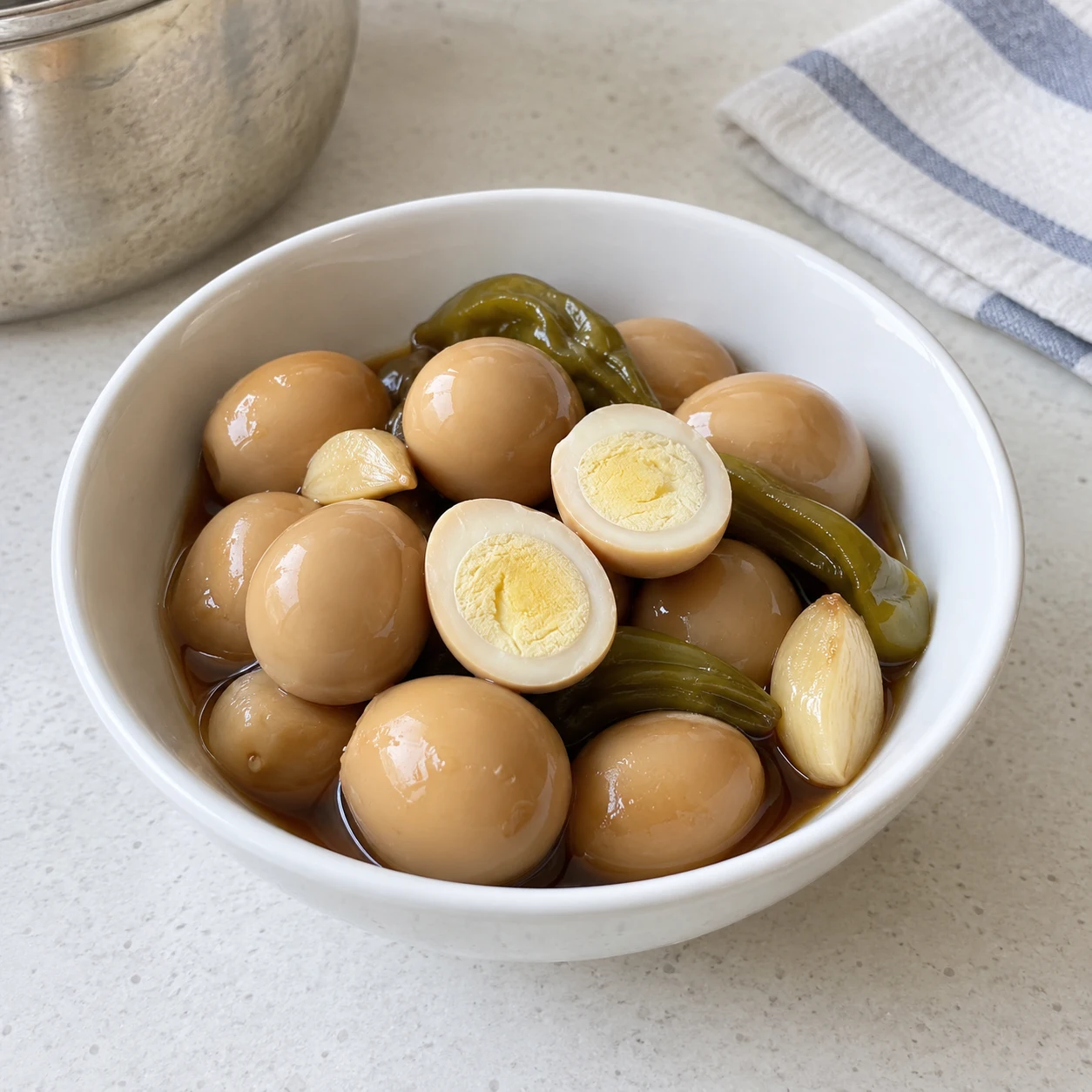
AI-generated cooking illustrations. Follow the written quantities and instructions.
Ingredients
4 servings
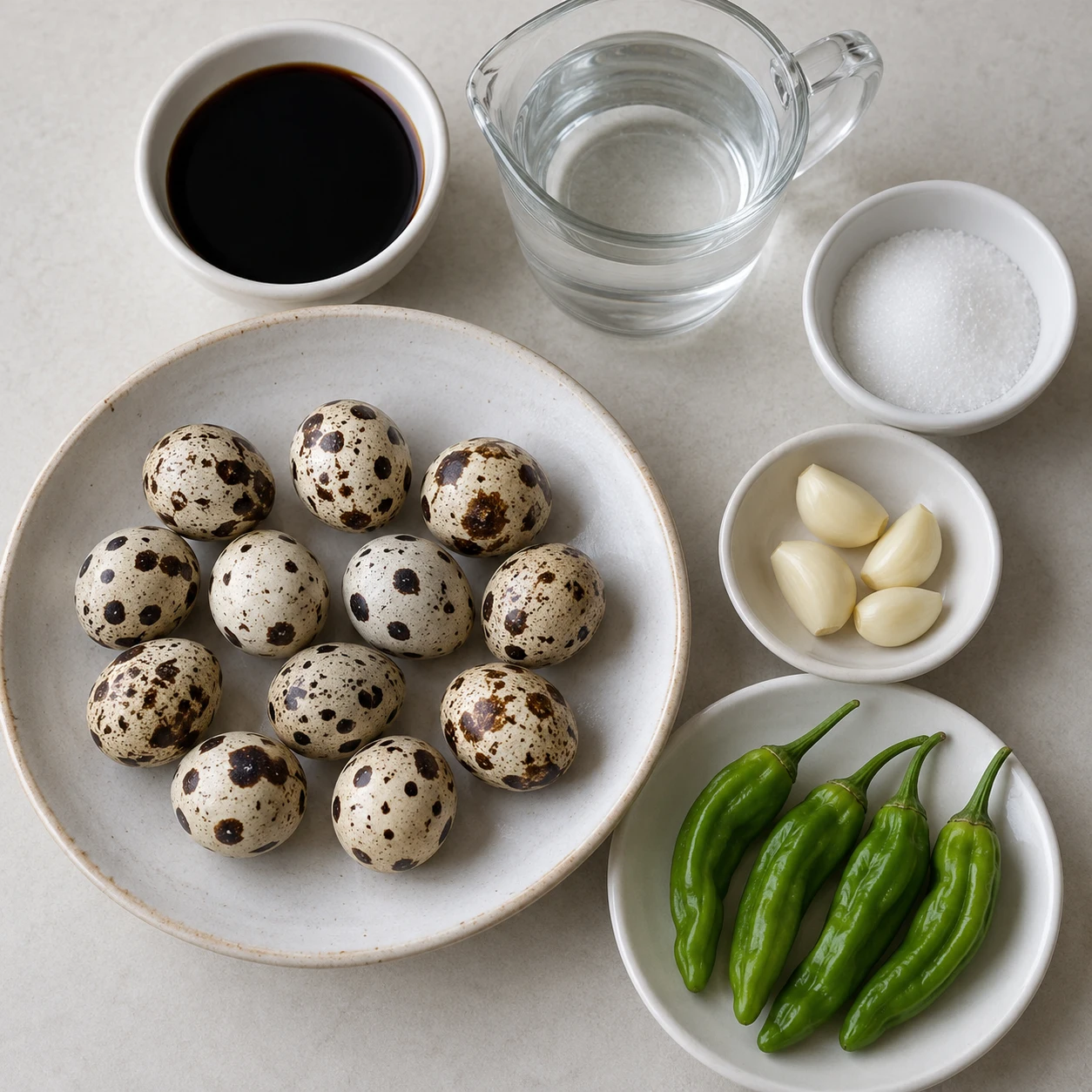
Everyday kitchen measurements
For 4 servings. Use a small 180 ml paper cup, a level eating spoon (about 15 ml) and a small teaspoon (about 5 ml).
How to fill the cup and spoons
Use the same cup and spoons throughout. Their sizes vary, so these amounts are approximate. Spoon flour in loosely and level the top without pressing. Measure vegetables after chopping, without packing them down. The amounts in g/ml are the original reference quantities. For part of a pack, use the specified pack weight and divide the contents evenly.
King Arthur Baking-
Substitute available
If Raw quail eggs is unavailable
- Use instead
- Fully cooked peeled quail eggs
- Substitute quantity
- 12 eggsReference quantity: 120 g
Skip the raw-egg boiling and peeling steps. Drain packaged eggs and start at the braising stage; follow the packet storage directions.
-
Substitute available
If Regular soy sauce is unavailable
- Use instead
- Reduced-sodium soy sauce
- Substitute quantity
- 2 level eating spoonsReference quantity: 30 ml
Use the same cooking method. It will be less salty; taste before deciding whether any extra salt is needed.
-
Essential
This dilutes the soy sauce for gentle braising. Keep some liquid around the eggs rather than boiling the pan dry.
-
Optional
May be reduced or omitted. The eggs will taste less sweet; keep the water and soy sauce unchanged.
-
Optional
May be omitted. Skip its preparation and addition and keep the other amounts unchanged; the aroma will be milder.
-
Optional
May be omitted, especially for children; some shishito peppers are unexpectedly hot. Keep the other amounts unchanged.
Tap each ingredient as you prepare it. Check product labels for egg, soy, sesame, wheat, fish or shellfish where relevant.
Step-by-step cooking
-
Step 1
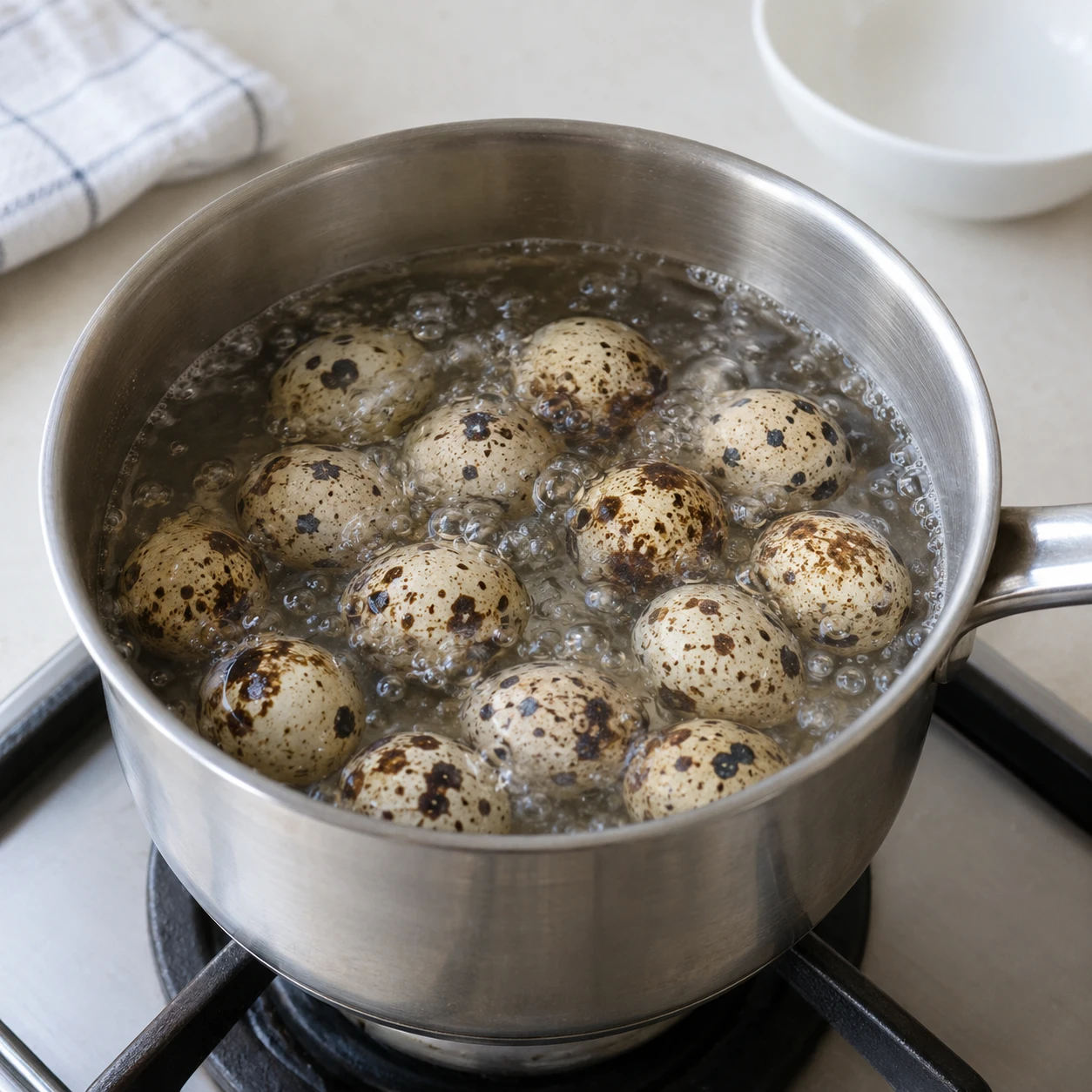
Place the raw quail eggs gently in a small saucepan and cover with cold water. Bring to a gentle boil, then simmer for 5 minutes. Use enough water to keep the eggs covered; this boiling water is not the measured braising water.
-
Step 2
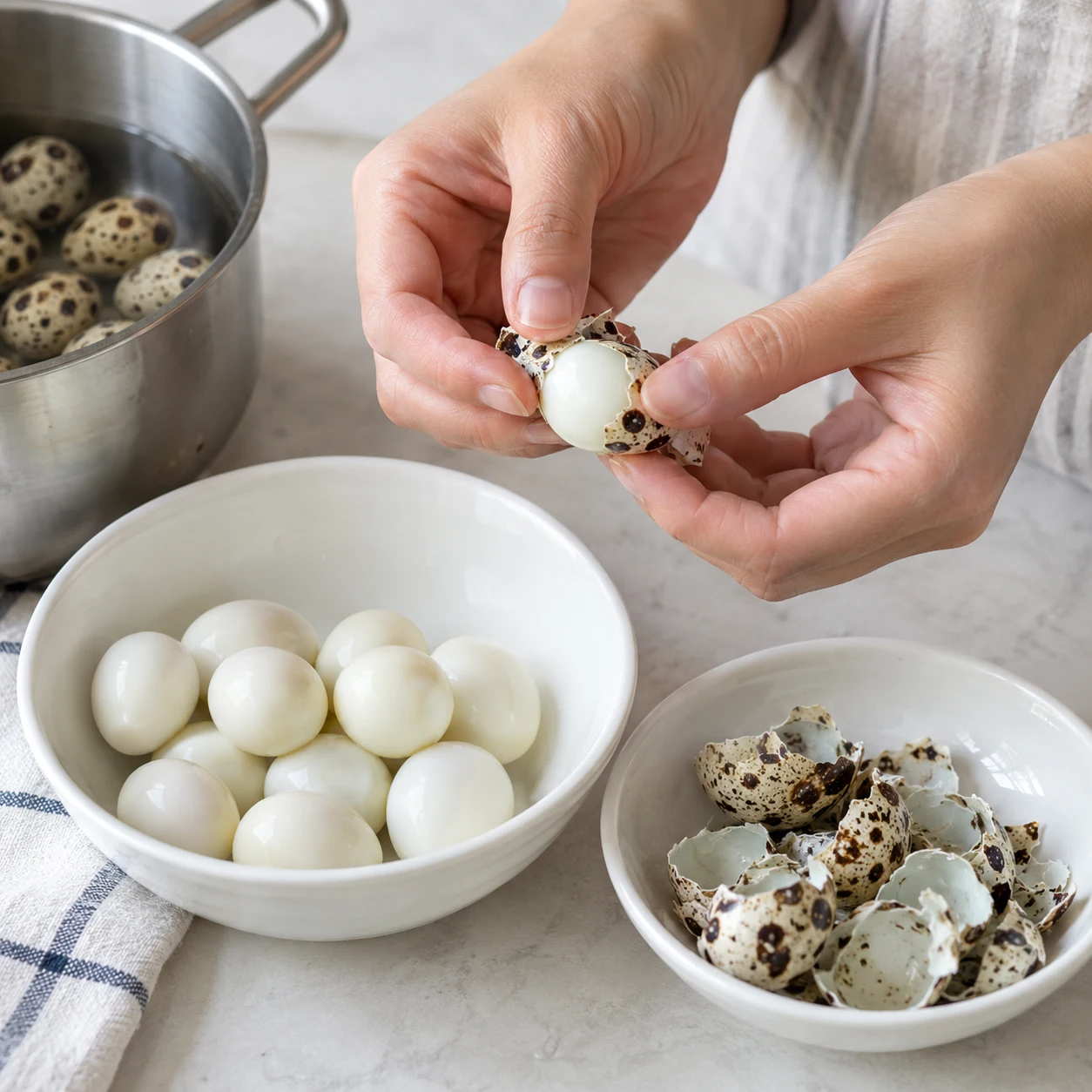
Transfer the eggs to cold water until cool enough to handle. Tap, peel carefully and rinse off shell fragments. Check that any broken egg has a fully set white and yolk; if not, cook the eggs further before using.
-
Step 3
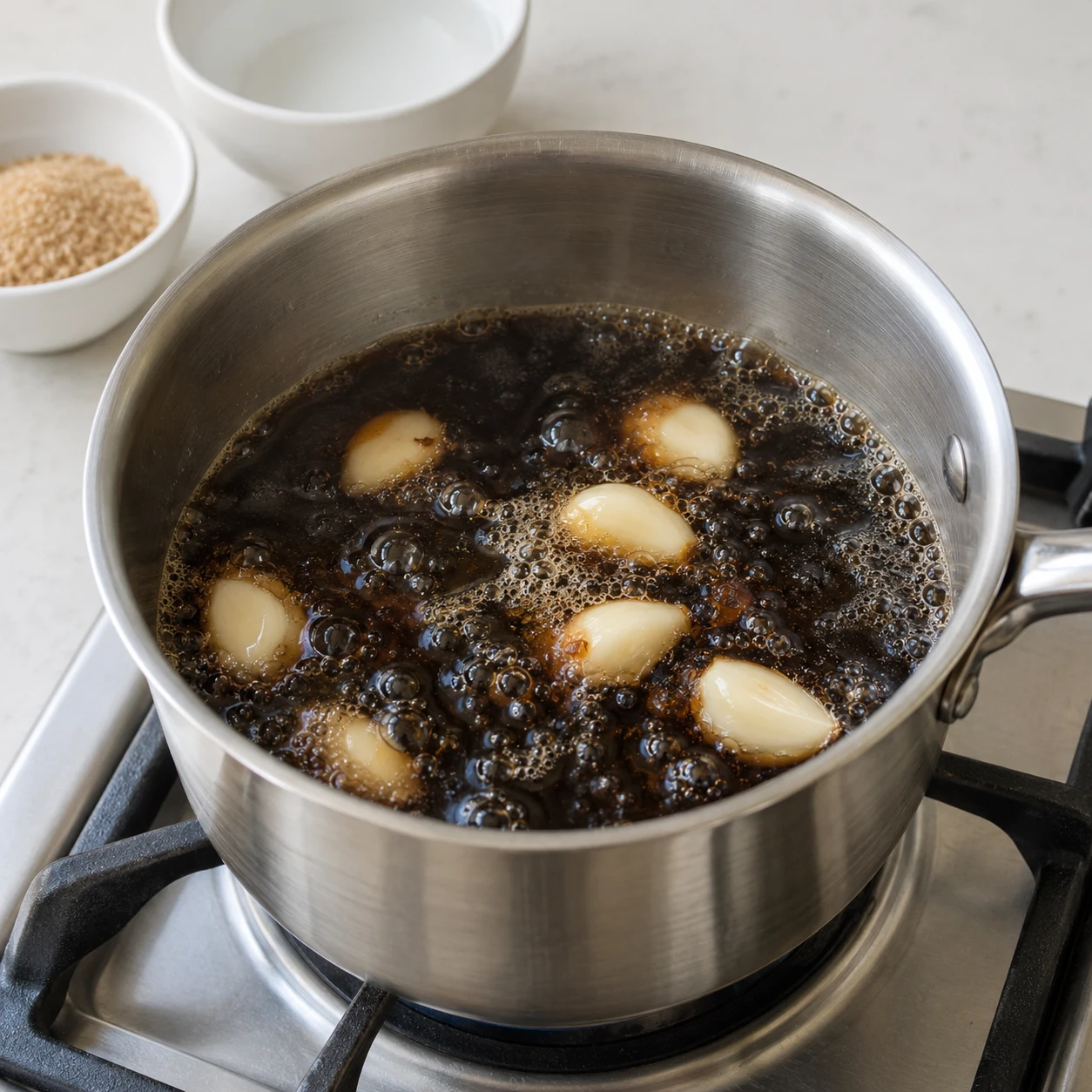
In a clean small saucepan, combine 1 paper cup of fresh water, the soy sauce, sugar if using and whole peeled garlic. Bring to a boil and stir until the sugar dissolves.
-
Step 4
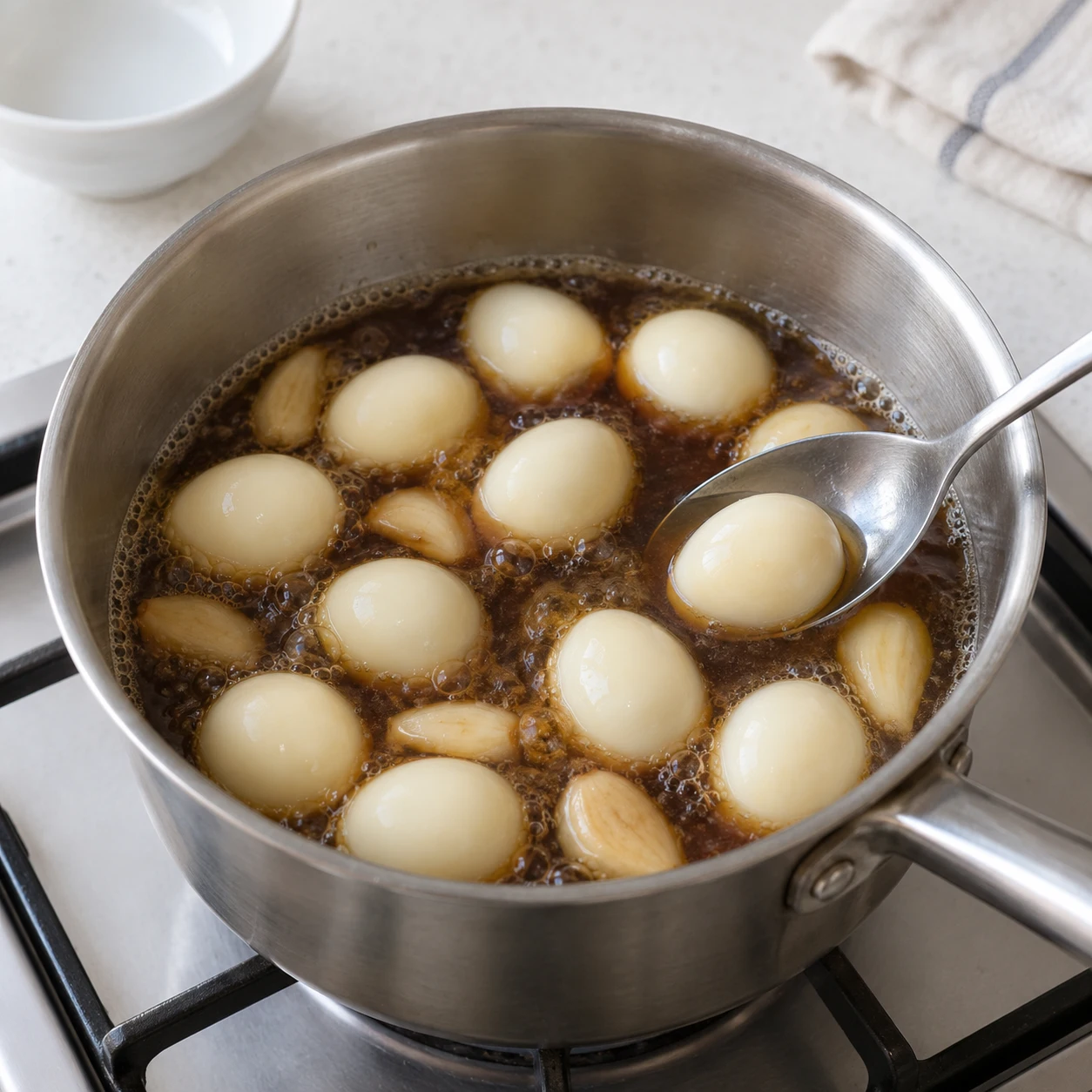
Add the peeled cooked quail eggs. Lower the heat and simmer uncovered for 8–10 minutes, rolling the eggs gently with a spoon so they colour evenly. Do not cook the liquid away completely.
-
Step 5
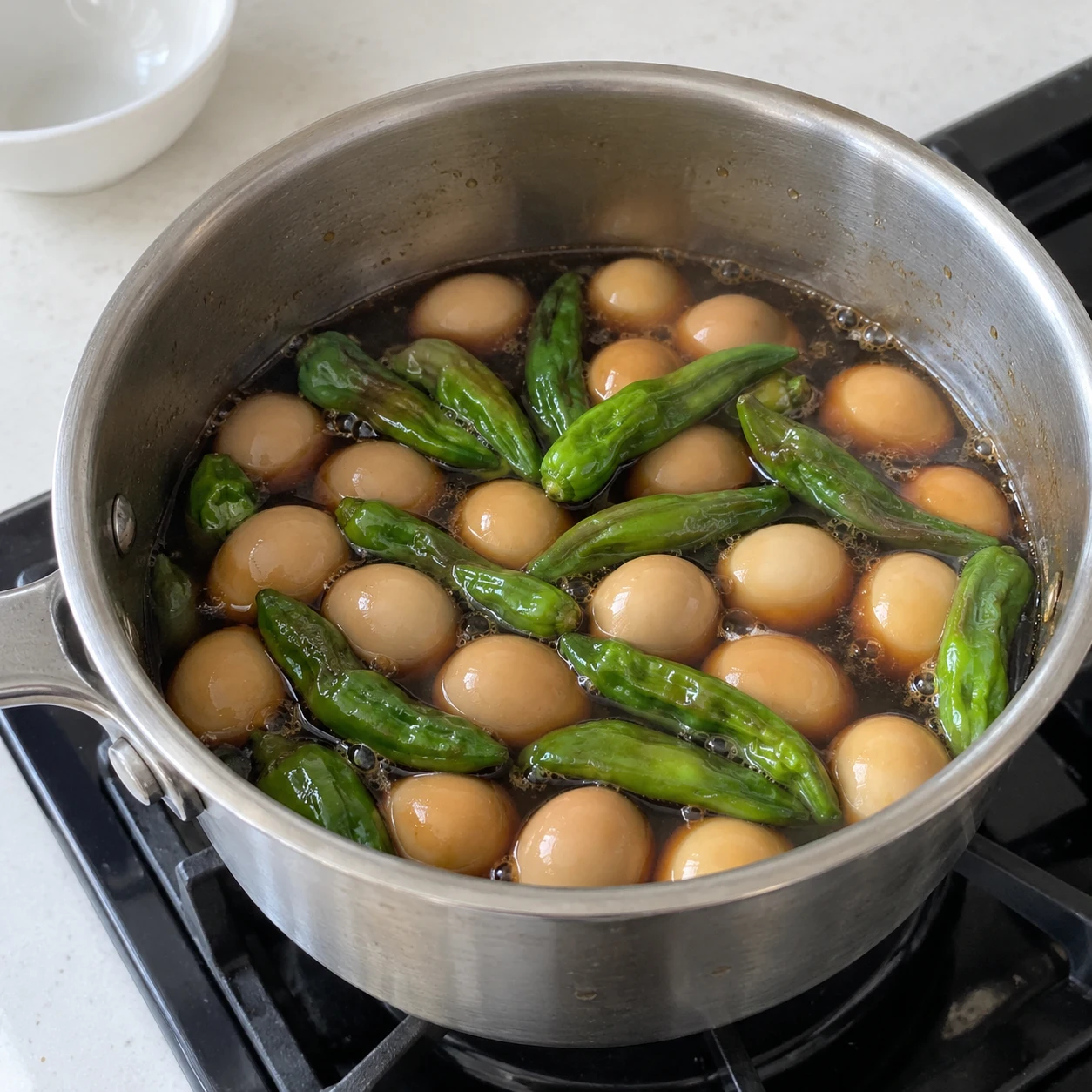
If using shishito peppers, pierce each once with a fork and add for the final 2–3 minutes. Remove from the heat when the eggs are light brown and the peppers soften; leave a little braising liquid.
-
Step 6
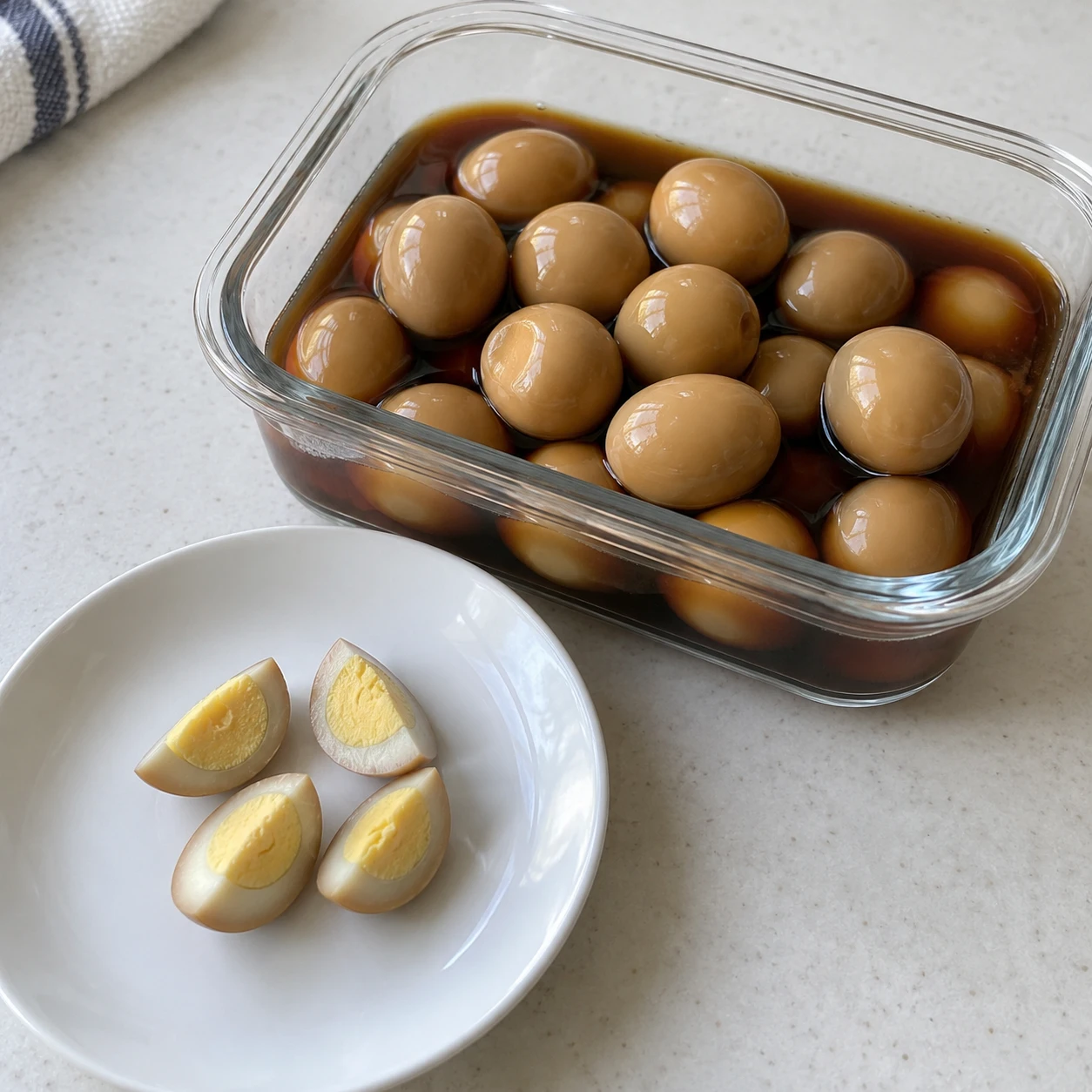
Serve a few eggs with a little sauce as a side dish. For young children, cut eggs lengthwise into quarters instead of serving them whole. Cool the remainder promptly in a shallow container and refrigerate with the braising liquid.
Finished dish
Makes about four side portions of three eggs. Whole quail eggs can be a choking risk for young children; quarter them lengthwise and adapt to the child’s needs. Keep at 4°C or below and use within 3–4 days. The soy liquid is not a room-temperature preservative. Reheat cooked leftovers to 74°C.
Enjoy every bite
How to enjoy it
Serve a small portion beside warm rice. Use a clean utensil for each dish and refrigerate the rest promptly.
Serve it with
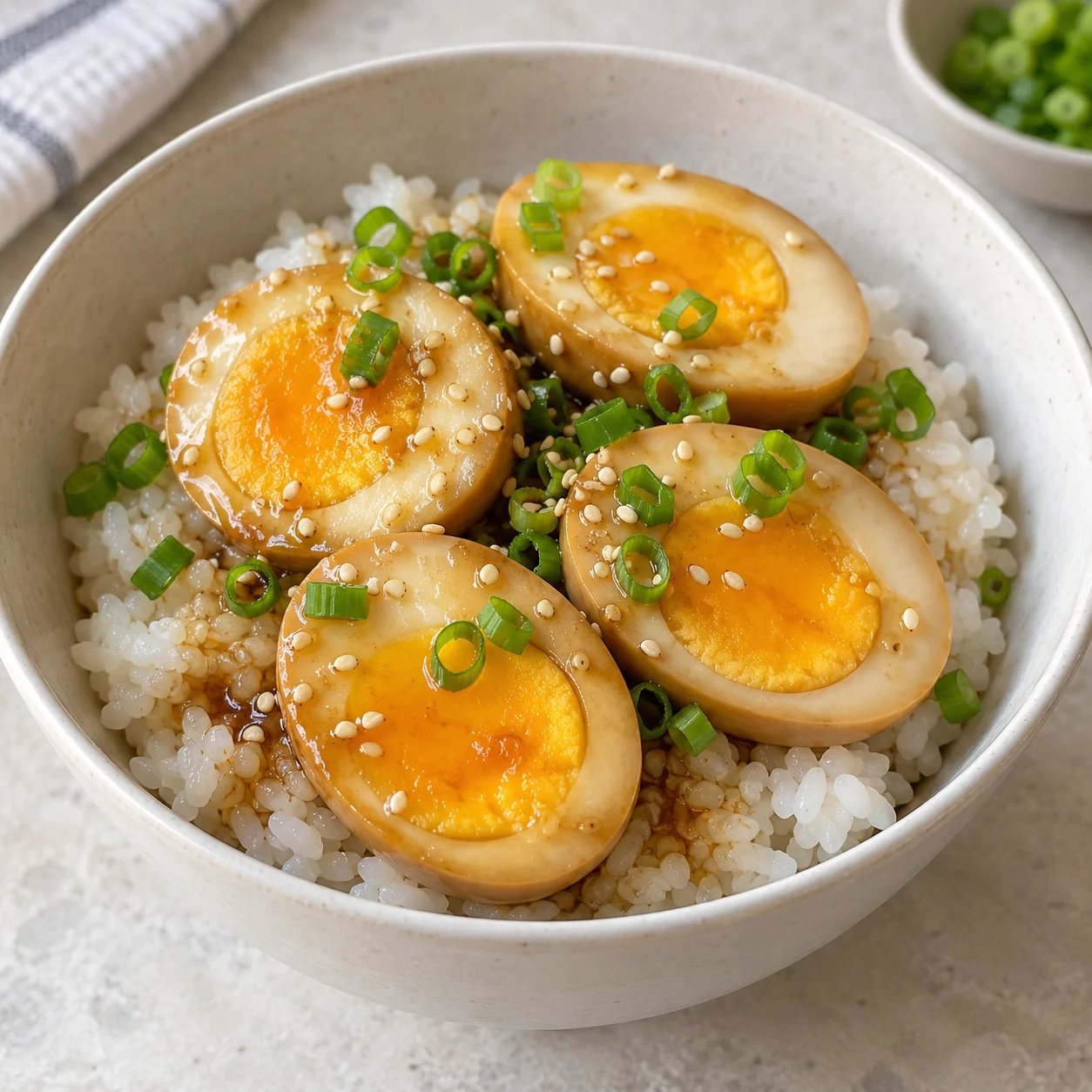
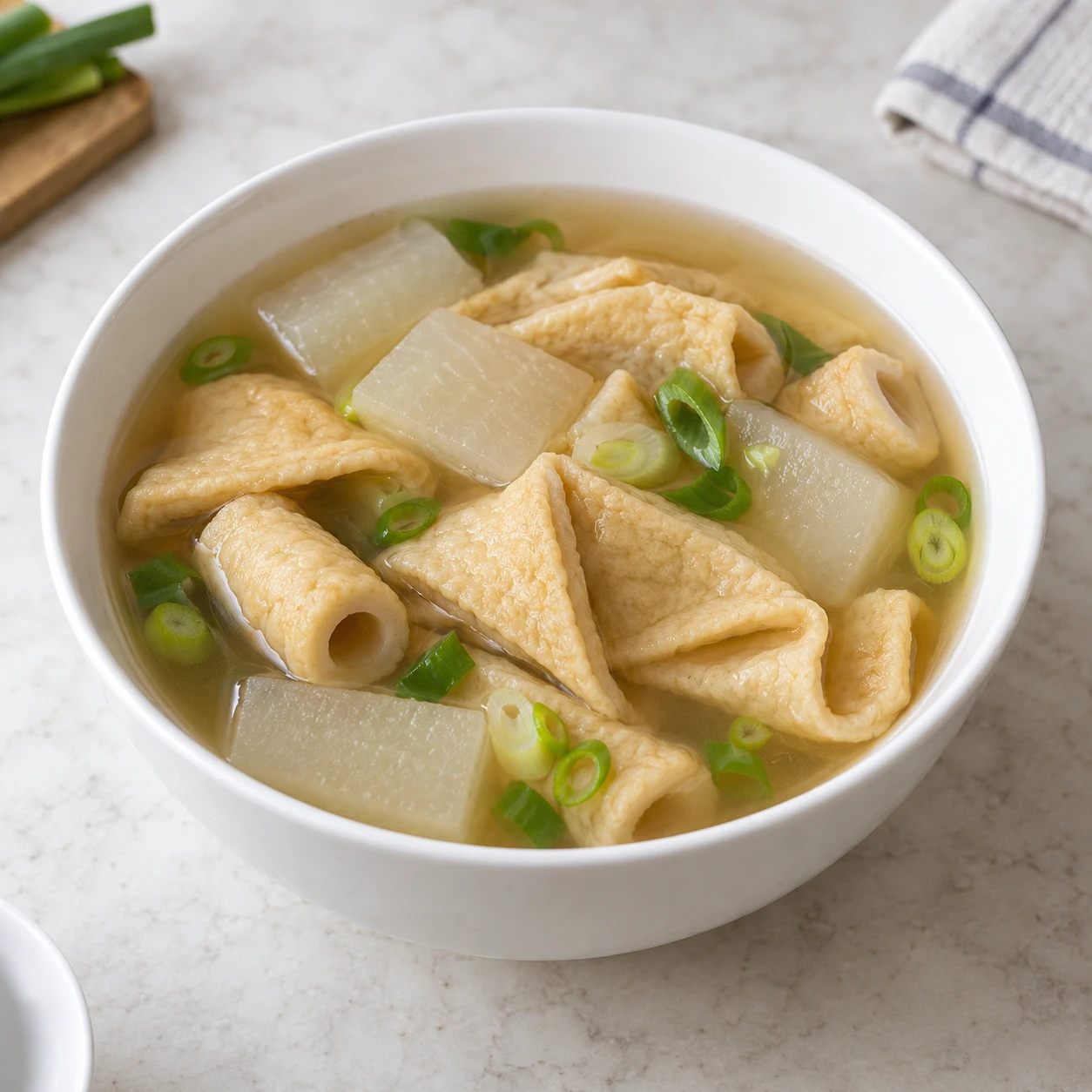
Eomuk tang — comforting Korean fish cake soup
A sip of warm broth makes a pleasant change between bites.
View recipe