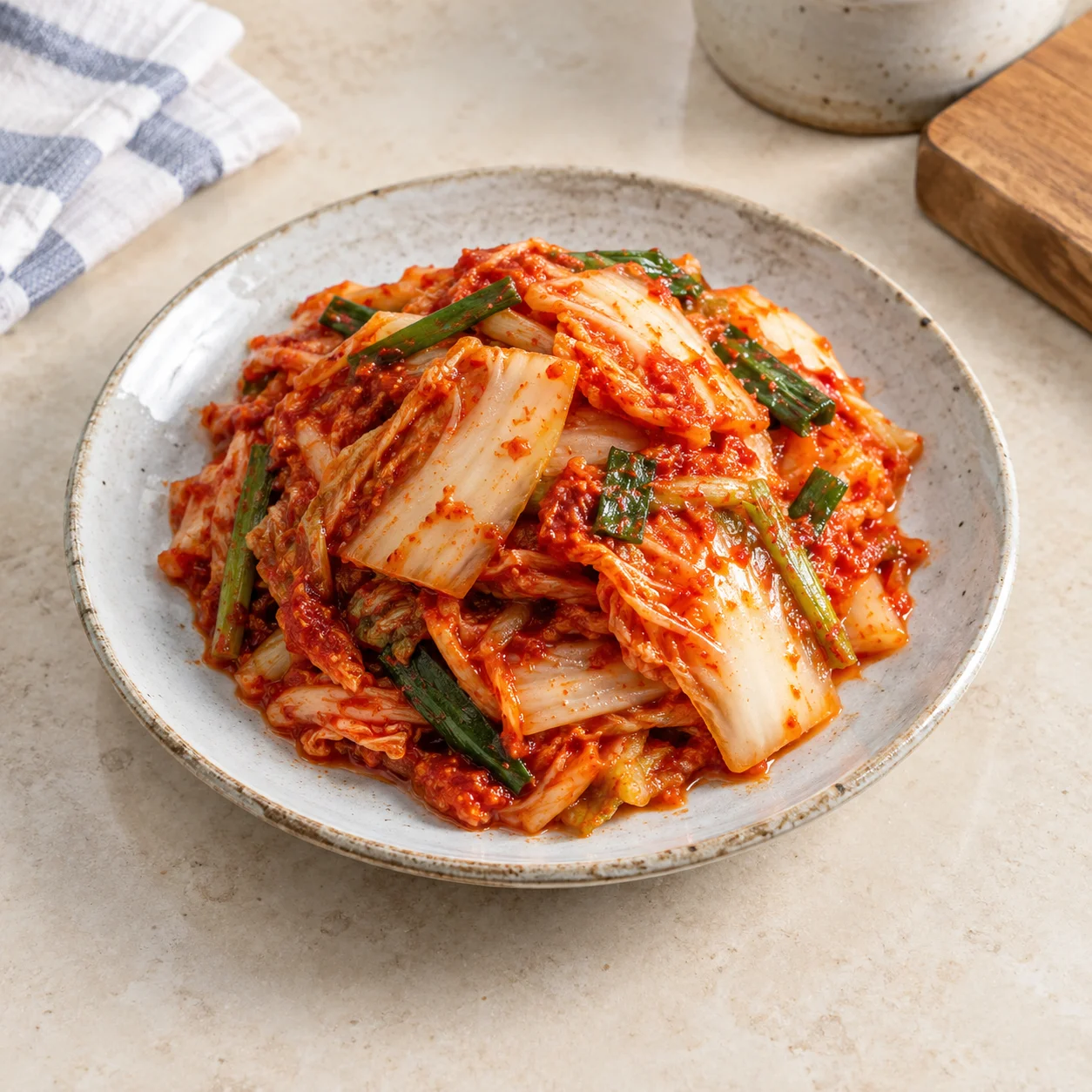
Pork belly and spring onion fried rice
Paper-thin pork belly turns crisp at the edges and flavours the rice with spring onion. A small amount of gochujang gives an optional warm red tint.

AI-generated cooking illustrations. Follow the written quantities and instructions.
Ingredients
2 servings
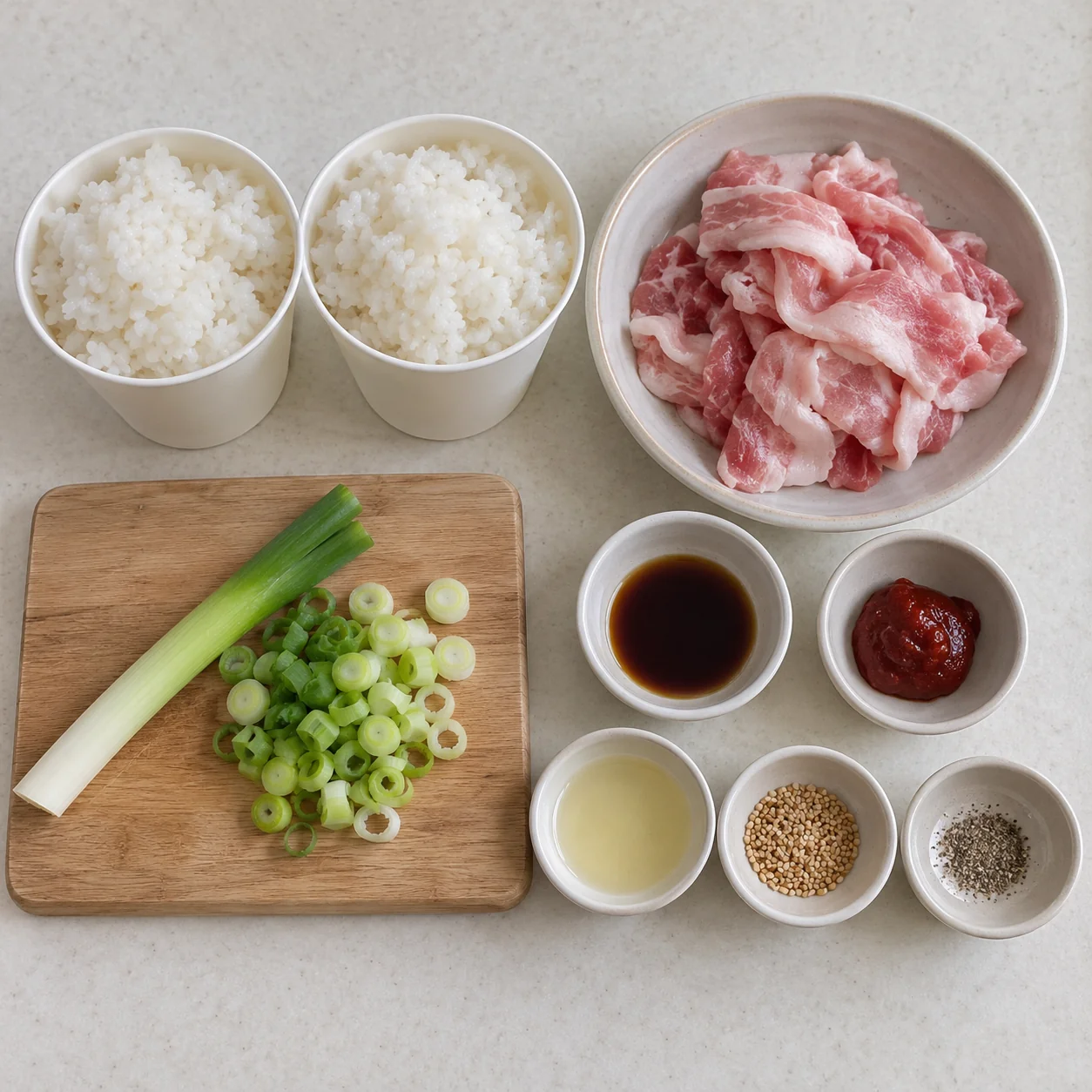
Everyday kitchen measurements
For 2 servings. Use a small 180 ml paper cup, a level eating spoon (about 15 ml) and a small teaspoon (about 5 ml).
How to fill the cup and spoons
Use the same cup and spoons throughout. Their sizes vary, so these amounts are approximate. Spoon flour in loosely and level the top without pressing. Measure vegetables after chopping, without packing them down. The amounts in g/ml are the original reference quantities. For part of a pack, use the specified pack weight and divide the contents evenly.
King Arthur Baking-
Substitute available
If Cooked white rice is unavailable
- Use instead
- Cooked brown rice
- Substitute quantity
- 2 loosely filled paper cupsReference quantity: 300 g
Use already cooked rice. The grains will be firmer; do not start with uncooked rice.
-
Substitute available
If Paper-thin raw pork belly, thawed is unavailable
- Use instead
- Fully cooked bacon
- Substitute quantity
- about 1 loosely filled paper cup, choppedReference quantity: 120 g
Brown briefly and omit soy sauce at first because bacon is salty. This changes the flavour to smoky bacon fried rice.
-
Optional
May be omitted. Skip the spring-onion frying time; the dish will have a milder aroma.
-
Optional
May be omitted; taste the cooked pork and rice first, especially if using bacon.
-
Optional
May be omitted for mild pale fried rice. Do not replace it with extra soy sauce.
-
Optional
Use only if the pork releases too little fat. Do not add it when the pan already has enough pork fat.
-
Optional
May be omitted. Leave all other quantities unchanged.
-
Optional
May be omitted for a milder bowl.
Tap each ingredient as you prepare it. Check product labels for egg, soy, sesame, wheat, fish or shellfish where relevant.
Step-by-step cooking
-
Step 1
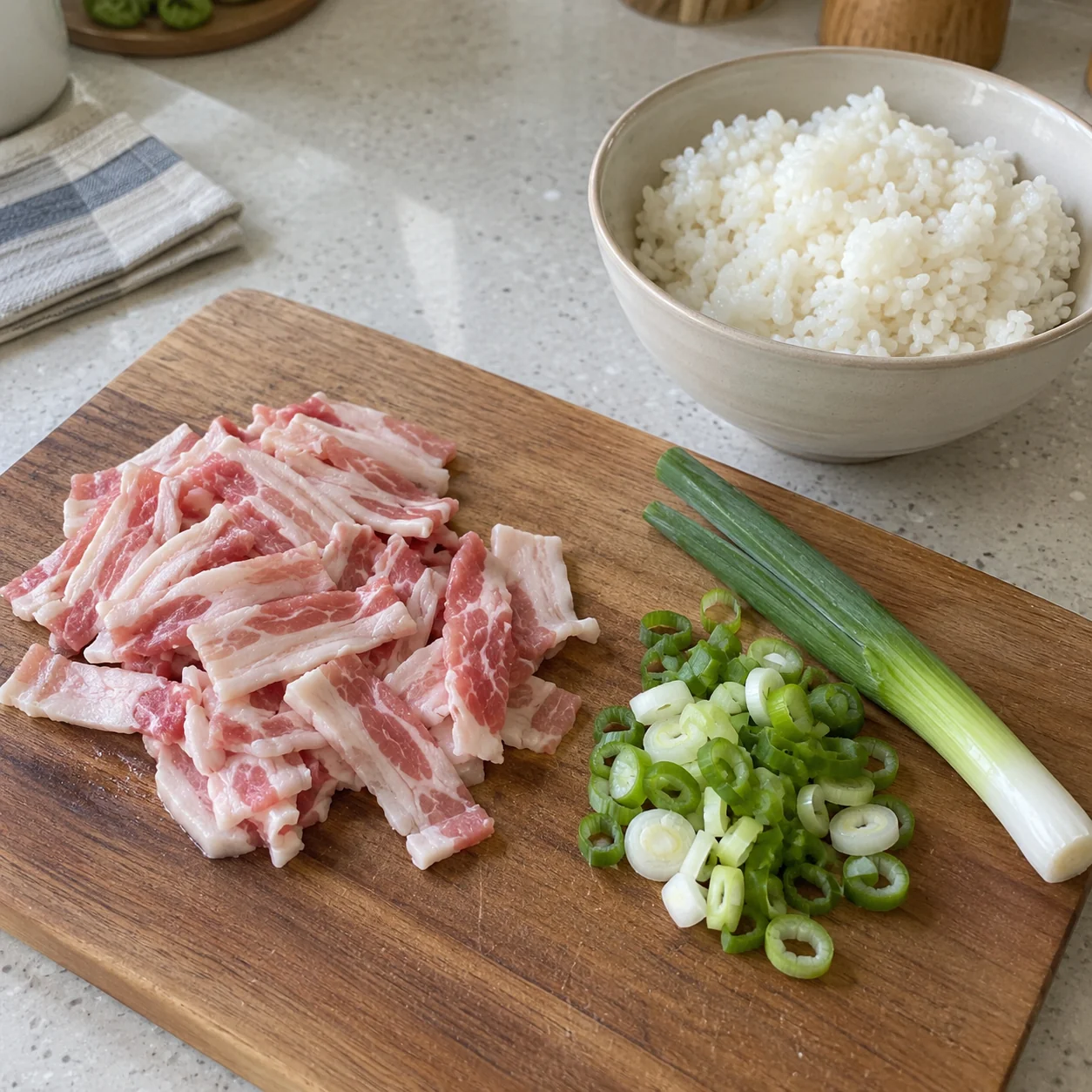
Loosen 2 loosely filled paper cups of cooked rice, about 300 g. Cut fully thawed paper-thin pork belly into short bite-sized strips with clean kitchen scissors. Slice the spring onion, keeping white and green parts separate. Use separate utensils for raw pork.
-
Step 2
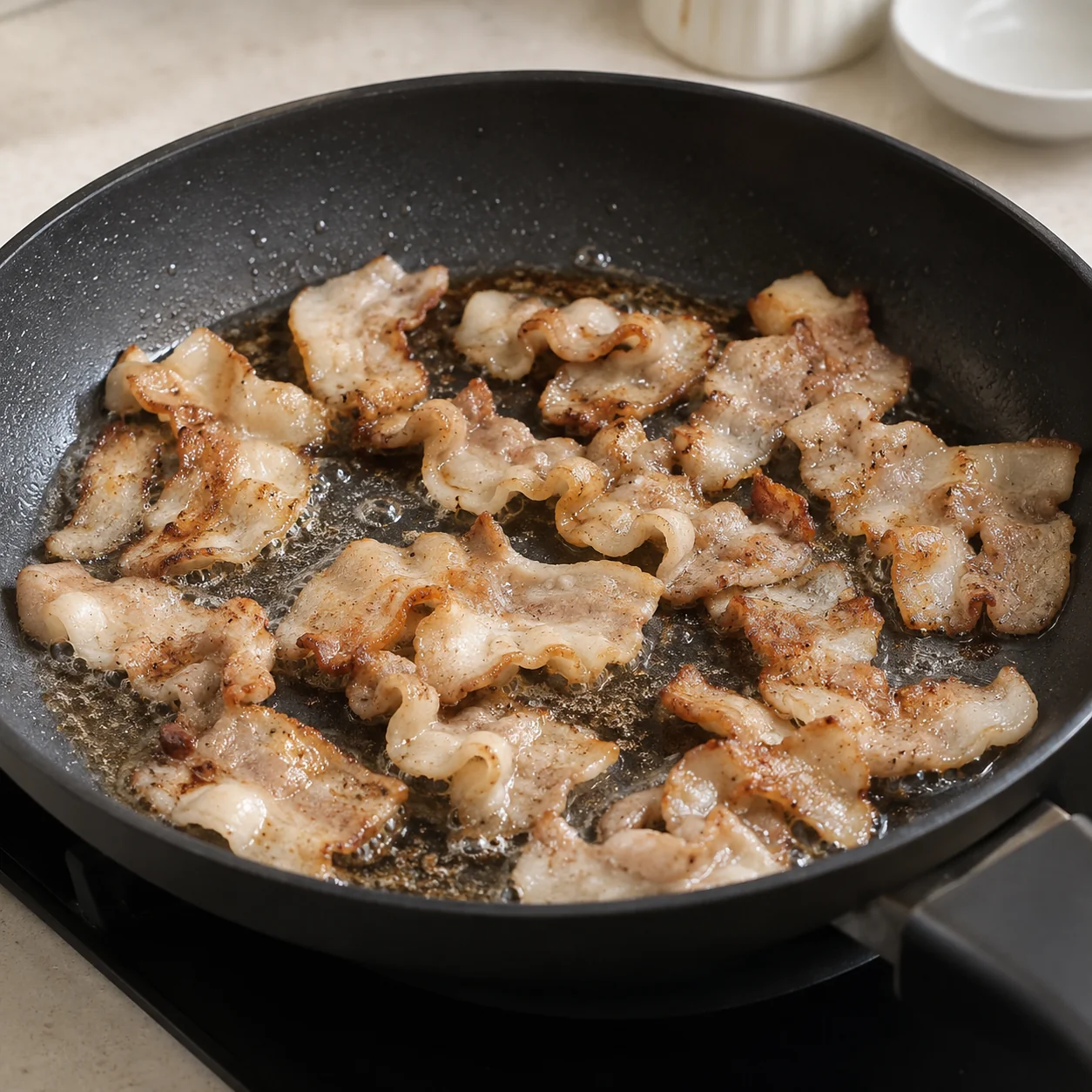
Place the pork in a dry nonstick pan in a single layer over medium-high heat. Cook for 3–4 minutes, turning and separating the thin slices until fully cooked, with no raw portions and browned edges. Work in a wide pan rather than piling the pork in a mound.
-
Step 3
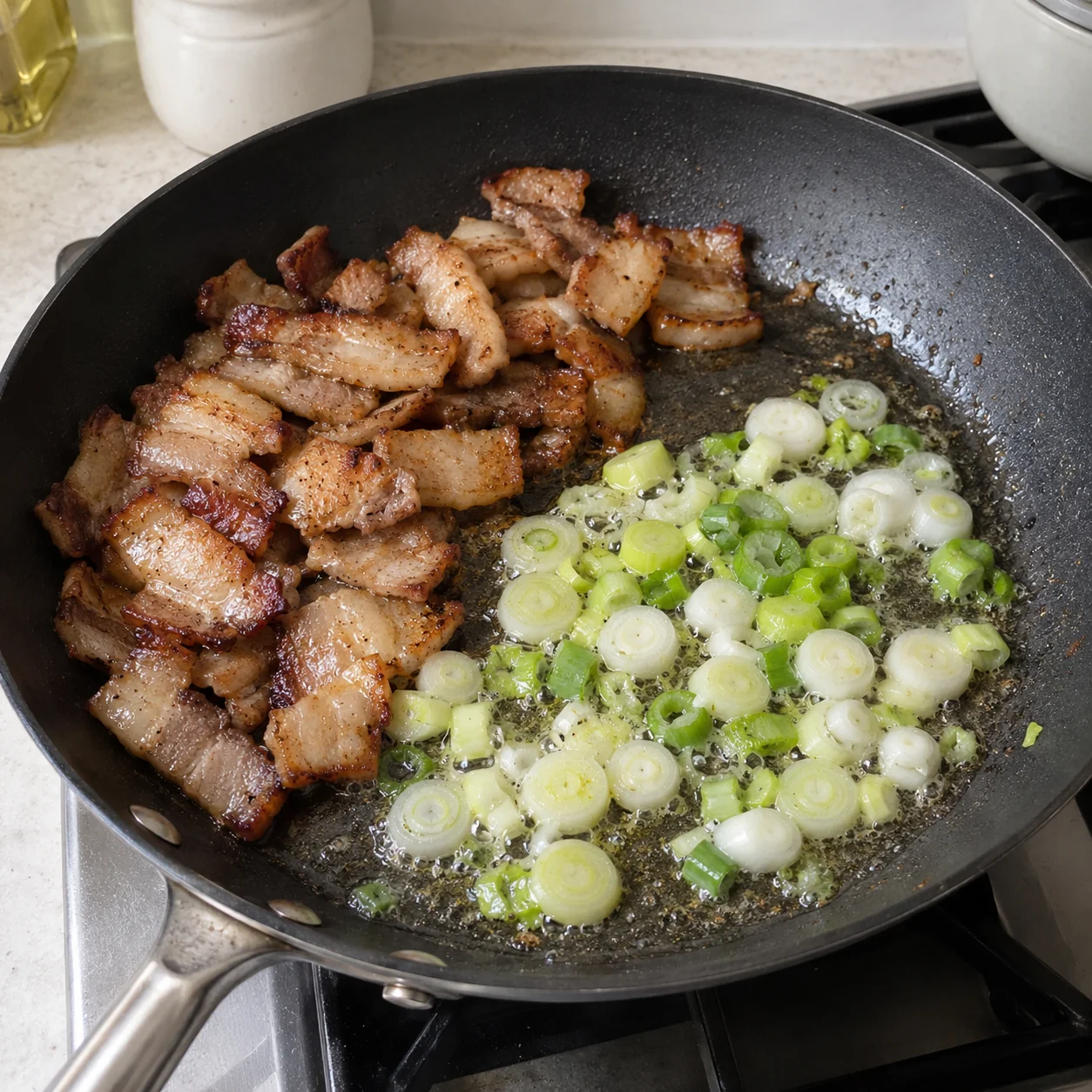
Move the cooked pork to one side. Carefully spoon away excess fat, leaving about 1 level tablespoon in the pan. Add the optional 1 level teaspoon oil only if the pan is dry. Add the white spring onion to the fat and stir for 20–30 seconds.
-
Step 4
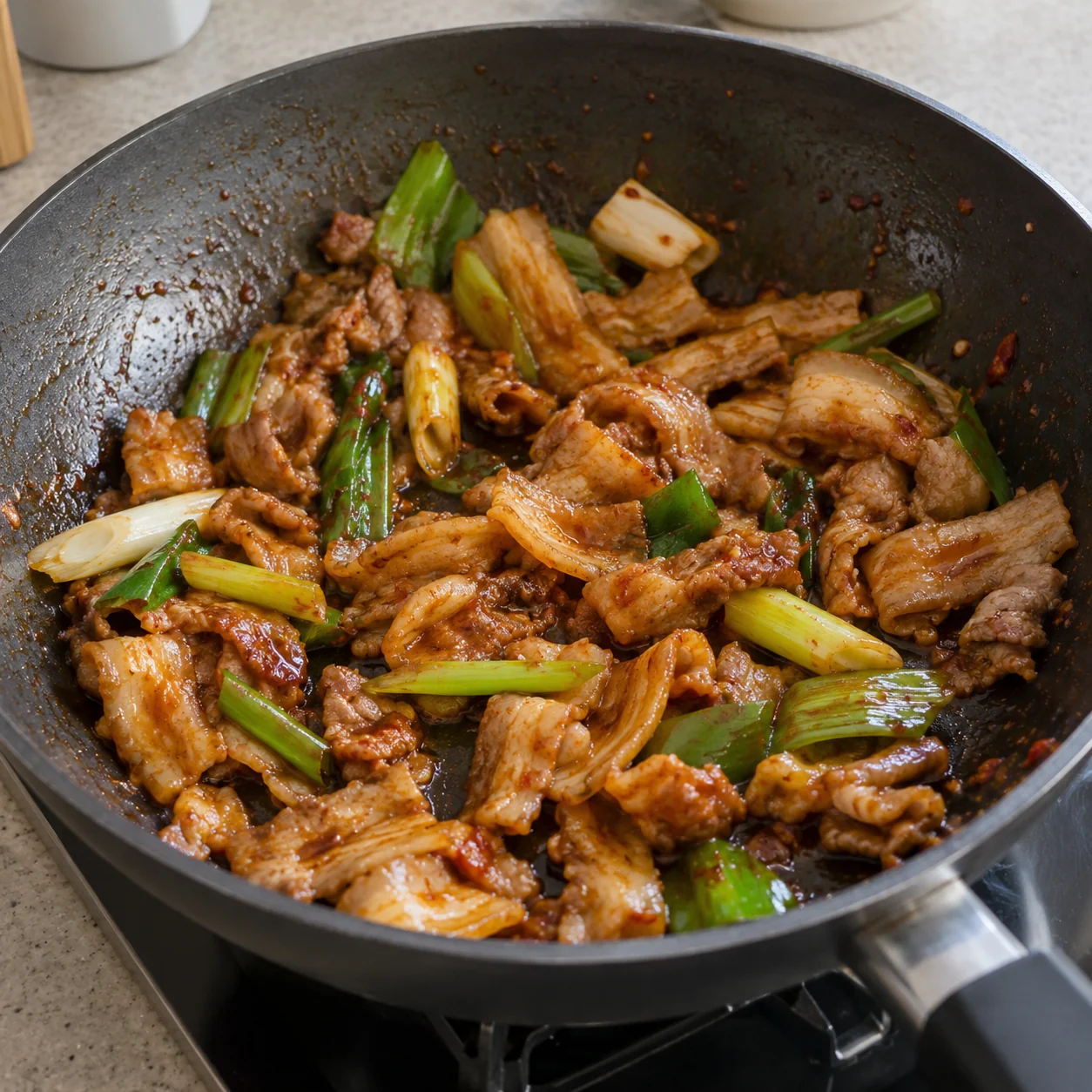
Lower to medium heat. If using gochujang, mix 1 level teaspoon paste with 1 level teaspoon water in a small cup, then stir it into the cooked pork for 15–20 seconds. Do not let the thick paste sit and burn on an empty pan.
-
Step 5
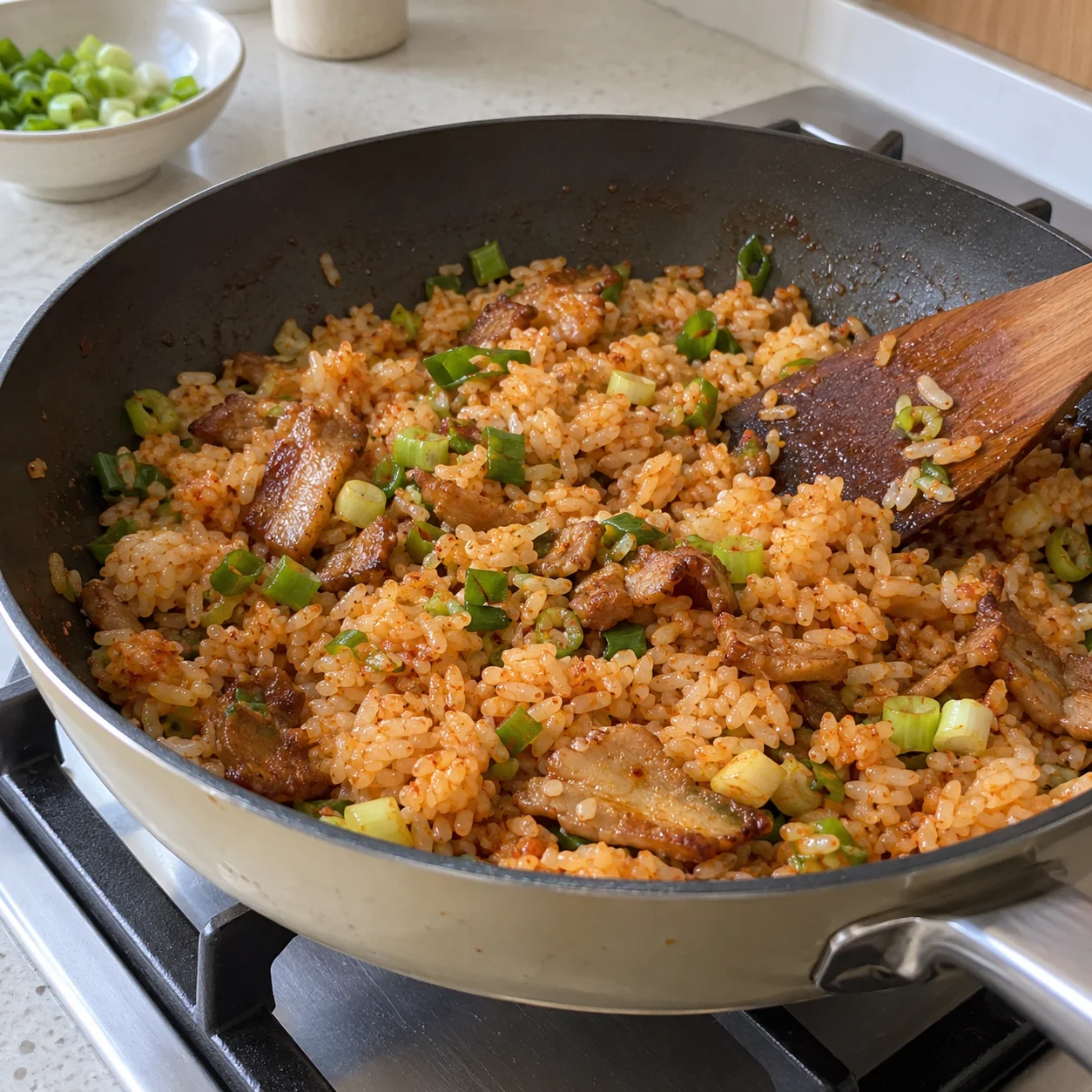
Add the cooked rice and stir-fry for 2–3 minutes, folding it through the pork and spring onion until piping hot. If checking reheated rice, aim for 74°C. Taste a cooked spoonful before adding up to 1 level teaspoon soy sauce; the paste may already provide enough salt.
-
Step 6
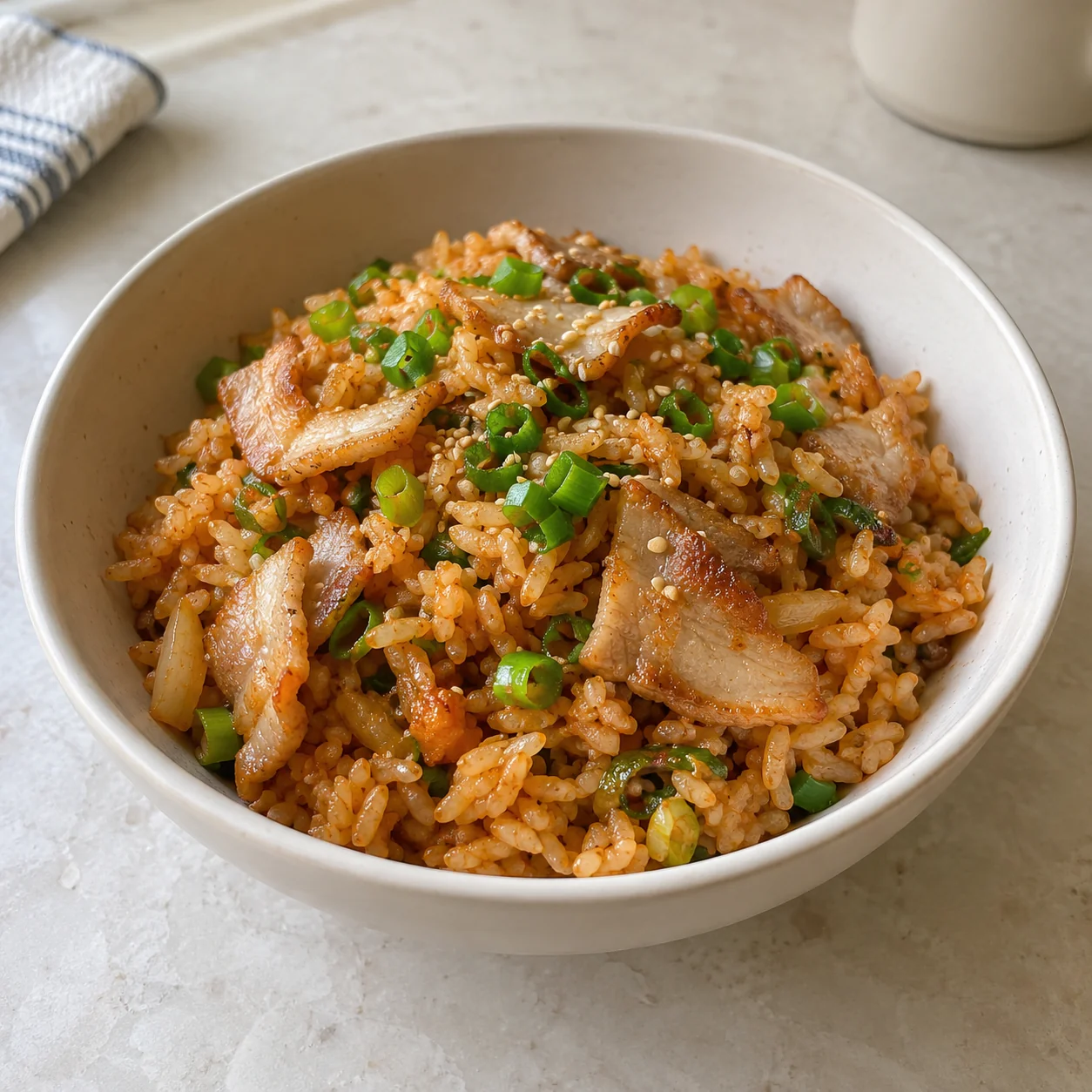
Turn off the heat, fold in the green spring onion and optional sesame seeds and pepper. Divide into two bowls and serve immediately. The mild version will be pale tan; the version with gochujang will be softly reddish.
Finished dish
Makes 2 modest bowls. The 15-minute time starts with cooked rice and prepared ingredients; cooking rice, thawing frozen ingredients and cooling fresh rice take extra time. A paper cup means 180 ml and is filled loosely. Use a level 15 ml tablespoon and a level 5 ml teaspoon. Never leave cooked rice at room temperature for hours. Cool leftovers promptly, refrigerate and reheat only once until piping hot throughout; use refrigerated rice within 24 hours. For reheated rice, check for 74°C if using a thermometer. Contains pork. Gochujang and soy sauce may contain soy and wheat; optional sesame seeds contain sesame. Thin pork cooks quickly, but it must be fully cooked before the rice is added. The 15-minute time excludes thawing; do not use a frozen block of meat.
Enjoy every bite
How to enjoy it
Try a spoonful with both browned pork and scallion. A small tangy vegetable bite gives contrast to the rich rice.
Serve it with
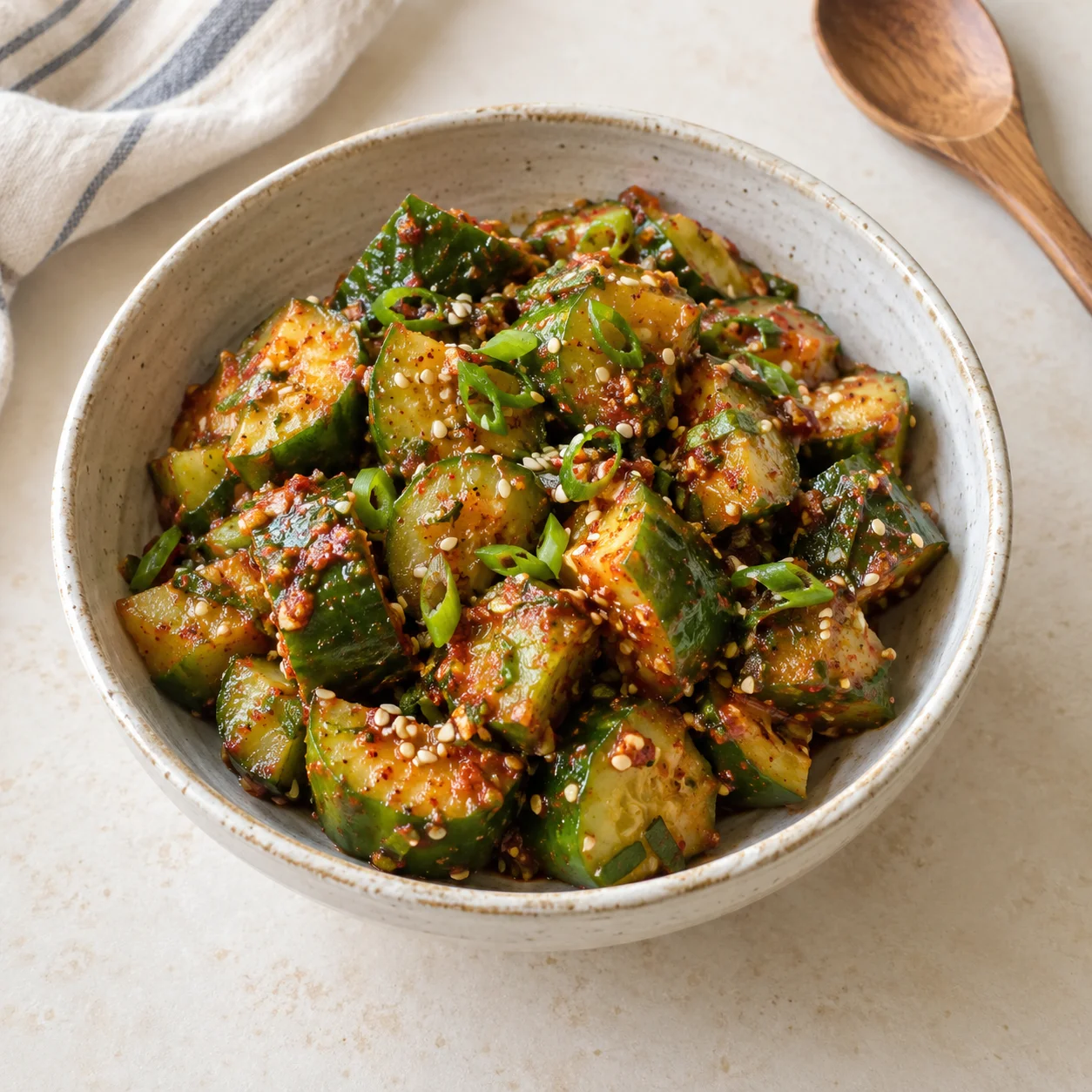
Korean spicy cucumber salad (oi-muchim)
A crisp vegetable bite contrasts with a richer or spicier dish.
View recipe