Ori jumulleok — spicy Korean duck stir-fry
Thin raw duck slices massaged with a sweet-spicy gochujang sauce and cooked with onion and garlic chives. This uses fresh duck, not ready-smoked duck, and needs no added cooking oil.
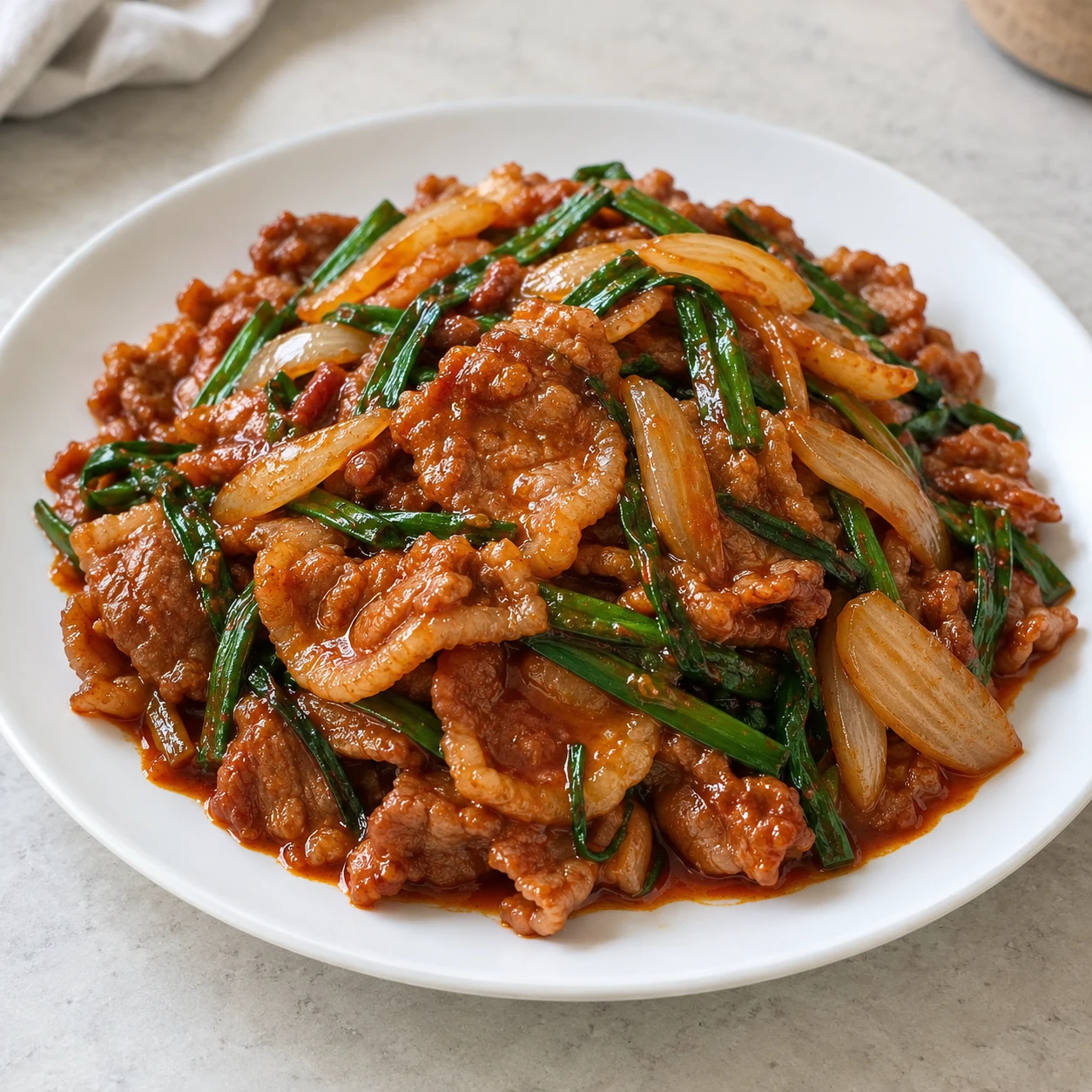
AI-generated cooking illustrations. Follow the written quantities and instructions.
Ingredients
2 servings
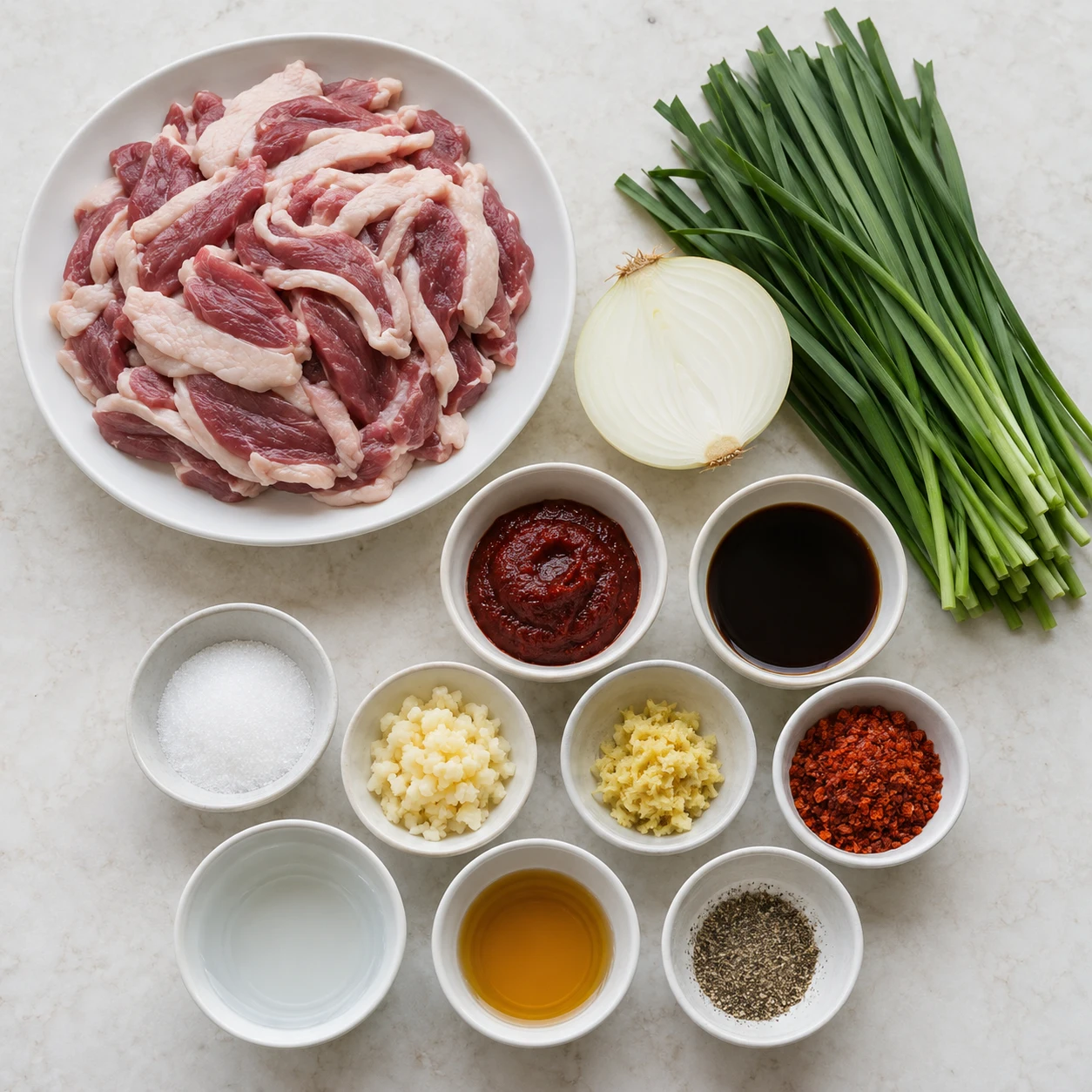
Everyday kitchen measurements
For 2 servings. Use a small 180 ml paper cup, a level eating spoon (about 15 ml) and a small teaspoon (about 5 ml).
How to fill the cup and spoons
Use the same cup and spoons throughout. Their sizes vary, so these amounts are approximate. Spoon flour in loosely and level the top without pressing. Measure vegetables after chopping, without packing them down. The amounts in g/ml are the original reference quantities. For part of a pack, use the specified pack weight and divide the contents evenly.
King Arthur Baking-
Substitute available
If Raw boneless duck, thinly sliced is unavailable
- Use instead
- Boneless skinless chicken thigh
- Substitute quantity
- 1 of a 400 g packReference quantity: 400 g
Use 1 small 400 g pack cut into thin 3 mm strips. Add 1 small teaspoon neutral cooking oil to the pan because skinless chicken has less fat. Cook to 74°C as for the duck. This makes a chicken version with a different flavor.
-
Optional
Omit the onion from the preparation and cooking steps. The dish will have less sweetness and fewer vegetables; keep the remaining quantities unchanged.
-
Substitute available
If Garlic chives is unavailable
- Use instead
- Spring onion
- Substitute quantity
- 2 thin stalksReference quantity: about 40 g
Slice thinly across the stalks and add during the last 1 minute in place of the garlic chives. The onion flavor will be stronger and the texture less leafy.
-
Essential
This fermented chili paste gives the dish its characteristic sweet-spicy flavor. Choose mild gochujang for less heat; ordinary hot sauce is not an equivalent replacement.
-
Substitute available
If Soy sauce is unavailable
- Use instead
- Tamari
- Substitute quantity
- 1 level eating spoonReference quantity: 15 ml
Use the same spoon amount at the same step. Choose a similar salt level and check the label if avoiding wheat.
-
Substitute available
If Sugar is unavailable
- Use instead
- Honey
- Substitute quantity
- 1 level eating spoonReference quantity: 15 ml
Use the same spoon amount in the sauce. The sauce will be a little wetter, so reduce it gently rather than using high heat. Do not serve honey to infants under 12 months.
-
Substitute available
If Minced garlic is unavailable
- Use instead
- Garlic powder
- Substitute quantity
- ½ small teaspoonReference quantity: about 1 g
Mix this small amount of powder into the sauce in place of fresh garlic. Use plain garlic powder, not garlic salt.
-
Optional
Omit the ginger from the sauce if unavailable. The aroma will be milder; keep the garlic and all other quantities unchanged.
-
Optional
Omit the extra chili flakes from the sauce for less heat. Keep the gochujang and the other sauce ingredients unchanged.
-
Essential
This small amount loosens the sauce and helps prevent it burning before the duck releases fat.
-
Optional
Omit the sesame oil at the finishing step if unavailable. The dish will have less nutty aroma; no other quantity or cooking-time change is needed.
-
Optional
Omit this pinch from the sauce if unavailable. The dish will be less peppery; no other change is needed.
Tap each ingredient as you prepare it. Check product labels for egg, soy, sesame, wheat, fish or shellfish where relevant.
Step-by-step cooking
-
Step 1
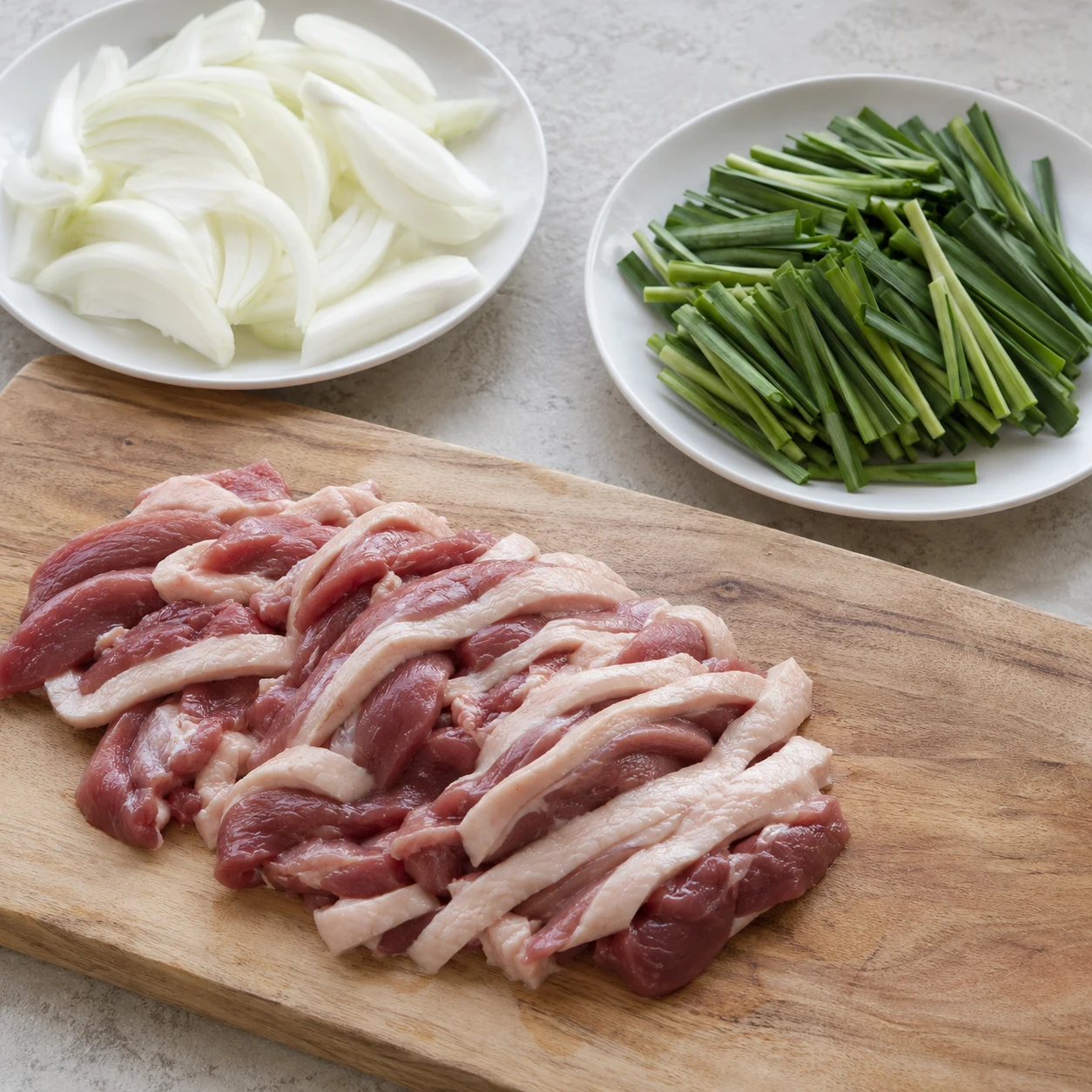
Prepare the duck and vegetables. Use 1 small 400 g pack of raw boneless duck sliced about 3 mm thick. If frozen, thaw in the refrigerator first. Pat dry without washing raw poultry. Cut very long slices into bite-size lengths and separate any stuck layers. Slice ½ onion. Rinse the garlic chives, cut into 5 cm lengths and loosely fill 1 small paper cup. Keep raw duck utensils separate.
-
Step 2
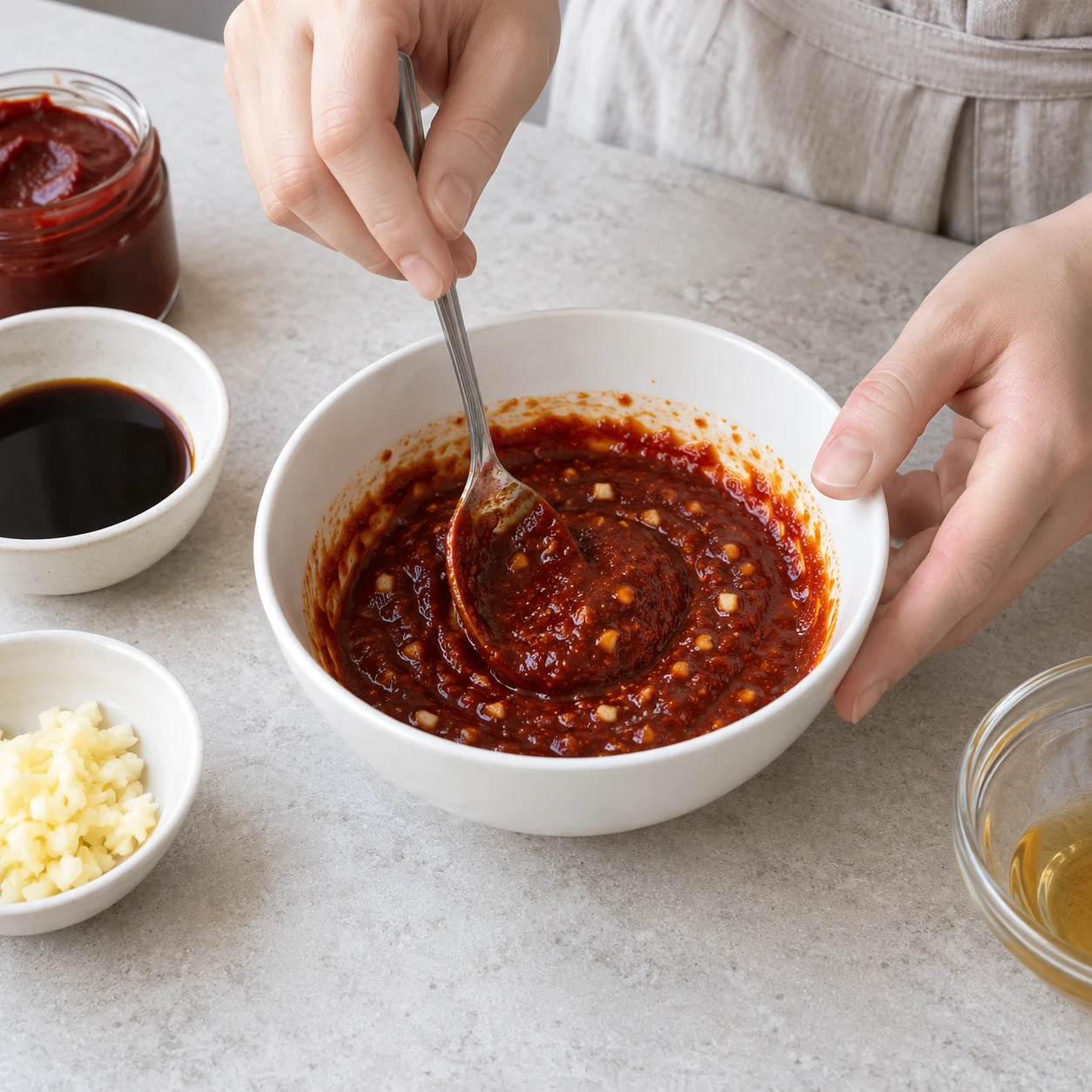
Mix the chili sauce. Combine 2 level eating spoons gochujang, 1 level eating spoon soy sauce, 1 level eating spoon sugar, 2 small teaspoons minced garlic and 2 level eating spoons water. Add the optional ½ small teaspoon ginger, 2 small teaspoons gochugaru and pinch of black pepper. Mix until smooth.
-
Step 3
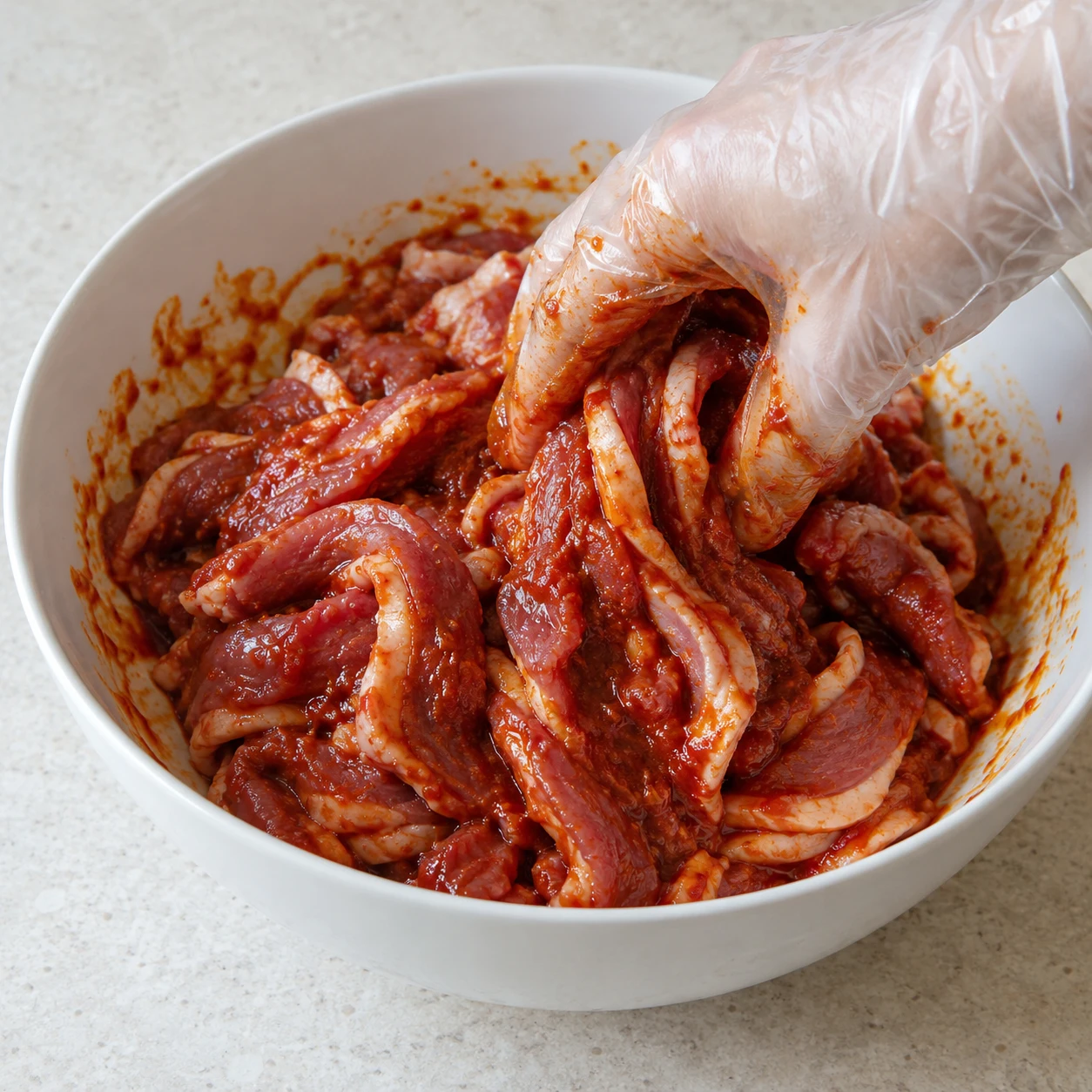
Massage and briefly marinate. Add the sauce to the duck in a bowl and mix thoroughly with a spoon or a food-safe glove, separating every slice so it is coated. Cover and refrigerate for 10 minutes. Do not taste the sauce after it has touched raw duck. Wash hands and clean utensils after handling raw poultry.
-
Step 4
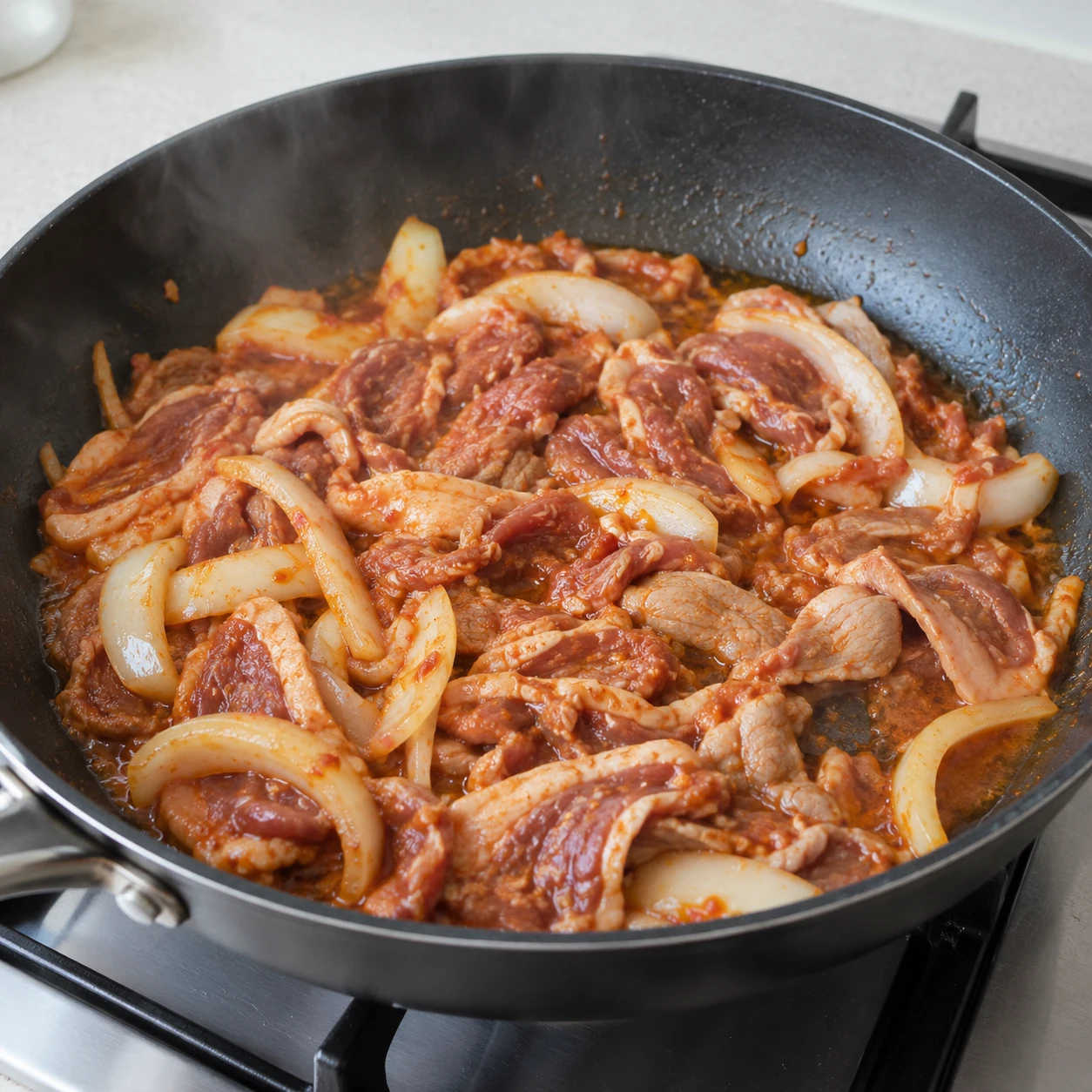
Start gently in a wide pan. Warm a wide nonstick pan over medium-low heat. Add the onion and all the marinated duck with its sauce; no extra oil is needed for duck with some skin and fat. Spread into a shallow layer. Cook for 4–5 minutes, turning often as the fat begins to render. If the sauce sticks before fat is released, add 1 extra level eating spoon water rather than raising the heat.
-
Step 5
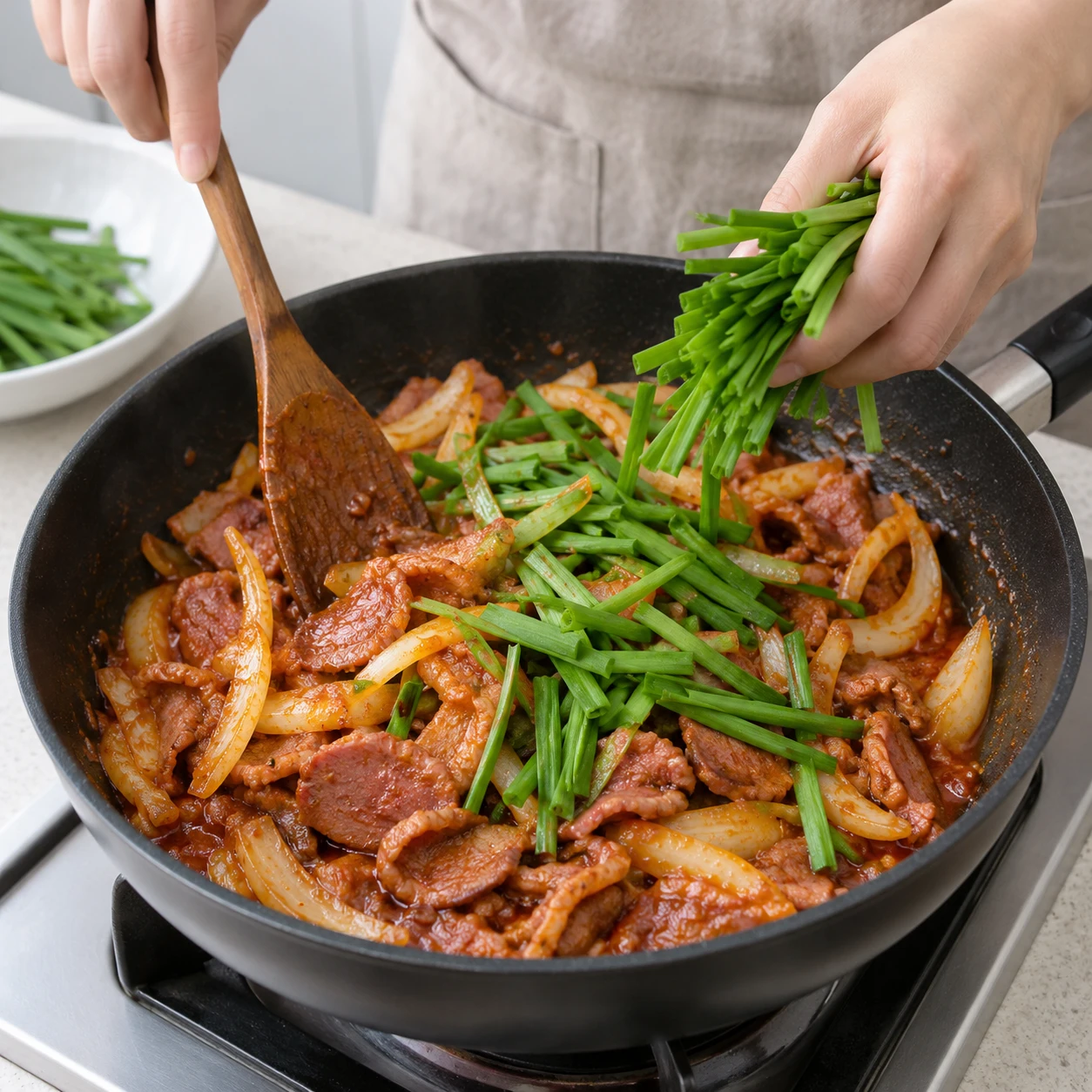
Cook through, then add the greens. Raise the heat to medium and stir-fry for another 5–7 minutes, unfolding any doubled slices. Duck is poultry: the thickest pieces must reach 74°C and have no raw-looking flesh. If necessary, continue cooking a little longer. Add the garlic chives for the last 1 minute and toss just until wilted. Keep the pan uncovered so the sauce can thicken.
-
Step 6
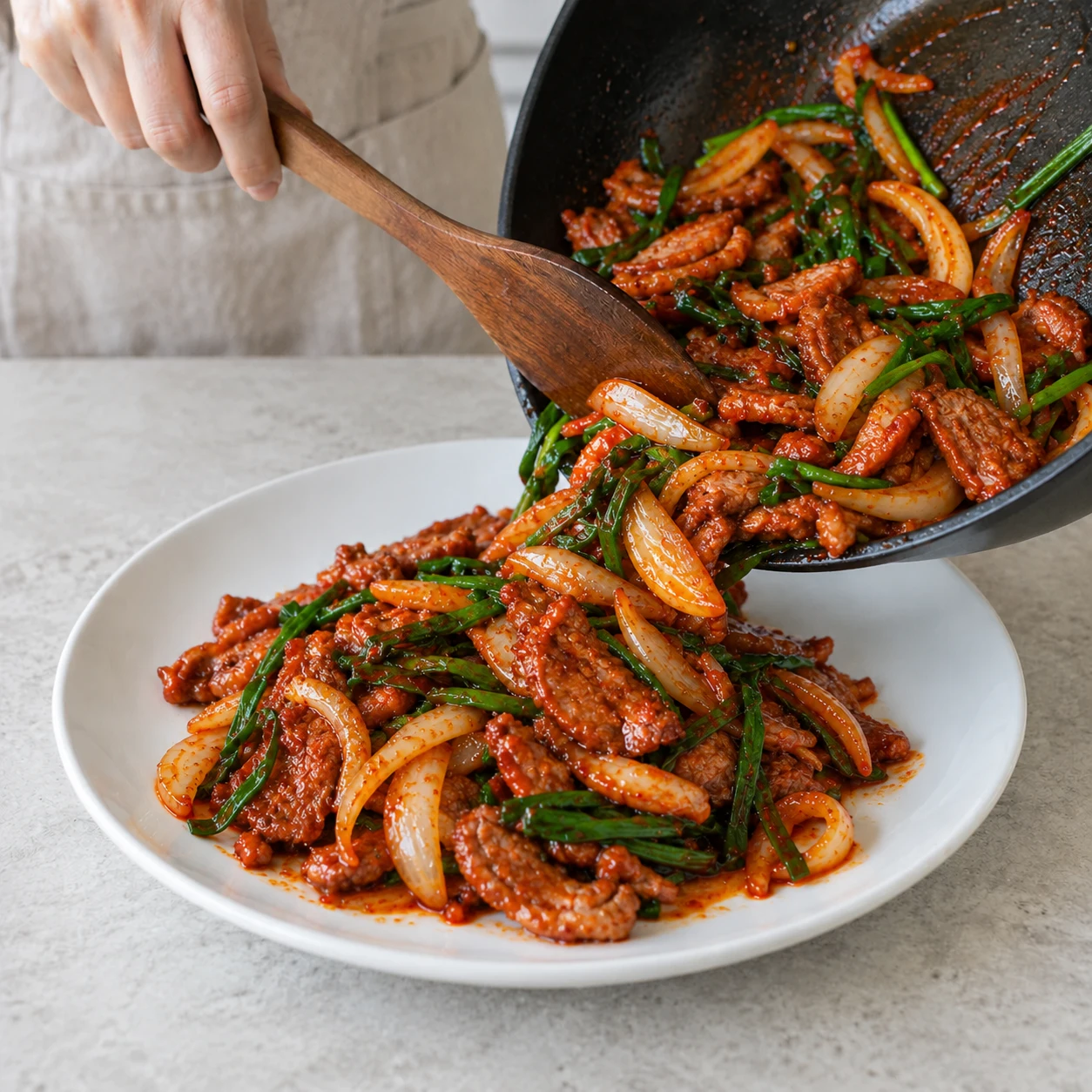
Finish and serve. Turn off the heat and mix in the optional 1 small teaspoon sesame oil. Transfer the duck, onion and chives to a serving dish promptly. Serve with plain rice if desired. This is spicy; choosing mild gochujang and omitting extra chili flakes reduces heat. Let discarded duck fat cool in a suitable container rather than pouring it down the sink.
Finished dish
A level eating spoon is about 15 ml, a small teaspoon about 5 ml, and the small paper cup used here about 180 ml. Use the same spoon or cup throughout; ordinary cutlery and cups vary in size. For thick unsliced duck breast, briefly chill it until firm and slice across the meat about 3 mm thick. Do not substitute thick whole duck pieces in this quick recipe. Skin-on duck releases its own cooking fat; a small pan is best used in batches rather than overfilled. Refrigerate cooked leftovers within 2 hours. Use within 3–4 days and reheat thoroughly to 74°C. Keep raw meat utensils separate from cooked food. A food thermometer is the most reliable doneness check.