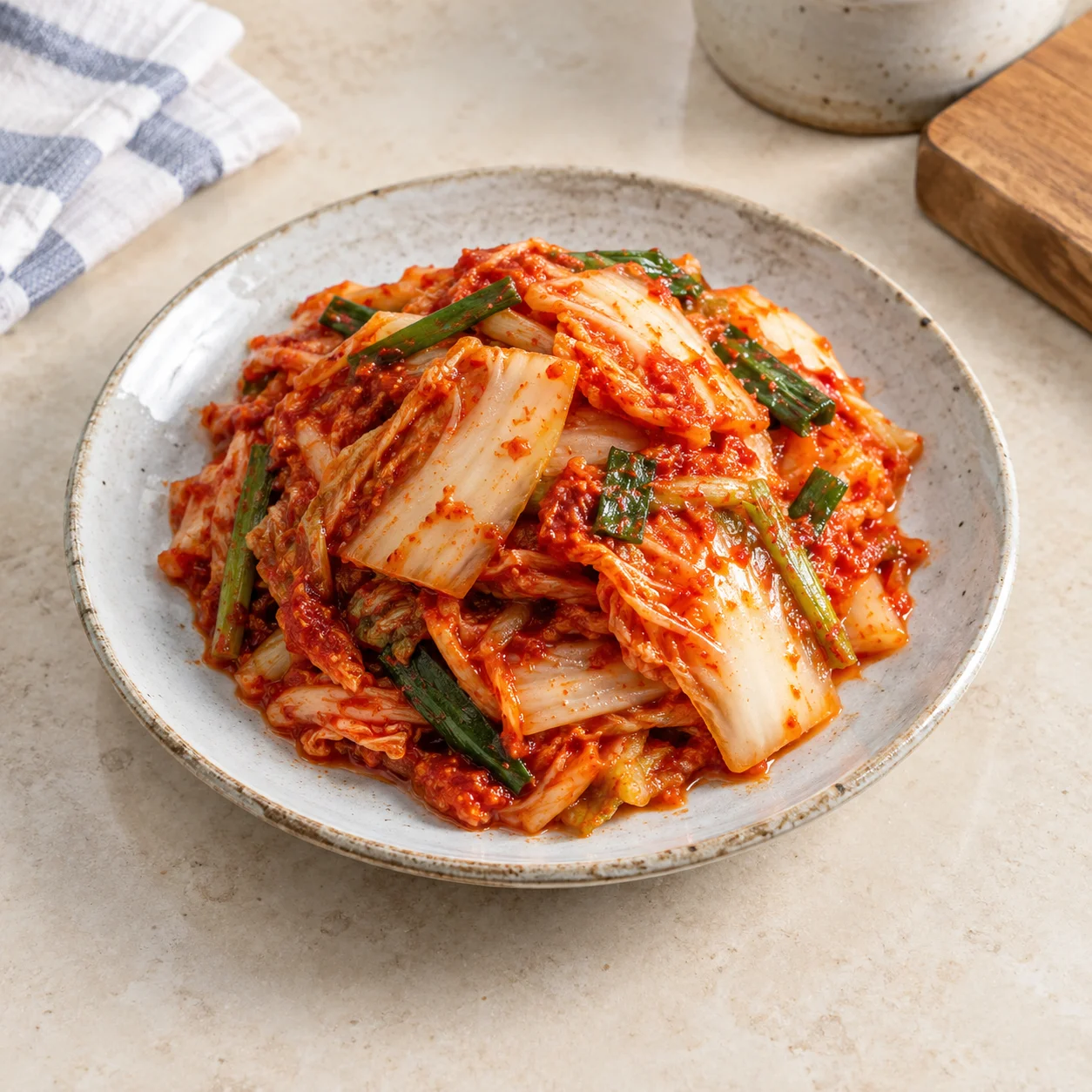
Korean stuffed squid (ojingeo-sundae)
Whole squid stuffed with glass noodles, tofu and vegetables, then steamed and sliced into neat rounds. This approachable home version keeps the filling moist and the squid easy to serve.
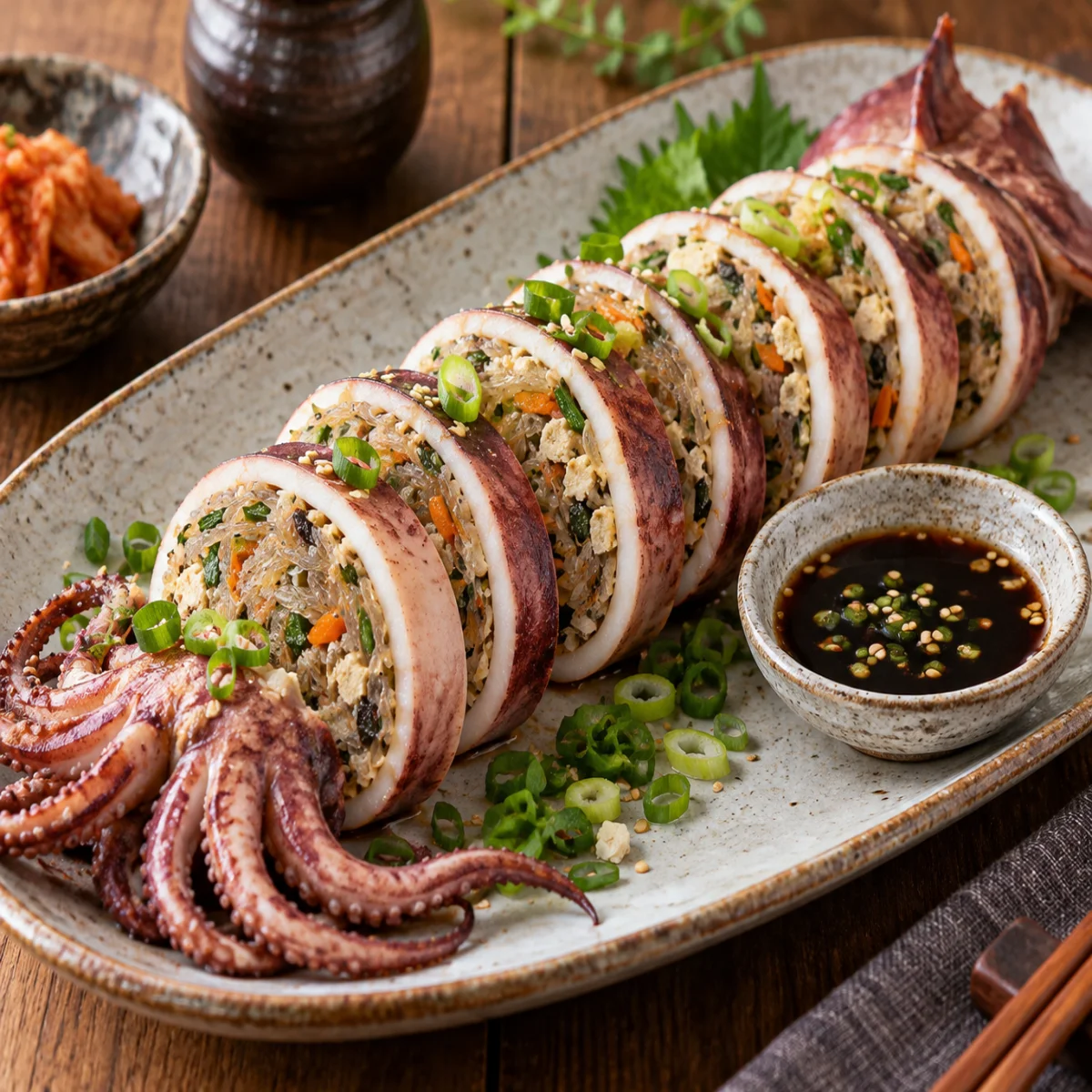
AI-generated cooking illustrations. Follow the written quantities and instructions.
Ingredients
3 servings
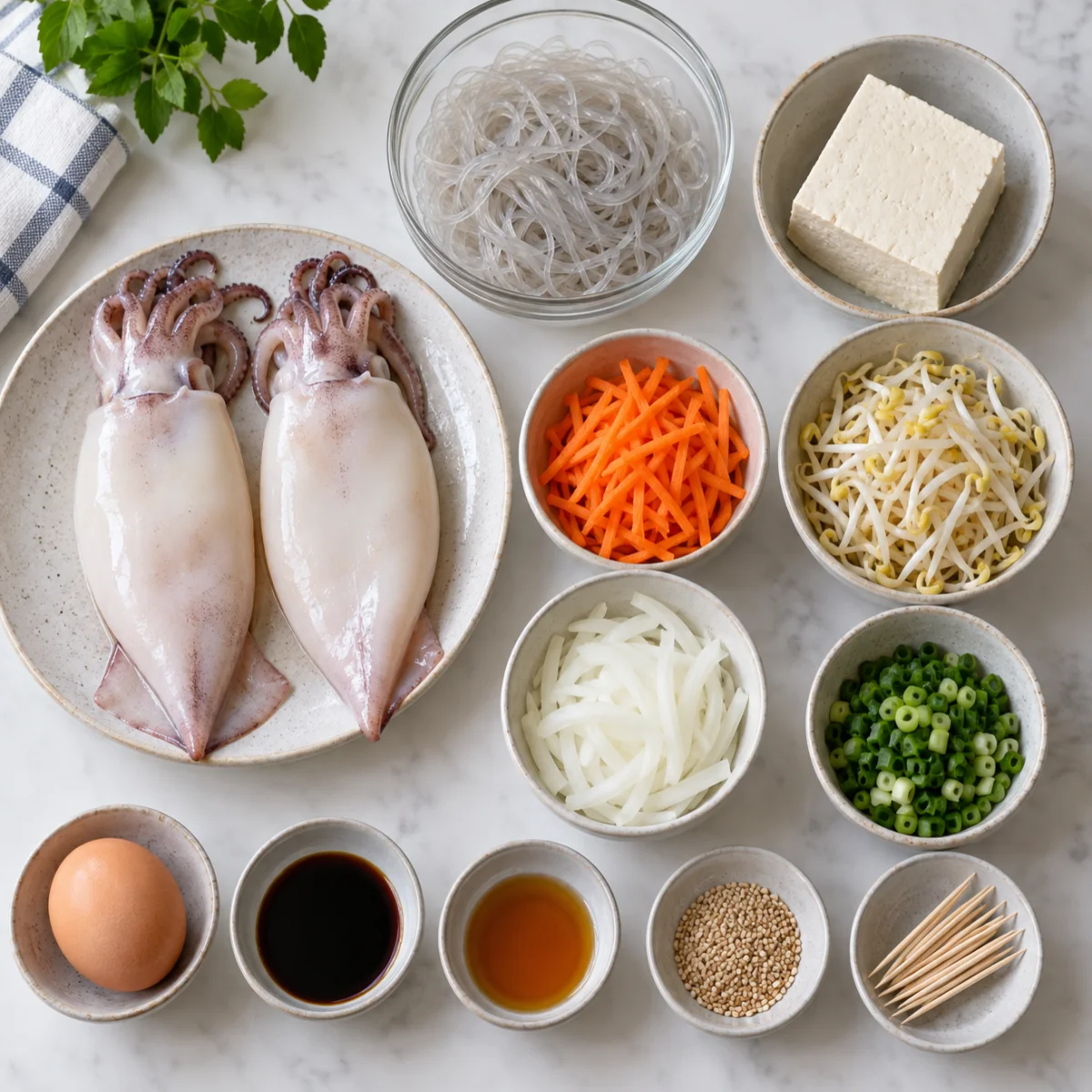
Everyday kitchen measurements
For 3 servings. Use a small 180 ml paper cup, a level eating spoon (about 15 ml) and a small teaspoon (about 5 ml).
How to fill the cup and spoons
Use the same cup and spoons throughout. Their sizes vary, so these amounts are approximate. Spoon flour in loosely and level the top without pressing. Measure vegetables after chopping, without packing them down. The amounts in g/ml are the original reference quantities. For part of a pack, use the specified pack weight and divide the contents evenly.
King Arthur Baking-
Essential
Ask the fish counter to clean them but keep the bodies whole. Thaw frozen squid in the refrigerator.
-
Substitute available
If Sweet potato glass noodles — 1/2 bundle (about 100 g) is unavailable
Use thin rice vermicelli if needed; cook it according to the package because it softens faster.
-
Substitute available
If Firm tofu — 1/2 block (about 150 g) is unavailable
Use the same amount of finely chopped cooked mushrooms for a tofu-free filling; texture changes.
-
Substitute available
If Bean sprouts — 1 paper cup is unavailable
Finely chopped napa cabbage works in the same amount. Squeeze out excess water.
-
Optional
Leave it out or use finely chopped zucchini.
-
Optional
Leave it out or use a little chopped onion.
-
Substitute available
If Egg — 1 large egg is unavailable
For an egg-free filling, add 1 extra tablespoon of glutinous rice flour and 1 tablespoon water to help bind; the texture changes.
-
Substitute available
If Soy sauce — 1 level tablespoon is unavailable
Use tamari in the same amount.
-
Optional
Leave it out for a milder filling.
-
Essential
Add only a little; soy sauce already seasons the filling.
-
Optional
Leave it out if you prefer a mild flavour.
-
Optional
Leave it out if unavailable; the filling will be less fragrant.
-
Optional
Garnish only. Leave out if unavailable or if anyone has a sesame allergy.
Tap each ingredient as you prepare it. Check product labels for egg, soy, sesame, wheat, fish or shellfish where relevant.
Step-by-step cooking
-
Step 1
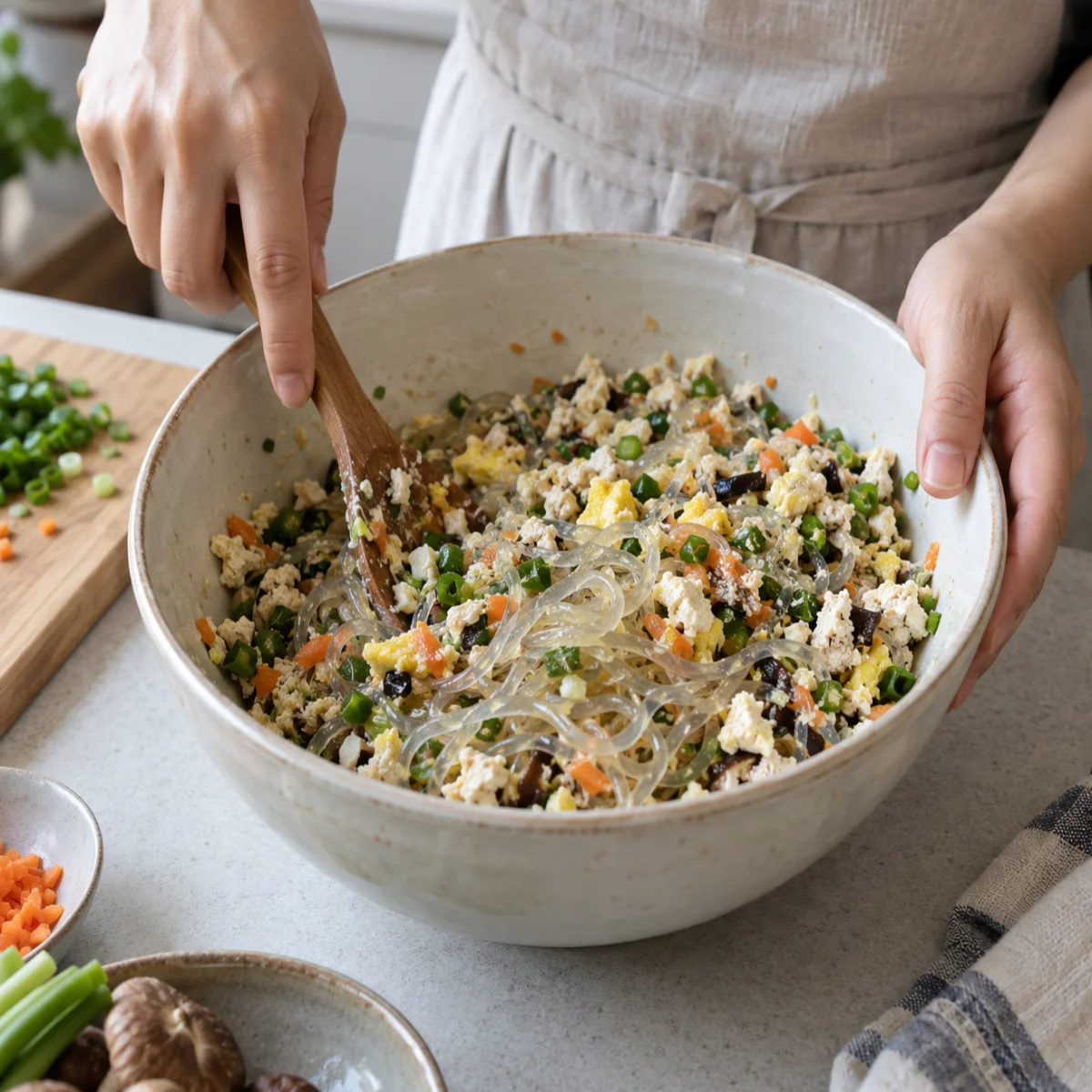
Cover the glass noodles with warm water for 20 minutes, then boil for 4 minutes or until just tender. Drain, rinse cool and snip into short pieces. Blanch the bean sprouts for 2 minutes, drain and squeeze dry. Crumble the tofu and finely chop the carrot and green onion. Mix everything with the egg, soy sauce, garlic, salt, pepper and sesame oil.
-
Step 2
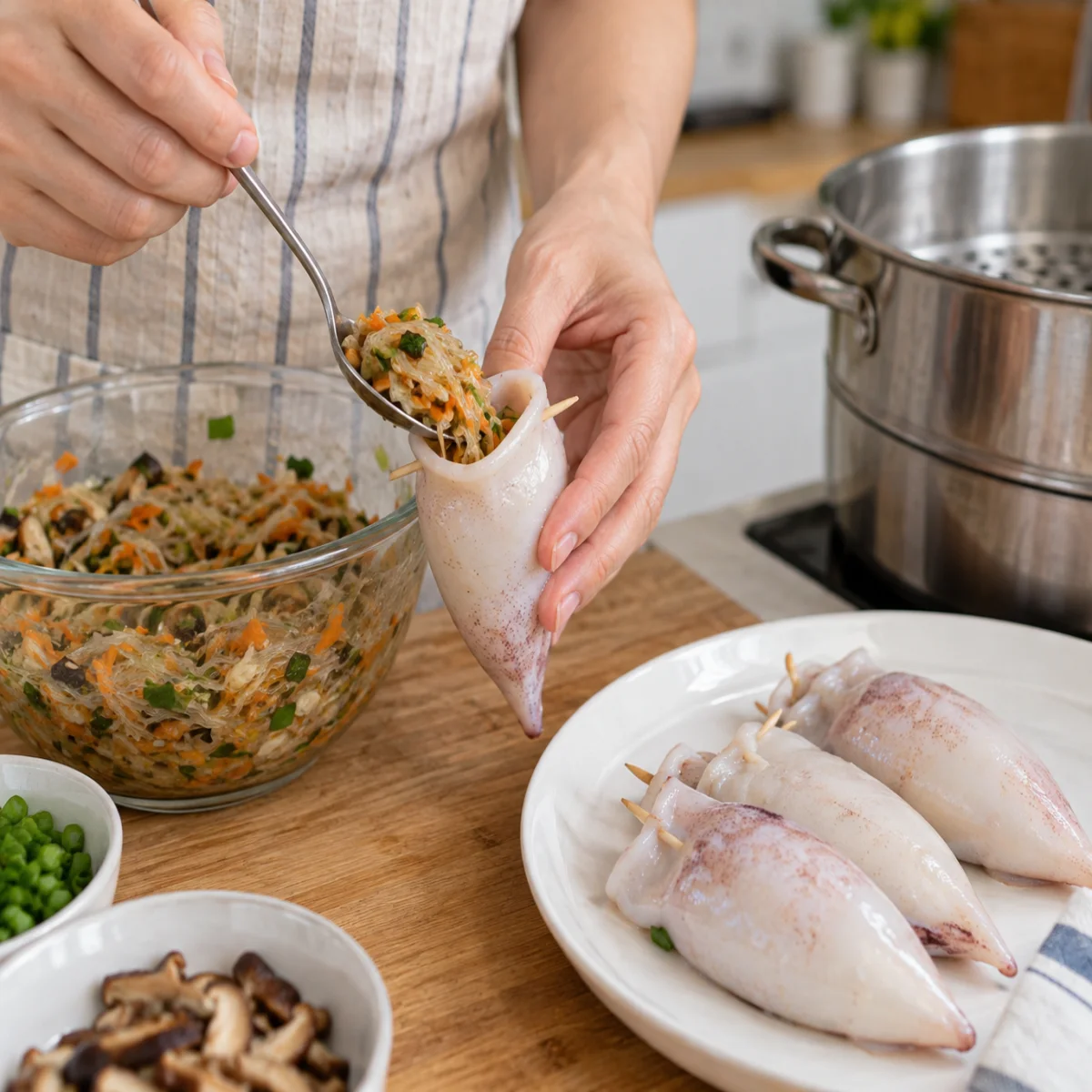
Rinse the squid bodies and pat dry. Spoon the filling into each body only about two-thirds full; it expands as it cooks. Secure the opening with a toothpick.
-
Step 3
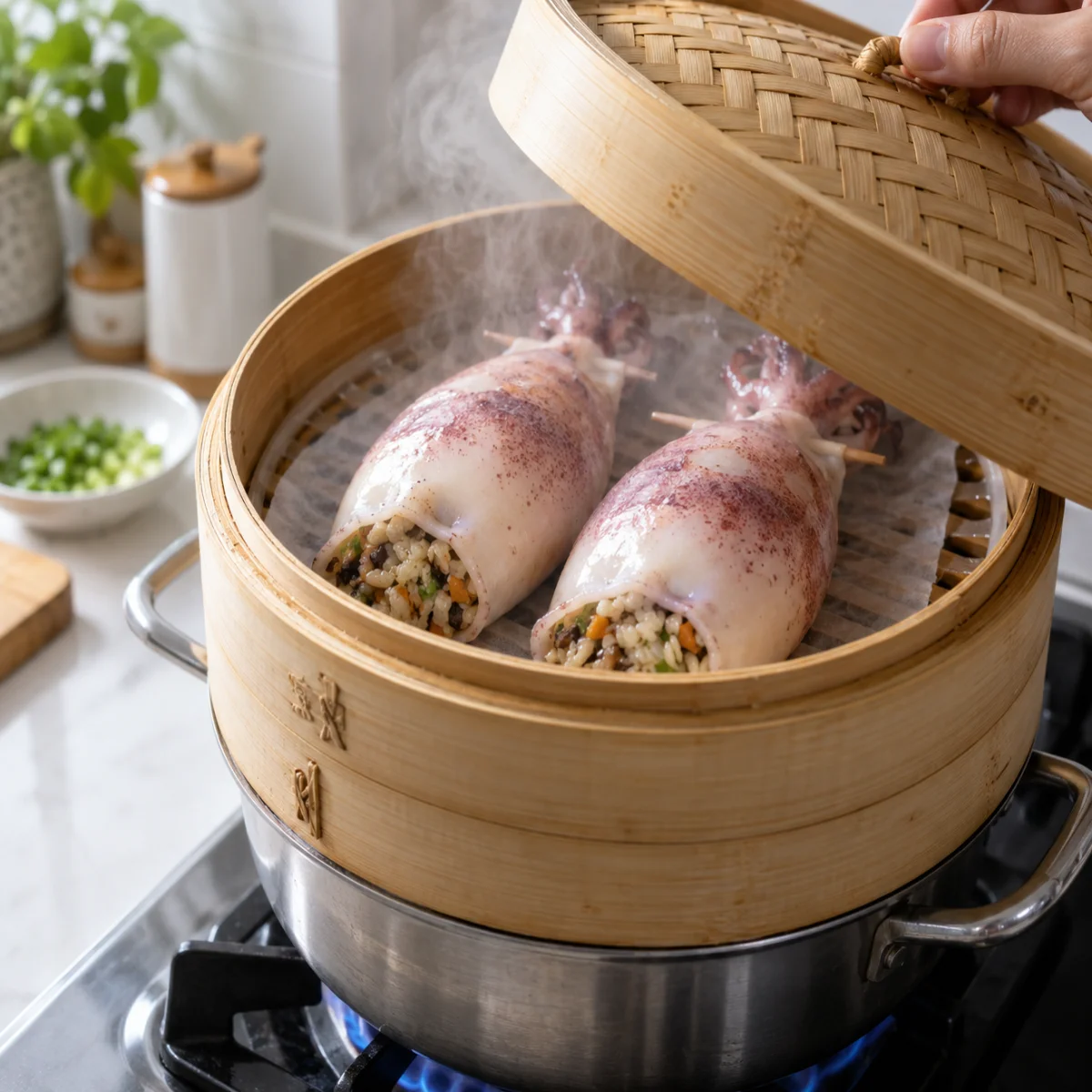
Set the squid in a steamer over boiling water, cover and steam for 12–15 minutes, until the squid is opaque and the filling is steaming hot throughout.
-
Step 4
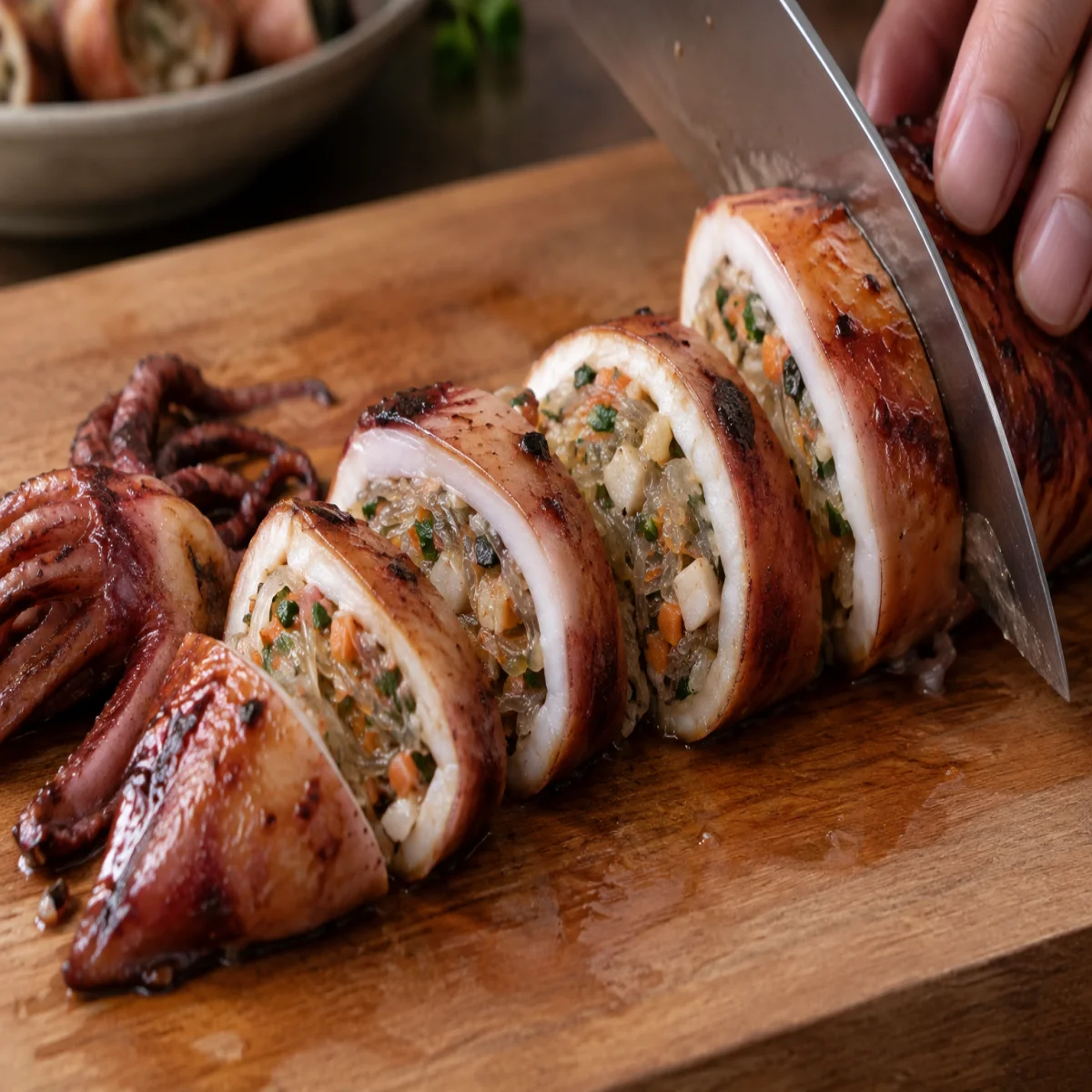
Rest the squid for 5 minutes so the filling can set. Remove the toothpicks and slice into 1–2 cm rounds with a sharp knife. Arrange the rounds on a plate and sprinkle with sesame seeds if using. Serve warm or at room temperature.
Finished dish
Do not pack the squid tightly; overfilling can split the body. Keep raw squid and its utensils separate from the cooked filling and vegetables. Steam until fully cooked; use a food thermometer if available and follow local seafood safety guidance. Check labels for fish, soy, egg, wheat and sesame allergens.
Enjoy every bite
How to enjoy it
Arrange slices in one layer and let the center cool briefly. Dip the cut side lightly so the filling stays in place.
Serve it with
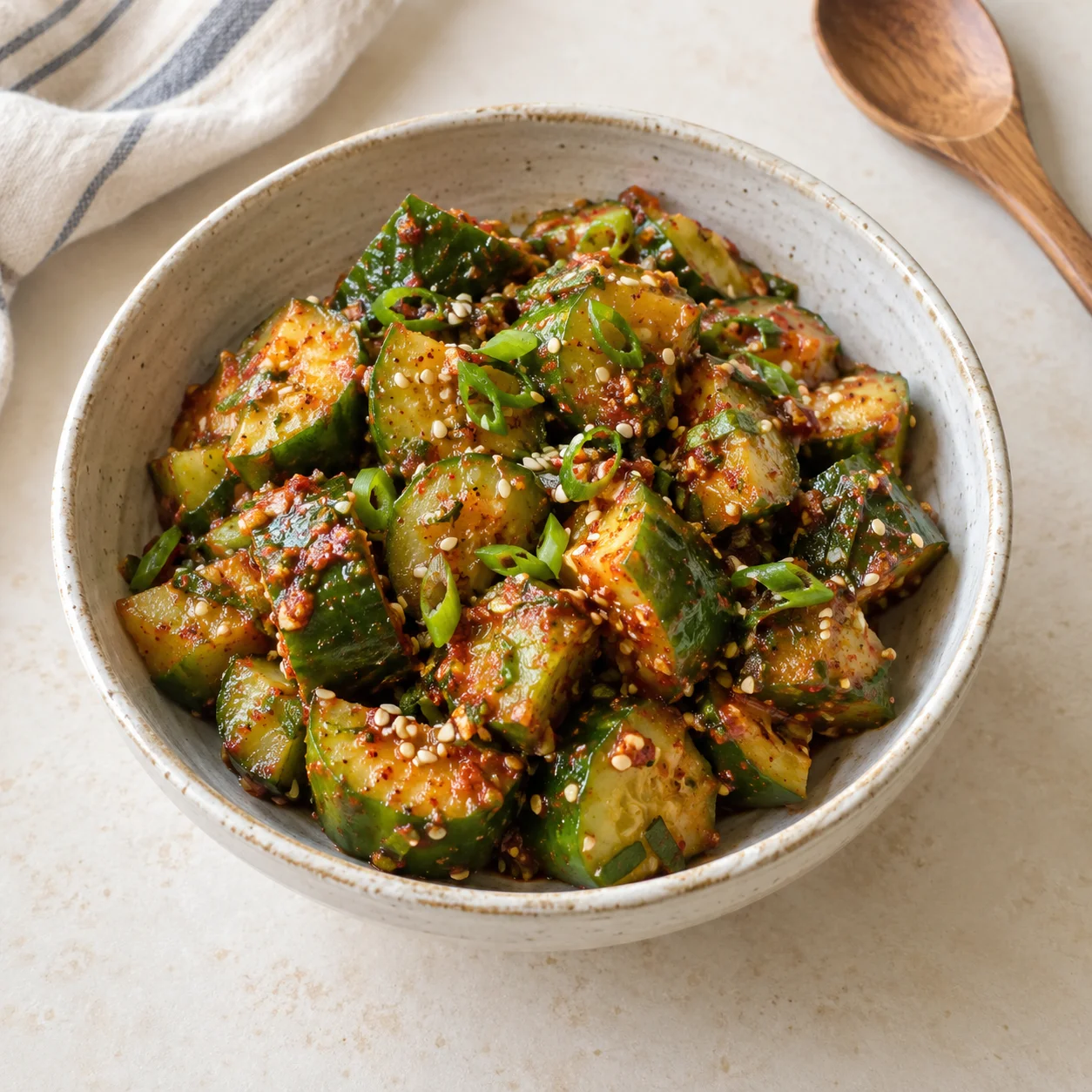
Korean spicy cucumber salad (oi-muchim)
A crisp vegetable bite contrasts with a richer or spicier dish.
View recipe