
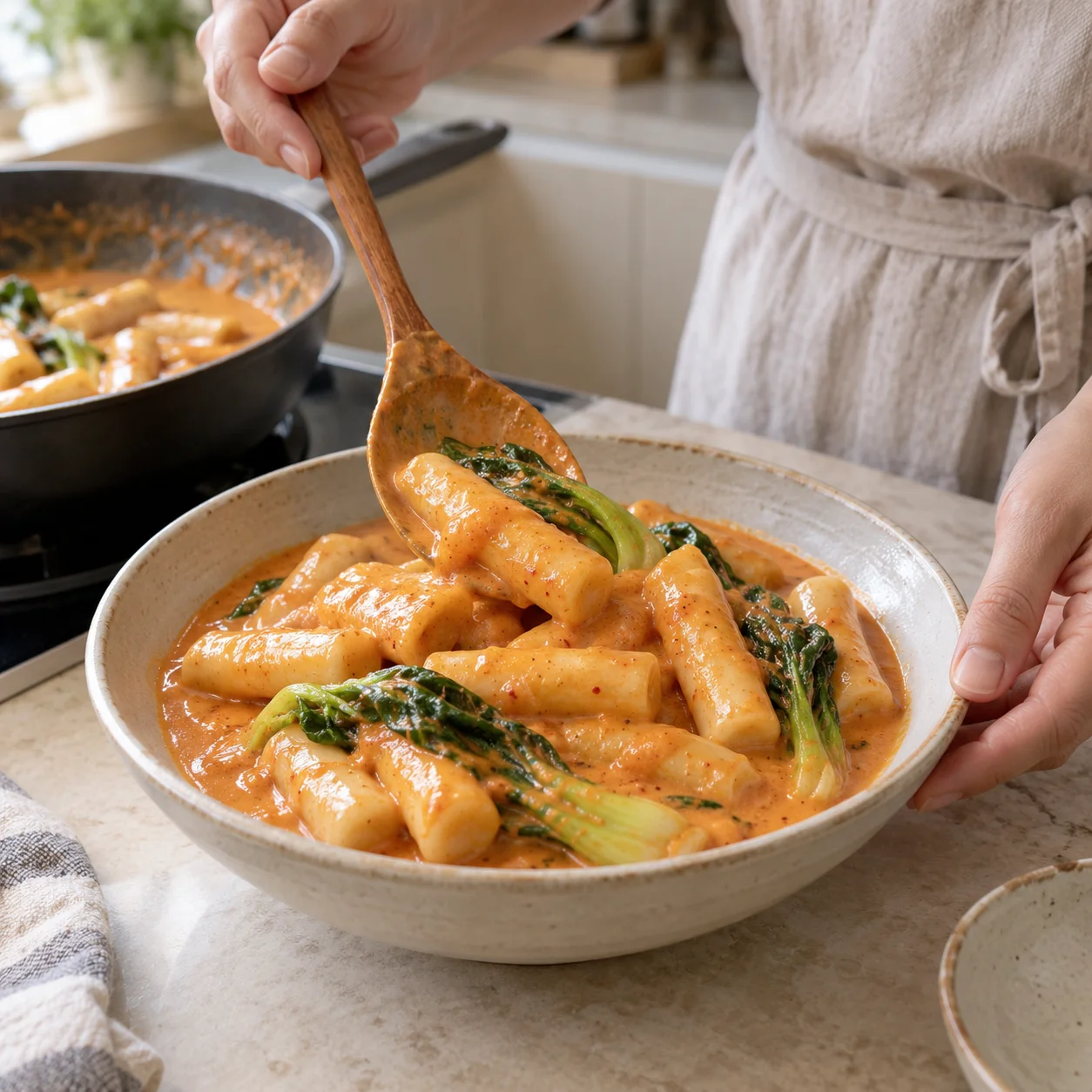
Mala rosé tteokbokki with bok choy
Chewy rice cakes and bok choy in a creamy chili sauce with adjustable Sichuan-style mala flavor. A Korean street-food fusion home version, with clear sauce measurements and gentle simmering.
Share recipe ↗
Choose an app on your device, or copy the link for Instagram and other apps.
✦ AI-generated cooking illustrations. Follow the written quantities and instructions.
Ingredients
2 servings
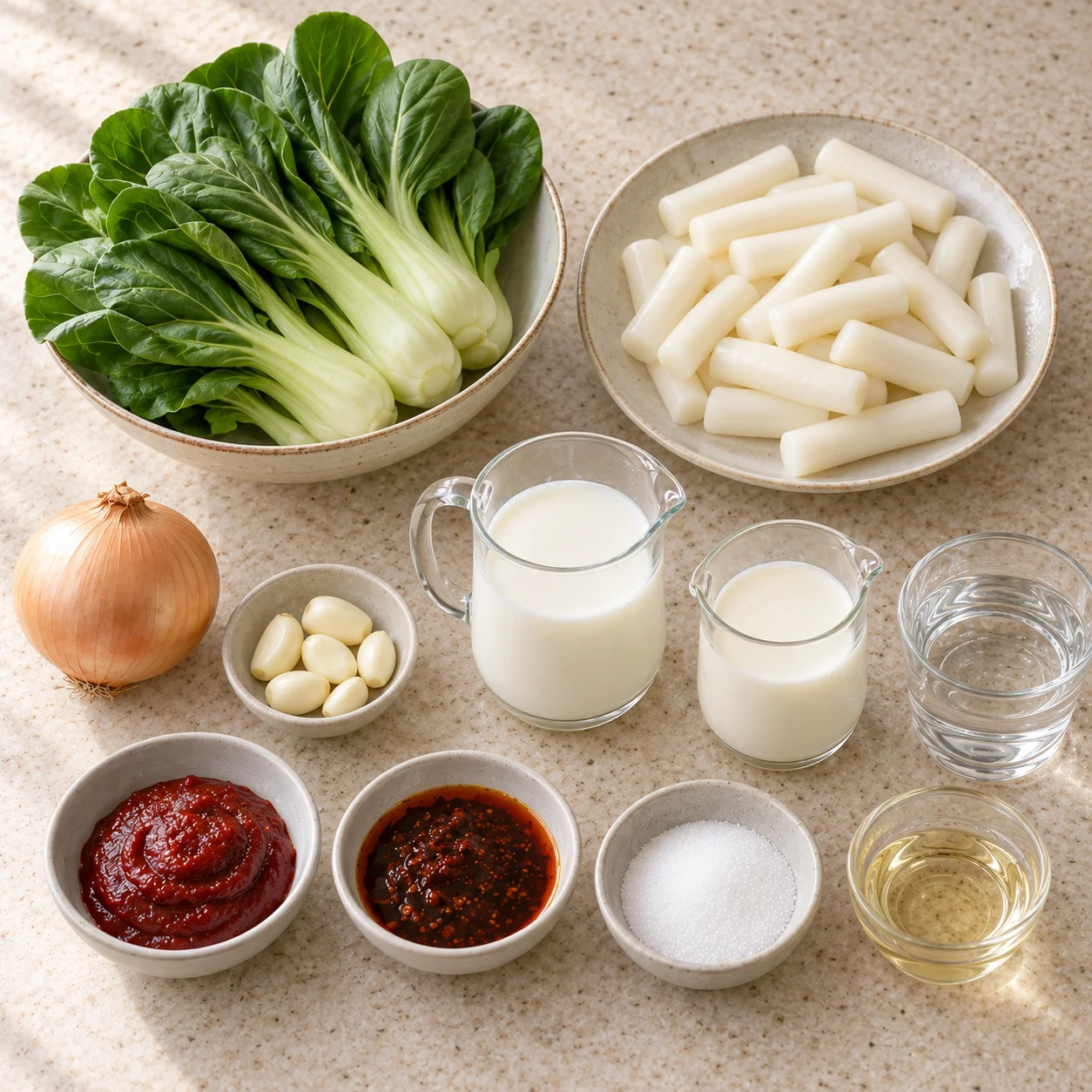
- Essential
Keep tteokbokki rice cakes for the chewy texture. Rice flour, bread and pasta are not direct replacements in this cooking method.
- Substitute available
Use 80 g spinach, washed and drained. Add near the end and cook until wilted; it softens faster than bok choy stems.
- Optional
May be omitted; the dish will be less sweet and aromatic. Skip the onion-preparation step.
- Optional
May be omitted; the flavour becomes milder. Skip the garlic preparation and addition.
- Substitute available
Use the same volume of unsweetened, unflavoured oat milk. Richness and colour may change; other dairy ingredients remain unchanged.
- Substitute available
Use 100 ml whole milk instead of 100 ml cream, and reduce the separate water from 100 to 50 ml. The sauce will be lighter and less creamy.
- Essential
Use 100 ml with the original cream. If replacing cream with milk as advised, use only 50 ml here so the sauce is not too thin.
- Essential
Keep gochujang for this sauce's fermented, sweet-spicy character. Chilli powder or hot sauce is not a direct same-amount replacement.
- Essential
Keep the mala sauce for its Sichuan-pepper numbing aroma. Ordinary chilli sauce cannot recreate it; check the label for extra salt or allergens.
- Substitute available
Use white or brown sugar in the same listed amount. Brown sugar adds a light caramel flavour; taste the sauce before adding more.
- Substitute available
Use the same volume of canola, sunflower or rice-bran oil. Choose an unflavoured oil; toasted sesame oil changes the taste.
1 tbsp = 15 ml · 1 tsp = 5 ml. Use level measuring spoons. Quantities below make 2 servings.
Tap each ingredient as you prepare it. Check product labels for egg, soy, sesame, wheat, fish or shellfish where relevant.
Step-by-step cooking
-
Step 1
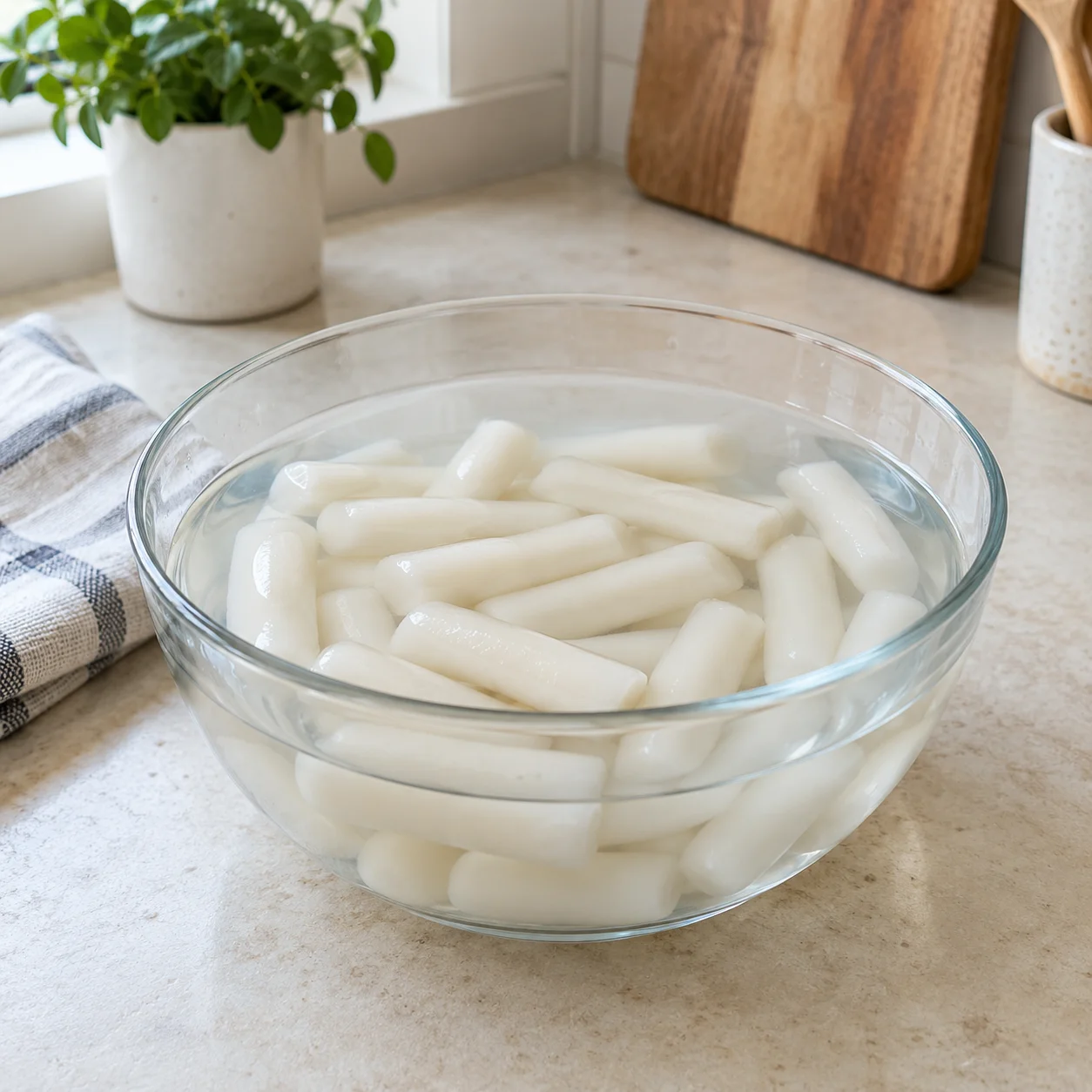
Separate 300 g rice cakes. Soak firm refrigerated ones in cool water for 10 minutes and drain. Soft fresh ones need no soak; follow the packet for frozen ones. Start preparing vegetables while they soak.
-
Step 2
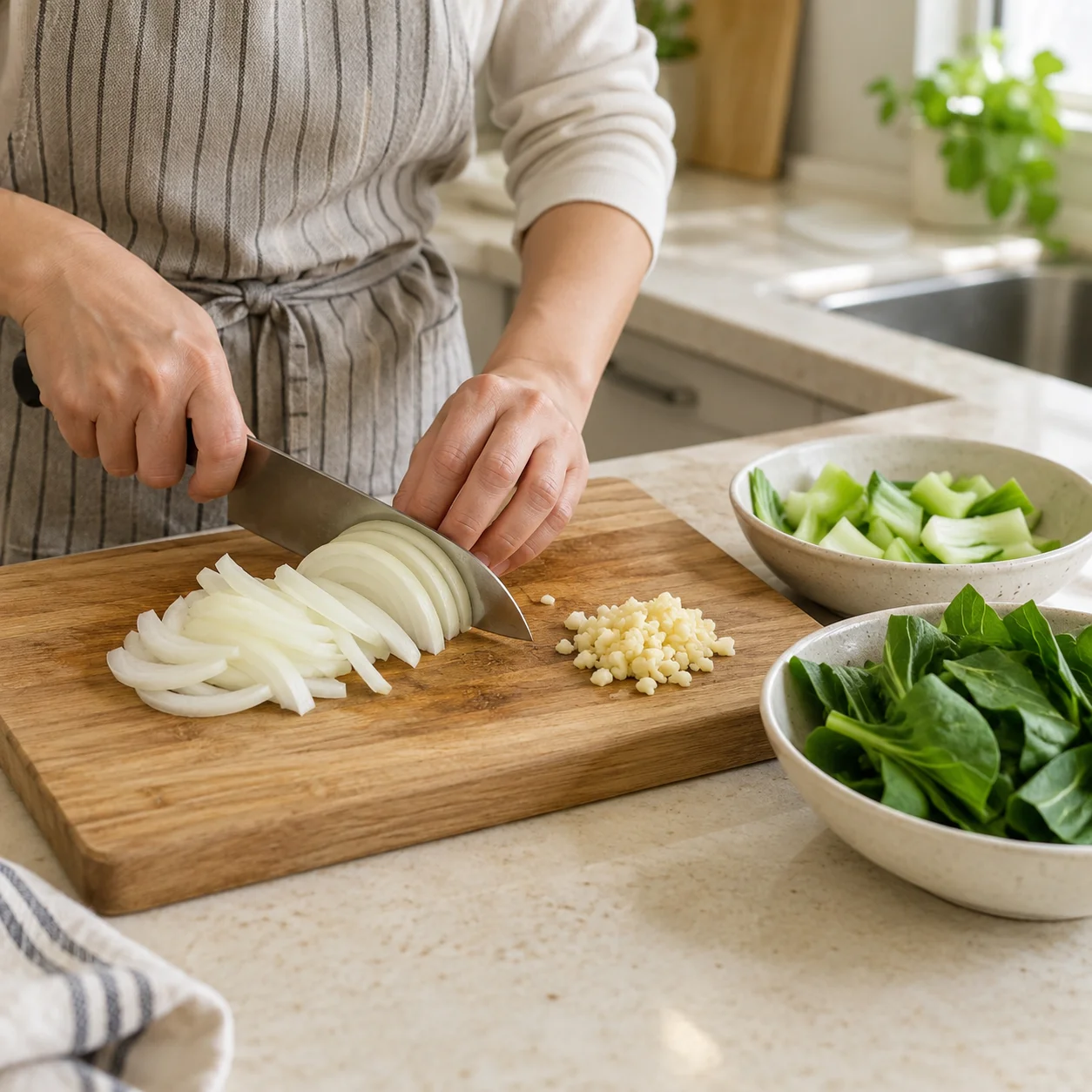
Wash 80 g bok choy thoroughly and trim the base. Slice the stems and keep leaves separate. Thinly slice 80 g onion and mince 6 g garlic. Measure milk, cream and sauces before heating the pan.
-
Step 3
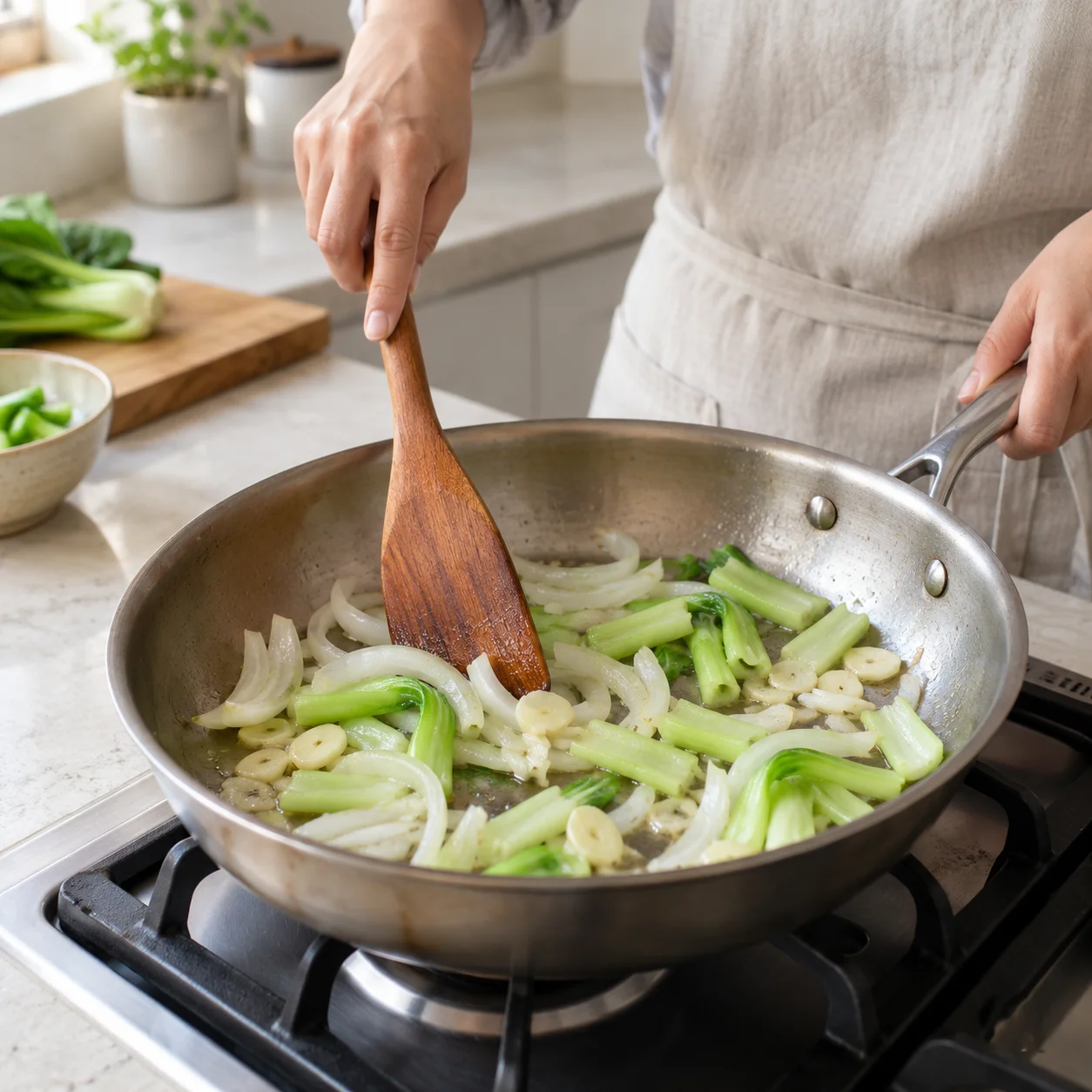
Heat 10 ml neutral oil in a wide pan over medium heat. Sauté onion and bok choy stems for 3 minutes. Add garlic and stir for 30 seconds. Lower the heat before the garlic browns.
-
Step 4
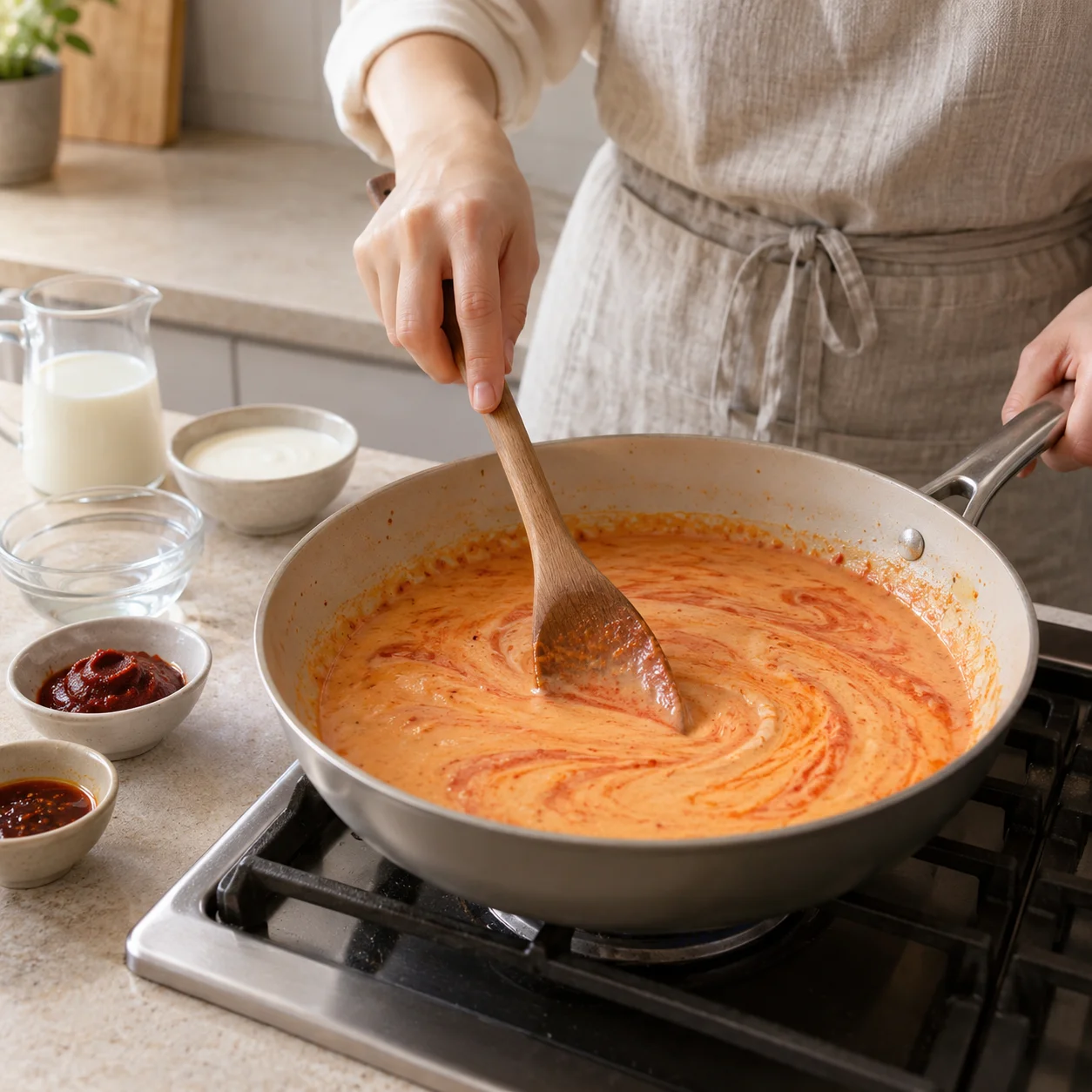
Add 100 ml water, 15 g gochujang, 8 g sugar and initially only 5 g ready-to-use mala sauce. Stir smooth, then pour in 200 ml milk and 100 ml cream. Warm on medium-low until evenly pink-orange; avoid a vigorous boil.
-
Step 5
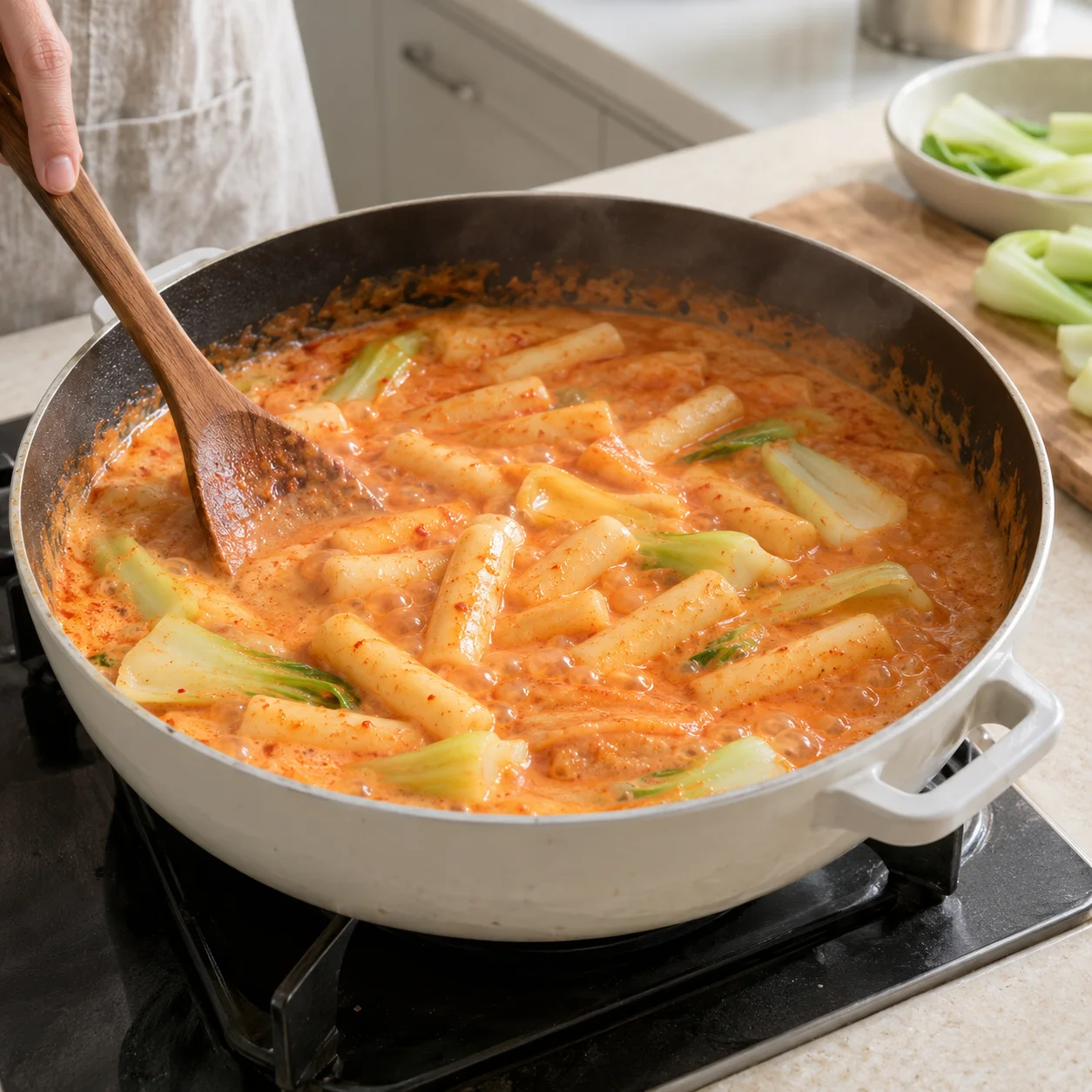
Add the drained rice cakes and simmer gently for 8–10 minutes, stirring often so they do not stick. Test a cooled piece for a soft center. If the sauce thickens before the rice cakes soften, add a small spoonful of water.
-
Step 6
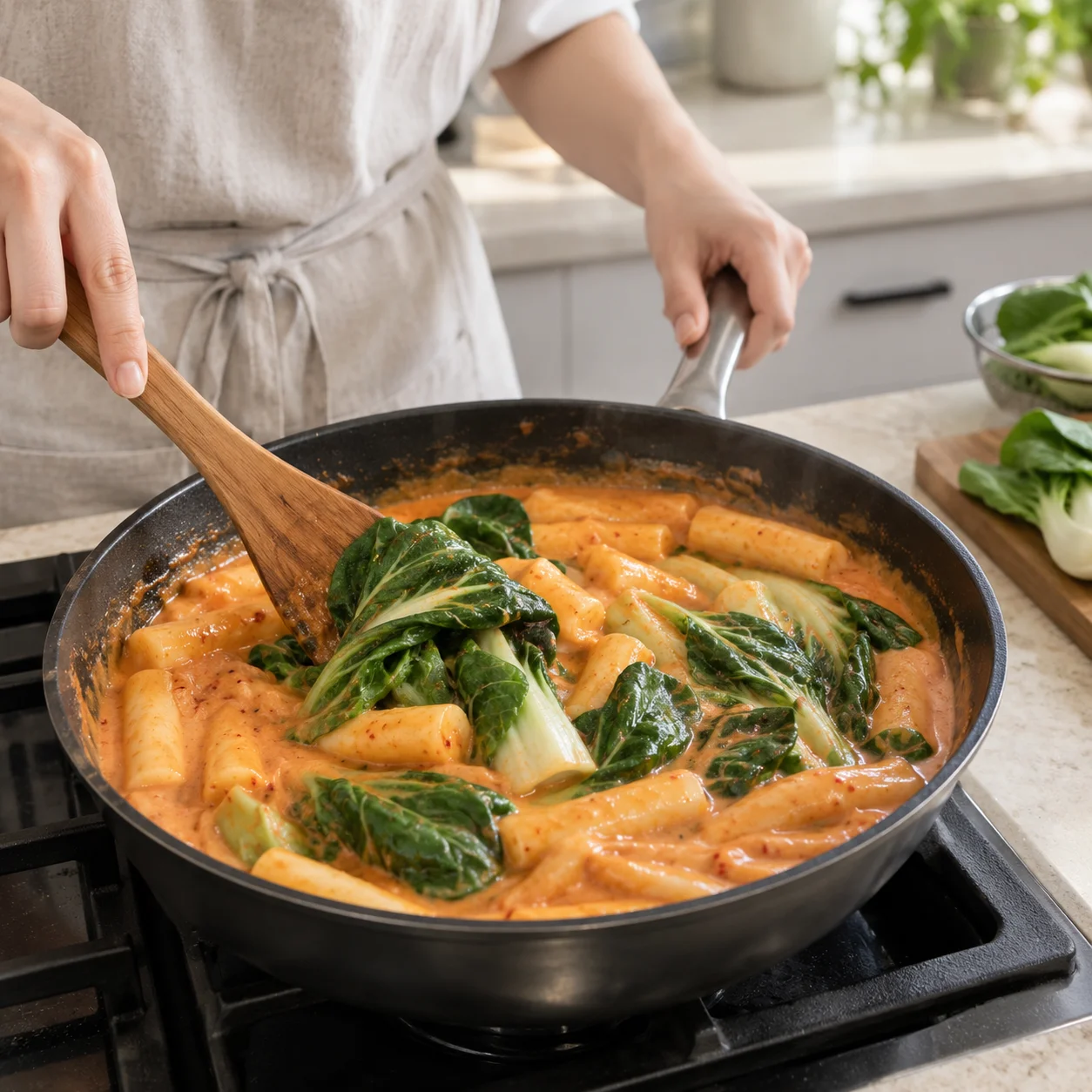
Fold in the bok choy leaves and simmer 1–2 minutes until wilted. Taste a cooled spoonful of sauce; add up to the remaining 5 g mala sauce if wanted and simmer 1 minute more. Turn off the heat and serve immediately while creamy.
Finished dish
Use a ready-to-use mala stir-fry sauce with Sichuan pepper flavor, not a concentrated hotpot cube. The listed 10 g is a maximum: start with 5 g because brands vary in salt and heat. This is a vegetable home fusion of Chinese mala and Korean rosé tteokbokki, not a restaurant’s secret formula. The 30-minute time includes soaking. Contains milk and often wheat/soy; check the mala sauce for sesame, peanut and other ingredients.
This complete home version was written for this site using the public recipe as a reference. Open the original for another method.
Maangchi · Rosé tteokbokki base; mala and bok choy home variation ↗Trending in Korea · 2026
Home adaptation, inspired by a 2026 Korean food trend.
Trend source · Baedduck · 2026-09-21 ↗Sources reviewed: 2026-10-14